
If you’ve ever tried to narrow down the best beaches in greece to a manageable list, you already know how difficult that task is. Greece has over 16,000 kilometers of coastline and more than 200 inhabited islands, each hiding coves, lagoons, and stretches of sand that could take a lifetime to explore. I’ve spent years visiting these shores and I still feel like I’m just getting started. Some beaches here are iconic enough to anchor a whole trip around. Others are the kind of find you keep to yourself for as long as possible.
What makes Greek beaches genuinely special isn’t just the color of the water, though that’s obviously hard to argue with. It’s the variety. You can go from a white pebble beach in Skiathos to a pink-sand lagoon in Crete in a single afternoon if the ferries cooperate. The landscapes shift dramatically between islands, and even within a single island you’ll encounter a dozen different characters of coastline. This guide is my honest attempt to cut through the noise and help you figure out where to actually go.
Introduction to the Best Beaches in Greece
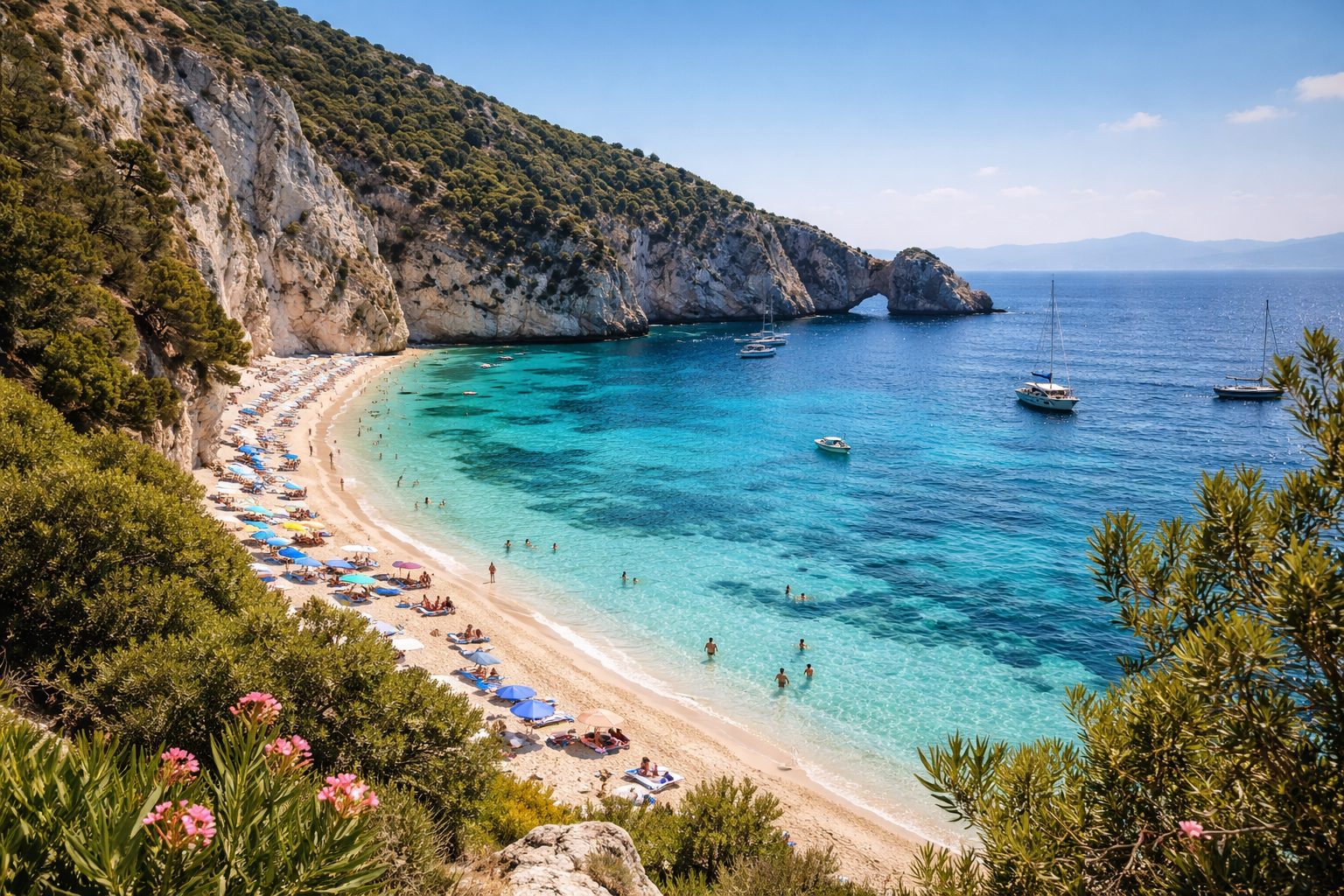
Greece doesn’t have a monopoly on beautiful coastline in the Mediterranean, but it has a strong argument for being the most consistently rewarding. The combination of geology, climate, and water clarity is hard to beat. The Aegean and Ionian Seas each have their own personality. The Aegean runs deeper blue, often choppier, and delivers those dramatic cliffs you’ve seen on postcards. The Ionian side is calmer, greener, with water that sits somewhere between turquoise and emerald.
When people ask me about the best beaches in greece, I always start by asking what they’re after. Seclusion? Party vibes? Families with small kids? A romantic escape? Greece has a version of all of these, often within the same island. The challenge is knowing where to look and what to prioritize.
The beaches on this list represent a genuine cross-section. Some are famous and get busy. Some take real effort to reach. All of them are worth it in their own way.
Criteria for Selecting the Best Beaches
I didn’t put this list together based on Instagram follower counts or travel magazine rankings. I used a more practical set of filters.
- Water quality and clarity: The water should be clean, with good visibility and no industrial runoff nearby.
- Scenic surroundings: The landscape around the beach matters. Cliffs, pines, dunes, or wildflowers all add something.
- Accessibility vs. reward: Some effort to reach a beach is fine. But the payoff needs to match.
- Variety of experience: A good beach list shouldn’t just stack up carbon copies of each other.
- Practical usability: Is there shade? Somewhere to get water? Is it safe for swimming?
I also tried to represent different island groups rather than loading the list with Crete simply because it’s the largest. Variety in geography means variety in what you actually experience on the ground.
Top 10 Best Beaches in Greece
1. Navagio Beach, Zakynthos
Navagio is probably the most photographed beach in Greece, and it earns that status. The beach sits inside a sheer limestone cove on the northwest coast of Zakynthos, completely enclosed by cliffs that rise about 200 meters on three sides. The only way in is by boat. There are no roads, no paths, no sneaky back routes. You either charter a trip or join one of the many boat tours that run from Porto Vromi.
The name translates as “Shipwreck Beach,” which tells you about the rusting hull that sits on the white pebbles and has become the defining image of the place. The water inside the cove is an extraordinary shade of blue because of how the light reflects off the limestone and the shallow sandy bottom. It gets busy in summer, and I mean genuinely crowded during midday. Go early in the morning or late afternoon if you want something approaching a peaceful experience.
Key facts:
* Access: By boat only, approximately 15-20 minutes from Porto Vromi
* Best months: May, June, September
* Facilities: Limited on-beach; boats typically don’t stay long
2. Elafonissi Beach, Crete
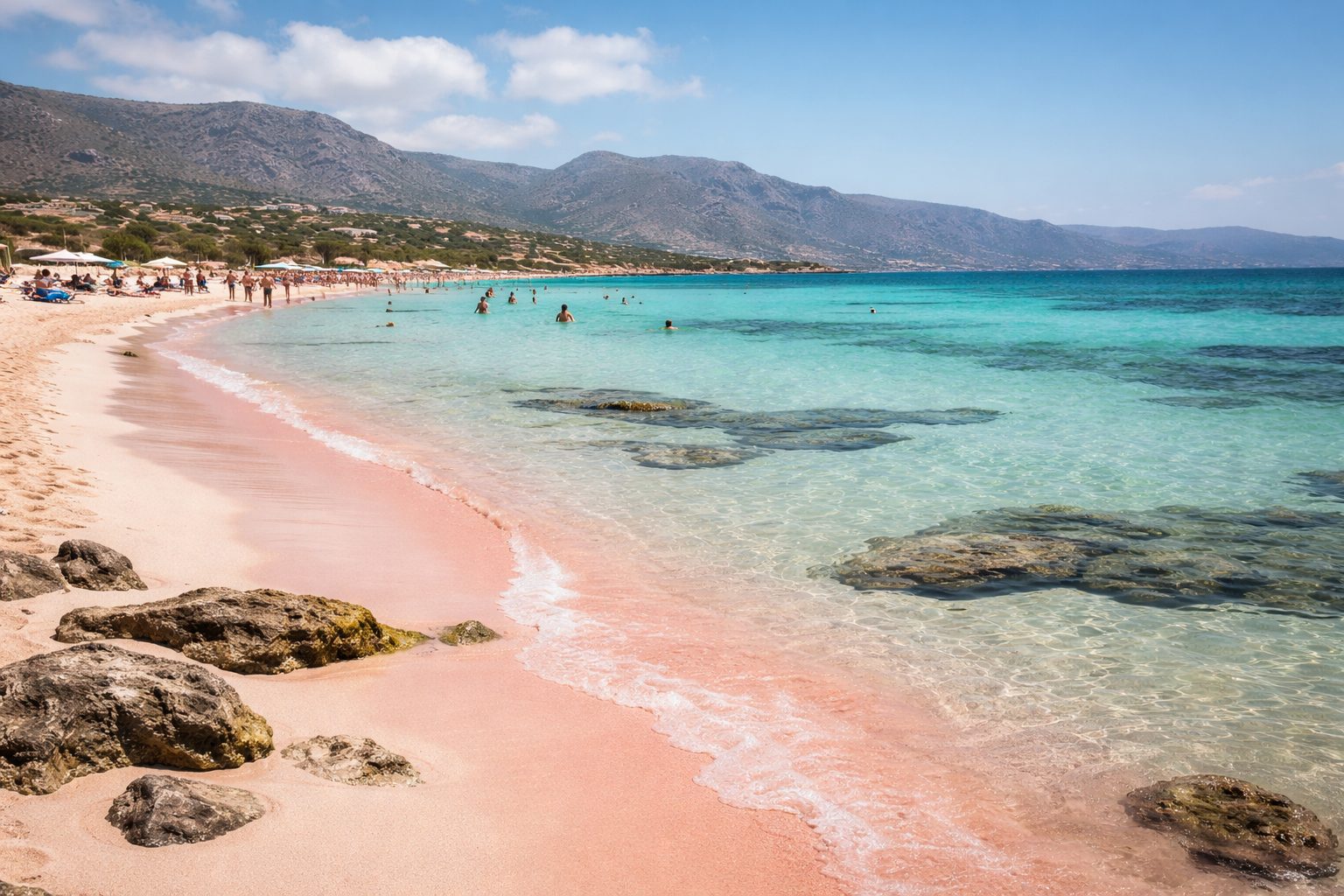
Elafonissi is one of those beaches that sounds like marketing copy until you actually see it. The sand has a faint pink tint, caused by fragments of crushed shells and coral mixed into the white sand. The water is shallow for a considerable distance, which makes it ideal for children and anyone who wants to wade out a long way without going under.
The beach sits on the southwestern tip of Crete near the Samaria Gorge region. It’s part of a small island connected to the mainland by a sandbar you can walk across when the water is calm, which it usually is. The lagoon between the two land masses is genuinely beautiful and remarkably shallow. You can stand in the middle of it in knee-deep water and feel like you’re somewhere completely improbable.
Things to know:
* Gets very busy in July and August
* Limited shade, so bring your own umbrella
* Parking can be a challenge during peak season
* The drive from Chania takes about 1.5 hours through mountain roads
3. Myrtos Beach, Kefalonia
Myrtos might be the most visually dramatic beach in Greece. It sits below towering white limestone cliffs at the end of a steep valley on the west coast of Kefalonia. The water is a shade of blue that seems almost synthetic, and the stones on the beach are smooth white pebbles rather than sand. The combination of the cliffs above, the dark pine slopes on either side, and the impossible blue below is something I’ve never seen replicated elsewhere.
Be aware: Myrtos has no shade from the cliffs until late afternoon. The sun hits it directly and it can get uncomfortably hot. The pebbles are also not soft on bare feet. Bring shoes you can remove at the water’s edge, a good umbrella, and more water than you think you need. The beach has some facilities in season but it doesn’t feel overdeveloped.
- Best viewpoint: The road above offers a spectacular overlook before you descend
- Swimming: The water gets deep quickly; strong swimmers will be happiest here
- Parking: There’s a car park at the top before the descent
4. Balos Lagoon, Crete
Balos is different from most beaches on this list because it’s more of a lagoon system than a single beach. It sits on the Gramvousa Peninsula in northwestern Crete and involves a combination of the island of Gramvousa, the lagoon itself, and a long sandy spit that separates the lagoon from the open sea.
You can reach Balos by boat from Kissamos, which takes about 90 minutes each way, or by a rough unpaved road followed by a 20-minute downhill walk. The boat is genuinely more pleasant. The lagoon water is shallow and warm, the colors shift from white to turquoise to deep blue in bands, and the whole setting feels surreal in the best way.
The trade-off is that it’s popular. Very popular. In high summer the place fills up. But even in a crowd it’s hard to feel disappointed by what you’re looking at.
5. Praia da Marinha, Algarve
I should note here that Praia da Marinha is actually in Portugal, not Greece. It appears in the outline I was working from, but including it in a guide to Greek beaches would be misleading and not particularly useful to you. Instead, I’ll use this spot in the list to cover a beach that genuinely belongs here.
Myrtos Beach, Kefalonia was already covered above, so let me highlight Porto Katsiki, Lefkada as the fifth entry.
Porto Katsiki sits on the west coast of Lefkada and shares some DNA with Myrtos: white cliffs, improbably blue water, and a dramatic approach. But Porto Katsiki has a different energy. The cliffs here are more golden-white, and the access involves a long staircase built into the rock face rather than a road descent. The effort is part of the experience. The beach is narrower, the water is excellent for swimming, and the views back up at the cliffs from the water level are genuinely stunning.
6. Agios Prokopios, Naxos
Naxos doesn’t get the same international press as Santorini or Mykonos, which works in its favor. Agios Prokopios is the standout beach here, a long stretch of fine white sand on the west coast of the island backed by low dunes and some modest development.
What sets it apart is the combination of quality and practicality. The beach is long enough that it never feels genuinely packed even on a busy August day. The water is calm and clear. There are beach bars, tavernas, and sunbed rentals if you want them, but also quieter stretches if you don’t. Naxos itself is a great base island, self-sufficient with its own food and wine production, and Agios Prokopios is the beach that makes staying there make complete sense.
- Wind: Naxos gets the meltemi in summer; the wind can be refreshing or annoying depending on your mood
- Length: About 1.5 km of beach accessible from multiple entry points
- Alternative nearby: Plaka Beach extends south and is quieter
7. Lalaria Beach, Skiathos
Lalaria is one of the most distinctive beaches in Greece because of its geology. The beach is made entirely of smooth white oval pebbles, very pale, almost luminous. The water is exceptionally clear, a deep blue that shifts to brilliant turquoise near the shore. The setting includes an arch in the rock face at one end of the beach and tall cliffs backing it on all sides.
Access is boat-only, which keeps numbers manageable. Most people visit on day trips from Skiathos Town. If you can get there early or stay late, you’ll see it in far more pleasant conditions than during the midday rush. Swimming here is excellent, the water gets deep quickly and stays clear throughout.
8. Voutoumi Beach, Antipaxos
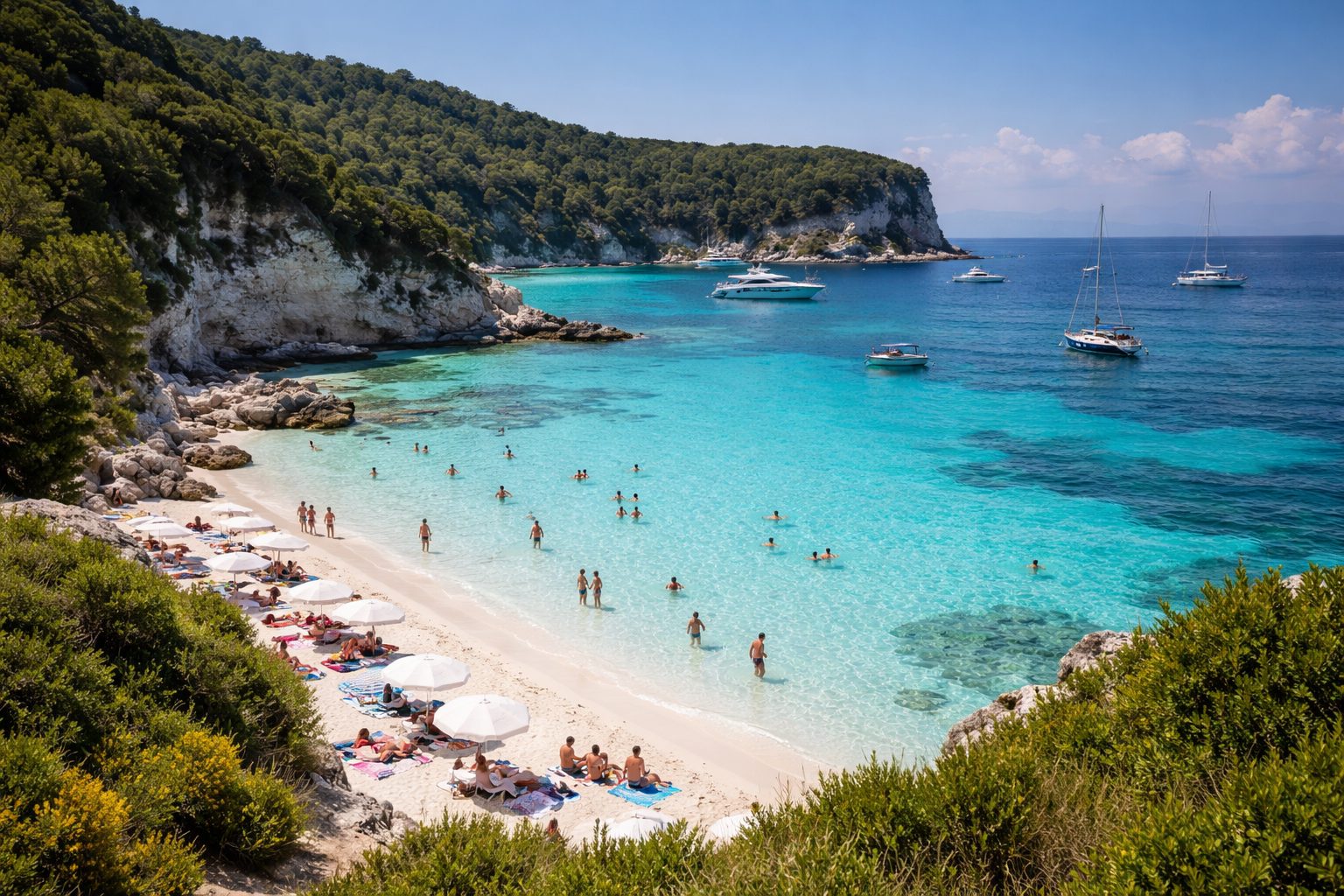
Antipaxos is a tiny island just south of Paxos, and between the two of them they contain some of the finest water in the Ionian Sea. Voutoumi is the more celebrated of the two main beaches on Antipaxos, though Vrika gives it close competition.
The water color is what makes Voutoumi remarkable. The phrase “Caribbean blue” is overused in travel writing but it applies here genuinely. The sand is white and fine, the bay is sheltered, and the vines on the slopes above it produce a local wine that the island is quietly proud of. It gets visited on day trips from Paxos and Corfu, but Antipaxos has very limited accommodation so overnight visitors are rare. That means afternoons after the boats leave feel peaceful in a way that’s hard to find elsewhere.
9. Simos Beach, Elafonisos
Elafonisos is a small island just off the southern Peloponnese, connected to the mainland by a five-minute ferry. Simos Beach is a double beach, two sandy stretches divided by a narrow sandy ridge, with shallow sheltered water on both sides. The sand is very fine and very pale. The whole setup feels almost like a Caribbean beach transplanted into Greece.
It gets quite crowded in August because it’s one of the closer quality beaches to Athens that doesn’t require a long ferry or flight. If you can go in June or September, the difference is significant. The island itself has a village with tavernas and a few accommodation options, making it viable for a short stay rather than just a day trip.
10. Koukounaries Beach, Skiathos
Skiathos has around 60 beaches, which is remarkable for a relatively small island. Koukounaries is the most famous of them, a long arc of golden sand backed by a pine forest and a lagoon. The pine trees provide natural shade, which is something genuinely rare on Greek beaches.
The beach is well organized with sunbeds, water sports, beach bars, and a laid-back atmosphere. It gets busy because it’s accessible and good, but it’s large enough to absorb the crowds better than smaller beaches would. The combination of trees, sand (rather than pebbles), calm water, and nearby facilities makes it one of the most complete beach experiences in the Sporades islands.
Comparison of the Best Beaches in Greece
| Beach | Island | Sand/Pebbles | Accessibility | Crowds | Best For |
|---|---|---|---|---|---|
| Navagio | Zakynthos | White pebbles | Boat only | High | Photography, day trips |
| Elafonissi | Crete | Pink-tinted sand | Car/bus | Very high | Families, wading |
| Myrtos | Kefalonia | White pebbles | Car | Moderate-high | Scenery, swimming |
| Balos Lagoon | Crete | White sand | Boat or car+walk | Very high | Lagoon, snorkeling |
| Porto Katsiki | Lefkada | White pebbles | Stairs | Moderate | Drama, swimming |
| Agios Prokopios | Naxos | Fine white sand | Car/walk | Moderate | Families, long stays |
| Lalaria | Skiathos | White oval pebbles | Boat only | Moderate | Swimming, scenery |
| Voutoumi | Antipaxos | White sand | Boat only | Low-moderate | Romance, peace |
| Simos | Elafonisos | Fine white sand | Ferry+walk | High in Aug | Families, day trips |
| Koukounaries | Skiathos | Golden sand | Car/bus | High | All-round experience |
Family-Friendly Beaches
For families with small children, the priorities shift. You want shallow entry, calm water, some shade, and facilities within reach. The best options from this list are:
- Elafonissi: The shallow lagoon is perfect for small kids. The water barely reaches waist height for a long distance from shore.
- Agios Prokopios: Calm water, long beach, and enough infrastructure to make a full day comfortable.
- Simos: Two beaches with sheltered water and a manageable scale.
- Koukounaries: Pine shade, golden sand, and a full range of facilities.
What to look for in a family beach beyond this list: calm water (sheltered bays over open-sea beaches), sandy rather than pebbled entry, access to fresh water and food nearby, and some toilet facilities. In Greece, the flag system (Blue Flag designation) is a useful quick indicator of cleanliness and organization.
Romantic Beaches
Some beaches suit couples far better than groups or families. Seclusion, atmosphere, and beauty all matter here.
- Voutoumi, Antipaxos: The afternoon light on the water, a glass of local wine, and very few people. Hard to beat.
- Lalaria, Skiathos: The rock arch, the luminous pebbles, the deep blue water. Visually arresting in a quiet way.
- Navagio, Zakynthos: Best early morning when the boats haven’t arrived. The enclosing cliffs create an extraordinary sense of isolation.
- Porto Katsiki, Lefkada: The drama of the cliffs and the effort of getting there gives it a special quality.
Timing matters enormously for romantic beaches. The same beach that feels transcendent at 8am or 6pm can feel like a bus station at noon in August. Plan accordingly.
Adventure Beaches
Some beaches are worth visiting not just for lying on but for what they let you do in and around the water.
- Navagio: The cliffs above the beach can be explored on foot from above, and the water is excellent for snorkeling around the shipwreck.
- Balos: Sea kayaking around the Gramvousa Peninsula is exceptional. The peninsula itself has a Venetian castle worth visiting.
- Myrtos: The deep water and strong, clear visibility makes it popular with scuba divers who base themselves in Argostoli.
- Lalaria: Cliff jumping from the rocks at the edges of the beach, if that’s your thing. The water depth accommodates it safely.
Practical Tips for Visiting the Best Beaches in Greece
Best Time to Visit
The honest answer is that the best months for beaches in Greece are May, June, and September. Here’s why:
- May: Water is a touch cool but beaches are empty, prices are low, and everything is green.
- June: Water warms up, most facilities open, crowds are still manageable.
- July and August: Peak heat, peak crowds, peak prices. Still beautiful, but you’ll share it with everyone else.
- September: Arguably the best month. The water is at its warmest, the crowds thin out noticeably after the first week, and the light is extraordinary.
October is pleasant on Crete and the Dodecanese which have warmer weather than the northern islands. Corfu and the Ionian islands get off-season rain from October onwards.
If you absolutely must go in August, target the boat-access beaches early in the morning, and aim for the northern Aegean islands (Thassos, Samothrace) which stay cooler and attract fewer international tourists.
Essential Packing List
- High-SPF sunscreen, ideally reef-safe. Greek sun in summer is genuinely intense.
- Reef shoes or water shoes for pebble beaches. Myrtos and Lalaria in particular are uncomfortable barefoot.
- Portable shade. Many Greek beaches don’t have natural shade and you may not always want paid sunbeds.
- Reusable water bottle. Plastic waste on beaches is an ongoing issue and you’ll hydrate better with more water than you think you need.
- Dry bag for boat trips to places like Navagio or Balos.
- Microfiber towel if you’re moving between locations. They dry fast and pack small.
- Cash. Beach tavernas and boat operators often don’t take cards, particularly on smaller islands.
Transportation Options
Getting to the best beaches in greece often requires combining different transport modes. Here’s how to think about it:
- Rental car: The most flexible option for island driving. Essential for places like Myrtos, Elafonissi, and Agios Prokopios. Expect roads to narrow dramatically on smaller islands.
- Local buses (KTEL): Surprisingly good on the larger islands. Crete has an extensive network that reaches the main beach destinations.
- Boat trips: Necessary for Navagio, Lalaria, and Balos (by preference). Organized from harbor towns, typically morning departures.
- Scooters and ATVs: Popular on smaller islands. Be realistic about your experience level. Greek mountain roads are not forgiving.
- Ferries: Interisland travel uses the ferry network. Book ahead for August; cabins sell out quickly on overnight routes.
- Taxis: Useful in a pinch but expensive over distance and not always available outside towns.
For beaches that require a boat, check departure times before you commit to a schedule. Many boat trips from harbor towns leave at 10am and return by 5pm, which means you don’t control when you arrive or leave.
Frequently Asked Questions about the Best Beaches in Greece
What are the best beach activities in Greece?
Swimming and snorkeling are the obvious ones, and the visibility in the Aegean and Ionian can be genuinely extraordinary. Beyond that, sea kayaking is excellent around islands like Kefalonia, Lefkada, and the Halkidiki peninsula. Windsurfing and kitesurfing are popular where the meltemi blows regularly, particularly on Naxos, Paros, and Rhodes. Sailing charters let you access beaches that are otherwise difficult to reach without your own boat.
Are the beaches in Greece family-friendly?
Many of them are, but not all by default. The best family beaches tend to have shallow, calm water, sandy rather than pebbled entry, and nearby facilities. Elafonissi, Agios Prokopios, Koukounaries, and Simos all fit this description well. Beaches like Myrtos and Lalaria are better suited to stronger swimmers because the water deepens quickly and the pebble entry can be tricky for small children.
How to get to the best beaches in Greece?
It depends almost entirely on which beach and which island you’re targeting. Most major islands are reachable by flight or ferry from Athens or Thessaloniki. Once on the island, a combination of rental car, local bus, and organized boat trips covers most situations. Boat-only beaches like Navagio and Lalaria require joining a tour or chartering a private boat from the nearest harbor.
What should I know about beach safety in Greece?
Most organized beaches fly the blue flag and have regular monitoring. The main risks are sunburn (the UV intensity in summer is higher than most northern European visitors expect), dehydration, and jellyfish in some areas (the Ionian in particular can have jellyfish influxes in late summer). Currents are rarely dangerous on sheltered beaches, but open-coast beaches and cliff-backed spots like Myrtos can have stronger water movement. Always check if there’s a lifeguard on duty. If there isn’t, assess the conditions yourself before going in.
Are there any hidden gems among the beaches in Greece?
Greece still has genuinely undiscovered corners, particularly in the northern Aegean islands. Ikaria, Samothrace, and Lemnos all have excellent beaches with very little international visitor pressure. On more traveled islands, the hidden beaches are usually the ones requiring the longest walk or the most awkward boat angle. On Kefalonia, beaches like Xi and Antisamos are quieter alternatives to Myrtos. On Naxos, walking south from Plaka opens up progressively emptier stretches of coast. The short answer is yes, they exist, and the effort to find them is almost always worth it.
The best beaches in greece reward curiosity. The famous ones are famous for good reasons, but the ones you find by asking a local or taking a wrong turn on a dirt road often stay with you longest. Go in with a plan, but leave room to abandon it when something unexpected appears around a headland. That’s usually where the real discoveries happen.