Turkey contains more ancient ruins than almost any country on earth, and the density and quality of what’s here consistently surprises even experienced travelers. The country sits at the center of multiple ancient civilizations: Hittite, Phrygian, Lydian, Greek, Persian, Hellenistic, Roman, Byzantine, Seljuk, and Ottoman cultures have all left physical evidence in this landscape. Turkey ancient ruins aren’t a single chapter of history; they’re an entire library.
What makes the ruins here distinctive is their variety and their state of preservation. Ephesus gives you an almost complete picture of Roman urban life. Göbekli Tepe pushes back the timeline of human civilization by thousands of years. Troy offers a connection to mythology so deep it shaped the foundation of Western literature. And Cappadocia’s underground cities and rock-cut churches represent a completely different chapter of human adaptation and faith.
Introduction to Turkey Ancient Ruins
When people think of ancient ruins, Greece or Italy usually comes to mind first. But Turkey’s archaeological heritage is at least as rich and in some respects more extensive. The western coast of Anatolia (what is now Turkey) was one of the most urbanized and culturally active parts of the ancient Greek and Roman world. Cities like Ephesus, Pergamon, Miletus, Priene, and Halicarnassus were major centers of art, commerce, philosophy, and medicine.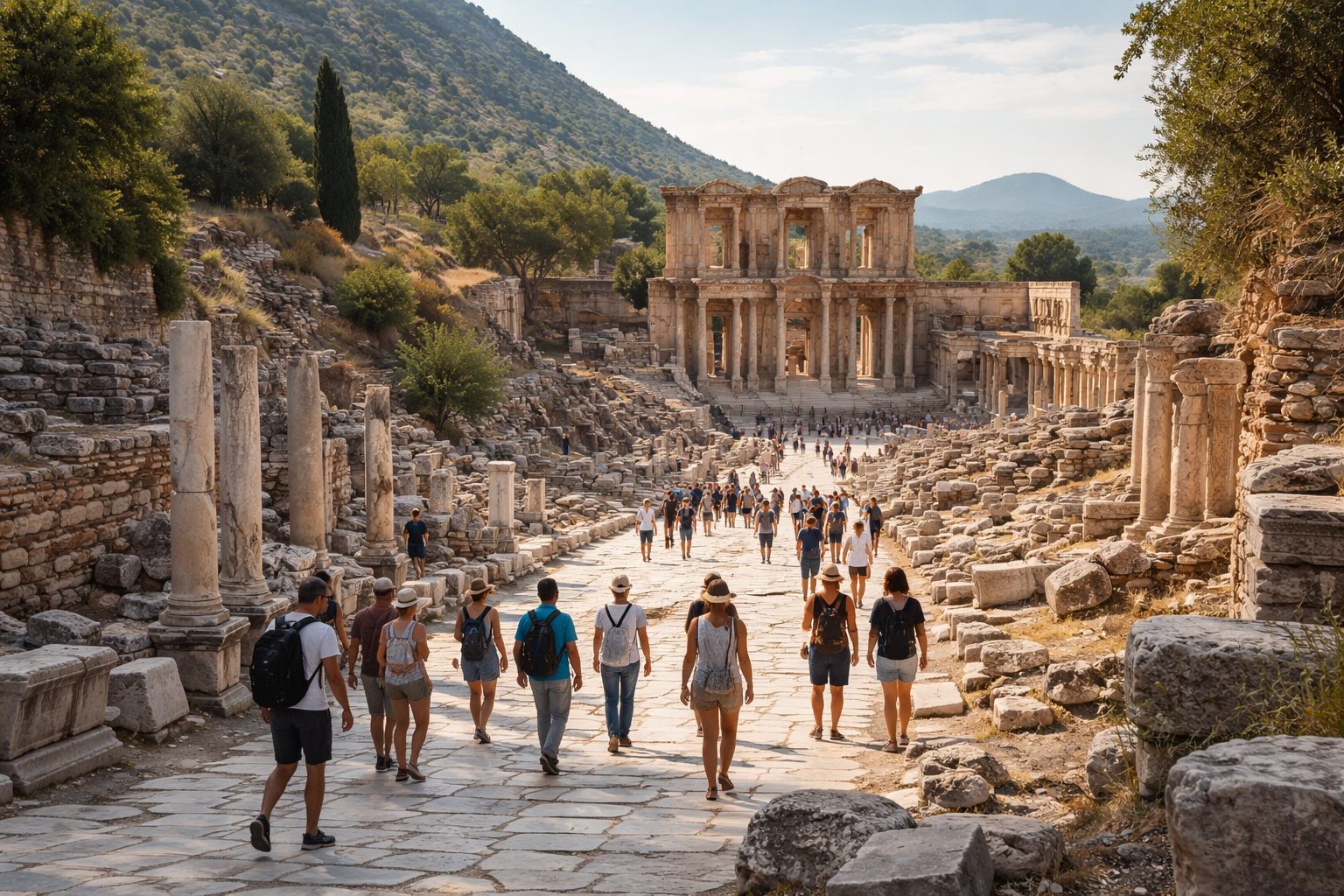
The interior of Anatolia has its own distinct archaeological record: the Hittite Empire, centered at Hattusha near modern Bogazköy, was one of the great powers of the ancient world that signed what may be the first known peace treaty with Egypt. The region of Phrygia produced the legendary King Midas and contributed to the cultural bridge between East and West.
Turkey ancient ruins are a product of this history: layer upon layer of occupation, building, destruction, and rebuilding across five millennia of recorded civilization, concentrated in a country that remains actively excavating new discoveries every year.
Historical Significance of Turkey Ancient Ruins
The ruins of Turkey are significant not just as archaeological record but as living cultural heritage with ongoing relevance.
Göbekli Tepe, discovered in the 1990s and still being excavated, has fundamentally changed the understanding of human civilization. The site pushes back evidence of organized ritual and monumental architecture by several thousand years beyond what was previously known. The temples here, built 11,000-12,000 years ago, predate the development of agriculture, which forces a reconsideration of how and why civilizations develop.
Ephesus represents something different: the most complete surviving example of a major Roman city, preserved in sufficient detail that walking its streets gives a tangible sense of what urban Roman life was like. The Library of Celsus alone, with its two-story colonnaded facade, is an architectural achievement that would be remarkable in any era.
Troy carries a different kind of significance: the connection between the physical place and the foundational texts of Western literature (Homer’s Iliad and Odyssey) creates a unique bridge between archaeology and cultural mythology that generates a different quality of response in most visitors.
And Cappadocia’s underground cities represent human ingenuity under pressure: communities carving entire functional cities, with ventilation systems, livestock areas, storage, and sleeping quarters, deep into the volcanic rock to escape invasion.
Major Ancient Ruins in Turkey
Göbekli Tepe: The World’s Oldest Temple
Göbekli Tepe, near the city of Şanlıurfa in southeastern Turkey, is the most historically significant archaeological site in Turkey and one of the most important in the world. Dating to approximately 9,500-8,000 BCE, it predates Stonehenge by 6,000 years and the pyramids of Egypt by 7,000 years.
The site consists of multiple circular enclosures built from T-shaped limestone pillars, the largest of which weigh up to 50 tons. The pillars are carved with remarkable bas-relief figures: foxes, scorpions, snakes, vultures, cranes, and human-like forms. The sophistication of the carving and the organizational complexity required to build the structures suggests a level of social organization that conventional models of pre-agricultural societies didn’t predict.
What makes Göbekli Tepe specifically revolutionary is the evidence it provides that monumental ritual architecture preceded agriculture, not the other way around. The site appears to have been a pilgrimage center or ceremonial gathering place, not a settlement, and it may have been the social driver that eventually led to the development of agriculture as a way to feed large seasonal gatherings.
The site is partially covered by a modern shelter to protect the excavations, and only a fraction of the total area has been excavated. Visiting gives you access to several exposed enclosures and a museum that contextualizes the finds. It’s an essential stop for anyone with serious interest in human prehistory.
Practical notes:
* Located about 15km northeast of Şanlıurfa
* The on-site museum and shelter make it a comfortable all-weather visit
* Guide is recommended for full context; the site itself has limited in-situ signage
* Allow 2-3 hours for a proper visit
Ephesus: A Glimpse into Roman Life
Ephesus, near the modern town of Selçuk in western Turkey, is the most visited ancient site in Turkey and justifiably so. At its peak in the 1st and 2nd centuries CE, it was the capital of the Roman province of Asia and had a population of around 250,000, making it one of the largest cities in the ancient world.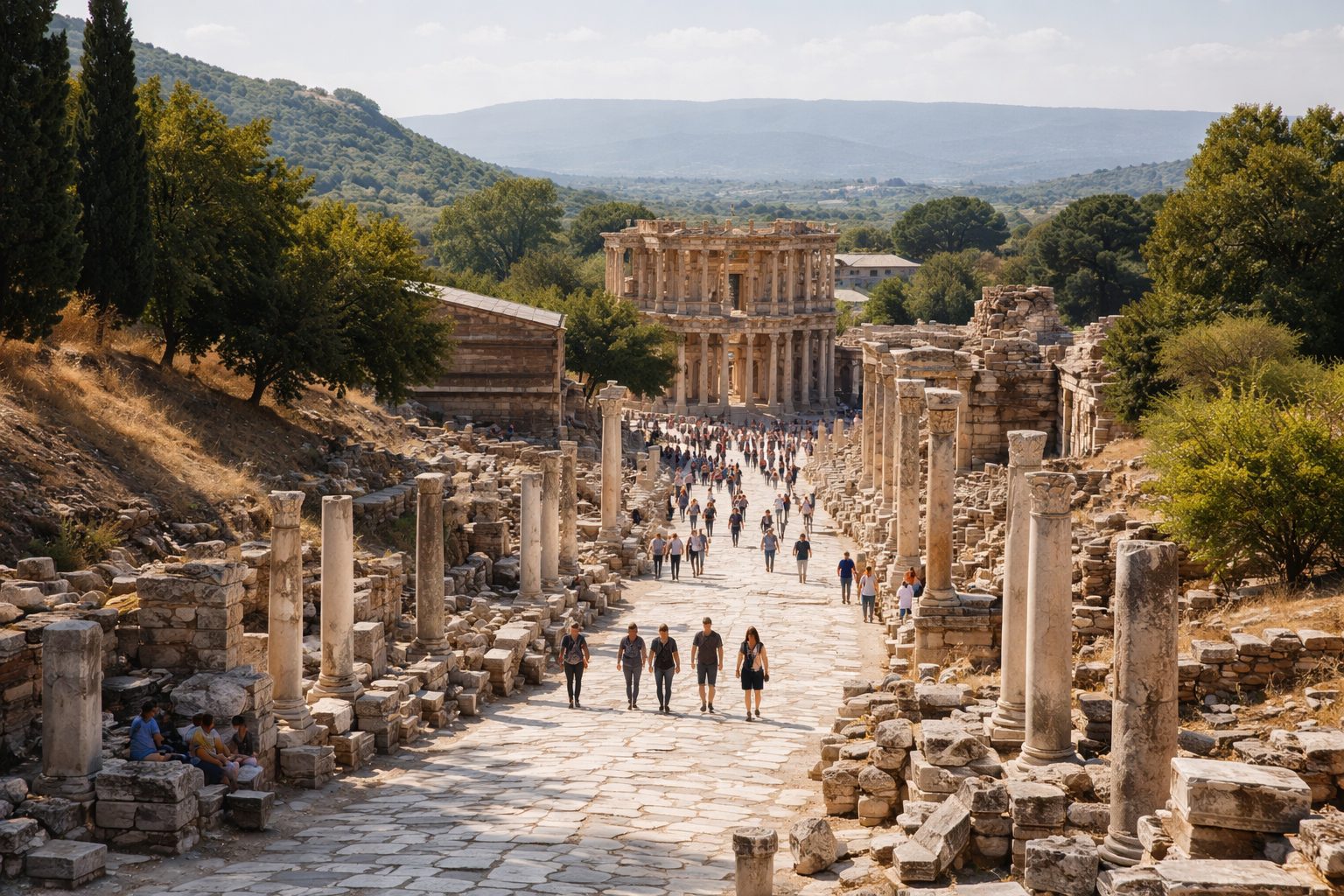
What survives gives an extraordinarily complete picture of Roman urban life:
The Library of Celsus was built in the early 2nd century CE as a mausoleum for Gaius Julius Celsus and as a functioning library that held an estimated 12,000 scrolls. The two-story facade, with its Corinthian columns and four female statues representing Sophia (wisdom), Episteme (knowledge), Ennoia (intelligence), and Arete (virtue), was reconstructed by archaeologists in the 1970s and is now one of the most photographed ancient facades in the world.
The Great Theatre, cut into the hillside of Mount Panayır, seated 25,000 people and remains largely intact. The Acts of the Apostles records Paul preaching here; the theatre was the center of public life in the city.
The Terraced Houses, an expensive separate ticket but worth it, allow you to walk through the well-preserved interiors of wealthy Roman houses with intact floor mosaics, wall frescoes, running water, and underfloor heating. These give the most intimate picture of Roman domestic life of anything I’ve seen at Turkey ancient ruins sites.
Curetes Street, the main colonnade, connects the library to the upper city. The complete street, with its column bases, pavement, fountains, and flanking buildings, gives the clearest sense of what a Roman city street would have felt like.
Tips for visiting:
* Arrive at opening time (8 AM) to beat crowds and heat
* Buy the Terraced Houses ticket; it’s an extra cost but genuinely exceptional
* Budget 3-4 hours minimum
* The upper gate (Magnesian Gate) entrance is less busy than the lower entrance
* Combine with the Ephesus Museum in Selçuk for context on finds from the site
Troy: The Legendary City
Troy (Truva), near the town of Çanakkale at the entrance to the Dardanelles, is one of the most evocative of Turkey ancient ruins sites because of its literary significance. The possibility that the Trojan War of Homer’s Iliad was based on real events at this real place has driven human imagination for over 2,500 years.
The reality of the site is both more complex and in some ways more interesting than the myth. There isn’t one Troy but at least nine main settlement layers at the site, from around 3,000 BCE to Roman times. The layer archaeologists associate with the Late Bronze Age Troy (Troy VI or VII), the period most consistent with a Homeric Troy, shows evidence of destruction, possibly by fire and conflict, in approximately 1180 BCE.
The site has a large wooden horse (a tourist addition), reconstructed walls from different periods, and a good on-site museum. It takes about 2 hours to walk the site with careful attention to the interpretation boards.
The real significance for most visitors is the feeling of standing in a place so woven into cultural memory. Whether or not the wooden horse or Helen existed, this was a real city of the Bronze Age, inhabited for thousands of years, and standing in its ruins connects you to the root of the Western imaginative tradition.
Troy is usually visited in combination with the WWI battlefields of Gallipoli nearby, which together make a powerful day in the Çanakkale region.
Hierapolis: The Ancient Spa Town
Hierapolis, above the famous white terraces of Pamukkale, was founded as a spa city in the 2nd century BCE and developed by the Romans into a significant city of perhaps 100,000 people. The thermal springs that form the Pamukkale terraces were the basis of the city’s economy and attraction: the water was considered sacred and healing.
The ruins cover a large area and include:
- The Antique Pool: The thermal springs still flow through this pool, which is strewn with submerged ancient marble columns. Swimming in this pool, surrounded by ancient remains, is one of the stranger and more memorable things to do at Turkey ancient ruins.
- The Theatre: A very well-preserved 2nd-century Roman theatre with an ornate stage building, set above the city with views across the plain below.
- The Necropolis: One of the largest ancient cemeteries in the world, stretching for nearly 2 kilometers outside the city walls, with sarcophagi in various styles spanning centuries of occupation.
- The Martyrium of St Philip: A 5th-century octagonal structure marking the site where the apostle Philip is believed to have been martyred.
- The Plutonion: A cave from which volcanic gases (carbon dioxide) emerged; in antiquity it was seen as an entrance to the underworld and used for ritual animal sacrifice (animals were lowered into the gas and killed).
Hierapolis works best as part of a Pamukkale combination that includes the white terraces and the thermal pool.
Cappadocia: Rock-Cut Churches and Underground Cities
Cappadocia’s connection to Turkey ancient ruins is less about classical civilization and more about Byzantine-era adaptation: the volcanic landscape of central Anatolia was exploited by early Christian and then later communities to create a unique underground and rock-cut civilization.
The Göreme Open Air Museum collects the finest rock-cut churches in a UNESCO-designated zone. The dark church (Karanlık Kilise) has the best-preserved 11th-century Byzantine frescoes in the country, their colors vivid because the church was poorly lit (hence the name) and protected from light-damage.
The underground cities are in a different category entirely. Derinkuyu, the deepest excavated at around 85 meters below the surface, could reportedly shelter up to 20,000 people along with their livestock. The city had stables, wine presses, a church, a school, and ventilation shafts. The engineering is extraordinary for any era. It’s believed to have served as refuge during Arab raids in the 7th-9th centuries CE.
Kaymakli is smaller than Derinkuyu but has better visitor infrastructure. Both are worth visiting for the experience of the underground scale, though if you’re claustrophobic, the narrow passages can be challenging.
The Ihlara Valley contains over 100 rock-cut churches carved into the walls of a gorge, spread across a 14km walking trail. Less visited than the Göreme sites, it offers a more immersive and physically active way to encounter this chapter of Turkey ancient ruins.
Architectural Styles of Turkey Ancient Ruins
The diversity of architectural traditions visible in Turkey’s ruins reflects the succession of civilizations that built here.
Pre-Classical (before 500 BCE):
* Hittite stone construction at Hattusha, with massive carved gateways featuring lion and sphinx sculptures
* Lydian and Phrygian tumulus tombs, mounded burial structures
* Early Iron Age construction at various Anatolian sites
Classical Greek:
* Orders (Doric, Ionic, Corinthian) applied to temple construction
* Theatre design evolved to maximize acoustic performance
* City planning with grids, agoras, and civic buildings
Hellenistic (after Alexander):
* More elaborately decorated versions of classical forms
* Larger scale ambition in public buildings
* The Pergamon school of sculpture representing dynamic, emotional forms
Roman:
* Arches and concrete enabling new structural possibilities
* The theatre and amphitheatre as standard urban features
* Large-scale infrastructure: aqueducts, roads, harbors
* Terraced housing with sophisticated interior finishing
Byzantine:
* Domed church architecture derived from Roman precedents
* Mosaic art as principal decorative medium
* Rock-cut forms adapted to volcanic geography in Cappadocia
The Role of Ancient Ruins in Turkish Culture
Turkey ancient ruins are not uniformly embraced in Turkish national consciousness. The Ottoman tradition and subsequent Turkish nationalism has had a complex relationship with the pre-Islamic civilizations whose ruins litter Anatolian soil.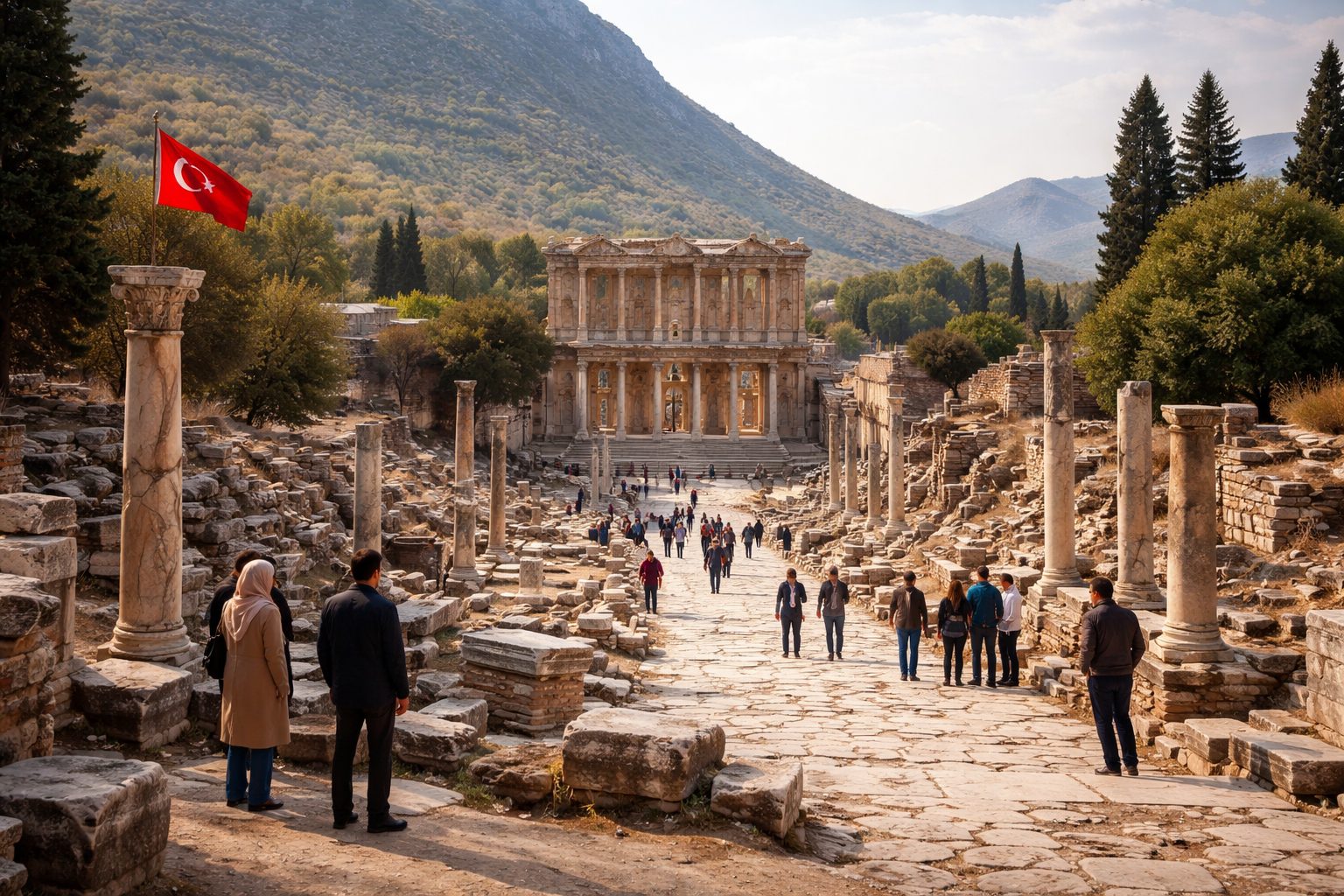
In practice, Turkey has invested substantially in archaeological excavation and site management. Turkish universities conduct significant archaeological research. The government’s culture ministry funds conservation and site development. The Ephesus Museum in Selçuk, the Anatolian Civilizations Museum in Ankara, and the Istanbul Archaeological Museums are all world-class institutions.
For contemporary Turkish people, the ruins have become a source of national pride precisely because they demonstrate the depth and richness of the land’s history, even if the civilizations that built them weren’t Turkic. The Anatolian Civilizations Museum in Ankara, with its comprehensive collection from prehistoric through Hittite, Phrygian, and Urartu periods, is particularly interesting for this framing.
Visiting Turkey Ancient Ruins: What to Expect
Best Time to Visit Turkey Ancient Ruins
The optimal visiting seasons for most Turkey ancient ruins are spring (April-May) and autumn (September-October). The reasons are consistent:
- Temperature: Most major sites are in western or southern Turkey where summer temperatures regularly exceed 35°C. Walking marble-paved ruins for 3-4 hours in July midday heat is genuinely punishing.
- Crowds: Summer brings the largest numbers of visitors. Ephesus in August with cruise ship groups is a different experience from Ephesus in early May.
- Light: The lower angle light of spring and autumn mornings and evenings is better for both photography and the visual experience of the ruins.
For Göbekli Tepe in the southeast, this advice applies even more strongly: the region is extremely hot in summer.
For Cappadocia, spring and autumn are also optimal, though the site is visit-worthy year-round.
Entry Fees and Accessibility
Entry fees are charged at all major Turkey ancient ruins sites. Fees for foreign visitors are higher than those for Turkish citizens. As a general guide (fees change; verify current rates):
- Ephesus: Higher-tier entry fee (worth every lira)
- Ephesus Terraced Houses: Additional fee on top of main entry
- Pamukkale/Hierapolis: Moderate fee, includes both terraces and site
- Cappadocia Göreme Open Air Museum: Moderate fee; Dark Church additional
- Göbekli Tepe: Moderate entry fee
- Troy: Lower-tier entry fee
A MüzeKart (museum card) purchased at major sites provides unlimited entry to state museums and sites for a set period and can represent good value for travelers visiting multiple major sites.
Accessibility varies: Ephesus’s lower city and Göreme’s main churches are wheelchair accessible. Many sites involve significant uneven terrain. Underground cities at Cappadocia are not accessible for mobility-impaired visitors.
Preservation Efforts for Turkey Ancient Ruins
Turkey has made significant investments in preserving its ancient heritage, though challenges remain at the scale of what requires conservation.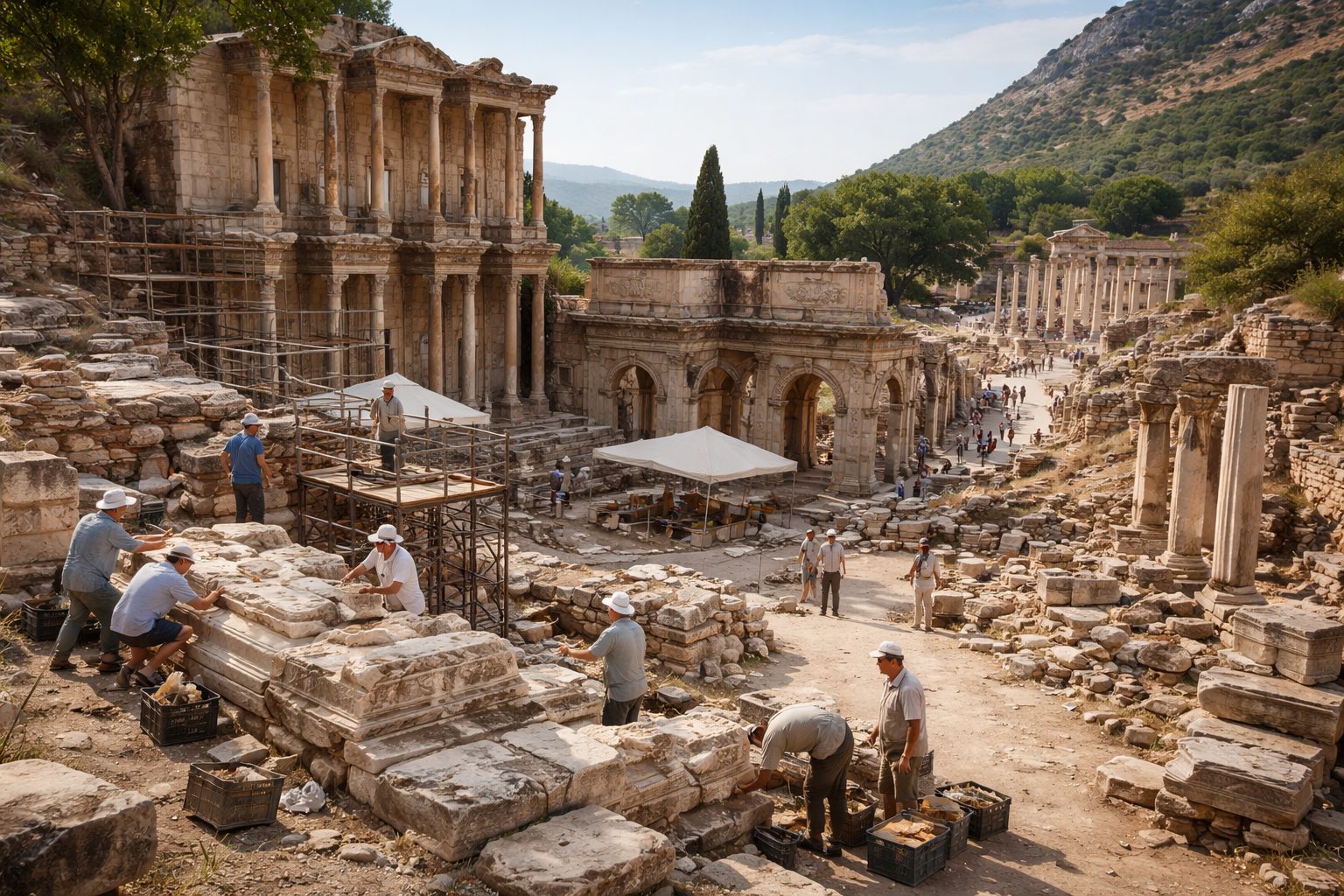
The Ephesus reconstruction work, including the famous Library of Celsus restoration and the ongoing Austrian Archaeological Institute excavation program, represents one of the most sustained archaeological efforts at any site globally.
UNESCO World Heritage designation has driven conservation investment at several sites. The process of applying for and maintaining designation requires measurable conservation standards.
Challenges include:
* Climate change effects on sites (more intense rain events, heat expansion/contraction of stonework)
* Tourism impact, particularly at highly visited sites
* Urban development pressure around some sites
* Illegal treasure hunting at less monitored rural sites
The Göbekli Tepe shelter construction represents a significant preservation investment, protecting the exposed excavations from weather damage while allowing visitor access.
Comparisons of Ancient Ruins in Turkey vs. Greece
This is a question travelers frequently ask, and the honest answer is: they’re different rather than better or worse.
| Aspect | Turkey Ancient Ruins | Greece Ancient Ruins |
|---|---|---|
| Variety | Greater range of civilizations | More focused classical Greek tradition |
| Preservation | Ephesus and others very well preserved | Acropolis exceptional, others variable |
| Crowds | Lower overall (Ephesus excepted) | Athens sites very crowded in summer |
| Cost | Generally lower entry and accommodation | Higher than Turkey overall |
| Context | Multiple civilizations in same area | Primarily Greek with Roman overlay |
| Underground sites | Unique (Cappadocia) | None comparable |
| Prehistory | Göbekli Tepe unmatched | Notable but younger Minoan sites |
| Museum collections | Strong (Ankara, Istanbul, Selçuk) | Outstanding (Athens National Museum) |
For travelers who have already visited Greece, Turkey’s ruins offer something complementary and in many ways more varied. For a first encounter with ancient Mediterranean civilization, either country delivers. Ideally, visit both.
Guided Tours of Turkey Ancient Ruins
Guided tours are particularly valuable at Turkish ruins because the context that a knowledgeable guide provides transforms the experience from viewing old stones to understanding what you’re seeing.
The options range from small-group tours operated by specialized archaeological travel companies to private guide hire at specific sites to general package tours that include ruins as part of a broader Turkey itinerary.
For serious archaeological interest, look for tours led by archaeologists or historians rather than general travel guides. Several operators cater specifically to this market.
For individual sites, hiring a local licensed guide at the entrance (available at Ephesus, Cappadocia, Pamukkale, and other major sites) is an option that provides good value and supports local expertise. Ask for credentials; licensed guides in Turkey have completed specific training programs.
Tips for Exploring Turkey Ancient Ruins
-
Start early: Most outdoor sites are best visited in the first two hours after opening, before tour buses arrive and before the heat builds.
-
Invest in good footwear: You’ll be walking on uneven marble, paving stones, and sometimes rough terrain for hours. Comfortable, sturdy shoes are essential.
-
Carry water and sun protection: Turkey in summer is genuinely hot. Dehydration and sunburn are real risks at exposed sites.
-
Read about sites beforehand: Even brief preparation (Wikipedia articles on Ephesus or Hierapolis) transforms what you see from ruins into a comprehensible world.
-
Budget more time than you think: Sites like Ephesus, Antalya’s Aspendos, or the Cappadocia valley network take more time to appreciate properly than most tour itineraries allow.
-
Visit in sequence: If possible, plan a route that puts historical sites in approximate chronological order, which helps build a sense of how civilizations built on each other.
-
Check seasonal closures: Some minor sites and specific areas within larger sites may close for ongoing excavation or restoration.
Frequently Asked Questions about Turkey Ancient Ruins
What are the must-visit ancient ruins in Turkey?
The non-negotiable five, in my assessment: Ephesus for Roman urbanism; Göbekli Tepe for prehistory significance; Hierapolis/Pamukkale for the combination of ruins and natural spectacle; Cappadocia’s rock churches and underground cities for Byzantine heritage; and either Troy for its literary connections or Hattusha (the Hittite capital near Boğazkale) for pre-classical significance. Each represents a different era and type of civilization.
How to get to Turkey’s ancient ruins?
Ephesus: Fly to İzmir, take the train to Selçuk (approximately 1 hour), then taxi or dolmuş (15 minutes). Alternatively, day trips from Bodrum or Kuşadası.
Göbekli Tepe: Fly to Şanlıurfa or Gaziantep, then taxi (about 30 minutes from Şanlıurfa).
Pamukkale/Hierapolis: Fly to Denizli or take the train from İzmir, then dolmuş from Denizli to Pamukkale village.
Cappadocia: Fly to Kayseri or Nevşehir Kapadokya airports, then transfer to Göreme.
Troy: Bus from Çanakkale city (about 30km, frequent dolmuş service).
Are there any guided tours available for ancient ruins?
Yes, extensively. Every major site has licensed local guides available for hire. Multiple specialist operators offer multi-day tours covering several sites. Day trip tours from İzmir to Ephesus, from Istanbul to Troy, and from Nevşehir to Cappadocia sites are all widely available through hotel concierges and online booking platforms.
What is the best time of year to visit Turkey’s ancient sites?
April-May is the consistent recommendation: mild temperatures, lower crowds than summer, and beautiful landscape conditions. September-October is equally good and allows for warm sea swimming if combining with coastal travel. Avoid July-August for outdoor sites if possible, particularly Ephesus; the combination of summer heat and peak tourist crowds makes for an uncomfortable experience.
Are there accommodations near ancient ruins in Turkey?
Yes, at all major sites. Selçuk town near Ephesus has a good range of guesthouses and small hotels within walking distance of the ruins. Pamukkale village sits directly at the base of the Hierapolis site. Göreme and other Cappadocia villages offer accommodation from budget guesthouses to luxury cave hotels within minutes of the main sites. For Göbekli Tepe, Şanlıurfa city has good accommodation options.