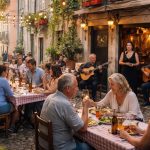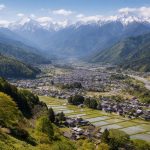
When people start planning a trip to the Iberian Peninsula, the question of portugal vs spain almost always comes up. Both countries share a peninsula, a warm climate, and centuries of intertwined history, yet they feel remarkably different the moment you step off the plane. I’ve spent considerable time in both, and I can tell you that the choice is never as straightforward as it might seem. This guide walks through every major angle of the comparison so you can make an informed decision, whether you’re visiting, relocating, or just curious about how these two neighbors stack up.
Overview of Portugal and Spain
Geographic Location and Borders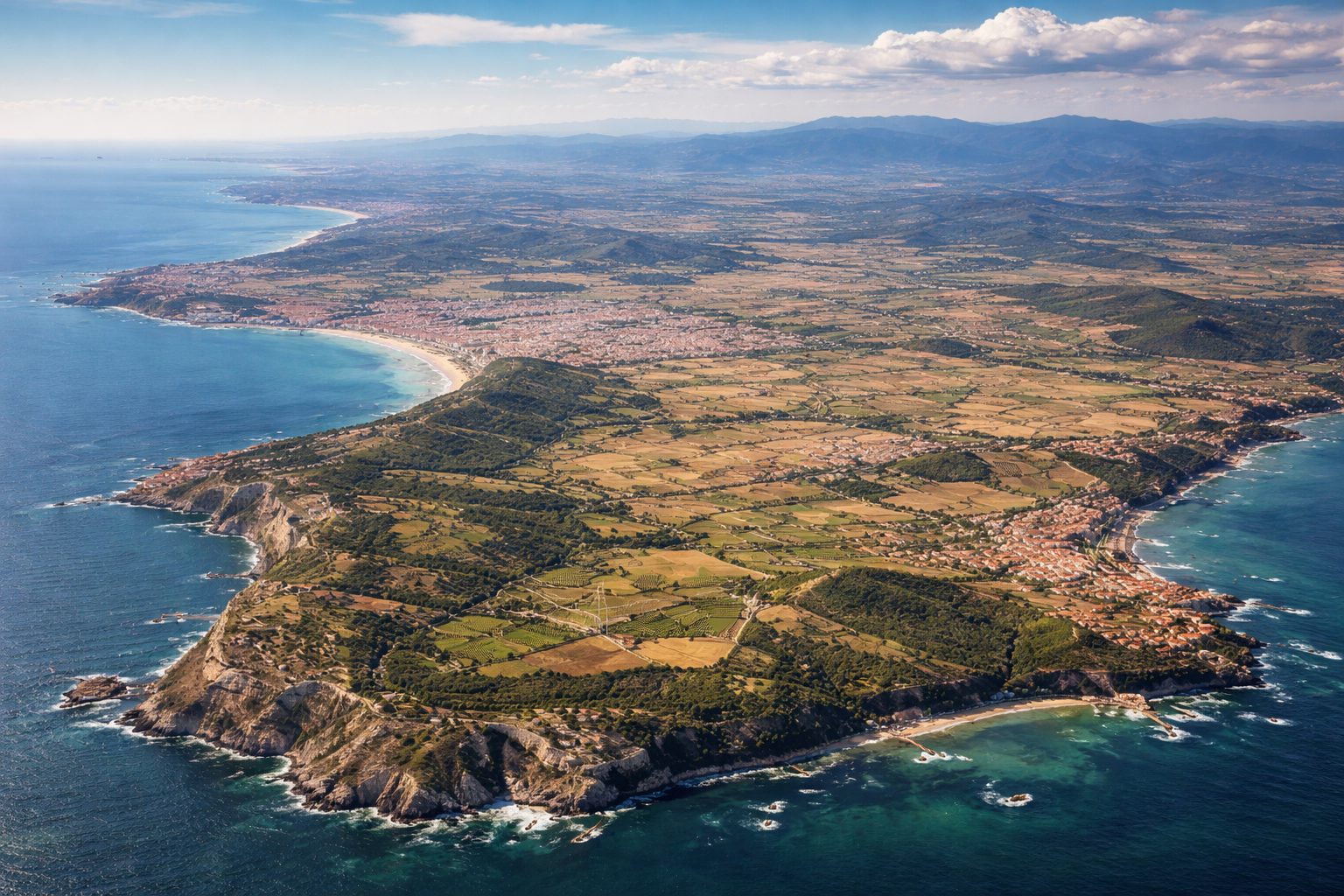
Portugal and Spain share the Iberian Peninsula in southwestern Europe, but their geographic footprints are very different. Spain is the larger of the two by a significant margin, covering roughly 505,990 square kilometers, which makes it the second-largest country in the European Union. Portugal, by contrast, occupies about 92,212 square kilometers on the western edge of the peninsula, with the Atlantic Ocean forming its entire western and southern coast.
Portugal borders Spain to the north and east and has no other land neighbors. Spain, on the other hand, borders France and Andorra to the north, Portugal to the west, and has small land borders with Gibraltar and Morocco in the south. This difference in size shapes nearly everything: how the countries govern themselves, how regional identities form, and how differently two people from different corners of each nation can feel from one another.
Historical Background
The history of these two nations is layered and sometimes turbulent. Portugal is one of the oldest nation-states in Europe, with borders that have remained largely unchanged since the 12th century. It built one of the world’s first global maritime empires, establishing colonies across Africa, Asia, and the Americas during the Age of Exploration. Figures like Vasco da Gama and Ferdinand Magellan sailed under Portuguese patronage and changed the world map.
Spain unified as a kingdom in 1492 with the marriage of Ferdinand and Isabella, and immediately launched its own era of conquest in the Americas. Both countries were once dominant colonial powers, and both experienced long periods of authoritarian rule in the 20th century. Portugal under Salazar and Spain under Franco remained dictatorships well into the 1970s, transitioning to democracy almost simultaneously. That shared modern political history gives both countries a similar democratic foundation while their older histories diverged dramatically.
Cultural Significance
Culturally, both nations punch well above their weight. Portugal gave the world fado music, a genre so emotionally distinctive it’s listed as UNESCO intangible cultural heritage. The Portuguese concept of “saudade,” a melancholic longing for something lost or distant, permeates literature, music, and everyday conversation in a way that’s genuinely unique.
Spain’s cultural exports are equally powerful: flamenco, bullfighting, Picasso, Cervantes, Dali, and the architectural genius of Gaudi. Spanish culture has a theatrical energy to it, an expressiveness that shows up in food, festivals, and social life. Both cultures place enormous importance on family, community, and food, but the emotional register of each is distinct. Portugal feels more introspective; Spain tends to be louder and more outwardly celebratory.
Tourism in Portugal vs Spain
Major Tourist Attractions in Portugal
Portugal’s most visited city is Lisbon, a hilly capital built on seven hills with tram lines, azulejo-tiled facades, and a relaxed energy that draws visitors from across Europe. The Belem Tower and Jeronimos Monastery are two of the finest examples of Manueline architecture in the world. Porto, Portugal’s second city, has become one of the continent’s most fashionable destinations, famous for its wine cellars, the Douro riverfront, and a gritty charm that resists over-polishing.
The Algarve in the south is Portugal’s beach powerhouse, with dramatic cliff formations, golden sands, and clear water that bring millions of tourists annually. The island of Madeira offers volcanic landscapes and lush greenery, while the Azores provide some of the most dramatic scenery in the Atlantic. Sintra, just outside Lisbon, feels like something out of a fairy tale, with palaces perched in mist-covered hills that genuinely take your breath away.
Major Tourist Attractions in Spain
Spain’s tourism infrastructure is enormous. Barcelona alone attracts tens of millions of visitors every year, drawn by the Sagrada Familia, Park Guell, Las Ramblas, and one of Europe’s most vibrant food and nightlife scenes. Madrid offers the Prado Museum, the Retiro Park, and a capital-city energy that’s cosmopolitan without feeling overwhelming.
Beyond the two major cities, Spain has an almost unfair range of destinations. The Alhambra in Granada is one of the most breathtaking pieces of Moorish architecture on earth. Seville’s cathedral and its historic center rival anything in Europe. San Sebastian is one of the world’s great food cities. The Camino de Santiago pilgrim route draws hundreds of thousands of walkers each year. The Balearic Islands and the Canary Islands offer beach and resort tourism on an enormous scale.
Comparing Natural Landscapes
In terms of natural variety, Spain has a clear numerical advantage simply because of its size. You can find high alpine terrain in the Pyrenees, volcanic islands off the African coast, dry desert landscapes in Almeria, green river valleys in Galicia, and flat cereal plains in Castile, all within the same country. The diversity is genuinely impressive.
Portugal is more compact, but its landscapes are still varied. The Douro Valley is one of Europe’s most beautiful wine regions. The Alentejo region has rolling plains covered in cork oak and olive trees. The Minho in the north is green and rainy, almost like Ireland. The Serra da Estrela offers Portugal’s only ski resort. And the coastline, both the Atlantic-exposed west and the calmer Algarve south, is consistently beautiful.
Culinary Differences: Portugal vs Spain
Traditional Portuguese Cuisine
Portuguese food is honest, hearty, and deeply connected to its maritime history. Bacalhau, salt cod, is the national obsession, and locals will tell you there are over 365 recipes for it, one for every day of the year. The truth is probably closer to a few dozen widely used preparations, but the passion for it is real. Grilled sardines, especially during Lisbon’s June festivals, are another institution.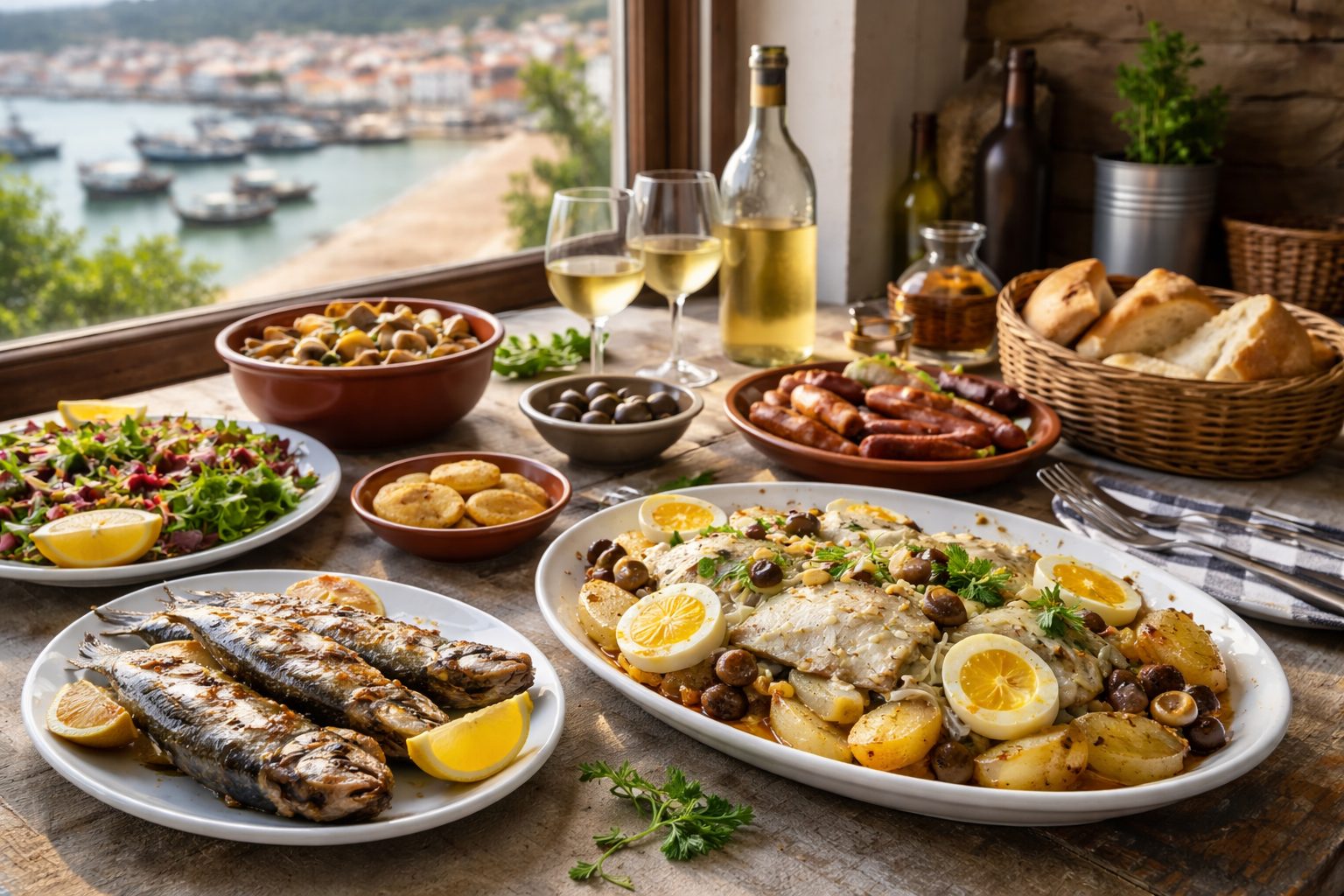
Piri piri chicken became globally famous through restaurant chains, but the original version, made with the small African bird’s eye chili brought back from the colonies, is properly spiced and eaten with crusty bread and simple salad. Pasteis de nata, the custard tarts sold in every pastelaria, are justifiably beloved. The original recipe from Belem is protected, but honestly excellent versions exist throughout the country.
Traditional Spanish Cuisine
Spanish cuisine varies more dramatically by region than Portuguese food does. Catalonia has its own distinct gastronomic tradition with dishes like pan con tomate and crema catalana. The Basque Country is home to some of Europe’s most technically sophisticated restaurants and a pintxos culture that’s become internationally renowned. Andalusia gave the world gazpacho and salmorejo. Valencia is the true home of paella, a dish that’s been so widely imitated abroad that the original can feel like a revelation.
Jamón ibérico, Spain’s cured ham from acorn-fed pigs, is a national treasure and a significant export product. Chorizo, manchego cheese, and a wide range of cured meats form the backbone of tapas culture, a way of eating small dishes with drinks that has no direct equivalent in Portugal, though the Portuguese petiscos tradition comes close.
Popular Dishes Comparison
| Dish Type | Portugal | Spain |
|---|---|---|
| National fish dish | Bacalhau (salt cod) | Bacalao al pil-pil (Basque style) |
| Street food icon | Pastel de nata | Churros con chocolate |
| Cured meat | Chourico, presunto | Jamón ibérico, chorizo |
| Seafood staple | Grilled sardines, amêijoas | Gambas al ajillo, pulpo a la gallega |
| Rice dish | Arroz de pato (duck rice) | Paella valenciana |
| Soup tradition | Caldo verde | Gazpacho, cocido madrileno |
| Bar snack culture | Petiscos | Tapas, pintxos |
Both food cultures are excellent, but they serve different kinds of cravings. Portuguese food is more straightforward and comfort-oriented. Spanish food has more range and, in its Basque and Catalan forms, more ambition.
Language and Dialects
Official Languages Overview
Portuguese and Spanish are both Romance languages derived from Latin, and they’re close enough that speakers of one can sometimes follow the other, particularly in writing. But spoken Portuguese and spoken Spanish are far less mutually intelligible than people expect. Portuguese has a phonological system that sounds closer to Slavic languages to many ears, with nasal vowels and consonant clusters that don’t exist in Spanish.
Spanish, officially called Castilian in Spain, is the world’s second most spoken native language, with approximately 490 million speakers globally. Portuguese is fourth, with around 260 million native speakers, thanks largely to Brazil’s enormous population. Both are major world languages and their global reach reflects their colonial histories.
Regional Dialects in Portugal
Portugal has two main dialectal groups: European Portuguese spoken on the mainland, and the varieties spoken in the Azores and Madeira, which have distinctive features of their own. Within mainland Portugal, there are northern dialects, which tend to be more conservative and preserve older sounds, and southern dialects, including the Lisbon standard, which have shifted more over time.
The most striking contrast for visitors is probably between the vowel-heavy speech of the south and the swallowed, almost Russian-sounding speech of Lisbon. Brazilians often find European Portuguese surprisingly difficult to follow despite speaking the same language officially. The two standards, European and Brazilian Portuguese, have diverged considerably in vocabulary, grammar, and especially pronunciation.
Regional Dialects in Spain
Spain’s linguistic situation is considerably more complex than Portugal’s. Castilian Spanish is the official national language, but Catalan, Galician, and Basque are co-official in their respective regions, and each has millions of speakers. Catalan, spoken in Catalonia, Valencia, and the Balearic Islands (with regional variations called Valencian), is a fully developed language, not a dialect. Galician is closely related to Portuguese. Basque is a language isolate with no known relatives anywhere in the world.
Within Castilian Spanish itself, regional accents vary significantly. Andalusian Spanish drops final consonants and merges sounds in ways that can confuse learners who’ve only studied neutral Castilian. Canarian Spanish has influences from Latin America due to historical migration patterns. The seseo, ceceo, and distincion features mark different regional patterns of pronouncing the letters s, c, and z, and can be a genuine source of confusion for Spanish learners.
Economy: Portugal vs Spain
Economic Overview of Portugal
Portugal is a high-income developed economy and a member of the eurozone, but it remains one of the less wealthy countries in Western Europe. GDP per capita sits below the EU average, and the country has historically struggled with low productivity, brain drain, and a heavy public debt burden. The 2008 financial crisis hit Portugal hard, and the subsequent austerity program imposed significant social costs throughout the 2010s.
That said, Portugal’s economy has recovered and diversified. Tourism became a major driver of growth in the 2010s, and Lisbon established itself as a tech startup hub that attracted investment and skilled workers from across Europe. The Golden Visa program and NHR tax regime brought substantial foreign investment and an influx of wealthy expatriates, particularly from the United States, the UK, and Brazil, though both programs have since been modified under political pressure.
Economic Overview of Spain
Spain is the fourth largest economy in the eurozone and the fourteenth largest in the world by nominal GDP. It has a more diversified industrial base than Portugal, a larger domestic market, and significantly greater trade volumes. Like Portugal, it was hit hard by the 2008 crisis, and its unemployment rate reached catastrophic levels, particularly among young people, in the early 2010s.
Spain’s economy is driven by services, which account for the majority of GDP, with tourism being by far the dominant sector. The country welcomed over 85 million international tourists in 2023, making it one of the top three most visited countries in the world. Industry, automotive manufacturing, agriculture, and renewable energy are also significant contributors. Spain has invested heavily in renewable infrastructure and is now one of Europe’s leaders in wind and solar energy.
Key Industries and Trade
Both countries are open economies with strong ties to the EU single market, and both export significant amounts of agricultural products, wine, and manufactured goods. But the scale and composition differ.
Key industries by country:
- Portugal: tourism, cork production (Portugal produces over half the world’s cork), wine (especially Port and Alentejo wines), textiles, footwear, refined petroleum products, technology services
- Spain: automotive manufacturing, tourism, food and beverage, textiles, pharmaceuticals, renewable energy, real estate, financial services
Spain’s economy is roughly five to six times larger than Portugal’s in absolute terms, which means it has greater resources to invest in infrastructure, research, and public services. But Portugal has shown more agility in recent years in attracting foreign capital and repositioning itself as a European destination for digital nomads and tech companies.
Climate and Geography
Climate Variables in Portugal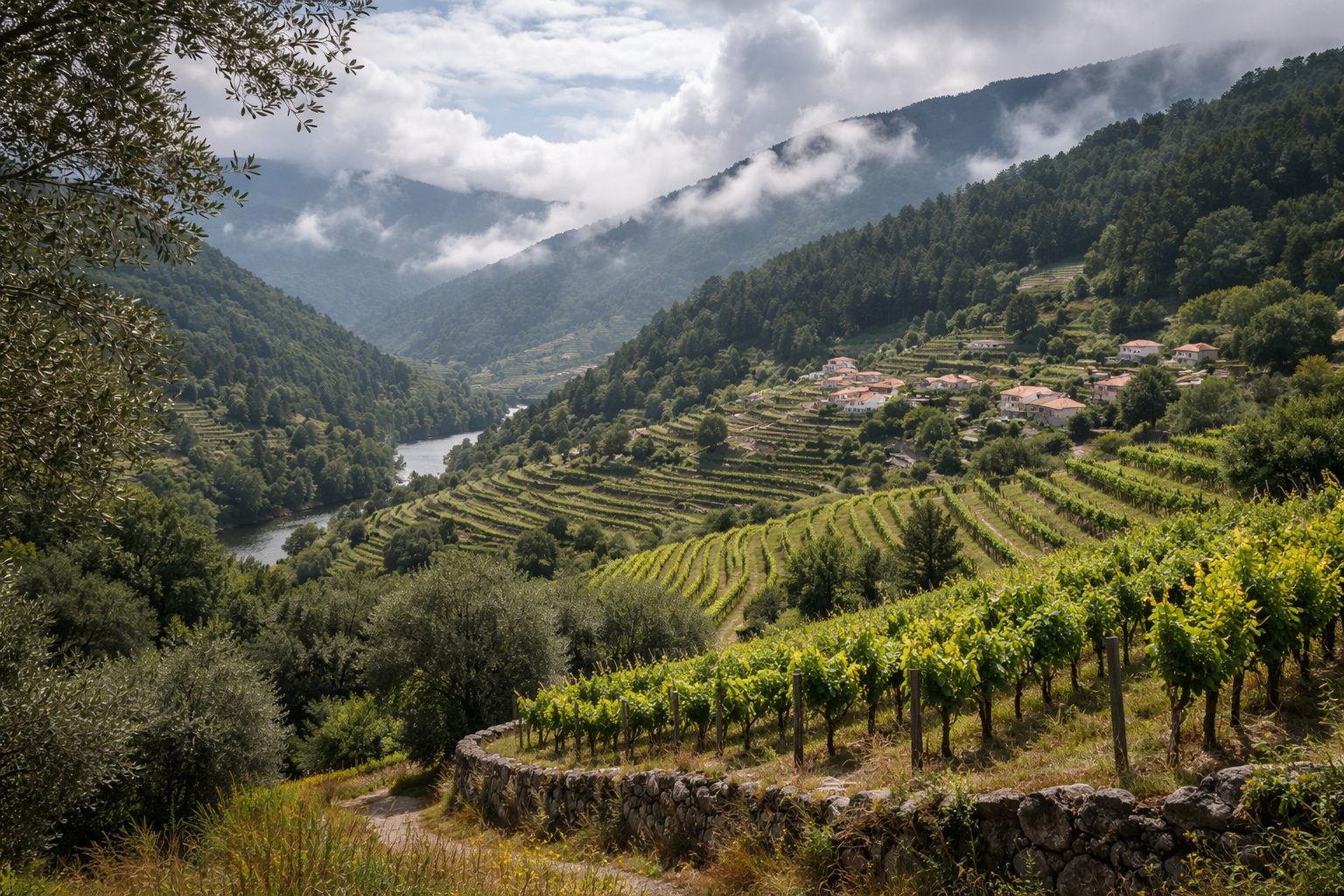
Portugal’s climate is predominantly Mediterranean, with hot, dry summers and mild, wet winters. But there’s real variation across the country. The northern Minho region receives significant rainfall and stays green year-round. Lisbon and the central coast have classic Mediterranean conditions. The Algarve in the south is the sunniest and driest part of the country, with beach conditions that last from May through October.
Madeira has a subtropical climate that stays warm year-round, while the Azores have an oceanic climate with high rainfall and dramatic temperature moderation from the Atlantic. Portugal is generally warmer and wetter in the north and drier and sunnier in the south, a relatively straightforward gradient compared to what you find in Spain.
Climate Variables in Spain
Spain’s climate is famously varied. The north coast, from Galicia through the Basque Country to Cantabria, is oceanic and rainy, with green valleys that look nothing like the Spain of tourist postcards. The interior plateau (the Meseta) has a continental climate with cold winters and very hot summers. Madrid can reach 40 degrees Celsius in August and drop below freezing in January.
The Mediterranean coast from Catalonia down through Valencia and Murcia to Almeria has classic Mediterranean conditions, though Almeria is so dry it’s technically Europe’s only desert. Andalusia in the south is hot and dry, with Seville regularly recording Europe’s highest summer temperatures. The Canary Islands, sitting off the African coast, have a semi-arid subtropical climate that makes them a popular winter sun destination for northern Europeans.
Geographic Diversity Comparison
Spain wins on pure geographic diversity. The range from alpine Pyrenees to Saharan-adjacent Almeria, from the green Galician coast to the volcanic Canaries, is extraordinary for a single country. Portugal is more consistent in its geography, which is neither a strength nor a weakness, just a reflection of its smaller size.
What Portugal does have, though, is a genuinely stunning Atlantic coastline. The west-facing beaches between Lisbon and Porto are exposed to proper Atlantic swell and are among Europe’s best for surfing. Nazare regularly hosts some of the world’s biggest rideable waves and has become a surfing pilgrimage site. That raw Atlantic energy gives Portugal a particular character that Spain’s more sheltered Mediterranean coast doesn’t replicate.
Sports and Recreation
Popular Sports in Portugal
Football is Portugal’s dominant sport and a source of fierce national pride. The country has produced some of the world’s greatest players, and the national team’s 2016 European Championship victory is still celebrated with genuine emotion. The three main clubs, Benfica, Porto, and Sporting CP, have intense and deeply tribal followings that shape social life across the country.
Beyond football, Portuguese athletes have had notable success in athletics, cycling, and sailing. The country’s coastal geography makes water sports such as surfing, kitesurfing, and sailing genuinely popular recreational activities, not just tourist attractions. Golf is a major draw in the Algarve, with some of Europe’s highest-rated courses. Hiking trails, particularly the Via Algarviana and the long-distance routes in the Minho, have grown in popularity with both locals and visitors.
Popular Sports in Spain
Spain’s sports culture is defined by football at the top, but the depth beneath it is impressive. The Spanish national team won back-to-back European Championships and a World Cup between 2008 and 2012, a period widely considered the greatest run in international football history. Real Madrid and FC Barcelona are two of the wealthiest and most watched clubs on the planet, and their rivalry, El Clasico, is arguably the biggest single club match in world sport.
Tennis is Spain’s second sport, fueled by the success of Rafael Nadal and a tradition of producing world-class players. Basketball is genuinely popular, with the ACB league considered one of Europe’s strongest, and the national team has won multiple EuroBasket and World Cup titles. Cycling, padel tennis (which originated in Spain and has spread globally), Formula 1, and MotoGP also command large followings.
Major Sporting Events Comparison
| Event | Portugal | Spain |
|---|---|---|
| Football league | Primeira Liga | La Liga |
| Top clubs | Benfica, Porto, Sporting | Real Madrid, Barcelona, Atletico |
| Tennis Grand Slam | None hosted | None hosted |
| Annual marathon | Lisbon Marathon | Madrid Marathon, Valencia Marathon |
| Surfing | Nazare Big Wave Challenge | Mundaka (Basque Country) |
| Cycling race | Volta a Portugal | Vuelta a Espana |
| Motor racing | Portimao F1 (occasional) | Spanish Grand Prix (Circuit de Catalunya) |
Spain’s sporting infrastructure is larger and more internationally prominent, but Portugal has a passionate sporting culture that exceeds what its size might suggest.
Education Systems: Portugal vs Spain
Overview of Education in Portugal
Portugal’s education system is structured similarly to most European countries, with compulsory schooling from age 6 to 18, covering primary, lower secondary, and upper secondary levels. The university system includes older institutions like the University of Coimbra, founded in 1290 and one of the oldest universities in continuous operation in the world, and newer technical and polytechnic institutes.
In recent decades, Portugal has made significant improvements in educational attainment. Graduation rates have risen substantially, and early school leaving has dropped from one of the highest rates in Europe to closer to the EU average. The Program for International Student Assessment (PISA) scores have improved markedly, reflecting genuine gains in teaching quality and student outcomes.
Overview of Education in Spain
Spain’s education system is decentralized, with the 17 autonomous communities having significant control over their regional curricula, including the use of co-official regional languages as languages of instruction. Compulsory education runs from age 6 to 16, with post-compulsory secondary and vocational pathways available. Universities are numerous and spread across the country, with institutions in Madrid, Barcelona, Salamanca, and Granada carrying particular academic prestige.
Spain has faced challenges with school dropout rates, particularly during the economic crisis years when youth unemployment made educational investment seem less worthwhile. Reform efforts have continued, and the system has stabilized. Spanish universities have strong international exchange programs, partly due to the country’s size and the global reach of the Spanish language.
Educational Achievements Comparison
Both countries have similar literacy rates, both approaching 99%, and both participate in PISA assessments that place them roughly in the middle of OECD performance rankings. Neither is Finland or Singapore, but both are functional, improving systems.
Portugal has arguably shown more rapid improvement over the past two decades starting from a lower base. Spain benefits from greater resources and a larger research university sector. For foreign students, both countries offer Spanish or Portuguese-medium programs at relatively low tuition costs compared to the UK or the US, and both have growing numbers of English-medium programs targeting international students.
Transportation and Infrastructure
Transportation in Portugal
Portugal’s transport network is well-developed for its size, with Lisbon and Porto served by metro systems, suburban rail networks, and reliable intercity rail. The high-speed rail question has been debated for years, with a planned connection between Lisbon and Porto that would dramatically cut journey times. As of the mid-2020s, progress has been slow but the project remains on the books.
Lisbon’s Humberto Delgado Airport handles international traffic well but has been under increasing strain from tourism growth. Porto’s Francisco Sa Carneiro Airport has expanded significantly. Road infrastructure is excellent throughout the country, with modern motorways connecting major cities and an extensive toll network. Within cities, the older tram and ferry services are as much tourist experiences as practical transport, though Lisbon’s metro is genuinely useful for getting around efficiently.
Transportation in Spain
Spain has invested massively in infrastructure over the past three decades. The high-speed rail network, the AVE, is the longest in Europe and connects Madrid to Barcelona, Seville, Valencia, Malaga, Bilbao, and many other cities. The Madrid-Barcelona line operates at speeds up to 310 km/h and has successfully competed with domestic aviation on that corridor.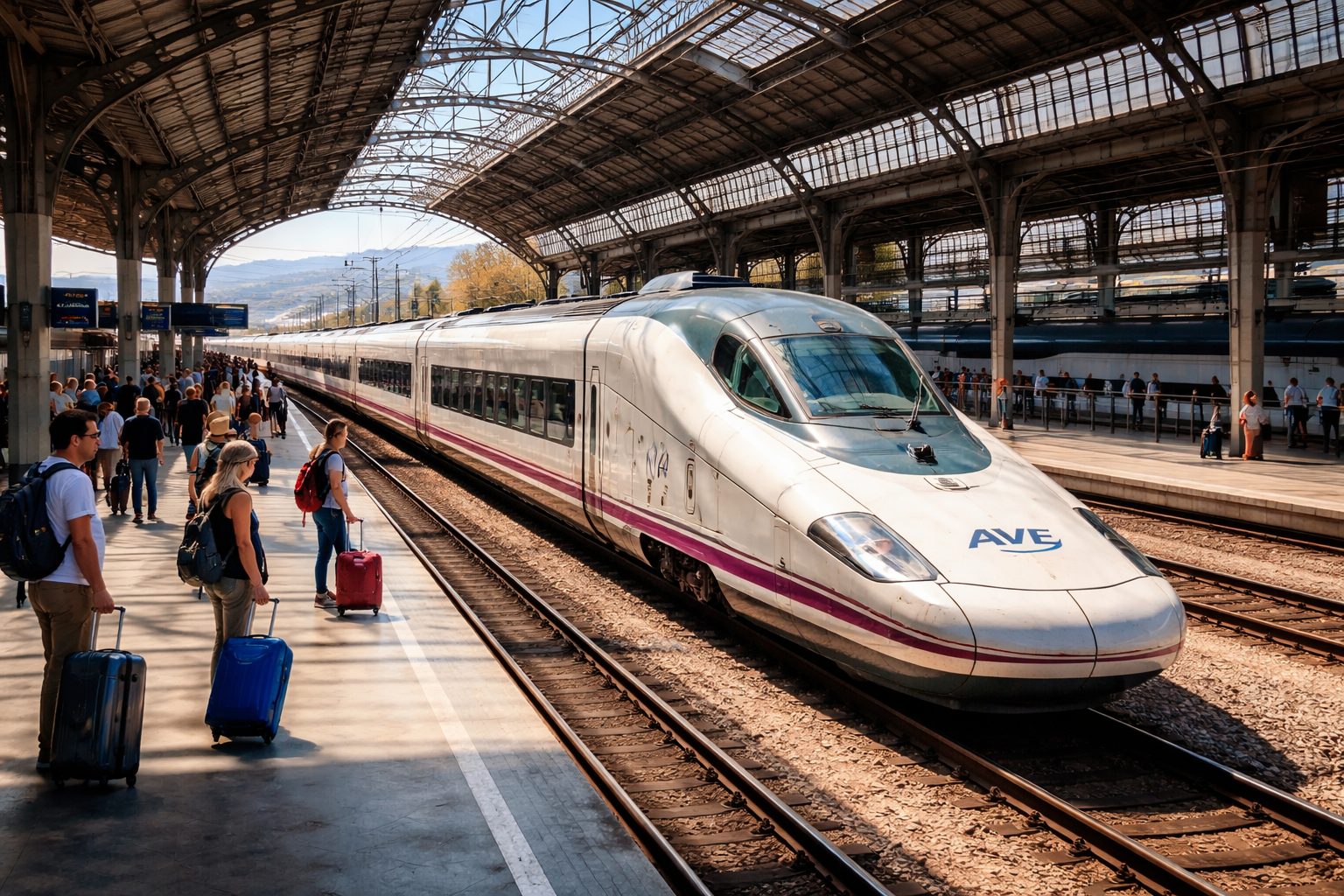
Madrid’s Barajas Airport is a major European hub and one of the busiest in the world. Barcelona, Palma, Malaga, and the Canary Island airports all handle substantial international traffic. Spain’s motorway network is extensive, and urban metro systems exist in Madrid, Barcelona, Valencia, Seville, Bilbao, and several other cities. Spain simply has more of everything transport-related, which reflects both its larger size and its greater investment capacity.
Infrastructure Comparison
| Infrastructure Category | Portugal | Spain |
|---|---|---|
| High-speed rail | Limited (planned expansion) | Longest network in Europe |
| Metro cities | Lisbon, Porto | Madrid, Barcelona, Valencia, Seville, Bilbao + more |
| Main international airports | Lisbon, Porto, Faro | Madrid, Barcelona, Palma, Malaga + more |
| Motorway network | Extensive, well-maintained | Very extensive, well-maintained |
| Internet connectivity | High, among EU leaders | High, among EU leaders |
| Mobile coverage | Good nationally | Good nationally |
Both countries rank well for digital infrastructure, with reliable broadband and strong mobile coverage. On physical infrastructure, Spain is simply larger in every dimension.
Living Conditions: Portugal vs Spain
Cost of Living in Portugal
Portugal has historically been one of the more affordable countries in Western Europe, and that reputation still holds relative to France, Germany, or the Netherlands. But costs have risen significantly in Lisbon and Porto over the past decade, driven by tourism, foreign investment, and an influx of expatriates. Housing in central Lisbon now rivals many major European cities in price, and rents in popular neighborhoods have doubled or tripled since 2015.
Outside the major cities and tourist areas, Portugal remains genuinely affordable. Groceries, restaurant meals, local wine, and domestic travel are all reasonably priced. A meal at a neighborhood tasca, with bread, wine, soup, main course, and coffee, can still cost 10 to 15 euros per person in many parts of the country. Healthcare is public and generally functional, though waiting times can be long without private insurance.
Cost of Living in Spain
Spain is similarly positioned, with Madrid and Barcelona being significantly more expensive than the rest of the country. A Barcelona apartment in a central neighborhood can cost as much as in comparable European capitals. But Valencia, Seville, Malaga, and smaller cities offer substantially lower costs while maintaining excellent quality of life metrics.
Food costs in Spain are competitive. The tapas culture means you often get snacks included with your drink at traditional bars, which adds up. Markets like La Boqueria in Barcelona or the Mercado de San Miguel in Madrid are tourist experiences now, but local municipal markets across Spain still offer fresh produce at fair prices. Healthcare is universal and generally high quality, with short waiting times by international standards in major cities.
Quality of Life Comparison
Both countries consistently rank well in quality of life surveys, scoring high on climate, food, social life, safety, and healthcare. The Mediterranean lifestyle, long lunches, outdoor dining, festivals, and a culture that prioritizes human connection over productivity, is real in both places and not just a tourist cliche.
Key quality of life factors:
- Climate: Both excellent, with Spain offering more variation
- Healthcare: Both universal systems, Spain generally better-funded
- Safety: Both among Europe’s safest countries
- Social culture: Both warm, family-oriented, community-focused
- Nightlife and food: Both world-class
- Pace of life: Portugal slightly more relaxed, Spain more energetic
- Bureaucracy: Both can be frustrating for foreigners; neither is a model of administrative efficiency
- Language barrier: English is more widely spoken among younger generations in both countries, but smaller towns in both can be challenging for non-speakers
Conclusion: Which Country is Better?
Summary of Key Points
The comparison of portugal vs spain doesn’t have a clean winner because the two countries serve different needs and suit different personalities. Spain is larger, louder, more varied, and more internationally connected. It has more of almost everything: more cities, more infrastructure, more economic weight, more sporting prestige, more linguistic complexity. If variety, scale, and a certain urban energy matter to you, Spain is hard to beat.
Portugal is smaller, more intimate, and arguably more coherent as a single cultural experience. It’s easier to get a feel for the whole country in a shorter time, the pace is gentler, and costs outside Lisbon and Porto remain more manageable. Portugal’s Atlantic-facing geography gives it a character that Spain’s Mediterranean orientation doesn’t replicate. And there’s something about fado, about saudade, about the particular emotional texture of Portuguese culture that’s genuinely unlike anywhere else in Europe.
Final Thoughts on Portugal vs Spain
I’ve found that people who visit Portugal often leave feeling like they’ve discovered something. Spain is brilliant but expected; you arrive knowing roughly what you’ll find. Portugal surprises you more often. That sense of discovery has real value, and it’s part of why the country became so fashionable among travelers in the 2010s and why it still draws people who’ve already done all the obvious European itineraries.
That said, the debate between portugal vs spain will keep running precisely because neither answer is wrong. The Iberian Peninsula is one of Europe’s great regions, and spending time in both countries is, frankly, the best possible conclusion to this comparison. Go to both. Start in Lisbon, cross to Seville, take the train to Madrid, fly to Porto. You’ll understand everything this article tries to explain in a way that no amount of reading can quite replace.
Frequently Asked Questions (FAQs)
Is Portugal or Spain cheaper to visit?
Portugal is generally slightly cheaper than Spain, especially outside Lisbon and Porto. Both countries have seen significant cost increases in major cities in recent years. Budget travelers will find both manageable, but smaller Portuguese towns tend to offer better value than their Spanish equivalents.
What are the main cultural differences between Portugal and Spain?
Portuguese culture tends to be more introspective and melancholic, shaped by fado music and the concept of saudade. Spanish culture is generally more outwardly expressive and regional, with strong distinct identities in Catalonia, the Basque Country, Andalusia, and elsewhere. The social pace and emotional register of the two countries feel noticeably different despite their geographic proximity.
Which country is better for expatriates: Portugal or Spain?
Both are popular expatriate destinations, and the choice depends on priorities. Portugal has attracted a significant English-speaking expat community in Lisbon and the Algarve, with favorable tax regimes having historically made it appealing. Spain offers more variety in city choices and a larger English-speaking expat infrastructure, particularly in Madrid, Barcelona, and the costas. Both require learning the local language for full integration and long-term satisfaction.