
There’s something deeply satisfying about loading up a car, picking a direction, and letting the open road do the rest. Scenic road trips usa style offer a kind of freedom that flying or taking a train simply can’t match. You set your own pace. You stop when something catches your eye. You eat at a diner that doesn’t have a website. I’ve done dozens of these drives over the years, and every single one taught me something new about this country and, honestly, about myself.
The United States has some of the most varied and jaw-dropping landscapes on earth. From rugged Pacific coastlines to rolling Appalachian highlands, from desert canyon country to glacier-carved mountain passes, the roads here connect places that feel worlds apart. That diversity is what makes planning a road trip in this country so compelling and, sometimes, so overwhelming. This guide is built to help you cut through the noise and actually get out there.
Introduction to Scenic Road Trips in the USA
America’s road trip culture didn’t happen by accident. The country was literally built around the automobile. The interstate highway system, constructed in the mid-20th century, made long-distance travel practical for everyday people. But it’s the older, slower, more deliberate routes that tend to stick with you.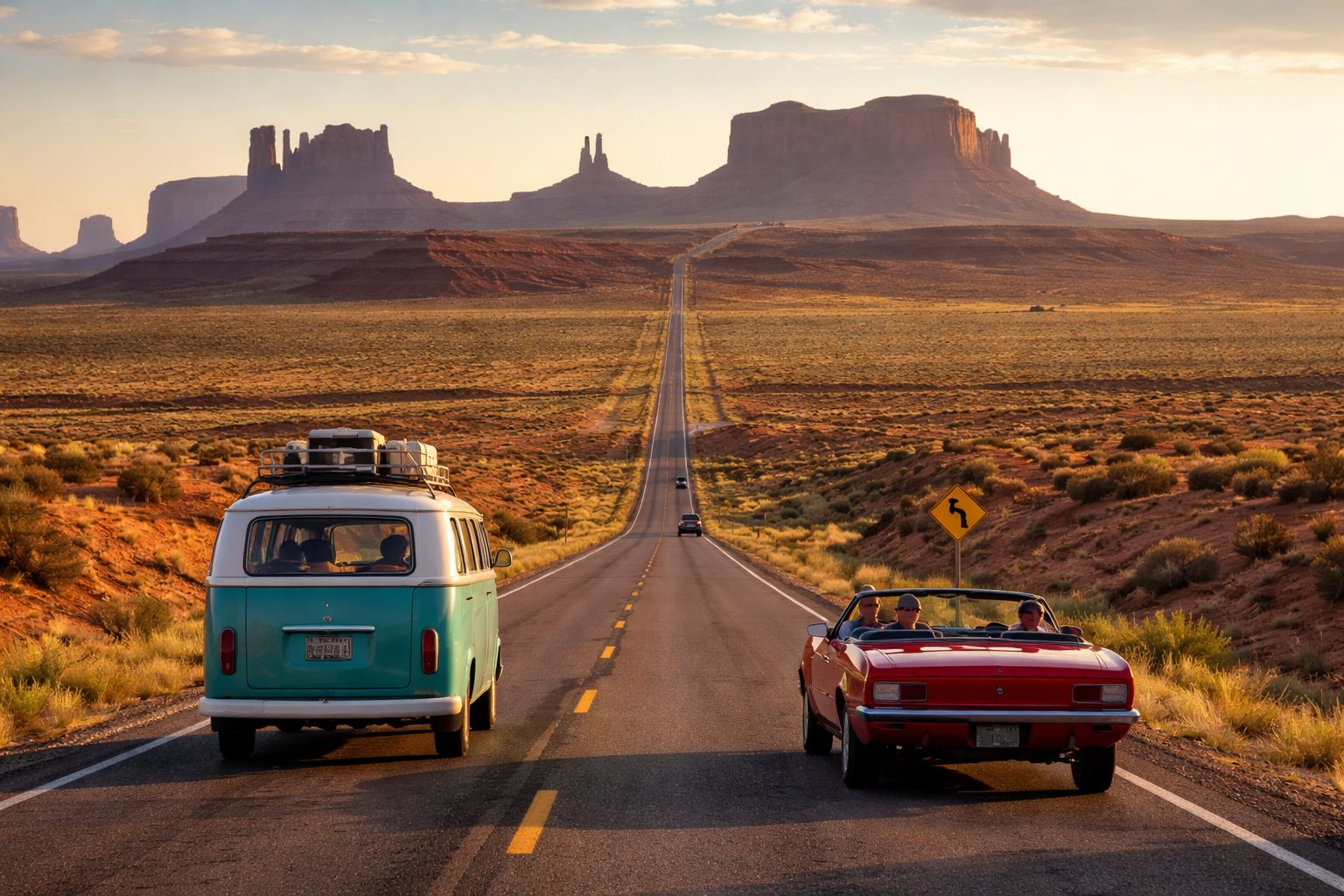
Scenic road trips usa enthusiasts know that the magic is rarely on the fastest path between two points. It’s on the two-lane highway that winds through a historic town, past a roadside waterfall, or over a ridge with a view that makes you pull over and just sit for a while. These drives exist all across the country, and many of them are formally designated as National Scenic Byways or All-American Roads by the federal government.
I’d argue that a good road trip isn’t primarily about the destination. It’s about the accumulation of small moments: a good cup of coffee at a local diner, a sudden rainstorm in the desert, a herd of elk crossing the road at dusk. Those are the things you end up talking about for years.
Benefits of Choosing Scenic Road Trips
Before we get into specific routes, it’s worth talking about why road trips are worth choosing in the first place, especially when flights are often cheaper and faster.
First, there’s flexibility. A plane ticket locks you into a schedule. A road trip doesn’t. If you stumble across a farmers market, a state park you’ve never heard of, or a weird little museum dedicated to something inexplicable, you can just stop. That spontaneity is genuinely hard to replicate.
Second, scenic road trips usa routes let you see the country at a human scale. When you’re driving through rural Kansas or the Ozarks or the bayou country of Louisiana, you’re experiencing the actual fabric of the United States. Not just the airports and the hotel chains, but the real thing.
Other benefits worth noting:
- You can bring more gear without paying baggage fees
- Traveling with pets becomes far easier
- You can manage your own food and budget much more freely
- Kids often handle long drives better than people expect, especially with the right stops built in
- You get a genuine sense of geography and how places relate to each other
And there’s a mental health angle here too. Research consistently shows that spending time in natural environments reduces stress and improves mood. A scenic drive through mountains or along a coastline delivers those benefits in a format that requires very little planning compared to, say, a backpacking trip.
Top Scenic Road Trips in the USA
The country has hundreds of notable scenic drives, but a handful consistently stand out as the best of the best. These are the routes people return to, the ones that define what scenic road trips usa means to most travelers.
Pacific Coast Highway, California
Highway 1 along the California coast is probably the single most famous road trip route in the United States, and it earns that reputation. The drive runs roughly 650 miles from Leggett in the north down to Dana Point in the south, though most people tackle a section rather than the whole thing.
The stretch between San Francisco and Los Angeles is the most popular, and it’s easy to see why. You’ve got the cypress-dotted cliffs of Big Sur, the elephant seal colony at San Simeon, the historic Hearst Castle, and the bohemian beach towns of Santa Cruz and San Luis Obispo. The road itself hugs the cliffs in places that feel almost reckless.
Key stops I’d recommend:
- Point Reyes National Seashore for dramatic coastal cliffs and hiking
- Muir Woods for the old-growth redwoods just north of San Francisco
- Big Sur for the overall atmosphere and the Bixby Bridge viewpoint
- Pfeiffer Beach for purple sand (yes, really)
- Morro Bay for a laid-back lunch stop with a view of the famous rock
Drive this route heading south so you’re on the ocean side of the road. The views are better and the pullouts are easier to access.
Route 66, From Chicago to Santa Monica
Route 66 is as much mythology as it is road. Stretching about 2,400 miles from Chicago to Santa Monica, it cuts through eight states and several distinct American eras. The route was officially decommissioned in 1985, replaced by interstates, but most of it survives in fragments as state and county roads.
What makes Route 66 compelling is the history layered into every mile. You’ll pass through small towns that boomed in the 1940s and 1950s, then faded when the freeway bypassed them. Neon signs, vintage diners, motor courts, and roadside attractions from a different era of American travel culture dot the entire route.
Don’t miss:
- The Gemini Giant statue in Wilmington, Illinois
- Cadillac Ranch outside Amarillo, Texas
- The Painted Desert and Petrified Forest in Arizona
- Wigwam Motel in Holbrook, Arizona
- The Santa Monica Pier at the western terminus
This is one of those scenic road trips usa routes where you really want to drive the old road, not the interstate running parallel to it. The interstate gets you there faster. The old road gives you the actual experience.
Blue Ridge Parkway, Virginia to North Carolina
The Blue Ridge Parkway runs 469 miles through the Southern Appalachians, connecting Shenandoah National Park in Virginia to Great Smoky Mountains National Park in North Carolina. There are no commercial trucks allowed, no traffic lights, and no billboards. It was designed from the ground up to be driven slowly and enjoyed.
I’ve driven this one in late October, when the fall foliage is at its peak, and it’s genuinely one of the most beautiful experiences I’ve had in this country. The colors are extraordinary. Maples, oaks, and hickories turn the mountains into something that looks almost painted.
The parkway isn’t fast driving. The speed limit stays at 45 mph throughout, and there are hundreds of overlooks, hiking trails, and visitor centers along the route. That’s the point. You’re not trying to get somewhere. You’re trying to see something.
Highlights:
- Mabry Mill, a working grist mill that photographs beautifully
- Linville Falls and Gorge for serious hiking
- Craggy Gardens for 360-degree mountain views
- Folk Art Center near Asheville for regional craft and culture
Going-to-the-Sun Road, Montana
This one is in a different category. Going-to-the-Sun Road crosses Glacier National Park in Montana over the Continental Divide, climbing through terrain that looks more like the Swiss Alps than anything most Americans have ever seen in the lower 48.
The road is only 50 miles long, but it’s one of the most dramatic drives in North America. At Logan Pass, the highest point at 6,646 feet, you’re surrounded by jagged peaks, snowfields even in July, and wildlife that treats the road shoulder like their personal territory. Mountain goats, bighorn sheep, and grizzly bears are all regularly spotted.
Because the road was carved into near-vertical cliffs in the 1930s, large vehicles aren’t allowed during peak season. You’ll either drive a small car, take the park shuttles, or book a ride in one of the historic red jammers, the open-topped buses that have been part of the Glacier experience since 1936.
The road is usually open from late June through mid-October, weather permitting. Check conditions before you go because it can close unexpectedly due to snow or rockfall.
All-American Road, Utah
Utah has multiple designated scenic byways, but the collection sometimes loosely referred to as the “Mighty Five” corridor deserves its own mention. Driving through Utah means passing near or through five national parks: Zion, Bryce Canyon, Capitol Reef, Canyonlands, and Arches. That’s a staggering concentration of geological drama in a relatively compact area.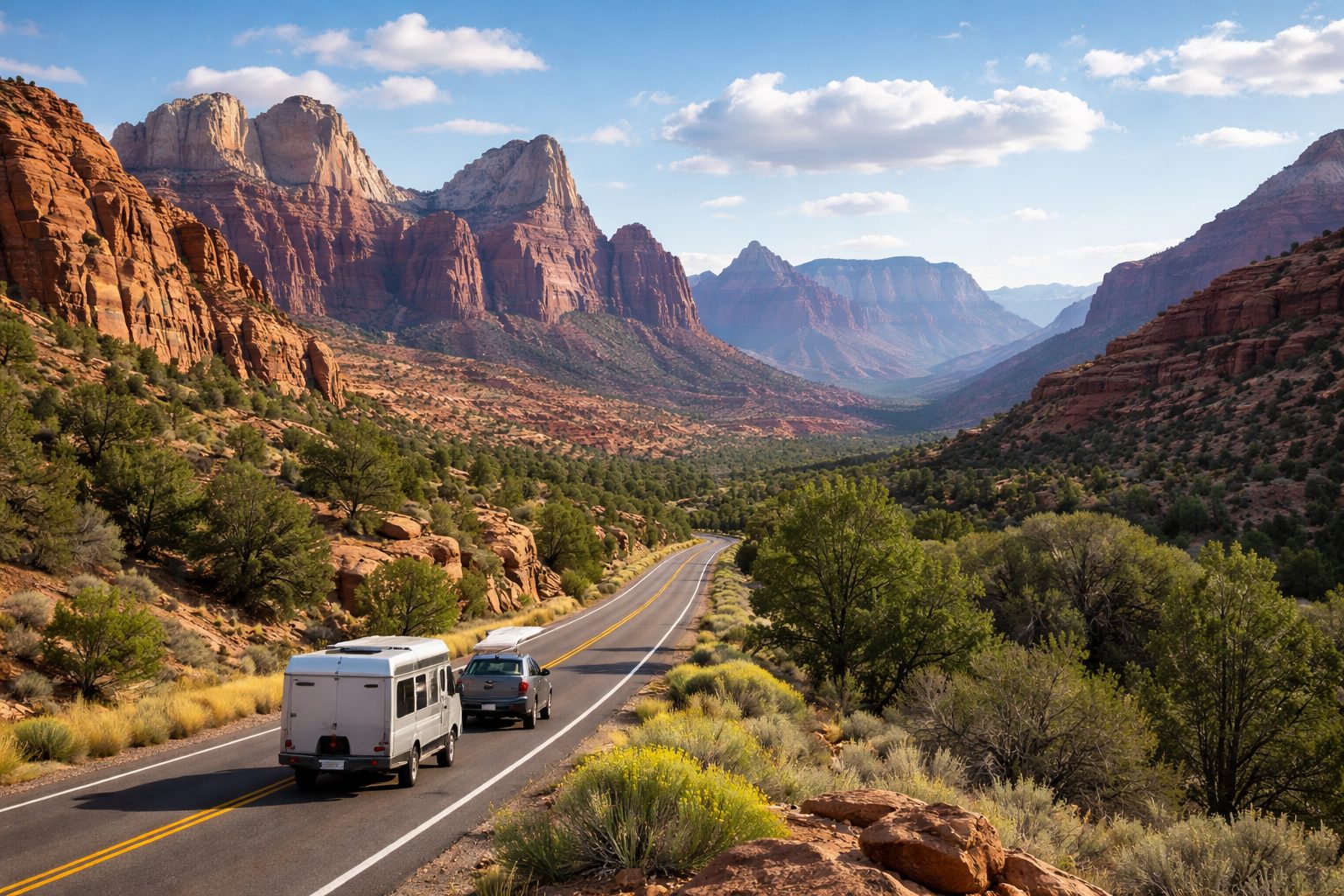
The landscape in southern Utah looks genuinely alien. Red rock arches, slot canyons, hoodoos, mesas, and vast empty skies create scenery unlike anything else in the country. Highway 12, which connects Bryce Canyon to Capitol Reef, is widely considered one of the most beautiful roads in America. It literally rides the spine of a ridge in one section, with drop-offs on both sides.
If you’re planning a Utah road trip, budget more time than you think you’ll need. Every park deserves at least a full day, and the drives between them are attractions in their own right.
Seasonal Considerations for Scenic Road Trips
Timing matters. The same road can feel completely different depending on when you drive it, and some routes are simply impassable or significantly degraded outside of certain seasons.
Best Times of Year for Scenic Drives
Here’s a general overview of when different regions tend to shine:
| Region | Best Season | Notes |
|---|---|---|
| Pacific Coast (CA) | Spring, Fall | Summer fog common near SF; fall light is exceptional |
| Southwest (UT, AZ) | Spring, Fall | Summers can be dangerously hot; winter can be surprisingly mild |
| Appalachians (VA, NC) | Fall | Peak foliage late October; spring wildflowers also spectacular |
| Rocky Mountains (MT, CO) | Summer | Many passes closed mid-fall through late spring |
| Deep South | Winter, Spring | Summers are brutally humid; spring has excellent wildflowers |
| Pacific Northwest | Summer | Rain dominates fall and winter; summer is genuinely stunning |
Spring and fall are generally the most rewarding seasons for scenic road trips usa in most parts of the country. You avoid peak crowds, temperatures are more moderate, and the light tends to be softer and more dramatic than harsh summer midday sun.
Weather Considerations and Road Conditions
Weather can shift fast in mountain environments. If you’re driving Going-to-the-Sun Road or any high-altitude route, check the forecast daily. Afternoon thunderstorms are common in the Rockies from July through August. Flash flooding is a serious risk in canyon country, particularly in Utah and Arizona.
A few practical points:
- Download offline maps before you go. Cell service disappears frequently on scenic routes.
- Check the National Park Service and state DOT websites for road closures before and during your trip.
- In winter, even routes that appear open on a map may require chains or four-wheel drive.
- Early morning departures on popular routes like Going-to-the-Sun help you beat both crowds and afternoon weather.
Planning Your Scenic Road Trip
Good road trips don’t just happen. The ones I’ve enjoyed most involved some real preparation, even if the trip itself felt spontaneous.
Essential Packing List for Road Trips
The goal is to be prepared for minor emergencies and extended periods without services, without packing like you’re going on a six-month expedition.
Physical gear:
- Paper maps or a road atlas as a backup to digital navigation
- Jumper cables or a portable jump starter
- Basic tool kit and tire pressure gauge
- First aid kit with any personal medications
- Sunscreen and insect repellent
- Reusable water bottles (fill whenever you can in remote areas)
- A cooler for drinks and snacks
- Blankets and a change of clothes accessible in the main cabin
Food and cooking:
- A small camp stove can save significant money and allow you to eat in spectacular locations
- Trail mix, dried fruit, and nuts for between stops
- A good insulated mug for coffee
For tech:
- Car charger and power bank
- Camera or at minimum a phone with plenty of storage
- A dedicated GPS device if you’re going deep into areas with no cell service
Budgeting for Your Scenic Road Trip
Road trips can be done very cheaply or can cost quite a bit depending on your choices. Here’s how to think about the major cost categories.
Gas is usually the biggest variable. For a 2,000-mile trip in a vehicle getting 30 mpg at current average gas prices, you’re looking at roughly $200-$250 in fuel. An older SUV getting 18 mpg would run closer to $400. Fuel efficiency genuinely matters on long drives.
Accommodation options, from most to least expensive:
- Hotels and motels: $80-$200 per night, widely available near popular routes
- Vacation rentals: Often better value for groups or families
- Campgrounds with hookups: $30-$60 per night, widely available near national parks
- Basic tent camping: $15-$35 per night at most national park and forest service campgrounds
- Dispersed camping on national forest land: Often free, requires some research
Food is where people often underestimate spending. Eating out every meal for a week easily adds $50-$80 per person per day. Mixing in grocery runs and some self-prepared meals makes a substantial difference.
National park fees add up if you’re hitting multiple parks. A $80 America the Beautiful pass covers entrance to all national parks and federal recreation areas for a year. If you’re planning to visit more than two or three parks, it pays for itself quickly.
Must-Have Apps for Scenic Road Trips
Technology has genuinely transformed road trip planning. A few apps worth having:
- Roadtrippers: Route planning with points of interest layered in, including quirky roadside attractions
- iOverlander or Freecampsites: Finding free and low-cost camping
- GasBuddy: Finding the cheapest gas along your route
- AllTrails: Trail information for hikes at stops along the way
- Weather.gov or a quality weather app: Essential for mountain driving
- Gaia GPS: Offline topo maps for remote areas
- Yelp or Google Maps: For finding good local restaurants in unfamiliar towns
Safety Tips for Road Trips
Long drives come with real risks that are easy to underestimate when you’re excited about the trip. A little preparation goes a long way.
Vehicle Preparation and Maintenance
Before a long trip, do a basic mechanical check. You don’t need to be a mechanic. Most of this is straightforward.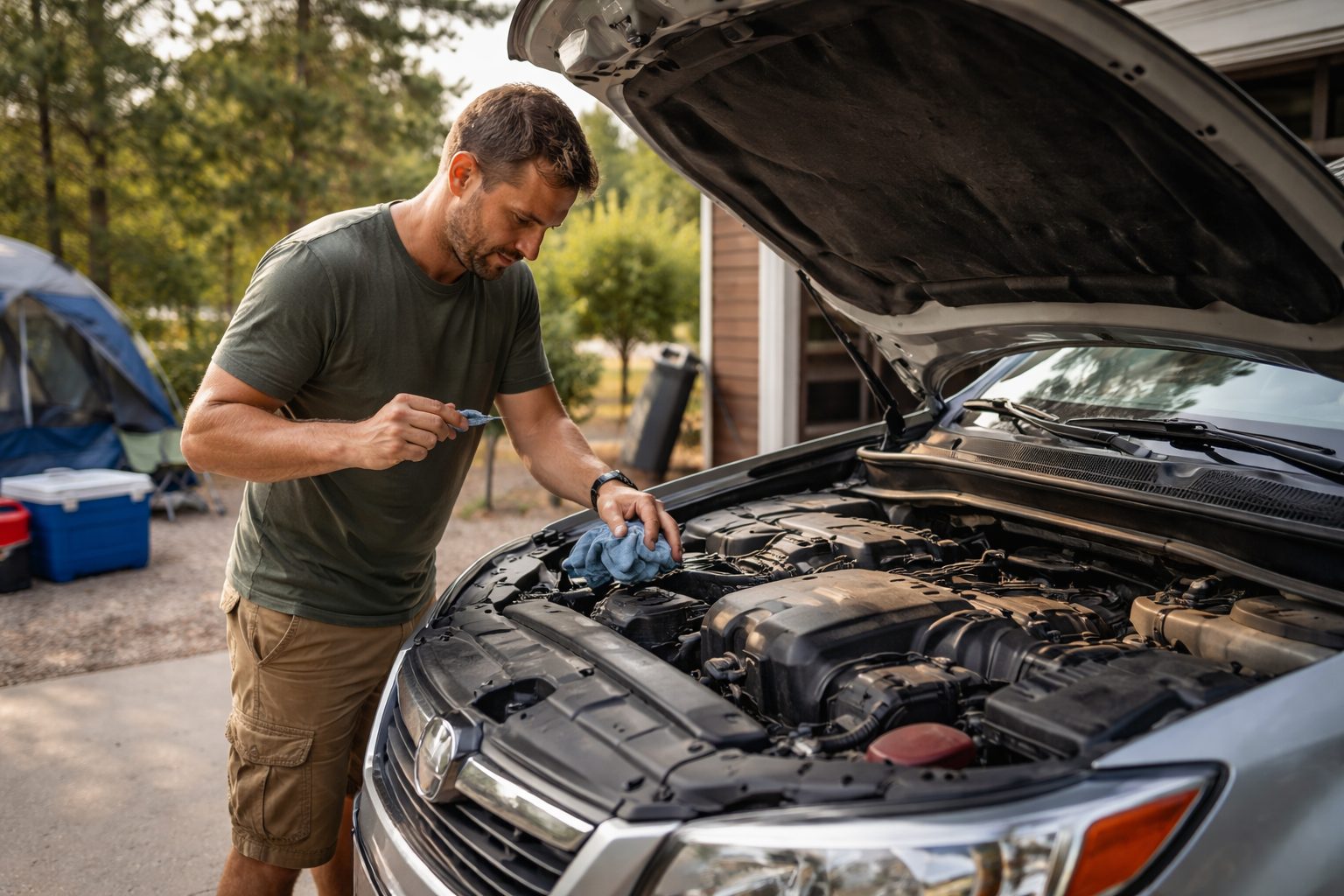
- Check tire pressure and tread depth. Worn tires are a serious risk, especially in rain.
- Check and top off oil, coolant, and windshield washer fluid.
- Test your brakes. If they’re making noise or feeling soft, get them checked.
- Make sure your spare tire is inflated and you have the equipment to change a flat.
- Check all lights, including brake lights and turn signals.
- If you’re overdue for an oil change, do it before the trip, not after.
- Have your battery tested if it’s more than three years old.
For drives in remote areas, consider carrying extra water (one gallon per person per day as a baseline), extra fuel if gas stations are sparse, and a tow strap.
Road Safety Tips and Regulations
Driver fatigue is one of the leading causes of road trip accidents. The general rule is to stop every two hours or 100 miles, whichever comes first. Don’t push through drowsiness. A 20-minute nap in a rest area is far better than the alternative.
Other safety points:
- Respect speed limits on mountain roads. They’re set based on curve radius and sight lines, not just general caution.
- In national parks, speed limits are low for a reason. Wildlife crossings happen constantly.
- Keep distance from other vehicles on winding roads where passing is limited.
- Never drive impaired. It sounds obvious, but long drives with alcohol at dinner are a documented risk factor.
- Cell phone use while driving is illegal in most states and genuinely dangerous. Use a mount and voice commands, or pull over.
In some western states, you can drive 50+ miles between gas stations. Keep your tank at least half full whenever you have the opportunity to fill up.
Family-Friendly Scenic Road Trips
Traveling with kids changes the calculus significantly, but it doesn’t mean you have to give up on ambitious routes. It just means planning differently.
Top Kid-Friendly Stops Along Scenic Routes
The key with kids is keeping the drive interesting with regular stops that have something to actually do. Long stretches of beautiful but passive scenery work better for adults than for children.
Along the Pacific Coast Highway:
- The Monterey Bay Aquarium is genuinely one of the best in the country
- The Santa Cruz Beach Boardwalk has old-school amusement park energy
- Tide pools at various points along the coast are interactive and fascinating
Along Route 66:
- Meramec Caverns in Missouri is a classic roadside stop that kids consistently love
- Cadillac Ranch in Amarillo lets kids (and adults) spray paint actual buried Cadillacs
- The Grand Canyon, accessible as a detour, is universally impactful regardless of age
Along the Blue Ridge Parkway:
- Linville Caverns offers a genuine underground experience
- The many short hiking trails are appropriate for kids of various ages
- Craft stops and farms throughout western North Carolina are engaging and educational
Tips for Traveling with Pets
Dogs in particular tend to do very well on road trips. They enjoy new smells and can handle long car rides if you build in regular exercise stops.
Practical pet travel advice:
- Stop every 2-3 hours minimum for a walk and bathroom break
- Keep a collapsible water bowl and water accessible at all times
- Never leave pets in a parked car in warm weather, even with windows cracked. Temperatures rise fatally fast.
- Check whether your planned campgrounds or accommodations are pet-friendly before booking
- Keep your pet’s vaccination records accessible. Some states and parks have requirements.
- A good harness or crate keeps pets secure and reduces distraction while driving
Cats can travel but are generally less adaptable to new environments. If you’re bringing a cat, maintaining a consistent space and routine matters more than it does with dogs.
Scenic Road Trip Itineraries
Sometimes the hardest part of planning is knowing where to start. Here are three concrete itineraries you can adapt.
3-Day Itinerary for the Pacific Coast Highway
This itinerary covers the San Francisco to Los Angeles stretch at a comfortable pace.
Day 1: San Francisco to Big Sur (about 150 miles)
* Start with coffee in the Mission District or North Beach
* Drive across the Golden Gate Bridge and stop at the Marin Headlands overlook
* Visit Muir Woods if you haven’t been
* Continue south through Half Moon Bay and Santa Cruz
* Stop at Natural Bridges State Beach for monarch butterflies in season
* Overnight in Santa Cruz or Monterey
Day 2: Big Sur to San Simeon (about 80 miles)
* Morning at Point Lobos State Natural Reserve for hiking and sea otters
* Drive the Big Sur coast slowly, stopping at every turnout that calls to you
* Bixby Bridge photo stop is practically mandatory
* Lunch in the area (options are limited, plan ahead)
* Pfeiffer Big Sur State Park for an afternoon hike
* Continue to San Simeon for the evening
* If you’re there in winter or early spring, walk to the elephant seal overlook at Piedras Blancas
Day 3: San Simeon to Santa Monica (about 200 miles)
* Morning tour of Hearst Castle if that interests you
* Drive through San Luis Obispo for breakfast or coffee
* Stop at Pismo Beach
* Continue south through Santa Barbara for lunch
* Arrive in Santa Monica; walk the pier at sunset
7-Day Route 66 Adventure
This covers the full route from Chicago to Santa Monica with enough time to actually experience it.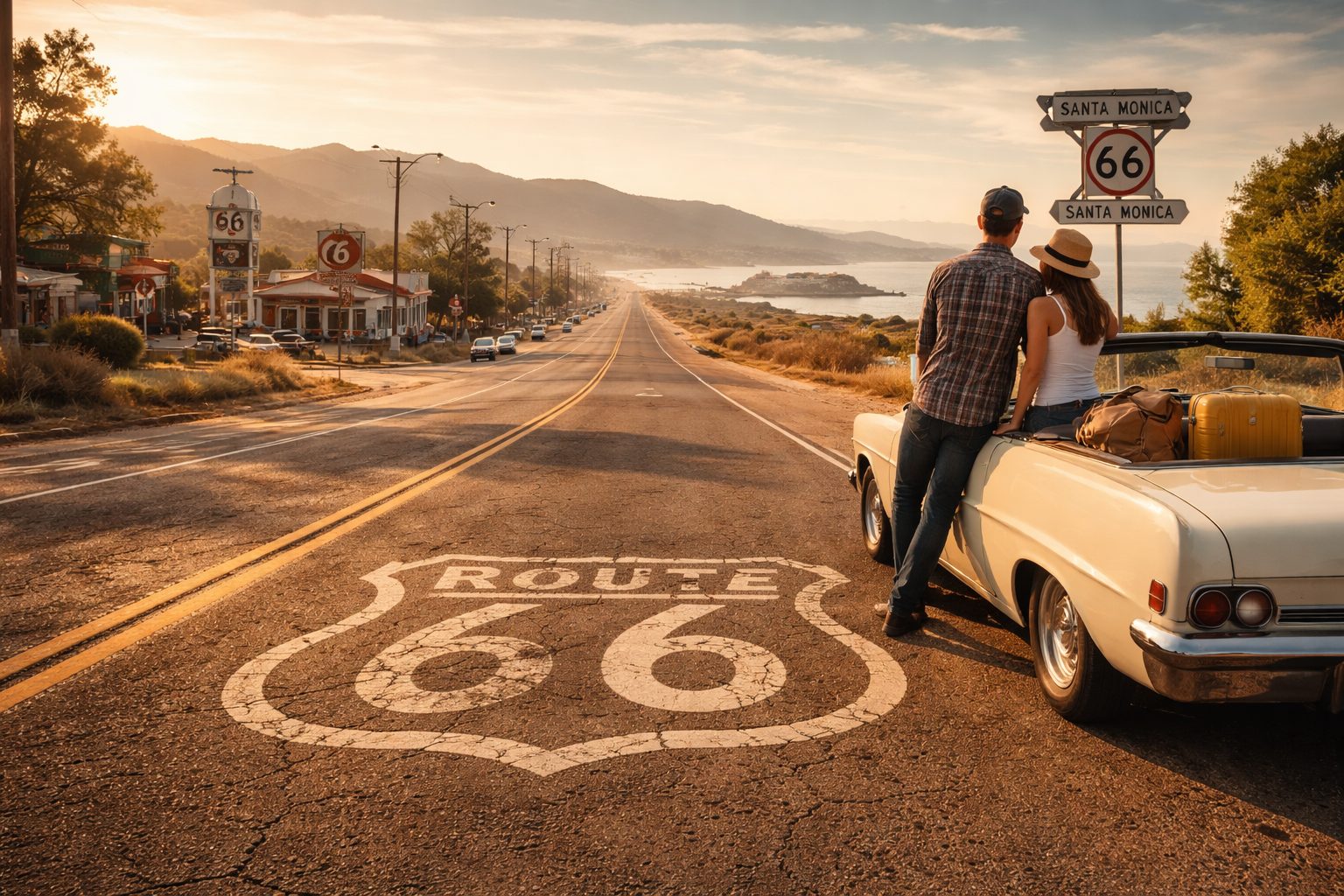
Day 1: Chicago to Springfield, Illinois (about 200 miles)
* Start at the official beginning on Adams Street in Chicago
* Drive through the suburbs and into the agricultural flatlands
* Stop in Pontiac at the Route 66 Hall of Fame and Museum
* Overnight in Springfield, the state capital and Lincoln country
Day 2: Springfield, Illinois to St. Louis, Missouri (about 100 miles)
* Visit Lincoln sites in Springfield if history interests you
* Cross the Mississippi at St. Louis
* Visit the Gateway Arch, which is genuinely impressive up close
* Overnight in St. Louis
Day 3: St. Louis to Joplin, Missouri (about 300 miles)
* Stop at Meramec Caverns near Stanton
* Drive through the Ozarks with stops in Cuba and Springfield
* Overnight near Joplin
Day 4: Joplin through Oklahoma (about 350 miles)
* Brief jog through Kansas (Route 66 only passes through 13 miles)
* Drive through Tulsa and Oklahoma City
* Look for the Round Barn in Arcadia and the Milk Bottle Building in OKC
* Overnight in Oklahoma City or Elk City
Day 5: Oklahoma into Texas and New Mexico (about 400 miles)
* Cross into Texas at Shamrock, home of the Tower Station
* Cadillac Ranch outside Amarillo
* Cross into New Mexico through Tucumcari
* Overnight in Albuquerque
Day 6: Albuquerque into Arizona (about 350 miles)
* Drive through historic Old Town Albuquerque
* Continue to Gallup, the heart of Navajo trading country
* Cross into Arizona
* Stop at the Painted Desert and Petrified Forest
* Overnight in Flagstaff
Day 7: Flagstaff to Santa Monica (about 475 miles)
* Drive through Williams and consider a quick detour to the Grand Canyon’s South Rim
* Continue through Kingman and across the Mojave
* Barstow and then the push through San Bernardino into Los Angeles
* End at the Santa Monica Pier
Weekend Getaway: Blue Ridge Parkway
This two-and-a-half day loop is designed around the North Carolina section, which I think is the most dramatic.
Day 1: Arrive at Asheville, NC
* Drive up to the parkway at Milepost 382 near the Folk Art Center
* Drive north to Craggy Gardens (Milepost 364) for sunset views
* Back to Asheville for dinner. The food scene here is genuinely excellent.
Day 2: Full day on the parkway
* Early start, drive south on the parkway toward the Pisgah area
* Stop at the Waterrock Knob overlook at Milepost 451 for panoramic views
* Continue to Cherokee if time allows, or turn back
* Stop at Mabry Mill on the return if you loop north to the Virginia section
* Evening back in Asheville or overnight near Boone if you’ve gone north
Day 3: Departure
* Morning hike at one of the shorter trails near Asheville
* Head home
Scenic Road Trips for Adventure Seekers
Not every road trip is about staying on the pavement and pulling into well-maintained overlooks. There’s a whole other category of driving experience for people who want more.
Off-Roading and Nature Trails
The American West in particular has thousands of miles of unpaved roads maintained by the Bureau of Land Management and the Forest Service. Some require a basic SUV; others genuinely require four-wheel drive with high clearance and recovery gear.
Popular off-road scenic routes:
- The Dalton Highway in Alaska, which runs 414 miles to the Arctic Ocean
- Mojave Road in California, a historic route through the Mojave Desert
- Imogene Pass Road in Colorado, crossing the San Juan Mountains at nearly 13,000 feet
- Canyonlands’ White Rim Road in Utah, a 100-mile dirt loop inside the park
For most off-road routes, you’ll want to research current conditions, carry extra water and fuel, and ideally travel with another vehicle if you’re heading into remote terrain.
Even on paved scenic road trips usa routes, most national forests and BLM areas have dirt roads branching off from the main highway that lead to dispersed campsites, lesser-known viewpoints, and real solitude. These don’t require any special vehicle and are worth exploring.
National Parks and Scenic Byways
The National Scenic Byways Program currently designates 150 byways in 46 states. All-American Roads are a subset of that, with even stricter criteria for uniqueness and quality.
If you want to systematically explore scenic road trips usa style at the highest level, working through the All-American Roads list is a reasonable framework. Current designations include routes in nearly every region of the country, including:
- The Kancamagus Highway in New Hampshire (spectacular fall foliage)
- the Great River Road along the Mississippi
- The Seward Highway in Alaska
- The Selma to Montgomery National Historic Trail in Alabama
- Highway 12 in Utah
National parks often have their own internal scenic drives that are worth planning around: the Rim Drive at Crater Lake, the park road at Theodore Roosevelt National Park in North Dakota, and Skyline Drive in Shenandoah all rank among the most beautiful drives in the country.
Conclusion: Embracing the Journey of Scenic Road Trips
At the end of a good road trip, you tend to arrive home slightly different from how you left. Something has been refreshed or reset. That’s not an accident. Scenic road trips usa at their best are a form of active meditation: you’re present, you’re moving through actual space, you’re encountering the unexpected.
The routes covered here represent some of the best driving in the world. Pacific coastlines, mountain passes, ancient geological formations, and living American history are all accessible from a two-lane road with a full tank of gas. You don’t need a huge budget or a special vehicle for most of them. You just need to go.
The best advice I can give is to leave room for the unplanned. The waterfall you stumble onto, the conversation with a local at a diner, the detour that turns into the best hour of the trip: those things don’t appear on any itinerary. They only happen when you’re actually out there. So plan enough to feel prepared, then let go of the rest.
Scenic road trips usa style are ultimately about reclaiming the journey itself. In a world that’s obsessed with efficiency and arrival, there’s real value in the trip for its own sake. The roads are there. The country is waiting.
Frequently Asked Questions (FAQ)
What are the most popular scenic road trips in the USA?
The Pacific Coast Highway in California, Route 66 from Chicago to Santa Monica, and the Blue Ridge Parkway in Virginia and North Carolina are consistently ranked as the top scenic road trips usa travelers recommend. Going-to-the-Sun Road in Montana and Highway 12 in Utah are close behind. All five offer dramatically different landscapes and experiences.
How do I prepare my vehicle for a long road trip?
Check tire pressure and tread, confirm your oil and fluids are topped off, test your brakes and lights, and make sure your spare tire is in usable condition. If your battery is older than three years, have it tested. For remote drives, carry extra water, a basic tool kit, and a jumper cable or portable jump starter.
What are some must-see attractions along scenic routes?
It depends on the route, but some consistently exceptional stops include Big Sur on the Pacific Coast Highway, Cadillac Ranch on Route 66, Mabry Mill on the Blue Ridge Parkway, Logan Pass on Going-to-the-Sun Road, and the Bryce Canyon hoodoos in Utah. The best advice is to research two or three anchor stops per day and leave the rest flexible.