India has been drawing wellness seekers for centuries, and honestly, it’s not hard to understand why. The country sits at the intersection of ancient healing traditions, breathtaking landscapes, and a culture that genuinely understands rest as a form of medicine. What surprises most first-timers is how accessible it all is. You don’t need a luxury budget to experience authentic transformation here. Affordable wellness retreats in India are not a compromise. They’re often the real thing, stripped of unnecessary hotel polish and focused entirely on what matters: your health, your mind, and your reset.
I’ve spoken to dozens of travelers who came back from budget retreats in Rishikesh or Kerala completely changed, spending less than what a single spa day costs in London or New York. The value is staggering. And more importantly, the quality is there.
Introduction to Affordable Wellness Retreats
Overview of Wellness Retreats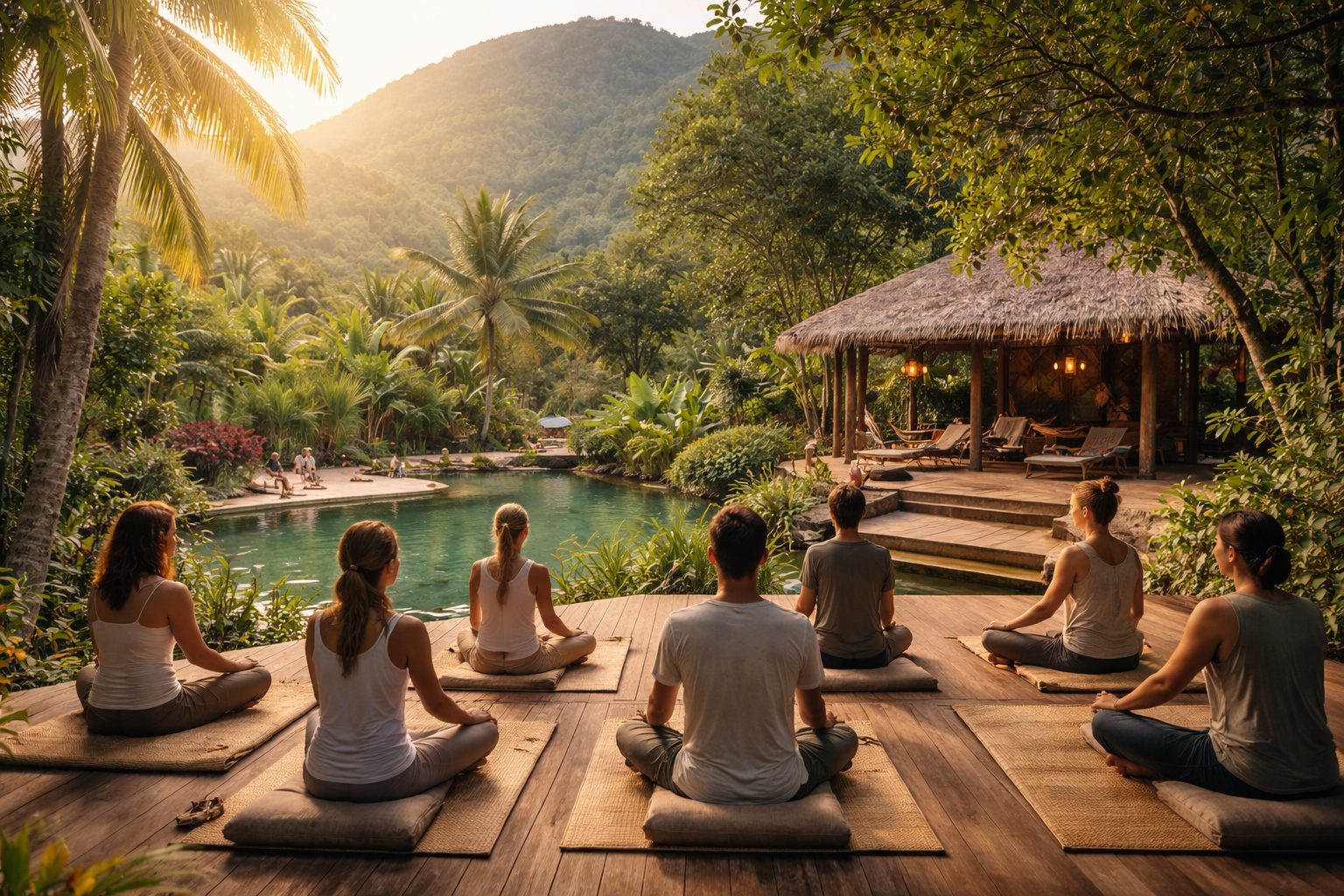
A wellness retreat is a structured stay designed around improving your physical, mental, or spiritual health. The format varies widely. Some are silent meditation programs. Others combine yoga with Ayurvedic treatments. Some focus on detox, others on fitness. Most retreats include accommodation, meals, and a daily program, which makes them easier to budget for than building a similar experience piecemeal.
India’s retreat industry has grown significantly over the past decade. The country now hosts thousands of programs ranging from ultra-luxury resorts with price tags to match, to simple ashram stays that cost under twenty dollars a day. Both can be genuinely transformative. The ashram is not lesser simply because it lacks a pool.
Retreats typically run anywhere from three days to a month. Shorter programs suit people testing the waters or working around limited leave. Longer programs allow deeper integration and real lifestyle shifts. Most people, especially first-timers, find seven to fourteen days the sweet spot.
Importance of Affordability in Wellness Tourism
There’s a common assumption that wellness has to be expensive to be effective. That assumption doesn’t hold up when you look at what’s actually being offered. The core practices at most retreats, yoga, meditation, breathwork, plant-based eating, and time in nature, cost very little to facilitate. What you’re often paying for in expensive retreats is branding, architecture, and marketing.
India flips this dynamic. Here, the traditions are deep-rooted and local. Teachers are often highly trained in lineages that have existed for generations, not just certified last year. Food is fresh, seasonal, and cooked with intention. Accommodation is clean and simple. The result is that affordable wellness retreats in India can deliver experiences that genuinely rival, and often outperform, what you’d find at far more expensive destinations.
Affordability also matters because it allows for longer stays. A two-week program transforms you differently than a weekend. When cost isn’t a barrier, you can actually commit to the depth of experience.
Top Affordable Wellness Retreats in India
Retreat 1: Parmarth Niketan, Rishikesh
Parmarth Niketan is one of the most iconic ashrams in India, sitting directly on the banks of the Ganges in Rishikesh. It offers yoga, meditation, and spiritual programs at prices that feel almost impossible given what’s included. Daily morning aarti on the river, structured yoga sessions, vegetarian meals, and simple but clean rooms are all part of the package.
Costs can run as low as five hundred to fifteen hundred rupees per night depending on the room type and season. Programs for one week including accommodation and all meals can come in under ten thousand rupees. For international visitors, that’s genuinely remarkable.
What makes Parmarth stand out beyond cost is the atmosphere. The energy on the ghats at sunrise is unlike anything else in the world. It’s not curated wellness. It’s the real thing.
- Daily yoga and meditation sessions included
- Evening Ganga aarti open to all guests
- Vegetarian meals prepared fresh daily
- Visiting teachers and workshops throughout the year
- Suitable for beginners and experienced practitioners alike
Retreat 2: Somatheeram Ayurvedic Village, Kerala
Somatheeram has been running authentic Ayurvedic programs since 1990 and is one of the few resorts globally that operates as a genuine Ayurvedic hospital alongside its retreat programs. Located near Kovalam in Kerala, it offers a range of packages from basic wellness stays to full Panchakarma detox programs.
What sets it apart in the affordability conversation is how it structures packages. A basic wellness program for seven nights that includes daily treatments, consultations with Ayurvedic doctors, and all meals starts at a fraction of what equivalent programs cost in Europe or Southeast Asia. Treatment quality is consistently high because the practitioners are trained in the classical Kerala tradition.
- Authentic Panchakarma programs supervised by doctors
- Packages from seven to twenty-eight days
- Meals prepared according to your Ayurvedic constitution
- Yoga and meditation included in all packages
- Strong track record across decades of operation
Retreat 3: Art of Living International Center, Bangalore
The Art of Living Foundation runs one of the largest wellness campuses in Asia, located in Bangalore. The programs here are particularly well-suited to beginners who want an introduction to yoga, breathing techniques, and meditation without the intensity of a traditional ashram.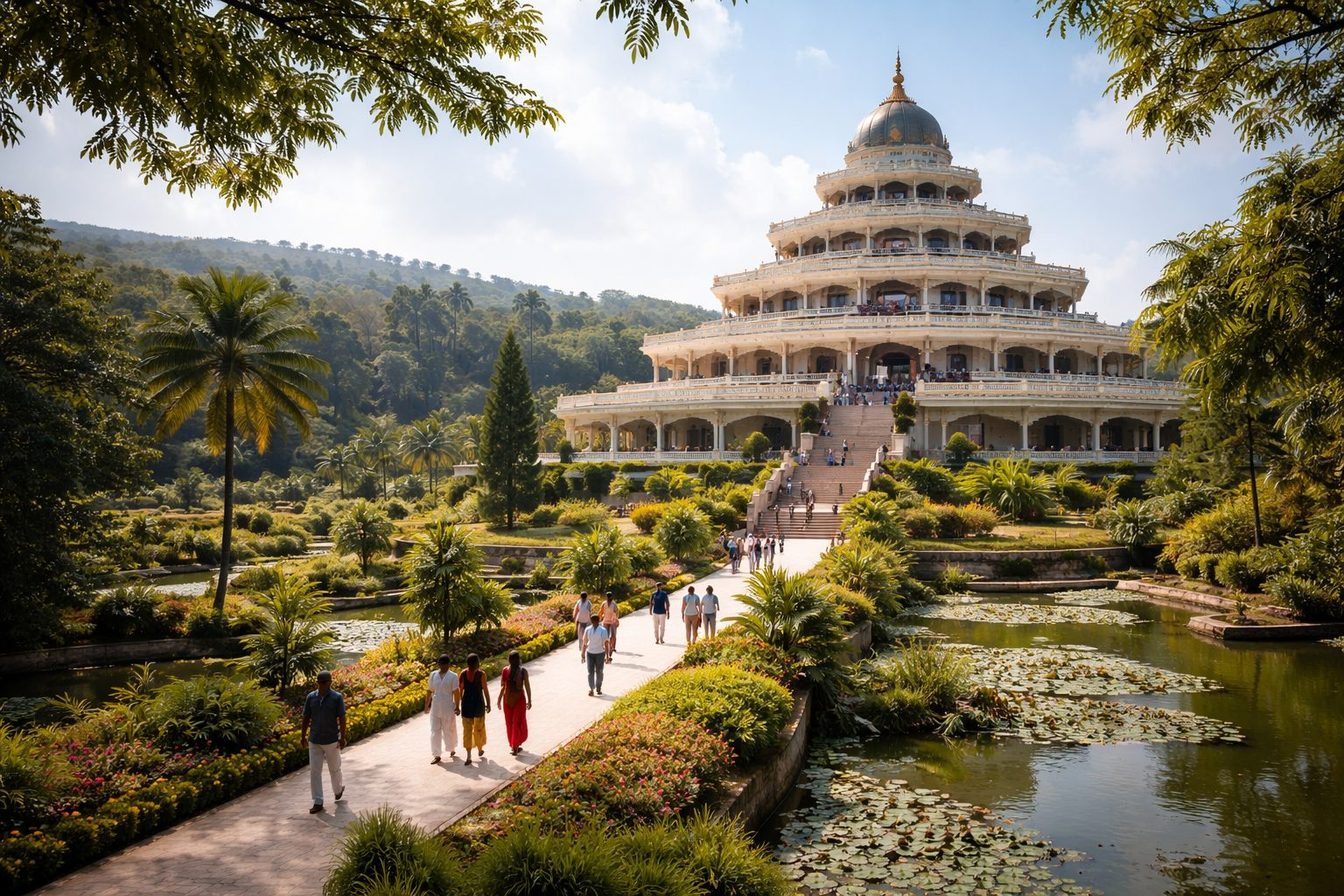
The flagship Happiness Program is the entry point for most visitors. It runs over several days and teaches the Sudarshan Kriya breathwork technique alongside yoga and guided sessions. Prices are kept deliberately low to maximize access, and the campus itself is beautiful, with organic gardens, clean air, and peaceful surroundings.
Longer residential programs are available and remain affordable relative to similar international offerings. The community aspect is also strong here. You’ll share the experience with people from many countries, which often adds unexpected depth.
Wellness Retreat Locations in India
North India: Scenic Mountains and Spiritual Retreats
North India, particularly the Himalayan foothills and the Uttarakhand region, is home to some of the most compelling retreat destinations in the world. Rishikesh is the obvious anchor point, but there’s also Dharamshala, Mussoorie, and Spiti Valley for those willing to venture further.
Rishikesh calls itself the yoga capital of the world, and while that title is debated, the density of quality programs here is genuinely unmatched. You can find everything from ten-day silent Vipassana retreats to month-long yoga teacher training programs, most at prices that work for budget-conscious travelers.
Dharamshala, home to the Tibetan government in exile, brings a different energy. Tibetan Buddhist meditation programs, mindfulness courses, and Himalayan trekking combined with retreat stays are all accessible here. The altitude, the mountain air, and the cultural richness create a retreat environment that’s difficult to replicate anywhere else.
South India: Coastal Getaways and Ayurvedic Retreats
Kerala is the heartland of Ayurveda in India. If you’re specifically looking for authentic Ayurvedic treatment rather than just wellness tourism with an Indian flavor, this is where you go. The tradition here is centuries old, deeply clinical, and practiced by families who’ve been doing it for generations.
The backwaters region around Alleppey and Kumarakom, the coastal areas near Kovalam and Varkala, and the hill stations of Munnar all host retreat centers ranging from simple guesthouses with attached treatment rooms to more established programs. The cost of living in Kerala is lower than many North Indian tourist destinations, which helps keep retreat prices accessible.
Goa, while primarily known as a beach party destination, has a substantial wellness community, particularly in the northern villages. Yoga shalas, meditation centers, and holistic health programs have operated there for decades, attracting a mix of long-term residents and visiting practitioners.
East India: Nature and Cultural Retreats
East India doesn’t appear on most wellness tourism radar, but it offers some genuinely distinctive experiences. The hills of Sikkim and Darjeeling combine high-altitude trekking, Buddhist monastery stays, and meditation programs in landscapes of extraordinary beauty.
Monasteries in Sikkim occasionally open to visitors for residential meditation programs, usually in exchange for a small donation or modest daily rate. The silence, the altitude, and the depth of practice available in these settings is unlike anything in more commercialized retreat destinations.
West Bengal’s Shantiniketan, founded by Rabindranath Tagore, draws visitors interested in art, culture, and contemplative practice. It’s an unusual retreat destination but one that rewards curiosity.
West India: Desert Wellness Experiences
Rajasthan brings a completely different energy to the wellness retreat landscape. The desert, the forts, the ancient traditions of Rajput culture, and a growing number of heritage hotels that have incorporated yoga and wellness programs create a compelling alternative to the mountain or coastal retreat experience.
Pushkar is a pilgrimage town with a strong spiritual presence and a well-established backpacker and wellness community. Programs here tend to be informal but genuine, and the cost of living is extremely low. You can find yoga instruction, Ayurvedic treatments, and meditation guidance at prices that are almost impossibly accessible by global standards.
Jodhpur and Udaipur have both developed more structured retreat offerings within heritage properties. These sit at a slightly higher price point than ashram-style programs but remain within the budget category for most international travelers.
Types of Wellness Programs Offered
Yoga and Meditation Retreats
Yoga retreats form the backbone of India’s wellness tourism industry. The range is enormous. You can practice Hatha in a Himalayan ashram, Ashtanga in a Mysore shala, Kundalini at a dedicated center, or Iyengar with a certified teacher in Pune. Each tradition has its own character, its own intensity, and its own ideal student.
Meditation retreats run the full spectrum from ten-day silent Vipassana programs, which are entirely donation-based, to guided mindfulness weekends at boutique retreat centers. Vipassana centers in India are among the most accessible in the world. You contribute what you can afford at the end if the experience was valuable to you.
Combining yoga with meditation is the format most retreats default to, and it works well. Morning yoga builds body awareness and creates the stillness that makes meditation easier. Evening meditation sessions help process and integrate the physical work done earlier in the day.
Ayurvedic Healing Retreats
Ayurveda is India’s classical medical system, dating back over three thousand years. A genuine Ayurvedic retreat is very different from a spa that uses the word for marketing. The real version starts with a consultation with an Ayurvedic physician who assesses your constitution and current imbalances. Treatment protocols are then prescribed based on that individual assessment.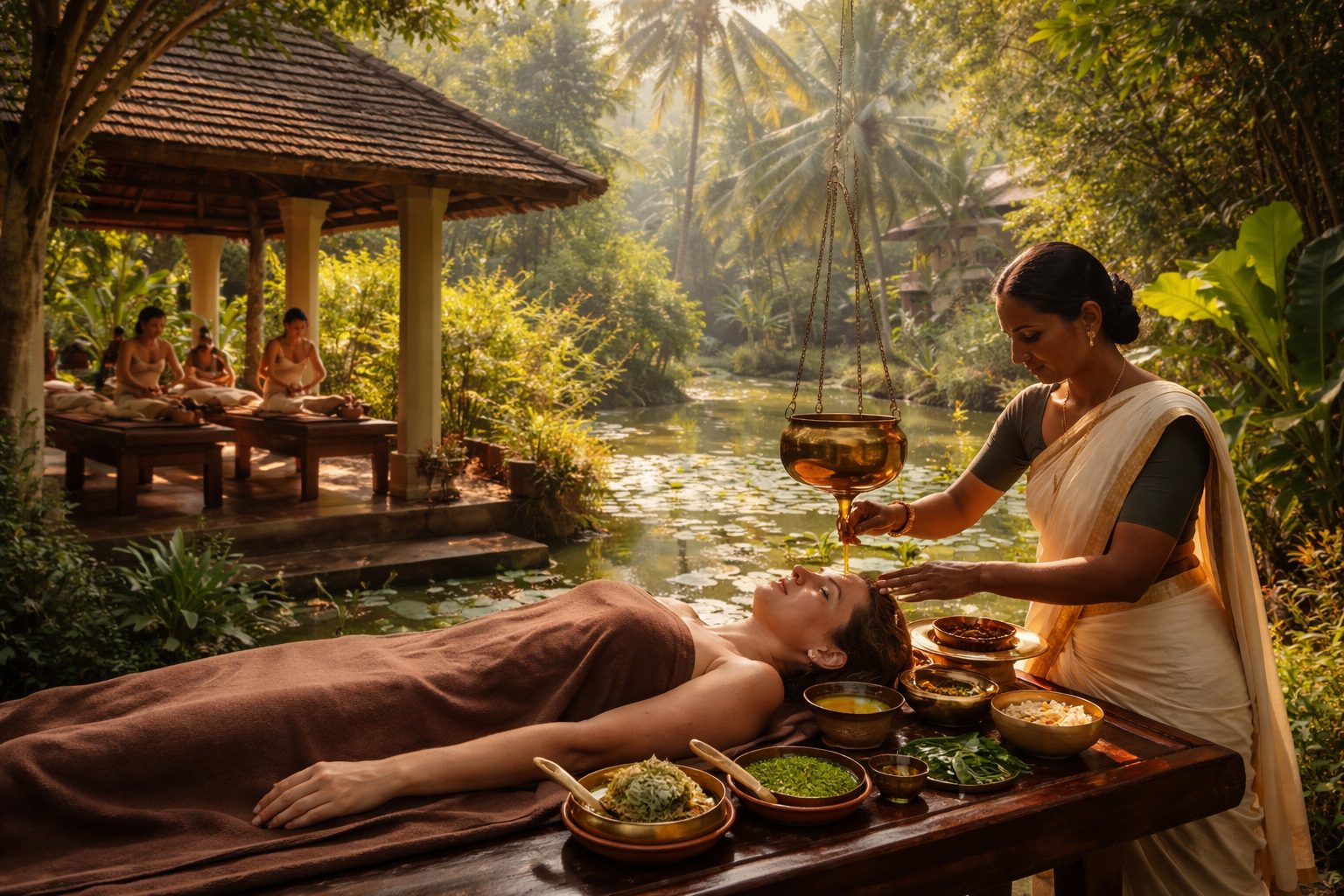
Panchakarma is the most comprehensive Ayurvedic cleansing protocol. It typically runs fourteen to twenty-eight days and involves a sequence of treatments, dietary modifications, and herbal preparations designed to remove accumulated toxins and restore balance. Kerala is the best place to experience this, though programs are available across India.
Shorter programs of five to seven days introduce Ayurvedic principles without the full depth of Panchakarma. These are more accessible for people with limited time and still deliver genuine value in terms of education, diet adjustment, and treatment experience.
Detox and Wellness Programs
Detox programs have proliferated across India’s retreat landscape. The quality varies considerably. The most credible ones are grounded in either Ayurvedic principles or naturopathy, both of which have strong traditions in India.
Naturopathy retreats, particularly in places like Bangalore and Pune, combine juice fasting, hydrotherapy, yoga, and dietary education into structured programs that can run from five days to three weeks. These are often run by naturopathic doctors and are considerably more clinical in their approach than typical spa detox programs.
Plant-based eating, intermittent fasting, and elimination diets are all woven into various retreat formats. Most programs that include meals take the food seriously, which is itself a significant part of the healing work.
Fitness and Wellness Bootcamps
Fitness-focused retreats are a smaller but growing segment of India’s wellness offering. These tend to cluster in cooler climates and combine early morning training sessions, hiking, yoga, and nutritional education in a structured daily format.
Programs in Rishikesh, Coorg, and various Himalayan locations combine outdoor activity with wellness education. The altitude and clean air in mountain locations adds a physiological dimension to the experience that’s harder to replicate at sea level.
Surf and yoga retreats in Goa and Kerala combine coastal activity with daily practice. These sit slightly outside the traditional wellness retreat model but attract a younger demographic looking for active recovery alongside skill development.
Comparison of Affordable Wellness Retreats
Price Comparison of Top Retreats
Understanding price ranges helps you plan realistically. The table below gives a broad sense of what different retreat types typically cost per week, including accommodation and meals.
| Retreat Type | Location | Approx. Weekly Cost (INR) | Approx. Weekly Cost (USD) |
|---|---|---|---|
| Ashram Stay (basic) | Rishikesh | 3,500 – 7,000 | 42 – 84 |
| Yoga Retreat Center | Rishikesh / Goa | 15,000 – 35,000 | 180 – 420 |
| Ayurvedic Program (basic) | Kerala | 25,000 – 50,000 | 300 – 600 |
| Panchakarma (14 days) | Kerala | 60,000 – 120,000 | 720 – 1,440 |
| Vipassana (10 days) | Pan-India | Donation only | Donation only |
| Naturopathy Retreat | Bangalore / Pune | 20,000 – 45,000 | 240 – 540 |
| Heritage Property Program | Rajasthan | 30,000 – 70,000 | 360 – 840 |
These are ballpark figures and vary by season, specific center, and room type. Off-peak periods, typically May to June in the mountains and July to September in coastal areas, often offer significant discounts.
Facilities and Amenities Offered
What you get at different price points varies more in terms of comfort than in quality of practice. Budget ashrams offer dormitory accommodation and simple vegetarian food. Mid-range retreat centers offer private rooms, more varied food, and additional amenities like swimming pools or steam rooms. Higher-end programs add air conditioning, better linen, and more personalized service.
What doesn’t scale as reliably with price is teaching quality. Some of the best yoga teachers in India work in modest settings because they prioritize authentic lineage over branding. Some expensive retreat centers trade on reputation rather than actual instruction quality.
Ask specifically about who’s teaching before you book. Teacher credentials matter more than thread count.
Duration of Programs: Short vs. Long Retreats
- Short programs (3-5 days): Good for introduction, stress relief, or a reset. Limited depth. Suit busy schedules.
- Medium programs (7-14 days): Most effective for building new habits and experiencing meaningful transformation.
- Long programs (21-28+ days): Allow full Panchakarma, deep meditation practice, or substantial lifestyle change.
- Month-long yoga teacher trainings: Popular format that combines practice with certification.
Most experienced retreat guests recommend going longer than feels necessary on your first booking. What seems like too much time often turns into not quite enough.
How to Choose the Right Retreat for You
Assessing Your Wellness Goals
Before you search for a retreat, spend some time being honest about what you actually want. Is this about stress reduction? Physical health? Spiritual development? Learning a practice you can continue at home? Or simply unplugging from a demanding schedule?
Different goals point to different retreat types. Stress and burnout usually respond best to gentler programs with nature, minimal stimulation, and rest. Physical health goals like weight management or digestive issues are better served by structured Ayurvedic or naturopathy programs. Spiritual development draws most people to meditation-heavy programs or ashram stays.
Being clear on your goal prevents the common mistake of booking a beautiful-looking retreat that’s actually wrong for what you need.
Budget Considerations
Set your total budget including travel, not just the retreat fee. Flights to India can be significant, and it’s worth factoring whether it makes sense to extend your stay to justify the travel cost.
Once in India, your daily costs outside a retreat package are low. If you’re flexible on dates, you can often find off-season rates that are substantially lower. Many centers offer early-booking discounts or reduced rates for longer stays.
Vipassana meditation retreats deserve special mention here. They operate entirely on a dana (donation) model. You attend the program, receive full accommodation and meals at no charge, and contribute what you can afford based on your experience. These programs are accessible to anyone regardless of financial situation.
Location Preferences
Think about climate, accessibility, and the kind of environment that supports your reset. Not everyone wants mountains. Some people thrive near water. Others need the dryness of a desert landscape. India offers all of these.
Consider how much travel you want to do after arriving. Retreats close to major airports are easier to reach if you have limited time. More remote locations require additional planning but often offer deeper immersion.
Season matters significantly. North India’s mountains are cold October through March. Kerala’s monsoon brings heavy rain June through August but also the best Ayurvedic treatment season, since humidity is considered therapeutic. Rajasthan is extremely hot in summer.
Program Types and Activities
Match the program to your current physical and mental state. A demanding yoga bootcamp is wrong for someone in burnout. A fully silent ten-day Vipassana is wrong for someone who’s never meditated and is also managing acute anxiety.
Start where you are, not where you aspire to be. A gentler first retreat done well does more for your long-term wellness practice than an ambitious program you don’t complete or leave early.
Read program descriptions carefully and reach out to centers with questions before booking. Reputable centers respond promptly and give honest assessments of whether a program is right for your current state.
What to Expect at a Wellness Retreat
Daily Schedule and Activities
Most retreats operate on early schedules. Expect to be up before six in the morning. This isn’t arbitrary. Early morning practice aligns with what Ayurveda and yogic traditions call Brahma Muhurta, the hour before sunrise, which is considered particularly potent for meditation and yoga.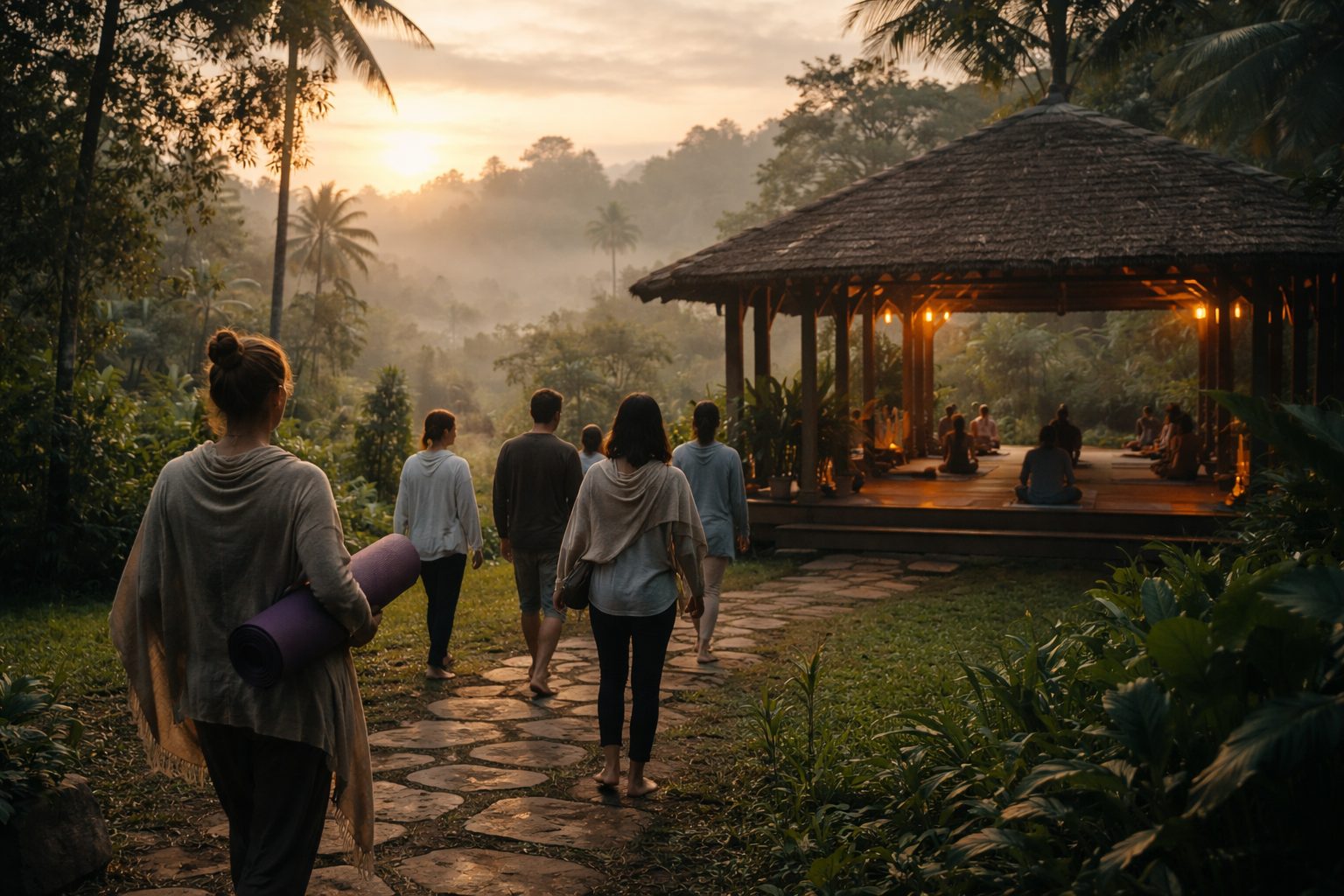
A typical day at a yoga or Ayurvedic retreat might look like:
- 5:30 or 6:00 AM: Wake, personal hygiene, optional self-practice
- 6:30 AM: Morning yoga or meditation session (90 minutes to two hours)
- 8:30 AM: Breakfast, often simple and plant-based
- 10:00 AM: Treatments, workshops, or free time
- 1:00 PM: Lunch, usually the main meal of the day
- 2:00 to 4:00 PM: Rest period or personal time
- 4:30 PM: Afternoon yoga or activity session
- 7:00 PM: Dinner
- 8:30 PM: Evening meditation, lecture, or kirtan
- 10:00 PM: Lights out
Structure varies by center, but this rhythm is broadly consistent. The early schedule and the emphasis on rest between activities is intentional. Recovery is part of the program.
Food and Nutrition Offered
Food at wellness retreats in India is almost universally vegetarian, often sattvic (a yogic dietary classification that emphasizes freshness, lightness, and minimal stimulation). No meat, sometimes no eggs, usually no garlic or onion in traditional ashram settings.
Ayurvedic retreats take food very seriously. Meals are timed, portioned, and prepared according to your dosha (Ayurvedic constitutional type). This is not a limitation. It’s actually one of the most educational aspects of the retreat experience for most guests.
If you have genuine dietary restrictions beyond vegetarian, such as gluten intolerance or specific allergies, communicate them clearly before arrival. Most centers accommodate these.
Accommodation and Environment
Budget retreats mean simpler accommodation. This usually means small rooms, basic furniture, shared bathrooms in some cases, and no air conditioning in cooler mountain climates. The standard is clean and functional rather than luxurious.
Mid-range retreat centers offer private en-suite rooms, better quality linens, and more considered design. Many older heritage properties in India have been sensitively converted and offer tremendous character at mid-range prices.
The environment itself, the garden, the surrounding landscape, the proximity to water or mountains, often contributes more to the retreat experience than the room quality. Prioritize setting.
Tips for Making the Most of Your Retreat Experience
Preparing for Your Retreat
Arrive with realistic expectations. A retreat is not a vacation in the conventional sense. It’s structured, sometimes demanding, and deliberately removes the distractions you normally use to manage discomfort. That’s the point.
In the two weeks before a retreat:
- Start reducing caffeine and alcohol gradually
- Begin eating lighter and more plant-based meals
- Establish a basic sleep schedule that moves toward earlier rising
- Clear your work obligations so you can be genuinely present
- Inform family or colleagues that you’ll have limited connectivity
Digital detox is part of what makes retreats effective. Most centers discourage phone use and some prohibit it entirely. Embrace this rather than resist it.
Staying Present and Engaged
The temptation to document your retreat experience for social media is real and counterproductive. The practices at a retreat work specifically because they draw your attention inward. Constant photography fragments that attention.
Engage with the teachings even if they feel foreign. Ask questions. Sit with discomfort. Allow the schedule to be the authority for a few days rather than your own impulses.
Connecting with other participants is also valuable. People who travel for wellness retreats tend to be thoughtful, curious, and good company. Shared meals and shared practice create genuine connections quickly.
Post-Retreat Integration of Wellness Practices
The most common mistake retreat veterans talk about is returning home and immediately slipping back into old patterns. The retreat environment supports the practices. Home usually doesn’t, at least not automatically.
Before leaving your retreat, identify two or three specific practices you want to maintain. Not ten. Two or three. Maybe a morning yoga sequence, a meditation practice, or a dietary change. Make them concrete and manageable.
Plan your first week back thoughtfully. If possible, return on a Thursday or Friday so you have a weekend to settle before work resumes. Give yourself a buffer rather than flying in on Sunday night and starting full-speed Monday morning.
The real value of a retreat compounds over time if you integrate what you learned. A single week in a beautiful setting changes nothing by itself. The practices you carry home are where the transformation actually lives.
Frequently Asked Questions (FAQs)
What is the average cost of a wellness retreat in India?
Costs range widely depending on the format. Basic ashram stays can run as low as 500-1000 rupees per day including meals. A decent yoga retreat center typically costs 2,000-5,000 rupees per day. Ayurvedic programs with treatments run 3,500-8,000 rupees per day depending on treatment intensity and location. Vipassana meditation programs cost nothing, operating entirely on donations.
How long should I stay at a wellness retreat?
Seven to fourteen days is the most effective range for first-time visitors. Three to five days gives you a taste but not enough time for meaningful change. Longer programs of three to four weeks allow deeper transformation but require more planning. Ayurvedic Panchakarma should be at least fourteen days to be clinically meaningful.
Are wellness retreats suitable for beginners?
Yes, almost all retreat centers actively welcome beginners. Be honest about your experience level when booking and ask about the program’s appropriateness for new practitioners. Programs marketed as intensives or advanced trainings are exceptions, but the vast majority of retreats in India are designed to meet you where you are.
What should I pack for a wellness retreat?
Pack light, modest clothing suitable for yoga and a warm layer for early mornings in mountain locations. Bring your own yoga mat if you have one, though most centers provide them. A journal is worth having. Leave expensive jewelry, party clothes, and anything you’d be distressed to lose. Medicines, sun protection, and insect repellent are practical necessities depending on location and season.
Can I attend a retreat alone?
Absolutely. Solo attendance is extremely common at Indian retreats and is in many ways the ideal format. You’re not managing another person’s needs or pace. You follow the program fully. Most people who attend alone also find it easier to connect with other participants because there’s no default companion to retreat to.
Conclusion: Embracing Wellness on a Budget in India
Recap of the Benefits of Affordable Wellness Retreats
The case for affordable wellness retreats in india is genuinely strong. You get access to healing traditions that predate modern wellness trends by centuries. You’re often taught by practitioners trained in unbroken lineages. The food is real, the practices are authentic, and the cost leaves room for longer stays and deeper transformation.
Compared to the global wellness retreat market, India offers extraordinary value. A month-long program here, combining Ayurveda, yoga, and meditation, costs what a week at a boutique retreat center in Bali or Costa Rica would run. And the depth of what’s available, from classical Panchakarma to donation-based Vipassana to ashram stays on the Ganges, is genuinely unmatched anywhere else on Earth.
The simplicity of the experience is a feature rather than a limitation. The lack of distraction, the early schedule, the modest rooms, all of it is structural. It creates the conditions for the internal work to happen.
Encouragement to Explore and Invest in Personal Wellness
Investing in a retreat is one of the more concrete ways to invest in yourself. Not in a vague, motivational-poster sense, but in a practical one. You come back with specific knowledge, a changed body, a quieter mind, and usually at least one practice you’ll carry for the rest of your life.
India makes this accessible at a price point that removes financial hesitation as a barrier. The country is not a difficult destination once you arrive. Retreats handle the complexity of daily logistics. You show up, follow the schedule, and do the work.
Start with a week. Stay longer if you can. Choose based on your actual goals rather than the nicest photography. And go with the willingness to be genuinely changed by it, because that’s what’s on offer at affordable wellness retreats in India for anyone who arrives with openness rather than expectations.