
If there’s one destination that consistently stops travelers in their tracks through sheer flavor alone, it’s Thailand. Food thailand is not just sustenance here — it’s identity, ritual, and an expression of something deeply cultural. From the moment you land and catch the first whiff of lemongrass and chili drifting from a roadside cart, you understand you’re somewhere genuinely different. I’ve eaten my way through Bangkok night markets, hillside villages in Chiang Mai, and beachside shacks in Krabi, and every single time, I’ve been reminded why Thai cuisine has earned its place among the world’s great culinary traditions.
Introduction to Thai Cuisine
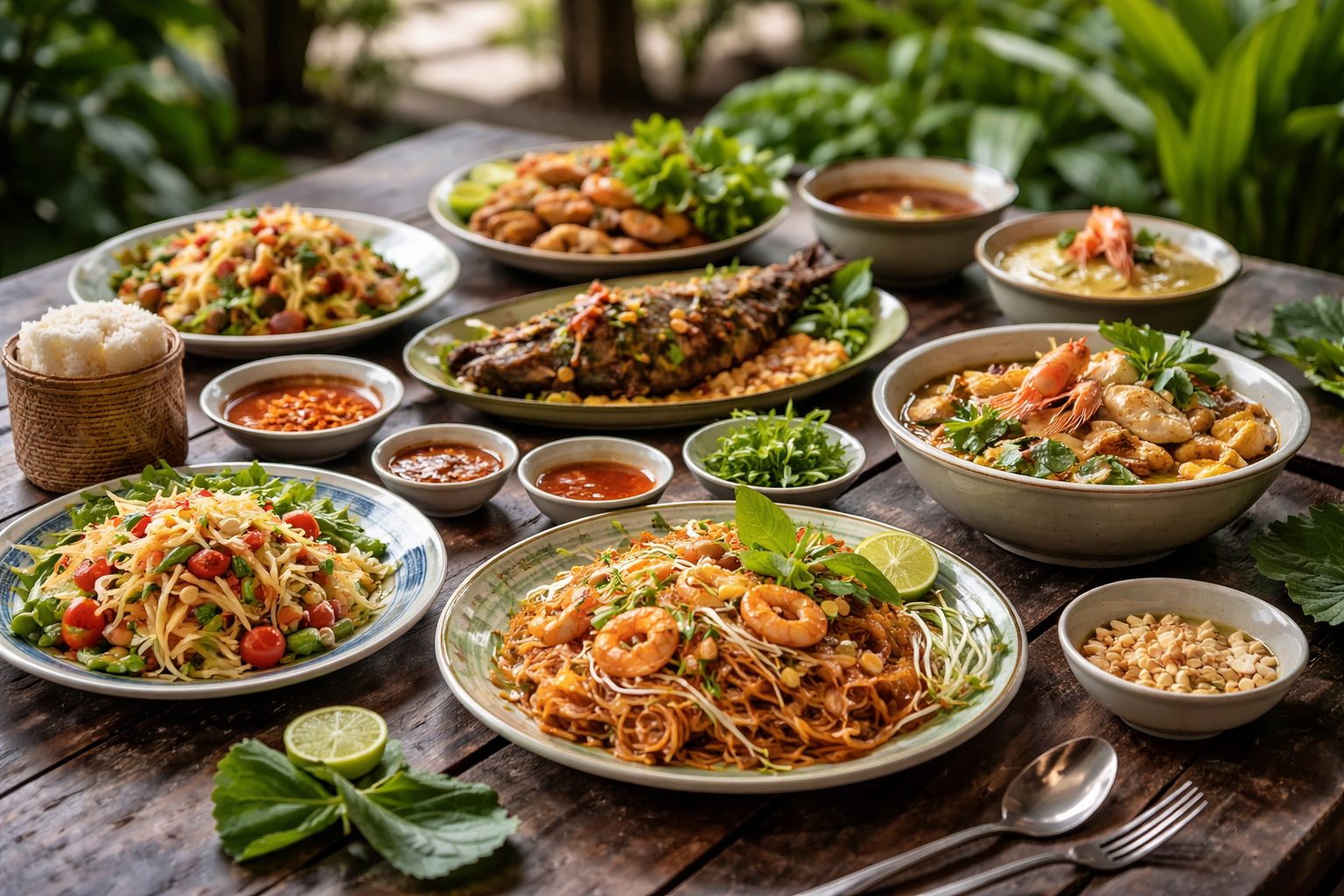
Thai cuisine is one of the most complex and internally consistent food traditions in Asia. Every dish reflects a deliberate philosophy: balance. Not just balance of flavors, but balance of texture, color, temperature, and nutritional profile. Thai cooks think holistically in a way that Western culinary training has only recently started to formalize.
The cuisine draws from centuries of cultural exchange with China, India, Portugal, and neighboring Southeast Asian countries. Yet it absorbed those influences without losing its own character. A Thai curry doesn’t taste Indian. A Thai stir-fry doesn’t taste Chinese. That’s a remarkable achievement when you look at the history.
What makes food thailand so compelling to outsiders is its accessibility. You can enjoy it at every economic level — from a 30-baht bowl of noodles on a plastic stool to a meticulously plated dish at a Michelin-starred restaurant in Bangkok. The gap in quality is smaller than you’d expect.
The Essence of Thai Food
At its core, Thai food is built on five flavor principles: sour, sweet, salty, bitter, and spicy. Unlike many cuisines that lean into one or two dominant profiles, Thai cooking actively seeks harmony across all five. A well-made som tum hits you with sourness from lime, sweetness from palm sugar, saltiness from fish sauce, heat from chilies, and a slight bitterness from the raw papaya. All at once.
This approach to food thailand distinguishes it from nearly every other major cuisine. There’s an intentionality behind every component. Nothing is accidental.
The cuisine also prizes freshness. Herbs are added at the last moment. Vegetables retain their crunch. Soups are built quickly over high heat to preserve brightness. Even the garnishes — a wedge of lime, a handful of bean sprouts, a sprig of Thai basil — are considered functional, not decorative.
Understanding this philosophy makes you a better eater and, if you cook, a better cook. It reframes how you think about seasoning and balance in every kitchen, not just a Thai one.
Popular Thai Dishes
Pad Thai: The National Dish
Pad thai is probably the dish most travelers encounter first, and it deserves its reputation. Rice noodles stir-fried with egg, tofu or shrimp, bean sprouts, and green onion, finished with tamarind, fish sauce, and palm sugar — it’s a complete meal in a single plate. The condiments served alongside it (dried chili flakes, sugar, vinegar, fish sauce) allow you to adjust the flavor to your preference, which is very Thai.
What many visitors don’t realize is that pad thai as we know it today was partly the result of a 1930s government campaign to promote national identity and reduce rice consumption. It’s a relatively modern dish with a political origin story. Doesn’t make it any less delicious.
Tom Yum Goong: Spicy Shrimp Soup
Tom yum goong is a clear, hot-and-sour broth built on lemongrass, galangal, kaffir lime leaves, chilies, and lime juice. The shrimp version is most famous internationally, but you’ll find it made with chicken, mushrooms, and mixed seafood throughout Thailand.
The broth is the soul of this dish. It’s intensely aromatic and layered in a way that seems simple until you try to replicate it. The lemongrass alone can’t carry it — it needs the citrusy punch of kaffir lime, the earthiness of galangal, and the brightness of fresh lime juice all working together.
Som Tum: Green Papaya Salad
Som tum originates from the Isaan region in northeastern Thailand but has spread across the entire country and beyond. It’s made by pounding unripe green papaya with a mortar and pestle, mixing in tomatoes, long beans, dried shrimp, peanuts, fish sauce, lime, and chilies.
The texture is everything here. The semi-crushed papaya absorbs the dressing while retaining some crunch. It’s spicy, tangy, slightly sweet, and satisfying in a way that feels light but fills you up. In Isaan, they eat it with sticky rice and grilled chicken. That combination is one of the best meals you can have in Thailand for under five dollars.
Massaman Curry: A Unique Blend
Massaman curry stands apart from other Thai curries because of its Muslim southern roots and its heavy use of spices more common in Indian and Persian cooking — cinnamon, cardamom, cloves, star anise. The result is a richer, warmer, more fragrant curry than the standard green or red versions.
It’s typically made with beef or chicken, potatoes, peanuts, and coconut milk. The sweetness of the coconut plays beautifully against the warming spices. In 2011, CNN Travel readers voted it the world’s most delicious food. It’s a bold claim, but I’d argue it’s not wrong.
Mango Sticky Rice: A Sweet Delight
Khao niao mamuang — mango with sticky rice — is one of the most iconic Thai desserts. The sticky rice is cooked in sweetened coconut milk, then served alongside slices of ripe, fragrant mango and drizzled with more coconut cream. Simple in concept, extraordinary in execution when the mango is perfectly ripe.
The seasonal nature of it matters. The best versions appear between March and May when nam dok mai mangoes are at peak ripeness. If you’re visiting outside mango season, you’ll still find it, but it won’t be quite the same.
Regional Variations in Thai Food
Northern Thai Cuisine
Northern Thai food, centered around Chiang Mai, is distinctly different from what most people picture when they think of Thai cuisine. It’s less reliant on coconut milk and uses more fresh herbs, fermented ingredients, and bitter vegetables. Portions tend to be earthier and more rustic.
Khao soi is the signature dish — a coconut milk curry broth with egg noodles, topped with crispy fried noodles and served with pickled vegetables and lime. It’s rich and complex, with clear Burmese and Yunnanese Chinese influence. Another staple is sai oua, a northern Thai herb sausage packed with lemongrass, galangal, and kaffir lime, grilled over charcoal until the skin blisters.
Northeastern Thai Cuisine (Isaan)
Isaan cuisine is arguably the most distinct regional food culture in Thailand. It draws heavily from Lao cooking traditions and is characterized by bold, fermented flavors, grilled meats, and sticky rice as the staple carbohydrate.
Laab (a spiced meat salad with toasted rice powder and herbs), gai yang (char-grilled chicken), and the already-mentioned som tum define the Isaan table. The flavors are intense — funkier, smokier, and more assertive than central Thai food. Isaan migrants have spread their cuisine throughout Bangkok and beyond, making it now accessible everywhere.
Central Thai Cuisine
Central Thailand, particularly Bangkok, is where the royal court tradition of Thai cooking was developed and refined. This is the cuisine most often represented internationally — the curries, the pad thai, the jasmine rice, the stir-fries. It’s balanced, refined, and more reliant on coconut milk than the north or northeast.
The royal Thai culinary tradition emphasized visual presentation alongside flavor. Dishes were carved, arranged, and garnished with a level of care that elevated eating into ceremony. That aesthetic sensibility still shows up in high-end Thai restaurants today.
Southern Thai Cuisine
Southern Thai food is the hottest and most intensely spiced of all regional variations. Proximity to Malaysia and the heavy use of turmeric, dried chilies, and shrimp paste give it a distinct character. Curries here are often drier and darker than central Thai versions.
Gaeng tai pla (a punishingly spicy fish kidney curry) and khao yam (a rice salad with dried seafood and tropical herbs) are southern specialties you won’t easily find in Bangkok. The region also produces some of Thailand’s best seafood, and coastal dishes reflect that abundance directly.
Street Food in Thailand
Iconic Street Food Dishes
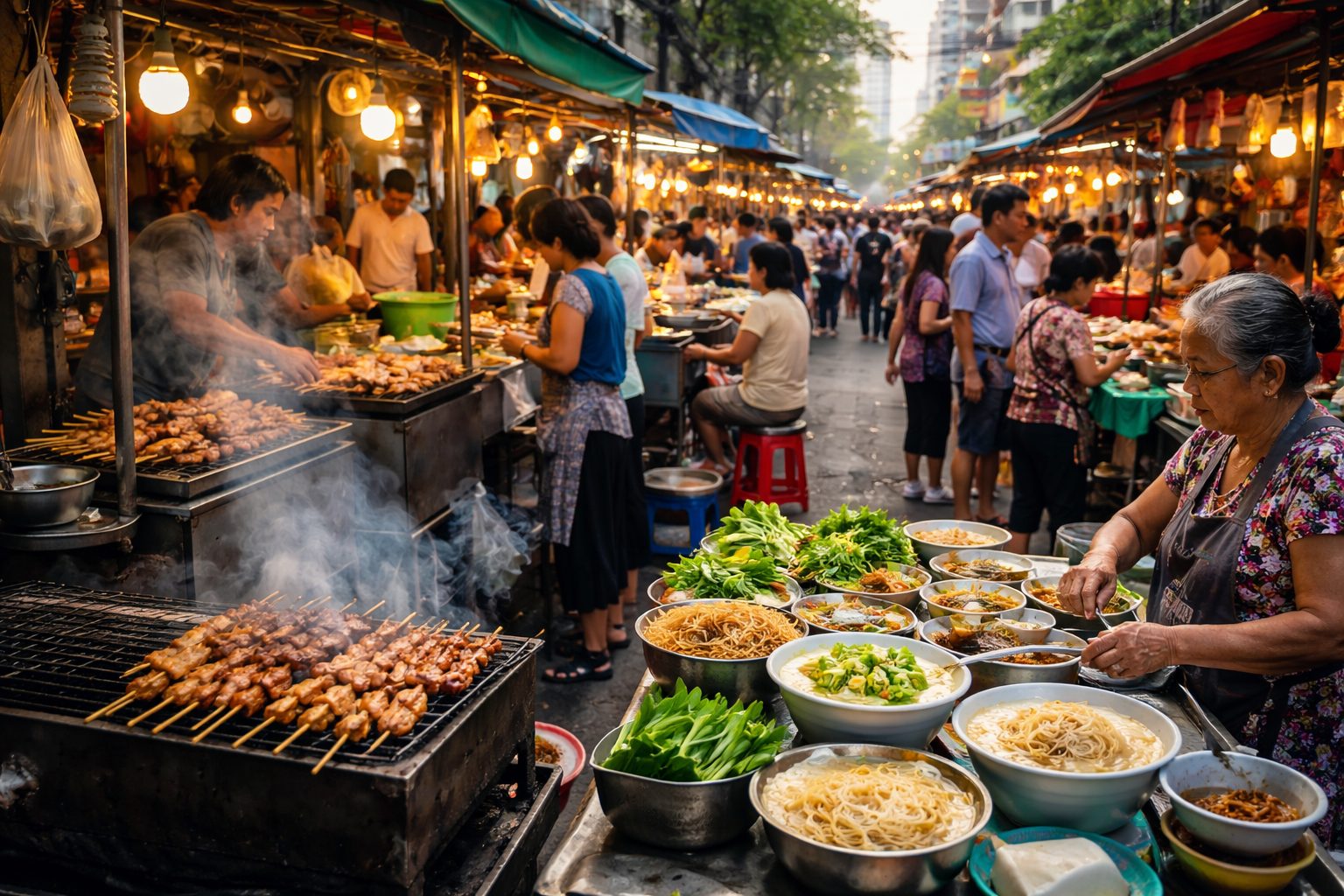
Street food is where food thailand truly comes alive for most visitors. The variety is staggering. In a single block in Bangkok, you might encounter grilled pork skewers, pad see ew, boat noodles, mango sticky rice, fresh-squeezed sugarcane juice, and roti with condensed milk — all from different vendors, all excellent.
Some of the most iconic street dishes include:
- Pad kra pao (stir-fried basil with meat and a fried egg on rice) — the real Thai comfort food
- Guay teow (rice noodle soup, available with pork, beef, or chicken)
- Satay (grilled meat skewers with peanut sauce and cucumber relish)
- Kanom krok (coconut rice pancakes, crispy outside, creamy inside)
- Hoy tod (oyster or mussel pancake with bean sprouts and egg)
Best Street Food Locations in Bangkok
Bangkok is one of the world’s great street food cities. A few locations consistently deliver:
- Yaowarat (Chinatown) — especially at night, when seafood stalls set up along the main road
- Victory Monument — a hub for northeastern Thai street food, particularly boat noodles
- Or Tor Kor Market — a more upscale market near Chatuchak with exceptional quality ingredients and prepared food
- Sukhumvit Soi 38 — a classic tourist-friendly street food street that still delivers quality
- Khlong Toei Market — the largest wet market in Bangkok, best visited early morning
Street Food Etiquette
Navigating street food in Thailand is easier than it looks, but a few habits make the experience smoother:
- Point and use numbers if there’s a language barrier — vendors are used to it
- Carry small bills; most stalls don’t handle large denominations easily
- Don’t ask for discounts at food stalls — prices are already fair
- Eat where locals eat, especially if you’re watching for freshness
- Plastic bags are common for takeaway liquids; don’t be surprised when your soup arrives in a bag
Thai Ingredients: What Makes Thai Food Unique
Herbs and Spices
The herb profile of Thai cooking is one of its most distinctive features. Thai basil (different from Italian basil — sweeter, with an anise note), lemongrass, galangal, kaffir lime leaves, cilantro, and Thai bird’s eye chilies form the foundation. These aren’t background flavors — they’re structural.
Fresh turmeric appears heavily in southern cooking. Pandan leaves add fragrance to desserts and rice dishes. Sawtooth coriander (also called culantro) provides a more intense cilantro-like punch in Isaan dishes.
Key Ingredients in Thai Cooking
Beyond herbs, a few ingredients recur constantly:
- Coconut milk — the fat base for most curries and many desserts
- Palm sugar — gentler and more complex than white sugar
- Tamarind paste — the souring agent in pad thai and many central Thai dishes
- Jasmine rice — the everyday staple throughout most of the country
- Sticky (glutinous) rice — preferred in the north and northeast
The Role of Fish Sauce and Shrimp Paste
Fish sauce (nam pla) is to Thai cooking what soy sauce is to Japanese or Chinese cooking — it’s the fundamental umami base. It adds saltiness and depth simultaneously. A Thai cook tastes with fish sauce the way a French cook seasons with salt. It’s not optional.
Shrimp paste (kapi) is more pungent and used primarily in curry pastes and as a dipping accompaniment. Fermented and intensely flavored, it provides a backbone of funk that makes Thai curries taste distinctly Thai rather than generic. If a curry tastes flat, shrimp paste is often what’s missing.
Cooking Techniques in Thai Cuisine
Stir-Frying
High-heat stir-frying (pad in Thai) is the most common everyday technique. A wok over an extremely hot flame, a small amount of oil, and ingredients added in a specific sequence produce dishes in minutes. The high heat creates wok hei — a smokiness and slight char that you genuinely cannot replicate on a home stove with normal burners. It’s one reason restaurant Thai food often tastes different from homemade versions.
Steaming
Steaming is used for dumplings, fish, certain curries wrapped in banana leaves, and desserts. It’s a gentler technique that preserves delicate textures and clean flavors. Ho mok (steamed fish curry custard in banana leaf cups) is a perfect example — the texture is silky, the flavor delicate, only possible through steaming.
Grilling
Grilling over charcoal is central to Isaan cooking especially. Gai yang (grilled chicken marinated in lemongrass, garlic, and fish sauce) and moo ping (pork skewers) are cooked over low charcoal heat for an extended time, building smoky depth and caramelized char without burning.
Curry Preparation
Making a Thai curry from scratch is a multi-stage process that starts with pounding a paste — fresh chilies, lemongrass, galangal, shallots, garlic, shrimp paste — in a mortar until completely smooth. That paste is then fried in coconut cream (the thick fat that separates from coconut milk) until fragrant before the remaining liquid, protein, and vegetables are added. The paste-frying step is critical and often skipped in shortcuts — it’s where the raw edge of the aromatics cooks out and the flavor deepens.
Dining Culture in Thailand
Traditional Thai Meal Structure
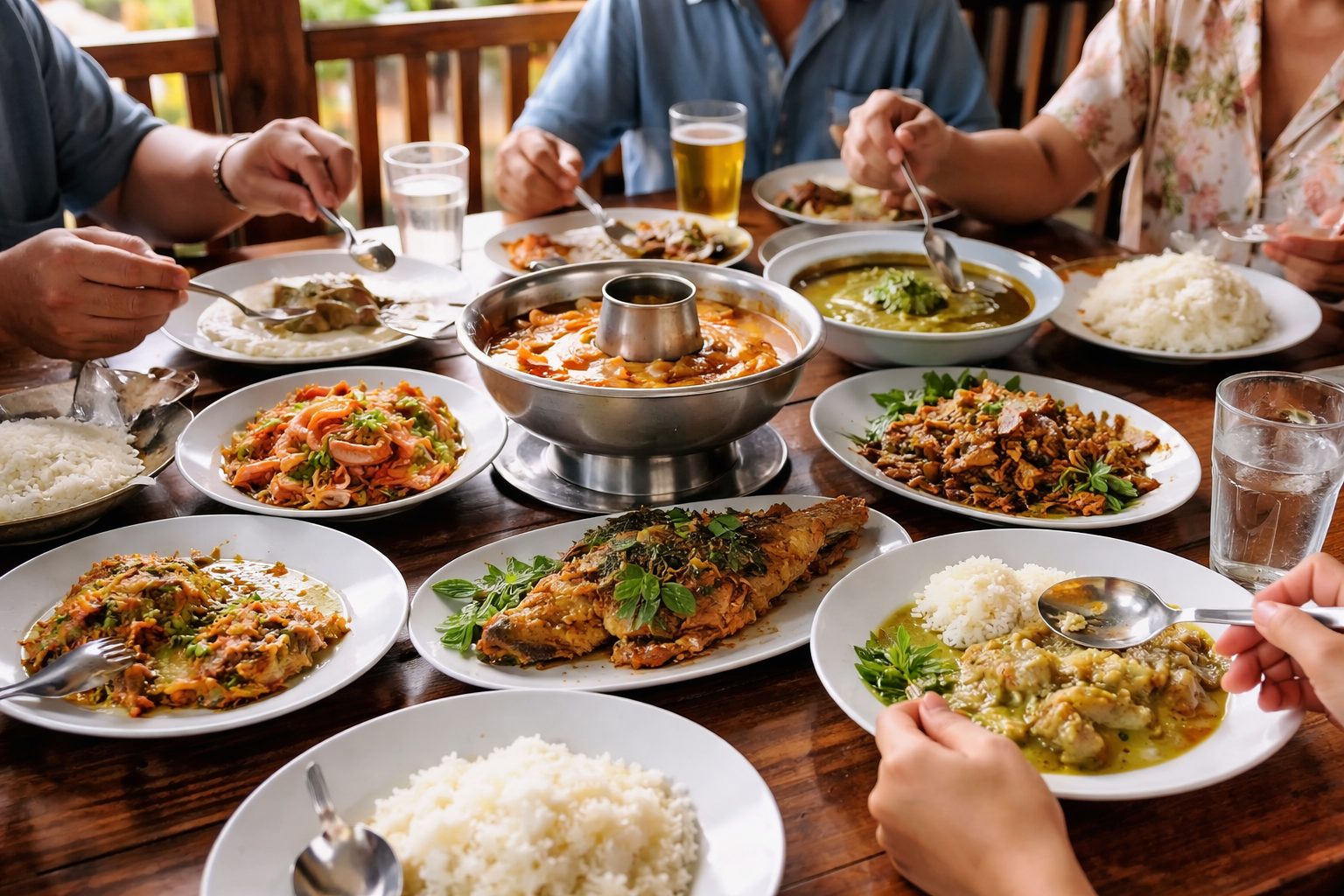
A Thai meal is not structured around courses the way a Western meal is. Multiple dishes arrive simultaneously — a curry, a stir-fry, a soup, a salad, and rice — and everyone at the table shares everything. The soup is sipped throughout the meal, not consumed first. Rice is the constant anchor around which all other dishes orbit.
How to Eat Thai Food
Use a spoon and fork, not chopsticks — chopsticks are reserved for noodle dishes. The spoon does most of the work: scooping rice, carrying bites to the mouth. The fork is used to push food onto the spoon. It feels awkward for about ten minutes, then becomes completely natural.
Don’t put a whole spoonful of curry on your rice at once. Take small amounts of each dish with each bite of rice, rotating through the dishes as you go. This is how the flavors stay balanced throughout the meal.
Importance of Sharing in Thai Dining
Sharing is not just a practical arrangement in Thai dining — it’s a social philosophy. Eating alone in Thailand carries a mild cultural stigma. The more dishes on the table, the more generous the host. Ordering one dish for yourself at a Thai restaurant is technically fine, but it misses the point of the experience.
When eating with Thai friends or colleagues, you’ll notice that ordering is a collective decision, not an individual one. Someone takes charge and orders for the group based on variety and balance, not personal preference alone.
Health Benefits of Thai Food
Nutritional Value of Common Ingredients
Thai food is, by and large, one of the healthier global cuisines when eaten as Thais actually eat it. The heavy use of fresh herbs provides antioxidants and anti-inflammatory compounds. Galangal and ginger have well-documented digestive benefits. Turmeric contains curcumin, now extensively studied for its anti-inflammatory properties.
Lemongrass has antimicrobial qualities. Kaffir lime is rich in antioxidants. Even the chilies — capsaicin is linked to metabolic benefits and has cardiovascular effects that researchers are still mapping. The ingredients in a bowl of tom yum are doing quite a lot of biochemical work.
The Balance of Flavors and Health
The five-flavor philosophy isn’t just about taste — it reflects a broader concept of balance borrowed partly from traditional Thai medicine. Sweet, sour, salty, bitter, and spicy each correspond to different bodily systems in traditional thought. Whether you accept that framework or not, the practical result is a cuisine that naturally avoids excess of any single element.
Portion sizes in traditional Thai eating are also moderate. Rice is the bulk, and the dishes surrounding it are eaten in small amounts — more condiment than main event. The Western tendency to eat a plate of curry alone, without rice, actually changes the nutritional profile significantly.
Vegetarian and Vegan Thai Options
Popular Vegan Dishes
Thailand has a robust tradition of Buddhist vegetarian cooking, and many dishes are naturally plant-based or easily adapted. The following are reliable vegan or vegetarian options:
- Pad pak ruam (stir-fried mixed vegetables)
- Gaeng jeud (clear vegetable soup)
- Som tum without dried shrimp or fish sauce (ask for jay version)
- Mango sticky rice (naturally vegan)
- Spring rolls with vegetable filling (po pia tod)
- Khao pad pak (vegetable fried rice)
Tips for Finding Vegetarian Options in Thailand
The main challenge for vegetarians in Thailand is fish sauce and shrimp paste — they appear in dishes that seem vegetable-based. The word to know is “jay” (เจ), which signals fully vegan in the context of Chinese-Buddhist vegetarian cooking. Jay restaurants and food stalls display a yellow flag and are completely animal-product free.
Outside jay establishments, communicate clearly:
- Say “mai sai nam pla” (no fish sauce)
- Say “mai sai kapi” (no shrimp paste)
- Ask if the dish uses oyster sauce, which is often hidden in stir-fries
- Look for jay flags in markets — yellow flag with red Chinese characters
Bangkok and Chiang Mai have strong vegetarian restaurant scenes. In more rural areas, options narrow considerably, but rice and stir-fried vegetables are always available.
Food Tourism in Thailand
Culinary Tours and Classes
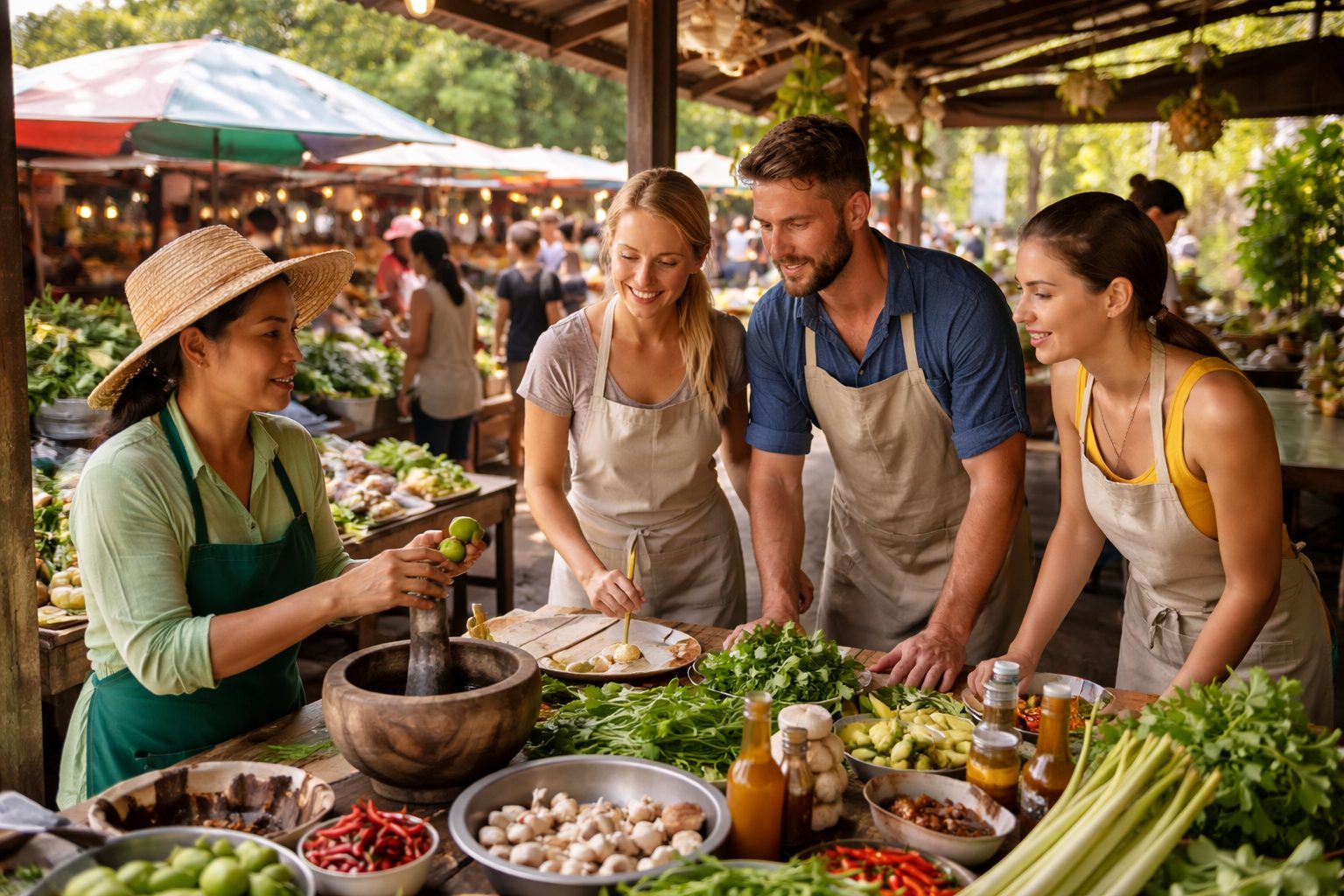
Cooking classes are one of the most popular activities for visitors, and for good reason — they give you skills and insight that change how you eat Thai food forever. The best classes include a market visit before cooking, so you understand ingredients before you start. Look for small group classes with actual Thai instructors rather than large tourist operations.
Some well-regarded options:
- Chiang Mai: The Chiang Mai Thai Cookery School and many smaller operations in the old city
- Bangkok: Blue Elephant Cooking School for a high-end experience; Silom Thai Cooking School for something more local in feel
- Ayutthaya: Several operators offer classes focused on central Thai royal cuisine
Culinary tours — guided walks through markets and food streets — are also increasingly popular and worth doing before attempting to navigate solo.
Food Festivals in Thailand
Thailand’s food calendar is worth planning around:
- Vegetarian Festival (Tesagan Gin Je): October, centered in Phuket but celebrated nationwide — nine days of strict vegan eating and elaborate ceremonies
- Chiang Mai Flower Festival: February, with significant food market components
- Bangkok’s various street food festivals throughout the year, often organized by district
- Songkran (Thai New Year, April): Not a food festival per se, but traditional foods appear everywhere during the celebration
Food tourism in Thailand rewards patience and curiosity. The best meals are rarely the ones in tourist-oriented restaurants — they’re the ones you stumble into down an unmarked street.
Conclusion: The Allure of Thai Food
Spending real time with food thailand changes you in a specific way. You stop thinking of flavor as something that happens in one dimension. You start expecting balance rather than dominance. You become impatient with one-note food. That’s not a complaint — it’s a gift the cuisine gives you.
Thai food has survived globalization with its integrity largely intact because it’s fundamentally difficult to fake. You can make something that looks like a Thai curry, but if you’re missing the fresh paste, the right fish sauce, the kaffir lime, the specific heat sequence — it tastes like a reasonable approximation, not the real thing. That’s actually what makes food thailand worth traveling for. Some things still require you to go to the source.
Whether you’re planning your first trip to Bangkok or your tenth, let the food drive at least part of your itinerary. Eat on plastic stools in market alleyways. Take a cooking class in Chiang Mai. Sit down to a proper southern Thai meal in Hat Yai. Let the flavors be your guide, not the other way around.
Frequently Asked Questions (FAQs)
What is the most famous Thai dish?
Pad thai holds that title internationally, though within Thailand, pad kra pao (basil stir-fry with rice) is arguably the most commonly eaten everyday dish. Both are worth trying early in any Thai food journey.
How spicy is Thai food?
It varies significantly by region and dish. Southern Thai food is the spiciest, while central Thai cuisine is more moderate. You can always request “pet nit noi” (a little spicy) or “mai pet” (not spicy) — most vendors will accommodate you, though results vary.
Are there vegetarian options in Thai cuisine?
Yes, more than most people expect. Look for restaurants displaying a yellow jay flag for fully vegan menus. In regular restaurants, many dishes can be adapted by requesting no fish sauce or shrimp paste, though cross-contamination is possible.
What is the best way to experience Thai food?
Eat where locals eat, eat often, and eat with others. Street food, market stalls, and local shophouses will serve you better than tourist-oriented restaurants in most cases. A cooking class early in your trip gives you vocabulary that makes the rest of the eating more meaningful.
How can I cook authentic Thai food at home?
Start with a well-stocked pantry: fish sauce, good coconut milk, palm sugar, tamarind paste, and fresh kaffir lime leaves. Make your own curry pastes from scratch at least once — it’s the fastest way to understand what goes into them. After that, jarred paste is a reasonable shortcut for weeknight cooking.