There’s something deeply satisfying about slipping into naturally heated water while surrounded by mountains, jungle, or volcanic landscape. I’ve spent years tracking down some of the best places for hot springs across multiple continents, and each experience has been completely different. Some were polished resort pools with mineral-rich water and towel service. Others were unmarked natural pools you had to hike to find. Both kinds are worth it.
Hot springs draw millions of visitors every year, and it’s not hard to understand why. The combination of therapeutic minerals, scenic settings, and genuine relaxation makes them stand apart from any ordinary swimming pool or spa. Whether you’re planning a dedicated soaking trip or just looking to add a natural hot spring to an existing itinerary, knowing where to go makes all the difference.
Introduction to Hot Springs
The appeal of hot springs crosses every culture and continent. In Japan, soaking in an onsen is practically a national ritual. In Iceland, geothermal pools are part of daily life. In North America, explorers and indigenous communities have known about these mineral waters for centuries. The best places for hot springs tend to cluster around volcanic activity, tectonic plate boundaries, and geothermal zones, which is why destinations like Iceland, New Zealand, Japan, and parts of the American West consistently rank at the top of any serious list.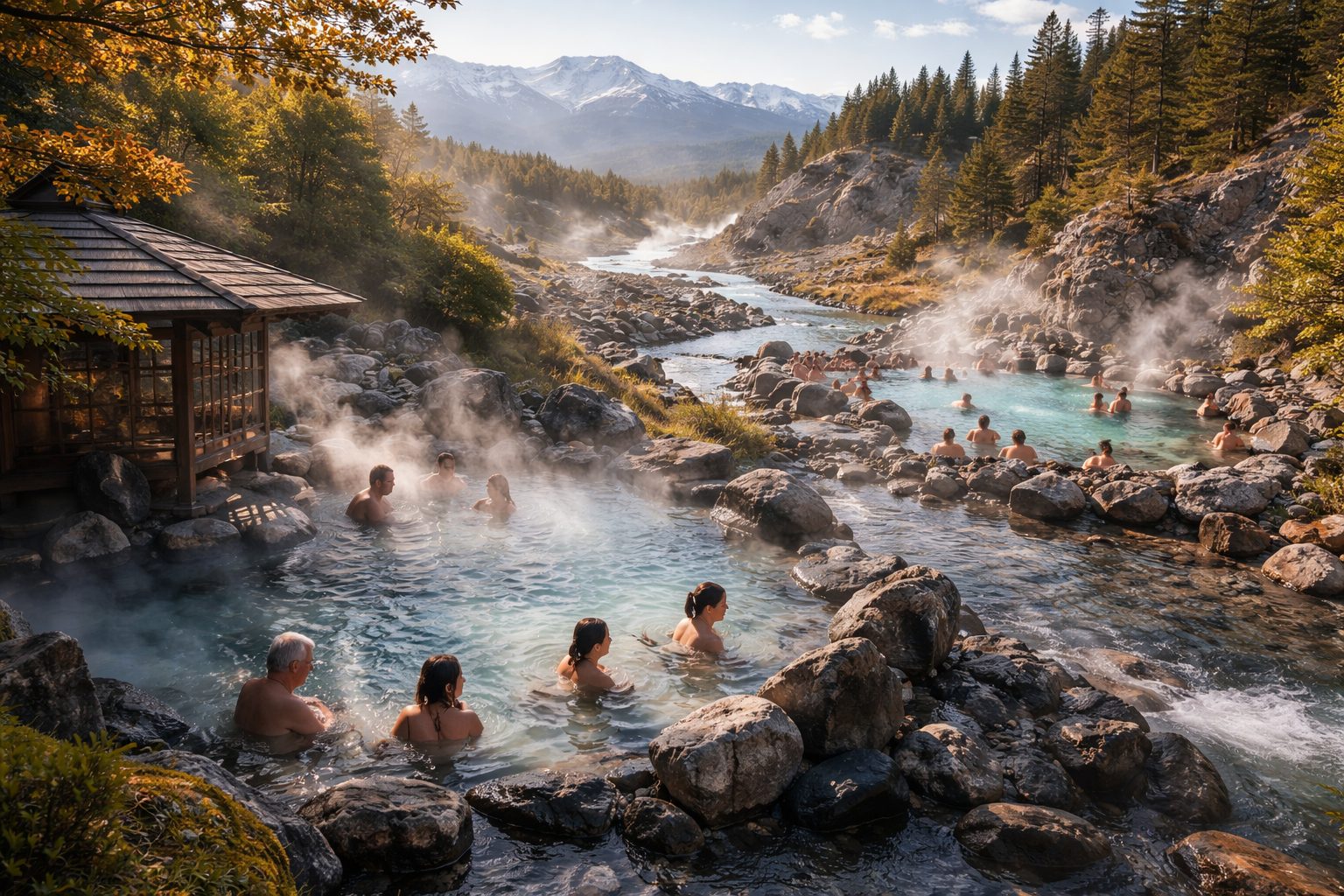
What strikes most people on their first visit is how different natural hot springs feel compared to a heated pool. There’s a softness to the water, a slight sulfuric smell in some locations, and a heaviness that makes your muscles relax almost immediately. That’s not placebo. The mineral content and heat work together in ways that are hard to replicate artificially.
What Are Hot Springs?
Hot springs are geothermal features where groundwater is heated by the earth’s internal heat and rises to the surface. The water typically picks up minerals as it moves through rock, which is why hot spring water is often rich in calcium, magnesium, silica, sulfur, and other compounds. The temperature can range from pleasantly warm to dangerously scalding, depending on how deep the water originates and how quickly it reaches the surface.
Not all hot springs are the same. Some emerge as free-flowing streams. Others pool naturally in rocky basins. Many have been developed into commercial bathing facilities with controlled temperatures and amenities. In geologically active regions like Yellowstone or Rotorua, hot springs can be so hot that swimming is impossible and dangerous. Always check temperatures before entering any natural spring.
The geothermal energy that powers hot springs is the same energy used in some countries for heating homes and generating electricity. Iceland is the clearest example of this, where nearly the entire country runs on geothermal power. That context gives you a sense of how much heat is actually involved.
Benefits of Visiting Hot Springs
People have been bathing in hot springs for medical and relaxation purposes for thousands of years. While not every claim about hot spring benefits is scientifically proven, there’s solid evidence behind several of them.
- Muscle relaxation: The heat dilates blood vessels and increases circulation, which helps muscles loosen up. This is particularly noticeable after physical activity.
- Stress reduction: Immersion in warm water triggers a parasympathetic response in the body, lowering cortisol levels and promoting a calmer state of mind.
- Skin benefits: Mineral-rich water, particularly water high in silica or sulfur, can improve skin texture and help with certain conditions. Iceland’s Blue Lagoon built an entire skincare brand around this.
- Joint relief: People with arthritis or chronic joint pain often report real improvement after regular soaking. The buoyancy reduces pressure on joints while heat increases mobility.
- Sleep improvement: Soaking in the evening raises body temperature, and the subsequent cooling when you exit promotes deeper sleep.
Beyond the physical, there’s the mental reset that comes from being somewhere genuinely beautiful and doing absolutely nothing. That matters too.
Top Hot Springs Destinations Worldwide
On a global scale, a handful of destinations consistently rise to the top when people are searching for the best places for hot springs. These aren’t just popular for tourism purposes. They’re considered exceptional because of the quality of the water, the setting, the cultural context, and the overall experience.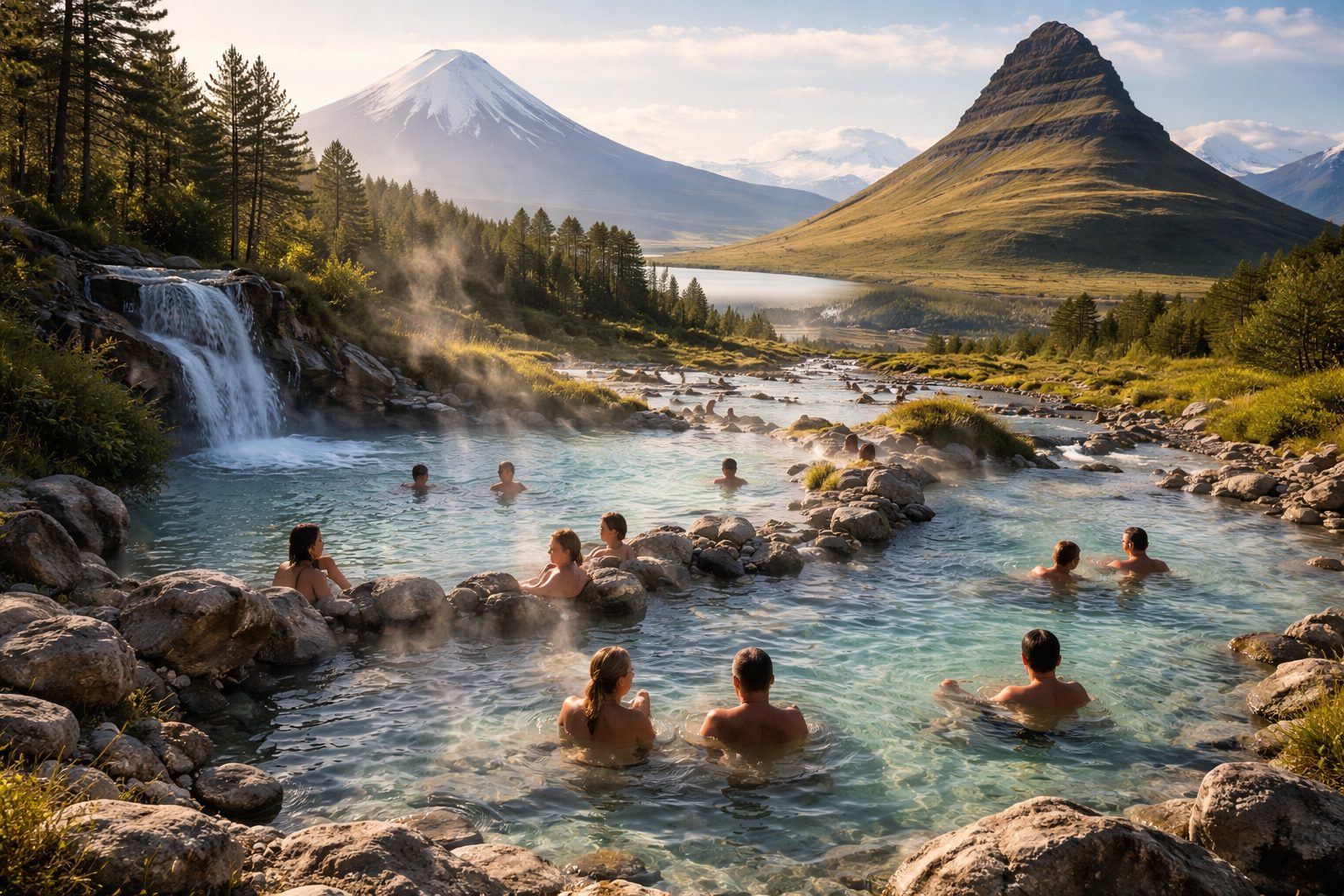
| Destination | Region | Water Type | Best For |
|---|---|---|---|
| Hakone / Beppu, Japan | Asia | Volcanic mineral water | Cultural experience, onsen etiquette |
| Blue Lagoon, Iceland | Europe | Geothermal silica-rich water | Luxury soaking, skin treatment |
| Yellowstone, USA | North America | Superheated geothermal | Viewing, some accessible pools nearby |
| Arenal, Costa Rica | Central America | Volcanic thermal pools | Jungle setting, resort pools |
| Rotorua, New Zealand | Oceania | Sulfuric geothermal water | Natural pools, Maori culture |
Each of these offers something the others don’t, so the best destination depends on what you’re after.
1. Japan: The Land of Onsen
Japan treats hot spring bathing as a serious cultural practice, not just a recreational activity. The country has thousands of onsen (natural hot spring baths) spread across nearly every region. Hakone, about 90 minutes from Tokyo, is one of the most accessible. Beppu in Kyushu is arguably the most dramatic, with eight distinct zones of geothermal activity including boiling mud pools and brilliantly colored mineral springs. Kinosaki Onsen in the Hyogo region offers a more traditional town experience where you walk between bathhouses in a yukata robe.
The etiquette matters here. You bathe nude, you wash thoroughly before entering any communal pool, and tattoos are still prohibited in many facilities. Going in knowing this makes the experience far smoother.
2. Iceland: Geothermal Wonders
Iceland sits directly on the Mid-Atlantic Ridge, which makes geothermal activity inescapable. Hot springs exist across the country, from the famous Blue Lagoon near Reykjavik to lesser-known spots like the Reykjadalur hot spring river in the highlands and the Landmannalaugar pools in the interior. The water temperature varies widely by location.
What makes Iceland distinctive is the contrast of soaking in warm, mineral-rich water while snow covers the ground or the northern lights drift overhead. That’s an experience that’s hard to find anywhere else on earth.
3. United States: National Parks with Hot Springs
The American West is loaded with geothermal activity. Yellowstone National Park in Wyoming is the most famous geothermal region in the country, though most of its springs are too hot for swimming. Hot Springs National Park in Arkansas is the exception, with bathhouses fed by naturally heated spring water that’s been channeled for bathing since the 1800s. Outside the parks, Colorado, New Mexico, California, and Oregon have dozens of developed and primitive hot springs accessible to the public.
4. Costa Rica: Natural Thermal Pools
The Arenal Volcano region of Costa Rica hosts some of the most scenic thermal pools in the Americas. Several resorts have channeled hot spring water into tiered pools overlooking the jungle, and the water stays genuinely warm from geothermal sources, not boilers. The setting, with cloud forest, tropical birds, and a volcanic backdrop, makes this one of the most atmospheric soaking experiences available.
The Tabacon Grand Spa is one of the best-known options, but smaller properties in the area offer similar water at lower prices. And if you’re willing to walk, there are natural pools in the Arenal area that cost nothing.
5. New Zealand: A Geothermal Wonderland
Rotorua on the North Island is the center of New Zealand’s geothermal activity, with a persistent sulfuric smell hanging over the city as a constant reminder of what’s beneath the surface. The Polynesian Spa in Rotorua is one of the best-developed hot spring facilities in the southern hemisphere, with pools ranging from relaxing to restorative. Outside the city, Wai-O-Tapu and other thermal parks let you see geysers, boiling mud pools, and vividly colored mineral lakes up close.
For natural pools, the Kerosene Creek outside Rotorua is free and genuinely wild. You’ll find yourself soaking in a forest stream heated by geothermal activity, which is exactly as good as it sounds.
Best Hot Springs in North America
North America has more accessible hot springs than most people realize. The American West alone has hundreds of known springs, and Canada has its own share of excellent options. These are three of the strongest choices on the continent.
1. Yellowstone National Park, Wyoming
Yellowstone is the most geothermally active region in North America, sitting atop a supervolcano that drives constant thermal activity. Grand Prismatic Spring, Mammoth Hot Springs terraces, and the famous Old Faithful geyser complex are all part of the same system. Most of the water here is far too hot and chemically aggressive for swimming, but the visual experience is unlike anything else in the country.
For actual soaking near Yellowstone, the Boiling River at the park’s north entrance is one of the few sanctioned swimming spots, where hot spring water mixes with the Gardner River to create a warm, swimmable stretch. It fills up fast, but it’s worth the early start.
2. Banff Upper Hot Springs, Canada
The Banff Upper Hot Springs in Alberta sit at the base of Sulphur Mountain in Banff National Park, and the setting alone is worth the visit. Snow-capped peaks surround the pool, and the water is a genuine geothermal spring. The facility has been operating since the 1880s, and while it’s been developed, it retains a lot of character. The water temperature hovers around 37 to 40 degrees Celsius, warm enough to be therapeutic but cool enough for a long soak.
This is one of the most visited hot springs in Canada, so expect crowds on weekends. Going on a weekday or during off-season makes the experience significantly better.
3. Hot Springs National Park, Arkansas
Hot Springs National Park is the oldest federal reservation in the United States, predating the national park system itself. The city of Hot Springs grew up around the 47 thermal springs on the hillside, and the historic Bathhouse Row on Central Avenue is a striking piece of American architectural history. The Quapaw Baths and Fordyce Bathhouse are both worth visiting, one for bathing and one as a museum showing what the bathhouse culture of the early 20th century actually looked like.
The water here is genuinely thermal, emerging from the ground at around 62 degrees Celsius and then cooled to a bathing temperature. It’s odorless and colorless, which makes it more approachable for first-time hot spring visitors.
Best Hot Springs in Europe
Europe has a rich tradition of thermal bathing that goes back to Roman times. The Romans built bathhouses wherever they found hot springs, and many of those traditions continue today. Three European destinations stand out for quality, uniqueness, and overall experience.
1. Blue Lagoon, Iceland
The Blue Lagoon is one of the most photographed geothermal experiences in the world, and it mostly lives up to the images. The milky blue color comes from silica suspended in the water, and the mineral content is genuinely high. The facility has developed significantly over the years, with multiple pools, spa services, and a hotel. It’s not cheap, and it’s crowded during peak season. But the experience of floating in that otherworldly blue water with steam rising around you is hard to forget.
For a more local alternative, the Sky Lagoon in Reykjavik offers a similar experience with an oceanfront setting and is slightly less visited than the Blue Lagoon.
2. Terme di Saturnia, Italy
In Tuscany, the Terme di Saturnia is a natural hot spring cascade that’s been drawing visitors for centuries. The most famous feature is the Cascate del Mulino, where warm mineral water flows over natural travertine terraces forming a series of pools. The public portion is free and accessible year-round. The water temperature stays around 37 degrees Celsius regardless of the season, and the setting, with rolling Tuscan hills in the background, is genuinely beautiful.
There’s also a resort attached to the springs, but the free pools are what most travelers come for. Come early in the morning to avoid the crowds, especially in summer.
3. Spa Towns in the Czech Republic
Western Bohemia in the Czech Republic has one of Europe’s oldest traditions of thermal bathing. Karlovy Vary (Carlsbad), Marianske Lazne, and Frantiskovy Lazne form a UNESCO-recognized spa landscape called the Great Spa Towns of Europe. Karlovy Vary is the most famous, known for its colonnaded promenades, hot spring fountains, and elegant 19th-century architecture.
The tradition here is as much about drinking the mineral water as bathing in it. Visitors walk between spring colonnades sipping water from decorated ceramic cups. It’s a deeply unusual and oddly compelling experience that connects you to a centuries-old European health culture.
Best Natural Hot Springs
Developed facilities are convenient, but natural hot springs, where you’re soaking in unaltered geothermal water in an undeveloped setting, offer something completely different. These three locations are among the best natural options currently accessible.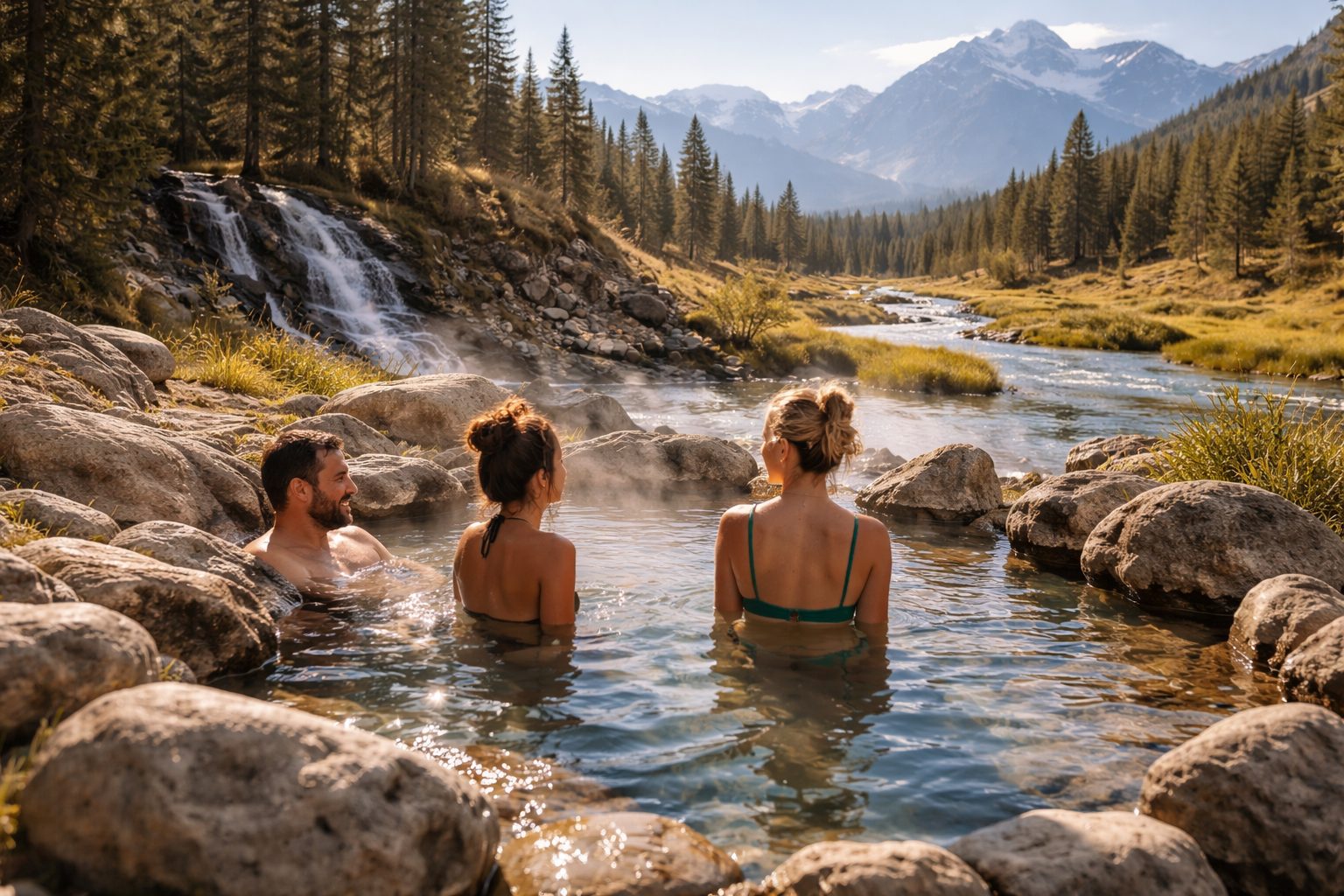
1. Natural Hot Springs in California
California has a surprising number of natural hot springs given how populated the state is. The Eastern Sierra is particularly rich, with spots like Wild Willy’s Hot Spring near Mammoth Lakes, the Travertine Hot Springs near Bridgeport, and the Hot Creek Geological Site outside Mammoth. Most are free, undeveloped, and accessible with a short walk.
Sespe Hot Springs in the Los Padres National Forest requires a full-day hike to reach, which keeps it less crowded. The remote Tecopa Hot Springs near Death Valley are another option, especially popular in the winter months when temperatures in the desert are mild.
2. Outdoor Hot Springs in Japan
Beyond the resort onsen, Japan has a category called rotenburo, meaning outdoor hot spring baths, that offer soaking in genuinely natural settings. Some of the best are found in remote mountain regions. Nyuto Onsen in Akita Prefecture is a cluster of small, traditional inns deep in the mountains where each property has its own spring with distinct water chemistry. The Jigoku Rotenburo in Beppu lets you look directly at the bubbling, brilliantly colored hot spring pools while soaking nearby.
The more remote outdoor springs in Hokkaido are also worth mentioning, particularly in areas like Noboribetsu, where volcanic activity creates some of the most dramatic natural spring environments in the country.
3. Hidden Hot Springs in Norway
Norway is less known for hot springs than Iceland, but the country does have geothermal activity, particularly on Svalbard and in some coastal areas. What Norway offers more broadly is the concept of combining natural bathing with fjord landscapes and wilderness settings. On Svalbard, there are genuine geothermal springs accessible via snowmobile tour in winter, which creates a genuinely extreme but memorable bathing experience.
On the Norwegian mainland, the tradition of friluftsliv (outdoor living) means that natural outdoor bathing is common, though typically in cold lakes rather than thermal springs. For hot spring experiences, most Norwegian travelers head to Iceland.
How to Choose the Right Hot Spring
Choosing the right hot spring depends on a few practical factors that are worth thinking through before you commit to a destination.
Temperature preference: Natural hot springs range from 28 to over 50 degrees Celsius. If you’re sensitive to heat, look for springs with controlled or lower natural temperatures. Some of the best places for hot springs have pools at multiple temperatures for exactly this reason.
Accessibility: Some springs require significant hiking. If mobility is a concern or you’re traveling with children, developed facilities with parking and paved access make more sense than backcountry pools.
Crowd tolerance: Popular natural springs near major cities, like those in California or near Reykjavik, can get crowded on weekends. Timing your visit for early mornings or weekdays makes a significant difference.
Budget: Natural springs are often free or low cost. Developed resorts like the Blue Lagoon can cost well over $100 per person. Factor this into your planning.
Cultural context: In Japan, understanding onsen etiquette before you arrive is important. In other locations, there may be rules about photography, swimwear, or behavior that are worth knowing in advance.
Tips for Visiting Hot Springs
Having visited dozens of hot springs over the years, I’ve accumulated a list of practical habits that make the experience better.
- Arrive early. The most popular springs fill up fast. Being there at opening or just after sunrise gives you a quieter, more atmospheric experience.
- Stay hydrated. Heat causes fluid loss even when you’re submerged. Bring water and drink it before, during, and after soaking.
- Limit soak time. Long sessions in very hot water can cause dizziness or overheating. Thirty minutes in, then a break, is a reasonable rhythm.
- Rinse before entering. This is standard etiquette in Japan and genuinely appreciated everywhere. Rinse off sunscreen, sweat, and products before getting into a shared pool.
- Check conditions. Natural springs can be temporarily closed after storms, earthquakes, or water quality issues. Check local sources before making a trip specifically for one spring.
- Respect the environment. Pack out everything you bring in at natural springs. Stay on marked paths. Don’t introduce soaps or shampoos into natural pools.
- Go off-season. Many hot springs, particularly in scenic mountain settings, are even better in winter when crowds thin and the contrast between cold air and warm water is at its sharpest.
What to Pack for a Hot Springs Trip
Packing for a hot springs visit is straightforward, but a few items make a meaningful difference.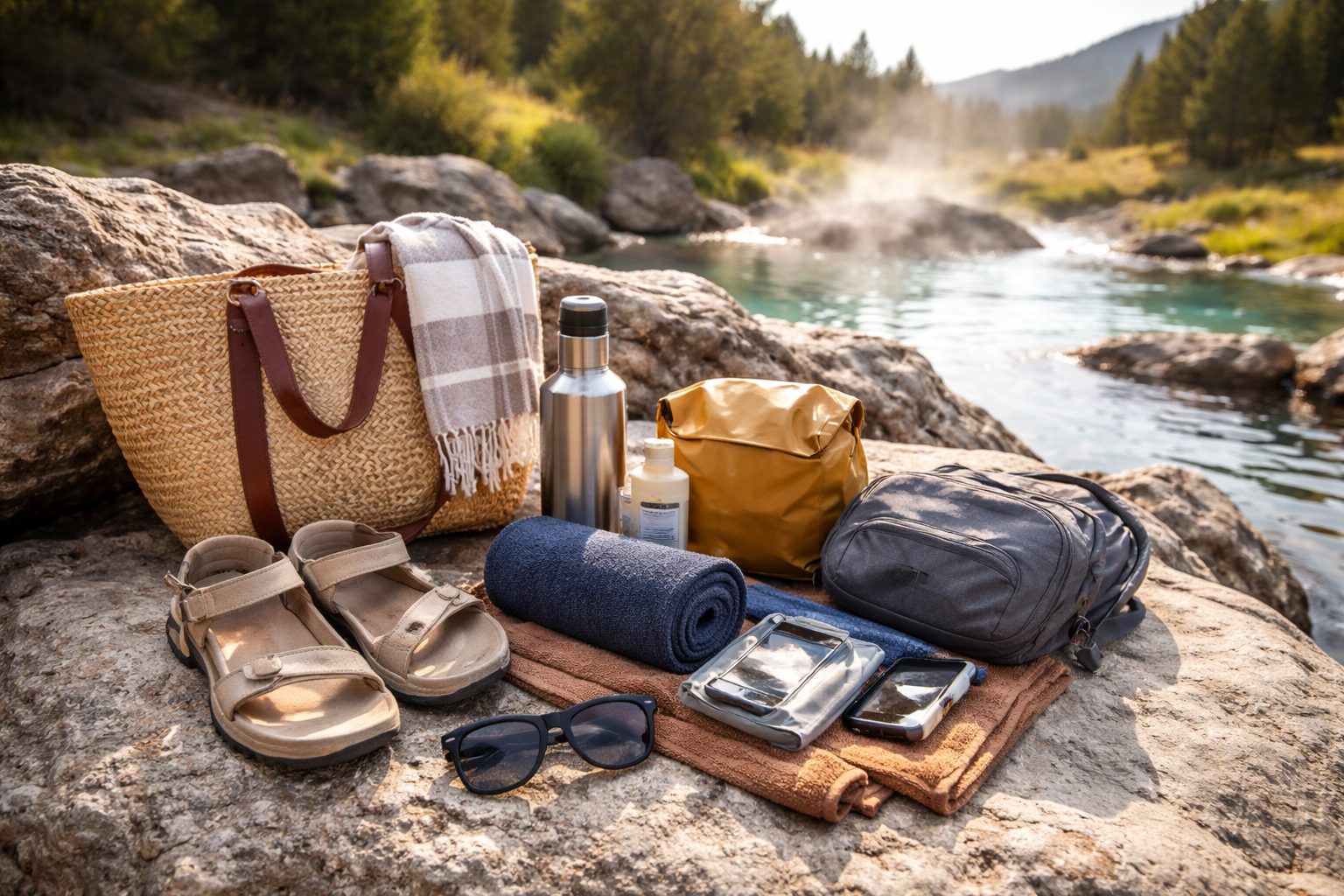
- A quick-dry towel, since resort towels often cost extra and natural springs have none
- Flip-flops or water sandals for poolside walking and shared changing areas
- A reusable water bottle
- A change of clothes, since mineral water can leave a faint smell on swimwear
- Sunscreen if you’ll be soaking outdoors during daylight hours
- A small dry bag if you want to keep your phone or valuables nearby
- Cash, since some natural springs have nominal entry fees or nearby parking that requires payment
For longer hikes to backcountry springs, add appropriate footwear, layers for changing temperatures, and a trail map or downloaded GPS route.
Safety Considerations at Hot Springs
Hot springs are generally safe, but there are real hazards that deserve attention. The most serious is temperature. Natural springs that haven’t been tested or marked can be scalding, and the ground around hydrothermal features can be unstable. At places like Yellowstone, the crust around hot springs and geysers is thin and can collapse without warning. Staying on marked paths isn’t just a rule. It’s the difference between a great trip and a serious injury.
Other safety considerations include:
- Bacterial risk: Some natural hot springs contain thermophilic bacteria, including species that can cause infections if water enters the nose or eyes. Keeping your head above water in natural springs is smart practice.
- Alcohol: Many hot spring resorts prohibit alcohol in pools for good reason. Heat and alcohol together accelerate dehydration and can cause fainting.
- Medical conditions: People with cardiovascular conditions, low blood pressure, or who are pregnant should consult a doctor before soaking in hot springs, particularly at higher temperatures.
- Children: Water above 38 degrees Celsius is generally too hot for young children. Check temperatures before bringing kids into any pool.
- Lone soaking: If you’re at a remote natural spring alone, let someone know where you are and when to expect you back.
Frequently Asked Questions (FAQs)
1. Are hot springs safe to visit?
Most developed hot springs are safe as long as you follow posted guidelines about temperature and entry rules. Natural backcountry springs require more caution, particularly around geothermally active areas where ground stability can be an issue. Checking local advisories before visiting any unfamiliar spring is always a good idea.
2. What should I wear to a hot spring?
In most Western countries and at resort facilities, a standard swimsuit is appropriate. In Japan, traditional onsen require nude bathing in communal pools. Some natural springs have no dress code at all. Research the specific location before arriving so you’re prepared.
3. Can you swim in all hot springs?
No. Many natural hot springs are far too hot for safe entry. Springs above 40 to 42 degrees Celsius are uncomfortable to stay in for any length of time, and anything above 50 degrees is dangerous. Always test the temperature before entering and check if local authorities have issued any advisories.
4. Are hot springs suitable for children?
It depends on the temperature and the facility. Many developed hot spring resorts have pools maintained at family-friendly temperatures. Natural hot springs require adult judgment about water temperature and environmental hazards. Very hot water is not safe for young children, so lower-temperature pools or dedicated family areas are the best option.
5. How do I find the best hot springs near me?
State and national park websites are a reliable starting point in the US. For international travel, travel forums and destination-specific guides often have current condition reports and access information. Apps focused on outdoor recreation sometimes include user-submitted hot spring locations with recent temperature and condition notes.
Finding the best places for hot springs near you often comes down to knowing what geological activity exists in your region. Volcanic and tectonic zones are your best starting points, and even modest geothermal activity can produce surprisingly good natural pools.
There’s a reason people have been seeking out hot springs for thousands of years. The combination of natural heat, mineral-rich water, and often spectacular scenery creates something that’s hard to manufacture artificially. Whether you’re soaking in a traditional Japanese onsen, drifting through Iceland’s silica pools, or hiking to a remote backcountry spring in the Sierra Nevada, the experience tends to leave a lasting impression. The best places for hot springs reward the effort it takes to reach them, and that effort is almost always worth making.