Asia is massive, and I mean that in every sense of the word. Geographically, culturally, and experientially, the places in Asia stretch from Arctic tundra in Siberia to tropical beaches in the Philippines, from ancient temples that predate written history to cities that feel like they exist twenty years in the future. If you’ve ever tried to plan a trip here and felt instantly overwhelmed, you’re not alone. I’ve been traveling across this continent for years, and it still surprises me constantly.
This guide is designed to help you cut through the noise. Whether you’re after bucket-list landmarks, off-the-beaten-path villages, life-changing food, or serious adventure, the places in Asia offer more than a single lifetime can cover. What I’ve tried to do here is give you a genuinely useful, organized overview so you can find your entry point and start planning something real.
Introduction to Places in Asia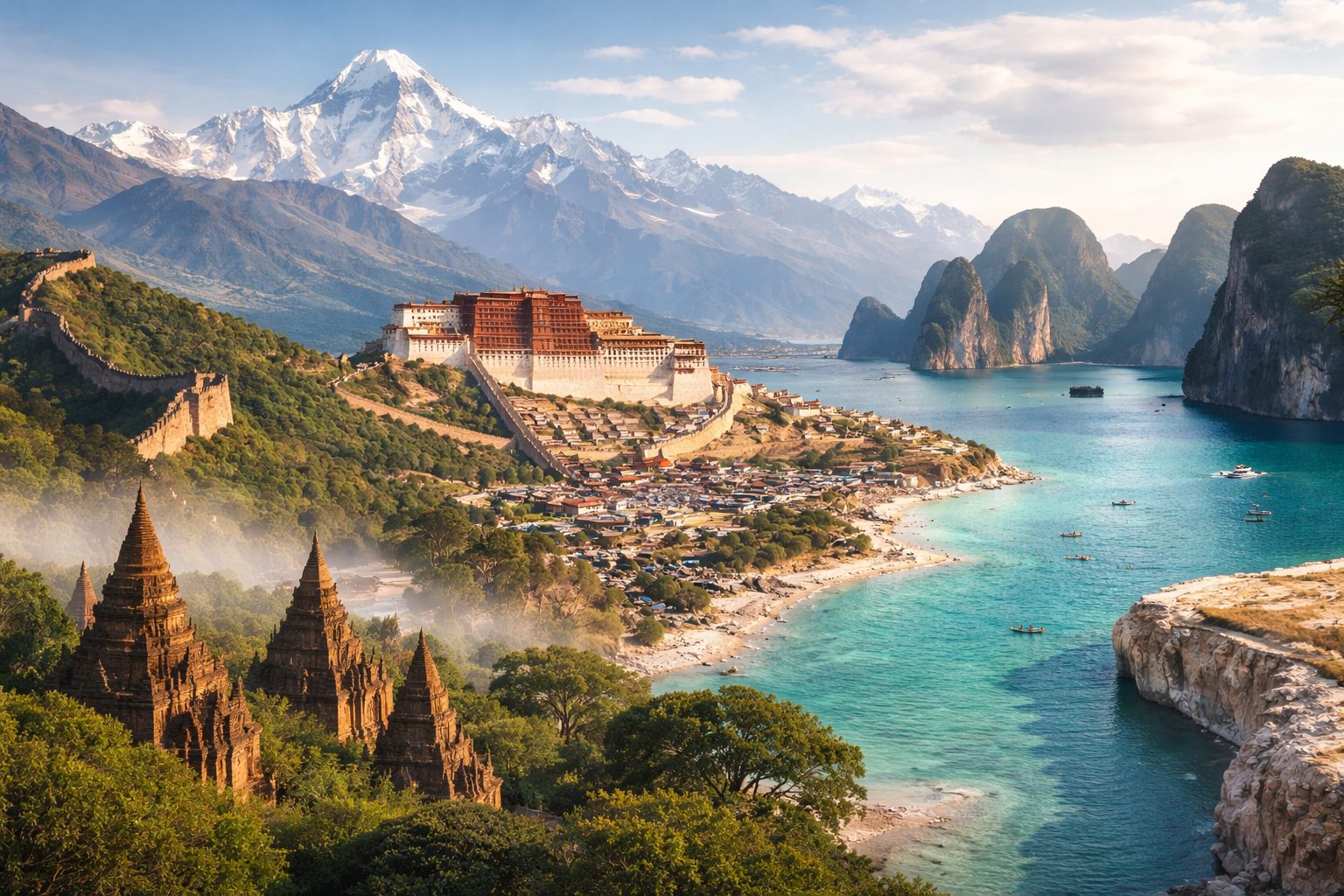
Overview of Asia’s Diversity
Asia contains 48 countries and spans over 44 million square kilometers. It holds the world’s highest mountain (Everest), the lowest point on land (the Dead Sea), the largest plateau (Tibet), and some of the most densely populated cities on the planet. That kind of geographic range naturally produces extraordinary cultural diversity.
You’ve got predominantly Muslim countries like Indonesia and Bangladesh, Buddhist-majority nations like Thailand and Sri Lanka, Hindu-majority India, Christian-majority Philippines, and secular urban powerhouses like Singapore and Japan. And within each country, there’s another layer of regional variation that most tourists never get to see. The places in Asia resist generalization almost by design.
Importance of Travel in Asia
Traveling here changes your reference points. The sheer scale of history in countries like China, India, and Iran makes it hard to take anything for granted. Visiting a temple that was built before the Roman Empire existed does something to your perspective. And then there’s the everyday texture of life across Asia, the markets, the food, the family structures, the relationship to time, which challenges assumptions you didn’t even know you had.
Asia also represents the fastest-growing travel region in the world. Infrastructure is improving rapidly, visa regulations are loosening in many countries, and tourism facilities are developing in ways that make previously remote places increasingly accessible. Now is genuinely a good time to go.
Top Tourist Destinations in Asia
The most visited places in Asia tend to cluster around a handful of countries: Japan, Thailand, Vietnam, Indonesia, India, China, and South Korea. These destinations have refined their tourism infrastructure over decades, which makes them approachable for first-time visitors while still offering serious depth for experienced travelers.
Famous Landmarks and Attractions
Some of the most iconic sites in the world are located across Asia. These aren’t just worth visiting because they’re famous. Most earned that status for legitimate reasons.
- Angkor Wat, Cambodia: The largest religious monument on earth, built in the 12th century. The scale is genuinely difficult to process in person.
- The Great Wall, China: Most tourists visit Mutianyu or Badaling near Beijing, but Jinshanling offers a less crowded, more atmospheric experience.
- Taj Mahal, India: Overvisited, overexposed, and still one of the most beautiful structures ever built. Go at dawn.
- Halong Bay, Vietnam: Limestone karsts rising from emerald water. Better experienced on a two-day cruise than a day trip.
- Borobudur, Indonesia: A 9th-century Buddhist temple in Java that most visitors underestimate until they’re standing on it.
- Fushimi Inari, Japan: Ten thousand torii gates winding up a mountain in Kyoto. Skip the crowds by hiking past the first hour mark.
- Petra, Jordan: The carved sandstone city in a hidden canyon is unlike anything else in the world.
Hidden Gems Worth Visiting
Beyond the headline attractions, there’s a whole layer of places in Asia that few travelers reach. These spots tend to reward the effort with authenticity and a real sense of discovery.
- Luang Prabang, Laos: A sleepy riverside town of golden temples and excellent French-influenced food. Genuinely peaceful.
- Kutaisi, Georgia: An ancient city in the Caucasus with caves, monasteries, and almost no tourist crowds.
- Hpa-An, Myanmar: Limestone karsts, cave monasteries, and some of the most spectacular sunsets I’ve ever seen.
- Zhangjiajie, China: The floating mountains that inspired Avatar. Far less visited than China’s famous highlights.
- Hampi, India: A UNESCO-listed ruined city spread across a boulder landscape in Karnataka that feels like another planet.
Cultural Heritage Sites in Asia
UNESCO World Heritage Sites
Asia has more UNESCO World Heritage Sites than any other continental region. Here’s a selection worth building a trip around:
- Historic District of Hoi An, Vietnam
- Sigiriya, Sri Lanka
- Ayutthaya Historical Park, Thailand
- Luang Prabang, Laos
- Lijiang Old Town, China
- Bagan, Myanmar
- Jaipur, India
- Gyeongju Historic Areas, South Korea
- Hiroshima Peace Memorial, Japan
- Persepolis, Iran
Each of these sites carries a specific kind of historical weight that’s worth reading about before you visit. Context transforms what you see. Without it, old stones are just old stones.
Traditional Festivals and Events
Timing a trip around local festivals adds a dimension that no amount of sightseeing can replicate. Some of the most memorable experiences across Asia happen during these events:
- Holi, India (March): The festival of colors, most vivid in Mathura, Vrindavan, and Jaipur.
- Lantern Festival, Taiwan and China (February): Thousands of lanterns released into the night sky.
- Songkran, Thailand (April): The Thai New Year water festival, chaotic and joyful in equal measure.
- Diwali, India and Nepal (October/November): The festival of lights, especially spectacular in Varanasi and Jaipur.
- Cherry Blossom Season, Japan (March/April): Not technically a festival, but the whole country celebrates it like one.
- Thaipusam, Malaysia (January/February): A Hindu festival of intense devotion centered in Batu Caves near Kuala Lumpur.
Natural Wonders in Asia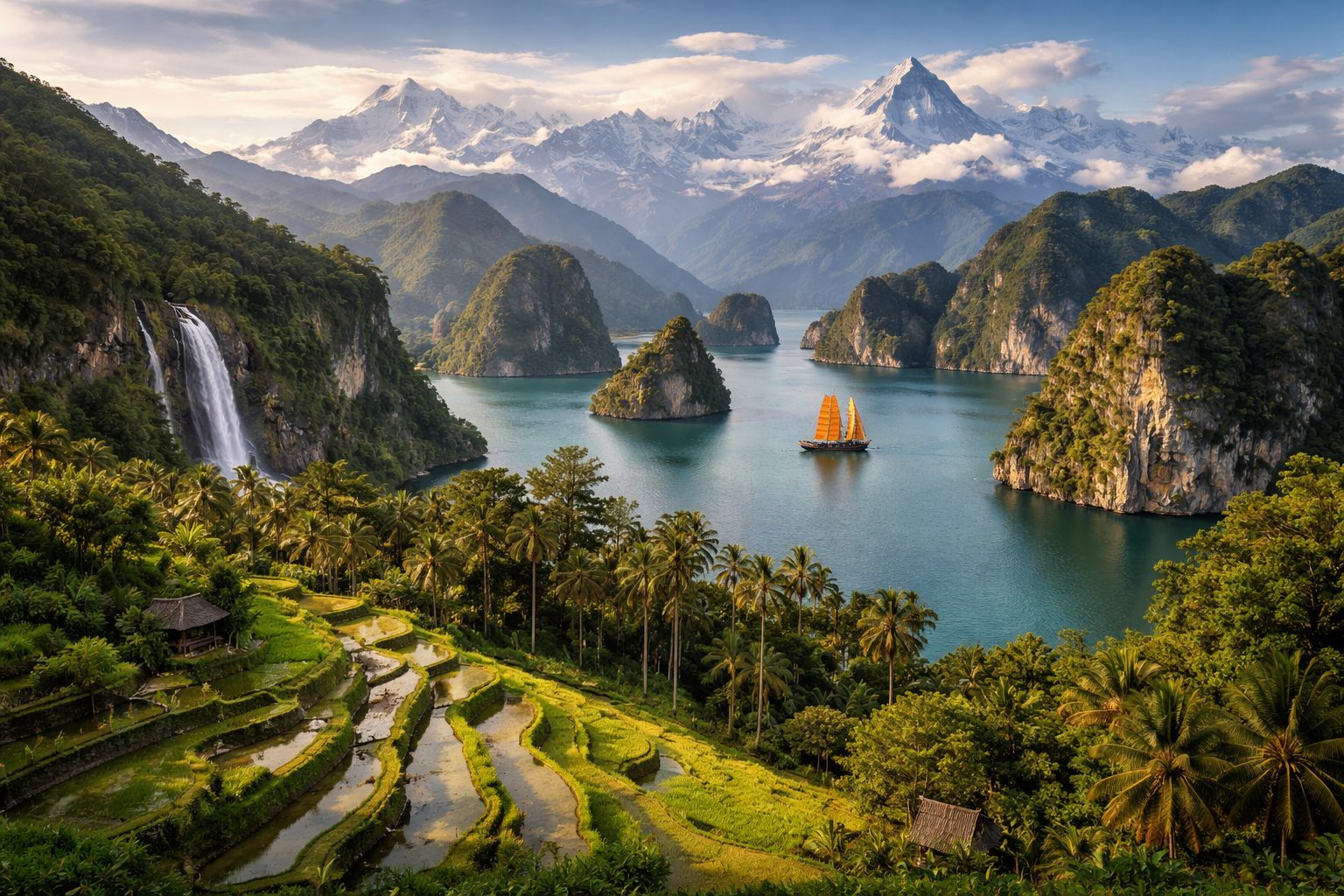
Stunning Landscapes and National Parks
The landscapes across Asia are some of the most varied on earth. Here are regions worth prioritizing if natural scenery is your main draw:
- Zhangjiajie National Forest Park, China: Towering sandstone pillars blanketed in mist. Otherworldly.
- Komodo National Park, Indonesia: Volcanic islands, Komodo dragons, and world-class diving.
- Ha Giang Loop, Vietnam: Mountain roads, rice terraces, and ethnic minority villages in northern Vietnam.
- Spiti Valley, India: A high-altitude desert in the Himalayas that feels like Tibet and is far easier to access.
- Sagarmatha National Park, Nepal: The gateway to Everest Base Camp, with rhododendron forests and Sherpa villages along the way.
- Jiuzhaigou, China: Turquoise lakes at altitude, fed by waterfalls and framed by peaks.
Unique Wildlife Experiences
Asia offers wildlife encounters that are genuinely rare, though it’s worth being thoughtful about which ones you participate in. Avoid any attraction involving performing animals or elephant riding.
- Orangutan trekking, Borneo (Malaysia/Indonesia): See wild orangutans in Tanjung Puting or Kinabatangan.
- Snow leopard tracking, Ladakh, India: One of the most difficult wildlife encounters on the planet, and one of the most rewarding.
- Whale sharks, Oslob, Philippines: Controversial in terms of ethics. Better options exist further offshore.
- Giant pandas, Chengdu, China: Volunteer programs at the Chengdu Panda Base are far more responsible than riding or holding.
- Wild tigers, Ranthambore, India: One of the best places in the world to see tigers in the wild.
Culinary Adventures in Asia
Food is, honestly, one of the strongest reasons to travel across Asia. The diversity of cooking traditions here makes Europe look limited by comparison. The places in Asia produce some of the world’s most complex and satisfying cuisines, and you don’t need to go to a restaurant to experience them.
Must-Try Dishes by Country
| Country | Dish | Why It Matters |
|---|---|---|
| Japan | Ramen | Regional variations make this an entire field of study |
| Thailand | Som tam (green papaya salad) | The balance of sour, sweet, salty, spicy is unmatched |
| Vietnam | Pho | The broth alone takes 12+ hours to make properly |
| India | Biryani | Over 50 regional variants; Hyderabadi is the benchmark |
| China | Peking duck | Ceremonial preparation turned into culinary art |
| South Korea | Bibimbap | Deceptively simple; endlessly satisfying |
| Indonesia | Rendang | One of the most complex spice-based dishes in the world |
| Lebanon | Mezze spread | Not always grouped with Asia, but the Levant belongs here |
| Taiwan | Beef noodle soup | A national obsession with competitions to prove it |
| Malaysia | Nasi lemak | Coconut rice that works as breakfast, lunch, and dinner |
Street Food Experiences
Street food in Asia isn’t a budget fallback. In many places, it’s the highest expression of local cuisine. Some spots worth noting:
- Jalan Alor, Kuala Lumpur: A whole street dedicated to Malaysian Chinese street food after dark.
- Yaowarat (Chinatown), Bangkok: Seafood, noodles, roast duck, all on the sidewalk.
- Old Delhi, India: Nihari, chaat, jalebi, and parathas from stalls that have been operating for generations.
- Shilin Night Market, Taipei: The largest night market in Taiwan, and the one worth the crowds.
- Tsukiji Outer Market, Tokyo: Fresh fish served in every format you can imagine, from dawn onwards.
Adventure Activities in Asia
Trekking and Hiking Trails
The Himalayan region alone could occupy a dedicated trekker for years. But the adventure hiking options across the continent go well beyond that.
- Everest Base Camp Trek, Nepal: 12-14 days round trip from Lukla. Altitude is the challenge, not technical difficulty.
- Annapurna Circuit, Nepal: A classic high-altitude loop with extraordinary cultural exposure.
- GR20, Himachal Pradesh, India: Less famous than Himalayan circuits, more technically demanding.
- Mount Rinjani, Lombok, Indonesia: A two-day volcano climb with a crater lake at 2,000 meters.
- Taroko Gorge, Taiwan: Carved marble canyons and temple trails within two hours of Taipei.
- Tiger Leaping Gorge, China: One of the deepest gorges in the world, with a manageable two-day trail.
- Doi Inthanon, Thailand: Thailand’s highest peak is more accessible than the rest and good for beginners.
Water Sports and Beach Activities
Asia’s coastlines and islands offer some of the best water sport conditions anywhere. Key spots:
- Diving: Tubbataha Reef (Philippines), Raja Ampat (Indonesia), Similan Islands (Thailand)
- Surfing: Uluwatu (Bali), G-Land (Java), Siargao (Philippines), Hikkaduwa (Sri Lanka)
- Kayaking: Halong Bay (Vietnam), Phang Nga Bay (Thailand), Palawan (Philippines)
- Kitesurfing: Mui Ne (Vietnam), Boracay (Philippines), Hua Hin (Thailand)
Urban Experiences in Asia
Bustling Cities and Nightlife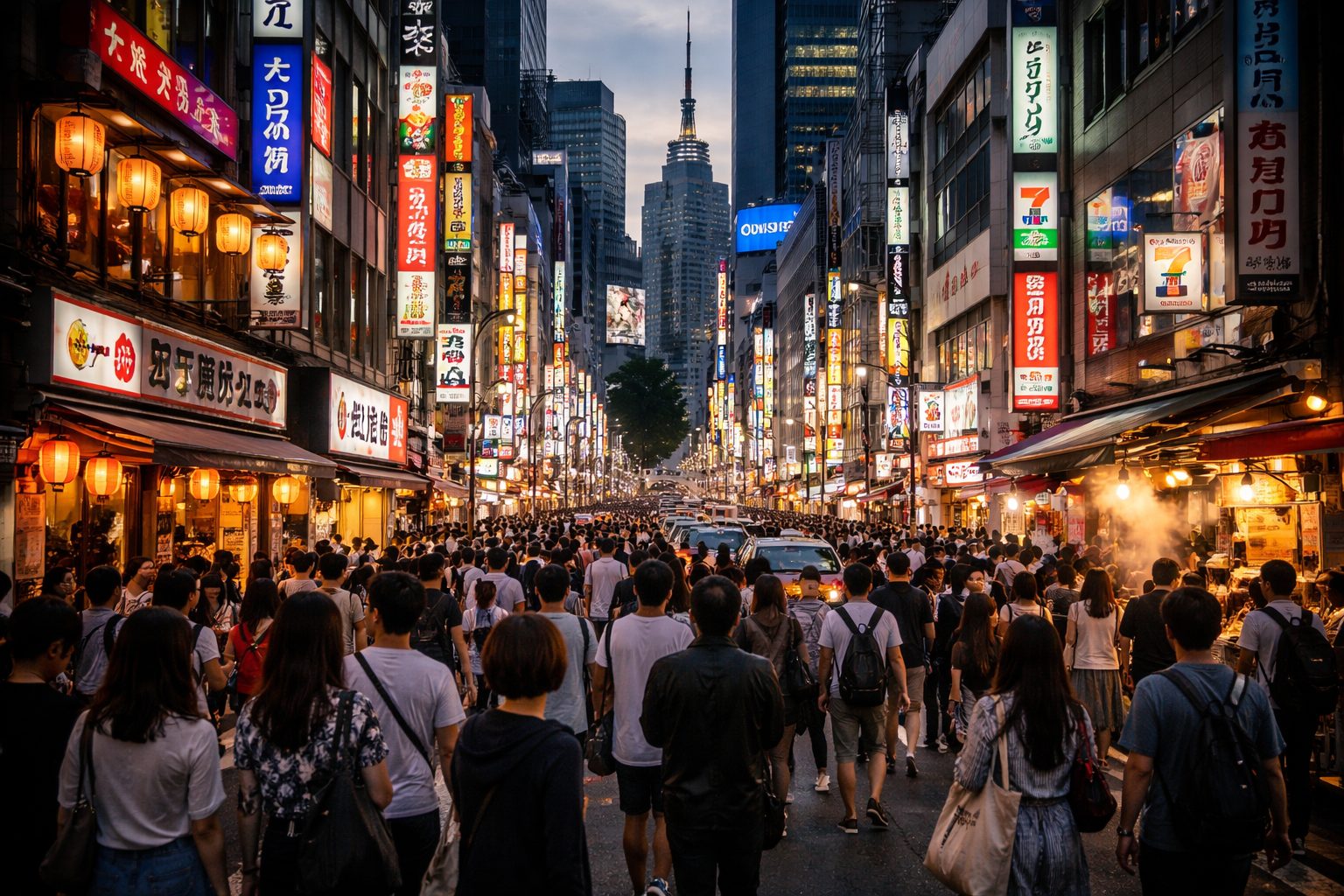
Some of the most exciting cities on earth sit across Asia. Tokyo, Seoul, Bangkok, Singapore, Hong Kong, Mumbai, Shanghai, and Taipei all compete for the title of the world’s most dynamic urban environment.
Tokyo is meticulous and endlessly detailed, a city where craft applies equally to noodle shops and skyscraper architecture. Seoul is forward-looking, design-oriented, and has developed a global cultural export machine through K-pop and drama. Bangkok is chaotic and fun in the way that well-organized chaos sometimes is, with the food compensating for any structural frustrations.
Singapore is the easiest entry point to Southeast Asia for first-time visitors, expensive but efficient and diverse in a way that makes it genuinely interesting. And then there’s Mumbai, which operates at a frequency that feels like a physical sensation when you arrive.
Shopping and Entertainment Hotspots
- Dongdaemun Design Plaza, Seoul: Fashion, design, and 24-hour shopping at its most surreal.
- Chatuchak Weekend Market, Bangkok: 15,000 stalls covering everything from live animals to antique furniture.
- Tsim Sha Tsui, Hong Kong: Electronics, tailoring, and luxury retail with the harbor as a backdrop.
- MBK Center, Bangkok: Affordable electronics and knockoffs, chaotic and honest about it.
- Orchard Road, Singapore: Asia’s answer to Fifth Avenue, more polished than most.
Historical Sites in Asia
Ancient Ruins and Archaeological Sites
The places in Asia that carry the deepest historical resonance are often the least visited. Beyond Angkor and the Great Wall, there’s an entire tier of ancient sites that deserve more attention.
- Bagan, Myanmar: Over 2,000 temples spread across a dusty plain. Watching the sunrise from a temple roof is genuinely moving.
- Persepolis, Iran: The ceremonial capital of the Achaemenid Empire, built in 518 BCE. The scale and craftsmanship are staggering.
- Mohenjo-daro, Pakistan: One of the earliest urban settlements on earth, dating to 2500 BCE.
- My Son, Vietnam: Cham towers from the 4th to 14th centuries, scattered through jungle clearings.
- Polonnaruwa, Sri Lanka: Medieval royal gardens, giant Buddhas carved from rock, and remarkably intact ruins.
Museums and Cultural Institutions
- National Museum of China, Beijing: The largest museum in the world by floor space. Reserve two days.
- National Museum, Tokyo: The oldest and most comprehensive collection of Japanese art and archaeology.
- National Museum of India, New Delhi: Over 200,000 objects covering 5,000 years of history.
- Istanbul Archaeological Museums, Turkey: Technically in Europe and Asia simultaneously; the collection is extraordinary.
- Guangdong Museum, Guangzhou: Architecture and collection both worth the detour.
Comparing Popular Destinations in Asia
Southeast Asia vs. East Asia
These two regions attract different types of travelers and offer distinct experiences. Understanding the contrast helps you plan more effectively.
| Factor | Southeast Asia | East Asia |
|---|---|---|
| Cost of travel | Low to moderate | Moderate to high |
| Climate | Tropical, humid | Varied: temperate to subtropical |
| Language access | English widely spoken | Less English outside major cities |
| Food culture | Street food dominant | Mix of street and restaurant |
| Visa access | Generally easy | More variable; Japan easy, China complex |
| Infrastructure | Variable by country | Generally excellent |
| Crowd levels | High at major sites | Very high in China; manageable in Japan |
| Best for | First-time Asia visitors, budget travel | Culture depth, food precision, tech cities |
Southeast Asia is more accessible for most Western travelers, both financially and logistically. East Asia rewards more planning and investment with a different kind of depth.
Urban vs. Rural Travel Experiences
Urban Asia and rural Asia might as well be two different continents. In cities like Seoul and Singapore, you have world-class infrastructure, multilingual menus, international payment systems, and more dining options than most European capitals. Rural areas, particularly in countries like Laos, Myanmar, or interior China, can involve sporadic electricity, local-only guesthouses, and language barriers that require patience and flexibility.
Neither is better. But they require different preparation. Rural Asia offers immersion; urban Asia offers access and efficiency. Most successful trips combine both.
Practical Travel Tips for Asia
Best Times to Visit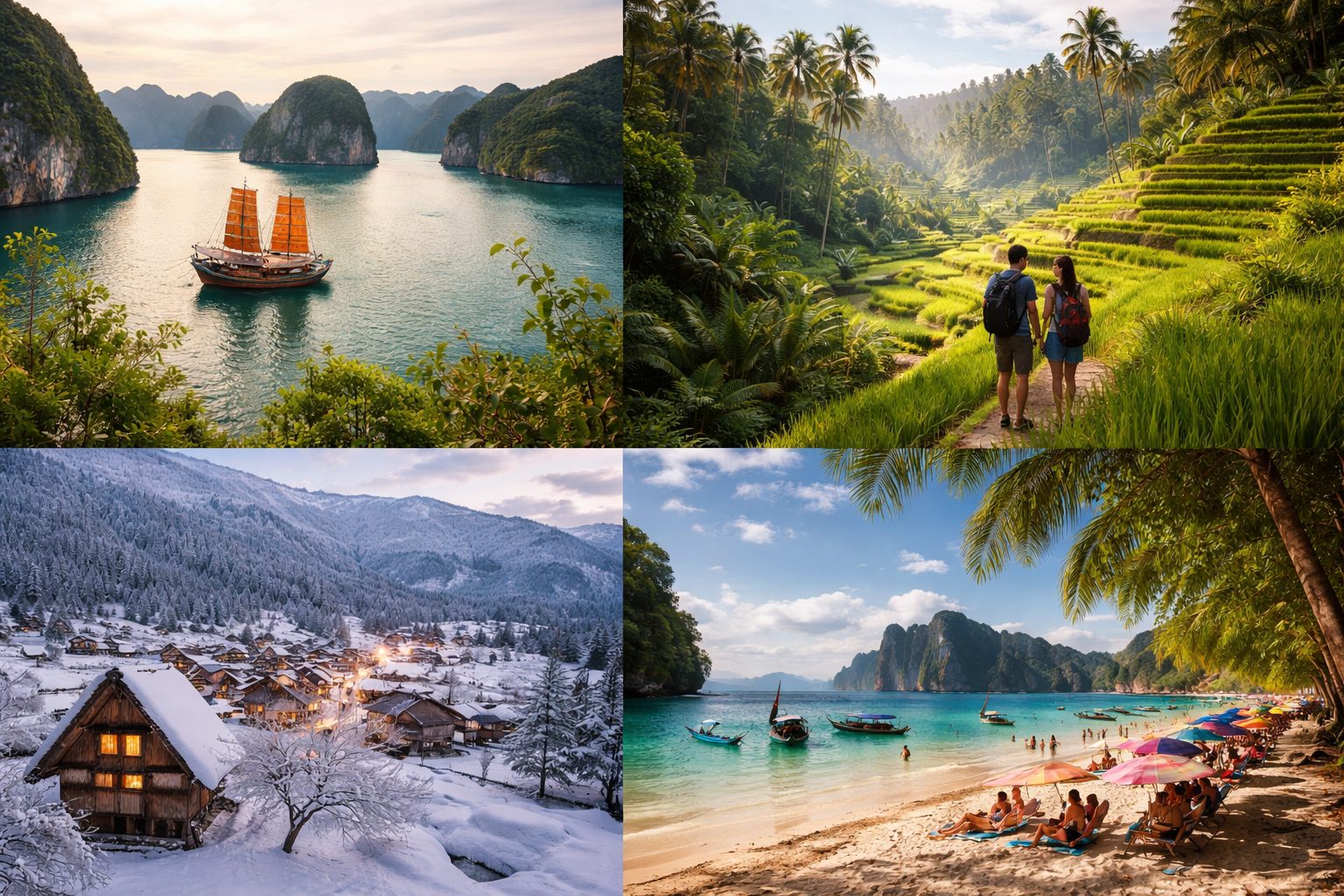
Asia spans so many climate zones that there’s no single “best time.” Here are some region-specific guidelines:
- Southeast Asia: November to February for most of the region. Avoid monsoon season (May to October) for coastal destinations.
- Japan: March to May (cherry blossoms) and October to November (autumn leaves) are peak seasons for good reason.
- India: October to March for most of the country. The Himalayas are better in summer (June to September).
- China: April to May and September to October. Avoid Golden Week holidays (October 1-7 and Chinese New Year).
- Nepal: October to November for trekking. March to May is also good but more crowded.
- Middle East: October to April for Jordan, Israel, UAE. Summer temperatures are extreme.
Transportation Options Across Countries
Getting around efficiently is one of the key skills of Asian travel. Options vary enormously by country.
- High-speed rail: Japan, China, Taiwan, and South Korea have world-class rail networks. Japan’s Shinkansen is worth riding even without a destination in mind.
- Budget airlines: AirAsia, Scoot, VietJet, and others make intra-regional hops affordable. Book early.
- Overnight sleeper trains: A budget-friendly and atmospheric option in Vietnam, India, and Thailand.
- Grab and Gojek: Ride-hailing apps that work across most of Southeast Asia and are far more reliable than taxis.
- Ferries: Essential for island hopping in Indonesia, Philippines, and Greece-adjacent Turkey.
- Tuk-tuks and motorbike taxis: Useful for short distances in cities like Bangkok, Siem Reap, and Hanoi. Always agree on a price first.
Accommodations in Asia
Types of Lodging: From Hostels to Luxury
Asia offers the fullest range of accommodation types anywhere in the world. Budget travelers can live exceptionally well for very little money in Southeast Asia, while luxury seekers will find some of the world’s finest properties here.
- Hostels: Excellent in Bangkok, Hanoi, Tokyo, and Seoul. Hostelworld and Booking.com both cover Asia well.
- Guesthouses: The most common form of budget accommodation in smaller cities and rural areas. Wildly variable in quality.
- Ryokans, Japan: Traditional Japanese inns with tatami rooms, futon beds, and multi-course kaiseki dinners. A full cultural experience.
- Heritage hotels, India and Southeast Asia: Converted palaces, colonial buildings, and plantation estates. Often competitively priced relative to their Western equivalents.
- Luxury resorts: Bali, Maldives, Phuket, and Langkawi all have world-class resort properties at prices significantly below comparable Western destinations.
Regional Accommodation Trends
Japan has seen a massive expansion of boutique hotels and capsule hotel chains in recent years, driven partly by tourism growth and partly by domestic business travelers. South Korea has a strong network of “jjimjilbang” (bathhouse hotels) that provide affordable all-night accommodation with communal facilities. In India, the “homestay” sector has grown substantially, giving travelers access to private homes in destinations that previously had almost no tourist infrastructure. Southeast Asia continues to lead on hostel quality, with many properties offering private rooms at hostel prices.
Sustainable Travel in Asia
Eco-Friendly Destinations
A growing number of destinations across Asia are developing genuine eco-tourism infrastructure, not just marketing language but actual conservation-linked practices.
- Palawan, Philippines: Community-based tourism projects alongside world-class marine protection.
- Bhutan: The only country in the world with a “high value, low impact” tourism model enforced through mandatory guide fees.
- Kerala Backwaters, India: Houseboat operators increasingly certified under Kerala’s Green Leaf and Olive Leaf programs.
- Mekong Delta community tourism, Vietnam: Village homestays that keep tourism revenue within local communities.
- Borneo conservation projects, Malaysia: Orangutan rehabilitation centers and wildlife corridors funded partly by responsible tourism.
Responsible Tourism Practices
Traveling sustainably in Asia comes down to a series of consistent decisions, not grand gestures.
- Avoid elephant riding and performing animal shows at any destination.
- Choose locally-owned guesthouses and restaurants over international chains when possible.
- Learn a few words in the local language. The response is almost always warm.
- Research wildlife encounters before booking. Responsible operators are easy to verify with a basic internet search.
- Carry a reusable water bottle. Plastic waste is a serious environmental problem in many Asian coastal areas.
- Follow dress codes at temples and religious sites. They exist for reasons that predate tourism.
- Bargain respectfully. Hard bargaining over small amounts at local markets takes money from people who need it more.
- Use local guides. The economic benefit stays where you want it, and you’ll learn things no guidebook covers.
Frequently Asked Questions About Places in Asia
What are the safest countries to visit in Asia?
Japan, Singapore, South Korea, Taiwan, and Bhutan consistently rank among the safest destinations in Asia for international travelers. Thailand, Vietnam, and Indonesia are also generally safe, though petty theft and scams targeting tourists are worth being aware of in busy tourist areas.
How to navigate language barriers while traveling?
Google Translate’s camera function handles menus and signs in most scripts, including Chinese, Japanese, Korean, Thai, and Hindi. Download offline language packs before you travel. In most major cities across Asia, younger people in tourism-adjacent jobs speak enough English to help with basic navigation.
What are the essential travel documents needed?
Most travelers need a valid passport with at least six months of validity beyond their entry date. Visas vary significantly: Japan, South Korea, and most of Southeast Asia offer visa-free or visa-on-arrival access to most Western passport holders. China, India, and some Central Asian countries require advance visa applications. Always verify current entry requirements directly with official embassy websites before departure, as policies change.
Traveling through the places in Asia rewards patience, curiosity, and a willingness to be surprised. This continent offers more variety than any other, and the more you explore it, the more you realize how much remains to discover.