If you’ve ever thought about visiting Southeast Asia, spring in Thailand deserves a serious look. The country transforms between February and April into something genuinely special — the landscapes are lush, the festivals are loud and joyful, and the crowds haven’t yet peaked to the levels you’d see in peak winter months. I’ve spent time in Thailand during this period, and it remains one of my favorite windows to experience the country honestly, without the glossy tourist-season veneer.
Thailand doesn’t follow the four-season pattern most Western travelers are used to. But that doesn’t mean the concept of spring is irrelevant here. There’s a distinct shift in energy, temperature, and culture during this transitional stretch of the year that makes it worth understanding before you book your flights.
Overview of Spring in Thailand
What is Spring?
In the conventional sense, spring refers to the season between winter and summer — a time of warming temperatures, blooming nature, and renewed activity. In Thailand, the seasonal calendar works differently. The country operates on three broad seasons: hot season, rainy season, and cool season. Spring, by the Western calendar, falls during the hot season, roughly from late February through April.
But calling it just “hot season” undersells it. This is also the season of major festivals, dramatic floral displays in the north, and a cultural vibrancy tied to the Thai New Year. If you approach spring in Thailand through a purely meteorological lens, you’ll miss the point entirely.
When Does Spring Occur in Thailand?
Spring in Thailand, as it maps onto the Western calendar, spans from around late February to April. Some travelers extend this window into early May. The core of this period — March and April — is when the temperature peaks, the festivals concentrate, and the northern highlands display their most dramatic seasonal shifts.
By late February, the cool season is winding down. Nights are still pleasant, but days are getting warmer. By April, you’re in full hot season territory, especially in Bangkok and the central plains. The north, including Chiang Mai, remains more temperate due to elevation.
Climate and Weather Conditions
Thailand’s spring is warm. In Bangkok, daytime temperatures regularly reach 35–38°C (95–100°F) by April. Humidity varies by region — coastal areas like Phuket tend to be more humid, while inland cities like Chiang Mai can feel drier.
Rainfall is minimal during this window. You’ll encounter very little rain in most regions until May, when the southwest monsoon begins arriving on the Andaman coast. This makes spring an excellent time for outdoor activities, though midday heat requires planning.
Key weather facts for spring:
- Bangkok: 34–38°C, low humidity, very little rain
- Chiang Mai: 28–36°C, occasional smoky haze from agricultural burning in March
- Phuket and Krabi: 30–34°C, calm seas before monsoon, ideal for water activities
- Pai and northern highlands: cooler nights, dramatic scenery
One thing to note: March in northern Thailand can be smoky due to seasonal field burning. If you have respiratory sensitivities, factor this into your planning.
Popular Spring Destinations in Thailand
Chiang Mai
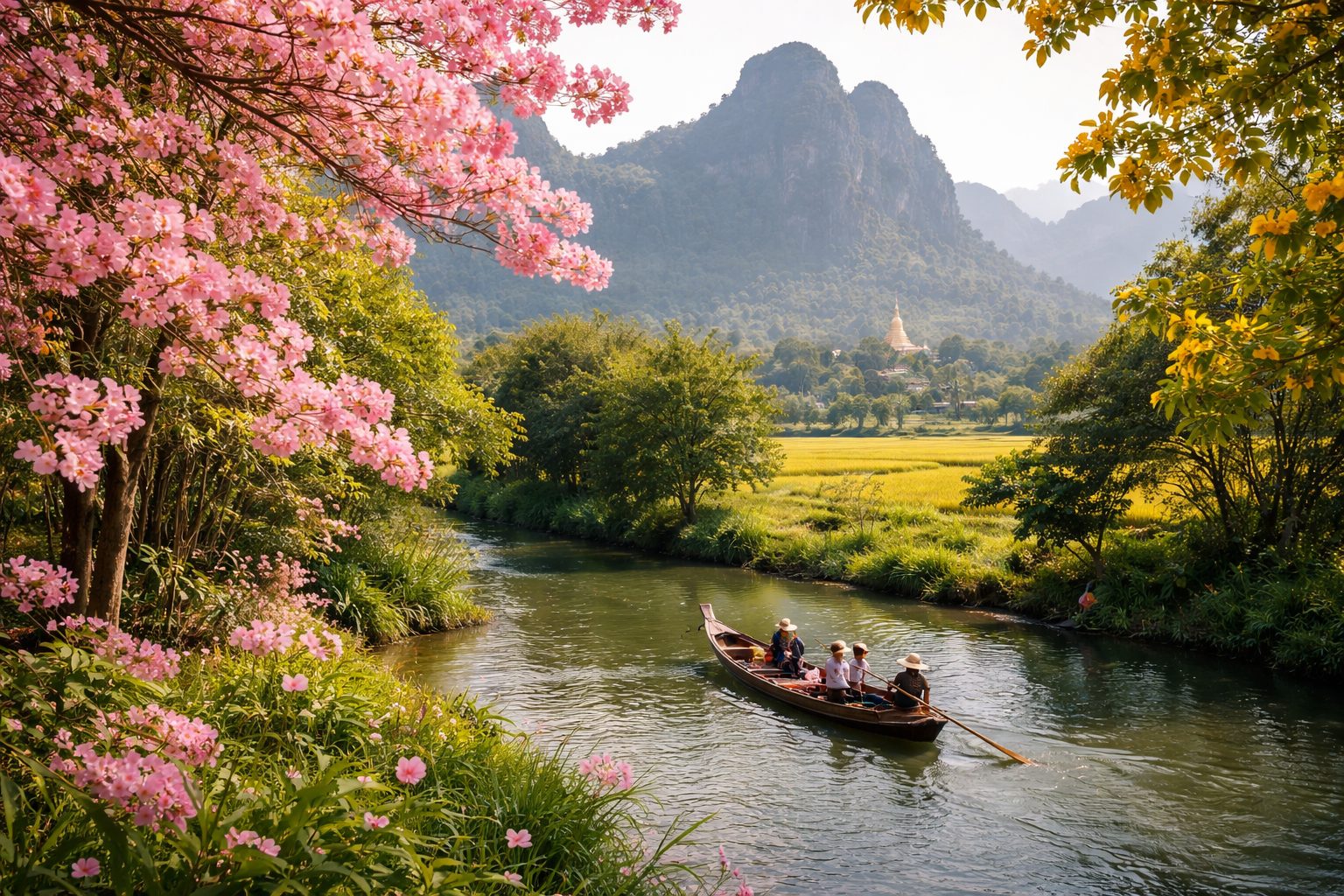
Chiang Mai is arguably the most atmospheric destination during spring in Thailand. The city sits in a valley surrounded by forested mountains, and as the season shifts, the landscape changes dramatically. The famous flower festival happens in early February, right at the tail end of the cool season, but the blooms often linger into early March.
By April, Chiang Mai becomes the heartbeat of Songkran celebrations. The old city moat turns into a full-scale water battle zone, and the energy is electric. Despite the heat, the city’s tree-lined streets and elevated position keep it slightly more bearable than Bangkok.
What I’d recommend doing in Chiang Mai during spring:
- Visit Doi Inthanon National Park before the heat peaks
- Attend a cooking class focused on northern Thai cuisine
- Explore the Sunday Walking Street before it gets too crowded
- Hire a motorbike and ride into the hills toward Mae Rim or Samoeng
Bangkok
Bangkok in spring is intense. The heat is real, and the city’s concrete density amplifies it. But Bangkok is also magnificent during this period because Songkran transforms entire neighborhoods. Silom Road, Khao San Road, and along the Chao Phraya riverbanks all become festival zones in April.
Outside of Songkran, spring is actually a good time to explore Bangkok’s temples and museums — the tourist crowds from peak winter season have thinned, and you can walk through Wat Pho or the Grand Palace with a bit more breathing room. Just go early in the morning before 10am to beat the worst of the heat.
Phuket
Phuket in spring sits in a sweet spot. The monsoon hasn’t arrived yet, the seas are calm, and prices are noticeably lower than in the December-January peak. The island still buzzes with activity, but it feels less saturated.
Patong Beach is at its most swimmable during March and April. The water is warm, visibility for snorkeling and diving is excellent, and the beach vendors haven’t ramped up to peak-season aggression. It’s one of those rare windows where Phuket actually feels relaxed.
Krabi
Krabi might be the single best beach destination during spring in Thailand. The Andaman coastline here is stunning year-round, but March and April offer some of its clearest water and calmest conditions. Rock climbing at Railay Beach is at its prime, and the longtail boat trips to the four islands are genuinely beautiful.
Ao Nang town itself is pleasant to walk around in the evenings, and the food scene has grown substantially. I’d prioritize at least three nights here during a spring Thailand itinerary.
Cultural Events and Festivals in Spring
Songkran Festival
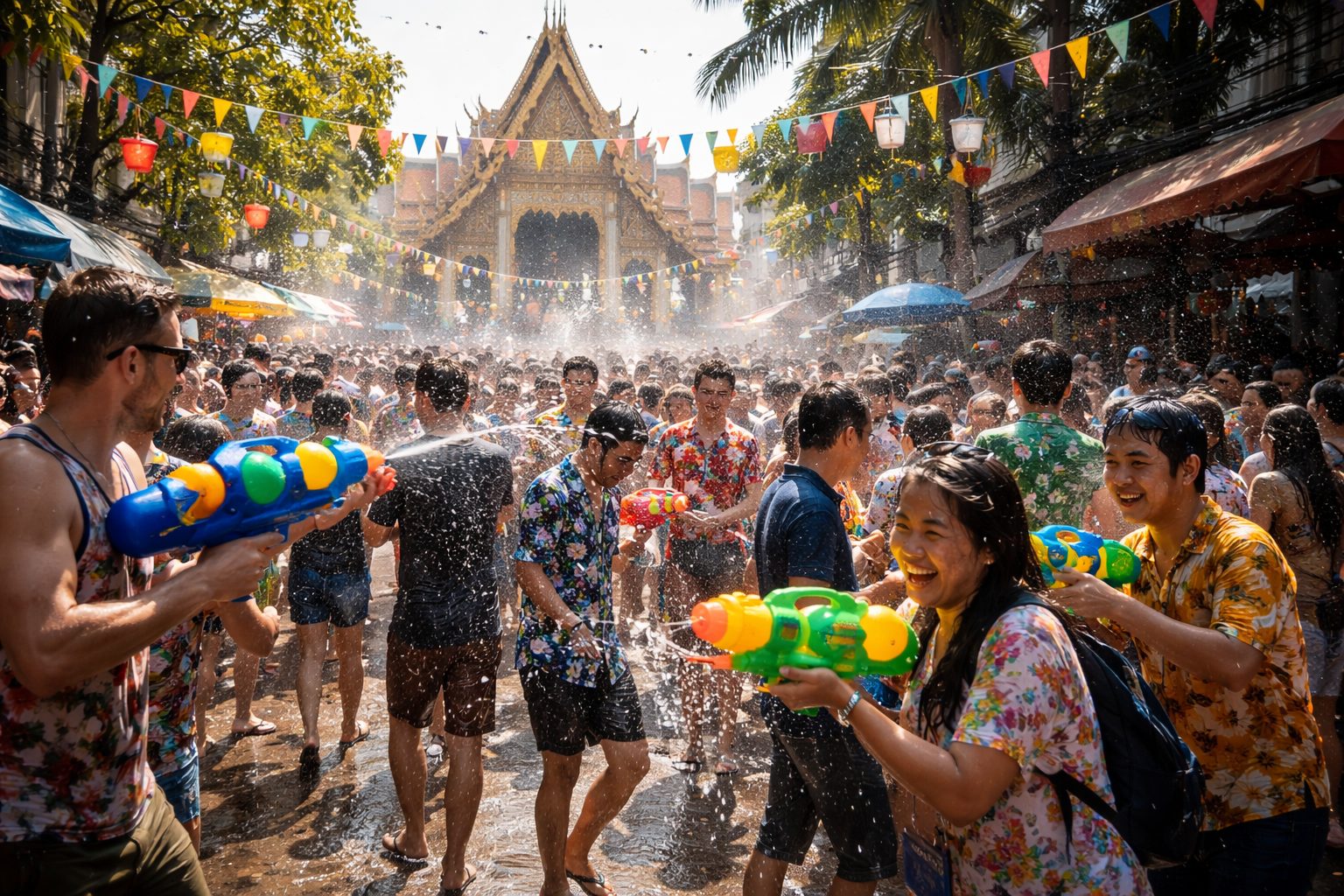
Songkran is the Thai New Year, and it’s the defining cultural event of spring in Thailand. It takes place from April 13–15 officially, though celebrations extend several days in either direction depending on the city. The festival originated as a gentle ritual of pouring water over elders and Buddha images as a symbol of purification and blessing.
What it has evolved into in cities like Bangkok and Chiang Mai is something more like the world’s largest water fight. Entire streets become arenas. People carry water guns, buckets, and hoses. Pickup trucks drive through neighborhoods with drums of water in the back, dousing pedestrians who line the curbs. It’s chaotic, joyful, and completely unlike anything else in the world.
A few practical notes if you’re participating:
- Protect your electronics. Waterproof bags are essential.
- Wear clothes you don’t mind getting soaked.
- Avoid leaving valuables unsecured in open vehicles.
- Respect older Thais — the gentle pouring tradition still matters to many.
- Stay hydrated. The combination of heat and water activity is more exhausting than it looks.
Flower Festivals
The Chiang Mai Flower Festival takes place in the first weekend of February, which overlaps with early spring planning for many travelers. Floats decorated with elaborate flower arrangements parade through the city, and the parks and public spaces fill with displays. The floral diversity on show — orchids, chrysanthemums, roses, and dozens of species native to northern Thailand — is genuinely impressive.
Even outside of the formal festival, flowers remain part of the landscape through March in the north. The highlands around Chiang Rai and Doi Ang Khang see blooms that feel almost surreal given the warm climate at lower elevations.
Traditional Thai New Year Celebrations
Beyond the water fights, Songkran carries deep traditional significance. Temples fill with worshippers making merit — donating food to monks, releasing fish and birds, and offering prayers. Families travel home from cities to celebrate with older relatives.
If you want to experience the traditional side of Songkran rather than the party version, smaller towns and rural areas outside the major tourist centers are where to go. Places like Sukhothai hold historically themed celebrations that incorporate performances, ancient temple rituals, and candlelit processions.
Outdoor Activities in Spring
Hiking and Nature Trails
Spring is a solid time for hiking in Thailand, especially in the north and northeast. The trails are dry, the rivers are still running from cool-season rains, and the forests are green. Doi Inthanon National Park near Chiang Mai offers trails ranging from casual walks to more demanding full-day routes.
In the northeast, Khao Yai National Park is excellent in early spring before the heat peaks. Waterfalls are still active, wildlife sightings are frequent, and the park feels genuinely wild rather than overrun. I’d pair it with a visit to nearby Pak Chong for some locally produced wine and farm stays.
For those venturing further, the jungle-covered hills of Umphang near the Myanmar border offer multi-day trekking with river crossings and waterfall camps. Go in March for optimal conditions.
Beach Activities and Water Sports
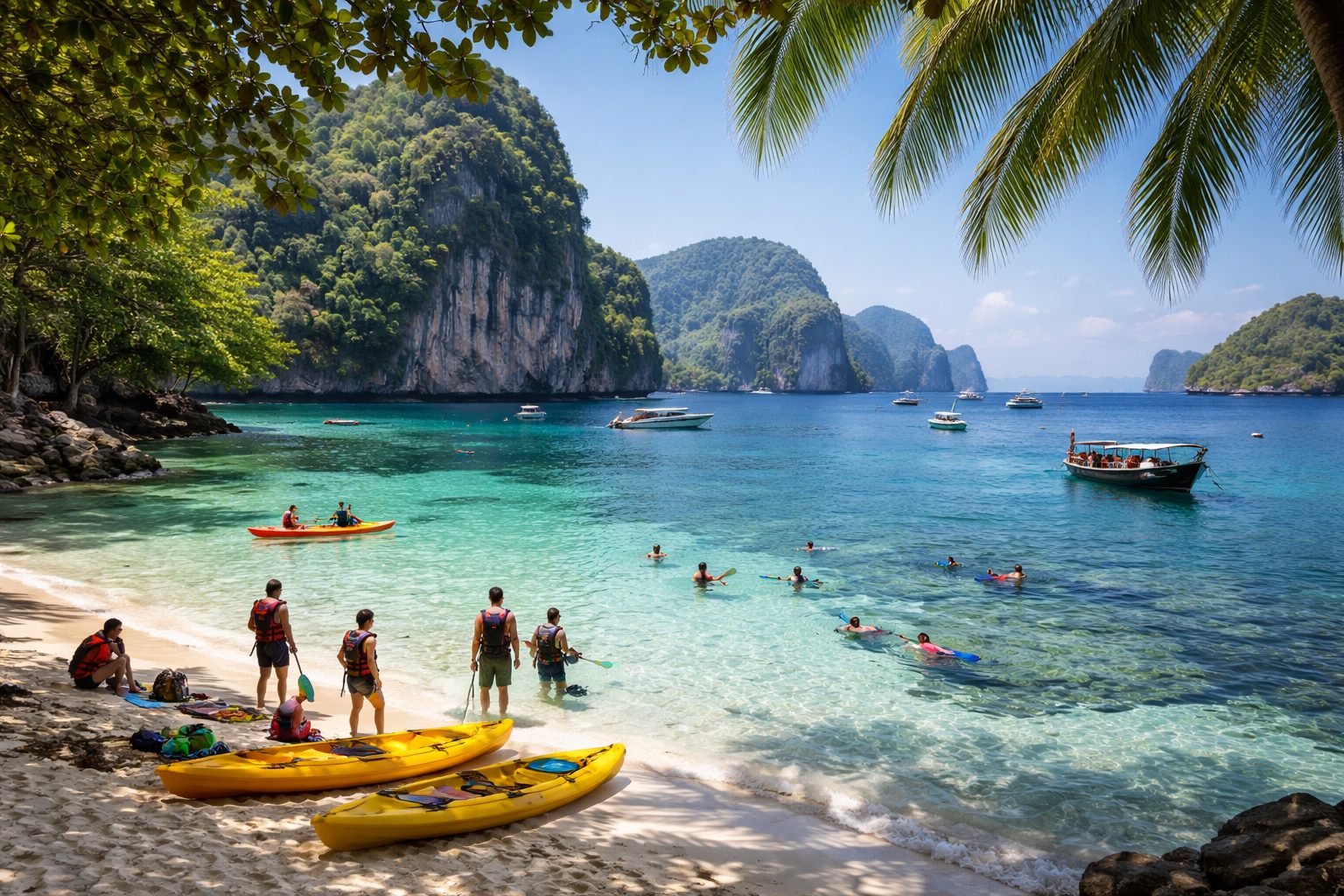
The Andaman coast — Phuket, Krabi, Koh Lanta, Koh Phi Phi — is at peak condition for water activities during spring. Diving and snorkeling visibility can reach 20–30 meters in March and April. Kayaking through mangroves and sea caves around Phang Nga Bay is particularly rewarding.
The Gulf of Thailand coast (Koh Samui, Koh Pha Ngan, Koh Tao) is also good during early spring, though Koh Tao remains the standout for diving regardless of season. Spring diving here often means encountering whale sharks, which migrate through the Gulf between March and May.
Popular water activities in spring:
- Scuba diving and snorkeling (Koh Tao, Similan Islands, Koh Lanta)
- Rock climbing at Railay Beach
- Sea kayaking in Phang Nga Bay
- Kiteboarding near Hua Hin
- Longtail boat excursions to remote beaches
Wildlife Watching Opportunities
Spring is one of the better seasons for wildlife in Thailand. Khao Yai National Park is famous for elephant sightings, hornbills, and gibbons. Doi Inthanon in the north attracts serious birdwatchers chasing rare highland species. The marine national parks around the Similan Islands are phenomenal for underwater wildlife — manta rays, leopard sharks, and diverse reef fish.
Elephant sanctuaries around Chiang Mai operate year-round, but spring visits mean smaller groups and more personal experiences. Choose sanctuaries with ethical practices — no riding, no performances, and a clear rehabilitation focus.
Local Cuisine During Spring
Seasonal Ingredients
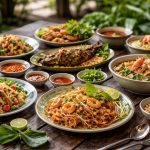
Thai cuisine in spring draws on ingredients that are at their freshest during this period. Mango is the standout spring fruit — green mangoes appear in salads and as accompaniments to grilled fish, while ripe yellow mangoes show up in desserts and fresh fruit stalls by April. Tropical herbs like lemongrass, galangal, and kaffir lime are also at their most aromatic in the warm season.
In northern Thailand, spring brings foraged ingredients into local cooking. Wild mushrooms, bamboo shoots, and various jungle herbs appear in markets that wouldn’t stock them at other times of year. These are ingredients that rarely make it into tourist restaurant menus, so exploring local markets is genuinely worth the effort.
Popular Dishes to Try
Spring is mango season, which means khao niew mamuang — sticky rice with mango — is everywhere and at its absolute best. The combination of sweet ripe mango over coconut-infused sticky rice, finished with toasted sesame, is one of the great simple desserts in the world. Don’t skip it.
Other dishes worth seeking out during spring:
- Som tam (green papaya salad) — cooling, spicy, and perfect for the heat
- Larb (spiced meat salad with herbs) — assertive and aromatic
- Gaeng kiew wan (green curry) — richer flavors suit the transitional season
- Pad cha talay (stir-fried seafood with young peppercorns) — particularly good on the coast
- Sai oua (northern Thai sausage) — intensely herbal and worth seeking out in Chiang Mai
Street Food Experiences
Street food in Thailand is extraordinary year-round, but spring adds seasonal freshness to the mix. Night markets in Chiang Mai’s old city, Bangkok’s Yaowarat (Chinatown), and Phuket’s old town district all operate with particular energy during spring.
In April, Songkran creates a street food surge — temporary stalls pop up along celebration routes selling grilled meats, iced drinks, and festival snacks. It’s a uniquely chaotic and delicious experience. Go hungry and plan to eat your way through the afternoon.
Travel Tips for Spring in Thailand
Best Time to Visit
Within the spring window, late February and March offer the most balanced conditions. The weather is warm but not yet at peak heat, the festivals are building up, and the crowds sit between the December holiday peak and the Songkran surge. If Songkran itself is your goal, plan around April 12–16 and book accommodation months in advance for Chiang Mai or Bangkok.
For beach destinations specifically, March is the sweet spot on the Andaman coast. The sea is calm, rain is minimal, and the pre-monsoon light gives sunsets a dramatic quality that’s hard to describe accurately.
Packing Essentials
Packing for spring in Thailand means planning for heat, occasional dust, and potential water-fight situations if you’re there for Songkran. Here’s what I’d prioritize:
- Lightweight, breathable clothing (linen or moisture-wicking synthetics)
- A compact rain jacket (useful even in dry season for air-conditioned spaces)
- Sunscreen with high SPF — the tropical sun is intense
- Insect repellent (especially for jungle or rural activities)
- A waterproof bag or case for Songkran
- Comfortable walking shoes and a pair of sandals
- A reusable water bottle — hydration is non-negotiable
Leave heavy layers at home. You won’t need them unless you’re going to extreme northern highland areas, and even then, a light fleece for evenings is sufficient.
Transportation Options
Getting around Thailand in spring is generally straightforward. Domestic flights connect Bangkok with Chiang Mai, Phuket, Krabi, and Koh Samui efficiently. Budget airlines like AirAsia and Nok Air keep costs reasonable if you book a few weeks ahead.
Within cities, ride-hailing apps (Grab is the dominant one) are reliable and cheap. Chiang Mai is well-suited to motorbike rental for those comfortable on two wheels. Bangkok’s BTS Skytrain and MRT metro system are excellent for navigating the city’s sprawl without melting in traffic.
For intercity travel, overnight sleeper trains from Bangkok to Chiang Mai remain one of the best travel experiences in Southeast Asia — affordable, comfortable, and atmospheric in a way that budget flights simply aren’t.
Accommodation Options in Spring
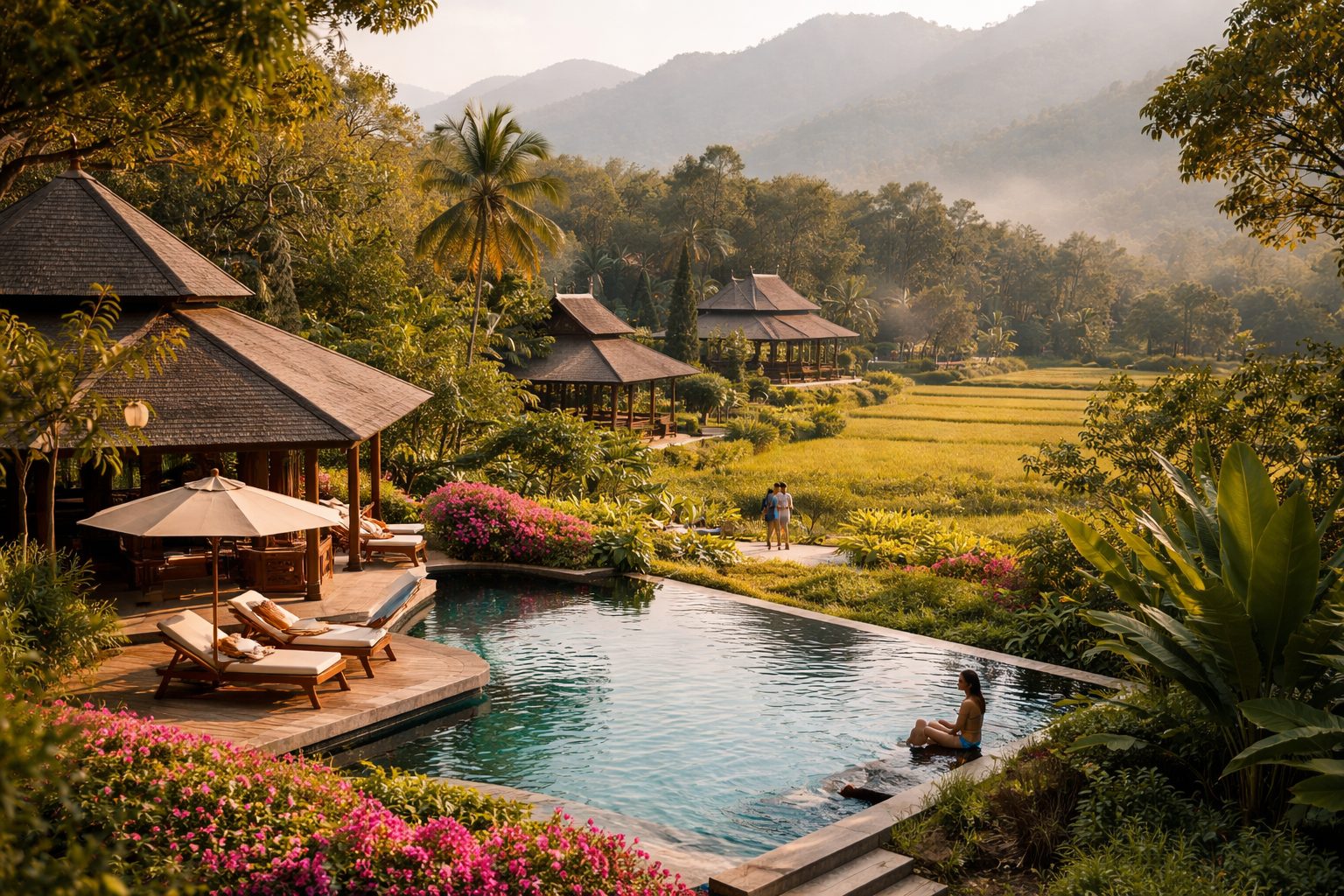
Luxury Resorts
Thailand’s luxury hospitality sector is genuinely world-class, and spring is a good time to access it at slightly reduced rates compared to peak winter season. The Four Seasons Chiang Mai, Amanpuri in Phuket, and Rosewood Bangkok represent the upper end of what’s available — all three deliver exceptional experiences with distinctive architectural identities and strong culinary programs.
For beach luxury, the resorts on Koh Lanta and the private island properties in Phang Nga Bay offer seclusion that’s hard to find in the Maldives at comparable prices. Spring pricing at these properties often drops 20–30% below December peak rates.
Budget-Friendly Stays
Thailand remains one of the world’s best value travel destinations, and spring doesn’t change that. Hostels in Chiang Mai and Bangkok offer excellent dorm beds for $8–15 USD per night, with private rooms typically running $20–35 USD. The hostel scene in both cities has matured considerably — you’ll find properties with proper pools, co-working spaces, and well-run bars.
Guesthouses in smaller towns like Pai, Chiang Rai, and along the Mekong are charming, genuinely affordable, and often family-run. Booking directly with smaller guesthouses rather than through platforms like Booking.com sometimes gets you better rates and more personal service.
Unique Boutique Hotels
The boutique hotel scene in Thailand is one of its underrated strengths. Chiang Mai has a cluster of converted heritage buildings in the old city that operate as boutique properties — think colonial-era teak wood, courtyard gardens, and very limited room counts. The Rachamankha is one of the most cited examples, but there are smaller, less-known properties worth finding.
In Bangkok, neighborhoods like Ari, Ekkamai, and the riverside areas around Charoen Krung have developed impressive boutique clusters over the past decade. These neighborhoods also offer better access to local dining and everyday Bangkok life than the tourist-heavy Sukhumvit corridor.
Spring in Thailand: A Comparison with Other Seasons
Spring vs. Summer
Summer in Thailand, broadly speaking, coincides with the rainy season from June through October. The contrast with spring is significant. Where spring offers dry skies and beach-ready conditions on the Andaman coast, summer brings heavy monsoon rains, rough seas, and occasional flooding. The upside of summer is lush green landscapes, cheaper prices, and far fewer tourists. But if you want predictable weather and full beach access, spring wins clearly.
| Factor | Spring (Feb–Apr) | Summer/Rainy Season (Jun–Oct) |
|---|---|---|
| Weather | Hot, dry, minimal rain | Humid, frequent heavy rain |
| Beach access | Excellent (Andaman coast) | Limited (rough seas, closures) |
| Crowds | Moderate to high | Low |
| Prices | Moderate | Lower |
| Festivals | Songkran (April) | Various regional events |
| Nature | Dry landscapes | Lush, green, waterfalls peak |
Spring vs. Winter
Thailand’s cool season (November–February) is widely considered the most comfortable time to visit in terms of temperature. The heat of spring hasn’t yet arrived, evenings are genuinely cool in the north, and the sky is clear and blue. Peak tourist season falls squarely in December and January, which drives prices up and adds crowds to popular sites.
Spring offers a comparable quality of experience with lower prices, more available accommodation, and the addition of Songkran — which has no equivalent in winter. If I had to choose purely on value, I’d take spring over the peak of winter every time, assuming the heat isn’t a dealbreaker for you.
Spring vs. Rainy Season
This comparison tends to favor spring for most travelers, but the rainy season has genuine advocates. The Gulf of Thailand coast (Koh Samui, Koh Pha Ngan) actually experiences its dry season when the Andaman coast is wet, so there’s always a good beach destination somewhere. But for a general Thailand trip covering multiple regions, spring’s dry and predictable conditions give it a clear edge over the rainy season’s variability.
Frequently Asked Questions (FAQs)
What is the weather like in Thailand during spring?
Spring in Thailand is warm to hot, with temperatures ranging from 28°C to 38°C depending on region. Rainfall is minimal in most areas until May, making it one of the drier periods of the year across the country.
Are there any travel restrictions in spring?
There are no significant travel restrictions specific to spring in Thailand. During Songkran (April 13–15), some roads in city centers are temporarily closed or restricted for festival events, so it’s worth checking local advisories if you need to get somewhere by vehicle.
What are the best activities for families during spring?
Spring is great for families — beach activities on the Andaman coast, elephant sanctuaries near Chiang Mai, and the Songkran water festival are all genuinely family-friendly. The dry weather also makes outdoor parks and temple visits more comfortable for children.
How to celebrate Songkran in Thailand?
The easiest approach is to position yourself in a major celebration zone — Silom in Bangkok or the old city moat in Chiang Mai — with a water gun, waterproof gear, and an appetite for joyful chaos. Participating in the traditional merit-making at temples in the morning adds meaningful cultural depth to the day.
What should I know about Thai customs in spring?
Dress modestly when visiting temples even in the heat, remove shoes before entering homes or sacred spaces, and treat water-pouring rituals with the respect they deserve — especially toward older Thais who may prefer the gentle traditional version over enthusiastic water guns. Learning a few words of Thai, even just basic greetings, is always appreciated.