Sri Lanka is one of those destinations that surprises you. You expect beaches and temples, and you get those, but you also get wild leopards, mist-covered tea hills, ancient cities that predate Rome, and food that genuinely changes how you think about cooking. I’ve traveled through this island more than once, and each time it offers something new. If you’re trying to figure out the best places to visit in Sri Lanka, this guide covers the full picture, from the ancient cultural triangle to the southern surf beaches and everything in between.
Overview of Sri Lanka’s Attractions
Brief Introduction to Sri Lanka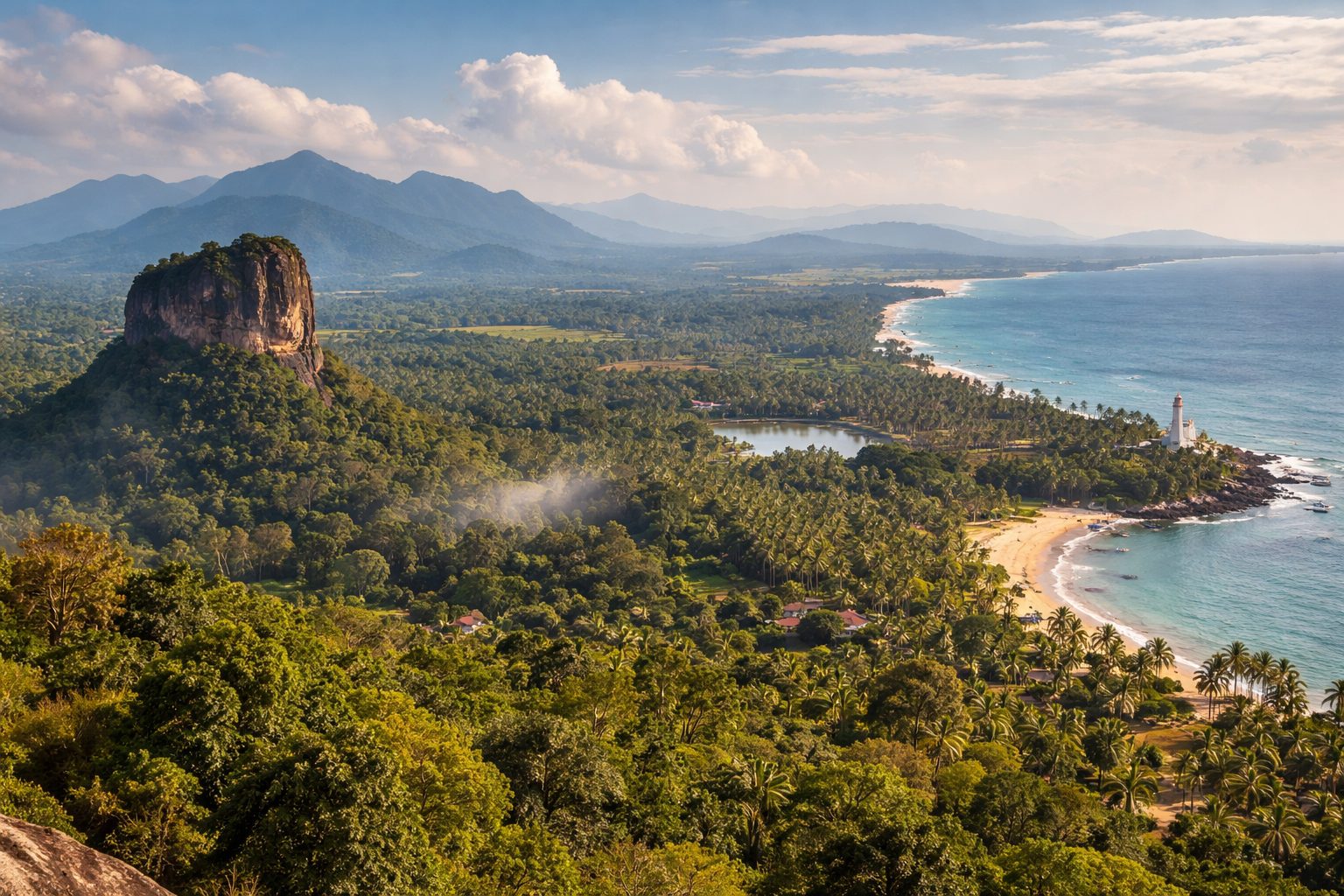
Sri Lanka sits just off the southern tip of India, separated by the Palk Strait. It’s a compact island, roughly 65,000 square kilometers, but what’s packed inside that space is remarkable. Tropical beaches line the coast, while the interior rises through dense jungle into cool highland tea country. The north has its own distinct character, shaped by a different cultural and historical legacy. The south has the most visited beaches and the famed Galle Fort. The central highlands offer a completely different pace.
Historically, Sri Lanka was a major stop on ancient trade routes, which is why you’ll find Buddhist monuments that are thousands of years old sitting alongside Hindu kovils, colonial Dutch architecture, and Portuguese forts. This layering of civilizations is part of what makes the country so interesting to explore on foot.
Importance of Tourism in Sri Lanka
Tourism is one of Sri Lanka’s main economic pillars. Before the political and economic turbulence of 2022, the country was seeing around two million international arrivals per year. Recovery has been strong, and the country is welcoming visitors again with open infrastructure and renewed hospitality investment.
For travelers, this matters because the industry has matured. You’ll find everything from budget guesthouses to luxury eco-lodges, efficient train routes between major destinations, and a tourism ecosystem that’s used to dealing with international visitors. Independent travel is easy here, which is one reason Sri Lanka consistently shows up on best places to visit in sri lanka lists published by major travel outlets every year.
Top Cultural Heritage Sites
Sri Lanka has six UNESCO World Heritage Sites, and three of them fall within what’s commonly called the Cultural Triangle in the north-central region. If history is your main driver, spend at least four or five days in this zone.
Anuradhapura: The Ancient Capital
Anuradhapura was Sri Lanka’s first great capital, established in the fourth century BCE and functioning as the seat of Sinhalese Buddhist civilization for over a thousand years. What remains is extraordinary. The sacred Bodhi Tree here is considered the oldest documented tree in the world, grown from a cutting of the original tree under which the Buddha attained enlightenment in India.
The ruins spread across a vast area, so you’ll want a bicycle or tuk-tuk to get around them comfortably. The dagobas, or stupas, are massive. The Jetavanarama dagoba was, at the time of its construction, one of the tallest structures in the ancient world. Walking around these structures at dawn, when most other tourists are still at breakfast, gives you a real sense of the scale of what was built here.
- Best way to explore: rent a bicycle for the day
- Entry fees apply for the archaeological zone
- Stay overnight in the town to visit early morning
- The sacred Bodhi Tree area requires modest dress
Sigiriya: The Lion Rock Fortress
Sigiriya is probably Sri Lanka’s most photographed site, and it earns that reputation. A massive granite rock rises nearly 200 meters above the surrounding jungle, and on top of it sit the ruins of a fifth-century royal palace complex built by King Kashyapa. The climb takes about 45 minutes and involves some steep steps, but the view from the top is worth every one of them.
On the way up, you’ll pass the famous frescoes, ancient paintings of “cloud maidens” that have survived for over 1,500 years on the exposed rock face. There’s also the Mirror Wall, a polished plaster surface on which ancient visitors carved graffiti, essentially creating a guest book that historians have been studying for decades.
I’d strongly recommend arriving when the site opens at 7am. By 10am it fills up fast, and the heat on the exposed rock becomes difficult. The surrounding moat gardens at the base are some of the earliest landscaped gardens in Asia and worth spending time in before or after the climb.
Kandy: Home of the Sacred Tooth Relic
Kandy is the cultural capital of Sri Lanka, sitting in the central highlands about three hours by train from Colombo. The city is centered on a beautiful lake, and beside it sits the Temple of the Sacred Tooth Relic, which houses what Buddhists believe to be a tooth of the Buddha. The temple is active, lively, and genuinely sacred, so approach it with respect.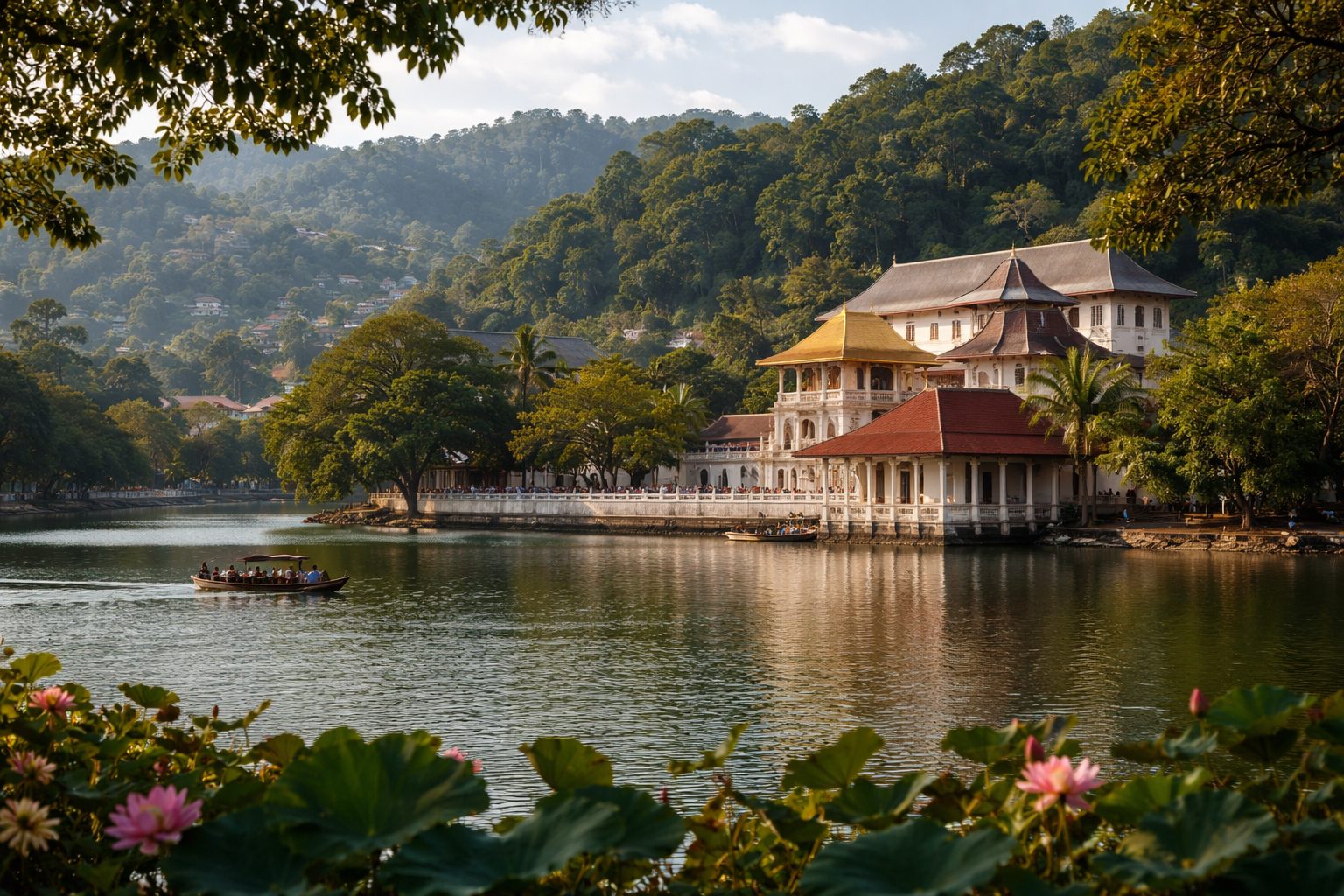
The most important time to visit Kandy is during the Esala Perahera festival in July or August, when an elaborately decorated elephant carries the casket containing the relic through the streets in a procession that lasts for ten days. It’s one of the most spectacular festivals in Asia. Outside of festival season, Kandy is a good base for visiting the Royal Botanical Gardens at Peradeniya, one of the finest tropical botanical gardens in the world.
Natural Wonders of Sri Lanka
The natural landscapes here shift dramatically over short distances. You can go from a beach to a national park to a misty highland all within a few hours of driving. That variety is one of the reasons Sri Lanka works so well as a multi-week trip.
Yala National Park: Wildlife Safari Experience
Yala is Sri Lanka’s most famous national park, and it has one of the highest leopard densities in the world. That’s the main draw, but the park also has elephants, sloth bears, crocodiles, and over 200 bird species. Safari jeeps enter the park at 6am, which is when leopard sightings are most likely.
I want to be honest about the experience: the popular Block 1 area gets crowded, especially from November through February. You’ll sometimes have a dozen jeeps converging on one leopard sighting. If that bothers you, look for operators who take you into the less-visited Block 5. The wildlife is there, and you’re more likely to have it to yourself.
- Safari duration: usually 3-4 hours per session
- Morning sessions are better than afternoon for big cats
- Book an experienced tracker, not just a driver
- The park closes in September for about a month
Nuwara Eliya: The Tea Country
Nuwara Eliya sits at about 1,800 meters above sea level, and the climate feels completely different from the rest of the country. You’ll need a light jacket here, which feels bizarre after sweating through Colombo. The British, who developed the tea industry in the 19th century, called this area “Little England,” and some of the colonial architecture and manicured gardens do have an odd English country feel.
The real reason to come is the tea. Visiting a working tea estate and factory is genuinely interesting. You can watch the entire process from withering the leaves through rolling, fermenting, drying, and sorting. The guided tours at places like Pedro Estate explain it clearly and don’t feel like tourist traps. And the tea you drink afterward, freshly processed at altitude, is excellent.
The train journey from Kandy to Ella passes through Nuwara Eliya and is consistently ranked among the most scenic rail journeys in the world. Book a second-class seat rather than a first-class observation car. The windows open, you can lean out, and the experience is more immediate.
Ella: Scenic Views and Hiking Trails
Ella has become a backpacker hub, but for good reason. The town sits in a natural gap in the hills, framing a view down through jungle to the distant coastal plain that’s genuinely hard to leave. The famous Nine Arch Bridge, a colonial-era railway viaduct, is about a 20-minute walk from town and is best seen when a train passes through, which happens several times a day.
Little Adam’s Peak is an easy two-hour hike from town with panoramic views. Ella Rock is a harder four-hour hike but rewards you with even more dramatic scenery. The town itself has a good selection of cafes and guesthouses, and it has the pleasant quality of being easy to relax in for two or three days without feeling like you’re wasting time.
Stunning Beaches to Explore
Sri Lanka’s coastline runs for over 1,500 kilometers. The south and southwest coasts are the most developed for tourism. The east coast has excellent beaches that are largely uncrowded compared to the south. The monsoon patterns mean the two coasts are good in opposite seasons, which is worth keeping in mind when planning.
Unawatuna: A Tropical Paradise
Unawatuna is a crescent-shaped bay about 5 kilometers east of Galle. The water is calm and the swimming is good, which makes it popular with families. The beach itself is lined with restaurants and guesthouses, and the atmosphere is relaxed rather than party-focused.
It’s worth combining a visit here with time in nearby Galle, since the Fort is only a short tuk-tuk ride away. Unawatuna also has decent snorkeling around its headland, though the coral isn’t pristine. If you want better underwater visibility and fewer people, the beach at Jungle Beach, a 10-minute walk over the headland, is a noticeably quieter option.
Mirissa: Whale Watching and Relaxation
Mirissa is known for two things: a genuinely beautiful beach and one of the best whale watching opportunities anywhere in the world. Blue whales, the largest animals on Earth, pass through the waters south of Sri Lanka from November to April. Sperm whales and spinner dolphins are also common sightings. The whale watching boats leave from Mirissa harbor at around 6am and return by midday.
The beach at Mirissa curves around a small headland with coconut palms leaning over white sand. It’s prettier than Unawatuna but gets busy during peak season. If you’re there in December or January, book accommodation a few weeks ahead. The town also has a small but good selection of seafood restaurants.
Arugam Bay: Surfing Hotspot
Arugam Bay is on the east coast, and it operates on a completely different seasonal timeline from the south. The surf season runs from April through October, which is the low season for the southern beaches. This makes it a smart choice if you’re traveling in May or June, when the south is rainy.
The main point break is one of the best surf spots in Asia, consistent enough for intermediate surfers and good enough to draw professionals during competition season. But Arugam Bay isn’t just for surfers. It has a laid-back village feel, good seafood, and easy access to Kumana National Park to the south, which is far less crowded than Yala and has excellent birdwatching.
Adventure Activities in Sri Lanka
Beyond the obvious safaris and beach activities, Sri Lanka has a solid set of adventure options that don’t get as much attention but are genuinely worthwhile.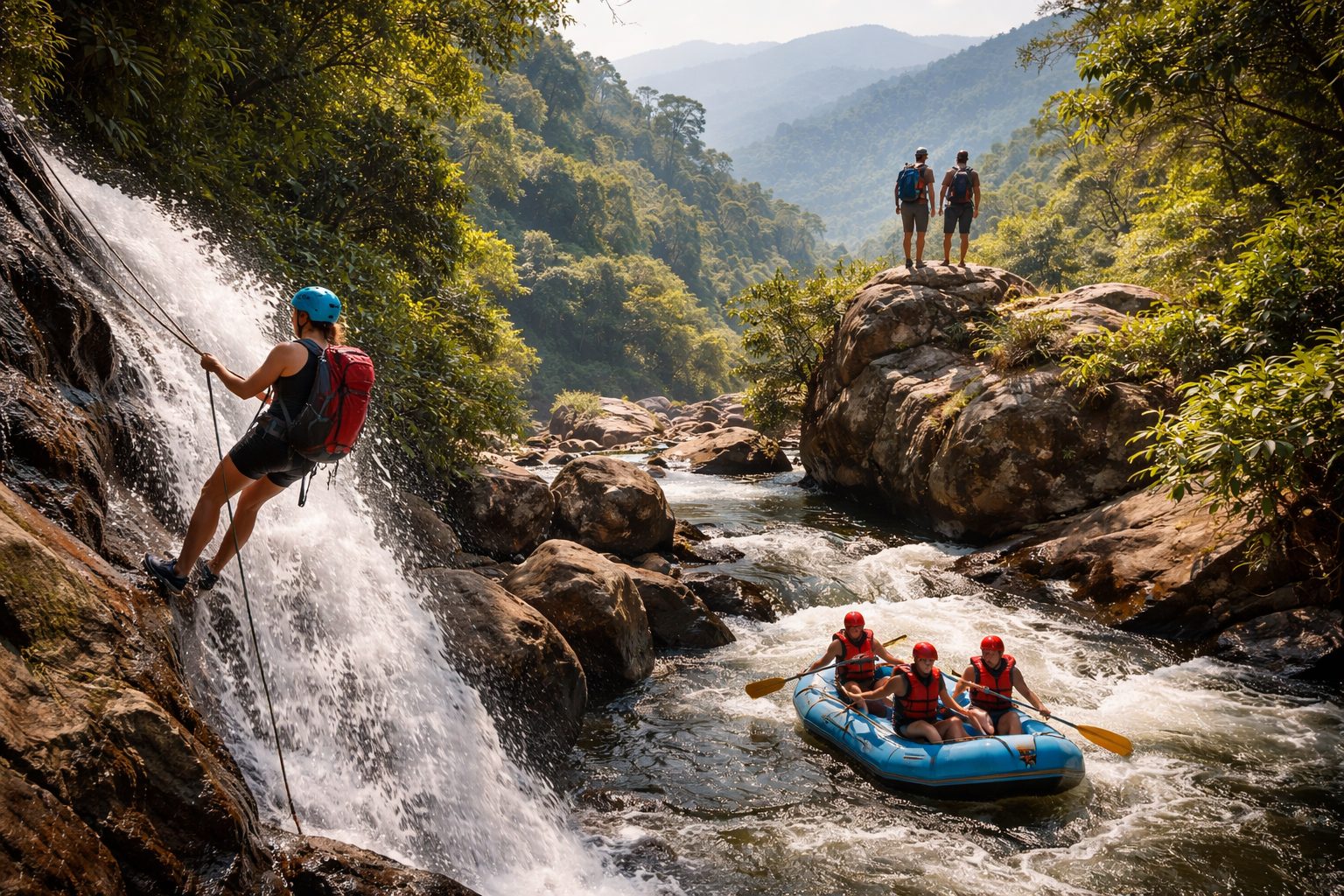
Hiking Adventures in Horton Plains
Horton Plains is a high-altitude plateau in the central highlands, and it’s the starting point for one of Sri Lanka’s most unusual hiking experiences. The circular trail takes you across open grassland and through cloud forest to World’s End, a sheer cliff with a drop of nearly 900 meters to the plains below.
The key is timing. By 9 or 10am, cloud usually fills the valley and obscures the view. The park opens at 6am, and if you’re there within the first hour or two, you get a clear drop. It’s a fairly easy hike, about 9 kilometers round trip, and takes around three hours. The plateau also has good wildlife, including sambar deer and endemic birds.
Water Sports in Bentota
Bentota is about 60 kilometers south of Colombo and has developed into Sri Lanka’s main water sports hub. The Bentota River, which runs behind the beach, is calm and ideal for jet skiing, water skiing, and wakeboarding. The beach itself has good conditions for windsurfing and kitesurfing.
The town caters to a mix of package tourists and independent travelers. The resort strip has the water sports operations, most of which are reputable and well-equipped. Bentota is also within easy reach of the Brief Garden, a beautiful private garden created by the landscape artist Bevis Bawa, which is worth a stop if you have a half-day free.
Snorkeling and Diving in Hikkaduwa
Hikkaduwa was Sri Lanka’s first proper beach resort town, and it retains a slightly retro atmosphere that I actually like. The offshore coral reef is the main draw for divers and snorkelers. The coral is healthier in some sections than others, affected by bleaching events and occasional fishing damage, but there are still good areas with interesting marine life, including sea turtles, reef fish, and occasional reef sharks.
The diving infrastructure in Hikkaduwa is mature. Multiple dive shops offer PADI courses and guided dives to wrecks and reef sites. Visibility is generally best from November through March. During peak season, the beach itself gets crowded and the main road loud, so factor that in if you prefer quiet.
Unique Experiences and Local Culture
The culture of Sri Lanka isn’t something you observe from a distance. It pulls you in through its festivals, its food, its approach to wellness, and the genuine warmth of most people you’ll encounter.
Traditional Festivals and Events
Sri Lanka has a busy festival calendar tied to Buddhist, Hindu, and to a lesser extent Muslim and Christian traditions. The Esala Perahera in Kandy is the most famous, but there are others worth planning around.
The Thai Pongal festival in January is a Tamil harvest celebration with colorful rituals. Vesak, the festival marking the Buddha’s birth, enlightenment, and death, is celebrated in May with elaborate lantern displays and street food stalls that spring up everywhere. The Nallur Kandaswamy festival in Jaffna in the north draws enormous crowds in August.
- Esala Perahera: July/August, Kandy
- Vesak: May full moon, island-wide
- Thai Pongal: January, particularly in Tamil communities
- Nallur Festival: August, Jaffna
Culinary Journey through Sri Lankan Cuisine
Sri Lankan food is distinct from Indian cooking, though they share some ingredients and techniques. The base of most meals is rice and curry, but “curry” here can mean fish curry, dhal, jackfruit, cashew, or a dozen other things, each with its own flavor profile and technique. Coconut milk appears constantly, both as a cooking medium and as a cooling element in hotter dishes.
Don’t miss hoppers. They’re bowl-shaped rice flour pancakes, crispy at the edges and soft in the center, often served with an egg cracked in the middle and a range of sambols on the side. String hoppers, their noodle-like cousin, are equally good. Kottu roti, chopped flatbread stir-fried with vegetables, egg, and your choice of protein on a hot griddle, is a reliable street food option and one of the most satisfying late-night meals you’ll find anywhere.
Pol sambol, a fresh condiment made from grated coconut, chili, lime, and onion, goes with almost everything and appears on almost every table. It takes about three days in Sri Lanka before you start wanting it with every meal.
Ayurveda and Wellness Retreats
Sri Lanka has a serious tradition of Ayurvedic medicine, and this has translated into a genuine wellness tourism sector. This isn’t spa hotels slapping “Ayurveda” on a massage menu. There are dedicated retreat centers where practitioners consult you properly, tailor treatments to your constitution, and provide dietary guidance alongside therapies.
The southwest coast and hill country have the highest concentration of reputable centers. A standard treatment package runs from 7 to 21 days and covers everything from oil massages and herbal steam baths to medicated enemas, if you’re committed to the full program. Shorter single-session treatments are available almost everywhere, and even those have a measurable relaxation effect that differs from regular massage.
Practical Travel Tips
Best Time to Visit Sri Lanka
Sri Lanka has two monsoon seasons, which split the island into two viable travel windows at any given time. The southwest monsoon affects the south and west coasts from May through September. The northeast monsoon hits the north and east from October through January.
| Region | Best Time | Avoid |
|---|---|---|
| South Coast (Galle, Mirissa, Unawatuna) | November to April | May to September |
| East Coast (Arugam Bay, Trincomalee) | April to October | November to January |
| Hill Country (Ella, Nuwara Eliya, Kandy) | January to April | May to September |
| Cultural Triangle (Sigiriya, Anuradhapura) | May to September | December to February (crowds) |
| Yala National Park | February to July | September (park closed) |
If you’re doing a comprehensive circuit of the island, December through March tends to work reasonably well for most regions, with some rain on the east coast being the main tradeoff.
Transportation Options Within the Country
The train network is the most enjoyable way to travel between major destinations. The hill country line from Colombo to Badulla via Kandy, Nanu Oya (for Nuwara Eliya), and Ella is the most scenic and most popular. Book observation car seats ahead of time, or just get a regular second-class seat and enjoy the open windows.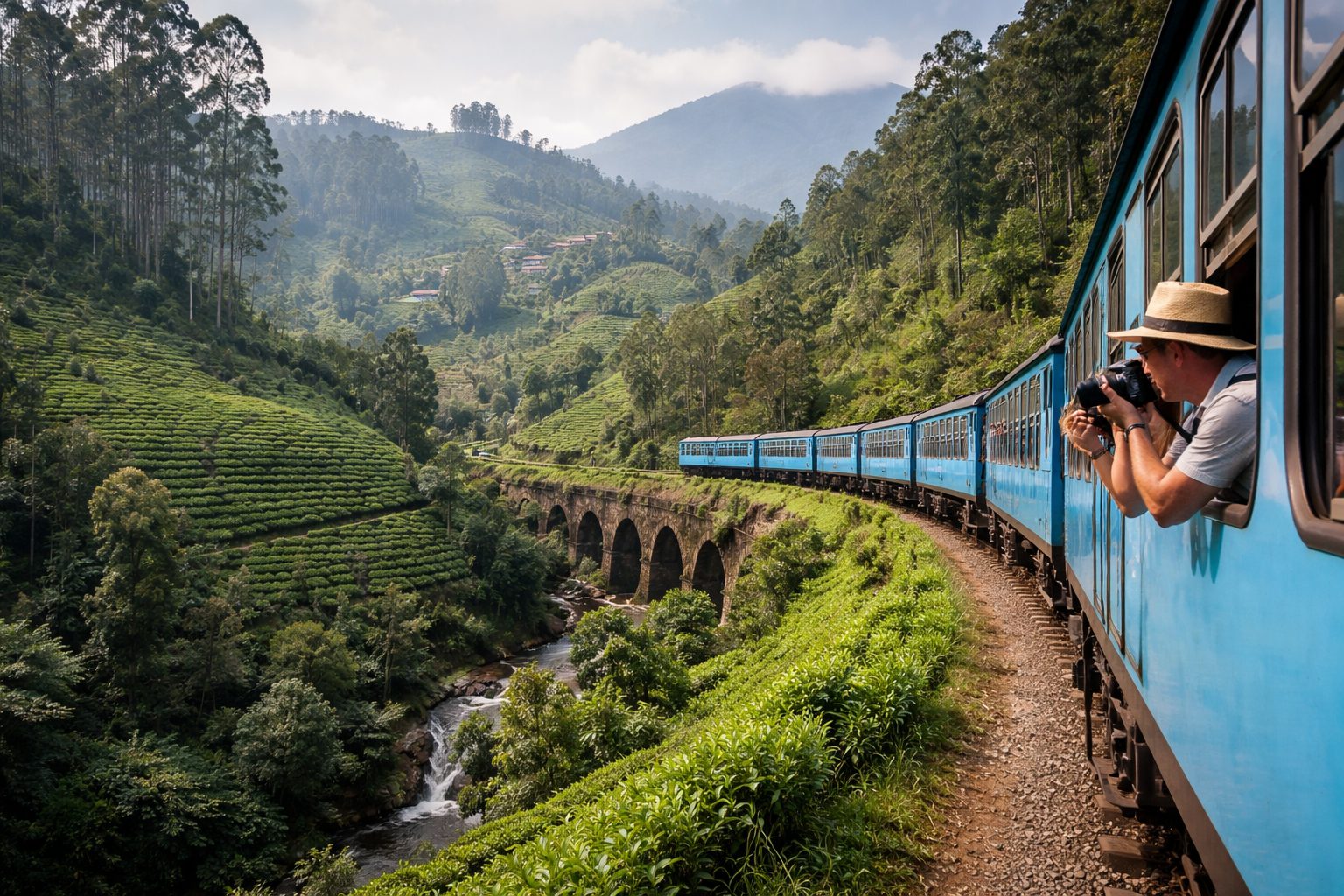
For shorter distances and less connected areas, tuk-tuks are the standard option. They’re cheap, widely available, and fine for most trips up to about 30 kilometers. For longer routes between cities, air-conditioned intercity buses are fast and inexpensive. Renting a car with a driver is also a popular option for families or small groups who want flexibility without the logistics of self-driving on roads that can be challenging.
- Trains: scenic, affordable, but book ahead for popular routes
- Tuk-tuks: ideal for local and short-distance travel
- Intercity buses: fast and cheap for longer journeys
- Private car with driver: good value for groups, maximum flexibility
- Domestic flights: limited routes, used mainly for Jaffna
Accommodation Choices for Every Budget
Sri Lanka’s accommodation range is wide. At the budget end, guesthouses run by local families are genuinely good value, often including breakfast and providing a much more personal experience than a hotel. In Ella, Unawatuna, and Hikkaduwa you’ll find well-run budget guesthouses for $15 to $30 per night.
Mid-range boutique hotels are well developed, particularly in Galle, Kandy, and the hill country. These often occupy restored colonial buildings or are set on tea estates with strong design sensibilities. At the top end, Sri Lanka has some excellent luxury properties, including a few on the ultra-luxury tier. The Amangalla in Galle Fort and The Wallawwa near the airport are consistently well-regarded.
Comparison: Urban vs. Rural Destinations
One of the interesting decisions when planning a Sri Lanka trip is how much time to give to cities versus countryside. The best places to visit in sri lanka include both, and they offer genuinely different experiences.
Exploring Colombo: The Bustling Capital
Most travelers arrive in Colombo and leave quickly for the countryside, which is a mistake. The city has modernized considerably and has a vibrant food and nightlife scene that rewards an extra day or two.
The Pettah market area is a sensory experience worth experiencing, a dense grid of market streets specializing in everything from textiles to spices to electronics. The Colombo Fort area has colonial-era buildings mixed with modern development. Galle Face Green, the seafront esplanade, is where the city comes to breathe in the evenings, with food stalls, kite flyers, and families spread across the grass.
The restaurant scene in Colombo is genuinely good, and you’ll find cooking here that reflects the full diversity of Sri Lankan cuisine in a way that’s harder to access in smaller towns. If you have two nights in Colombo, one in Pettah and one evening at a good restaurant in Cinnamon Gardens or Kollupitiya will give you a useful frame of reference for the rest of the trip.
Discovering the Charm of Galle Fort
Galle Fort is one of the most intact examples of Dutch colonial fortification in Asia, and walking its ramparts at sunset is one of those experiences that earns its cliche reputation. Inside the walls you’ll find a neighborhood of colonial-era buildings now housing boutique hotels, cafes, independent shops, and galleries.
The fort is small enough to walk in an hour but interesting enough to spend a full day in. The streets within have a quiet residential quality alongside the tourism, with locals going about daily life in buildings that have stood for 400 years. The National Maritime Museum inside the fort is small but well-curated. The lighthouse at the southern tip is photogenic at any time of day.
Galle works well as a base for exploring the southwest coast. Unawatuna is minutes away by tuk-tuk, and you can make day trips to Mirissa or Hikkaduwa from here without changing accommodation.
Frequently Asked Questions (FAQs)
What are the must-see places in Sri Lanka?
The core circuit that most travelers follow covers Sigiriya, Kandy, Ella, and either the south coast beaches or a national park like Yala. These give you a mix of cultural heritage, highland scenery, and natural landscape that represents the island well. If you have more time, add Anuradhapura, Galle, and the east coast.
How long should I spend in Sri Lanka?
Two weeks is a solid amount of time for a first visit and lets you cover the main highlights without rushing. Three weeks gives you room to slow down, explore less-visited areas, or spend more time on a beach. Ten days is doable if you focus on one region rather than trying to cross the whole island.
Is Sri Lanka safe for tourists?
Sri Lanka is generally safe for tourists. The civil conflict that ended in 2009 is long over, and the country has been stable. The 2019 Easter Sunday attacks were a serious incident but were followed by significant security improvements. Normal travel precautions apply, and petty theft around tourist areas should be watched for, but serious crime targeting tourists is uncommon.
What is the best way to travel around Sri Lanka?
Trains work well for the main routes between Colombo, Kandy, Ella, and the south coast. For areas off the rail network, a private car with driver or intercity buses are the practical options. Tuk-tuks handle local transport within towns easily and cheaply. Many independent travelers combine all three depending on the leg of the journey.
Are there any travel restrictions or requirements for Sri Lanka?
Most nationalities receive a visa on arrival or can apply for an electronic travel authorization before departure, which is recommended to avoid queues. A small arrival fee applies. There are no mandatory vaccinations required for entry, though hepatitis A, typhoid, and standard travel vaccinations are advisable. Check current entry requirements with your country’s foreign affairs office before travel, as conditions can change.
Sri Lanka rewards travelers who take time with it. The best places to visit in sri lanka span everything from ancient ruins to active surf breaks, from misty tea highlands to warm-water reef dives. You could spend a month here and still find new corners worth exploring. Start with the highlights, but leave room for the unexpected, because that’s usually where the best memories come from.