India is one of those rare places where history doesn’t just sit in museums. It lives in the streets, in the stones, in the air around ancient monuments. I’ve traveled across this country more than a few times, and every visit reinforces the same feeling: nowhere else packs so many layers of civilization into a single landscape. When you start looking at the top 10 historical places in india, you quickly realize you’re dealing with thousands of years of empire, religion, art, and human ambition all compressed into stone and soil.
From Mughal mausoleums to Dravidian temples, from medieval forts to rock-cut monasteries, India’s heritage sites span time periods that would cover entire civilizations elsewhere. This article walks through the most significant and fascinating historical destinations the country has to offer, with practical context to help you actually plan a visit.
Introduction to India’s Rich Historical Heritage
India’s history runs deeper than almost any other continuous civilization on Earth. The Indus Valley Civilization, which flourished around 3000 BCE, was already building planned cities with drainage systems while much of the world was still in early antiquity. Then came the Vedic period, the Maurya and Gupta Empires, the medieval sultanates, and eventually the Mughal Empire, which left some of the most visually stunning monuments still standing today.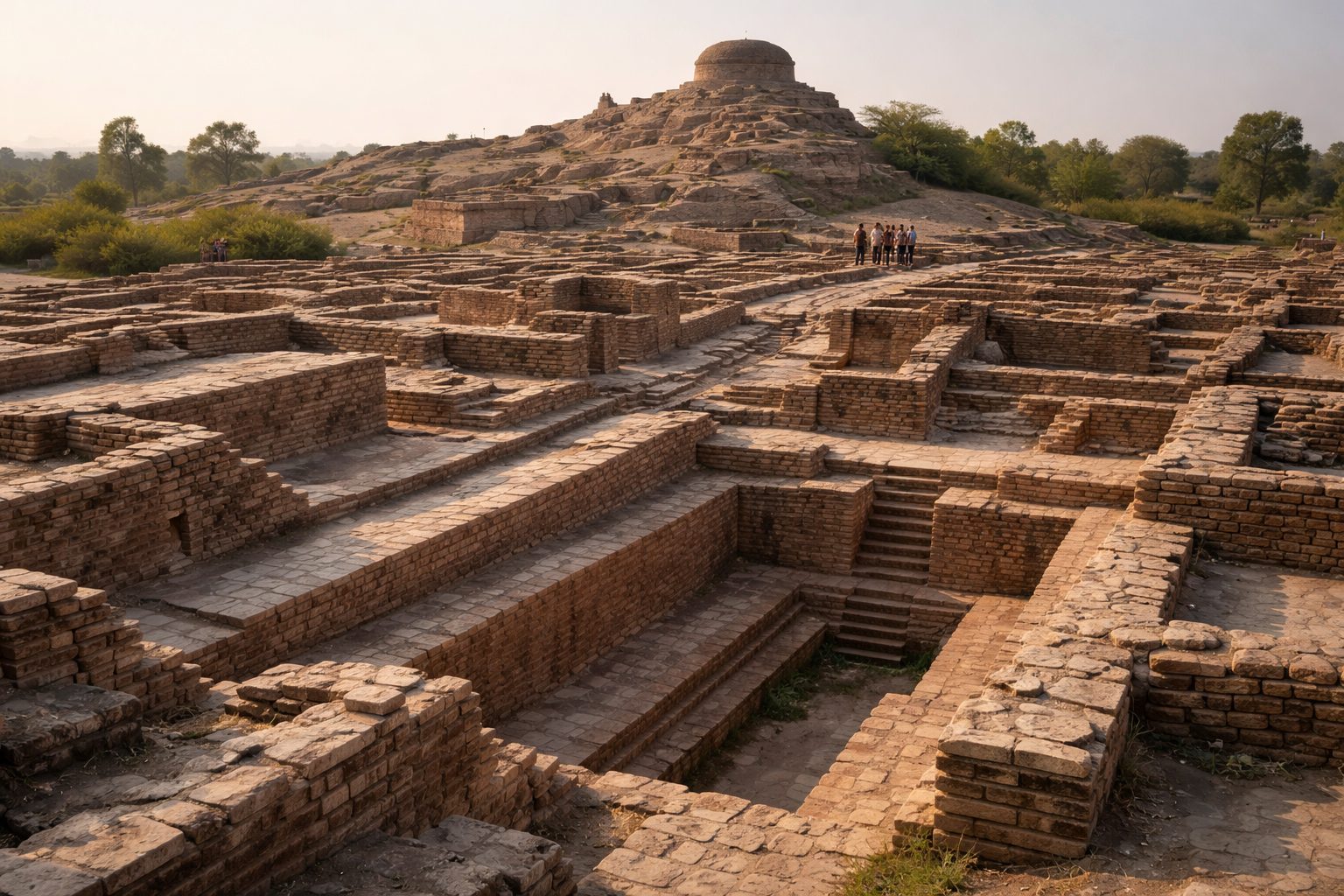
What makes Indian heritage different from, say, European heritage, is the sheer density. You can drive two hours in any direction from a major city and stumble onto a 10th-century temple complex that barely shows up on tourist maps. The country holds 42 UNESCO World Heritage Sites, more than most people realize, and countless others that haven’t made the list yet.
The historical record here isn’t linear either. Hindu, Buddhist, Jain, and Islamic traditions all left their marks in overlapping waves, sometimes literally on the same site. That layering is what makes exploring India’s past so compelling and occasionally confusing in the best way.
Why Explore Historical Places in India?
Honestly, you don’t have to be a history enthusiast to get something meaningful out of visiting these sites. Architecture alone justifies the trip. The craftsmanship on display at places like the Ajanta Caves or the Khajuraho temples is technically astonishing even by modern standards.
But beyond aesthetics, visiting these sites gives you context that no book can fully provide. Standing inside the Agra Fort, looking at the small window from which a deposed emperor reportedly spent his final years gazing at the Taj Mahal, makes history feel personal rather than academic. That kind of experience changes how you understand the people behind these monuments.
There’s also the cultural continuity angle. Many of these sites are still actively used, still embedded in living religious and community practices. That’s unusual globally, and it makes the experience richer than a typical heritage tourism visit.
Some practical reasons to prioritize these destinations:
- Most major historical sites are well-connected by rail and road
- Entry fees for Indian nationals and foreign tourists are reasonable
- Several sites have been restored with improved signage and visitor infrastructure
- The surrounding towns often have strong local food and craft traditions worth exploring alongside the monuments
Top 10 Historical Places in India
India has hundreds of sites worth visiting, but these ten represent the range, depth, and variety that make exploring the top 10 historical places in india so rewarding. Each one tells a different chapter of the same long story.
1. Taj Mahal: The Epitome of Love
There’s a reason the Taj Mahal is the first thing most people think of when they picture India. Built between 1632 and 1653 by Mughal Emperor Shah Jahan as a tomb for his wife Mumtaz Mahal, it’s one of the most technically and aesthetically accomplished structures in human history.
The main mausoleum is built from white Makrana marble, inlaid with semi-precious stones in intricate floral and geometric patterns. The symmetry is precise, the proportions studied carefully over years by the architect Ustad Ahmad Lahori and his team of over 20,000 craftsmen. The entire complex, including the garden, mosque, and guesthouse, covers 17 hectares.
Visit at sunrise if you can manage it. The light changes the marble from pale gray to warm gold in the first hour of the morning, and the crowds haven’t arrived yet. The Taj looks different at every hour of the day, and that’s by design.
- Location: Agra, Uttar Pradesh
- UNESCO World Heritage Site since 1983
- Best visited: October to March
- Avoid Fridays when the complex is closed to tourists
2. Jaipur City: The Pink City and Its Forts
Jaipur is more of an experience than a single monument. Founded in 1727 by Maharaja Sawai Jai Singh II, it was one of India’s first planned cities, and the old walled city is still largely intact. The terracotta pink color on the buildings was applied in 1876 as a welcoming gesture for a royal visit and never changed.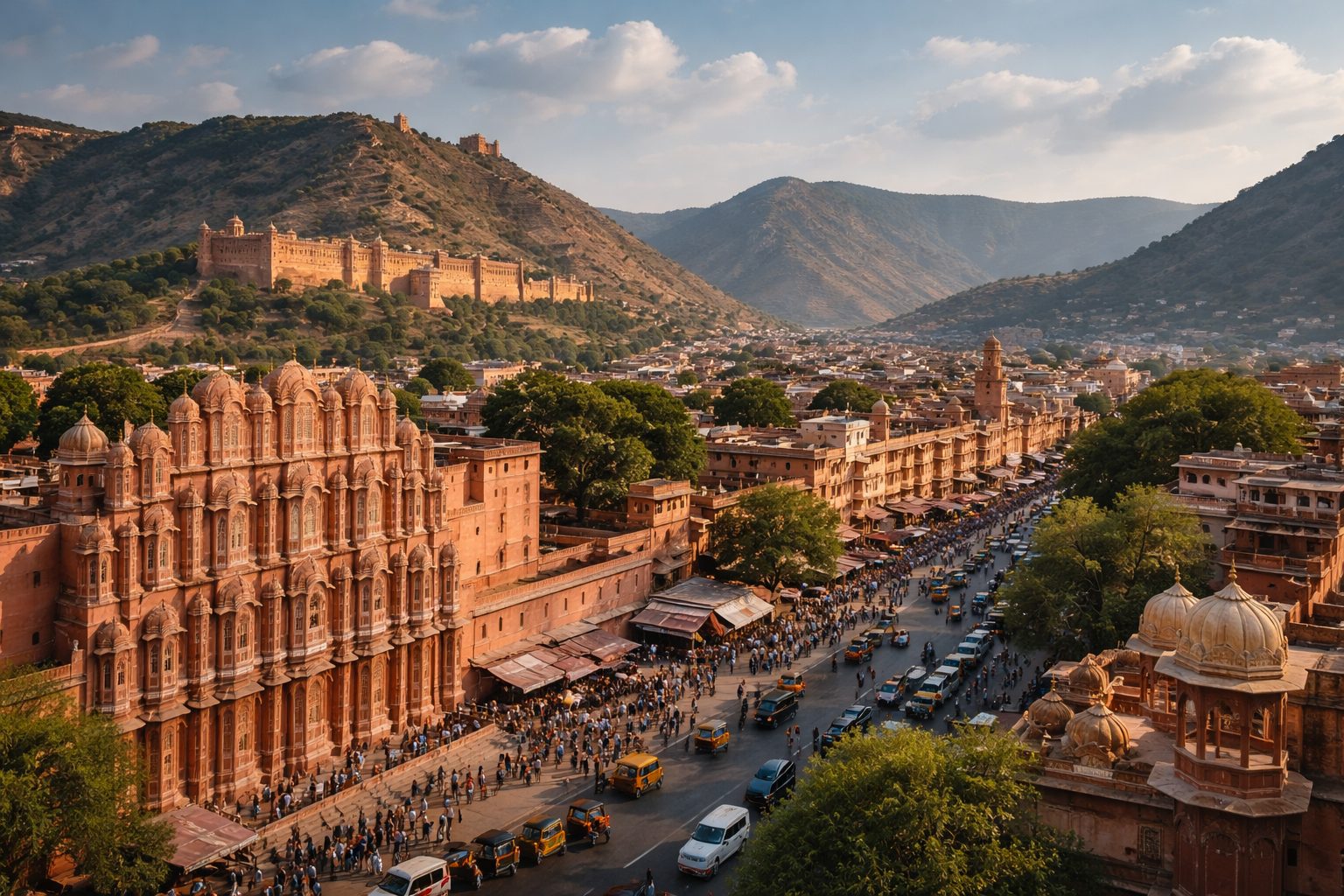
The city’s two main forts are Amber Fort and Nahargarh Fort. Amber is the more famous one, sitting on a hilltop above a lake and connected by a long zigzag ramp. Its Sheesh Mahal, the Hall of Mirrors, is genuinely spectacular when lit by torchlight. Nahargarh is less polished but offers better views of the city at sunset.
The City Palace complex in the old city is still partially inhabited by the royal family and houses a museum with textiles, weapons, and manuscripts. The Jantar Mantar observatory nearby, built by the same Maharaja who founded the city, contains large stone astronomical instruments that were accurate to a fraction of a degree.
- Combination of palace, fort, and urban heritage is rare globally
- The bazaars in the old city are worth several hours on their own
- Easy day trips to Amber from most city hotels
3. Qutub Minar: A Marvel of Indo-Islamic Architecture
The Qutub Minar in Delhi is the tallest brick minaret in the world at 73 meters, and it’s been standing since the late 12th century. Qutb ud-Din Aibak started it in 1193 after establishing the Delhi Sultanate, and successive rulers added to and repaired it over the following century.
What’s easy to miss if you focus only on the tower is the surrounding complex. The Quwwat-ul-Islam Mosque, built using materials from demolished Hindu and Jain temples, shows a fascinating visual tension between indigenous craftsmanship and imported Islamic design conventions. The columns are clearly from earlier temples, but they’ve been assembled into a mosque. That collision of traditions is preserved in the stonework itself.
The Iron Pillar in the courtyard, dating to around 375 CE, is another remarkable object. It’s made from 98% pure wrought iron and shows almost no corrosion after 1,600 years in the open air, a metallurgical achievement that puzzled scientists for a long time.
- Located in Mehrauli, South Delhi
- Easy to combine with other Delhi monuments in a day
- Morning visits are cooler and less crowded
4. Red Fort: A Symbol of India’s Independence
The Red Fort in Delhi has two identities. Historically, it was the main residence of the Mughal emperors from 1648 until 1857, a massive administrative and ceremonial complex covering 2.41 square kilometers. Symbolically, it’s the site from which India’s Prime Minister addresses the nation every Independence Day on August 15th.
Shah Jahan built it at the same time as the Taj Mahal, and the quality of workmanship reflects that parallel investment. The Diwan-i-Aam (Hall of Public Audience) and Diwan-i-Khas (Hall of Private Audience) are the two main ceremonial spaces, both stripped of much of their original decoration but still impressive in scale.
The fort went through rough handling under British rule after 1857, when many structures were demolished to build barracks. What remains is a partial picture of what was once an entire royal city enclosed in red sandstone walls.
- UNESCO World Heritage Site
- Evening light and sound shows run most nights
- Allow two to three hours for a thorough visit
5. Hampi: The Ruins of a Vijayanagara Empire
Hampi is unlike anywhere else in India. The ruins of the Vijayanagara Empire, which reached its peak in the 14th and 15th centuries, are spread across a surreal landscape of giant boulders and banana plantations in Karnataka. The city was once one of the largest in the world, home to half a million people at its peak.
The Virupaksha Temple in the center of the village is still an active place of worship, which gives Hampi a living continuity that purely archaeological sites lack. But it’s the outer reaches of the site that take your breath away: the massive stone chariot at the Vittala Temple complex, the royal enclosure with its elephant stables, the queen’s bath, the stepped tanks.
Getting around Hampi requires some effort. The site is spread over roughly 16 square kilometers, so hiring a bicycle or auto-rickshaw makes more sense than trying to walk everything. Give it at least two full days.
- UNESCO World Heritage Site since 1986
- Bouldering is popular here, separate from the historical sites
- The Tungabhadra River adds a scenic element to the experience
6. Ajanta and Ellora Caves: Ancient Rock-Cut Wonders
The Ajanta and Ellora cave complexes in Maharashtra are separated by about 100 kilometers but are usually visited together. They’re different in character but equally extraordinary.
Ajanta’s 30 rock-cut Buddhist caves were carved between the 2nd century BCE and the 6th century CE. The paintings inside, depicting scenes from the Jataka tales and the life of the Buddha, are among the oldest and best-preserved examples of Indian art anywhere. The detail in the faces, the naturalistic rendering of animals, the confident use of depth and composition: it’s genuinely stunning for work this old.
Ellora’s 34 caves span Buddhist, Hindu, and Jain traditions across a single cliff face, which is itself a statement about the period’s religious coexistence. The Kailasa Temple at Ellora (Cave 16), carved entirely from a single basalt rock by excavating downward, is probably the most ambitious single-stone structure ever attempted. Estimates suggest over 200,000 tonnes of rock were removed by hand.
- Both sites are UNESCO World Heritage Sites
- Ajanta caves are better for paintings; Ellora for sculpture and architecture
- Aurangabad is the closest major city for basing a visit
7. Fatehpur Sikri: The Abandoned Mughal Capital
Akbar built Fatehpur Sikri as his capital in 1571, moved the entire Mughal court there, and then abandoned it 14 years later. The reasons are still debated: water scarcity is the most common explanation, though political and strategic factors likely played a role too.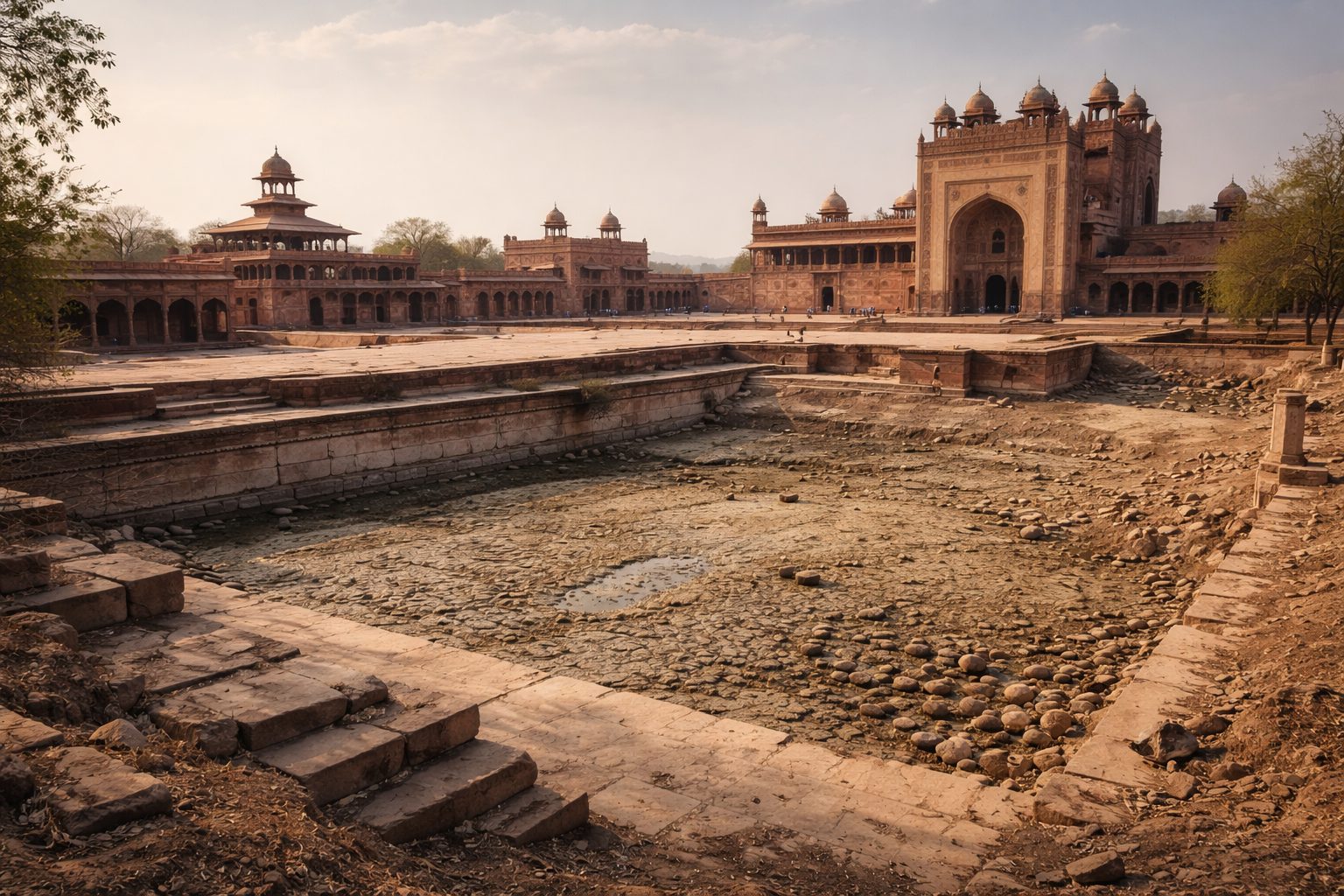
What’s left is a remarkably complete ghost city. The palace complex, mosques, courts, and residential quarters are all still standing in good condition, preserved partly by the fact that no later city grew over it. The Buland Darwaza, the gateway to the mosque, stands 54 meters high and is one of the most imposing entries to any building in India.
The Diwan-i-Khas here is especially interesting: a single pillar in the center supports a circular platform where Akbar reportedly held discussions with scholars of different faiths. That image, of an emperor physically centering himself between religious traditions, says something interesting about Akbar’s governing philosophy.
- Located about 40 kilometers from Agra
- Easy to combine with a Taj Mahal visit
- Allow two to three hours for the full complex
8. Mysore Palace: A Royal Heritage Site
The Mysore Palace is the official residence of the Wadiyar dynasty, who ruled Mysore from 1399 to 1947, and it remains one of the most visited monuments in India. The current structure, built between 1897 and 1912 after the previous palace burned down, is a blend of Hindu, Islamic, Rajput, and Gothic styles that somehow works together cohesively.
The interior is extraordinarily rich: painted ceilings, stained glass windows, carved wooden doors, floors of inlaid marble and precious stones, and a Durbar Hall designed for royal audiences. The golden throne used during the Dasara festival is one of the most elaborate ceremonial objects still in regular use in India.
Mysore itself is worth lingering in beyond the palace. The Chamundi Hills above the city, the Devaraja Market in the old town, and the city’s association with silk weaving and sandalwood crafts all add to the experience.
- Sunday evenings when the palace is illuminated by 100,000 bulbs are worth timing a visit around
- The palace is particularly atmospheric during the Dasara festival in October
- Combined ticket available for the palace and surrounding gardens
9. Khajuraho Temples: Sculptures of Love and Life
The Khajuraho temple complex in Madhya Pradesh was built between 950 and 1050 CE by the Chandela dynasty. Of the original 85 temples, 25 survive. They’re famous worldwide for the erotic sculptures on their outer walls, but that framing often overshadows the temples’ broader artistic achievement.
The sculptures cover the entire range of human experience, religious devotion, celestial beings, daily life, animals, and yes, erotic scenes, as part of a unified visual program. The eroticism represents maybe 10% of the total sculptural content, but it’s the part that gets all the attention. The temples’ overall form, with their curvilinear towers rising in clusters, is one of the finest examples of Nagara temple architecture anywhere.
The Western Group of temples is the most visited and the best preserved. The Kandariya Mahadeva Temple, the largest, has over 800 sculptures covering its exterior. Morning light hits the sandstone with a warmth that makes the carving look almost alive.
- UNESCO World Heritage Site since 1986
- The nearest airport is in Khajuraho itself, which makes access easier than the location might suggest
- Light and sound shows in the evening explain the mythology behind the temples
10. Jaisalmer Fort: The Golden Fort of Rajasthan
Jaisalmer Fort, rising from the flat desert of Rajasthan, looks like something invented for a film set. It was built in 1156 CE by Rawal Jaisal, and it’s still inhabited by around 3,000 people inside its walls: a living fort in a way that most of its counterparts are not.
The fort is built from yellow sandstone that catches the desert light and glows deep amber at sunset. The bastions, havelis (traditional mansions), and Jain temples inside the walls are all part of the working city. You can eat breakfast in a rooftop restaurant, visit a 900-year-old temple, and then walk the ramparts looking out over the Thar Desert.
The havelis just outside the fort walls, particularly Patwon ki Haveli, are worth a visit for their elaborate sandstone facades. Jaisalmer as a whole is remote enough that it still feels like a discovery rather than a standard tourist stop.
- UNESCO World Heritage Site (as part of Hill Forts of Rajasthan)
- Camel safaris into the Thar Desert are easily arranged from here
- Cooler months from October to February are the most comfortable for visiting
Comparison of Historical Significance of the Top 10 Sites
| Site | Period | Dynasty/Origin | UNESCO Status | Primary Style |
|---|---|---|---|---|
| Taj Mahal | 1632-1653 | Mughal | Yes | Mughal Islamic |
| Jaipur City | 1727 onwards | Rajput | Yes (old city) | Rajput/Indo-Islamic |
| Qutub Minar | 1193 onwards | Delhi Sultanate | Yes | Indo-Islamic |
| Red Fort | 1648 | Mughal | Yes | Mughal |
| Hampi | 14th-16th century | Vijayanagara | Yes | Dravidian |
| Ajanta & Ellora | 2nd BCE – 6th CE | Various | Yes | Rock-cut Buddhist/Hindu/Jain |
| Fatehpur Sikri | 1571 | Mughal | Yes | Mughal |
| Mysore Palace | 1897-1912 | Wadiyar | No | Indo-Saracenic |
| Khajuraho | 950-1050 CE | Chandela | Yes | Nagara Hindu |
| Jaisalmer Fort | 1156 CE | Rajput | Yes | Rajput |
Most of these sites are UNESCO-listed, which reflects both their international significance and the conservation work that’s been invested in them. The Mysore Palace, while not UNESCO-listed, is arguably the most visited monument in India after the Taj Mahal.
Best Times to Visit These Historical Places
India’s climate varies enormously by region, and timing your visit to match the weather makes a real difference to the experience.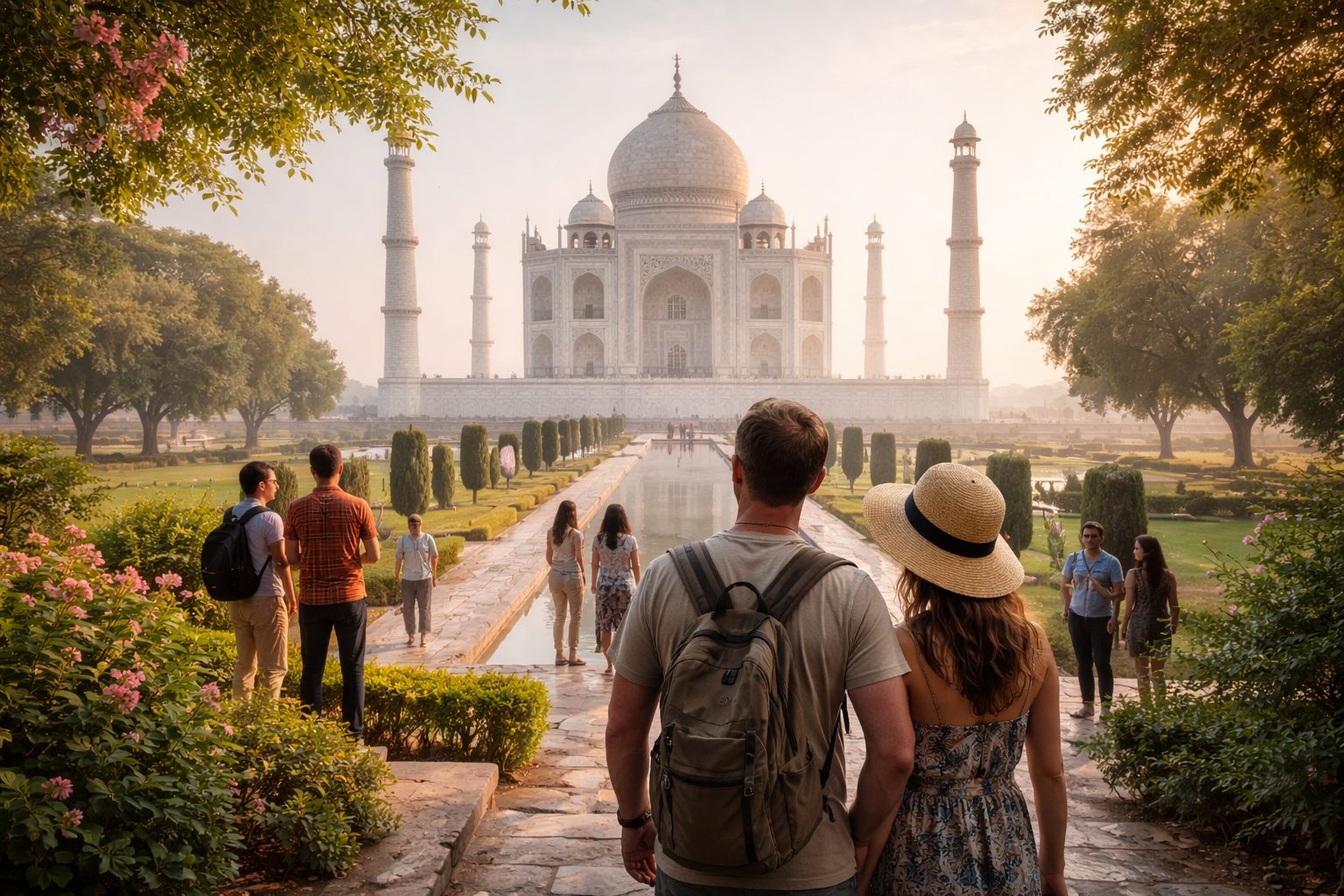
For most of the country, October to March is the sweet spot. Temperatures are manageable, humidity is lower, and the monsoon has cleared out, leaving landscapes green and air quality improved. This is when I’d recommend visiting Agra, Delhi, Rajasthan, and Madhya Pradesh.
A few site-specific considerations:
- Hampi: October to February is ideal; summers reach 40°C and the site is largely unshaded
- Ajanta and Ellora: November to February; caves are cool year-round but surrounding travel is more comfortable in winter
- Jaisalmer: October to February strictly; desert summers are genuinely hostile to outdoor exploration
- Mysore: October is when Dasara happens, making it spectacular but crowded; November and February are quieter alternatives
- Khajuraho: November to March; the central Indian summer arrives early and hard
Monsoon season (July to September) can be beautiful but also logistically challenging. Roads flood, some sites partially close, and the heat combines with humidity in ways that make outdoor exploration exhausting. Coastal and hill stations are actually better in the monsoon, but the inland heritage sites are easier avoided until after September.
Tips for Traveling to Historical Sites in India
Planning Your Itinerary
Don’t try to pack too many major sites into a single trip. India rewards slower travel. Rushing from Agra to Jaipur to Delhi to Varanasi in five days gives you a checklist but not an experience.
A practical approach is to cluster sites by geography:
- Golden Triangle circuit: Delhi, Agra, Jaipur (covers Taj Mahal, Red Fort, Qutub Minar, Jaipur forts in one loop)
- Rajasthan extension: Add Jaisalmer and Jodhpur for a week-long desert circuit
- South India circuit: Hampi, Mysore, and other Karnataka and Tamil Nadu sites work well together
- Central India: Khajuraho, Ajanta, and Ellora can be linked with Varanasi for a cultural triangle
Book trains in advance. Indian Railways is excellent for intercity travel, and the popular routes between heritage cities fill up weeks ahead during peak season.
Essential Travel Gear
- Comfortable, breathable footwear you can remove quickly (most temple sites require shoes off)
- A light scarf or shawl, useful for both sun protection and covering up when entering religious sites
- A reusable water bottle and water purification tablets for remote sites
- High-SPF sunscreen; most heritage sites have minimal shade
- Cash in smaller denominations for entry fees, guides, and small purchases
Local Etiquette and Customs
Most Indian historical sites are still active religious spaces, so a few basics matter. Remove footwear before entering temples and mosques. Dress conservatively, especially at religious sites: covered shoulders and knees is a good default. Ask before photographing people. And if a guide approaches you, a brief but direct “no thank you” is fine.
Tipping guides is expected and appreciated. The standard for a half-day tour is around 200 to 500 rupees depending on quality and length. Don’t bargain aggressively on this.
How to Make the Most of Your Visit to Historical Places
Hire a licensed guide at least once per major site, especially the first time. The difference between wandering Fatehpur Sikri alone with a map and having someone explain the political context behind each structure is enormous. Many guides have spent years at these sites and know details that no guidebook captures.
Read a little before you arrive. You don’t need to be an expert, but knowing the broad strokes of Mughal history before visiting Agra, or understanding the Vijayanagara Empire before going to Hampi, transforms what you see. Connections between structures start to make sense when you have even basic context.
Wake up early. Almost every heritage site in India is dramatically better in the first hour after opening. The light is better, the crowds are smaller, and the experience is more personal. The Taj Mahal at 6 AM and the Taj Mahal at 11 AM are essentially different places.
Go back a second time if you can. Major sites reward return visits in different light conditions, at different times of day, or after you’ve read more about the history. The Ellora Caves in afternoon light are different from morning visits. Hampi at dusk has an atmosphere that’s hard to find elsewhere.
Finally, talk to locals. The people living around these sites often have family connections to the history, working as craftspeople, priests, or guides in traditions that go back generations. Those conversations, if you’re open to them, add a dimension that no tour or guidebook can replicate.
Frequently Asked Questions (FAQs)
What are the entry fees for these historical sites?
Entry fees vary significantly between Indian nationals and foreign tourists. The Taj Mahal charges around 1,100 rupees for foreigners and 50 rupees for Indian nationals. Most other ASI-maintained sites are between 40 and 600 rupees for foreign visitors. Prices update periodically, so check the Archaeological Survey of India website before visiting for current rates.
Are guided tours available at these locations?
Yes, licensed guides are available at all major sites and can be hired at the entrance. Rates are generally set by local tourism boards and should be confirmed before starting the tour. Private tour operators also offer multi-day packages covering several sites, which can simplify logistics considerably.
What other attractions are near these historical places?
Most heritage sites sit within or near cities that have additional attractions worth exploring. Agra has the Agra Fort and Mehtab Bagh in addition to the Taj Mahal. Jaipur’s surrounding region includes Amber, Nahargarh, and Jaigarh forts within a short drive. Aurangabad, the base for Ajanta and Ellora, also has Bibi ka Maqbara and Daulatabad Fort.
How can I reach these sites from major cities?
India’s railway network connects most major heritage destinations directly or via a short onward journey. Delhi, Mumbai, and Chennai serve as the main hubs. Agra is 2.5 hours from Delhi by express train. Jaipur is 4.5 hours. Aurangabad and Hampi both have airports with connections to major cities. For Khajuraho and Jaisalmer, domestic flights significantly reduce travel time.
What is the best way to experience the culture around historical places?
Stay in heritage hotels where they exist, particularly in Rajasthan where many old havelis and palaces have been converted. Eat in local restaurants rather than hotel dining rooms. Attend any local festivals or events timed to your visit. Markets near heritage sites often carry crafts and textiles directly connected to the local artisan traditions that have coexisted with these monuments for centuries.