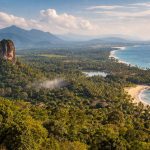
Sri Lanka is one of those places that surprises you. You arrive expecting something beautiful, and then the coastline hits you and you realize you weren’t prepared for just how stunning it actually is. The best beaches in Sri Lanka stretch across an island roughly the size of Ireland, yet they pack in an extraordinary variety of sand, sea, and atmosphere that few countries can match. Whether you’re after turquoise lagoons, powerful surf, quiet coves, or lively beach towns, this teardrop island has it all within a relatively short drive.
I’ve spent weeks traveling the Sri Lankan coast, from the busy south-west shore to the calmer east, and the variety genuinely caught me off guard. This article covers every major beach you should consider, what makes each one worth visiting, and how to plan your trip around them.
Introduction to Sri Lanka’s Coastal Beauty
Sri Lanka sits in the Indian Ocean just south of India, surrounded by water on all sides. That geographic reality gives it something special: a coastline that runs for over 1,500 kilometers, with beaches facing different directions that benefit from different seasonal winds and currents.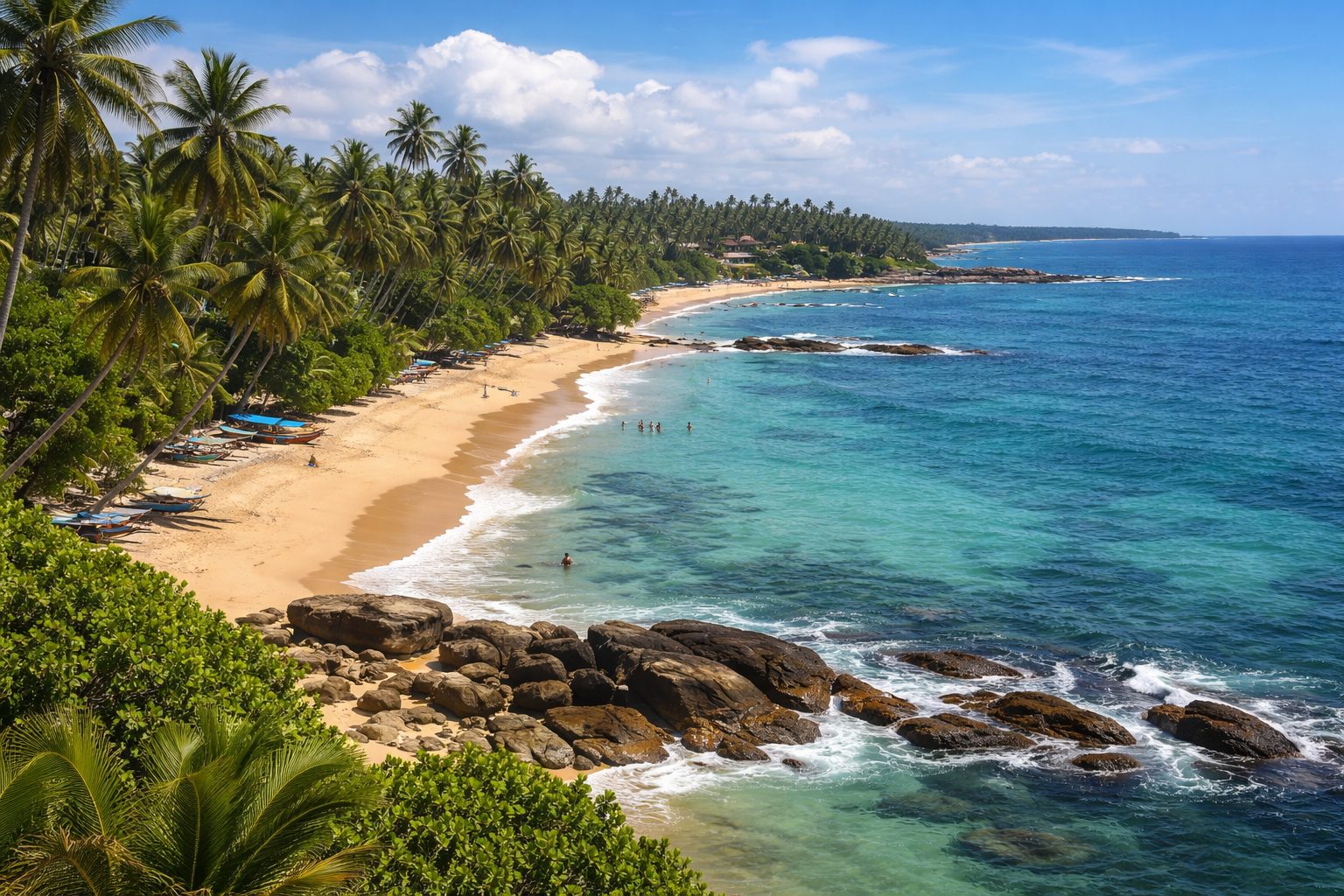
The south and west coast beaches tend to be the most famous. Galle, Unawatuna, Mirissa, and Bentota are names you’ll see in every travel guide. But spend a little time researching and you’ll discover that the east coast, once less accessible due to the long civil conflict, has opened up beautifully. Nilaveli, Passikudah, and Arugam Bay offer a different pace altogether.
What makes Sri Lankan beaches distinctive isn’t just the water, though it is genuinely warm and clear. It’s the setting. Most beaches here back up against coconut palms and jungle rather than concrete hotels. The towns nearby tend to be small. The food scene has improved enormously over the past decade. And the people are, broadly speaking, welcoming and easy to interact with.
Why Sri Lanka is a Beach Lover’s Paradise
The straightforward answer is variety. Within a few hours of driving, you can move between dramatically different beach environments. That’s unusual even by global standards.
The water temperature stays comfortable year-round, typically sitting between 27 and 30 degrees Celsius. So unlike some tropical destinations where the sea is genuinely too warm or too rough to enjoy comfortably, Sri Lanka tends to offer good swimming conditions for most of the year depending on which coast you’re on.
There’s also the value factor. Sri Lanka remains genuinely affordable compared to Maldives, Thailand, or Bali. You can eat well, stay somewhere comfortable, and spend long days at the beach without burning through a serious budget. That combination of quality and affordability keeps drawing travelers back.
Beyond the beaches themselves, Sri Lanka offers an unusual density of things to see and do nearby. Ancient temples, wildlife reserves, tea country, and colonial-era forts sit within reach of the coast. A beach holiday here doesn’t have to mean two weeks of doing nothing. It can, of course, but you have options.
Top 10 Best Beaches in Sri Lanka
The following selection covers the range of what’s available, from popular to quiet, from surfing to snorkeling, from family-friendly to romantic. I’ve included all of these personally or researched them thoroughly from people I trust.
1. Unawatuna Beach
Unawatuna sits about six kilometers from Galle and is probably the most visited beach on the south coast. It’s a curved bay with calm, protected water, and it works well for swimming across most of the year on this side of the island.
The beach has filled up with restaurants, small guesthouses, and dive shops over the years. It’s more developed than it used to be, and that does affect the atmosphere. But the fundamentals remain solid: warm shallow water, a crescent of sand, and views of a headland covered in vegetation.
Key things to know about Unawatuna:
- Calm, protected water makes it good for swimming and snorkeling
- Strong restaurant and accommodation scene right on the beach
- Gets busy, especially December through March
- Accessible from Galle in about fifteen minutes
2. Mirissa Beach
Mirissa is a crescent bay further east along the south coast, and it has a slightly more relaxed atmosphere than Unawatuna despite also being popular. The beach is long enough that it never feels completely overcrowded, and the surf here is gentle enough for casual swimming.
What Mirissa is genuinely famous for is whale watching. From November through April, blue and sperm whales pass through waters off the coast here, and boat tours operate daily. I went out on one of these trips and it remains one of the more extraordinary things I’ve experienced near a beach.
The town behind the beach is compact and walkable. There’s a good selection of seafood restaurants, and you can watch the fishing boats come in early morning.
3. Bentota Beach
Bentota sits further north along the west coast and is a different kind of beach experience. The main stretch runs along a narrow spit of land between the ocean and the Bentota Lagoon, which means you have two very different water environments within a short walk of each other.
The lagoon side is calm and perfect for water sports: jet skiing, kayaking, banana boats, and windsurfing all operate here. The ocean side is more open with stronger surf. Bentota is a solid choice if you want activity rather than just lying on the sand.
The area around Bentota also has some of the better mid-range and upscale hotels on the west coast, many of them set back in gardens with proper facilities.
4. Hikkaduwa Beach
Hikkaduwa has a long history as a beach town and carries that lived-in, slightly scrappy energy that some travelers love and others find less appealing. The main beach road is busy and commercial, but the actual beach and the reef just offshore are genuinely worthwhile.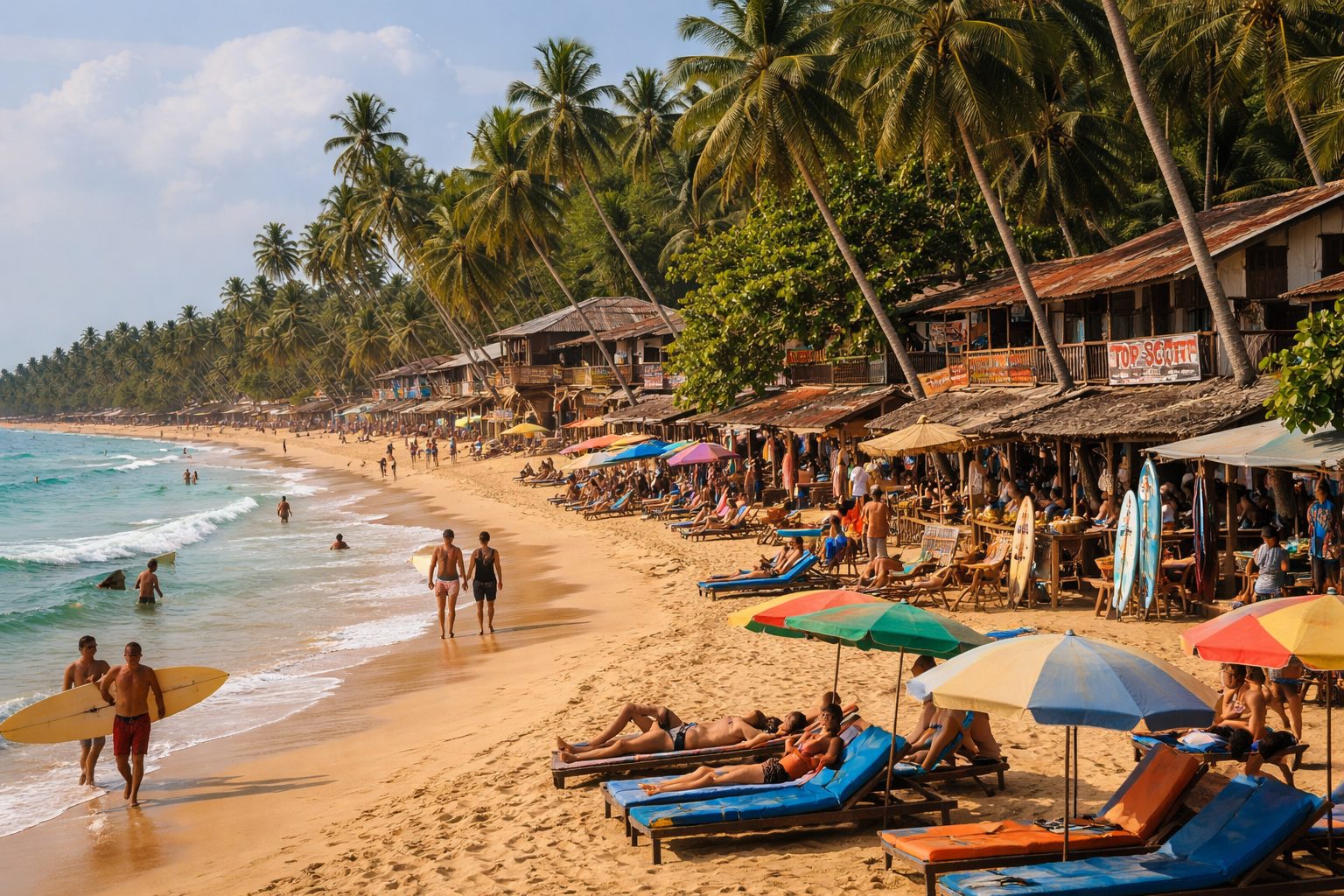
The coral reef at Hikkaduwa is one of the easiest to access in Sri Lanka. You can snorkel from the beach itself and see turtles, reef fish, and decent coral without needing to join a boat trip. It’s not pristine reef, but it’s accessible and the turtles are reliable.
Hikkaduwa also has a surf break that works well for beginners, several surf schools, and a nightlife scene that’s more active than most other Sri Lankan beach towns.
5. Arugam Bay
Arugam Bay sits on the east coast and is a completely different world from the south-west strip. It’s a small, narrow bay known worldwide among surfers as one of the better breaks in Asia. The main point break produces long, consistent rides during the season from April through October.
Outside surfing, Arugam Bay has a village atmosphere that feels more low-key than anywhere on the south coast. The restaurants are simpler. The accommodation tends toward guesthouses and surf camps. Tuk-tuks rather than tourist buses.
There are also worthwhile day trips from here: elephant gathering spots, coastal lagoons with crocodiles, and several temples nearby. I’d recommend Arugam Bay to anyone who wants something genuine and slightly off the beaten track.
6. Tangalle Beach
Tangalle is one of my personal favorites and doesn’t always get the attention it deserves. The coastline here is rougher, more dramatic, with a series of headlands breaking up the shore into smaller sections. It’s not the place to come for calm swimming beaches, though some sections are protected enough to swim safely.
What Tangalle offers is atmosphere and solitude. Some stretches of sand here are genuinely empty. The town itself is a real fishing community rather than a tourist hub. You’ll find sea turtle nesting sites nearby, particularly around Rekawa Lagoon, where conservation projects allow nighttime visits to watch nesting turtles.
Accommodation tends toward boutique guesthouses set in gardens, often with small pools. It’s a destination for people who want to slow down.
7. Nilaveli Beach
Nilaveli sits on the north-east coast near Trincomalee and is one of the most visually impressive beaches in the country. The sand is white and fine, the water is a clear shade of turquoise that looks almost too perfect, and the pace is extremely slow.
Pigeon Island, a short boat ride offshore from Nilaveli, offers some of the best snorkeling in Sri Lanka. There’s a national park status that has helped preserve the reef, and the coral and fish life there are noticeably better than at more visited sites.
The area is less developed than the south coast, which means fewer restaurant options but also fewer crowds. The best season here runs from April through September when the east coast is at its calmest.
8. Passikudah Beach
Passikudah is on the east coast as well, just south of Trincomalee, and it has attracted serious investment in recent years. A long, shallow bay with unusually calm water, it’s been developed into something of a resort area with a handful of larger hotels.
The shallow water here is the defining feature. You can walk a hundred meters offshore in many spots and still be chest-deep. That makes it exceptional for families with young children and for nervous swimmers who want calm conditions.
Outside the resort zone, Passikudah retains some of its original character. Local fishing communities still operate along the shore, and the scenery behind the bay includes coconut palms and paddy fields.
9. Weligama Beach
Weligama is a wide, curved bay just west of Mirissa and is the most beginner-friendly surf beach on the south coast. Surf schools line the beach road, and on any given morning you’ll see dozens of first-time surfers taking lessons in the gentle rolling waves.
The beach itself is long and sandy, and when conditions are right the swimming is good too. The town of Weligama is genuinely worth a walk. There’s a lively fish market, some good local restaurants away from the beach strip, and the general buzz of a working coastal town.
Weligama is also home to the famous stilt fishermen you’ve probably seen in photographs: local fishermen who balance on poles stuck in the surf to fish. Some of it is now staged for tourists, but early morning you can still see it done for real.
10. Kalapuwa Beach
Kalapuwa is a quieter option in the Yala area, near the famous wildlife reserve. It’s part of a stretch of undeveloped coastline that sees far fewer visitors than the main south coast beaches. The draw here is solitude and the combination of beach and jungle wildlife in one location.
Staying near here gives you the option to visit Yala National Park in the early morning for wildlife, then spend afternoons on the beach. It’s a pairing that works well and that you can’t really replicate anywhere else on the island.
The beach itself is raw and windswept rather than calm and manicured. There are limited facilities nearby, so come prepared. But if you want a beach experience with real wilderness character, Kalapuwa delivers.
Family-Friendly Beaches in Sri Lanka
Traveling with children changes what you need from a beach. You’re looking for calm water, facilities nearby, and somewhere you can spend a full day without stress. Sri Lanka has good options for families, though some of the wilder stretches are not appropriate for young children.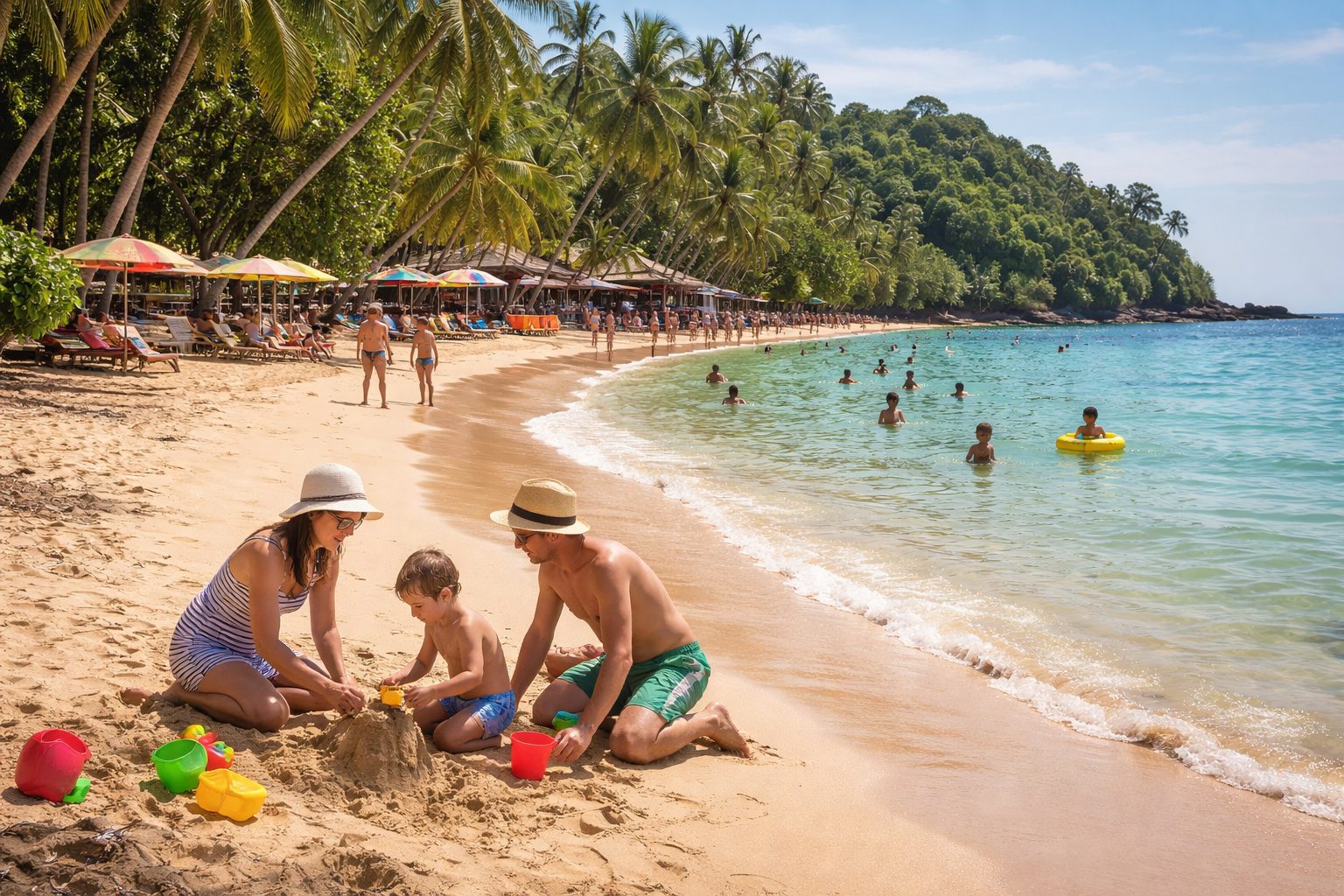
Top choices for families:
- Passikudah is the clearest recommendation, with its exceptionally shallow and calm bay
- Unawatuna works well because the bay is protected and facilities are right there
- Bentota offers the lagoon side for children who aren’t confident swimmers
- Weligama has gentle surf and a long sandy beach where kids can play freely
Things to consider when choosing a family beach:
- Check whether there are lifeguards or rescue facilities nearby
- Look for beaches with shade, either from palm trees or nearby structures
- Consider whether the nearest town has pharmacies, restaurants, and transport links
- Avoid beaches known for strong currents or exposed surf if swimming with children
East coast beaches like Passikudah and Nilaveli are excellent in terms of water conditions but require more planning to reach. The west and south coast beaches are easier to combine with other family-friendly activities around Galle, Colombo, and the hill country.
Best Beaches for Water Sports and Activities
Sri Lanka has developed a decent water sports infrastructure, particularly on the south and west coast. You don’t have to look hard to find good snorkeling, surfing, diving, kayaking, or whale watching.
Best beaches for specific activities:
- Surfing: Arugam Bay (advanced), Weligama (beginners), Hikkaduwa (intermediate)
- Snorkeling: Pigeon Island off Nilaveli, Unawatuna, Hikkaduwa reef
- Scuba diving: Unawatuna and Hikkaduwa have established dive centers with good equipment
- Whale watching: Mirissa is the main departure point, typically November through April
- Water sports and jet skiing: Bentota Lagoon
- Kayaking: Lagoon areas at Bentota and around Mirissa
- Kitesurfing: Kalpitiya on the north-west coast, particularly December through March
A few practical notes on water sports in Sri Lanka. The quality of equipment and instruction varies considerably between operators. It’s worth spending a few minutes reading recent reviews or asking your accommodation for a recommendation rather than booking with whoever approaches you on the beach first. That’s generally good advice anywhere in Asia.
Whale watching in particular requires some thought. Choose operators who follow responsible guidelines: maintaining distance from the animals, not chasing or circling them, and limiting trip durations. The better operators in Mirissa are known for this.
Romantic Beaches in Sri Lanka
If you’re planning a honeymoon or a trip with a partner, Sri Lanka has some genuinely romantic beach settings. The key tends to be choosing somewhere quieter and more intimate rather than the busiest spots.
Top choices for couples:
- Tangalle is my top recommendation. Secluded sections of beach, boutique accommodation in garden settings, turtle watching at night, and a genuine sense of being away from it all.
- Nilaveli offers empty white sand beaches and extraordinary sunset colors over the Bay of Bengal from the east coast.
- Mirissa has a romantic atmosphere in the evenings when the beach thins out, especially during the whale watching season when there’s genuine excitement in the air.
- Kalapuwa near Yala for couples who want wildlife and solitude combined.
What makes a beach romantic in Sri Lanka is partly the setting and partly timing. Getting up early or staying on the beach in the evening after the day trippers have left changes the atmosphere completely. Most beaches here are quieter than you might expect at those times, regardless of how busy they get during the day.
Good-quality boutique hotels and guesthouses with ocean views are available at Tangalle, Weligama, Mirissa, and along the east coast. They tend to be smaller and more personal than the larger resort properties, which suits a couple-focused trip better in most cases.
Comparison of Popular Beaches
It helps to put some of the most popular beaches side by side, particularly if you’re deciding between them for limited time.
| Feature | Unawatuna | Mirissa | Bentota | Hikkaduwa | Arugam Bay |
|---|---|---|---|---|---|
| Swimming | Excellent | Good | Good | Good | Fair |
| Surfing | Poor | Fair | Poor | Fair | Excellent |
| Snorkeling | Good | Fair | Poor | Good | Fair |
| Nightlife | Moderate | Moderate | Low | High | Low |
| Crowd level | High | Moderate-High | Moderate | High | Low-Moderate |
| Family-friendly | Yes | Partial | Yes | Partial | No |
| Best season | Nov-Apr | Nov-Apr | Nov-Apr | Nov-Apr | Apr-Oct |
Unawatuna vs. Mirissa
Both are on the south coast, both are popular, and both are within reasonable distance of Galle. The main differences come down to atmosphere and water conditions.
Unawatuna has a more protected, enclosed bay that makes it better for swimming and snorkeling. It’s also more developed, with a denser cluster of restaurants and accommodation right on the beach. That’s convenient but also means less space and more noise.
Mirissa is slightly more stretched out, with a wider bay that feels a bit more open. The whale watching access here is a major advantage if that’s something you want to do. The town has good restaurants too, but the vibe is marginally more relaxed than Unawatuna’s busy strip. If I had to pick one, I’d choose Mirissa for a longer stay and Unawatuna for a quick couple of days.
Bentota vs. Hikkaduwa
These two west coast beaches serve different purposes and attract different types of travelers.
Bentota is better organized, more resort-oriented, and suited to people who want facilities, water sports in the lagoon, and a comfortable base. It’s somewhat less characterful but more reliable for a relaxed, activity-based stay.
Hikkaduwa has more personality. It’s slightly rougher around the edges, busier in a local and backpacker sense, and has the reef and surf scene that Bentota lacks. The social atmosphere in Hikkaduwa is livelier, which is either a selling point or a reason to avoid it depending on what you’re looking for.
Practical Tips for Visiting Sri Lankan Beaches
Getting the most out of Sri Lanka’s coast takes a bit of planning. The beaches are accessible but the country has some specific seasonal and logistical realities worth understanding before you arrive.
Best Time to Visit
Sri Lanka’s two coastlines have opposite seasonal patterns, which is one of the reasons the island works well year-round as a destination if you’re flexible.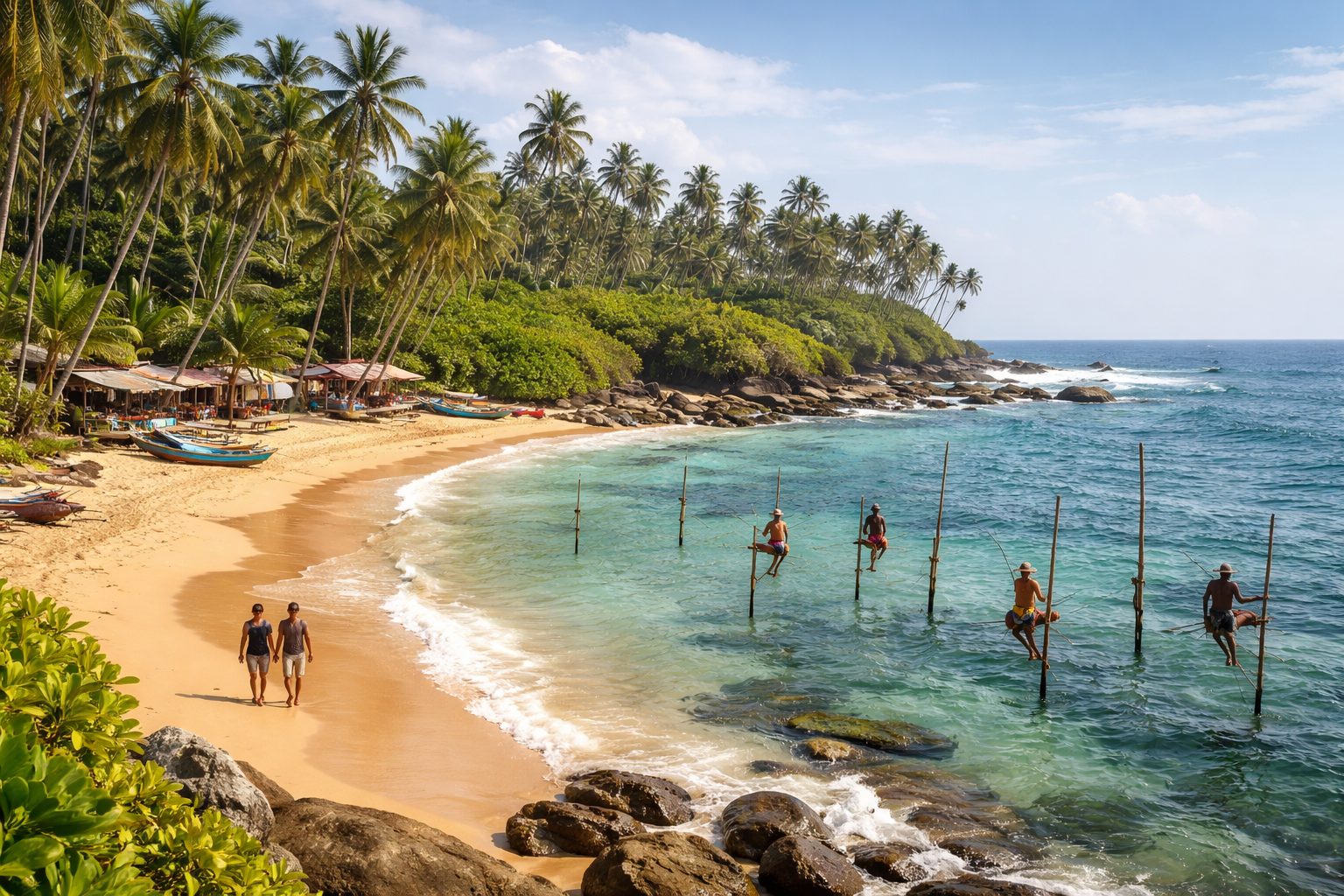
West and south coast (Unawatuna, Mirissa, Bentota, Hikkaduwa, Tangalle):
* Best from November through April
* The southwest monsoon from May through October brings rough seas and significant rain
* December through March is peak season with highest prices and crowds
East coast (Arugam Bay, Nilaveli, Passikudah):
* Best from April through September
* The northeast monsoon affects the east coast from October through March
* Arugam Bay’s surf season peaks from June through September
If you want to visit several beaches across both coasts, the transition months of April-May and October-November can sometimes offer decent weather on both sides, though neither coast is fully reliable during those windows.
Safety Tips for Beachgoers
Sri Lankan beaches are generally safe but have some specific hazards worth knowing:
- Currents: Several beaches, especially on the south coast, have strong rip currents. Tangalle in particular can be dangerous. Always look for local advice or flags before swimming.
- Sunburn: The equatorial sun is intense and the sea breeze can mask how much UV exposure you’re getting. Use high-factor sunscreen and reapply frequently.
- Jellyfish: Seasonal jellyfish blooms occur on various parts of the coast. Ask locally before swimming if you’re unsure.
- Theft: Don’t leave valuables unattended on the beach. This is basic anywhere, but worth stating.
- Boat tours: Check that any boat you board has life jackets for all passengers. This varies between operators.
Alcohol is available at most beach restaurants and bars, but exercise common sense about swimming after drinking, particularly where currents are present.
Beach Amenities and Facilities
Facilities vary considerably between beaches. The south coast main beaches like Unawatuna, Mirissa, and Hikkaduwa have:
- Multiple restaurants and cafes directly on the beach
- Equipment rental for water sports
- Accommodation at all budget levels within walking distance
- Pharmacies and basic shops in nearby towns
The east coast and quieter beaches like Tangalle or Kalapuwa have:
* More limited dining options, though quality can be good
* Less water sports infrastructure
* Accommodation that may require booking in advance
* ATMs in nearby towns but not always on the beachfront
It’s worth noting that many beaches in Sri Lanka don’t have public toilets or changing facilities. Accommodation nearby is where most people base themselves. Day trippers from Colombo often face this practical issue at south coast beaches.
How to Get to the Best Beaches in Sri Lanka
Getting around Sri Lanka has become considerably easier over the past decade. The country is compact enough that most beaches are reachable from Colombo within a day.
Main options for getting to the beaches:
-
Private car or driver: The most flexible option. You can hire a driver for a day, a few days, or the whole trip. Rates are reasonable by international standards and this gives you the most freedom, especially for the east coast beaches.
-
Train: The coastal railway line from Colombo runs south through Bentota, Hikkaduwa, Galle, and continues to Matara. It’s one of the more scenic train journeys in Asia and is comfortable enough for this stretch. Tickets are cheap.
-
Bus: Long-distance buses connect all major beach towns. They’re cheaper than trains and sometimes faster, though less comfortable. For the east coast, buses via Kandy or Badulla reach Trincomalee and Batticaloa areas with connections to Nilaveli and Passikudah.
-
Tuk-tuk: Once you’re near a beach town, tuk-tuks are the standard local transport. They’re everywhere, cheap, and useful for short hops between beaches or to nearby towns.
-
Motorbike rental: Available at several beach towns, particularly Hikkaduwa and Arugam Bay. A good option if you’re comfortable on a bike and want flexibility for day trips.
Colombo’s Bandaranaike International Airport is the main entry point. From the airport to the south coast beaches typically takes two to three hours by car. The east coast is four to five hours or more.
Frequently Asked Questions about Sri Lanka’s Beaches
What are the best beaches for snorkeling?
Pigeon Island near Nilaveli is the standout, with protected reef and excellent visibility when conditions are right. Hikkaduwa has easy access from the beach itself and reliable turtle sightings. Unawatuna also has a reef accessible from shore. All three have local operators offering snorkel equipment rental and guided snorkel trips.
Which beaches are less crowded?
The east coast beaches, particularly Nilaveli and Passikudah, are significantly quieter than the south coast, especially if you visit during April through September. On the south coast, Tangalle and Kalapuwa see far fewer tourists than Unawatuna or Hikkaduwa. Early mornings at any beach, even popular ones, tend to be quieter before the day trippers arrive.
What activities can I do at Sri Lankan beaches?
The range is genuinely wide. Surfing, snorkeling, scuba diving, whale watching, turtle watching, kayaking, jet skiing, windsurfing, and kitesurfing are all available depending on location. Beyond water-based activities, beaches are close to cultural sites like Galle Fort, wildlife parks like Yala and Udawalawe, and the hill country. Sri Lanka’s beaches work well as a base for a broader itinerary rather than just a sit-on-the-sand destination, though that’s an equally valid approach.
The best beaches in sri lanka offer something for almost every kind of traveler. Whether you’re drawn to the surf culture of Arugam Bay, the whale watching off Mirissa, the calm family-friendly waters of Passikudah, or the quiet romance of Tangalle’s secluded coves, the coast here consistently delivers. Plan around the seasons, give yourself enough time to explore more than one or two spots, and you’ll find the island’s beaches among the most rewarding in Asia.