Getting around Sri Lanka is one of those things that sounds straightforward until you’re standing at a bus station in Colombo with no idea which vehicle goes where. I’ve been there. The country is compact enough that you can theoretically cross it in a day, but the roads, the traffic, and the sheer variety of transport options can make even a short journey feel like an adventure. That’s not a complaint. Once you understand how the system works, moving between cities, coast, and hill country becomes one of the most memorable parts of the trip.
Sri Lanka has a surprisingly layered transport network. Trains, buses, tuk-tuks, taxis, and rental cars all coexist in a way that gives travelers genuine choices. The key is knowing which mode suits which journey, and when to pay a premium for comfort versus when the cheap option is perfectly fine.
Overview of Transportation in Sri Lanka
The country’s transport infrastructure reflects its colonial past and its modern pressures. The rail network was built by the British and still runs largely on the same tracks. Buses came later and expanded aggressively to fill gaps the trains couldn’t reach. Tuk-tuks, also called three-wheelers, became the default short-distance vehicle for both locals and tourists. And in recent years, ride-sharing apps have changed how people move around major cities.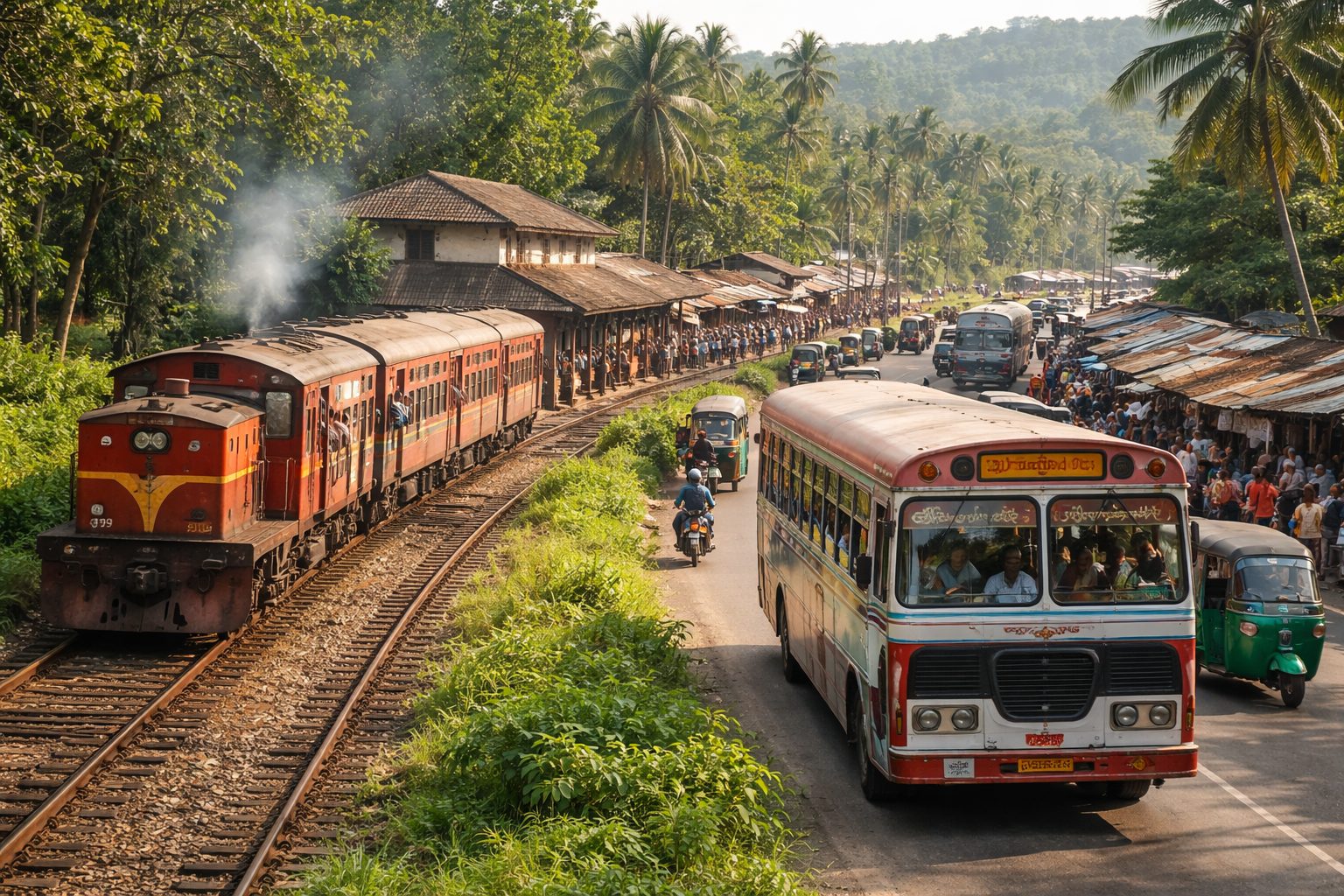
Getting around Sri Lanka doesn’t require expensive private transfers, though those exist if you want them. The public transport system is genuinely accessible. It’s crowded and occasionally chaotic, but it works. Millions of Sri Lankans use it every day, and with a bit of preparation, tourists can too.
Road quality varies significantly. Highways near Colombo are modern and fast. Rural roads can be narrow, pot-holed, and shared with everything from motorcycles to elephants. That variability shapes journey times in ways that maps and schedules don’t always capture.
Types of Transportation Available
Buses in Sri Lanka
Buses are the backbone of getting around Sri Lanka for budget travelers. They go almost everywhere, they run frequently, and they’re cheap. A long-distance journey that might cost several thousand rupees by taxi can cost a few hundred on the bus.
There are two main types: government-run CTB buses and private buses. CTB buses are often older, slower, and more crowded. Private buses are faster and slightly more comfortable, though “comfortable” is relative. Both types operate on the same routes but with different frequencies depending on the destination.
For intercity routes, air-conditioned express buses are available on the most popular corridors, like Colombo to Kandy or Colombo to Galle. These cost more than regular buses but are a significant step up in comfort. If you’re traveling during peak hours or holidays, book a seat on one of these rather than taking your chances on a standing-room-only local bus.
Key things to know about buses:
- Tickets are usually purchased on board from a conductor who walks the aisle
- Luggage goes on your lap or in the overhead rack if there is one
- Schedules exist but buses often run informally, departing when full
- Stations in major cities can be confusing and poorly signed in English
Trains in Sri Lanka
The train system is genuinely one of Sri Lanka’s highlights, particularly the routes through the hill country. The Kandy to Ella line is internationally famous, and for good reason. Watching the landscape shift from lowland jungle to misty tea plantations from an open train door is the kind of experience that stays with you.
But trains aren’t just scenic. They’re also a practical way to travel between Colombo and Kandy, or down to the south coast. The main limitation is that the network doesn’t cover the entire island. If you want to reach places like Arugam Bay or Trincomalee by rail, you’ll need to combine train and bus travel.
There are three main classes on Sri Lankan trains:
- First class: air-conditioned observation saloons or reserved seating, book well in advance
- Second class: reserved and unreserved seating, reasonable comfort
- Third class: bench seating, very cheap, often very crowded
For the hill country route specifically, the observation carriages in first class are worth every rupee if you can get a booking. They sell out fast, especially during peak tourist season.
Taxis and Ride-Sharing Services
For door-to-door convenience, taxis are the obvious choice. Traditional metered taxis operate in larger cities but metering is inconsistently enforced. Agreeing on a price before you get in is standard practice outside of app-based services.
Ride-sharing has changed things considerably. PickMe is the dominant local app in Sri Lanka, similar in concept to Uber. It operates in Colombo and increasingly in other major cities. Prices are fair, routes are tracked, and you avoid negotiation entirely. Uber also operates in Sri Lanka, though PickMe tends to have better coverage and faster response times in most areas.
For airport transfers or longer point-to-point journeys, private car hires are common. You negotiate a rate, often through your accommodation or at the arrivals hall. These aren’t cheap but they offer comfort, flexibility, and a driver who knows the roads.
Tuk-Tuks: The Iconic Three-Wheelers
Tuk-tuks are everywhere in Sri Lanka. They’re the default transport for short urban and suburban trips, and they’re also used creatively for longer journeys by travelers who enjoy the exposure and pace.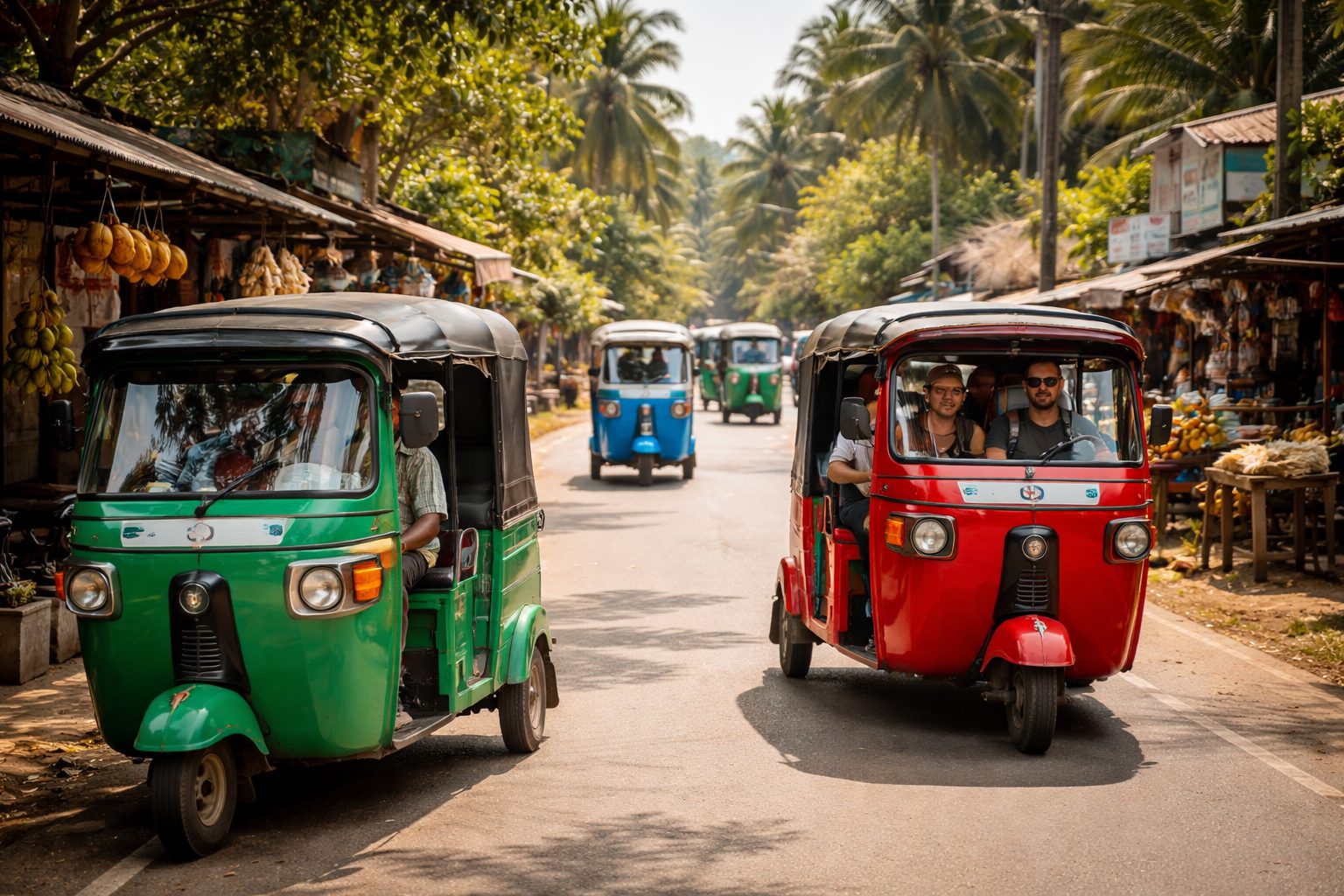
The pricing dynamic is worth understanding upfront. Meters exist on many tuk-tuks but are routinely ignored in tourist areas. Negotiating the fare before you set off is expected. For most trips, you’ll agree on a price in Sri Lankan rupees, and then you’re off. It helps to have a rough sense of the going rate in each city, which tends to vary. Galle and Colombo charge more than rural towns.
Some travelers hire a tuk-tuk driver by the day for a semi-private tour. This works well in areas like the Cultural Triangle around Sigiriya, where you want flexibility without the cost of a full car hire. Drivers often function as informal guides and are genuinely helpful if you find one you trust.
Tuk-tuk tips:
- Always agree on the price before you get in
- For airport or long-distance tuk-tuk journeys, cross-check with app prices first
- Night-time rides should be arranged with care, especially in unfamiliar areas
- Having the destination written down or loaded on your phone map avoids miscommunication
Car Rentals and Self-Driving
Renting a car and driving yourself is possible in Sri Lanka but comes with real caveats. Sri Lankans drive on the left, which is familiar territory for British or Australian travelers but an adjustment for others. The larger issue is driving style. Roads in and around cities can feel aggressive and unpredictable to foreign drivers who aren’t used to the informal rules.
Outside cities, self-driving becomes more manageable. Countryside roads are quieter, though slower. For some destinations, particularly along the south coast, driving yourself offers flexibility that public transport doesn’t match.
You’ll need either a Sri Lankan driving permit issued locally, or you can use an International Driving Permit from your home country alongside your national license. Many car rental companies will sort the local permit for you as part of the rental process.
Driving alternatives to consider:
- Hiring a car with a driver, which costs more but removes all navigation stress
- Renting a scooter or motorbike for short distances in smaller towns
- Using a mix of self-drive and public transport depending on the region
Comparing Transportation Options
Cost Comparison of Different Modes
Getting around Sri Lanka on a tight budget is very achievable. The cheapest options are buses and trains, followed by tuk-tuks for shorter legs. Taxis and private car hires sit at the premium end.
| Transport Mode | Typical Cost Range | Best For |
|---|---|---|
| Local bus | 30-150 LKR per trip | Short/medium distances, budget travel |
| AC express bus | 200-600 LKR | Intercity routes with comfort |
| Train (3rd class) | 50-200 LKR | Long distances, cheap but crowded |
| Train (1st class) | 500-2000+ LKR | Scenic routes, advance booking needed |
| Tuk-tuk | 100-500 LKR for short trips | Urban and suburban hops |
| PickMe/Uber | Variable, typically fair | City travel with transparency |
| Private taxi | Negotiated, 3000-10,000+ LKR | Point-to-point, groups, comfort |
| Car rental | 5000-12,000 LKR per day | Flexibility, self-drive routes |
Prices shift with tourism season, fuel costs, and inflation, so treat these as rough orientation figures.
Speed and Efficiency of Transport
Speed depends heavily on the route and time of day. Colombo traffic can turn a ten-kilometer journey into a forty-minute ordeal during rush hour. On the highway south toward Galle, the same distance takes a fraction of the time.
Trains are rarely the fastest option in terms of raw speed, but they bypass road congestion entirely. On routes where they run, they’re often more time-consistent than buses or taxis during peak periods. The hill country trains are slow by design, covering steep terrain at a gentle pace.
Buses on major intercity routes are usually faster than trains but more variable in timing. A private taxi or ride-share is the most time-efficient option for urban journeys when you need predictability.
Comfort Levels: Which is the Best?
Comfort is the most personal variable. What’s fine for a backpacker on a long trip may be miserable for someone traveling for two weeks with a fixed itinerary and limited energy.
Ranking transport comfort in Sri Lanka:
- Private taxi or car hire with a driver: highest comfort, climate controlled, door to door
- Ride-sharing apps: clean, air-conditioned, good for city use
- First-class train: scenic, reserved seating, often air-conditioned
- AC express bus: reasonably comfortable for longer intercity legs
- Second-class train: decent for medium distances
- Tuk-tuk: exposed, bumpy, but fun for short trips
- Local bus: crowded, can be hot, but an authentic experience
- Third-class train: benches, no AC, often packed
For most travelers, mixing modes based on the journey makes more sense than committing to one approach throughout the trip.
Tips for Getting Around Sri Lanka
Navigating Public Transport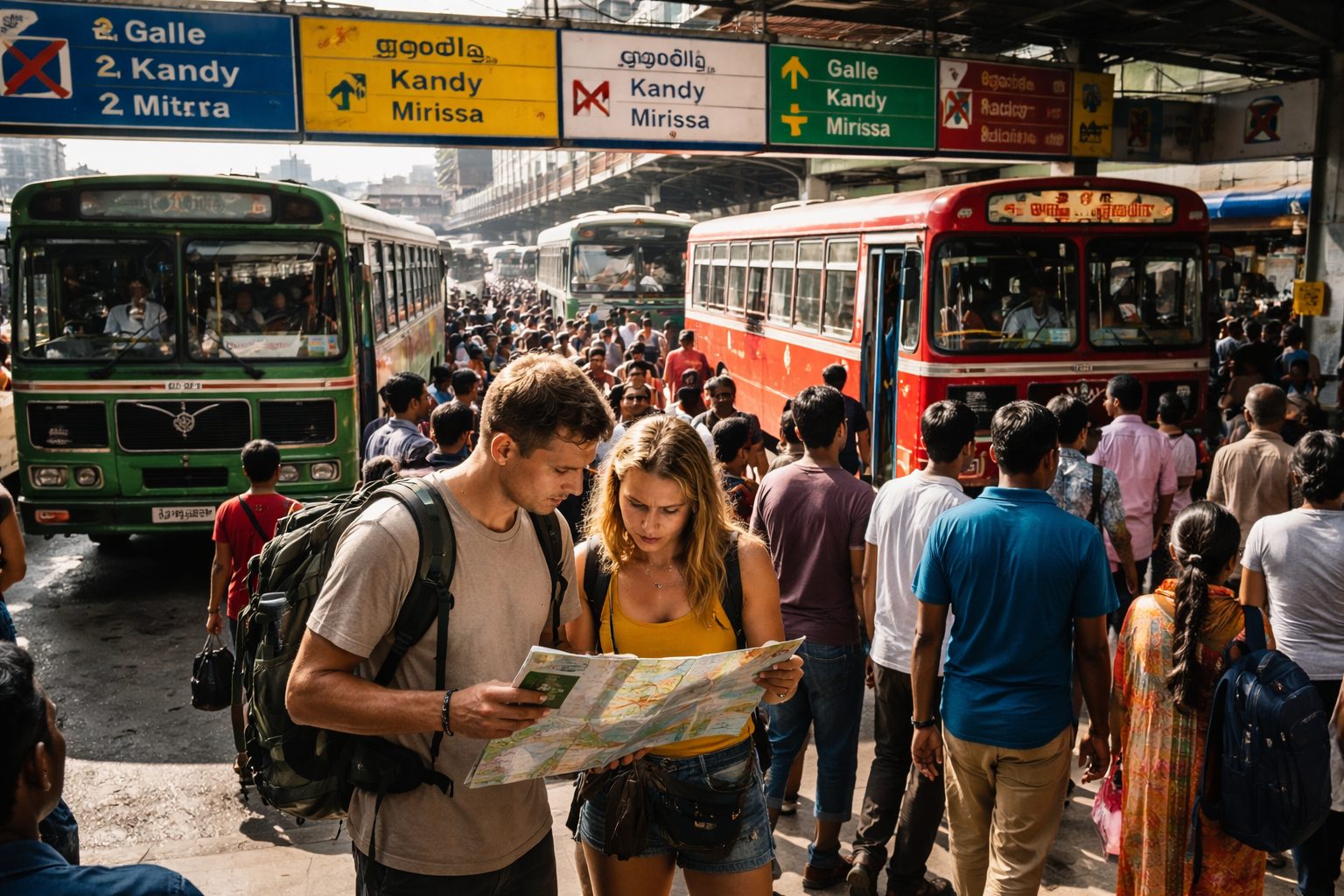
The biggest challenge with Sri Lankan public transport isn’t the vehicles themselves. It’s the information. Bus stations in cities like Colombo and Kandy are busy, multilingual environments where English signage is limited. Knowing what to look for helps.
Practical navigation tips:
- Download Google Maps and use it offline by saving the map area in advance
- PickMe app works for taxis and also shows transport options in some areas
- Ask hotel or guesthouse staff to write your destination in Sinhala or Tamil
- In bus stations, conductors often call out destinations from the bus door, listen for the name of your city
- Arrive at train stations early and confirm your platform before the crowd builds
For long-distance bus journeys, Colombo’s main terminals are Pettah (for most routes) and the Central Bus Stand. These are adjacent to each other and easy to reach by tuk-tuk from most of the city.
Safety Tips for Travelers
Getting around Sri Lanka is generally safe for tourists, but some habits reduce risk significantly.
Safety considerations:
- Use app-based taxis at night whenever possible rather than flagging street tuk-tuks
- Keep a small amount of local cash on hand; not all transport accepts cards or apps
- Secure your bag on buses and trains, particularly in crowded compartments
- Share your journey details with someone when using private hires
- Stick to well-lit waiting areas at night
- For solo female travelers, first or second-class train seats and app taxis offer more control over your environment
Road safety is a genuine concern. Accident rates in Sri Lanka are higher than in many tourist-origin countries. Wearing helmets on motorbikes is legally required and practically essential.
Cultural Etiquette in Transportation
Sri Lankan transport culture has some nuances worth knowing. Buses and trains often have reserved seats for monks, elderly passengers, and pregnant women. Sitting in these without checking is considered disrespectful.
When traveling in rural areas or smaller towns, modest dress is appreciated. Shorts and sleeveless tops are common in tourist zones but draw attention in more conservative communities. It’s not a hard rule, but being aware of local context matters.
Bargaining for tuk-tuk fares is normal and expected. It’s not aggressive negotiation, just a practical conversation. Keep it friendly and you’ll get a fair price. Getting frustrated or impatient usually makes the process worse for both sides.
Regional Transportation Insights
Getting Around Colombo
Getting around Sri Lanka’s capital is genuinely demanding. The city’s road network was not built for the volume of traffic it now handles. Rush hours, which stretch from roughly 7am to 10am and 4pm to 7pm, can gridlock entire neighborhoods.
For most Colombo journeys, PickMe or Uber are the most reliable options. They’re fairly priced, air-conditioned, and take the navigation out of your hands. For very short hops, tuk-tuks are fine. A new light rail project is under development, but for now, road transport dominates.
If you’re staying in the Fort or Pettah area, many city attractions are walkable in the cooler morning hours. The Colombo seafront and Galle Face Green are accessible on foot from central accommodation.
Exploring Kandy via Public Transport
Kandy works well on public transport. The central area around the Temple of the Tooth and the lake is compact and walkable. Tuk-tuks handle the hills up to viewpoints and surrounding attractions efficiently.
The train from Colombo to Kandy takes around two and a half hours and is a good introduction to the rail network. Services run frequently throughout the day. From Kandy, buses go to nearby villages, cultural sites, and onward into the hill country.
Within Kandy, tuk-tuks are everywhere and relatively affordable compared to Colombo. Negotiate the fare before boarding, as meters are rarely used.
Traveling to Galle and the South Coast
Galle and the south coast are well-connected to Colombo by both train and highway bus. The expressway bus from Colombo to Galle takes under two hours and is a comfortable, inexpensive option. The train follows the coast, which is scenic but slower.
Within Galle itself, the Fort area is best explored on foot. Tuk-tuks handle routes to beaches outside the Fort walls and to neighboring towns like Unawatuna, Mirissa, and Hikkaduwa.
For beach-hopping along the south coast, local buses run frequently between towns. They’re slow but cheap and drop you close to most main beaches. Alternatively, tuk-tuks can be hired for half or full-day coastal trips at negotiated rates.
Transportation in the Hill Country
The hill country, centered around Ella, Nuwara Eliya, and the surrounding tea estate roads, is where getting around Sri Lanka becomes most scenic and most challenging at the same time.
The train between Kandy and Ella via Nuwara Eliya Road is one of the most famous rail journeys in Asia. It’s slow, roughly six to seven hours for the full route, but the views are extraordinary. Book observation carriage tickets as far in advance as possible.
Road travel in the hill country involves switchbacks, fog, and narrow lanes. Driving yourself requires full attention and patience. Many travelers opt for a local driver or use the train as the primary mode and supplement with tuk-tuks for local exploration.
Buses connect the hill country towns but run infrequently on some routes. Check timings before committing to a schedule that relies on catching a single service.
Sustainable Transportation Options
Eco-Friendly Travel Choices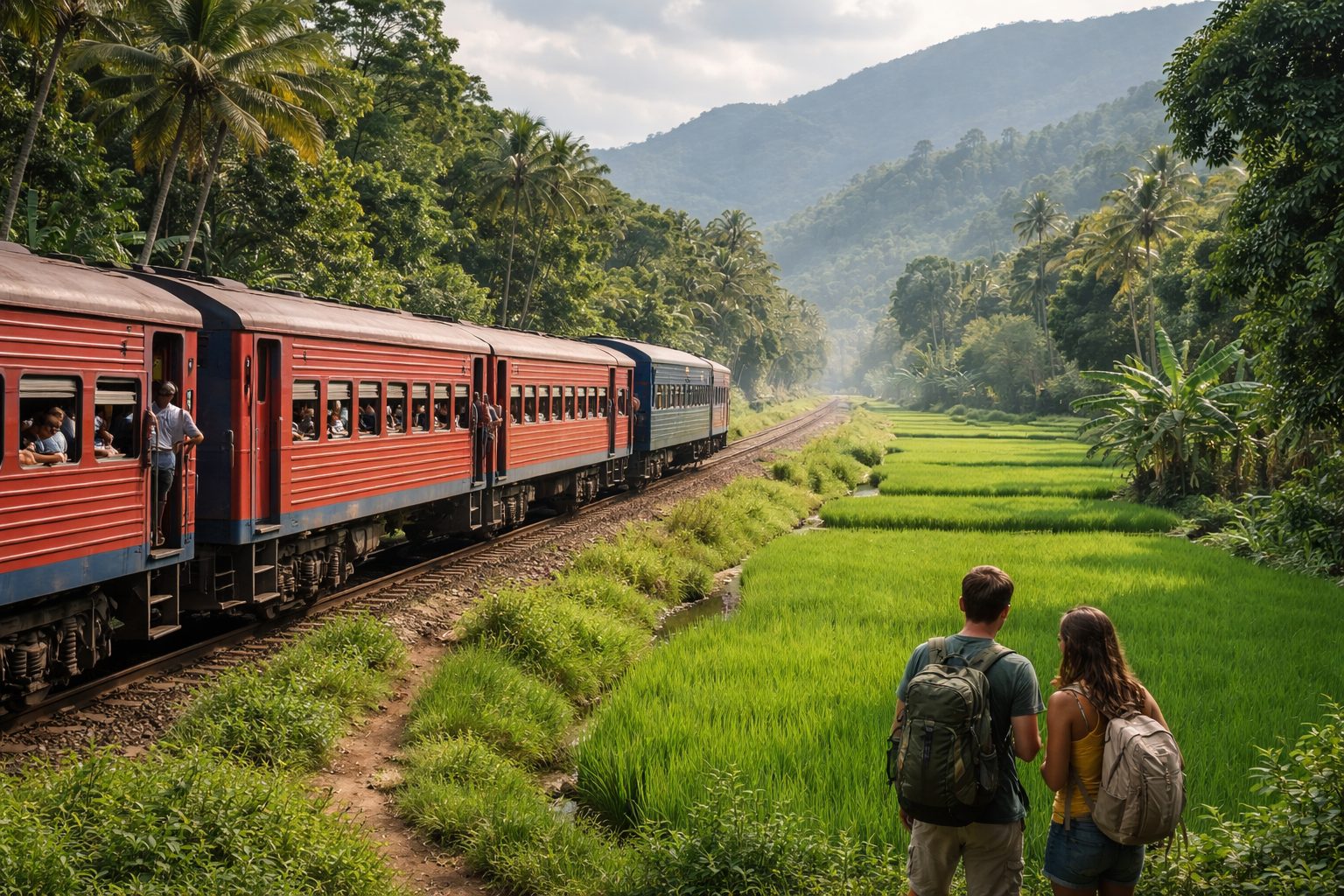
Choosing lower-impact transport while getting around Sri Lanka is more practical than it might seem. Trains produce significantly lower emissions per passenger than private cars or air-conditioned buses. Using them where the network exists is a straightforward environmental choice.
Walking is underused by tourists in walkable areas. Galle Fort, the Kandy lake area, and parts of Colombo are all pedestrian-friendly in the cooler parts of the day. Cycling is possible in flatter areas, particularly around Anuradhapura and some beach towns.
Tuk-tuks, while not zero-emission, are significantly lighter and more fuel-efficient than private cars. For short urban distances, they’re a reasonable middle ground. Electric tuk-tuks are beginning to appear in some tourist areas, a small but meaningful shift.
Promoting Local Transport Initiatives
There’s a broader benefit to using local transport rather than private international tour vehicles. Money spent on local buses, tuk-tuks, and Sri Lankan-owned drivers circulates within local economies rather than flowing to international operators.
Hiring local drivers through guesthouses or community-based transport initiatives is a direct way to support regional livelihoods. Some areas, particularly in the Cultural Triangle and the south coast, have organized driver cooperatives that offer transparent pricing and local knowledge.
For travelers who want structure without large group tours, hiring an independent local driver for several days remains one of the best ways to see the country while keeping spending local.
Common Challenges and Solutions
Language Barriers in Transport
Sinhala and Tamil are the official languages of Sri Lanka. English is widely spoken in tourist areas, less so in rural bus stations and village stops. The language barrier is rarely a crisis, but it can cause confusion.
Practical solutions:
- Have your destination written in Sinhala script, which guesthouse staff can do for you
- Use Google Translate with offline Sinhala support downloaded in advance
- Maps saved offline work even without a data connection
- Showing a driver your destination on a map eliminates almost all ambiguity
- Numbers in Sri Lanka are often communicated in English, so price negotiation usually works across languages
Local people are generally patient and willing to help. Asking a fellow bus passenger for confirmation that you’re on the right vehicle is completely normal and usually met with helpfulness.
Dealing with Traffic in Major Cities
Traffic in Colombo and, to a lesser extent, Kandy and Galle, is the single most frustrating aspect of getting around Sri Lanka for many travelers. The density of vehicles relative to road capacity means that journeys can take far longer than distance suggests.
Strategies for managing city traffic:
- Travel early in the morning, before 7am, or after 8pm to avoid peak congestion
- Use the highway when available for city exits; the expressway south is dramatically faster than old roads
- Walk for short city distances when the weather allows
- Accept that some delay is built into urban travel and plan accordingly
- Avoid scheduling tight connections that rely on urban road travel being fast
Traffic management in Colombo has been improving gradually with new overpasses and road expansions, but the city is still catching up with its growth. Patience is the most useful tool.
FAQs about Getting Around Sri Lanka
What is the best way to travel long distances?
For most long routes, trains are the most scenic and the most comfortable at a reasonable cost, provided you book first or second class in advance. Express buses are a solid alternative where trains don’t go, particularly for the south coast route from Colombo to Galle.
Are public buses safe for tourists?
Yes, broadly. Buses are used by millions of Sri Lankans every day and serious incidents involving tourists are rare. The main risks are petty theft in crowded conditions and occasional aggressive driving. Keep your bag on your lap, stay aware of your surroundings, and you’ll be fine.
How do I hire a taxi in Sri Lanka?
The easiest approach is to use PickMe or Uber in cities where they operate. Outside app coverage, your accommodation can arrange a trusted local driver. At airports, official taxi counters operate at set rates and are a safe first option after arrival.
What are the best apps for navigating transportation?
PickMe is the most useful single app for Sri Lanka travel. Google Maps with offline data covers navigation well. 12Go Asia is helpful for booking train tickets in advance, particularly for the scenic hill country routes where seats sell out.
Do I need an International Driving Permit?
Yes, if you plan to rent a car or motorbike and drive yourself. An International Driving Permit from your home country, combined with your national license, is the standard requirement. Many rental companies also issue a temporary local permit, which some authorities prefer. Check with your specific rental operator before you travel.
Getting around Sri Lanka rewards flexibility. The country is small enough that almost nothing is truly out of reach, and the variety of transport options means there’s always a way to get where you’re going. Some journeys will be slow, some will be chaotic, and a few will be genuinely beautiful. That combination is part of what makes traveling here memorable rather than just convenient.