Sri Lanka is one of those destinations that stops you in your tracks the moment you realize how much history is packed into such a small island. I’ve spent time exploring its ruins, temples, forts, and sacred sites, and I can tell you that the historical places in Sri Lanka are genuinely unlike anything else in South Asia. The island has been continuously inhabited for over 125,000 years, shaped by ancient Sinhalese kingdoms, Indian influences, Buddhist tradition, and successive waves of colonial rule. That layered past has left behind an extraordinary set of monuments, cities, and landscapes that still feel alive today.
Whether you’re an archaeology enthusiast, a casual traveler curious about culture, or someone who wants to understand how a small tropical island became a significant player in global trade and religion, Sri Lanka delivers. And it does so across remarkably varied terrain, from jungle-covered ruins in the north to ocean-facing colonial forts in the south.
Introduction to Historical Places in Sri Lanka
The historical places in Sri Lanka span more than two millennia of documented civilization. The earliest settlements trace back to the Anuradhapura Kingdom, founded around the 4th century BCE, and the island’s story unfolds through a succession of powerful kingdoms, each leaving its architectural and cultural mark.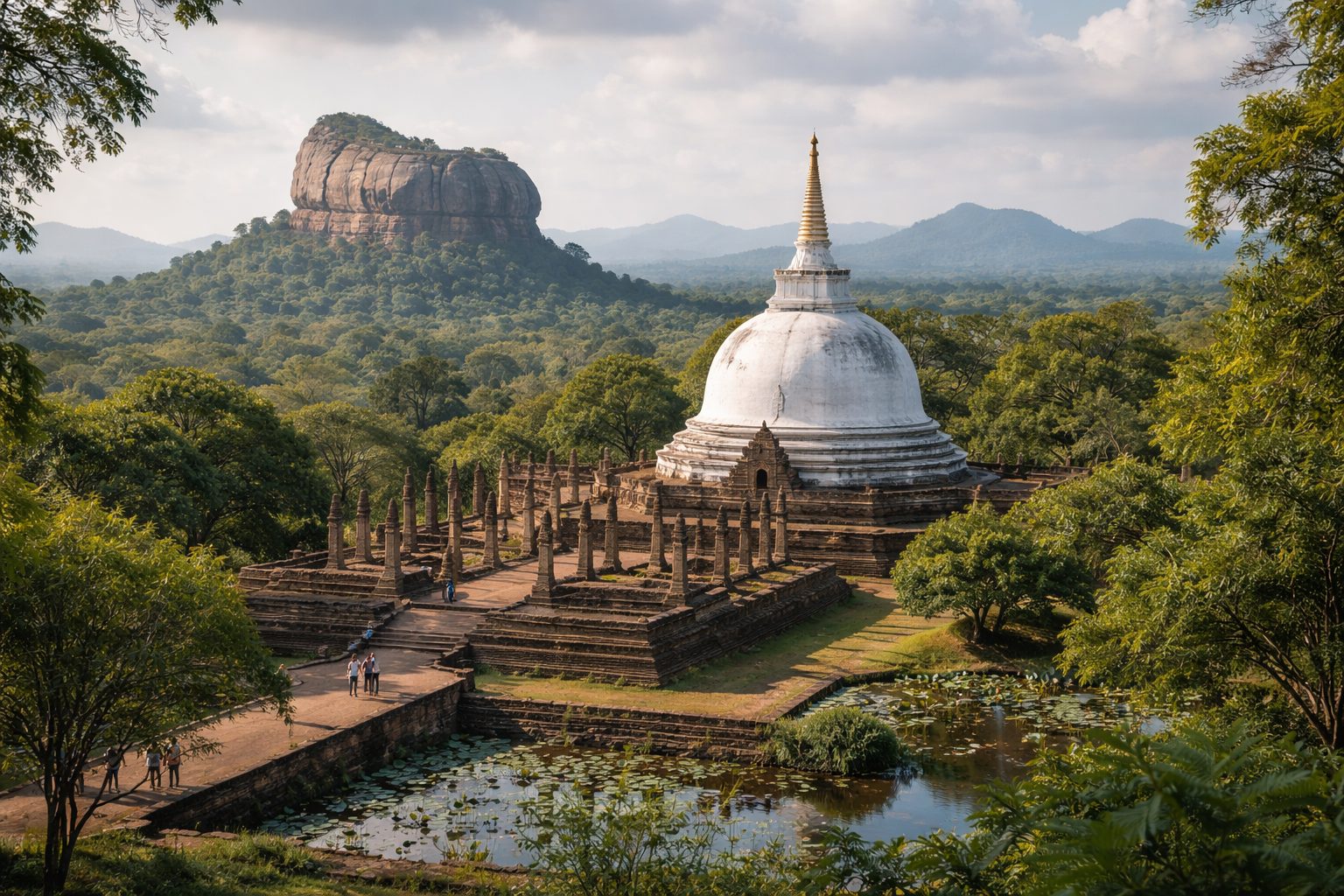
What makes Sri Lanka unusual is the sheer concentration of heritage. Within a few hours’ drive in the Cultural Triangle, you can move between ancient tank systems, massive dagobas, rock-cut Buddha statues, and medieval palace ruins. This density of history is rare anywhere in the world.
The Portuguese arrived in 1505, followed by the Dutch in 1658, and finally the British in 1796. Each colonial power added its own layer to the island’s built heritage. The result is a place where a Buddhist monastery from the 3rd century BCE might stand a short distance from a 17th-century Dutch fort, and both feel equally essential to understanding the full picture.
Significance of Historical Places in Sri Lanka
The historical places in Sri Lanka aren’t just tourist attractions. They’re living parts of the culture. Monks still meditate in ancient cave temples. Pilgrims still climb sacred hills barefoot. Local communities maintain traditions that have been tied to specific sites for over a thousand years.
This continuity matters. It means these places carry active meaning, not just archaeological value. When you visit the Temple of the Tooth in Kandy, you’re not entering a museum. You’re stepping into a site of active religious devotion that has been central to Sinhalese Buddhist identity for centuries.
Economically, heritage tourism is a major driver for Sri Lanka. The country’s UNESCO World Heritage Sites attract hundreds of thousands of visitors annually, and the income from entrance fees, guides, and local services supports communities near these monuments. Understanding their significance is understanding Sri Lanka itself.
From a global perspective, Sri Lanka’s historical sites offer insights into:
- Early Buddhist art and architecture
- Ancient hydraulic engineering systems
- Trade routes connecting South Asia, the Arab world, and China
- The spread of Theravada Buddhism across Southeast Asia
- European colonial strategies in the Indian Ocean
Overview of Major Historical Sites
Ancient Cities of Sri Lanka
Sri Lanka’s ancient cities form the backbone of what tourism boards call the Cultural Triangle, a roughly triangular region in the north-central part of the island. The three main points are Anuradhapura, Polonnaruwa, and Kandy, though Dambulla and Sigiriya are also clustered in this area.
These cities were not just administrative centers. They were religious capitals, engineering marvels, and hubs of trade and scholarship. The kings who built them competed through monumental architecture, commissioning dagobas, viharas, and palaces that were meant to demonstrate both political power and spiritual legitimacy.
The ancient tank systems surrounding these cities are particularly impressive. Sri Lankan engineers built enormous artificial reservoirs called “tanks” or “wewas” to manage irrigation across a dry zone that would otherwise be difficult to farm. Some of these tanks, like Parakrama Samudra in Polonnaruwa, are still in use today.
UNESCO World Heritage Sites in Sri Lanka
Sri Lanka has eight UNESCO World Heritage Sites, six of which are cultural and two natural. The cultural sites are:
- Ancient City of Sigiriya
- Ancient City of Polonnaruwa
- Ancient City of Anuradhapura
- Old Town of Galle and its Fortifications
- Sacred City of Kandy
- Golden Rock Temple of Dambulla
Each of these sites was inscribed based on its outstanding universal value, meaning they represent something significant to all of humanity, not just to Sri Lanka. That’s a meaningful distinction when you’re deciding which places to prioritize on a limited itinerary.
Notable Historical Landmarks
Sigiriya Rock Fortress
Sigiriya is the one that tends to make people’s jaws drop. Rising 200 meters above the surrounding jungle, this massive granite column was transformed by King Kasyapa in the 5th century CE into a fortified palace complex. The engineering alone is astonishing: gardens, moats, water features, and royal apartments were built into and around a vertical rock face.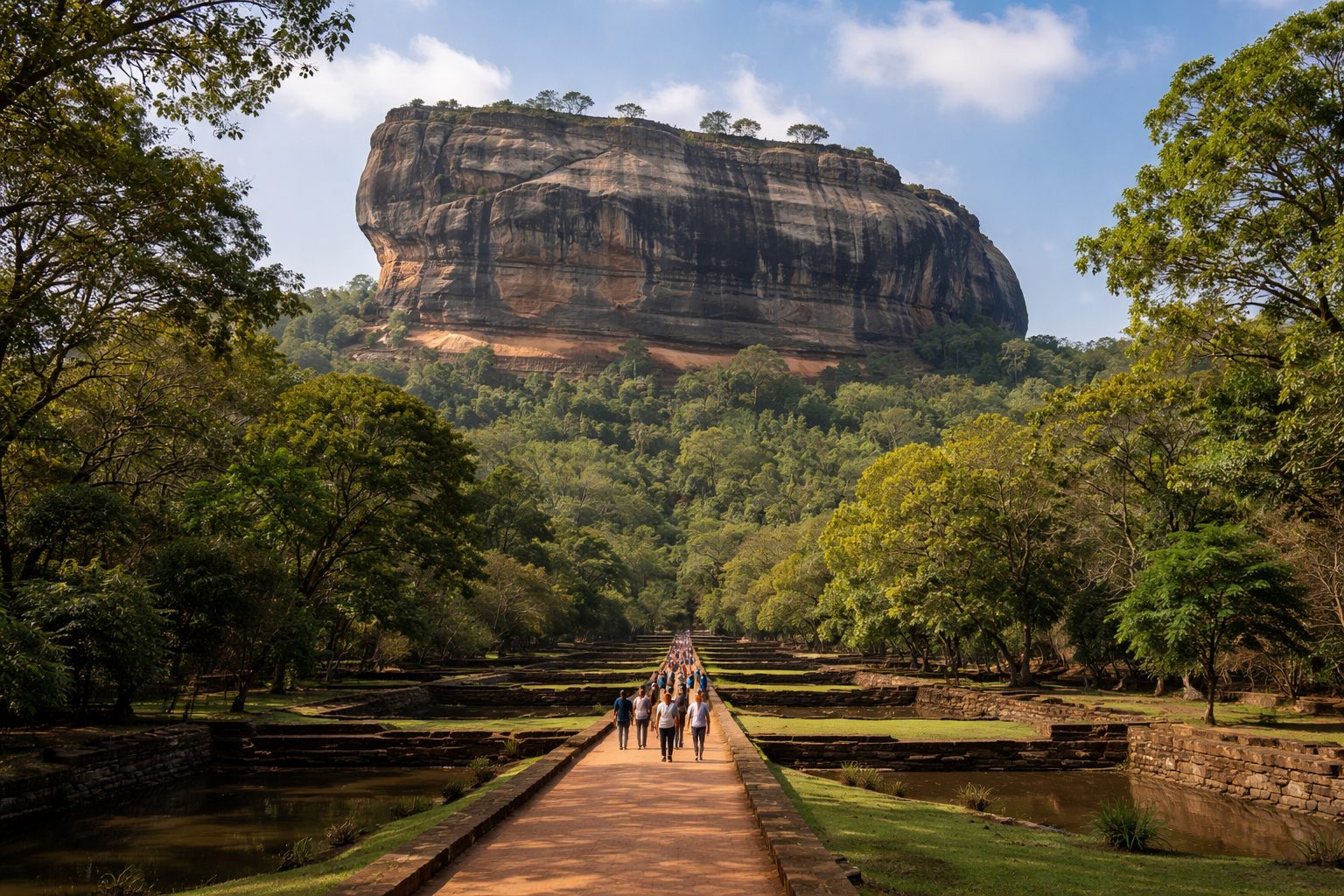
The climb takes about 90 minutes at a moderate pace and involves staircases cut into the rock, iron walkways bolted to cliff faces, and a final stretch through the lion’s paw entrance that gives the site its name (Sigiri translates roughly as “Lion Rock”). Halfway up, you’ll find the famous Sigiriya frescoes, a series of paintings depicting celestial maidens that have survived for 1,500 years in a sheltered rock cavity.
What I find compelling about Sigiriya is that it defies easy categorization. It’s part fortress, part pleasure garden, part religious site, and part political statement. Kasyapa chose this location after killing his father and seizing the throne, and the whole complex seems designed to project invincibility. It worked for 18 years before he was defeated.
Key features at Sigiriya:
- Lion Gate entrance with massive paws carved in stone
- Mirror Wall with ancient graffiti dating back to the 8th century
- Water gardens at the base, still functional during rains
- Cloud Maidens frescoes in a sheltered gallery
- Summit ruins of the royal palace
Anuradhapura Ancient City
Anuradhapura is where Sri Lankan civilization effectively began. The city was the capital of the island for over a thousand years, from roughly the 4th century BCE to the 10th century CE. At its peak, it was one of the largest cities in the ancient world, with a population estimated in the hundreds of thousands.
The site is vast. You’ll need at least a full day, ideally two, to do it justice. The highlights include the Ruwanwelisaya dagoba, one of the world’s largest, built in the 2nd century BCE, and the Jetavanaramaya, which was for a time the tallest structure in the ancient world after the pyramids of Giza.
But the most spiritually significant spot in Anuradhapura is the Sri Maha Bodhi, a sacred fig tree grown from a cutting of the original Bodhi Tree under which the Buddha attained enlightenment. Planted in 288 BCE, it’s the oldest documented living tree in human history with a known planting date. Pilgrims come every day, and the atmosphere around it is genuinely moving.
Polonnaruwa Heritage City
Polonnaruwa became the capital after Anuradhapura fell to South Indian invaders in the 10th century. The city flourished for about three centuries under a series of powerful kings, most notably Parakramabahu I, who ruled in the 12th century and oversaw a period of extraordinary construction and agricultural expansion.
The ruins of Polonnaruwa are compact enough that you can explore them comfortably by bicycle, which is how most visitors do it. You’ll cycle between royal palaces, bathing pools, a circular relic house called the Vatadage, and the Gal Vihara, four enormous Buddha figures carved directly into a granite face.
The Gal Vihara is one of Sri Lanka’s artistic masterpieces. The seated and reclining figures display a refinement of form that shows the maturity of 12th-century Sinhalese stone carving. The reclining Buddha, 14 meters long, depicts the moment of the Buddha’s passing with an extraordinary calm and precision.
Dambulla Cave Temple
Dambulla sits between Sigiriya and Kandy and is easy to underestimate. From the outside, it looks like a rocky hill. But inside five cave chambers carved into the rock, you’ll find over 150 Buddha statues, 80 cave paintings, and shrines dedicated to both Buddhist and Hindu deities, all maintained as an active place of worship.
The paintings cover approximately 2,100 square meters of ceiling and walls, making Dambulla the largest area of cave paintings in Sri Lanka. Some date back to the 1st century BCE, though most were expanded and repainted by later kings. King Valagamba, who took shelter in these caves after being driven from Anuradhapura, later returned as king and consecrated them as a royal temple.
The climb to the caves takes about 20 minutes and involves a moderate incline. Shoes must be removed at the base, so you’ll walk on warm stone in the sun. Monkeys are common on the path and have learned to grab bags, so keep food well secured.
Kandy’s Temple of the Tooth
The Temple of the Tooth Relic, or Sri Dalada Maligawa, sits on the banks of the Kandy Lake in the heart of the city. It houses what is believed to be a tooth of the Buddha, brought to Sri Lanka in the 4th century CE. Possession of this relic conferred legitimacy on Sri Lankan kings, and it remains the most sacred object in Theravada Buddhism on the island.
The temple complex is a layered structure built and expanded over several centuries. The innermost shrine contains the golden casket housing the relic, though the tooth itself is only displayed on special occasions. The daily puja ceremonies, held three times a day, draw both pilgrims and visitors and offer a genuine sense of the devotion this site inspires.
Every year in July or August, the Esala Perahera, a grand procession featuring elaborately costumed elephants, drummers, and dancers, winds through Kandy’s streets for ten nights. It’s one of the most spectacular festivals in Asia and has its roots directly in the tradition of publicly displaying the tooth relic.
Colonial Era Historical Sites
Galle Fort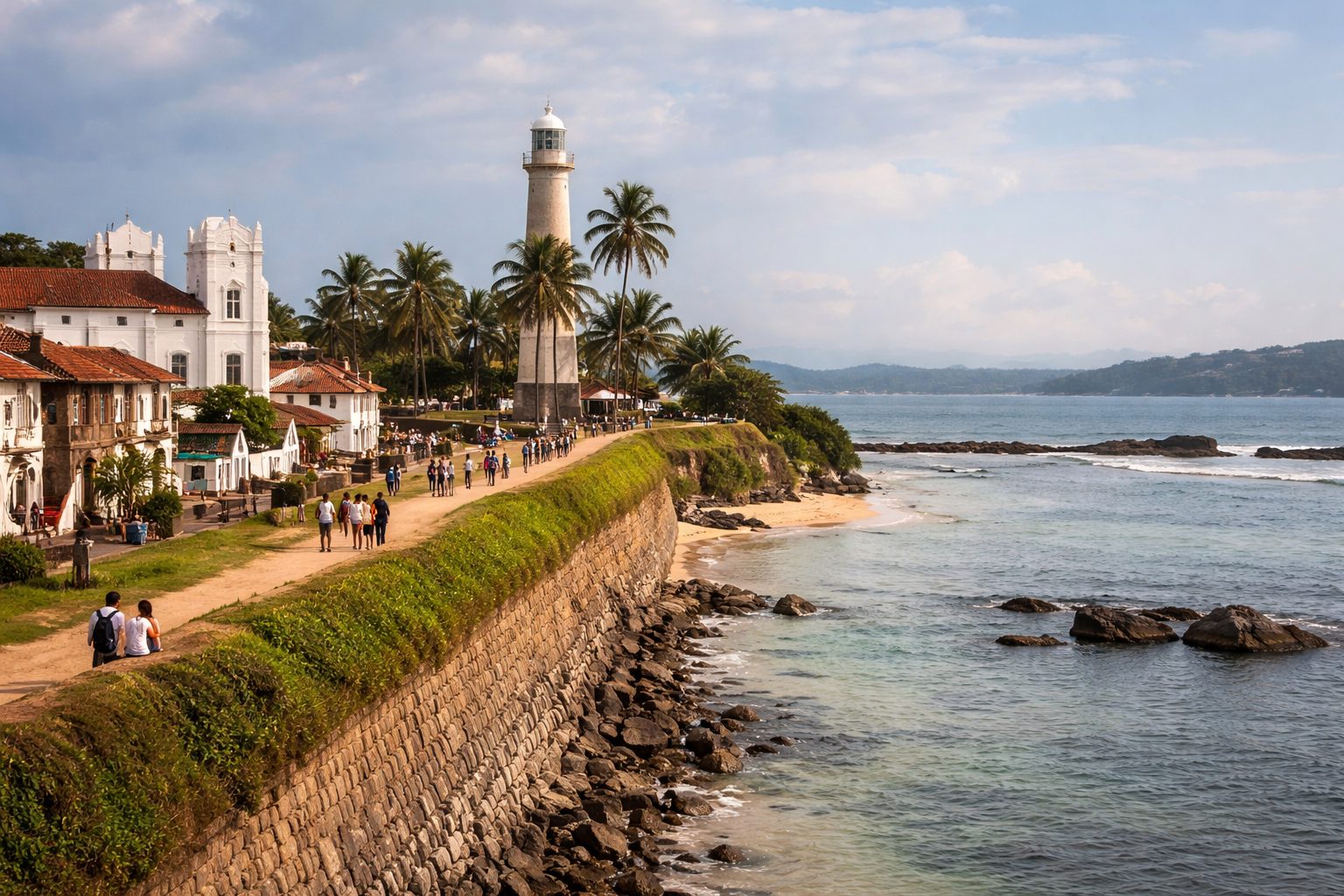
Galle Fort on the southwestern tip of Sri Lanka is arguably the best-preserved colonial fort in Asia. The Portuguese built the original fortification in the 16th century, but the Dutch substantially rebuilt and expanded it in the 17th century after they captured the city in 1640. The British then took it in 1796 and made further additions.
What makes Galle Fort exceptional is that it’s not a ruin. It’s a living town. About 400 families still live inside the walls, alongside hotels, restaurants, boutique shops, and museums. The streets follow the original Dutch grid, and the colonial-era architecture, Dutch Reformed churches, warehouses, and merchants’ houses, has been carefully maintained or thoughtfully restored.
Walking the fort walls at sunset, looking out over the Indian Ocean, is one of those travel experiences that stays with you. The walls run for nearly two kilometers and offer views over the town, the harbor, and the sea.
Jaffna Fort
Jaffna Fort in the north of the island has a more complicated history. Like Galle, it was originally Portuguese, then captured and redesigned by the Dutch, and eventually taken by the British. But Jaffna Fort has also survived much more recent conflict: it was heavily damaged and changed hands multiple times during Sri Lanka’s civil war.
The fort is now open to visitors and represents a significant act of heritage recovery. Restoration work has been ongoing since the end of the conflict in 2009. It’s not as polished as Galle, but that rawness is part of what makes it interesting. You can see layers of history quite literally in the walls: Dutch masonry, British additions, and the marks of a recent war.
The views from the ramparts over Jaffna Lagoon are striking, and the surrounding city has a distinct Tamil Hindu character that feels quite different from the Sinhala Buddhist south.
Colombo’s Old Dutch Hospital
In the heart of Colombo’s Fort district, the Old Dutch Hospital is one of the oldest buildings in the city. Built in the late 17th century as a hospital for the Dutch East India Company, it’s now been converted into a complex of restaurants and shops. The building itself is worth seeing for its thick walls, colonnaded verandas, and courtyard.
It doesn’t have the dramatic impact of Sigiriya or the spiritual weight of Anuradhapura, but it represents the urban colonial heritage that shaped Colombo’s identity as a commercial port city. Combined with the nearby Colombo Fort area, it gives you a sense of how European trading companies organized their Indian Ocean operations.
Cultural and Religious Significance of Historical Places
You can’t separate Sri Lanka’s historical sites from religion. Virtually every major monument is connected to Buddhism, Hinduism, or both, and many sites have layers of meaning that evolved over centuries as religious and political contexts shifted.
The dagoba, or stupa, is the most characteristic Sri Lankan architectural form. These dome-shaped structures house sacred relics and serve as focal points for devotion and circumambulation. Walking clockwise around a dagoba at Anuradhapura at dawn, with monks chanting nearby and the mist still on the jungle, is a surprisingly affecting experience even for non-Buddhists.
Hinduism has also shaped Sri Lanka’s historical landscape significantly, particularly in the north and east. Tamil kings built kovils (Hindu temples) and patronized traditions that remain central to Tamil Sri Lankan culture today. Sites like the Nainativu Nagapooshani Amman Temple, reachable only by boat, draw enormous numbers of Hindu pilgrims.
The relationship between these traditions has been complex. Some sites, like Dambulla, show evidence of both Buddhist and Hindu worship. Others have shifted from one tradition to another as political power changed hands. Reading these layers is part of what makes visiting these places intellectually rewarding.
Architectural Styles Found in Historical Places
Sri Lankan historical architecture draws on multiple traditions but developed its own distinct identity over centuries. The main architectural categories you’ll encounter include:
- Sinhalese Buddhist architecture, characterized by massive dagobas, image houses (patimaghara), bo-tree shrines, and moonstones (decorative entrance slabs)
- Dravidian influence visible in temple gopurams and shrine designs, particularly in the north
- Medieval palace architecture combining timber, brick, and stone in multi-story complexes
- Dutch colonial buildings with thick walls, terracotta roofing, and functional courtyard layouts
- Portuguese fortifications with angular bastion designs
- British Neoclassical and administrative architecture in Colombo and Kandy
The moonstones at Anuradhapura deserve special mention. These semicircular stone slabs placed at the entrance to sacred buildings are among the most refined examples of decorative carving in the ancient world. Each zone of the moonstone carries symbolic meaning related to the cycles of existence in Buddhist cosmology.
Rock-cut architecture is another distinctive feature of Sri Lanka’s heritage. Sigiriya, Dambulla, Gal Vihara, and Buduruwagala are all examples of ancient Sri Lankans using natural rock formations as architectural and artistic canvases.
Comparison of Historical Places in Different Regions
| Region | Main Sites | Period | Character |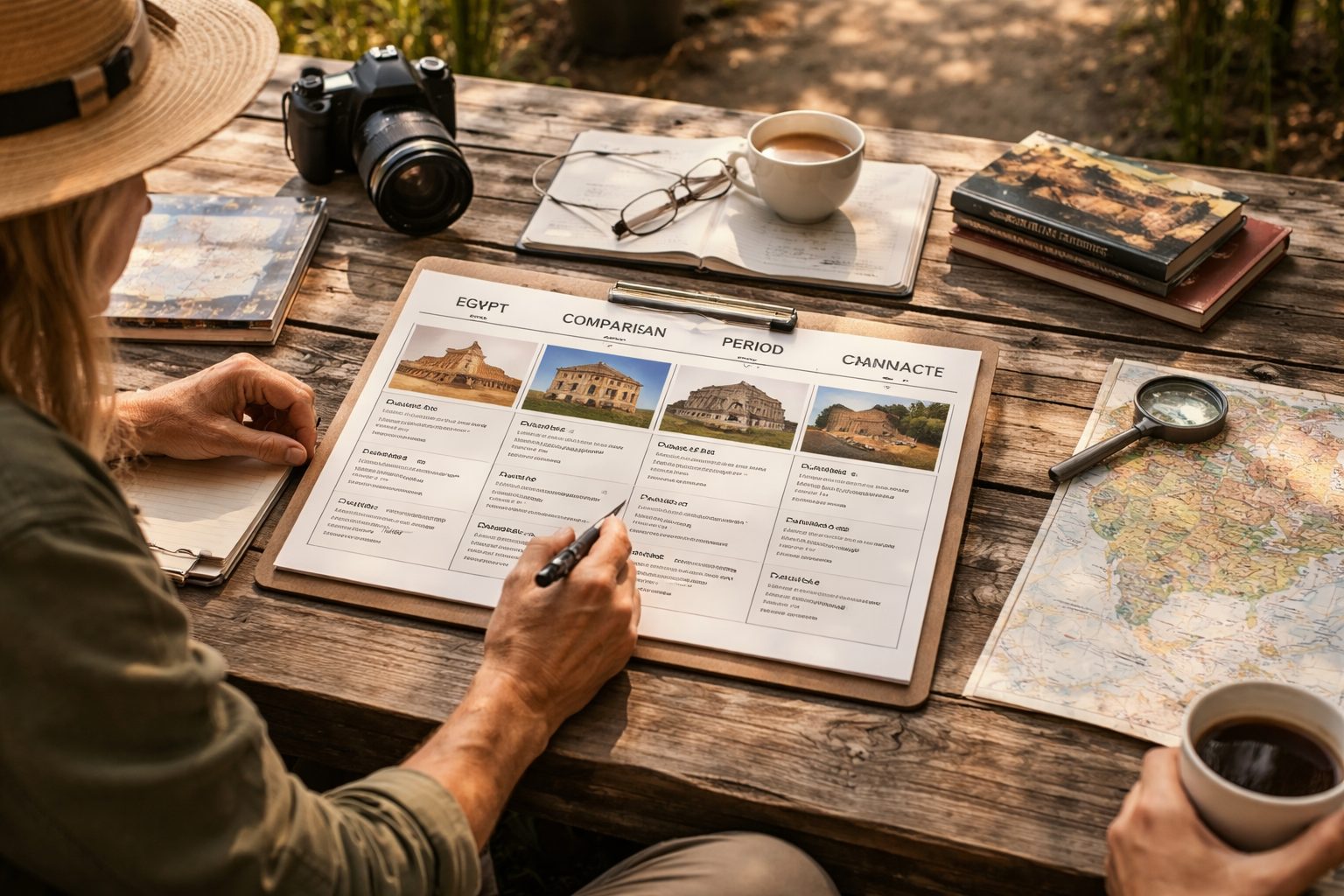
|—|—|—|—|
| North Central | Anuradhapura, Polonnaruwa, Sigiriya, Dambulla | 4th BCE to 12th CE | Ancient Buddhist kingdoms |
| Central Highlands | Kandy | 16th to 19th CE | Last Sinhalese kingdom, living tradition |
| Southern Coast | Galle | 16th to 19th CE | Dutch and Portuguese colonial fort |
| North | Jaffna | 17th to 19th CE | Colonial fort, Tamil heritage |
| West Coast | Colombo | 17th CE onwards | Colonial trade infrastructure |
Central Sri Lanka Historical Sites
The central region, centered on Kandy, represents the last phase of independent Sinhalese rule. The Kandyan Kingdom managed to resist European colonizers for over two centuries, and this period produced a distinctive cultural flowering: Kandyan dance, elaborate jewelry traditions, a particular style of temple architecture, and the grand traditions associated with the Temple of the Tooth.
Kandy sits in a bowl of hills, which made it naturally defensible. The landscape itself shaped its history. Surrounding Kandy, you’ll find smaller but significant sites like Embekka Devalaya, known for its intricate wood carvings, and Lankatilaka Vihara, a striking hilltop temple with Indian and Sri Lankan stylistic influences.
Coastal Historical Sites
The coastal historical sites are dominated by colonial-era fortifications built to control Sri Lanka’s trade routes. Galle was the most important port on the southwestern coast, and its fort reflects that strategic value. But the coast also has older sites: beach temples, ancient harbors, and sites connected to the maritime silk road.
Beruwala, on the western coast, has one of the oldest mosques in Sri Lanka, testament to the early Arab trading presence on the island. These Muslim communities were established long before European colonization and represent a distinct thread in Sri Lanka’s historical fabric.
Northern Historical Sites
The north has a distinct heritage character shaped by Tamil culture and Hinduism. Jaffna’s historical landscape includes the fort, the Jaffna Public Library (destroyed and rebuilt, a symbol of cultural resilience), kovils of architectural significance, and island temples like the one at Nainativu.
Access to the north improved dramatically after 2009, and it now offers some of the most authentic heritage travel on the island precisely because it’s less developed for tourism. The flat landscape, the lagoons, and the palm-lined roads give the region a different visual character from the rest of Sri Lanka.
Practical Tips for Visiting Historical Places
Best Time to Visit Historical Sites
Sri Lanka has two monsoon seasons that affect different parts of the island. Understanding this is essential for planning a heritage trip.
The southwest monsoon (May to September) brings heavy rain to the west and south, including Galle and Colombo. The northeast monsoon (October to January) affects the north and east, including Jaffna. The Cultural Triangle in the north-central zone is relatively dry for most of the year but gets some rain from both monsoons.
The best overall time to visit the historical places in Sri Lanka is during the dry season from December to March for the south and west, and from May to September for the north and east. If your itinerary covers both, February and March tend to be the most reliable across the island.
Avoid visiting open-air sites at midday during April and May. The heat in the Cultural Triangle during these months is intense, and the stone surfaces of the ruins can reach uncomfortable temperatures. Start early, take a midday break, and continue late afternoon.
Guided Tours vs. Independent Exploration
This depends on what you want from the experience. Hiring a local guide at Sigiriya or Anuradhapura adds real depth. A good guide will point out carvings, explain iconography, and place sites in historical context that a sign or guidebook won’t fully convey. I’ve learned things from Sri Lankan guides that I hadn’t found in any written source.
That said, independent exploration has its advantages. You set your own pace, you can linger where you feel like it, and you avoid being rushed through highlights. For Polonnaruwa, renting a bicycle and exploring at your own pace is genuinely one of the better ways to see the site.
A middle path that works well: hire a guide for the first major site you visit in each region to build contextual understanding, then explore subsequent sites independently with that foundation.
Accessibility and Transport Options
Getting between historical sites is manageable with some planning. The main options are:
- Renting a car with driver: The most flexible and comfortable option, especially for the Cultural Triangle. Rates are reasonable by international standards.
- Public buses: Connect most towns but are slow and often crowded. Good for budget travelers with time.
- Train: The Colombo to Kandy route is one of the most scenic train journeys in Asia. Trains also run to Anuradhapura and Polonnaruwa, though connections can be slow.
- Tuk-tuks: Good for getting around within a single town or site area, not for long-distance travel.
- Organized tours: Convenient but limiting. Best for those with very little time.
Within sites like Polonnaruwa, bicycle rental is available near the entrance and is the most practical way to cover the ground. Sigiriya and Dambulla are walkable from their entrance gates.
Note that some sites require removing footwear, and walking on hot stone or rough ground can be uncomfortable. Carry a small bag for your shoes and wear socks if you’re sensitive to surfaces.
Frequently Asked Questions (FAQs)
What are the top three historical places to visit in Sri Lanka?
If I had to choose three, I’d say Sigiriya for its sheer dramatic impact and engineering, Anuradhapura for its historical depth and spiritual atmosphere, and Galle Fort for its colonial character and walkability. Together they cover ancient, medieval, and colonial Sri Lanka across very different landscapes.
How can I learn more about Sri Lanka’s history?
The Central Cultural Fund of Sri Lanka publishes detailed guides on the UNESCO sites. For broader history, academic works by scholars like K.M. de Silva provide solid grounding in Sri Lanka’s political and cultural past. Many sites also have small on-site museums worth spending time in.
Are there any entry fees for historical sites?
Yes, most major sites charge separate entrance fees for foreign visitors, and these are considerably higher than rates for local visitors. Sigiriya is among the more expensive, currently in the range of USD 30. Anuradhapura and Polonnaruwa are sold as combined site tickets covering multiple monuments within each complex. Bring cash as card facilities aren’t always available.
What should I wear when visiting historical places?
Lightweight, breathable clothing that covers shoulders and knees is the practical choice. Many sacred sites require covered shoulders and legs, and you’ll be asked to remove shoes at temple entrances. A hat and sunscreen are essential for outdoor sites in the Cultural Triangle. Avoid synthetic fabrics that trap heat.
How do I plan a historical tour in Sri Lanka?
Start in Colombo, then move north to the Cultural Triangle: Dambulla, Sigiriya, Polonnaruwa, and Anuradhapura. From there, head south to Kandy before continuing to Galle. If time allows, add a side trip to Jaffna. Allow at least 10 to 14 days to cover the historical places in Sri Lanka without feeling rushed.