
If you’ve never explored Sri Lankan cuisine, you’re missing one of the most layered and genuinely exciting food cultures in South Asia. I’ve spent a lot of time eating my way through this island’s kitchens and street stalls, and I can say with confidence that the best sri lankan food isn’t just about heat. It’s about depth, contrast, and a kind of balance that’s hard to find elsewhere. Coconut meets tamarind, spice meets cool sambol, crispy meets soft. Every meal tells you something about the land and the people who shaped it.
Sri Lanka sits at a crossroads of culinary influence. Centuries of trade brought Arab, Dutch, Portuguese, and British contacts to the island, each leaving something behind. Tamil culture in the north contributed distinct vegetarian traditions. Sinhalese culture in the south and central regions brought its own spice blends and rice-based staples. The result is a cuisine that doesn’t fit neatly into one category. It’s plural, regional, and constantly surprising.
Introduction to Sri Lankan Cuisine
Sri Lankan cooking is built around a few central ideas: freshness, layering, and rice. Most meals center on rice surrounded by small dishes of curries, chutneys, and sambol. The cuisine relies heavily on local produce and fresh coconut in multiple forms, whether it’s the milk, the flesh, or the oil.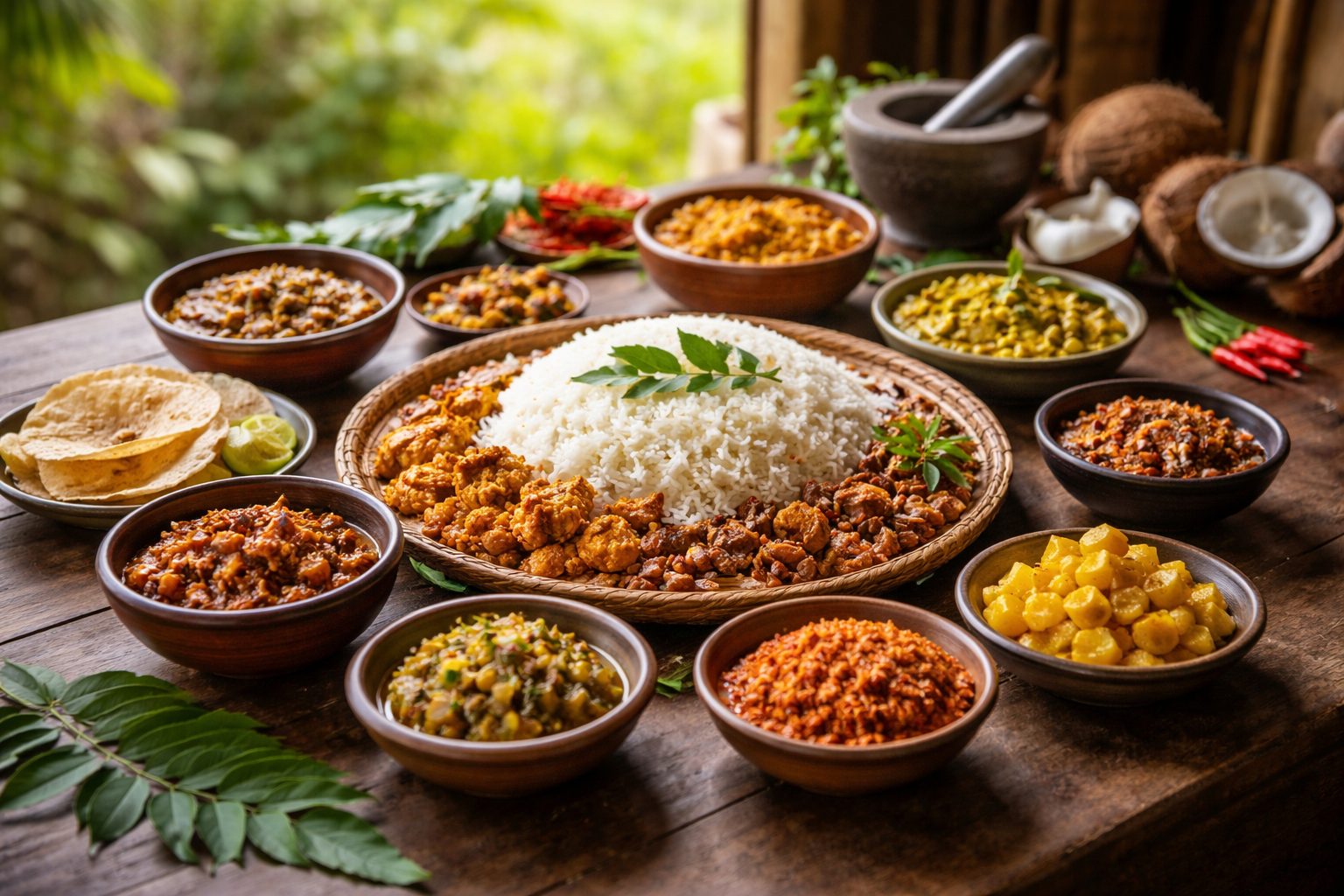
What makes the best sri lankan food stand out from neighboring Indian cuisine is its intensity. Sri Lankan spice blends tend to be darker roasted and more pungent. Curry leaves, pandan, and goraka give dishes a distinct earthiness that’s different from what you’ll find in a typical North Indian kitchen. The cooking also uses a lot more coconut milk, which softens the heat and adds richness without heaviness.
Meals are often served on a banana leaf, especially at traditional places, which adds a faint herbal note to the food. That’s a small detail, but it tells you something about how much environment matters to Sri Lankan cooking. Nothing is accidental.
Key Ingredients in Sri Lankan Cooking
Understanding the base ingredients helps explain why Sri Lankan food tastes the way it does. These aren’t exotic imports. They’re everyday items that Sri Lankan cooks use with real skill.
- Coconut: Used as milk, cream, oil, and fresh grated flesh. It appears in curries, sambols, and sweets.
- Curry leaves: Fresh or dried, these add a specific aromatic quality that dried spice cannot replace.
- Pandan leaves: Used to flavor rice, sweets, and some curries. The scent is subtle but distinctive.
- Goraka: A dried sour fruit used to add tartness, especially in fish dishes.
- Cinnamon: Sri Lanka is the original source of true cinnamon, and it’s used far more generously here than anywhere else.
- Turmeric: Used fresh and dried, it gives color and a mild earthiness to curries.
- Lemongrass and ginger: Both appear regularly in coastal and southern dishes.
- Black pepper: One of the island’s original spice exports, used more freely than in many neighboring cuisines.
- Maldive fish: Dried and cured tuna flakes that add a deep umami note to sambol and vegetable dishes.
Roasted curry powder is another staple. Sri Lankan cooks typically make their own blend, roasting whole spices until dark and grinding them fresh. This roasted quality gives many dishes a smokier, more complex flavor than unroasted blends.
Popular Sri Lankan Dishes
The dishes below are the ones I’d recommend to anyone exploring this cuisine for the first time. They’re widely eaten, genuinely representative, and among the best sri lankan food you can find.
Rice and Curry
Rice and curry is the backbone of Sri Lankan daily eating. But calling it just rice and curry undersells what’s actually on the table. A typical rice and curry meal includes a large mound of steamed rice surrounded by four to eight small dishes. You might have a fish curry, a dhal, a green jackfruit preparation, a dry potato curry, pol sambol, a fresh salad, and a small portion of papadum.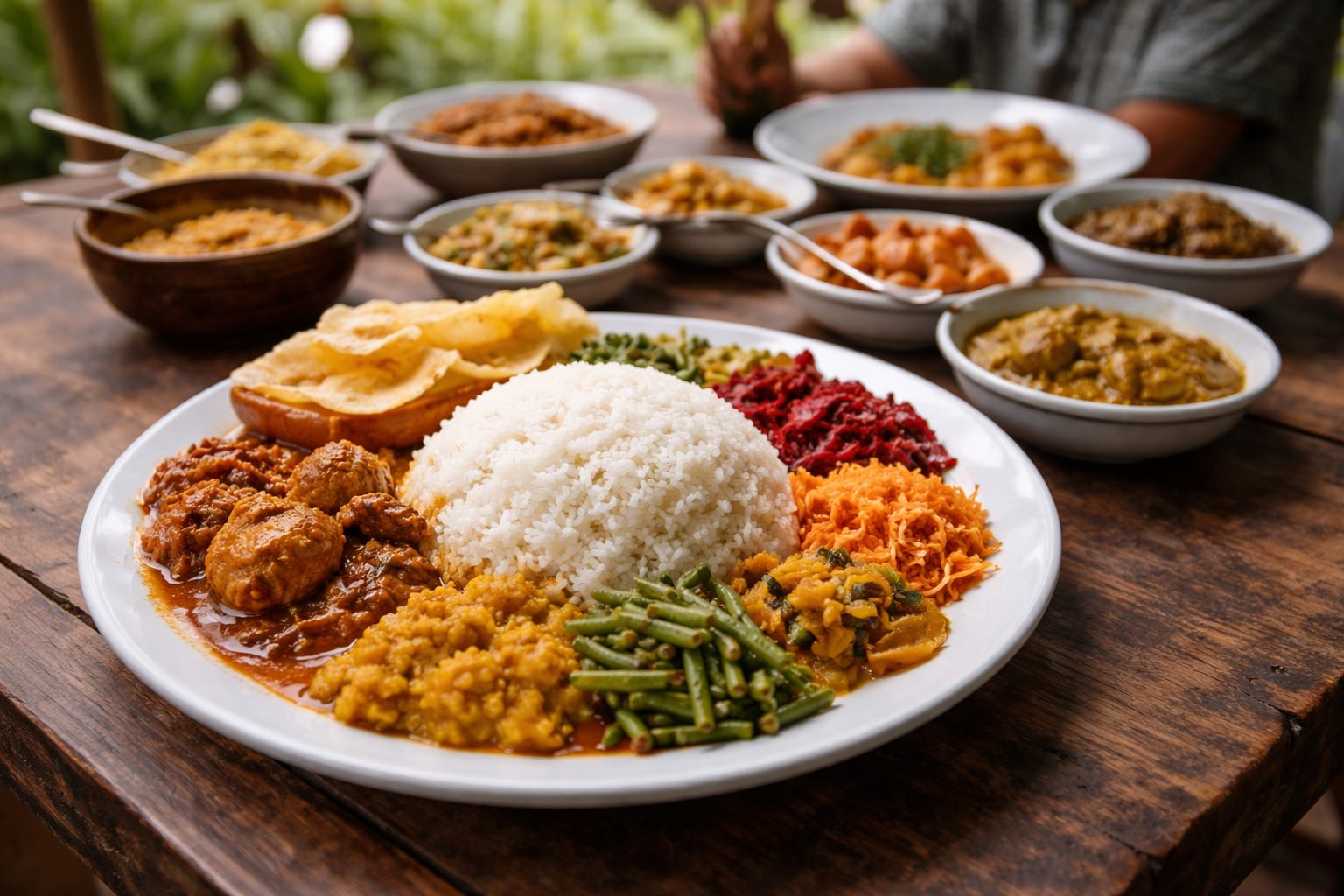
The idea is to mix everything together on your plate, getting a different combination of flavor in each bite. Nothing is eaten in isolation. That mixing is part of the technique, and experienced eaters do it instinctively, building each spoonful for balance.
Red rice is the traditional choice at most local meals. It’s nuttier and chewier than white rice, and it holds up better under rich curries. White rice is used too, especially for special occasions and at more tourist-focused places.
Hoppers (Appa)
Hoppers are bowl-shaped pancakes made from a fermented rice flour and coconut milk batter. The edge is thin and crispy, the center is thick and soft. They’re cooked in a small curved pan that gives them their distinctive shape.
Egg hoppers are the most common version. A whole egg is cracked into the center of the batter before cooking, so the yolk sits soft and runny in the middle of the hopper. You break it open, mix it with a little pol sambol or onion sambol, and eat it by hand. It’s simple and genuinely satisfying.
Sweet hoppers are another popular variant. They’re made with a bit of coconut treacle or sugar added to the batter. Hoppers are typically a breakfast or dinner food, not eaten much at midday.
Kottu Roti
Kottu roti might be the most fun dish to watch being made. It starts with day-old roti that gets chopped directly on a hot griddle with two metal blades. You can hear it from the street before you see it. The rhythmic clanging is something I associate immediately with evening in a Sri Lankan town.
The chopped roti gets mixed with egg, vegetables, and your choice of meat or seafood. Chicken kottu is the most common version. A curry-based gravy is poured over the top before serving. The result is chewy, rich, and deeply savory.
It’s street food, but it’s also sold at restaurants. The quality varies a lot depending on where you go. The best versions use well-seasoned curry and properly stale roti. Fresh roti doesn’t cut the same way and tends to go mushy.
String Hoppers (Idiyappam)
String hoppers are thin noodles made from rice flour pressed through a mold into a flat circular disc. They’re steamed rather than fried and have a delicate, slightly chewy texture. The noodles are fine and lacy, almost like a nest.
They’re usually served for breakfast or dinner with a thin coconut milk curry and a sambol. They’re lighter than regular hoppers and tend to be more popular in the northern part of the island, though you’ll find them everywhere. The combination of coconut milk curry and string hoppers is one of those pairings that just works.
Dhal Curry
Sri Lankan dhal curry uses red lentils tempered with mustard seeds, curry leaves, and dried chili in coconut oil. Coconut milk is added to give it a creamy, slightly sweet base. It’s a mild dish compared to many others in the spread, which makes it an important counterbalance on the plate.
Good dhal curry here is nothing like the thick, spiced version you might know from Indian restaurants. Sri Lankan dhal is thinner and more coconut-forward. It soaks into the rice and ties the other elements of the meal together. Every rice and curry spread includes it, and it’s often the component that holds the whole plate together.
Fish Ambul Thiyal
Fish ambul thiyal is a dry, intensely flavored sour fish curry from the southern coastal region. It uses goraka to create a deep tartness that’s different from tamarind or lime. The fish is cut into thick cubes, coated in a paste of goraka, black pepper, and other spices, then cooked slowly until the mixture dries out and coats each piece.
The result is concentrated and bold. A small amount goes a long way. It keeps well without refrigeration, which is why it was traditionally made for travel and long sea journeys. Today it’s a prized dish at home cooking and a marker of authentic southern cuisine.
Tuna is the most common fish used, though seer fish is also popular. If you want to understand southern Sri Lankan food, ambul thiyal is the dish to try.
Pol Sambol
Pol sambol is a simple coconut relish that appears at almost every Sri Lankan meal. It’s made from freshly grated coconut, dried red chili, lime juice, Maldive fish, and onion. The ingredients are ground together by hand into a rough paste. It’s served fresh and eaten in small amounts alongside the main dishes.
It provides heat, acidity, and texture in one spoonful. The Maldive fish adds a savory depth that keeps it from tasting one-dimensional. Pol sambol is one of those things that sounds basic and turns out to be essential. Meals without it feel incomplete.
Regional Variations of Sri Lankan Food
The island is small but the food varies significantly from region to region. Geography, ethnicity, religion, and history all shape what ends up on the plate.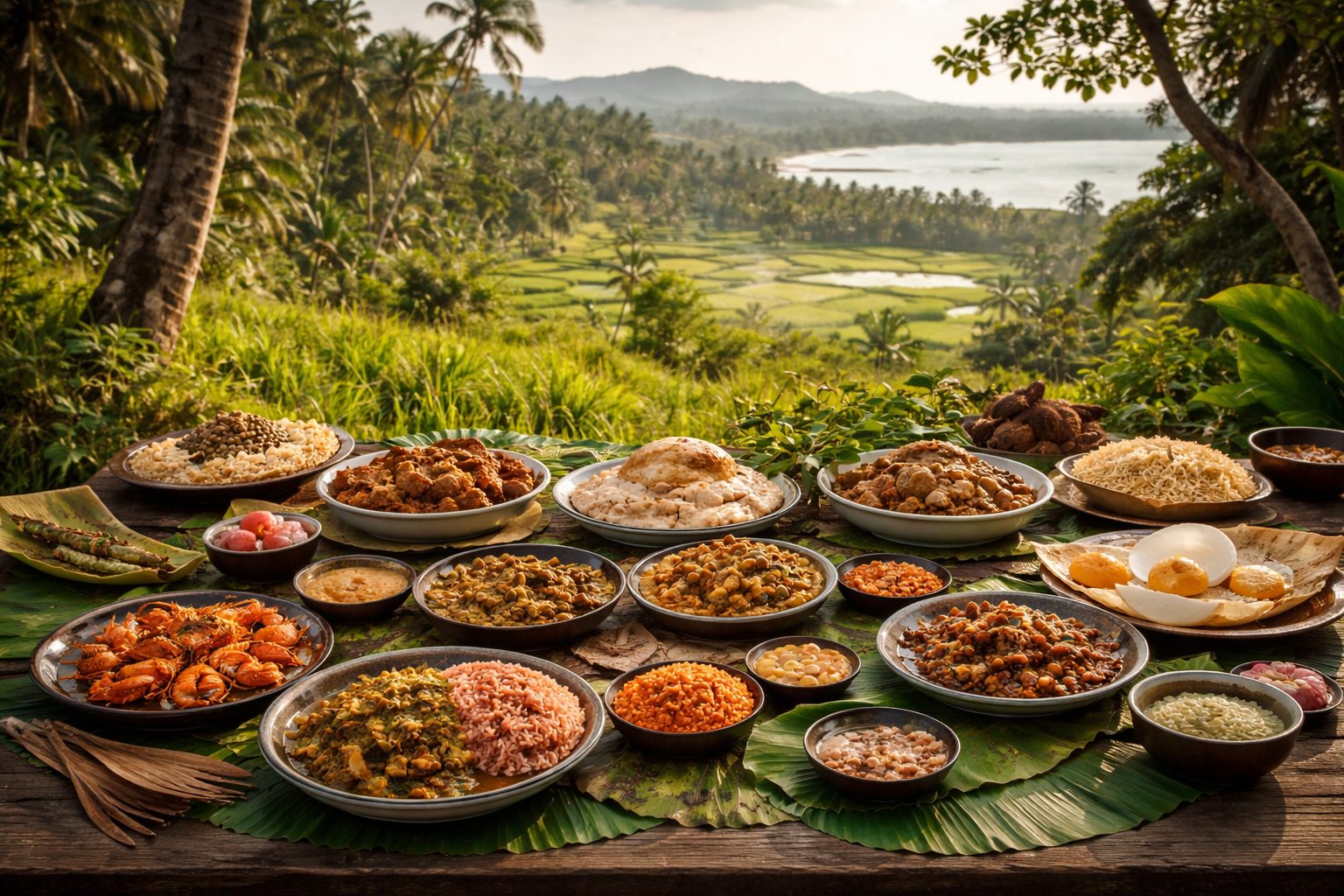
Southern Sri Lankan Cuisine
The south is known for its fish and seafood, its use of goraka, and its bold, dark-roasted spice blends. Ambul thiyal comes from here. So does lamprais, a Dutch-influenced dish where rice, curry, and sambol are wrapped in a banana leaf and baked. Southern food tends to be richer and more intensely spiced than northern dishes.
Coastal villages in the south also have strong traditions of dried fish preparation and coconut-based curries. Fresh seafood is abundant, and you’ll find crab, prawn, and squid prepared in multiple ways along the southern coast.
Northern Sri Lankan Cuisine
Northern cuisine is dominated by Tamil cooking traditions and is more vegetarian than the rest of the island. The region around Jaffna has its own distinct style, using more fresh chili, less coconut milk, and more tamarind. Jaffna crab curry is one of the most famous dishes in the country and is hard to find done well outside the north.
String hoppers are eaten more frequently here, and the curries tend to be thinner and sharper in flavor. The food reflects both the Tamil cultural tradition and the local environment, which is drier and less lush than the wet zone in the south and west.
Western Sri Lankan Cuisine
The western region, including Colombo, is where you see the most fusion and the most variety. The capital city has high-end restaurants, traditional local joints, and every type of street food imaginable. It’s also where you’ll find the strongest Dutch and Portuguese culinary influence in dishes like breudher (a Dutch spiced bread) and love cake (a dense cashew and rose water confection with Portuguese roots).
Colombo’s food scene has grown quickly in recent years. There are now excellent modern restaurants serving updated versions of traditional dishes alongside Japanese, Italian, and other international cuisines.
Eastern Sri Lankan Cuisine
The east coast is a meeting point of Tamil, Sinhalese, and Muslim culinary traditions. Muslim-influenced food is more prominent here than anywhere else on the island. Biriyani, mutton rolls, and pilau-style rice dishes are common. The eastern coast’s seafood is exceptional, particularly during the season when the sea is calm enough for fishing.
The food here tends to be aromatic and slightly sweeter in profile than the more fiery southern style. Eastern biriyani is a dish worth going out of your way for.
Best Places to Experience Sri Lankan Food
Knowing where to eat matters as much as knowing what to eat. The same dish can be extraordinary or forgettable depending on where it’s prepared.
Street Food Stalls
Street stalls are where you find the most honest, everyday Sri Lankan food. Kottu roti shops, hopper stalls, and lunch rooms serving rice and curry by weight are the backbone of daily eating for most locals. Prices are low, turnover is fast, and the food is usually fresher for it.
Lunch rooms, called hotels in local parlance (confusingly), are the typical spot for a midday rice and curry. You walk up, choose your dishes from what’s on display, and pay by the amount you take. These places rarely advertise and rarely disappoint.
Look for stalls with a line of locals. That’s the most reliable signal of quality anywhere in the world, and it holds especially true in Sri Lanka.
Traditional Restaurants
Traditional restaurants in Sri Lanka range from modest family-run places to more established dining rooms that serve full rice and curry spreads. Some of the best experiences I’ve had were at simple restaurants in smaller towns where the cook is also the owner and everything is made from scratch that morning.
In Colombo, places like Upali’s or Ministry of Crab serve Sri Lankan food at a higher standard with more consistent quality. Ministry of Crab in particular has brought attention to Sri Lankan seafood on an international level, using locally caught crab in preparations that respect tradition while being refined in execution.
Modern Fusion Cuisine
A new generation of Sri Lankan chefs is taking local ingredients and techniques into more contemporary territory. You’ll find restaurants in Colombo experimenting with Sri Lankan flavors in new formats, combining local spice profiles with European cooking methods or presenting traditional dishes in fine dining settings.
This isn’t fusion for its own sake. The best of it uses a deep understanding of local ingredients to create something genuinely interesting. It’s worth exploring if you’re already familiar with the classics, but it’s not where I’d start if you’re new to the cuisine.
Cooking Techniques in Sri Lankan Cuisine
The techniques behind Sri Lankan food are worth understanding, especially if you want to recreate dishes at home.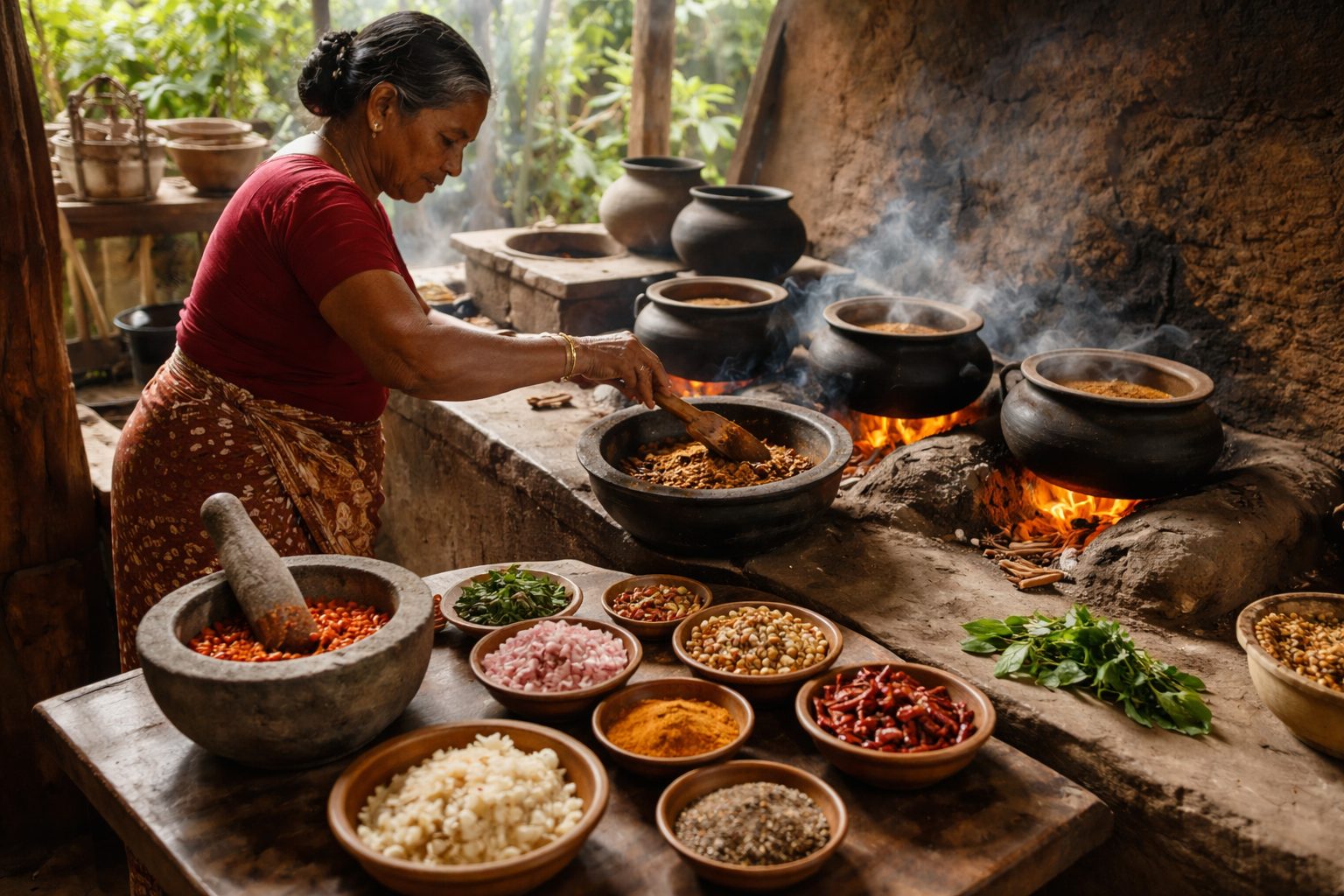
- Tempering: Almost every curry starts with tempering in hot oil. Mustard seeds, curry leaves, dried chili, and sometimes onion are added to hot oil until fragrant before the main ingredients go in. This step builds the aromatic base of the dish.
- Roasting and grinding: Sri Lankan cooks roast whole spices before grinding them. This creates the darker, more complex roasted curry powder that defines much of the cuisine.
- Slow cooking: Many dishes like ambul thiyal and certain meat curries are cooked slowly to develop flavor and reduce liquid. Patience is part of the process.
- Coconut milk in stages: Thin coconut milk is often added early in cooking, and thick coconut milk is added at the end. This prevents the milk from splitting and adds a richer finish.
-
Banana leaf cooking: Wrapping food in banana leaf and steaming or baking it is used for dishes like lamprais and certain sweets. The leaf adds a subtle flavor and keeps moisture in.
-
Heat the oil properly before adding any aromatics.
- Add whole spices and curry leaves first, let them pop and release fragrance.
- Add onion and fresh chili, cook until soft and slightly caramelized.
- Add main spice powders and cook them out before adding liquid or protein.
- Finish with thick coconut milk and adjust seasoning at the end.
That sequence is the foundation of most Sri Lankan curries. Get it right and the rest follows.
Health Benefits of Sri Lankan Food
The best sri lankan food is not just satisfying to eat. It also happens to align well with what nutritionists currently understand about healthy diets.
Turmeric is the most widely studied ingredient in Sri Lankan cooking. Curcumin, its active compound, has demonstrated anti-inflammatory properties in multiple research contexts. Sri Lankan cooking uses turmeric in almost every savory dish, often combined with black pepper, which increases curcumin absorption significantly.
Curry leaves contain antioxidants and compounds that have been studied for blood sugar regulation. They’re eaten daily in this cuisine, not used as a garnish to be pushed aside. Coconut, despite its saturated fat content, is increasingly understood to have a different effect on the body than animal-based saturated fats, particularly when consumed as part of a varied diet rich in fiber and vegetables.
The plant diversity in a typical Sri Lankan rice and curry meal is substantial. On a single plate you might have lentils, jackfruit, green beans, pumpkin, bitter gourd, and several herbs. That variety supports gut health and provides a wide range of micronutrients from whole food sources.
Sri Lanka also has a tradition of herbal medicine, and many of the herbs used in cooking, including lemongrass, pandan, and ginger, have recognized medicinal properties. The line between food and medicine has historically been thin in this culture.
Tips for Cooking Sri Lankan Dishes at Home
You don’t need specialty equipment or a long list of imported ingredients to cook Sri Lankan food at home. What you do need is attention to detail and a willingness to build flavors properly.
- Start with roasted curry powder. Buy a good Sri Lankan brand or make your own by dry roasting coriander, cumin, fennel, cinnamon, cloves, cardamom, and pepper, then grinding them. This is the single ingredient that makes the biggest difference.
- Use fresh or frozen curry leaves. Dried curry leaves have almost no flavor. If you can find frozen fresh leaves, use those. Many South Asian grocery stores stock them.
- Don’t skip the tempering step. It’s tempting to add everything to the pot at once, but tempering builds the aromatic base that makes the dish taste right.
- Source Maldive fish or use a small amount of dried shrimp as a substitute. It’s not the same, but it adds the umami depth that pol sambol needs.
- Make hoppers at home with a proper hopper pan. A small wok works in a pinch. The fermented batter needs to rest overnight, so plan ahead.
- Coconut milk quality matters. Fresh-pressed or high-fat canned coconut milk gives better results than low-fat versions. Don’t dilute it further than the recipe requires.
- Cook rice and curry together for balance. Making a single Sri Lankan curry in isolation is fine, but the cuisine makes more sense when you have multiple elements to mix and contrast.
A comparison of common Sri Lankan dishes by complexity and accessibility for home cooking:
| Dish | Difficulty | Time Required | Key Specialty Ingredient |
|---|---|---|---|
| Dhal curry | Easy | 30 minutes | Curry leaves, roasted powder |
| Pol sambol | Easy | 10 minutes | Maldive fish, fresh coconut |
| Rice and curry | Medium | 1 to 2 hours | Multiple curries, roasted powder |
| Kottu roti | Medium | 45 minutes | Day-old roti, curry gravy |
| Hoppers | Medium | 8+ hours (ferment) | Rice flour, hopper pan |
| Fish ambul thiyal | Medium | 1 hour | Goraka |
| Lamprais | Hard | 3+ hours | Banana leaf, Dutch spice blend |
Starting with dhal curry and pol sambol gives you an immediate feel for how Sri Lankan flavors work together. From there you can expand to more involved preparations.
Frequently Asked Questions (FAQs)
What is the most popular dish in Sri Lanka?
Rice and curry is the most widely eaten dish across the island, consumed daily by the majority of Sri Lankans for lunch. It’s not a single dish but a meal format built around rice surrounded by multiple curries and condiments.
How spicy is Sri Lankan food?
Sri Lankan food tends to be genuinely spicy by most standards. The heat comes from fresh green chili, dried red chili, and black pepper. Many dishes can be adjusted when cooking at home, and some restaurants will moderate the heat for visitors, but the local version is typically quite hot.
Are there vegetarian options in Sri Lankan cuisine?
Yes, substantially. The northern Tamil tradition is largely vegetarian, and even in other regions the plant-based side dishes at a rice and curry meal are extensive. Dhal, jackfruit curry, potato curry, and various vegetable preparations are all central to the cuisine, not afterthoughts.
What are the must-try desserts in Sri Lanka?
Watalappan is a must. It’s a steamed coconut custard made with jaggery and spiced with cardamom and nutmeg, with clear Malay influence. Kiri pani, buffalo curd with palm treacle, is simple and excellent. Love cake is a dense, fragrant confection worth trying at least once.
How can I find authentic Sri Lankan food abroad?
Look for Sri Lankan grocery stores, which often have a small attached kitchen or sell prepared foods. Cities with South Asian diaspora communities typically have at least a few Sri Lankan-run restaurants. The best sri lankan food abroad is usually found in places serving a local Sri Lankan community rather than catering primarily to tourists or the general public.
Sri Lankan cuisine rewards curiosity. The more you eat it, the more you notice the logic and care behind each element on the plate. Start with the classics, eat where locals eat, and let the food speak for itself.