There’s something genuinely different about exploring Portugal by car. You move at your own pace, stop wherever a cobbled village or cliffside viewpoint catches your eye, and cover ground that most tourists never see. A portugal road trip gives you that rare combination of iconic cities, dramatic Atlantic coastline, medieval hill towns, and endless wine country, all within a country small enough to drive across in a few hours. I’ve been on the road here more than once, and every time I discover something new.
Portugal is compact but wildly varied. The north feels Celtic and green, the Algarve is sun-baked and tourist-ready, and the interior Alentejo stretches out like a slow exhale. Driving connects all of it in a way that flights and trains simply can’t replicate. And the roads? For the most part, they’re excellent. Well-maintained motorways, clear signage, and surprisingly light traffic outside of Lisbon and Porto.
This guide covers everything you need: the best time to go, how to plan your route, what to budget, where to sleep and eat, and the practical stuff that saves you headaches on the road.
Why Choose a Portugal Road Trip?
The short answer is freedom. Portugal rewards slow exploration. The best moments tend to happen off the main tourist trail, in places you’d never find with a pre-packaged itinerary.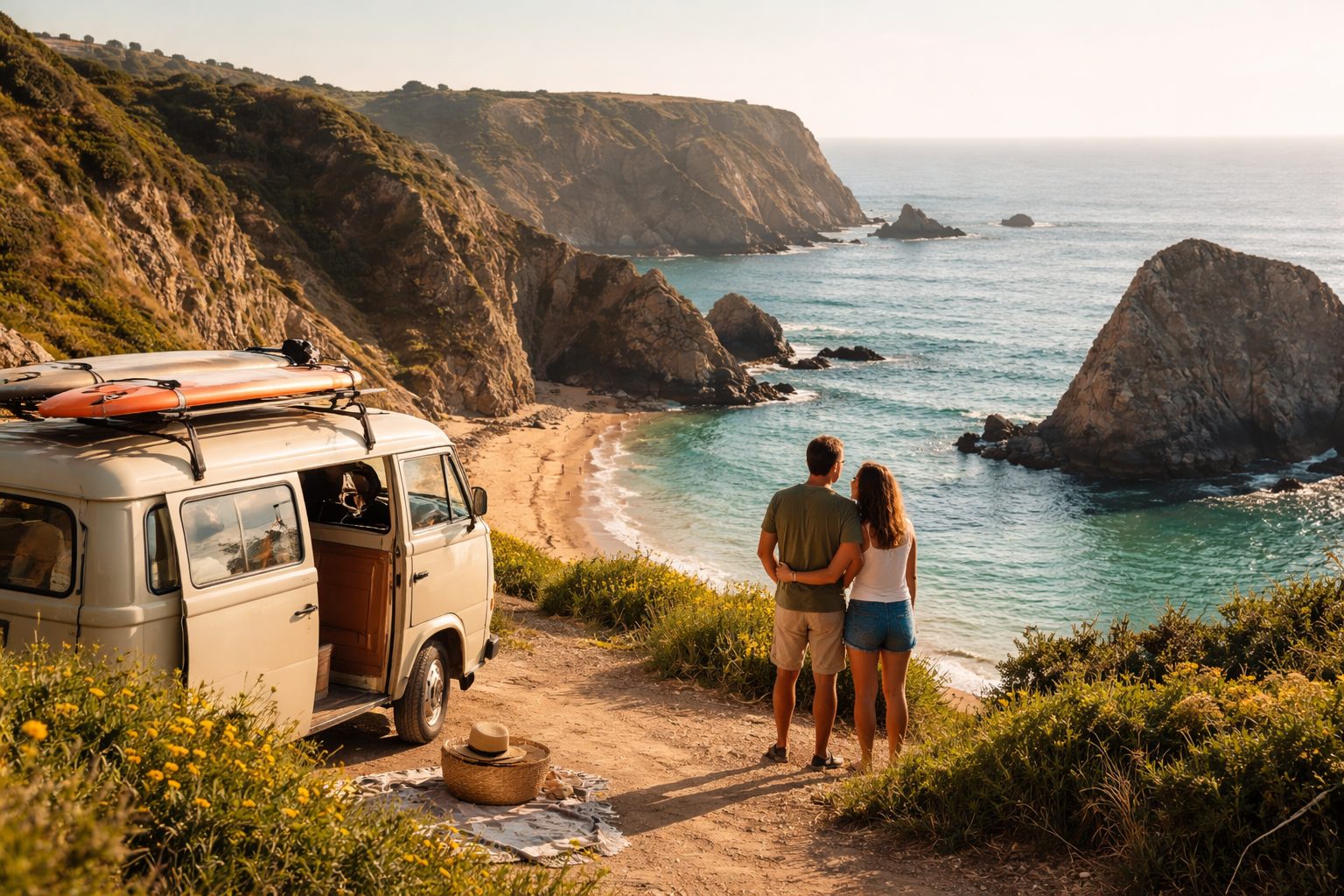
But there are real practical advantages too. Portugal is one of the most road-trip-friendly countries in Europe. The motorway network is modern and well-maintained. Distances between major cities are manageable, and the country is compact enough that you can cover a lot without the driving becoming exhausting.
Here’s why a portugal road trip makes sense:
- You can reach the Algarve coast, the Douro wine valley, and the western Atlantic surf beaches all in one trip
- Rural guesthouses and quintas (farmhouses) are often only reachable by car
- You control your schedule, so you can stay longer in places you love and skip the ones that don’t click
- Parking outside major cities is cheap or free
- Petrol costs are manageable compared to many western European countries
The country also punches above its weight for scenery. Cliffs at Cabo de Roca, river gorges in the Serra da Estrela, cork forests in the Alentejo, vineyard terraces in the Douro. All of it accessible if you have wheels.
Best Times to Visit Portugal for a Road Trip
Timing matters, and the ideal window depends on what kind of driving experience you want.
Spring (April and May) is probably the best overall time. Temperatures are mild across the country, wildflowers cover the hillsides, and the main tourist areas haven’t hit their summer peak yet. Driving in spring feels effortless. You’ll find parking easily, accommodation is more available, and prices are noticeably lower.
Summer (June through August) is peak season, especially in the Algarve. The weather is hot and reliably sunny, which is great for beaches. But coastal roads get congested, small towns fill up, and accommodation books out weeks in advance. If you’re doing a portugal road trip in summer, book everything ahead and plan to drive early in the morning or after dinner when traffic thins.
Autumn (September and October) is my personal preference. The heat drops to a comfortable level, the light turns golden in the afternoons, and the wine harvest is underway in the Douro. Fewer tourists and better prices without sacrificing good weather.
Winter (November through February) is quiet and can be beautifully dramatic on the Atlantic coast. The Algarve stays mild. But the north gets cold and wet, some rural places close, and the days are short. Worth it if you want solitude and a rawer experience.
| Season | Weather | Crowds | Prices | Best For |
|---|---|---|---|---|
| Spring | Mild, 15-22°C | Low to medium | Moderate | Scenery, flowers, cities |
| Summer | Hot, 25-35°C | High | Peak | Beaches, festivals |
| Autumn | Warm, 18-26°C | Low | Moderate | Wine harvest, hiking |
| Winter | Cool to mild, 8-16°C | Very low | Cheapest | Quiet travel, Algarve |
Essential Tips for Planning Your Portugal Road Trip
Good planning saves money and reduces stress. That said, you don’t need to script every day. Portugal is easy to navigate and you’ll find accommodation in most towns with little notice, outside of high summer.
Choosing the Right Vehicle for Your Trip
For most routes, a standard compact car is perfectly fine. Portugal’s main roads and motorways are well-maintained, and you don’t need a 4WD unless you’re heading into the remote interior or planning to drive mountain tracks in the Peneda-Gerês national park.
A few things to consider when choosing your rental:
- Manual vs automatic: rentals in Portugal skew towards manual. If you’re more comfortable with automatic, book in advance as availability is limited
- Fuel type: petrol and diesel are widely available. Electric car infrastructure is improving but still sparse in rural areas
- Size: a smaller car handles the narrow streets in historic town centers much better than an SUV
- Insurance: always take the full collision damage waiver and check whether your credit card provides additional coverage
If you’re travelling as a couple or solo, a small hatchback is ideal. For families or groups with lots of luggage, go one size up to an estate or compact SUV.
Understanding Portugal’s Road Rules and Regulations
Portugal drives on the right. The rules are similar to most EU countries, but there are a few things worth knowing:
- Speed limits: 50 km/h in towns, 90 km/h on national roads, 120 km/h on motorways
- Tolls: most motorways charge tolls. Many use electronic collection (no cash lanes), so you’ll need a Via Verde transponder or a pre-registered rental with toll coverage included
- Alcohol limit: 0.5 g/L blood alcohol (lower than the UK but in line with most of Europe)
- Headlights: not legally required during the day, but recommended
- Mobile phones: illegal to use while driving without hands-free
Portugal has speed cameras, both fixed and mobile. They’re not particularly hidden, but they’re consistent. Don’t expect warnings to always come in advance.
Roundabouts give way to traffic already on the roundabout, which is standard EU practice. In older towns you’ll sometimes encounter one-way systems that aren’t well-signposted, so keep your navigation app running.
Packing Essentials for Your Road Trip
You don’t need to overpack, but a few items make the trip considerably easier: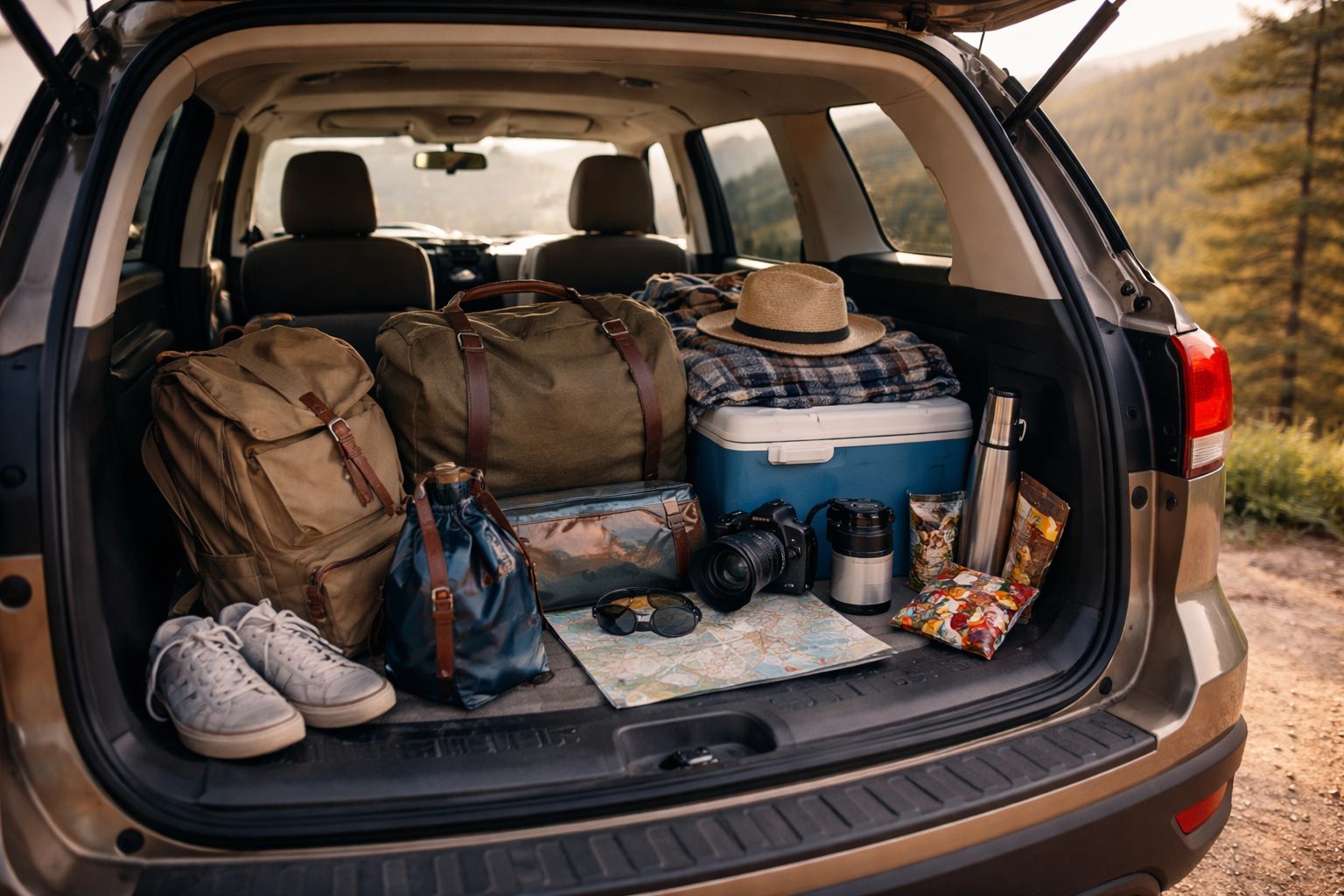
- Offline maps: download Google Maps or Maps.me offline packs before you go. Mobile data can be patchy in rural areas
- Reusable water bottle: summers are hot and you’ll get through a lot of water
- Car charger: keep your phone topped up for navigation
- Small day bag: for walking in cities while you leave luggage in the car
- Sunglasses: the light in southern Portugal in summer is intense
- European travel adapter: useful if you’re from outside the EU
- Copies of your documents: keep photos of your passport, driving licence, and rental agreement on your phone
For the Algarve and summer travel, pack sun cream with a high SPF. The Atlantic breeze can fool you into thinking it’s cooler than it actually is.
Must-Visit Destinations on Your Portugal Road Trip
Portugal is dense with great destinations. These are the ones that genuinely deserve time on any road trip through the country.
Exploring Lisbon: A City of Seven Hills
Lisbon is the natural start or end point for most trips. It’s well-connected by motorway to the rest of the country, and the city itself is compact enough to explore on foot once you’ve parked.
I’d suggest basing yourself in a neighbourhood away from the historic centre, somewhere like Beato, Mouraria, or Campo de Ourique, where parking is more manageable and you get a more local feel. The touristy parts are worth visiting: Alfama, Belém, and the viewpoints (miradouros) are genuinely impressive. But the neighbourhoods are where the city actually lives.
Key things to see in Lisbon:
- Alfama: the old Moorish quarter, steep and atmospheric
- Belém Tower and the Jerónimos Monastery: UNESCO World Heritage and genuinely worth seeing
- The tram 28 route (go early to avoid the queues)
- Pastéis de Belém for the original custard tarts
- The LX Factory market on Sunday afternoons
Give Lisbon at least two days. One is never enough.
The Beauty of Sintra: Palaces and Nature
Sintra sits about 30 kilometres west of Lisbon, in the forested hills of the Serra de Sintra. It’s easy to reach by car and unmissable.
The main attraction is the cluster of palaces and castles built into the hillsides. The Palácio Nacional da Pena is the most famous, a 19th-century Romantic palace painted in vivid yellow and red that sits above the clouds on misty mornings. The Palácio da Regaleira is smaller but weirder and more interesting, with underground tunnels, a mysterious initiation well, and dense woodland gardens.
Sintra gets crowded. Go midweek if you can, arrive early, and book tickets online. The town itself is charming but very tourist-focused. The real pleasure is the landscape around it, the winding forested roads, the Atlantic views from the cliffs at Cabo da Roca (the westernmost point of mainland Europe), and the quieter beaches nearby at Praia das Maçãs.
Cascais: Beaches and Coastal Scenery
Cascais is about 10 kilometres south of Sintra along the coast road. It used to be a fishing village, became a resort town for the Lisbon aristocracy in the 19th century, and is now a busy but genuinely pleasant coastal town.
The beaches around Cascais are good without being exceptional. The real draw is the combination of easy resort living, good restaurants, a pretty old town, and the wild Atlantic scenery at Cabo da Roca and the Boca do Inferno (a dramatic coastal blowhole just outside town).
The Estrada Marginal between Cascais and Lisbon hugs the Tagus estuary and then the coast. It’s a lovely drive in either direction, particularly in the late afternoon when the light falls across the water.
Porto: Wine, Culture, and Historic Charm
Porto is the second city and, for many travellers, the one they love more. It’s smaller than Lisbon, more intimate, and built around the Douro river in a way that gives it a constantly changing perspective.
The Ribeira district along the waterfront is the obvious starting point: colourful facades, tascas serving grilled fish and bifanas, wine lodges across the river in Vila Nova de Gaia. But Porto rewards walking uphill as well. The Cedofeita neighbourhood has good independent shops and cafés, and the Livraria Lello is worth seeing even if you don’t buy a book.
Port wine is the obvious thing to try, and the lodges in Gaia offer free or cheap tastings with cellar tours. But Porto’s table wines from the Douro valley are increasingly excellent and much less well-known. Ask for a vinho verde from the Minho or a red from the Douro and you’ll drink very well.
The Algarve: Stunning Beaches and Coastal Towns
The Algarve is Portugal’s most famous region and there’s a reason for that. The coastline between Faro and Lagos is genuinely spectacular, with limestone sea stacks, golden cliffs, hidden cove beaches accessible only by boat or on foot, and long stretches of wide sandy beach.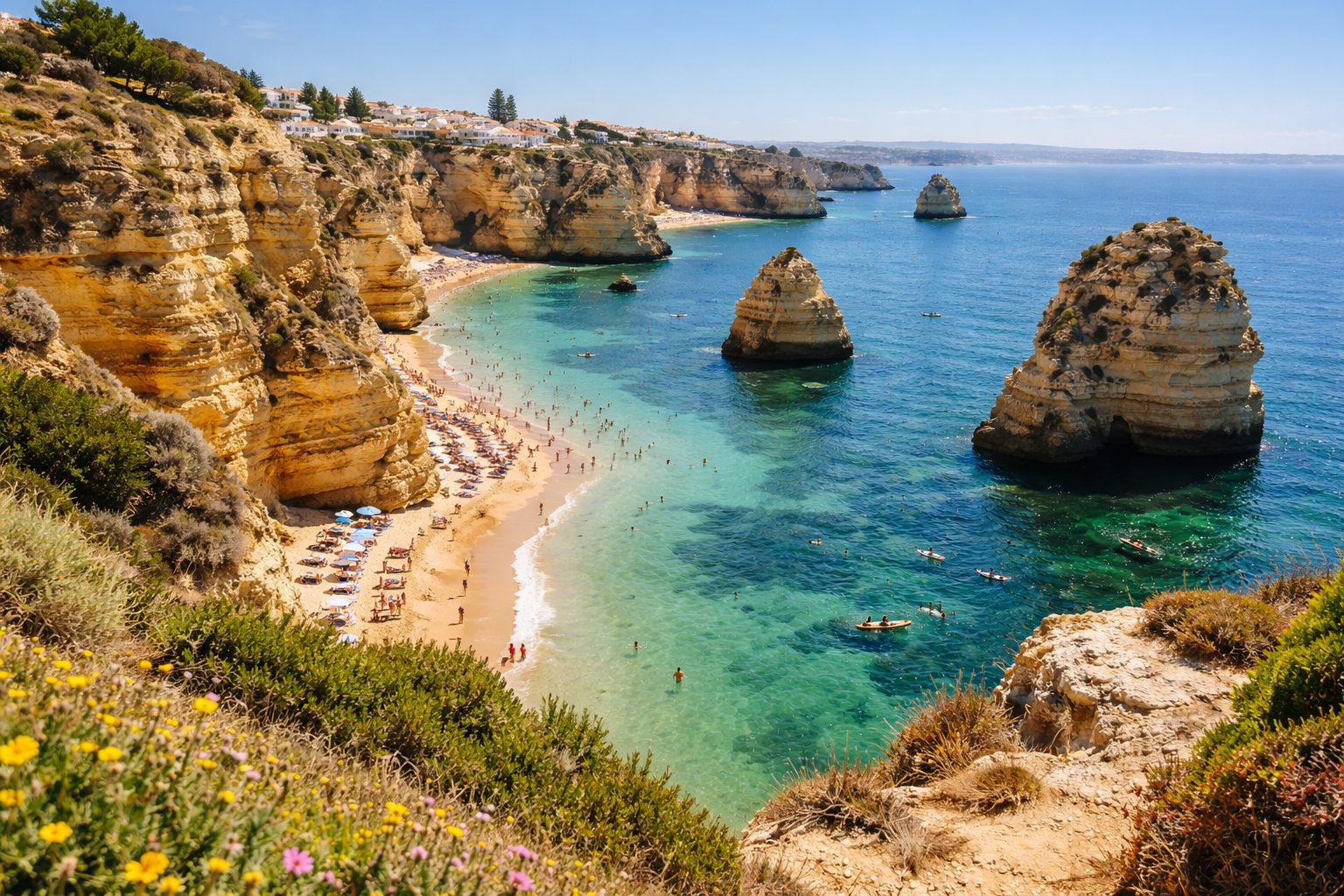
The western Algarve around Lagos and Sagres is wilder and more dramatic. The eastern Algarve towards the Spanish border is flatter, with long barrier island beaches that stretch into the distance. The central strip between Albufeira and Vilamoura is the most developed and honestly worth avoiding if you’re after character.
Towns worth stopping in:
- Lagos: the best base on the western Algarve, great old town and excellent beaches nearby
- Tavira: a beautiful, slightly overlooked town on the eastern Algarve with a real Portuguese feel
- Sagres: bleak and wind-battered in the best possible way, the end of the world atmosphere is real
- Silves: the inland former Moorish capital with a well-preserved red sandstone castle
Drive the N125 rather than the motorway wherever you can. It takes longer but runs through the towns and gives you a proper sense of the region.
Road Trip Itineraries: Suggested Routes
Portugal works well as a one-week or two-week trip. Here are two practical itineraries, plus some suggestions if you want to go further off the main tourist trail.
A 7-Day Portugal Road Trip Itinerary
Seven days is enough to cover the main highlights without feeling rushed, as long as you keep the driving manageable.
- Day 1-2: Arrive in Lisbon. Explore the city, visit Belém, walk Alfama
- Day 3: Drive to Sintra (30 mins), visit the palaces, continue to Cascais for the night
- Day 4: Drive south to the Algarve (3 hours). Arrive in Lagos or the Sagres area
- Day 5: Explore the western Algarve coast, beaches and cliffs
- Day 6: Drive east along the Algarve, stop in Tavira, continue to Évora in the Alentejo (2 hours from Faro)
- Day 7: Spend the morning in Évora (a UNESCO World Heritage city with a Roman temple in the main square), then drive back to Lisbon for your flight (1.5 hours)
Total driving: roughly 700 km across the week. Comfortable and well-paced.
A 14-Day Adventure Through Portugal
Two weeks lets you add Porto and the Douro valley, which are genuinely among Portugal’s best experiences.
- Days 1-3: Lisbon, Sintra, Cascais
- Days 4-5: Drive north to Porto (3 hours). Explore the city
- Day 6: Drive into the Douro valley, stop at wine quintas, stay overnight in Pinhão or Peso da Régua
- Day 7: Continue east into the Douro Schist villages, or loop back towards Guimarães and Braga (excellent medieval towns in the Minho)
- Day 8: Head south back through the interior, stop in Serra da Estrela (Portugal’s highest mountains, worth a night)
- Days 9-10: Alentejo: Évora, Monsaraz, the cork and olive plains. Slow and genuinely beautiful
- Days 11-13: Algarve coast from east to west
- Day 14: Drive back to Lisbon
Total driving: roughly 1,600 km. That’s very manageable over two weeks.
Off the Beaten Path: Hidden Gems of Portugal
If you’ve already done the main circuit, or you just want a different kind of portugal road trip, these areas are worth exploring:
- Peneda-Gerês: Portugal’s only national park, in the far northwest. Granite mountains, waterfalls, wild horses and almost no international tourists
- Trás-os-Montes: the remote northeastern interior. Medieval villages, outstanding local food, and a landscape that feels unchanged for centuries
- Serra de São Mamede: a natural park in the northeastern Alentejo near the Spanish border, with hilltop fortified towns like Marvão and Castelo de Vide
- Costa Vicentina: the wild Atlantic coast north of Sagres, part of a protected natural park. Huge empty beaches, good surf, no resort development
- Beira Interior: the villages and castles in the mountain region east of the Serra da Estrela, mostly unknown and quietly spectacular
These areas require more planning and a higher tolerance for slower roads and fewer tourist amenities. But they’re where Portugal’s real character lives.
Budgeting Your Portugal Road Trip
Portugal is among the most affordable destinations in western Europe. That doesn’t mean it’s as cheap as it was a few years ago, prices have risen significantly, but it remains good value compared to France, Spain, or Italy.
Accommodation Options: From Hostels to Luxury Stays
Portugal has a wide range of accommodation types. Here’s a rough breakdown: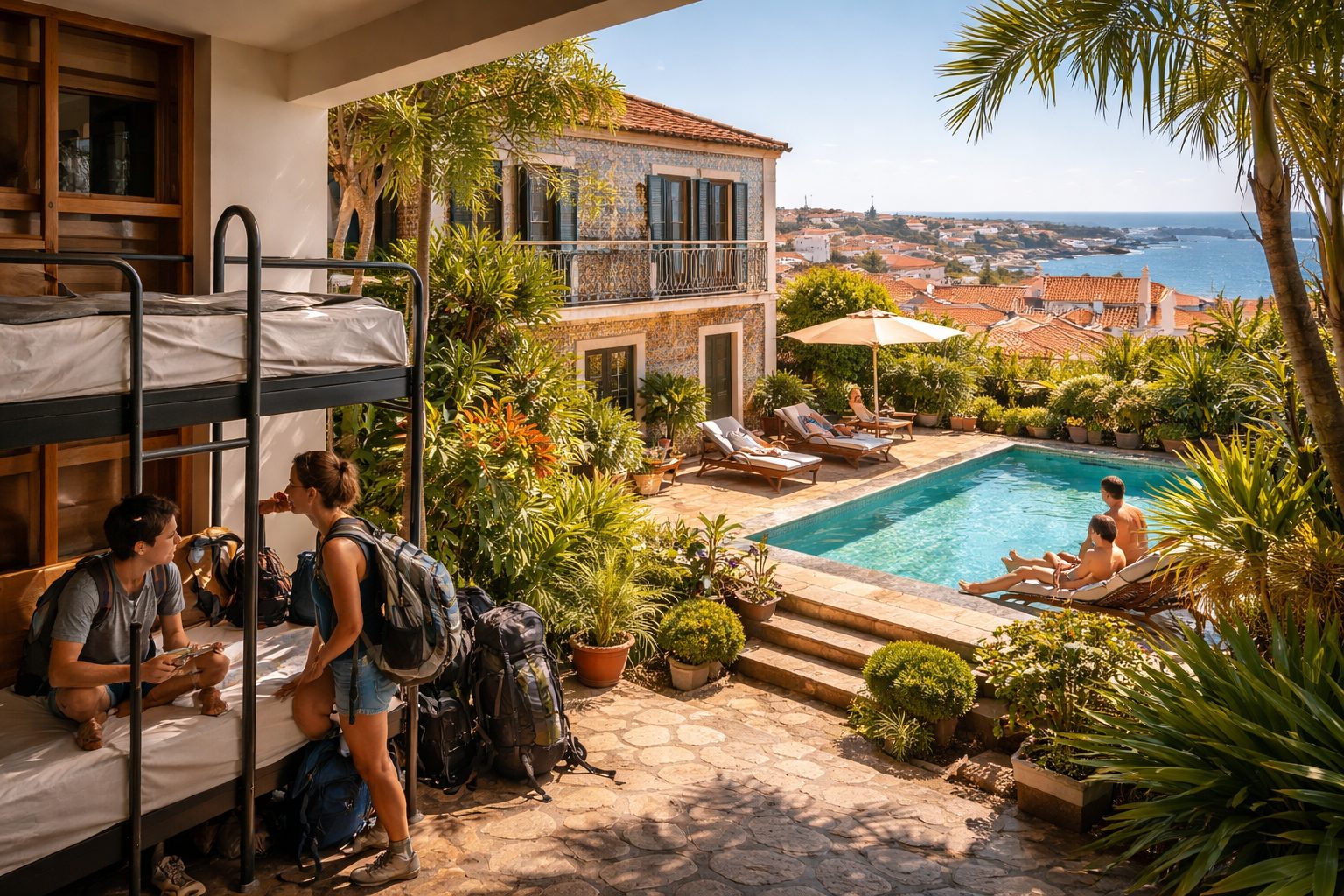
- Hostels: from €15-25 per night in dorms, €40-60 for private rooms in Lisbon and Porto
- Guesthouses (pensões): typically €50-80 per night for a double room, often including breakfast
- Boutique hotels: €80-150 in most cities, more in peak season
- Quintas (rural farmhouses): €70-120 per night, often excellent value with large grounds and breakfast included
- Pousadas: state-run hotels in converted castles and monasteries. Expensive (€120-200+) but exceptional settings
- Airbnb and short-term rentals: a mixed bag in cities, better value in smaller towns
Outside of Lisbon, Porto, and the Algarve in July-August, you can often find good places without booking too far in advance. In those areas and at peak times, book at least two to three weeks ahead.
Dining and Food Experiences on the Road
Eating well in Portugal is not difficult and it doesn’t cost much. The tascas, simple local restaurants, serve lunches (almoços) that often include a starter, main, bread, wine, and coffee for €8-12 per person. These are the best value meals in the country.
Things to eat:
- Bacalhau (salt cod): Portugal’s national obsession, said to have 365 recipes. Bacalhau à Brás (shredded salt cod with eggs, onion and chips) is a good starting point
- Grilled fish (peixe grelhado): fresh sardines, sea bream, or sea bass, simply cooked
- Bifana: pork steak sandwich, better than it sounds
- Caldo verde: kale soup, a staple in the north
- Pastéis de nata: custard tarts, eat them warm
- Ameijoas à Bulhão Pato: clams cooked with garlic, olive oil, and coriander
Avoid restaurants with laminated picture menus near major tourist attractions. Walk one or two streets back and you’ll find better food for half the price.
Fuel and Tolls: What to Expect
Fuel prices in Portugal are broadly in line with the European average, slightly higher than the European average but lower than the UK or Scandinavia. Fill up at supermarket petrol stations (Pingo Doce, Continente, Intermarché) where prices are consistently lower than branded forecourts.
Tolls are the main variable cost. The SCUT (free) motorways that used to exist in the interior are now mostly tolled. For a full two-week trip covering around 1,500-1,600 km, budget €40-70 for tolls depending on your route. The Lisbon-Algarve motorway (A2) is the most expensive stretch.
Your options for managing tolls:
- Ask your rental company to include toll coverage in your package (often worth paying for)
- Rent a Via Verde transponder from the rental company for around €1-2 per day plus actual toll costs
- Book a rental that includes EASYToll or similar pre-registered toll service
If you drive through a toll without paying, fines are issued to the rental company, which then charges your card with an additional administration fee. Avoid this by sorting out toll coverage before you drive off the lot.
Safety Tips for Driving in Portugal
Portugal is a safe country to drive in. The roads are generally good, drivers are predictable, and serious crime targeting tourists in rental cars is rare.
A few practical safety points:
- Don’t leave valuables visible in a parked car. Break-ins targeting rental cars do happen in Lisbon, Porto, and some Algarve coastal areas. Put bags in the boot before you arrive at your destination, not after
- On mountain roads (Serra da Estrela, Serra de Monchique), take your time. They’re well-maintained but narrow and winding, with occasional patches of poor visibility
- In summer heat, carry water in the car. If you’re driving through the Alentejo interior in July or August, fill up more often than you think you need to
- Night driving in rural areas requires extra attention. Stray animals (dogs, sheep, and even wild boar in the north) can appear on unlit roads
- Parking in Lisbon: use designated car parks in the city centre. Street parking in Lisbon is genuinely confusing and the fine system is efficient
The emergency number in Portugal is 112, which connects to police, fire, and ambulance. If you break down on a motorway, use the orange SOS phones placed every 2 kilometres.
Frequently Asked Questions About a Portugal Road Trip
What are the best scenic drives in Portugal?
The N2 national road from Chaves in the north to Faro in the south is often cited as one of Europe’s great road trip routes, covering over 700 km of varied Portuguese landscape without touching a motorway. The Douro valley road along the river between Régua and Pinhão is spectacular in autumn. And the coastal route along the Costa Vicentina between Sines and Sagres is wild and largely undeveloped.
How to navigate Portugal’s toll roads?
Most Portuguese motorways use electronic toll collection. The easiest solution is to ask your rental company to include a Via Verde transponder or a pre-paid toll package. Without this, you’ll need to use the toll payment stations at service areas or risk fines. The Easytoll and PayToll services also allow you to register your rental car plate online before driving.
Is it safe to drive in Portugal at night?
Generally yes, though rural driving after dark requires more caution due to unlit roads and occasional animals. In cities, be aware that parking and navigation can be trickier at night. The main safety concern on night drives is wildlife on rural roads, especially in the north and Alentejo.
What are the must-try local foods during the trip?
Don’t leave Portugal without eating a proper bacalhau dish, freshly grilled sardines (especially between June and September), ameijoas (clams), a bifana sandwich, and a warm pastel de nata. In the north, try caldo verde, rojões (braised pork), and a glass of vinho verde. In the Alentejo, the migas (bread and pork stew) and Alentejo-style pork with clams (carne de porco à alentejana) are outstanding.
How can I find parking in major cities?
In Lisbon and Porto, use underground car parks (parques de estacionamento) in the city centre. They’re clearly signposted and cost around €1.50-2.50 per hour. Free street parking exists but is increasingly rare in central areas. Apps like Parclick or Parking Portugal help you find and pre-book spaces. In smaller cities and towns, parking is generally free and plentiful outside the historic centre.
A portugal road trip is one of those trips that tends to exceed expectations. The country is easy to navigate, the people are genuinely warm, and the combination of coast, city, history, and food is hard to match anywhere else in Europe. Plan the broad strokes, leave room for detours, and you’ll come back with a completely different sense of what Portugal actually is.