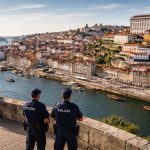
Portugal is one of those places that quietly gets under your skin. I’ve traveled widely across Europe, and few countries match Portugal’s ability to deliver authenticity, natural beauty, and cultural depth without the overwhelming crowds or inflated prices you’d expect. If you’re trying to figure out the best things to do in Portugal, you’ve landed in the right place. This guide covers everything from medieval castles and wild Atlantic surf to fado music and slow wine country drives. Whether this is your first trip or your fifth, there’s always something new waiting here.
Overview of Portugal’s Attractions
Brief Introduction to Portugal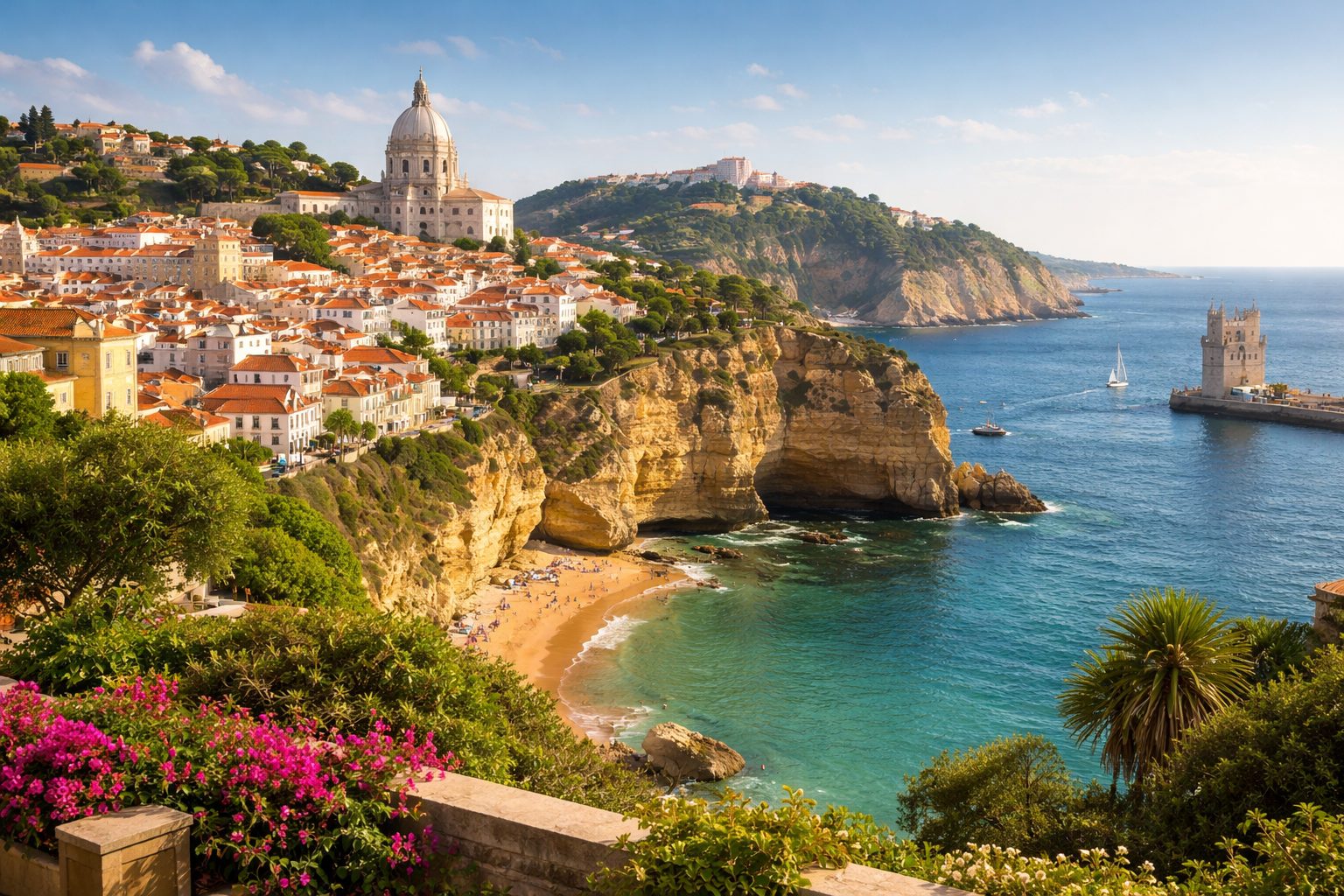
Portugal sits at the southwestern edge of Europe, bordered by Spain to the north and east and the Atlantic Ocean to the west and south. It’s a small country by geographic standards, but what it packs in is remarkable. You get dense cities shaped by centuries of maritime history, remote highlands where wolves still roam, subtropical islands in the middle of the ocean, and over 800 kilometers of coastline.
The country has been shaped by explorers, traders, Moorish rulers, and Roman engineers. You see that layering everywhere: in the blue-and-white azulejo tiles, in the Manueline architecture, in the Arabic-influenced city names, in the way people still gather for slow evening meals. Portugal doesn’t try to be something it isn’t, and that honesty is part of what makes it compelling.
Why Visit Portugal?
The honest answer is: because it rewards curiosity. Most visitors start in Lisbon or the Algarve and don’t go much further. But the country has so much more. The interior, the northern wine country, the islands, the Silver Coast, the Alentejo plains. All of it is accessible and relatively undervisited.
There are also practical reasons. Portugal is consistently one of Europe’s more affordable destinations. Transport is efficient. English is widely spoken, especially in cities. The food is genuinely excellent. And the climate across most of the country means you can visit in almost any season and have a good time.
A few more reasons to consider:
- Mild climate for most of the year, with over 300 days of sunshine in the south
- One of the safest countries in Europe for solo and family travelers
- Strong infrastructure for tourism without losing local character
- Rich culinary tradition built on seafood, wine, and honest ingredients
- Incredible variety in a compact geography
Popular Cities to Explore
Lisbon: The Vibrant Capital
Lisbon is where most people begin, and with good reason. The city sprawls across seven hills above the Tagus estuary, and walking it feels like a constant negotiation with gradient and cobblestone. The historic districts of Alfama, Mouraria, and Bairro Alto each have their own personality, and the viewpoints scattered across the city make you stop and reconsider the skyline every few blocks.
The tram network is iconic but genuinely useful. Tram 28 cuts through Alfama and up toward the hilltop castle, though it’s worth noting it’s often crowded. The yellow funiculars are more practical than people realize. On foot, you’ll cover more ground and make more discoveries.
Must-do experiences in Lisbon:
- Visit the Jerónimos Monastery in Belém, a masterpiece of Manueline architecture
- Walk along the Tagus waterfront in Belém toward the Tower of Belém
- Explore the Alfama district on foot in the early morning before crowds arrive
- Go to the Time Out Market for an overview of the best Portuguese dishes in one place
- Take the Elevador de Santa Justa up for a view across the Baixa district
- Visit the Museu Nacional do Azulejo to understand the tile tradition properly
Lisbon works best when you’re not rushing. The city rewards slow exploration, and the best meals I’ve had there were in places with handwritten menus on paper that change daily.
Porto: The City of Bridges
Porto sits farther north along the Douro River, and it has a rougher, more textured feel than Lisbon. The historic Ribeira waterfront is a UNESCO site, and the Douro fills quickly with rabelo boats traditionally used to transport wine barrels from the valley. The city is famous for its port wine cellars across the river in Vila Nova de Gaia, where you can taste directly from the barrel.
But Porto is more than port wine. The Livraria Lello bookshop, often cited as one of the most beautiful in the world, is worth visiting even if you have to queue. The São Bento train station is covered floor to ceiling with azulejo panels depicting Portuguese history. The Clérigos Tower gives you one of the best views in the country.
What makes Porto interesting is that it’s not trying to be a tourist city. It still works as a functioning, lived-in place. The Bonfim and Miragaia neighborhoods have a gritty authenticity. The food is heavier than in Lisbon, built around tripe, sandwiches like the francesinha, and bacalhau in forms that seem endless.
Faro: The Gateway to the Algarve
Faro is underrated. Most people fly into Faro airport and head straight to the resort towns of Albufeira or Lagos, overlooking the city itself. The old walled town, the Roman and Moorish layers visible in the architecture, the lagoon system of Ria Formosa just outside town. It’s worth spending at least a day here.
The Ria Formosa is a protected coastal lagoon that forms a natural barrier between the Atlantic and the mainland. You can take small ferries out to the barrier islands. The beaches there are quieter than the main Algarve coast and the water is calm and shallow on the lagoon side.
Faro is also a good base for day trips along the eastern Algarve, which is less developed and more rural than the western stretches.
Sintra: A Fairy-Tale Destination
Sintra is a short train ride from Lisbon and feels like it exists in a different century. The town sits in forested hills where Portuguese royalty once retreated from the summer heat, and it’s dotted with palaces, follies, and aristocratic estates that range from Gothic to Romanticist in style.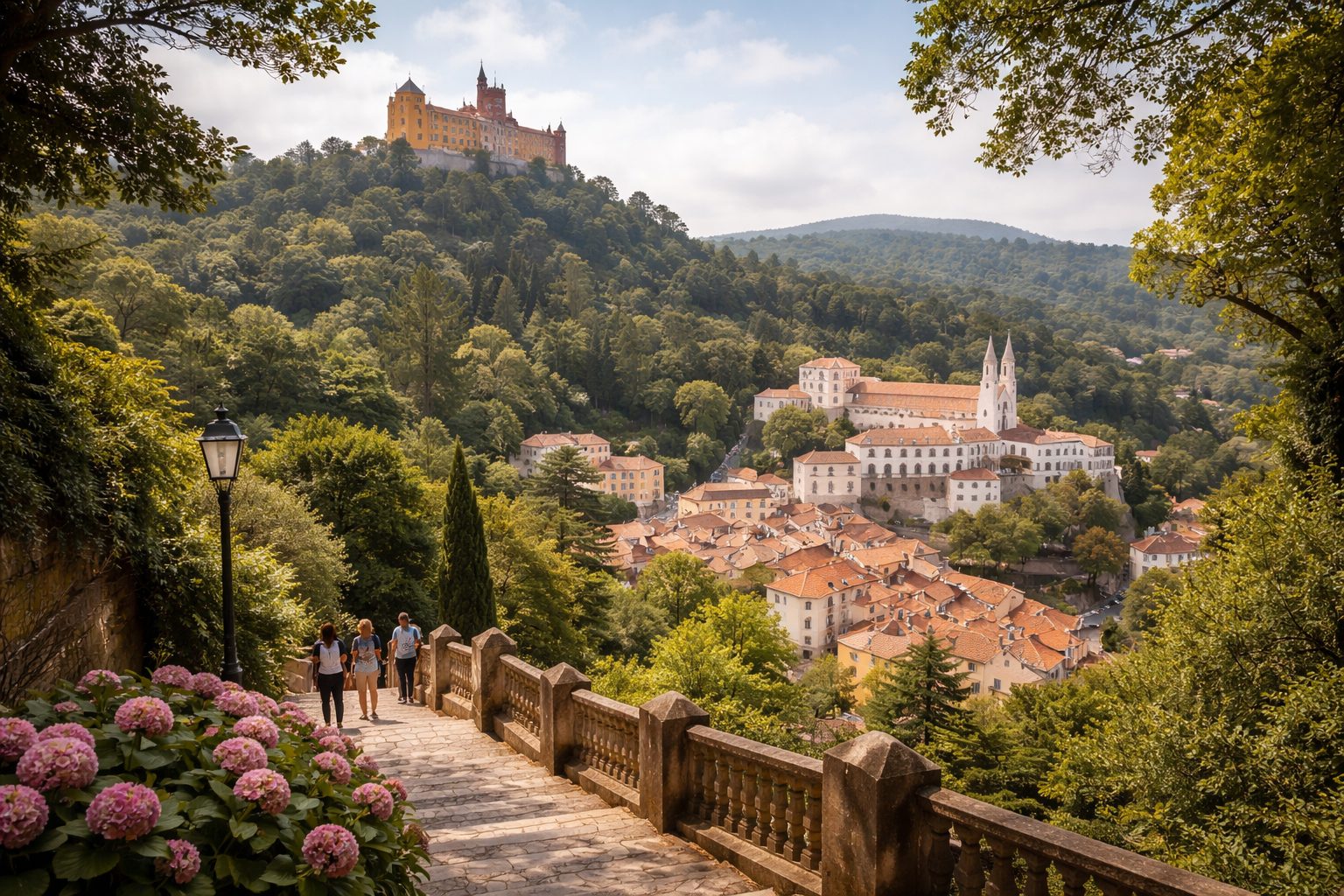
The Pena Palace is the most recognizable. It’s a riot of colors: yellow, red, blue, with turrets and drawbridges that seem deliberately theatrical. The Moorish Castle predates it by centuries and offers dramatic views. The Quinta da Regaleira is smaller but arguably more fascinating, with its underground initiation wells and esoteric symbolism scattered throughout the grounds.
Sintra gets crowded, especially in summer. Go early, book tickets in advance, and plan to stay for a full day. The town itself has good restaurants and is worth walking through after the palace visits.
Coimbra: The Historic University Town
Coimbra sits in the center of the country along the Mondego River and has been home to one of Europe’s oldest universities since the 13th century. The university complex on the hill dominates the city and includes the Baroque Joanina Library, one of the most ornate libraries I’ve ever seen. It’s home to a colony of bats that protect the ancient books from insects.
The student culture here gives Coimbra a different atmosphere than Lisbon or Porto. Students still wear traditional black capes, and the Coimbra style of fado is more melancholic and academic in character than the Lisbon version. The city is compact enough to explore in a day or two, but interesting enough that you might want to stay longer.
Natural Wonders and Landscapes
The Algarve Coastline
The Algarve is one of the things to do in portugal that needs no special introduction. It’s Europe’s most celebrated southern coastline, and the sea stacks, grottos, and golden limestone formations around Ponta da Piedade near Lagos rank among the most dramatic coastal scenery anywhere.
The western Algarve has wilder surf, especially around Sagres and the Vicentine Coast. The eastern Algarve is calmer, protected by dunes and the Ria Formosa lagoon system. Both halves have excellent seafood restaurants and infrastructure for visitors.
Best spots along the Algarve:
- Praia da Marinha for dramatic rock formations and clear water
- Ponta da Piedade for grottos accessible by kayak or boat tour
- Sagres for end-of-the-world atmosphere and surf culture
- Meia Praia near Lagos for a long, quieter beach with good facilities
- Ilha Deserta in Ria Formosa for isolation and wildlife
Douro Valley: Wine and Scenery
The Douro Valley is where port wine was born, and the landscape it’s produced is one of the most striking in Europe. Terraced vineyards climb steep schist hillsides above the river in patterns that required centuries of human labor to build and maintain. The valley was designated a UNESCO World Heritage Site in 2001.
The train journey from Porto to the Douro is itself worth taking for the views. The line tracks the river through a series of tunnels and bridges before the valley opens up. Many quintas (wine estates) offer visits, tastings, and accommodation. Staying overnight means you see the valley in the evening light, which is something else entirely.
It’s best explored between September and November when harvests are happening and the vineyards are turning red and gold.
Azores: An Untouched Paradise
The Azores are nine volcanic islands in the middle of the Atlantic, roughly 1,500 kilometers west of Lisbon. They’re Portuguese territory and feel like a different planet. The islands are green, dramatic, and built around volcanic calderas, crater lakes, and geothermal springs. São Miguel is the largest and most visited. Pico has its eponymous volcano, the highest peak in Portugal.
The Azores are not a beach destination in the traditional sense. They’re for people who want to hike, whale-watch, dive among manta rays, soak in natural hot springs, and experience landscapes that feel genuinely untouched. Infrastructure has improved in recent years without losing the raw character that makes the islands worth visiting.
Madeira: The Island of Eternal Spring
Madeira sits in the Atlantic closer to the coast of Africa than to mainland Portugal and has a climate that justifies its nickname. It’s warm and green year-round. The island is mountainous and covered in laurel forest, a relic ecosystem that predates the last ice age.
The levadas are Madeira’s signature experience: irrigation channels built over centuries that now serve as hiking paths across the island. They traverse some extraordinary terrain, passing through tunnels, along cliff faces, and through the heart of the laurel forest. The Levada do Caldeirão Verde and the Levada das 25 Fontes are two of the most popular routes.
Funchal, the island capital, has a good food scene, the famous cable car ride to Monte, and the market hall known for its tropical fruit and flower displays. And yes, Madeira wine is worth drinking properly here.
Cultural Experiences
Traditional Portuguese Cuisine
Portuguese food is built on a few honest principles: good ingredients, simple preparation, and portion sizes that suggest someone expected you to be hungry. Bacalhau, the salt cod, is the cornerstone. There are supposedly over 365 recipes, one for each day of the year. Whether that’s true or not, you’ll encounter it everywhere in forms ranging from bacalhau à Brás (shredded with eggs and potatoes) to grilled fillets with olive oil.
Other things to eat:
- Pastel de nata: the custard tart that started in Belém. The original from the Pastéis de Belém shop is still the reference point.
- Piri-piri chicken: a Portuguese-African legacy from Mozambique and Angola
- Caldo verde: a simple soup of potato, kale, and chouriço that’s deeply comforting
- Arroz de marisco: seafood rice, loose and brothy, loaded with clams, prawns, and crab
- Leitão: roasted suckling pig, especially celebrated in the Bairrada region
- Queijo Serra da Estrela: a soft, runny sheep’s milk cheese from the mountain region
Wine deserves its own paragraph. Vinho verde from the Minho region is light and slightly fizzy, perfect for summer. The reds from the Alentejo are full-bodied and internationally recognized. And beyond the Douro’s port wine, there are excellent dry table wines coming from the same region that remain underappreciated outside Portugal.
Fado Music: The Soul of Portugal
Fado is hard to explain and easier to experience. It’s a vocal music tradition centered on saudade, a Portuguese word for a particular kind of longing or melancholy that has no perfect English equivalent. The music is traditionally performed by a single singer accompanied by the Portuguese guitarra and a viola baixo.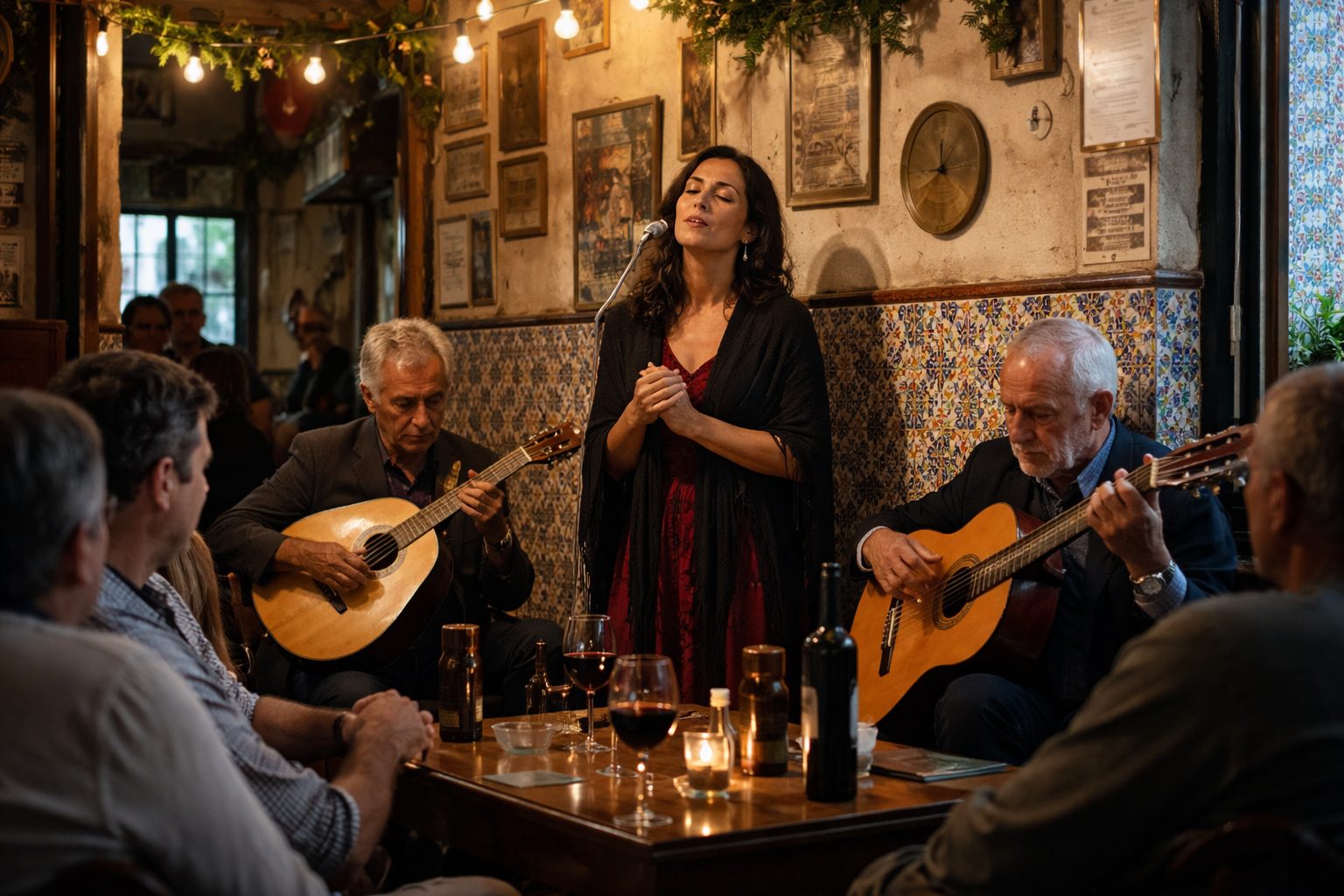
In Lisbon, the Alfama neighborhood is the historical home of fado. There are dedicated fado houses, called casas de fado, where dinner and performance are combined. Quality varies enormously. The better establishments have professional musicians and singers, and the experience in a small, candlelit room with a good fadista performing is genuinely moving.
Coimbra fado is distinct in character. It’s traditionally sung by men, often students or former students of the university, and the repertoire has a more literary, introspective quality.
Festivals and Events Throughout the Year
Portugal’s festival calendar is dense and varies by region:
- Carnaval (February/March): Best celebrated in Torres Vedras and Loule
- Queima das Fitas (May): Coimbra’s student ribbon-burning festival, chaotic and fun
- Festa de Santo António (June 12-13): Lisbon’s most important festival, centering on the Alfama district with sardines, music, and crowds
- NOS Alive (July): One of Europe’s better music festivals, held outside Lisbon
- Festa de São João (June 23-24): Porto’s main festival, involving plastic hammers, leeks, and street fires
- Vendima (September): Harvest festivals across the Douro and Alentejo
The Santos Populares season in June transforms Lisbon’s old neighborhoods into street parties that run through the night. Tables of sardines, local wine, and fado drifting from windows. It’s one of those experiences that reminds you why street festivals still matter.
Historical Sites and Landmarks
UNESCO World Heritage Sites in Portugal
Portugal has a strong collection of UNESCO-listed sites, and visiting several of them gives you a cross-section of the country’s history:
| Site | Location | Listed Since |
|---|---|---|
| Jerónimos Monastery & Tower of Belém | Lisbon | 1983 |
| Sintra Cultural Landscape | Sintra | 1995 |
| Historic Centre of Porto | Porto | 1996 |
| Douro Valley Wine Region | Northern Portugal | 2001 |
| Convent of Christ, Tomar | Tomar | 1983 |
| Historic Centre of Guimarães | Guimarães | 2001 |
| Pico Island Vineyard Culture | Azores | 2004 |
| Prehistoric Rock Art, Foz Côa | Upper Douro | 1998 |
The Prehistoric Rock Art site in Foz Côa is one of the less-visited UNESCO sites and one of the most extraordinary: thousands of engraved figures of horses, aurochs, and humans on the schist walls of the Côa Valley, dating back 20,000 to 30,000 years.
Exploring the Castles and Fortresses
Portugal is covered in castles. The Moors, the Romans, and the medieval Portuguese kings all left fortifications, and many have survived in decent condition. A few stand out:
- Castelo de São Jorge in Lisbon: perched above Alfama with sweeping views over the city
- Castelo dos Mouros in Sintra: a ruined Moorish fortification with panoramic forest views
- Castelo de Almourol: a Templar castle on a small island in the Tagus River, photogenic and isolating
- Óbidos Castle: a complete medieval walled town in the Estremadura region
- Castelo de Guimarães: considered the birthplace of the Portuguese nation
Óbidos deserves special mention. The entire town is enclosed within its medieval walls, and walking the ramparts gives you views over the whitewashed rooftops and the surrounding countryside. The town also has a local ginjinha served in a chocolate cup that you should not skip.
Notable Churches and Cathedrals
Portugal’s religious architecture tells the story of its political and colonial history in stone and gold. The Baroque period in particular left behind some extraordinary interiors:
- Mosteiro de Jerónimos (Lisbon): Manueline Gothic at its highest point, with intricate carved limestone that seems to dissolve the boundaries between architecture and sculpture
- Sé de Lisboa: Lisbon’s Romanesque cathedral, plain on the outside but with Gothic cloisters
- Igreja de São Francisco (Porto): A Gothic exterior hiding a Baroque interior covered in gilded carved wood, one of the most overwhelming rooms in Portugal
- Basílica de Fátima: A 20th-century religious complex of significant pilgrimage importance, interesting architecturally if you’re familiar with the story
The Igreja de São Francisco in Porto took me by surprise. I went in expecting a modest church and walked into a cave of gilded woodwork that covers every surface from floor to ceiling. It’s excessive and spectacular in equal measure.
Outdoor Activities and Adventures
Hiking Trails in Portugal
Portugal has a growing network of marked long-distance trails. The Rota Vicentina is one of the finest coastal walking routes in Europe, running 450 kilometers along the Vicentine Coast and the Algarve coast from Santiago do Cacém to Lagos. The Fishermen’s Trail section runs along cliff tops and hidden beaches and is legitimately world-class.
Other notable hiking options:
- Serra da Estrela: Portugal’s highest mainland mountains, with granite landscapes and the source of the Mondego River
- Peneda-Gerês National Park: the only national park on the mainland, with waterfalls, granite formations, and wildlife including wolves and wild horses
- Levada trails in Madeira: already mentioned above, but worth emphasizing
- PR1 trail in São Miguel, Azores: traverses the Sete Cidades volcanic calderas
Most of these trails are well-marked and don’t require specialized equipment. A good pair of trail shoes and some rain preparation for the north and islands is usually sufficient.
Surfing in Ericeira and Nazaré
Portugal is one of Europe’s great surfing destinations. Ericeira, north of Lisbon, was the first surf reserve in Europe and has a compact collection of breaks that work at different swells. It’s a small fishing town that has adapted well to the surf culture without losing its character. Ribeira d’Ilhas is the main break and hosts World Surf League competitions.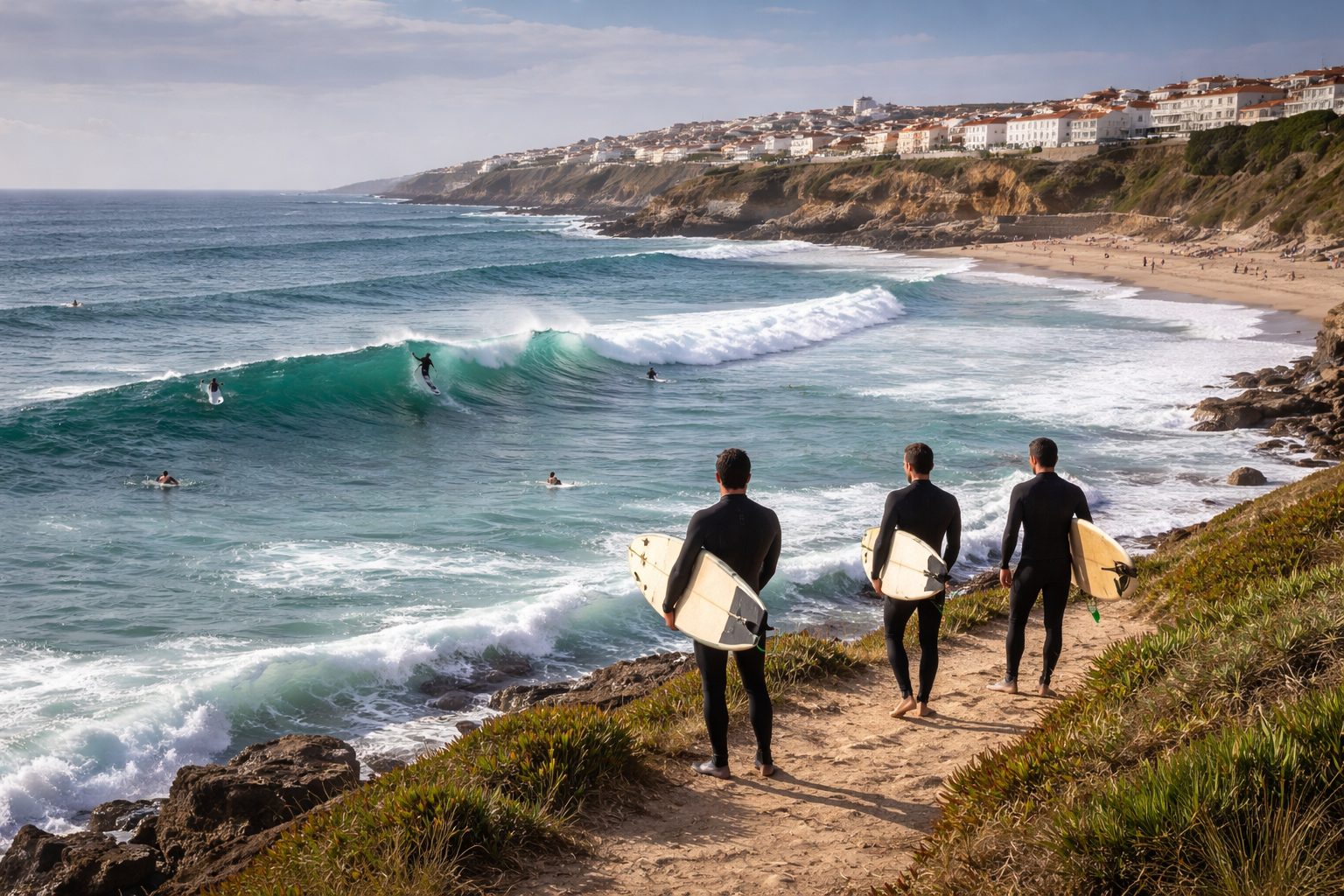
Nazaré is in a different category. The Praia do Norte there produces the biggest waves ever surfed, with records broken almost every winter season. The underwater Nazaré Canyon focuses ocean energy and creates waves that can exceed 20 meters. You don’t need to surf to come here in winter. Watching from the clifftop fort while professional surfers tackle those walls of water is remarkable.
For beginners, the Algarve has plenty of surf schools operating out of Lagos, Sagres, and Aljezur. The waves there are generally gentler and the water warmer.
Wine Tasting Tours in Douro Valley
The things to do in portugal wouldn’t be complete without spending proper time in the Douro Valley. The most direct approach is a guided tour from Porto, which includes transport along the valley, a winery visit, lunch, and a cruise back on the river. These are well-organized and genuinely informative.
More rewarding, if you have the time, is to stay in the valley for two or three nights. Many quintas offer accommodation, and the experience of waking up to terraced vineyards dropping toward the river in early morning mist is not something you forget quickly.
The harvest season from mid-September through October is the best time. Pickers are working, the air smells of fermenting grapes, and you can sometimes participate in the treading process at traditional wineries.
Practical Tips for Travelers
Best Time to Visit Portugal
The honest answer depends on where you’re going and what you want to do:
| Season | Mainland | Algarve | Azores | Madeira |
|---|---|---|---|---|
| Spring (Mar-May) | Excellent | Good | Good | Good |
| Summer (Jun-Aug) | Hot, crowded | Very hot, crowded | Warm, busy | Good |
| Autumn (Sep-Nov) | Excellent | Good | Good | Excellent |
| Winter (Dec-Feb) | Cool, quiet | Mild, quiet | Rain likely | Good |
Spring and autumn are the best times for mainland Portugal and the Algarve. You get decent weather, smaller crowds, and better prices. Madeira and the Azores are viable year-round, though the Azores gets significant rain in winter. Summer in the Algarve is beautiful but hot and crowded, especially August.
For the Douro Valley, September is near-perfect. For Lisbon city breaks, almost any time outside peak July-August works well.
Transportation Options in Portugal
Getting around Portugal is easier than many visitors expect. The main train corridors connect Lisbon, Porto, and Coimbra with fast, affordable trains. Comboios de Portugal runs the national rail service. For the Algarve, there’s a regional rail line that runs the length of the coast.
Bus networks fill the gaps that trains don’t reach. Rede Expressos and Flixbus cover most intercity routes.
For the Douro Valley, Serra da Estrela, and other inland areas, a rental car makes a significant difference. The road network is good, tolls are common but manageable, and parking in rural areas is straightforward.
Within Lisbon, the Metro is efficient and covers most points of interest. Porto has a Metro and tram system. In both cities, walking covers a surprising amount of ground once you have your bearings.
For the islands, you’ll need to fly or take ferries between the Azores islands. Within Madeira, a rental car or taxis work best given the mountainous terrain.
Safety Tips for Tourists
Portugal is one of the safest countries in Europe for tourists. The crime rate is low, and violent crime toward visitors is rare. That said, standard precautions apply:
- Pickpocketing occurs in Lisbon’s tourist areas, particularly on Tram 28, in Alfama, and at the Bairro Alto nightlife zone. Keep bags in front, use inside pockets for wallets and phones.
- Be cautious on poorly lit streets in Lisbon’s hill districts at night, not because of crime but because the uneven cobblestones and steep gradients are genuinely treacherous when wet.
- Water quality is high across Portugal. Tap water is safe to drink everywhere.
- Health insurance or a European Health Insurance Card covers EU citizens at public hospitals. Non-EU visitors should have travel insurance.
- The emergency number is 112, which works across Portugal including the islands.
The driving culture takes some adjustment. Portuguese drivers can be assertive on smaller roads. Roundabouts are frequent and follow European conventions. Speed cameras are common on national roads.
Frequently Asked Questions (FAQs)
What are the must-see places in Portugal?
For a first visit, Lisbon and Sintra together cover the highlights of the center and offer huge variety. Adding Porto, the Douro Valley, and either the Algarve or the Azores gives you a well-rounded picture of the country. If you only have a week, Lisbon plus the Algarve is the most practical combination.
How can I travel between cities in Portugal?
The train network connects Lisbon, Porto, and Coimbra efficiently and affordably. Intercity buses reach smaller towns. For the Algarve, a combination of train and local bus works well. Renting a car is the best option for the Douro Valley, Alentejo, and rural areas.
Is Portugal an affordable travel destination?
By Western European standards, yes. Accommodation, food, and transport cost noticeably less than in France, Germany, or the UK. A mid-range daily budget of 80 to 120 euros per person covers comfortable accommodation, meals, and entry fees. Eating at local restaurants rather than tourist-facing ones makes a significant difference.
What language is spoken in Portugal?
Portuguese is the official language. English is widely spoken in cities, hotels, and tourist areas, especially among younger people. In rural areas and with older residents, some basic Portuguese phrases go a long way and are generally appreciated.
What is the best way to experience Portuguese culture?
Slow down and eat local. Seek out a fado performance in a small casa de fado rather than a large tourist venue. Walk neighborhoods in the early morning before they fill up. Visit a local market. Take the train instead of flying between cities. The best things to do in portugal aren’t necessarily the famous attractions; they’re often the ones you stumble onto when you’re not rushing to the next scheduled stop.
Portugal rewards the traveler who’s willing to go a little off-script. The country has enough depth that you can return multiple times and keep finding new things. I’ve been back several times and still have a list. That’s the mark of a place worth knowing properly.