The turquoise coast turkey is one of the Mediterranean’s genuine treasures, a stretch of coastline in southwestern Turkey that combines extraordinary natural beauty with historical depth, world-class sailing, and a variety of towns and villages that each have their own distinct character. The name is not marketing invention: the water really is that shade of intense turquoise blue, particularly in the sheltered bays and coves that punctuate the coast between Bodrum in the north and Antalya in the east.
I’ve spent time along this coast in different ways and different seasons, from a gulet sailing trip through the bays near Fethiye to renting a car and driving the mountain roads above the sea toward Kas. Each approach reveals something different, and the more time you invest here, the more you understand why this stretch of water has attracted sailors, travelers, and eventually resort developers for centuries.
Overview of the Turquoise Coast
What is the Turquoise Coast?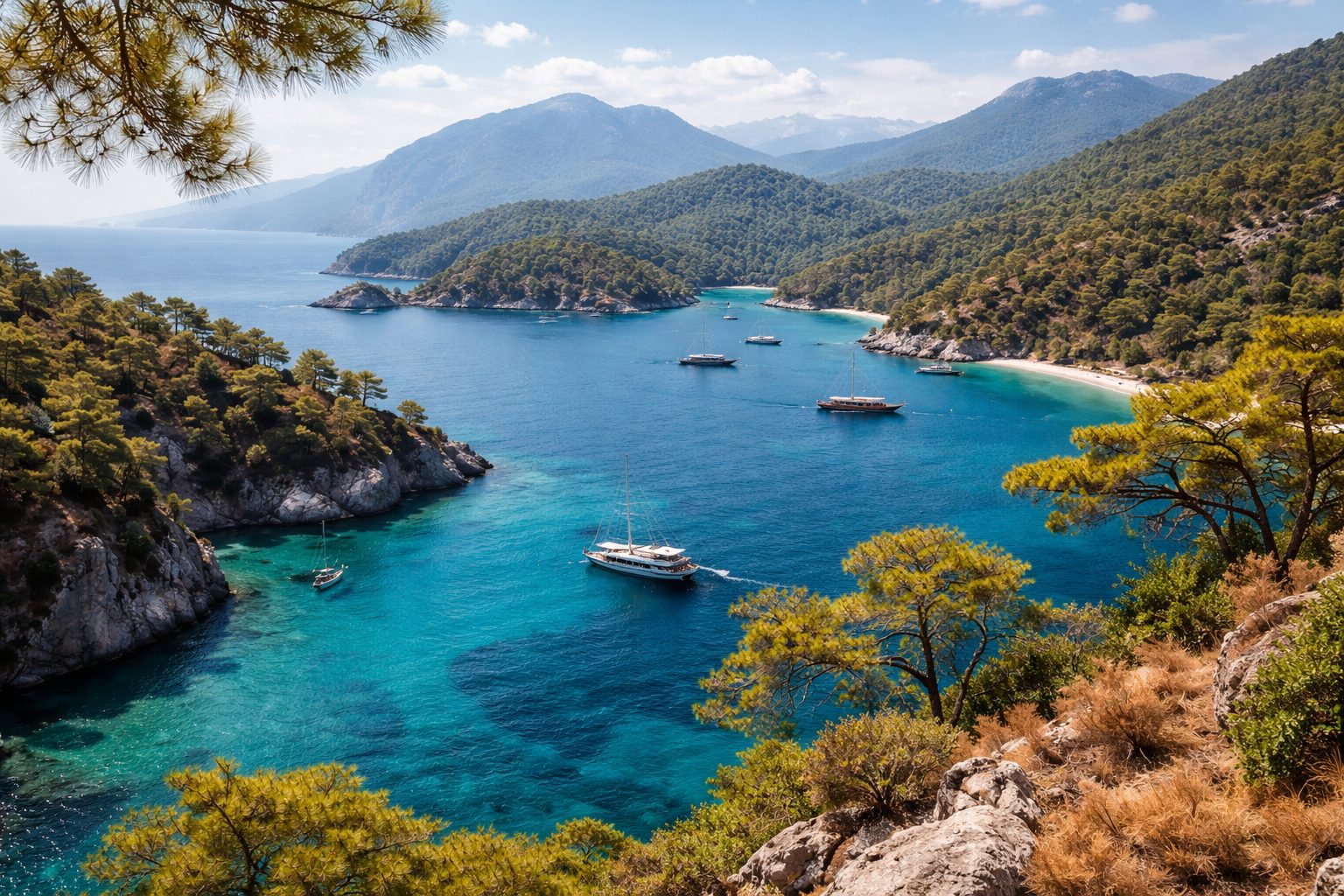
The turquoise coast turkey is also known as the “Blue Voyage” coast (Mavi Yolculuk), a name coined by Turkish author Cevat Şakir Kabaağaçlı (known as Halikarnas Balıkçısı) in the 1950s to describe gulet sailing trips along this shoreline. The “blue voyage” concept captures something real: this is a coast best experienced from the water, where hidden bays, ancient ruins visible from the sea, and the particular quality of light on the water combine into an experience that’s hard to replicate any other way.
Geographically, the turquoise coast turkey runs along the province of Muğla (including Bodrum, Marmaris, and Fethiye) and into Antalya province. The coastline is characterized by mountains rising sharply from the sea, creating the dramatic scenery that makes this different from flat, beach-focused coastal areas. The mountains are the ancient Lycian range, and the ruins of Lycian civilization, one of the ancient world’s more distinctive cultures, are scattered along the coast and inland.
The turquoise water itself is a product of geography: sheltered bays trap clear, clean water with good visibility, and the particular mineral and biological content produces the intense blue-green color that gives the coast its name.
Geographical Location and Climate
The Turquoise Coast runs roughly from Bodrum (latitude 37°N) east and south to Antalya. The entire stretch benefits from a classic Mediterranean climate: long, hot, dry summers with very reliable sunshine from May through October, and mild, wet winters from November through March.
Summer temperatures average 30-35°C at sea level from June through September, with the sea reaching 26-28°C. The combination of air and sea temperature makes this one of the most comfortable summer climates for beach and water activity. The mountains provide relief from heat at higher elevations.
The Meltemi wind affects the northern Aegean part of the coast, particularly around Bodrum and Marmaris, bringing cooling conditions but sometimes making sailing challenging. Further east around Fethiye, Kas, and Antalya, the conditions are calmer and more sheltered.
The shoulder seasons (May and October) are increasingly popular: sea temperatures are still excellent, the crowd and price premium of summer is absent, and the weather is reliably good.
Top Destinations along the Turquoise Coast
Bodrum: The Jewel of the Aegean
Bodrum is the most cosmopolitan town on the turquoise coast turkey, a city of genuine culture and style that has attracted artists, writers, and Turkey’s creative class for decades. It occupies a peninsula between two bays and has the St. Peter’s Castle, built by the Knights of St John in the 15th century, dominating the harbor.
The ancient city of Halicarnassus stood here, birthplace of the historian Herodotus and site of the Mausoleum of Halicarnassus, one of the Seven Wonders of the Ancient World. The Bodrum Museum of Underwater Archaeology, housed in St Peter’s Castle, contains an extraordinary collection of objects from Bronze Age and later shipwrecks recovered from the surrounding waters.
Modern Bodrum has a well-developed infrastructure of beach clubs, restaurants, and nightlife. Bodrum’s high season (July-August) is intense, with prices high and accommodation at capacity. The peninsula’s numerous coves and villages offer quieter alternatives to the main town, and May-June and September-October provide the experience without the extreme crowds.
Day trips from Bodrum by boat explore the bays of the Bodrum Peninsula and across to Greek islands (Kos is very close). Bodrum Milas Airport connects to Istanbul and several European cities, making it a convenient entry point to the turquoise coast turkey.
Fethiye: Gateway to the Blue Lagoon
Fethiye sits in a large protected bay about 80km east of Marmaris, and it’s the hub for several of the Turquoise Coast’s most spectacular experiences. The town itself is pleasant without being exceptional, but its surroundings are extraordinary.
Ölüdeniz, a short drive from Fethiye, has one of the most photographed beaches in Turkey: the Blue Lagoon, a protected inlet of impossibly colored water beside a long beach, backed by mountains. The images don’t lie: the combination of the lagoon and the open beach bay is genuinely stunning. Ölüdeniz is also the primary site for paragliding from the 1,960-meter Baba Dağ mountain that rises above it, one of the most popular tandem paraglide locations in the world.
The ancient city of Tlos, Pinara, and Letoon (a UNESCO World Heritage Site) are all within an hour of Fethiye. The Saklıkent Gorge, a dramatic river canyon 18km long, is another accessible natural attraction.
Butterfly Valley, accessible only by boat from Ölüdeniz, is a protected cove famous for its wildlife. Accommodation exists but is limited and basic. For most visitors it’s a day trip.
The Fethiye market on Tuesdays is excellent for local produce, textiles, and household goods.
Marmaris: A Vibrant Coastal Town
Marmaris is the largest town on the turquoise coast turkey and the most resort-oriented. It has a large natural harbor, extensive marina facilities, and a castle above the old quarter. The resort strip running east of the town center, Icmeler and beyond, is a succession of hotels, beach clubs, and holiday developments.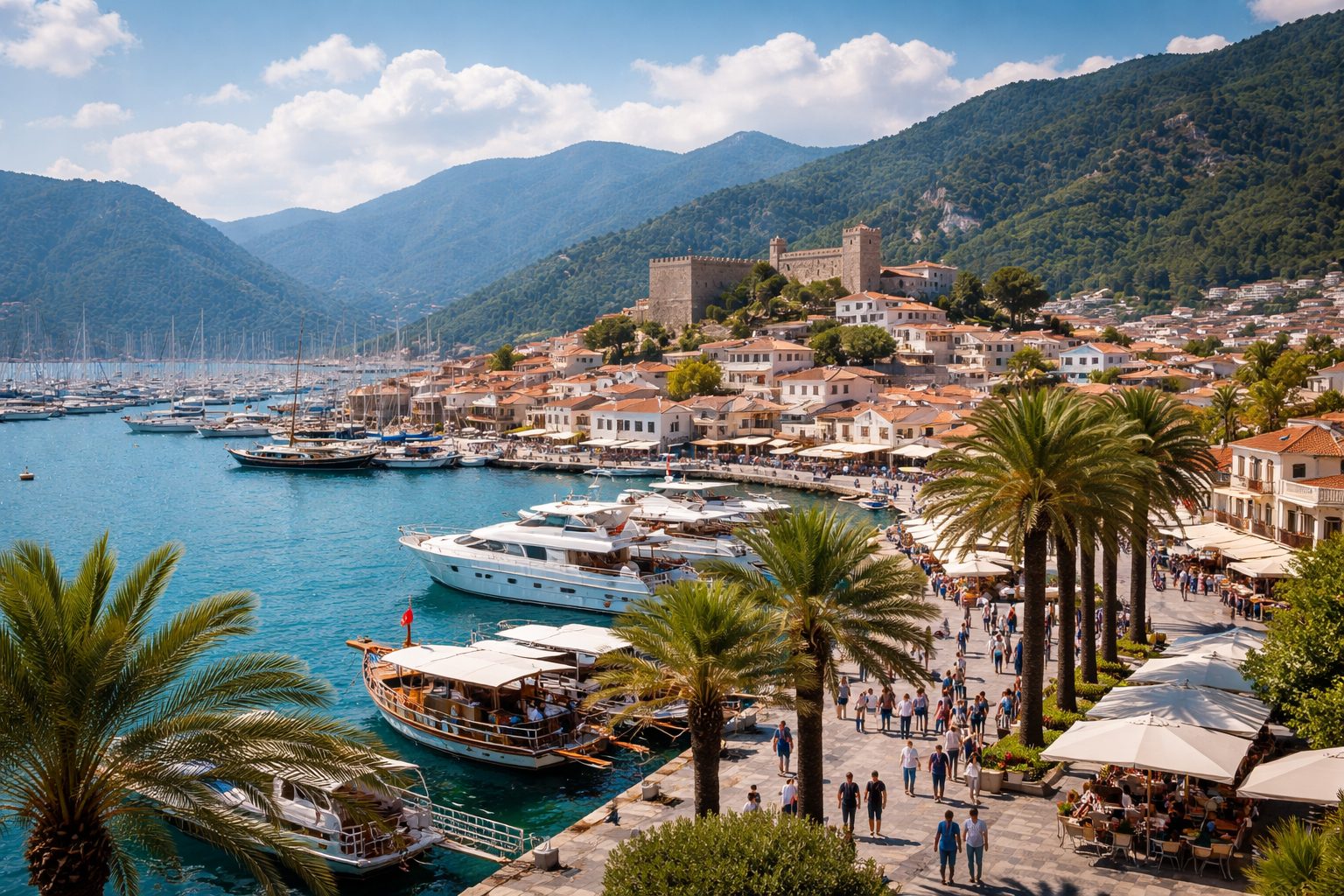
For serious cultural or natural experiences, Marmaris is less compelling than Fethiye or Kas. But its practical strengths are real: frequent ferries to Rhodes (the Greek island is just 40 minutes away), excellent boat trip options in the surrounding bays, and a well-developed infrastructure that handles large numbers of visitors efficiently.
The Marmaris market town area has an authentic character separate from the resort strip, and the castle and surrounding old quarter are worth a couple of hours. The surrounding Bozburun Peninsula to the south is significantly more peaceful and has good anchorages for sailing.
Kas: A Hidden Gem
Kas (pronounced “kash”) is the town on the turquoise coast turkey that most consistently wins the affection of people who’ve traveled the coast several times. It’s small, built around a natural harbor, with Lycian rock tombs carved into the cliffs above the town, and a slower pace of life that the more developed resorts have lost.
The diving around Kas is among the best on the coast: clear water, interesting topography including submarine walls and swim-throughs, and an ancient sunken city (Kekova, accessible from Kas or nearby Üçağız) visible through the water.
Kekova island and the partly submerged ruins of the ancient city of Simena visible through the clear water below the surface is one of the more atmospheric historical experiences on the turquoise coast turkey.
Kas has a good restaurant scene, friendly atmosphere, and is a natural base for several days of exploration including the Kekova sunken city, Patara Beach (one of Turkey’s finest, longest, and least developed beaches, also a sea turtle nesting site), and the Lycian Way walking trail.
Activities and Attractions
Sailing and Yacht Tours
The turquoise coast turkey is one of the premier sailing destinations in the Mediterranean, and the traditional way to experience it is on a gulet, a broad-beamed wooden motor-sailing vessel that has become synonymous with Turkish coastal travel.
The classic “Blue Voyage” involves 4-7 days on a gulet, stopping at coves, ancient sites, and villages along the coast. Routes typically run between Bodrum, Marmaris, Fethiye, and various ports in between. The itinerary is flexible by nature: the captain and passengers collectively decide where to anchor each night.
What a gulet trip provides:
* Access to coves and bays unreachable by road
* Daily swimming stops in crystal clear water off the boat
* A moving hotel with accommodation, meals, and transport in one
* A pace of travel fundamentally different from land-based tourism
* Snorkeling directly from the boat
Options range from shared cabin trips on smaller gulets (budget-friendly, social) to fully crewed private charter of larger vessels (expensive but extraordinary). The Fethiye-Olympos route and the Bodrum-Marmaris route are both classic.
Best sailing months: May through October, with June, September, and October avoiding peak summer heat and prices.
Snorkeling and Diving Opportunities
The water clarity of the turquoise coast turkey makes it excellent for both snorkeling and diving. Several areas stand out:
Kas and environs: Multiple dive sites including submarine walls, canyons, and the partly submerged ancient city at Kekova. Visibility regularly exceeds 20-30 meters. The Uçanbalık (Flying Fish) rock is a particularly notable site.
Bodrum: Good diving with the local marine life and some wreck options, though the area has more boat traffic than Kas and visibility can be variable.
Fethiye: Day boat snorkeling trips to nearby coves are popular and accessible for non-divers.
For non-divers, snorkeling from gulets or directly from the shore in clear-water coves is excellent throughout the coast. Mask and snorkel rental is available everywhere.
Historical Sites and Ancient Ruins
The turquoise coast turkey was the heartland of ancient Lycia, a confederation of cities with a distinctive culture, language, and architecture that flourished between approximately 400 BCE and the Roman period. Lycian ruins are encountered throughout the coast, often in spectacular settings.
Key sites:
Xanthos (UNESCO World Heritage): The principal capital of Lycia, with a theatre, agora, and remarkable Lycian pillar tombs. Near Letoon (also UNESCO).
Patara: An important Lycian city and later Roman settlement, with a temple, theatre, baths, and one of the finest beaches in Turkey directly adjacent to the ruins.
Kekova and Simena: The partially submerged ruins of Simena, visible through the clear water from boats, create one of the most evocative historical experiences on the coast.
Olympos: An ancient Lycian city in a forested river gorge running to the sea. The ruins are spread through the gorge, partly overgrown, and partly accessible from the tree-house accommodation area that has made Olympos a traveler destination for decades.
Myra (near Demre): Notable for its large rock-cut Lycian tomb facades and a Roman theatre. Also the burial site of St Nicholas (Santa Claus), whose remains are disputed between the church in Demre and the Bari Cathedral in Italy.
The Chimaera (Yanartaş): Eternal natural gas flames emerging from the hillside above Olympos, burning since antiquity and described in ancient sources. The walk up to the flames in the evening is one of the more unusual experiences on the turquoise coast turkey.
Nature and Hiking Trails
The mountains behind the coast provide significant hiking opportunities, with the Lycian Way long-distance trail being the primary attraction for serious walkers.
The Lycian Way runs 500km from Fethiye to Antalya, waymarked through ancient ruins, mountain villages, coastal scenery, and forest. Sections can be walked independently or with a guide. The walking season is October through April; summer heat makes the exposed sections dangerous.
The Saklıkent Gorge near Fethiye involves wading through a river canyon and is suitable for non-hikers as an adventure experience rather than a serious trek.
Butterfly Valley, accessible from Ölüdeniz by boat, has a beach backed by steep walls and a waterfall, with a hiking trail to the valley above.
The area around Olympos and Chimaera has good forest walking with historical interest.
Best Times to Visit the Turquoise Coast
Seasonal Weather Overview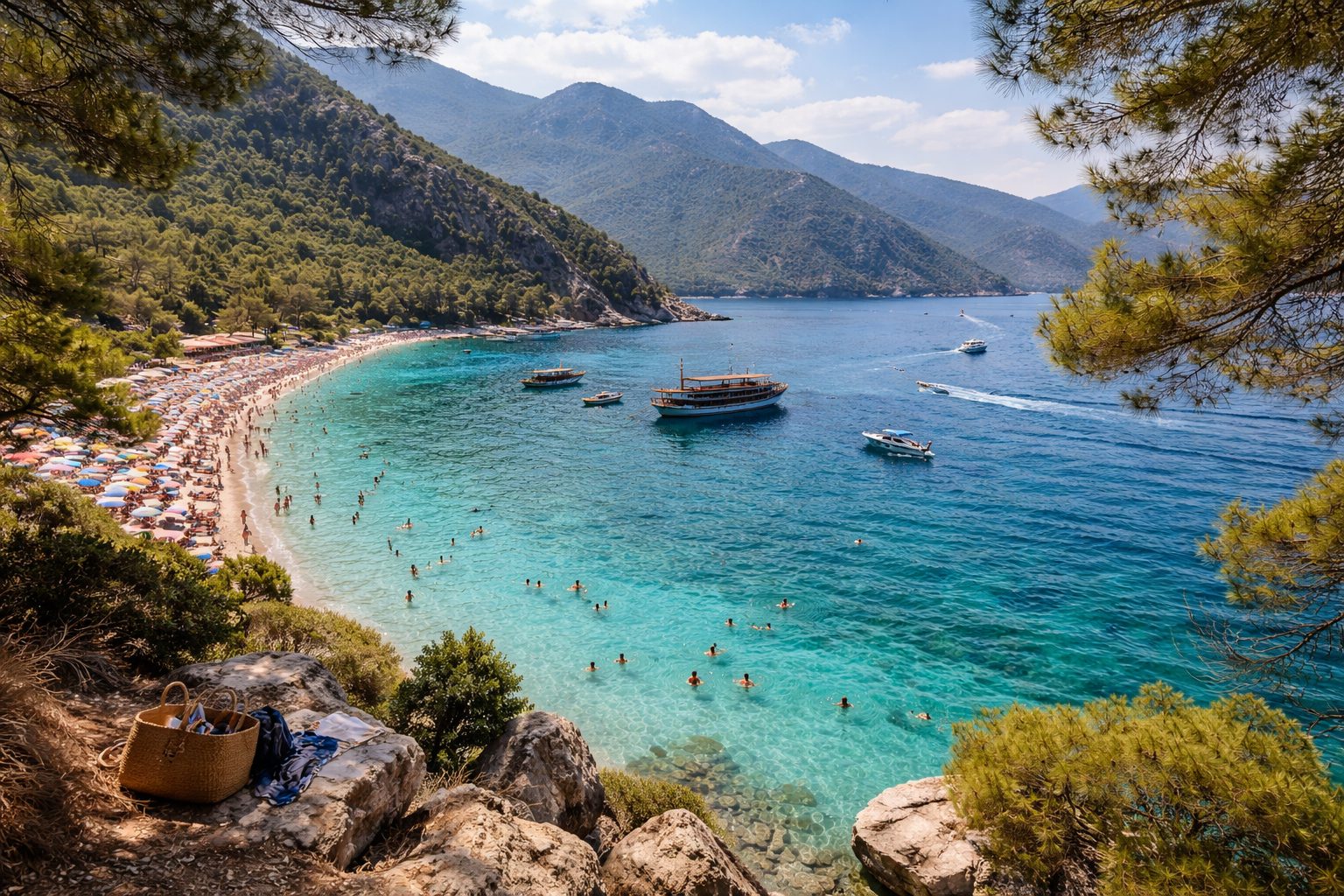
| Month | Sea Temp | Air Temp | Crowds | Rainfall |
|---|---|---|---|---|
| May | 22-24°C | 25-28°C | Low-moderate | Minimal |
| June | 24-26°C | 28-32°C | Moderate | None |
| July | 26-28°C | 33-37°C | Very high | None |
| August | 27-29°C | 33-36°C | Peak | None |
| September | 25-27°C | 28-32°C | Moderate-high | None |
| October | 22-24°C | 22-27°C | Low | Possible |
| November | 18-20°C | 16-20°C | Very low | Increasing |
The clear sweet spot: June, September, and October. June has excellent conditions before peak crowds. September sees temperatures still high with warm sea and noticeably fewer visitors post-August. October offers a beautiful autumn coast experience with the added possibility of having beaches largely to yourself.
Events and Festivals
The coast has several events worth knowing about:
- Bodrum Ballet Festival (July): Outdoor performances at the Bodrum Castle
- Marmaris International Sailing Race (May): One of Turkey’s major sailing events
- Fethiye Folk Dances Festival: Summer cultural events
- Ölüdeniz Air Games (October): Paragliding competition, with extraordinary aerial activity above the Blue Lagoon
The holy month of Ramadan (dates shift each year following the lunar calendar) affects the coast’s Muslim-majority population but has limited impact on tourist facilities, which generally operate normally.
Accommodation Options
Luxury Resorts
The turquoise coast turkey has developed significant luxury hotel infrastructure, particularly around Bodrum, Ölüdeniz, and the Antalya area.
Bodrum Peninsula has several outstanding boutique luxury properties in coves away from the main town, combining secluded beach settings with very high service standards.
The D-Resort chain and several independent properties around Göcek Bay (near Fethiye) offer marina-based luxury in a quieter setting.
Ultra-luxury gulet charter is available for those wanting a floating luxury experience: fully crewed private yachts with high-quality catering and accommodation.
Budget-Friendly Hotels
The coast offers extensive budget accommodation, particularly in smaller towns. Kas and Ölüdeniz have numerous small pensions and guesthouses run by local families, offering basic but clean rooms at very reasonable rates.
Olympos is famous for its tree-house accommodation, now more accurately described as wooden bungalow lodges among the trees. This remains one of the most distinctive budget experiences on the coast, combining affordable accommodation with the ancient ruins and beach directly outside.
In Bodrum and Marmaris, self-catering apartments provide good value for families or groups wanting to self-cater and stay longer.
Unique Boutique Stays
Several distinctive accommodation options deserve mention for their setting and character:
Cave lodges and cliff-top properties around Kas provide dramatic views and intimate scale.
Old stone houses in Datça, on the peninsula west of Marmaris, have been converted to boutique accommodation in a charming, less-developed coastal town.
Gulet charter and small boat accommodation provide genuinely unique stays, waking up in a new cove each morning.
Culinary Delights of the Turquoise Coast
Traditional Turkish Cuisine
The turquoise coast turkey has a strong culinary tradition centered on Aegean and Mediterranean ingredients: olive oil used generously in cooking, fresh herbs (particularly mint, thyme, and wild herbs from the mountain), grilled meats and seafood, and an extensive tradition of meze (small dishes for sharing).
Signature dishes of the region:
- Zeytinyağlı dishes: Vegetables cooked in olive oil and served at room temperature, a fundamental Aegean preparation. Artichokes, beans, and courgettes done this way are excellent.
- Meze spread: A selection of cold starters including hummus, cacık (yogurt-cucumber-dill), çoban salatası (shepherd’s salad), and various olive and cheese preparations.
- Pide: Turkish flatbread with various toppings, particularly good in inland bakeries.
- Gözleme: Thin flatbread filled with cheese, spinach, or meat and cooked on a griddle; excellent roadside food.
Local Seafood Specialties
The Mediterranean waters of the turquoise coast turkey produce excellent seafood, and coastal restaurants take this seriously. The best fish restaurants display the day’s catch in ice cases at the entrance for you to select directly.
Key seafood to try:
* Çipura (sea bream): The most common quality fish, typically grilled over charcoal
* Levrek (sea bass): Equally excellent, often with a lemon and herb basting
* Lakerda: Salt-cured bonito, a seasonal specialty when bonito is running in autumn
* Ahtapot (octopus): Grilled or in a cold salad, very good along this coast
* Kalamar (squid): Fried or grilled, a staple of coastal restaurants
Fresh fish is significantly better value at smaller, non-tourist-facing restaurants in local neighborhoods rather than in the main harbor-front establishments in popular tourist areas.
Must-Try Restaurants
The turquoise coast turkey has developed a restaurant scene that ranges from excellent local seafood restaurants to creative modern Turkish cooking.
In Bodrum: The waterfront restaurants in Bodrum harbor serve good food but at tourist prices; better value and often better quality is found at restaurants in the neighborhoods behind the waterfront or in the smaller villages of the peninsula.
In Kas: The town has an excellent selection of small restaurants and terrace cafes serving fresh food at honest prices. Smaller spots in the backstreets often outperform the more prominent harbourfront establishments.
In Fethiye: The Çarşı fish market area, where you buy your own fish from the market and take it to an adjacent restaurant kitchen to prepare, is a local tradition and a very enjoyable way to eat.
Transportation and Accessibility
How to Get to the Turquoise Coast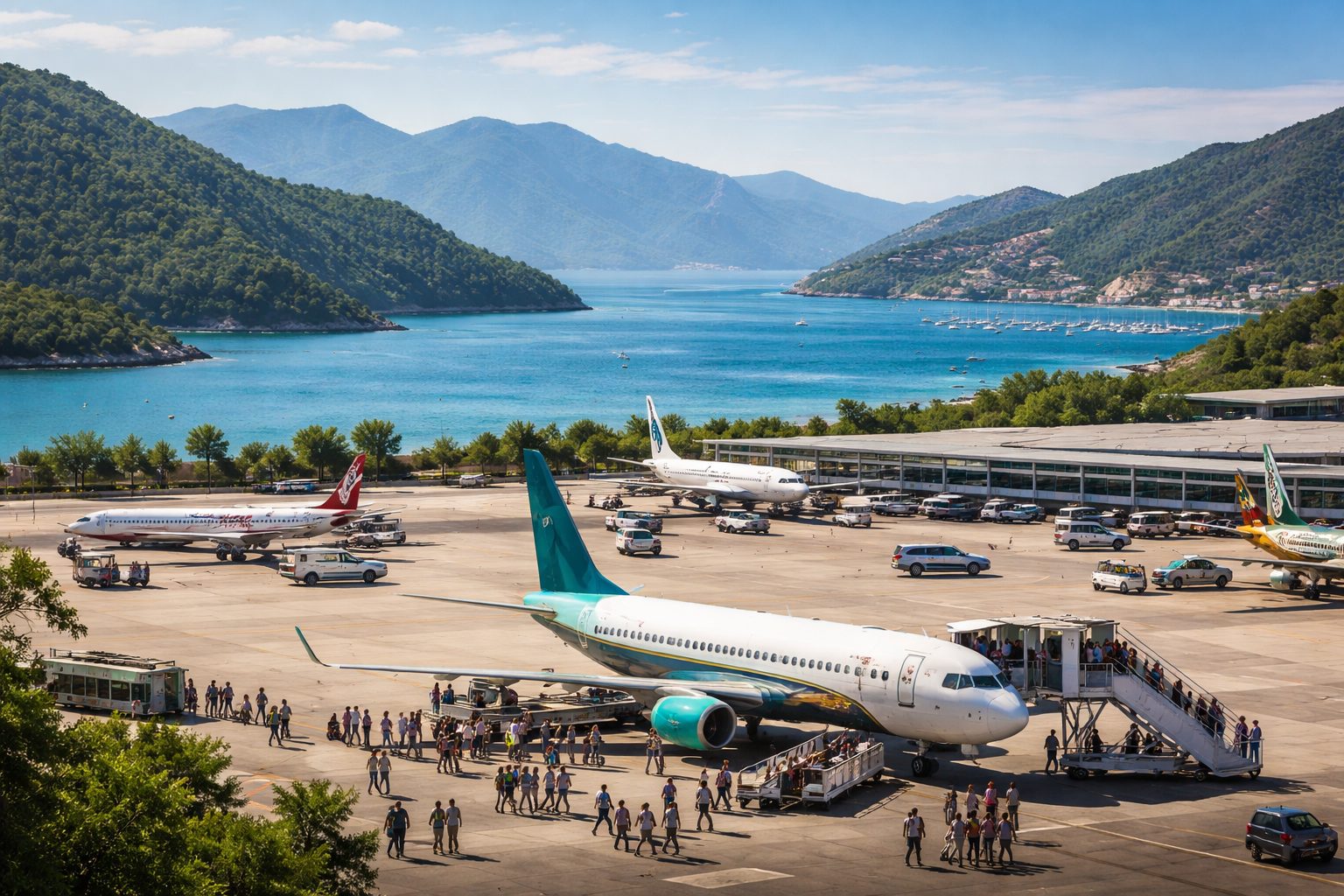
The turquoise coast turkey is accessible by air to Bodrum Milas (for the western section), Dalaman Airport (for Fethiye and Marmaris), and Antalya Airport (for the eastern section).
All three airports receive direct international flights from numerous European cities in summer, making arrival without a Turkey domestic flight possible for many European visitors.
From Dalaman, dolmuş (shared minibus) connects to Fethiye in about 1 hour. From Bodrum Milas, transfers to Bodrum town are about 35 minutes. From Antalya, various transfers serve the surrounding resort areas.
For visitors traveling from Istanbul, domestic flights to any of these three airports are the practical choice; the distances are too great for comfortable overland travel.
Local Transportation Options
Within the turquoise coast turkey, getting between towns and attractions:
Dolmuş (shared minibus): The primary public transport, connecting towns and villages along the coast. Cheap and reliable on main routes. Frequency decreases on minor routes.
Rental car: The single best option for exploring the coast with flexibility. The mountain road between Fethiye and Kas is one of the most scenic drives in Turkey and rewards having your own vehicle. Roads are generally good quality along the main coastal route.
Boat: For the most scenic and enjoyable movement between certain points (Fethiye to Ölüdeniz, exploring coves near any base), small boats and day boat charters are practical and often the only way to reach certain spots.
Taxi: Available everywhere but expensive compared to dolmuş for longer distances.
Practical Tips for Travelers
Safety and Health Considerations
The turquoise coast turkey is very safe for tourists. Normal precautions apply:
- Sea swimming safety: Check for jellyfish (sea nettles can be painful), be aware of boat traffic in busy harbors, and note that some bay entrances have current
- Hiking safety: If walking the Lycian Way or other trails in summer, carry adequate water (2L minimum), sun protection, and let someone know your route
- Sun: UV intensity at this latitude is high; use high-factor sunscreen, wear a hat, and cover up during midday hours
- Food and water: Tap water in Turkey is not recommended for drinking; bottled water is widely available and cheap
Cultural Etiquette and Customs
The turquoise coast turkey is heavily oriented toward tourism and Western visitors, so the culture is broadly familiar. A few things worth knowing:
- Away from major resort towns, smaller villages and towns have more conservative social norms. Dress more modestly when moving away from the immediate beach area.
- Visiting mosques (which exist in all towns): cover shoulders and legs, remove shoes, don’t visit during prayer times
- Bargaining is expected in bazaars and with market vendors, not in restaurants or established shops
- Tipping in restaurants is customary; 10-15% is standard
Comparison: Turquoise Coast vs. Other Coastal Destinations in Turkey
Turquoise Coast vs. Aegean Coast
The Aegean Coast north of Bodrum (İzmir area, Çeşme, Dikili) has a different character from the turquoise coast turkey.
| Aspect | Turquoise Coast | Northern Aegean Coast |
|---|---|---|
| Water color | Intense turquoise-blue | Clear blue, not as vibrant |
| Scenery | Dramatic mountain-meets-sea | More gentle, flatter |
| Ancient sites | Lycian civilization | Greek and Roman (Ephesus, Troy) |
| Development level | Mix from developed to remote | Mixed |
| Sailing | Prime gulet territory | Good but less iconic |
| Wind conditions | Generally calmer | More Meltemi wind influence |
| Season length | May-October | Similar |
The turquoise coast turkey wins for natural scenery and sailing conditions. The northern Aegean wins for proximity to major ancient sites (Ephesus is near İzmir, Troy near Çanakkale).
Turquoise Coast vs. Black Sea Coast
Turkey’s Black Sea coast is an entirely different experience and rarely features in comparisons because it attracts a completely different type of traveler.
| Aspect | Turquoise Coast | Black Sea Coast |
|---|---|---|
| Climate | Mediterranean, hot and dry summers | Humid, significant rainfall |
| Water | Clear turquoise | Green-blue, less clear |
| Tourism development | High | Low, primarily domestic Turkish |
| Summer suitability | Excellent | Good but weather less reliable |
| Scenery | Dramatic coastal mountains | Lush, forested mountains |
| International tourism | Very high | Very low |
The Black Sea coast is for travelers specifically seeking a less developed, more authentically Turkish coastal experience, with an appreciation for green landscapes and potentially cooler, damper conditions. The turquoise coast turkey is for those who want the classic Mediterranean combination of heat, clear water, ancient ruins, and developed tourism infrastructure.
FAQs about the Turquoise Coast
What are the best beaches on the Turquoise Coast?
Patara Beach, near Kas, is one of Turkey’s finest: 18km long, backed by sand dunes and ancient ruins, and a protected sea turtle nesting area. Visitor numbers are managed. Ölüdeniz has the famous Blue Lagoon, possibly the most photographed beach in Turkey. Iztuzu Beach near Dalyan is another protected sea turtle beach, and the boat trip through the river delta to reach it adds to the experience. Kabak Bay (near Fethiye) is a remote, beautiful cove accessible by mountain road and boat, relatively undeveloped.
Is the Turquoise Coast family-friendly?
Yes, very. The sheltered bays and coves along the coast provide calm swimming conditions ideal for children. The boat-based activities (day trips, gulet holidays) work well for families. The various beach clubs have facilities for children. The main challenge for families is the lack of sandy beaches in some areas (pebble and rock beaches are common), which affects young children’s comfort. Patara’s long sand beach is specifically excellent for families.
What water activities can I enjoy?
The turquoise coast turkey supports a full range of water activities: sailing and gulet trips, scuba diving and snorkeling, sea kayaking (particularly around Kekova’s submerged ruins), paddleboarding from most beach clubs, jet skiing and motorized water sports at busier resort areas, parasailing, kite surfing (Gökova Bay near Bodrum has good conditions), and various boat trip options. Day boat charters from any harbor let you combine multiple activities in a day.
How can I explore the ancient ruins?
Most accessible Lycian ruins along the turquoise coast turkey are reachable by car and on foot. Xanthos and Letoon (UNESCO sites near Patara) require a short drive from the main coastal road. Olympos ruins are within walking distance of the accommodation area in the valley. Kekova’s sunken city is accessible only by boat tour from Kaş or Üçağız. The Myra rock tombs are a half-day trip from Kaş. A rental car gives maximum flexibility for visiting multiple sites; guided tours from Fethiye, Kas, and Bodrum are also widely available for the most significant sites.
Are there guided tours available?
Yes, extensively. From every town on the turquoise coast turkey, local operators offer day trips to nearby sites and natural attractions. Boat day trips from Fethiye cover Butterfly Valley, St Nicholas Island, and the 12 Islands area. Boat trips from Kaş go to Kekova and the sunken city. Day trips from Bodrum explore the peninsula coves. For the Lycian Way, several operators offer guided multi-day walking trips with accommodation and luggage transfer arranged. Diving operations in Kas offer PADI courses and fun dives. The range of available guided experiences is extensive.