If you’ve spent time traveling along the Silver Coast of Portugal, you’ve probably spotted those jagged silhouettes on the horizon, rising from the ocean just off the coast of Peniche. That’s berlengas portugal, an archipelago that sits about 12 kilometers offshore and feels like an entirely different world from the mainland. I first visited on a whim during a road trip and ended up spending most of the day just sitting on the rocks, stunned by how untouched it all felt. This is one of those rare places in Europe where nature genuinely takes priority over tourism, and that balance shows in every direction you look.
Overview of Berlengas Portugal
The Berlengas archipelago is a small cluster of islands off the western coast of Portugal, roughly between Lisbon and Porto. It consists of three main groups: Berlenga Grande, which is the only inhabited and accessible island; the Estelas islets; and the Farilhões group further out. When people say berlengas portugal, they almost always mean Berlenga Grande, the largest island and the one with visitor infrastructure.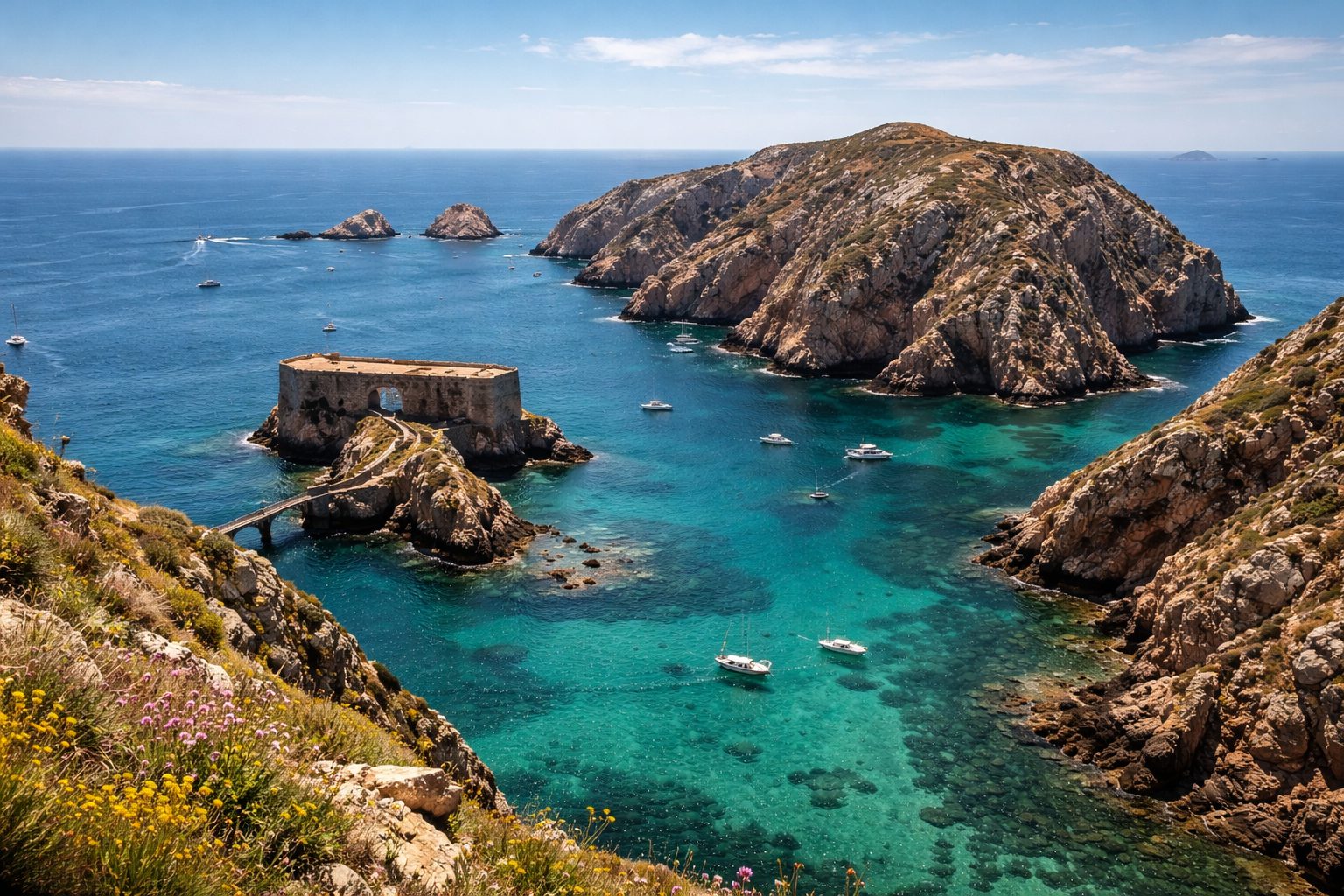
The entire archipelago was declared a UNESCO Biosphere Reserve in 2011, which tells you everything you need to know about its ecological status. It’s also a protected marine park. So while you can visit, the rules are clear: you’re a guest here, and the wildlife comes first. Daily visitor numbers are capped, access requires booking in advance during peak months, and overnight stays are tightly controlled.
Despite these restrictions, or maybe because of them, it remains one of the most remarkable natural destinations in Portugal. The water is a shade of blue that genuinely looks unreal, and the cliffs, tunnels, and sea caves carved into the granite give the island an almost dramatic visual presence.
Geographic Location and Accessibility
Berlenga Grande sits at roughly 39 degrees north latitude, exposed to the full force of Atlantic weather. The island is small, about 1.5 kilometers long and under a kilometer wide, with an interior that rises steeply from sea level to around 70 meters at its highest point. The coastline is dramatic, full of vertical cliffs, sea stacks, and narrow channels that have been carved by centuries of wave action.
Getting there is straightforward but weather-dependent. The main departure point is the port of Peniche, about 90 kilometers north of Lisbon. Ferry services run from June through September, with daily sailings in summer. The crossing takes between 40 and 60 minutes depending on sea conditions. In rough weather, the boats don’t go at all, which is something to factor in if you’re planning a day trip.
A few things to know about accessibility:
- Book ferry tickets early, especially in July and August. They sell out fast.
- The last ferry back is usually early afternoon, so plan your day accordingly.
- Overnight visitors must book accommodation in advance, as capacity is strictly limited.
- The island has no ATM and limited facilities, so bring cash and everything else you’ll need.
There’s no road on the island. Once you dock, you move on foot. The terrain is rocky and uneven in places, so solid footwear matters.
Natural Beauty and Biodiversity
What makes berlengas portugal so distinctive isn’t just the scenery, though that alone would be worth the trip. It’s the density of life packed into such a small area. Because human activity has been so limited here for so long, the natural systems have developed in ways you simply don’t see near the mainland.
The water clarity around the island is exceptional. Looking down from the granite ledges into the sea below, you can often see the bottom at 10 or 15 meters depth. The coves and channels shift in color from deep sapphire to turquoise and emerald depending on the angle of light and the depth of the water. It’s genuinely spectacular.
Unique Flora and Fauna
The vegetation on Berlenga Grande is sparse but interesting. The island supports a range of salt-tolerant plant species adapted to constant exposure and rocky soils. You’ll find sea campion, rock samphire, and various grasses clinging to the clifftops. There are no trees to speak of; the island is essentially open heath and scrub, which gives it a windswept, elemental feel.
Land animals are limited mainly to reptiles and the occasional rabbit, but the real wildlife story here is about birds. The island hosts one of the most important seabird colonies on the Iberian Peninsula. Guillemots, shags, herring gulls, and a significant population of roseate terns all breed here. The density of nesting birds during breeding season is something you have to see to appreciate.
The endemic Berlengas wall lizard is worth noting. It’s found nowhere else in the world, a small, fast lizard that’s clearly adapted to the island environment and shows little fear of humans. You’ll spot them darting across the rocks almost everywhere you walk.
Marine Life and Conservation Efforts
The marine park surrounding the archipelago is one of the reasons the underwater ecosystem remains so healthy. Spearfishing is banned, and even recreational fishing is restricted. This has allowed fish populations to recover significantly over the decades. Dive guides report seeing grouper, moray eels, octopus, and schools of bream in numbers that are unusual for European Atlantic waters.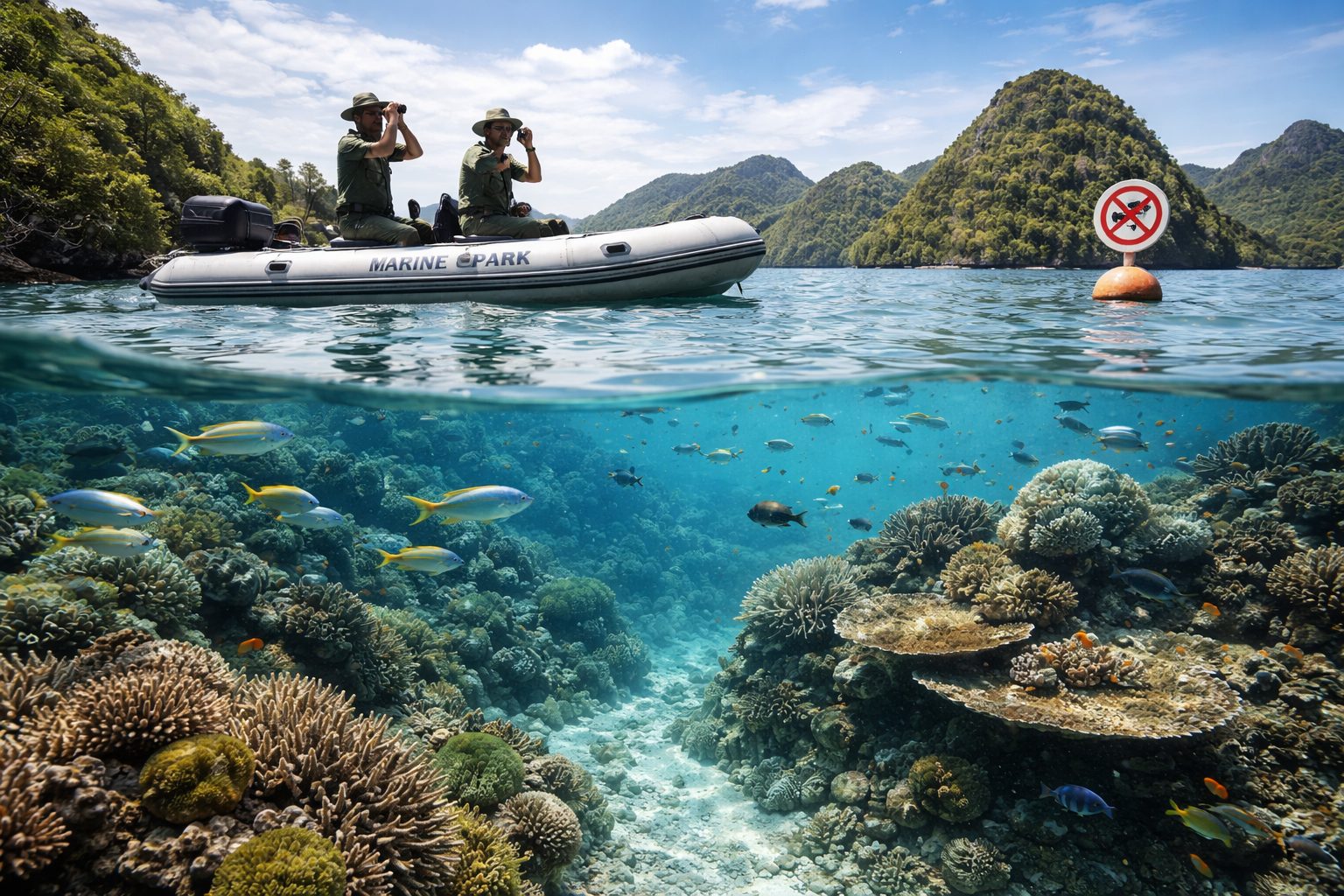
Conservation efforts here are ongoing and serious. The Berlengas nature reserve is managed by the Institute for Nature Conservation and Forests (ICNF), which monitors both land and marine ecosystems. Visitor caps, waste management, and restrictions on anchoring in sensitive areas all contribute to maintaining the ecological integrity of the reserve.
If you snorkel or dive here, you’ll understand immediately why the protections matter. The reefs and rocky underwater formations are remarkably intact, and the fish density reflects decades of reduced pressure.
Historical Significance of Berlengas
The history of berlengas portugal is older and more layered than its small size might suggest. The island served as a strategic maritime waypoint for centuries, sitting at the intersection of shipping routes between northern Europe and the Mediterranean. Portuguese and Spanish fleets both recognized its value.
The most visible historical marker on the island is the Forte de São João Baptista, a 17th-century fortress built on a rocky islet just off the main island and connected to it by a narrow stone causeway. Construction began in 1651 under King João IV as a defense against pirate raids and foreign naval threats. The fort changed hands multiple times over the centuries, was repeatedly attacked, and eventually fell into disuse as a military installation.
Today the fort has been converted into a small hostel, which is one of the most unusual accommodation options in Portugal. Staying inside a 400-year-old fortress on a rock in the Atlantic is an experience that’s hard to compare to anything else.
Before the fortress, there was a monastery. The Franciscan monks of the Convent of São João Baptista occupied the island in the 16th century, drawn by its isolation. The convent was destroyed repeatedly by pirates and was eventually abandoned. The ruins are still faintly visible, and the fort was built partly using stones from the former monastic complex.
There are also records of earlier occupation stretching back to Roman times, though the evidence is scattered and largely archaeological.
Activities and Attractions in Berlengas
For such a small island, berlengas portugal packs in a surprising range of things to do. The key is arriving with a rough plan, because the last ferry back gives you a hard deadline. A full day is enough to cover most of the island on foot, snorkel in at least one cove, and still have time to sit and watch the sea.
Hiking Trails and Scenic Views
The island has a small network of trails that cover most of its accessible terrain. From the dock, a main path leads up toward the interior and connects to viewpoints along the western cliffs. The lighthouse at the southern end of the island is a logical destination; the views from there extend back toward Peniche and out over open ocean.
The walk around the perimeter of the island, where terrain allows it, gives you the best sense of its geology. The granite has been sculpted by wind and waves into remarkable shapes, full of arches, sea caves, and platforms that sit just above the water line. At low tide, some of these lower areas are accessible on foot.
The Furado Grande tunnel is one of the more striking features on the island. This natural sea tunnel cuts through a headland, and boats pass through it on the tourist circuit. If you’re on foot, you can view it from above and watch the water move through the channel.
Key spots worth visiting on foot:
- The lighthouse and its surrounding viewpoint
- The western clifftops for Atlantic views
- The causeway and exterior walls of the fortress
- The small beach near the dock, which gets crowded in summer but is genuinely beautiful
The hiking here is not difficult. Distances are short and elevation gain is modest, but the terrain is rocky and can be slippery near the water. Take your time.
Water Sports and Adventures
The water around the island is the main attraction for many visitors. Snorkeling is excellent in the coves near the dock and along the more sheltered eastern coast. Visibility regularly exceeds 10 meters, and even a brief snorkel session will turn up sea bream, wrasse, and various invertebrates.
Scuba diving is popular and well-organized. Several dive operators run trips to the island from Peniche, and the underwater topography is diverse, with walls, boulders, and swim-throughs. There are also a few wrecks in the area. The water temperature ranges from around 15 degrees in winter to 20 or 21 degrees in late summer.
Kayaking and stand-up paddleboarding are both available through rental operations near the dock. These give you access to parts of the coastline that are hard to reach on foot, particularly the sea caves and arches along the northern and western edges. Going by kayak into some of the sea caves during calm conditions is one of those experiences that stays with you.
Boat tours of the island run regularly throughout the day in summer, offering views of the cliffs and tunnels from the water. These are short trips, usually about an hour, and they’re a good option if you want to see the coastline without paddling yourself.
Birdwatching Opportunities
Serious birdwatchers treat berlengas portugal as a significant destination, and rightly so. The island hosts breeding colonies of European shag, yellow-legged gull, Cory’s shearwater, and the roseate tern, which is a globally threatened species. Seeing terns in numbers here is increasingly rare in Atlantic Europe.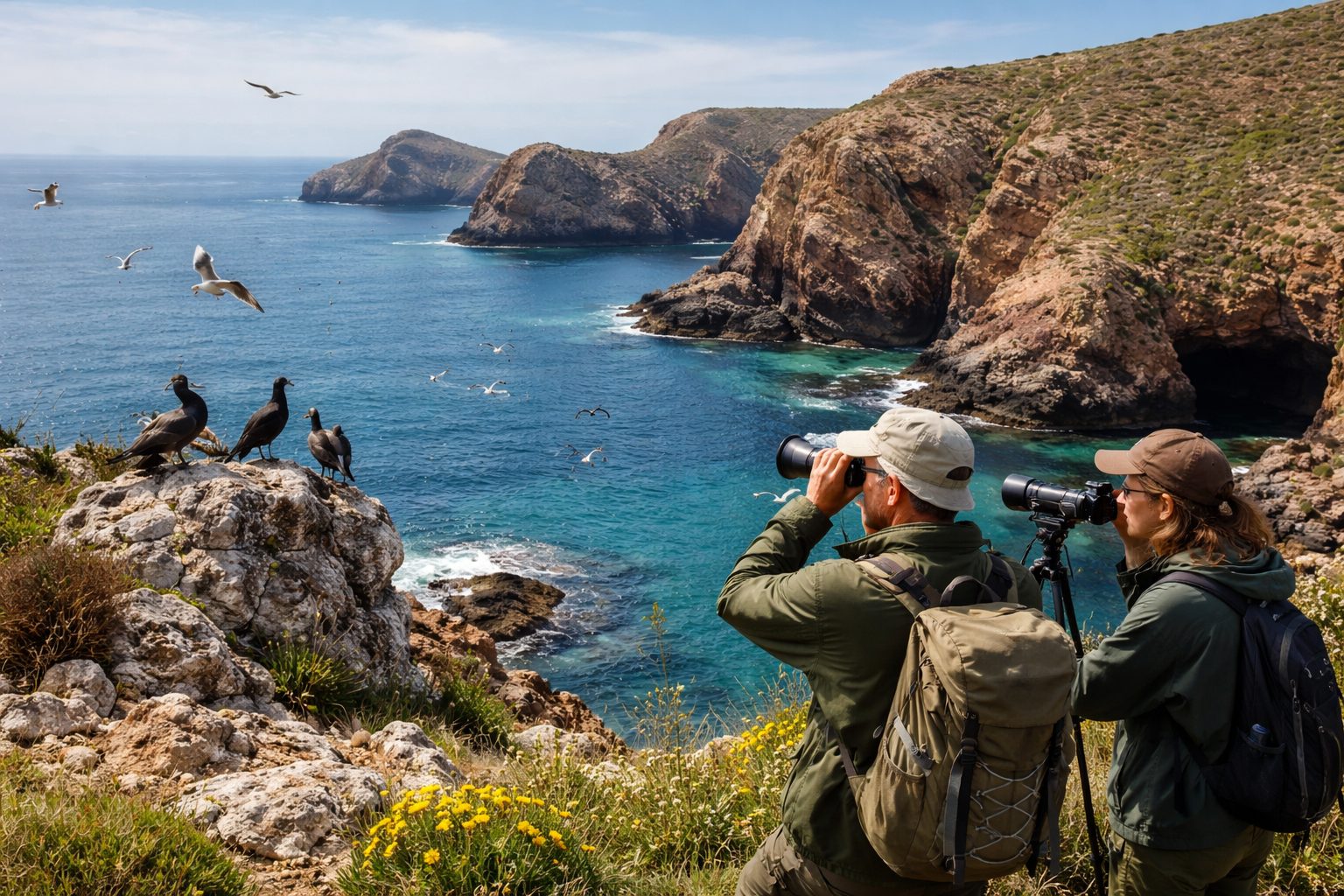
The best birdwatching is during the breeding season from April through July. The cliffs are alive with activity at that time, with constant movement of birds between the nesting sites and the sea. Guillemots nest in rock crevices, and the shearwaters tend to be most visible at dusk when they return from feeding offshore.
Outside breeding season, the island remains interesting for birds, particularly during migration periods in spring and autumn when vagrant species occasionally turn up. The island’s isolated position makes it a landing point for birds crossing the Atlantic or moving along the Iberian coast.
A few practical notes for birdwatchers:
- Bring binoculars. Cliff-nesting species are often at a distance from the paths.
- Avoid approaching nesting areas during breeding season. Signs indicate restricted zones.
- Early morning is the best time for activity and light.
- A field guide to Iberian birds covers most species you’re likely to see.
Accommodation Options in Berlengas
Staying overnight on the island is a different experience entirely from a day trip. The crowds thin out dramatically after the last ferry leaves, and you’re left with the island, the birds, and the sound of the sea. But the options are limited and demand is high relative to supply.
Camping vs. Hotels
There are essentially two options for staying on the island: the campsite and the fortress hostel. Neither is luxurious, but both have a character that more than compensates.
The campsite is the more accessible option, with space for a modest number of tents on a flat area near the dock. It has basic facilities including toilets and running water, but don’t expect much more than that. The location is excellent, close to the beach and with views toward the fortress. Nights on the island in good weather are genuinely beautiful, with the Milky Way visible above and bioluminescence sometimes visible in the water.
The Pousada de Berlenga, the hostel inside the fortress, is the more dramatic option. It’s a historic building with basic dormitory accommodation, and availability is extremely limited. Booking months in advance is not an exaggeration. The experience of sleeping inside the 17th-century fortress is unique enough that most people who’ve done it consider it one of their better travel decisions.
| Option | Type | Facilities | Atmosphere |
|---|---|---|---|
| Campsite | Tent pitches | Basic (toilets, water) | Relaxed, open-air |
| Pousada de Berlenga | Hostel in fortress | Minimal but functional | Historic, dramatic |
Recommended Places to Stay
If the fortress hostel is on your list, book as early as possible. The season runs roughly June through September, and it fills up fast. The campsite is easier to get into but still requires advance booking in July and August.
For visitors doing a day trip, Peniche on the mainland has a good range of accommodation from guesthouses to small hotels. The town has its own appeal as a working fishing port, and the drive from Lisbon is under two hours, making it a reasonable overnight stop even if you’re not heading to the islands.
Best Time to Visit Berlengas
The ferry service and most island activities run from June through September. That’s the practical window for most visitors, and for good reason: the weather is generally stable, the sea is calmer, and the daylight hours are long. But the busiest weeks in July and August also mean the most competition for ferry tickets, campsite spots, and a peaceful experience.
If you can go in June or September, you’ll generally find fewer people and still get reliable enough conditions for the crossing. June is also an excellent month for birdwatching, as the breeding season is in full swing.
Outside of summer, the island is largely inaccessible to casual visitors. The ferries stop running after September, and rough Atlantic weather makes the crossing impractical. Dive operators occasionally run trips in spring and autumn for experienced groups, but this is not a general visitor destination in the off-season.
The weather during the summer months is typically warm and sunny, with occasional strong northwest winds that characterize the Portuguese Atlantic coast. These winds can kick up significant swell and occasionally cancel ferry crossings, even in midsummer. Always have a backup day in mind if your schedule allows it.
Tips for Visiting Berlengas
Planning makes a real difference here. The island doesn’t forgive lack of preparation the way a city destination might. A few things I’d tell anyone visiting for the first time.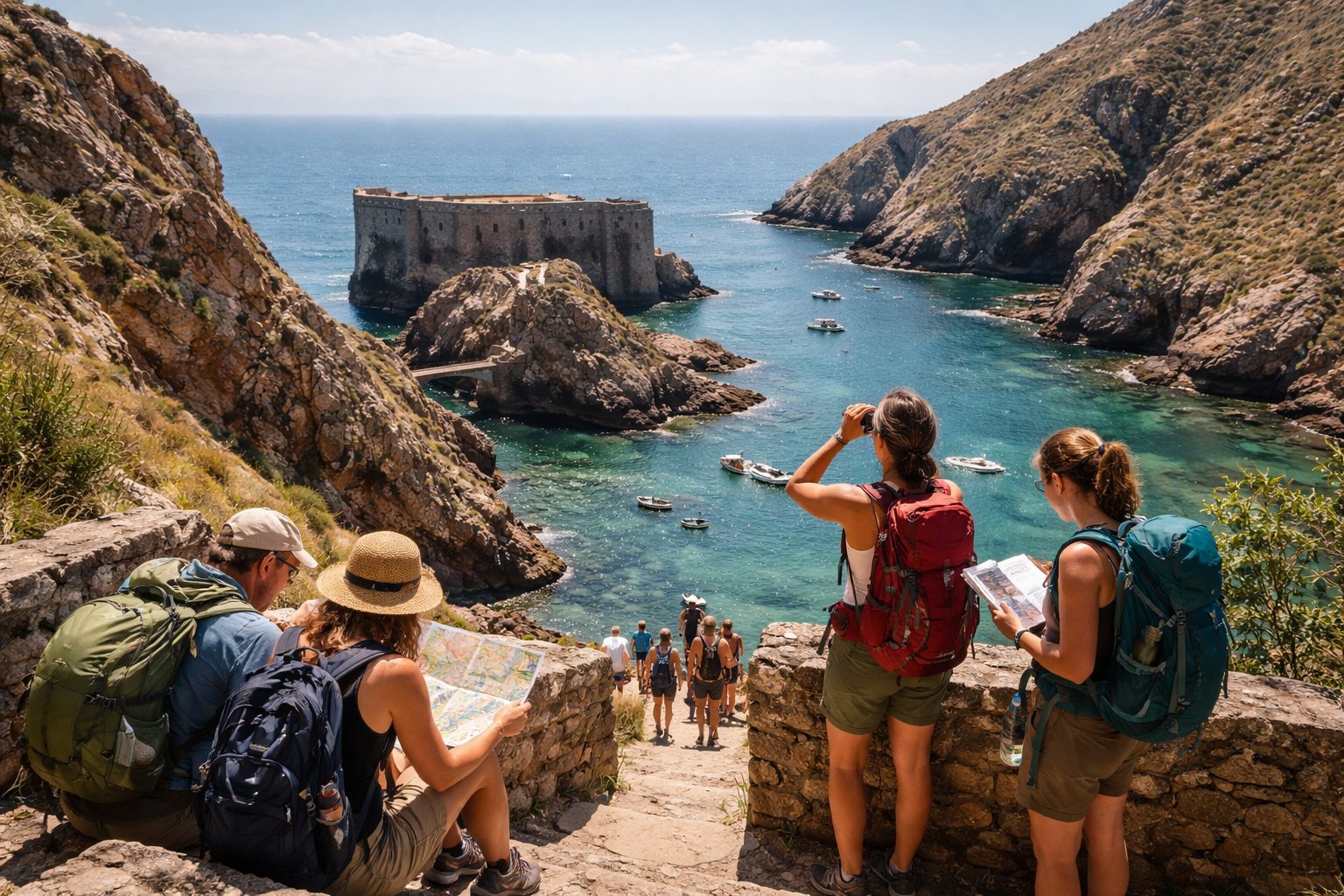
What to Pack
The essentials for a day trip or overnight stay:
- Solid footwear with grip. Flip-flops are a bad idea on rocky terrain.
- Sunscreen and a hat. The island offers minimal shade.
- Water. There’s limited fresh water available, and the heat plus walking adds up.
- A windproof layer. Even in summer, the Atlantic wind can be cold on exposed clifftops.
- Snorkeling gear if you want to use it. Rental options are limited on the island.
- Cash. No card machines, no ATM.
- Packed food if you’re staying all day. The small café near the dock can sell out or close early.
- A dry bag if you’re planning any water activities.
For overnight stays, add everything you’d need for camping or a hostel with minimal amenities.
Safety Guidelines
The main safety considerations on berlengas portugal are water and terrain related.
- Stay away from cliff edges. Some of the rock formations look stable but are undercut or unstable at the edge.
- Don’t swim outside designated areas. Currents in the channels between rock formations can be strong.
- Check the sea conditions before kayaking or paddleboarding away from the main beach. The western side of the island can get significant swell with little warning.
- Don’t approach nesting birds during breeding season. It’s not just ecologically damaging; some of the larger gulls will actively defend nests.
- Keep an eye on ferry departure times. Missing the last boat is a real scenario if you’re not watching the time.
There are no medical facilities on the island. In an emergency, the boat back to Peniche is the evacuation route.
Comparing Berlengas to Other Portuguese Islands
Portugal has several island destinations, and it’s worth being honest about how berlengas portugal compares to the others rather than just calling everything unique.
The Azores are the obvious major comparison. They’re a proper nine-island archipelago in the mid-Atlantic with genuine volcanic landscapes, whale watching, and a full range of accommodation and infrastructure. The experience is vastly larger in scale and takes at least a week to begin to appreciate. Berlenga is a day trip or two-night stay at most; the Azores is a destination in its own right.
Madeira is another well-known Portuguese island destination, with dramatic terrain, a sophisticated tourism infrastructure, and year-round accessibility. It’s a garden island in a way that Berlenga simply is not.
The contrast between Berlenga and either of these destinations is mainly one of scale and accessibility. Berlenga is raw, minimalist, and logistically demanding. You earn the experience a bit.
| Destination | Scale | Infrastructure | Best For | Accessibility |
|---|---|---|---|---|
| Berlenga Grande | Very small | Minimal | Nature, diving, day trips | Seasonal ferry only |
| Azores | Large (9 islands) | Full | Adventure, nature, volcanic landscapes | Year-round flights |
| Madeira | Medium | Full | Hiking, gardens, culture | Year-round flights |
| Culatra Island | Small | Basic | Beach, fishing village atmosphere | Year-round ferry |
For a specific kind of traveler, the one who wants a genuinely undeveloped natural experience close to the mainland, berlengas portugal has no real equivalent in Portuguese territory. It occupies a niche that the bigger island destinations simply don’t.
Frequently Asked Questions about Berlengas Portugal
How to Get to Berlengas?
Take a ferry from the port of Peniche. Services run daily during summer (June through September), with the crossing taking around 45 to 60 minutes. Book tickets in advance online, especially in July and August, as capacity is limited and sailings fill up quickly.
What is the Weather Like?
Summer conditions are generally warm and sunny, with daytime temperatures in the mid-20s Celsius. Atlantic winds are common and can be strong, particularly in the afternoon. Crossings are occasionally cancelled due to rough seas, even in summer, so it’s worth having flexibility in your plans.
Are there Guided Tours Available?
Yes. Boat tours around the island run regularly from the dock, and several dive operators in Peniche offer guided underwater tours to the marine park. Organized birdwatching tours are occasionally available but less common. Most visitors explore the island independently on foot, which is entirely feasible given its small size.
The appeal of berlengas portugal is ultimately straightforward: it’s one of the few places in Atlantic Europe where you can genuinely feel like you’ve stepped outside the reach of modern development. That’s rare, and it’s worth protecting. Go during the week if you can, book ahead, pack well, and spend as much time as possible just sitting by the water. That’s the best version of this trip.