There’s a moment, somewhere between slipping into steaming mineral water and watching snow fall outside, when you understand why onsen japan has captivated visitors for centuries. I’ve soaked in mountain baths surrounded by cedar forests, sat in stone pools carved into cliffsides, and spent quiet mornings in old wooden bathhouses where the light comes in golden through frosted glass. Every time, it feels like stepping out of ordinary life and into something slower and more meaningful. This guide is for anyone who wants to experience that, whether you’re planning your first trip or your fifth.
Introduction to Onsen Japan
Japan has over 27,000 hot spring sources spread across the country. That number alone tells you something important: onsen japan isn’t a niche travel interest, it’s woven into the fabric of daily life here. People don’t just visit hot springs on vacation. They go after work, on weekends, with family, alone. It’s as routine as visiting a coffee shop in other countries, and yet it never loses its sense of occasion.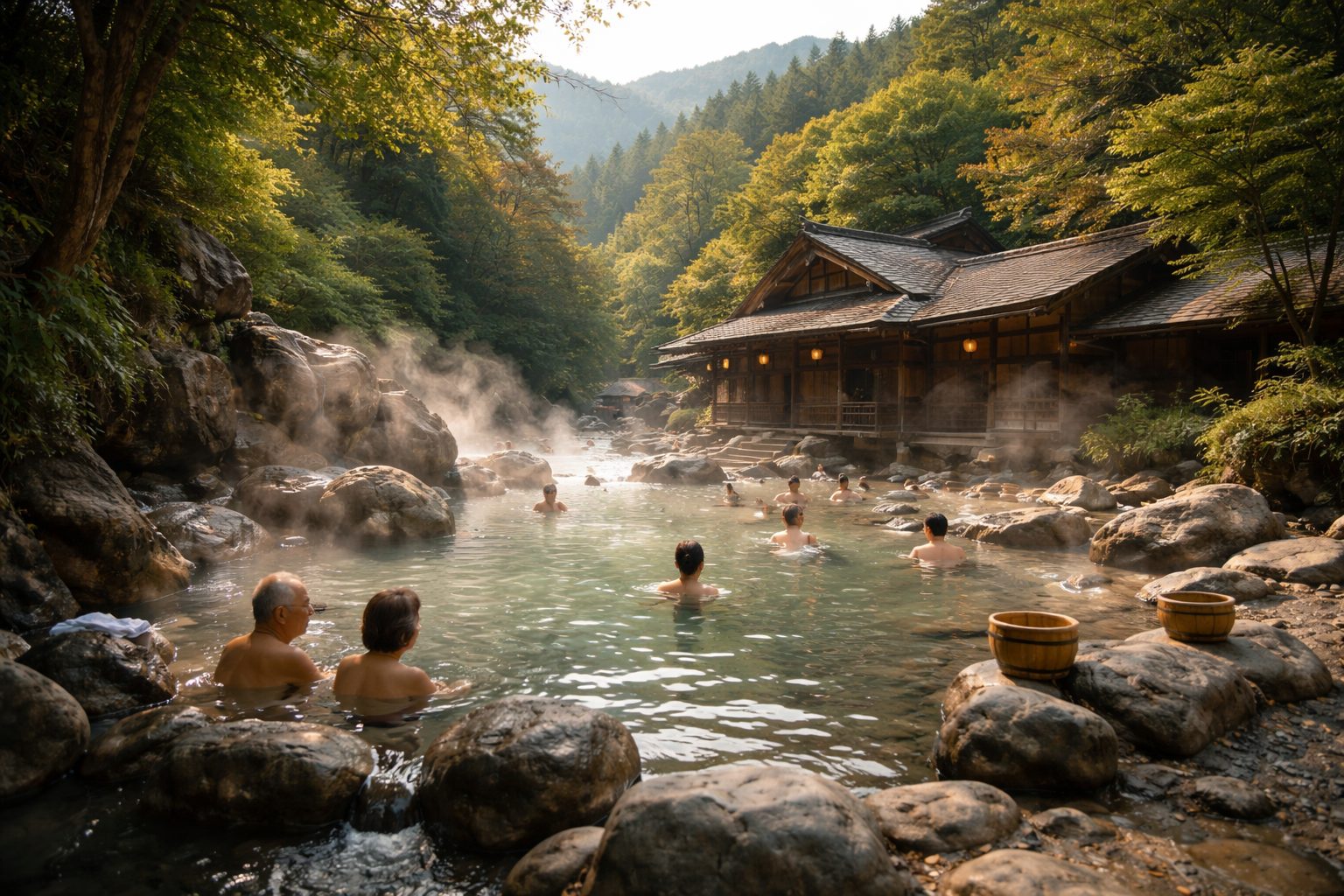
The word onsen (温泉) literally means “hot spring,” and it refers to naturally heated geothermal water that meets specific mineral content requirements set by Japanese law. Not every hot bath qualifies. To carry the onsen designation, the water must contain at least one of seventeen designated minerals and meet a minimum temperature threshold. That distinction matters because it’s what gives onsen their therapeutic qualities and keeps standards consistent across the country.
For visitors, understanding this framework helps set expectations. When a place advertises itself as an onsen, you know you’re getting the real thing, not just a heated pool with scented salts.
The History and Cultural Significance of Onsen
The history of bathing in Japan’s hot springs stretches back more than a thousand years. Some of the oldest documented onsen date to the Nara period, around the 8th century, when they were already considered sacred places with healing powers. Buddhist monks and Shinto priests associated hot springs with purification rituals, and many of Japan’s earliest onsen towns grew up around temples and shrines.
By the Edo period (1603 to 1868), onsen culture had expanded far beyond religious practice. Bathhouses became social spaces where people from different walks of life gathered on equal footing. There’s a concept in Japanese culture called “hadaka no tsukiai,” which translates roughly as “naked communion.” The idea is that when you strip away clothing and rank, honest connection becomes possible. Onsen were, and still are, one of the few places where that kind of equality is practiced in a literal sense.
The Meiji era brought Western medicine and briefly cast doubt on traditional bathing practices, but the cultural attachment to onsen proved too strong. By the 20th century, onsen towns had become major domestic tourism destinations, and today they attract millions of visitors both from within Japan and abroad.
What makes this history feel alive rather than academic is that so many original onsen are still operating. You can bathe in the same waters people have used for hundreds of years, in some cases in the same buildings. That continuity is rare, and it’s part of what makes onsen japan such a compelling travel experience.
Types of Onsen
Indoor vs. Outdoor Onsens
The Japanese terms here are “uchiyu” (indoor bath) and “rotenburo” (outdoor bath), and both have their appeal depending on what you’re after.
Indoor baths tend to be more controlled environments. The temperature stays consistent, there’s no wind or rain to contend with, and many facilities put real effort into the interior design, using natural stone, hinoki cypress wood, and minimalist lighting to create a calm atmosphere. In winter, indoor baths let you stay warm from head to toe rather than just from the neck down.
Outdoor baths, the rotenburo, are what most people picture when they imagine a classic onsen experience. Sitting in mineral-rich water while looking out at a mountain range, a bamboo grove, or a snowy garden is genuinely one of the better things you can do with your body and mind. The contrast of cold air against hot water creates a sensation that’s hard to replicate anywhere else. Most serious onsen facilities offer both options, so you don’t necessarily have to choose.
Private Onsens vs. Public Onsens
Public communal baths are the traditional format. Men and women bathe in separate sections, and the social element is part of the experience. This is the setup you’ll find in most public sento (bathhouses) and traditional onsen facilities. It can feel intimidating the first time, but regular visitors will tell you it quickly becomes comfortable.
Private onsen, called “kashikiri buro” or “family baths,” are rented by the hour for a single group or couple. They’ve grown in popularity among tourists, people with visible tattoos (which many communal facilities still prohibit), families with young children, and anyone who simply values privacy. Many ryokan now include private open-air baths in their room packages, which is a luxurious option if the budget allows.
Here’s a quick comparison to help you decide:
| Feature | Communal Onsen | Private Onsen |
|---|---|---|
| Cost | Lower | Higher |
| Social experience | Yes | No |
| Tattoo-friendly | Rarely | Usually |
| Availability | Walk-in often possible | Reservation usually required |
| Best for | Solo travelers, cultural immersion | Couples, families, privacy seekers |
The Health Benefits of Soaking in Onsen
Japan’s Ministry of the Environment officially recognizes onsen as having therapeutic value, and has classified different spring types based on their mineral composition and corresponding health effects. This isn’t folk medicine, it’s policy, and it reflects a long history of documented outcomes.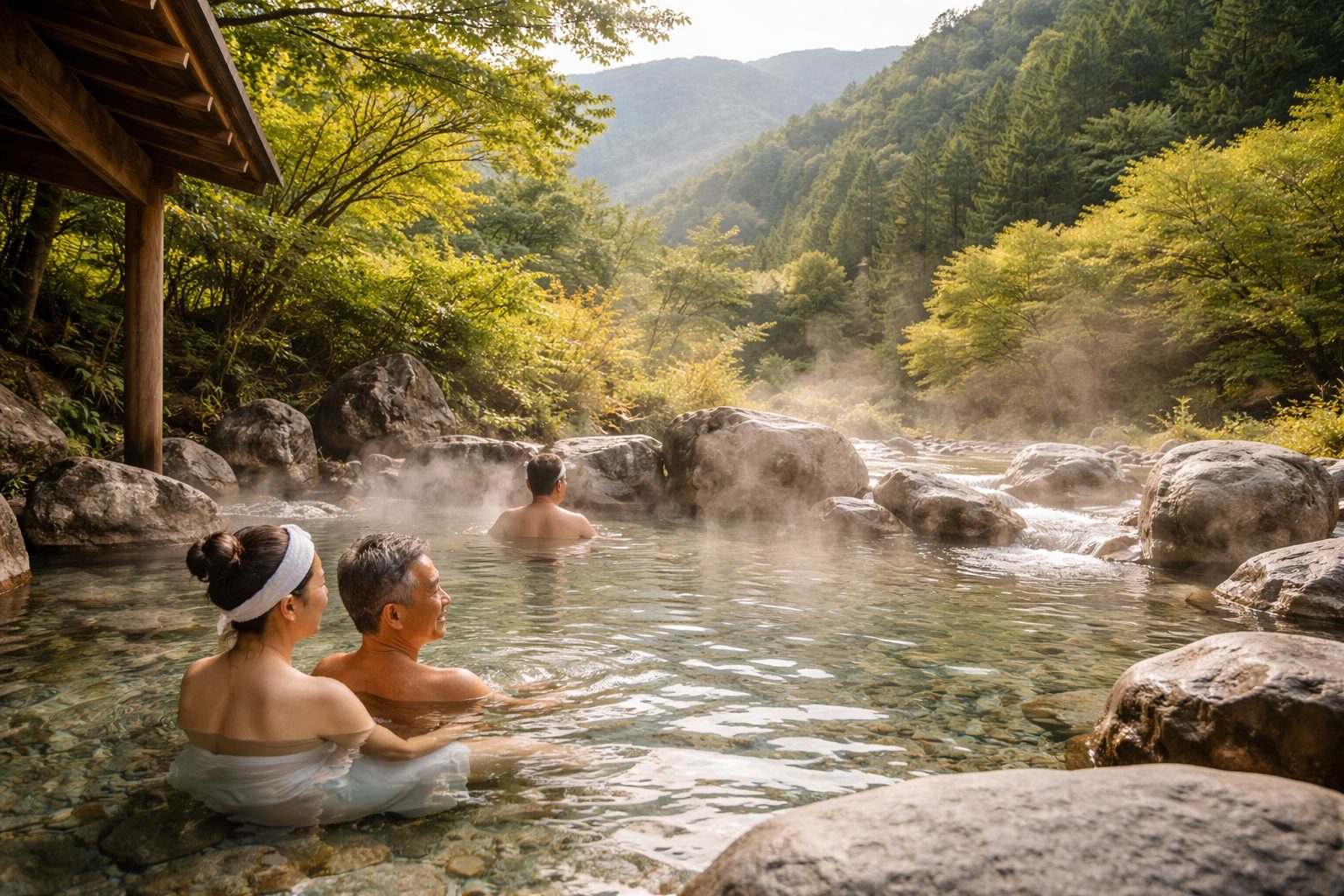
The mineral content varies significantly from one onsen to the next. Sodium chloride springs are warming and said to improve circulation. Sulfur springs are associated with skin conditions and respiratory relief. Acidic springs are known for their antibacterial properties. Radium and carbonic acid springs are thought to support cardiovascular function. The specific claims are regulated, and facilities are required to post the mineral analysis of their water.
Beyond the chemistry, there are broader physiological effects that are harder to argue with. Soaking in hot water for 15 to 20 minutes lowers blood pressure temporarily, loosens muscle tension, improves sleep quality, and reduces cortisol levels. In a country with one of the highest life expectancies in the world, many researchers have pointed to regular onsen bathing as a contributing factor, though it’s obviously part of a larger lifestyle picture.
The psychological benefits deserve mention too. A proper onsen visit involves slowing down. You’re not checking your phone. You’re not multitasking. You’re just sitting in warm water, breathing, and existing. For people whose lives involve a lot of screens and noise, that kind of enforced stillness has genuine value.
Popular Onsen Regions in Japan
Hakone Onsen
Hakone sits about an hour west of Tokyo by Romancecar train, and it’s probably the most accessible onsen destination for travelers based in the capital. The town is spread across a mountain valley near Mount Fuji, and on clear days you can see the peak reflected in Lake Ashi. The hot springs here tend to be sodium chloride and sulfur types, good for the skin and generally relaxing.
What draws people to Hakone beyond the scenery is the sheer density of quality ryokan and onsen facilities. You could stay a week and visit a different bath every day without leaving the area. The Hakone Open Air Museum is also worth fitting in if you have time, one of Japan’s better outdoor sculpture parks.
Beppu Onsen
Beppu, on the island of Kyushu, produces more hot spring water than anywhere else in Japan except Iceland’s volcanic fields. The city has eight distinct spring zones, collectively called the “Beppu Hatto,” each with different mineral content and visual character. The “jigoku” or “hells” are a series of non-bathable pools with extreme temperatures and striking colors, from cobalt blue to blood red, that have become a tourist attraction in their own right.
For actual bathing, Beppu offers everything from traditional wooden bathhouses that cost a few hundred yen to upscale resort facilities. The sand baths here are unique, attendants bury you in naturally heated sand close to the spring sources, and it’s one of the more unusual onsen experiences you’ll find anywhere in the country.
Kinosaki Onsen
Kinosaki, in Hyogo Prefecture, is the onsen town that most closely resembles the classic literary and cinematic image of hot spring culture in Japan. Willow trees line a narrow canal, wooden machiya townhouses have been converted into shops and restaurants, and guests wander between the town’s seven public bathhouses in yukata (cotton robes) and wooden geta sandals. It looks like a film set, but it’s completely authentic.
The town was the setting for Shiga Naoya’s famous short story “At Kinosaki,” and literary tourists still come to trace the author’s footsteps. I’d recommend spending at least two nights here. One evening isn’t enough to properly do the bathhouse circuit and soak up the atmosphere.
Noboribetsu Onsen
Noboribetsu, in Hokkaido, is Japan’s northernmost major onsen destination, and it has a quality that’s hard to find elsewhere: raw volcanic drama. The Jigokudani (“Hell Valley”) crater at the edge of town spews sulfurous steam constantly, and the landscape around it feels genuinely otherworldly. The spring water here contains an unusually high concentration of minerals because of the volcanic activity, and the range of spring types available at a single facility is wider than almost anywhere else in Japan.
Winter is the peak season for Noboribetsu, when you can soak outdoors in snow-covered rotenburo with your breath visible in the frozen air. But the facilities are excellent year-round, and the lack of summer crowds makes it a practical off-peak destination too.
The Onsen Experience: What to Expect
Traditional Onsen Etiquette
Getting the etiquette right isn’t just about not offending anyone, though that matters. It’s also about understanding why the rules exist, which makes the whole experience feel more intentional.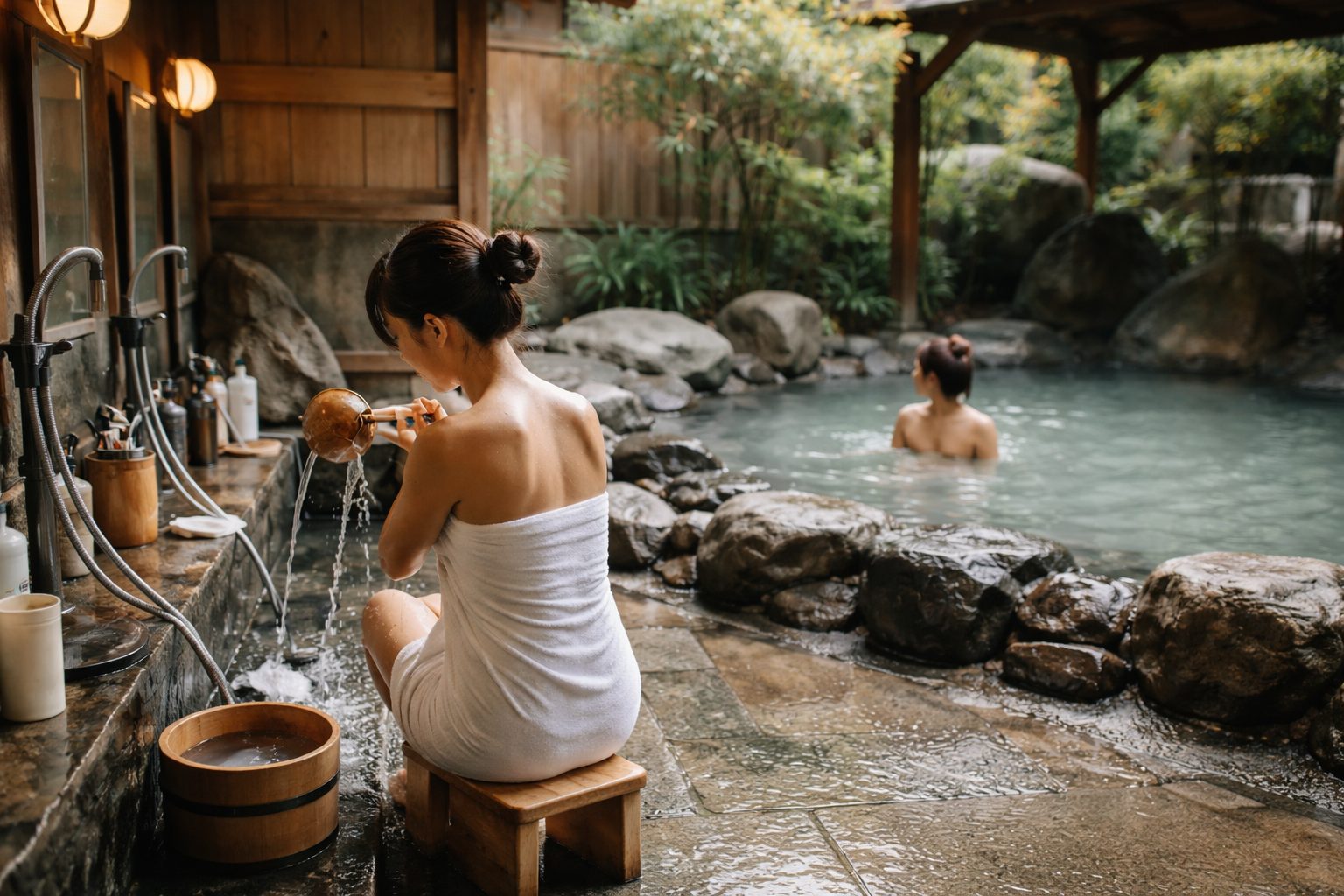
The most important rules are:
- Shower thoroughly before entering any communal bath. Use the seated shower stations provided, soap everything, rinse completely. This is non-negotiable.
- Do not bring your towel into the bath. Fold it and place it on your head or leave it at the bath edge.
- Move quietly. Onsen are not social venues in the loud sense. Conversations happen at low volume.
- Do not swim or splash. The baths are for soaking, not exercise.
- If you have a tattoo, check the facility’s policy before booking. Many public and communal onsen still prohibit tattoos due to historical associations with organized crime. Private facilities are more flexible.
- Do not take photographs inside any bathing area. This should go without saying, but it’s worth stating.
The shower before bathing is the one rule that visitors most often miss or underestimate. It’s not just hygiene, it’s respect for the shared water and the other people using it.
Onsen Facilities and Amenities
Most onsen facilities offer more than just the baths themselves. Standard amenities typically include:
- Multiple bath types, often including a main bath, a jet bath, a sauna, and a cold plunge pool
- Showers and washing stations with soap, shampoo, and conditioner provided
- Lockers for clothes and valuables
- A rest area or lounge, often with vending machines and sometimes with tatami mats for lying down after bathing
- Rental towels, if you haven’t brought your own
Higher-end facilities and ryokan add:
- Private or semi-private baths for rent
- Indoor and outdoor options
- Restaurant or kaiseki dining
- In-room private onsen
Many public bathhouses, especially in smaller towns, are remarkably affordable. Entrance fees of 400 to 800 yen are common. The experience you get for that price is genuinely excellent, and visiting a local sento alongside residents rather than in a tourist-oriented facility gives you a more honest sense of what onsen culture actually looks like day to day.
How to Choose the Right Onsen for You
The right onsen depends on what you’re actually after. That sounds obvious, but it’s easy to book something based on photos without thinking about what the experience will actually involve.
Ask yourself these questions before booking:
- Do you want cultural immersion or privacy? Communal baths are more culturally authentic. Private baths are more comfortable for many foreign visitors.
- Are you traveling solo, as a couple, or with family? Some facilities are better suited to certain group sizes.
- What’s your budget? Public bathhouses are often as good as expensive facilities for the actual bathing. You pay more for the surrounding experience, food, accommodation, and aesthetics.
- Do you have tattoos? If so, narrow your search to tattoo-friendly facilities from the start.
- What kind of setting do you want? Mountain, forest, coastal, urban? Japan has onsen in all of them.
- What season are you visiting? Certain regions and certain types of baths are dramatically better at particular times of year.
There’s no single “best” onsen. There are just better and worse matches for what you’re specifically looking for.
Seasonal Onsen Experiences
Winter Onsen Retreats
Winter is the most celebrated season for visiting onsen japan, and the popularity is completely justified. The image of soaking in an outdoor bath while snow falls around you, “yukimi buro” or snow-viewing bath, is one of those travel experiences that lives up to its reputation. Regions like Noboribetsu, Zao in Yamagata, and the Kusatsu area in Gunma are especially popular for winter bathing.
The contrast of extremely cold air against hot mineral water creates a sensory experience you remember for years. Steam rises from the surface of the water, frost forms on the rocks at the pool edge, and your body adjusts to a temperature equilibrium that feels almost meditative. If there’s any one time I’d recommend prioritizing an onsen visit, it’s late January or February in a region with real snowfall.
Book well ahead for winter stays, particularly over the New Year holidays. The best ryokan fill months in advance.
Summer Onsen Escapes
Summer bathing gets overlooked because the idea of soaking in hot water when it’s already warm outside doesn’t immediately appeal. But Japanese summers are intensely humid, and a properly managed onsen visit in summer has its own logic. Many facilities lower their bath temperatures slightly in summer, and some offer “ashi-yu” foot baths outdoors that are cooler and more comfortable in heat.
Mountain onsen destinations at higher elevations, Nikko, parts of the Japanese Alps, and highland areas in Nagano, offer genuinely cool summers where outdoor bathing is comfortable even in August. Evening baths at a forest onsen with the sound of cicadas and a cool mountain breeze are a very different but equally compelling experience to winter bathing.
Tips for First-Time Visitors to Onsen
If this is your first time, here’s what I’d tell you directly:
- Don’t stress about the nudity. It’s not sexual in context, and everyone is in the same situation. Within about five minutes, it stops being unusual.
- Drink water before and after. Hot water opens your pores and you’ll lose fluids faster than you realize. Dehydration headaches are common among first-timers who didn’t think about this.
- Limit your first soak to 10 to 15 minutes. Long first sessions in very hot water can cause dizziness. Build up to longer baths over subsequent visits.
- Go at off-peak times. Early morning, right after opening, or weekday afternoons tend to be quieter. Weekends at popular facilities can be crowded.
- If you’re at a ryokan, use the baths at night after dinner and again early morning before breakfast. Those are the best times, both for the quality of the experience and for avoiding crowds.
- Don’t rush. The whole point is to slow down. Bring nothing with you except a small towel. Leave the phone in the locker.
And practically: most facilities will have a place to buy or rent a small towel if you’ve forgotten yours. Don’t let logistics anxiety stop you from going.
Onsen and Ryokan: The Perfect Pairing
A ryokan is a traditional Japanese inn, and the best ones are built around their onsen. This is the combination I’d recommend to anyone who wants a complete introduction to onsen culture in Japan rather than just a bathing stop.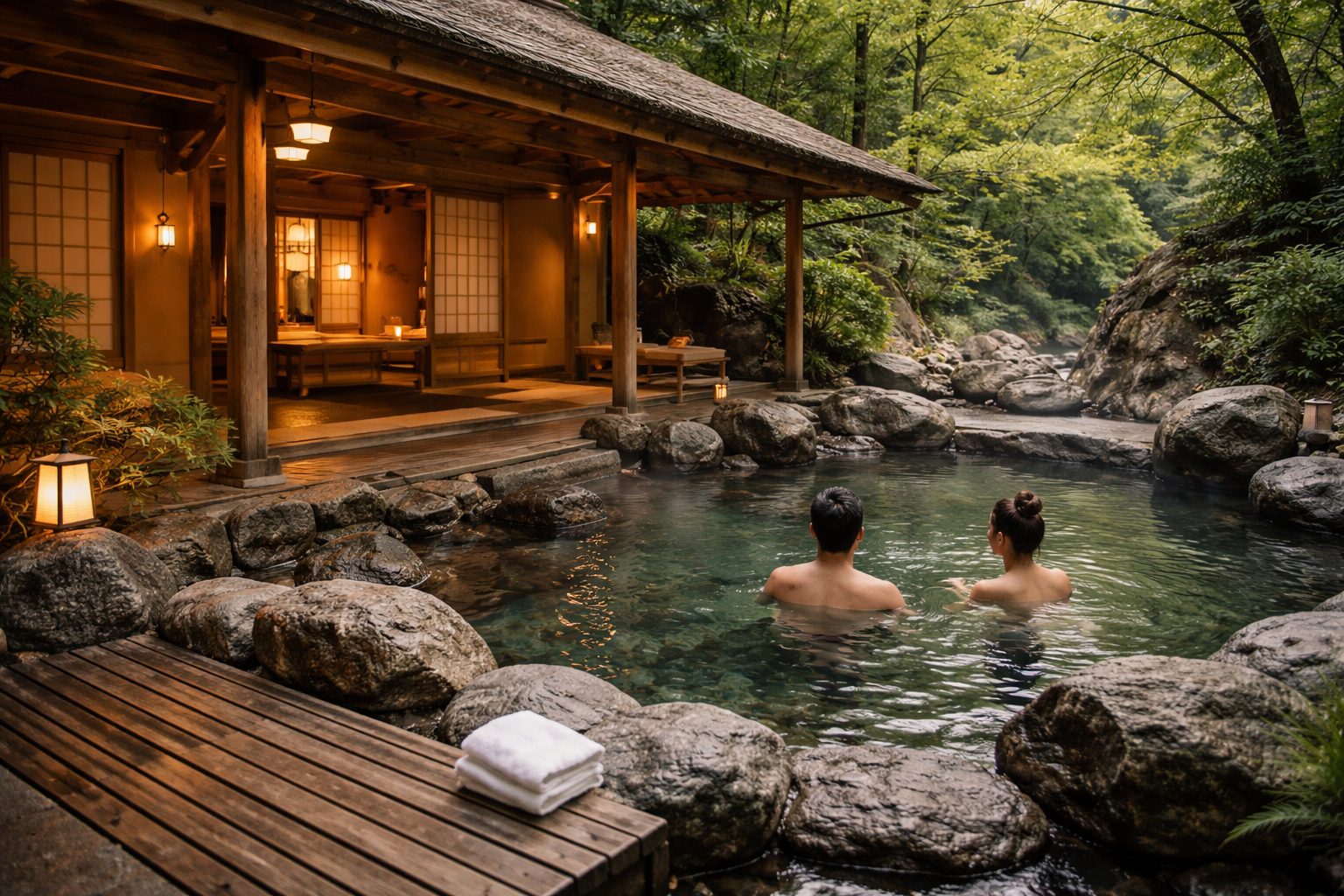
When you stay at a traditional ryokan, you’re essentially living inside the onsen experience for a night or two. You arrive, change into a yukata provided by the inn, eat kaiseki dinner in your room or a private dining space, have unrestricted access to the baths throughout the evening and morning, sleep on a futon laid out on tatami, and wake to a traditional Japanese breakfast. Everything is calibrated toward relaxation, and the onsen is the center of the entire structure.
Ryokan vary enormously in price and quality. Some are genuinely luxurious with private outdoor baths attached to each room. Others are modest family-run places with shared communal baths and simple meals. Both can be excellent in different ways. A mid-range ryokan in a good onsen town, spending 15,000 to 25,000 yen per person per night including two meals, gives you a complete experience without extraordinary expense.
The one thing I’d caution is reading reviews carefully for foreign visitor friendliness. Some traditional ryokan prefer Japanese-speaking guests and may not accommodate dietary restrictions or communication barriers easily. There are plenty that welcome international visitors warmly, but it’s worth checking before booking.
Unique Onsen Experiences
Themed Onsens
Japan has a category of onsen that goes considerably beyond traditional mineral bathing. Theme-park style facilities called “super sento” or “spa resorts” offer multiple bath types including coffee baths, red wine baths, green tea baths, and various other infused soaks. These are less about the medicinal qualities of the water and more about novelty and entertainment. They’re popular with domestic visitors and can be genuinely fun, particularly for groups or for families with children who might not appreciate a quiet traditional bath.
The Oedo Onsen Monogatari chain in Tokyo is probably the best-known example for international visitors. It’s not authentic in the strict onsen sense, but it’s a reasonable introduction to bathing culture for people who are uncertain about the more traditional format.
Nature-Inspired Onsens
Some of the most remarkable onsen experiences in Japan involve going further off the beaten path. Outdoor mountain baths that require a hiking trail to reach, riverside natural pools in forest gorges, and remote hot springs accessible only by a mountain railway or road are scattered across the country.
The “konyoku” or mixed-gender outdoor baths are increasingly rare but still exist at some traditional mountain facilities, usually in remote locations where old customs are maintained. This is a very different experience from urban onsen and one that connects more directly to the historical and spiritual roots of hot spring culture.
Yunoko Lake in Nikko, the outdoor baths at Nyuto Onsen in Akita, and the jungle hot springs of Yakushima Island represent three very different but equally memorable versions of nature-based onsen. Each requires a bit more planning than a standard facility visit, but the experiences justify the effort.
Frequently Asked Questions About Onsen Japan
What Should I Bring to an Onsen?
Most facilities provide everything essential, but bring a small hand towel if you have one. You’ll also want to bring toiletries if you have brand preferences, though shampoo and soap are usually supplied. For a ryokan stay, they provide everything including yukata. For a public day facility, bring a change of underwear and any skin or hair products you use after bathing.
Can You Visit Onsen While Pregnant?
The general guidance in Japan is to avoid onsen during the first trimester and to consult a doctor before bathing in later stages of pregnancy. The concern is primarily about overheating and the mineral content of some spring types. Foot baths and cooler facilities are considered lower risk. If you’re pregnant and want to participate in some form, ask at the facility about cooler or lower-mineral options.
Are Onsens Open Year-Round?
Most are, yes. Year-round operation is the norm for established facilities and ryokan. Some outdoor-only natural pools at higher elevations close in winter due to access or safety issues. A small number of smaller public bathhouses close for maintenance periods or seasonal reasons. It’s always worth checking the operating schedule before making a special trip, but in practice the vast majority of onsen destinations are accessible in any season.
There’s a reason onsen japan has endured as one of the country’s defining cultural experiences across more than a thousand years. It solves something fundamental. Somewhere between the mineral-rich water, the enforced slowness, the stripping away of social performance, and the connection to landscape and season, you find something that most modern travel doesn’t offer. It’s not just relaxation. It’s a particular kind of presence. And once you’ve experienced it properly, you’ll find yourself planning your next trip back before you’ve even dried off.