When people ask me about south korea vs japan, I tell them it’s one of the most fascinating comparisons you can make in East Asia. These two countries sit just a few hundred kilometers apart across the Korea Strait, yet they’ve developed into distinct civilizations with their own identities, strengths, and struggles. Both are economic powerhouses. Both have deeply rooted cultures. Both punch well above their weight on the global stage. But spend any real time in either place, and you’ll quickly realize how different they actually are.
I’ve spent time in Seoul and Tokyo, traveled through smaller cities, eaten at roadside stalls and fine restaurants, and talked to locals and expats alike. This comparison isn’t theoretical. It’s grounded in what these countries actually look and feel like in practice. Whether you’re planning to visit, considering a move, doing business, or just curious, this guide covers what matters most.
Introduction to South Korea and Japan
South Korea occupies the southern half of the Korean Peninsula, with a population of around 52 million. Its capital, Seoul, is one of the most densely populated metro areas in the world. Japan is an archipelago of about 6,800 islands, home to roughly 125 million people, with Tokyo serving as the urban heart of the country.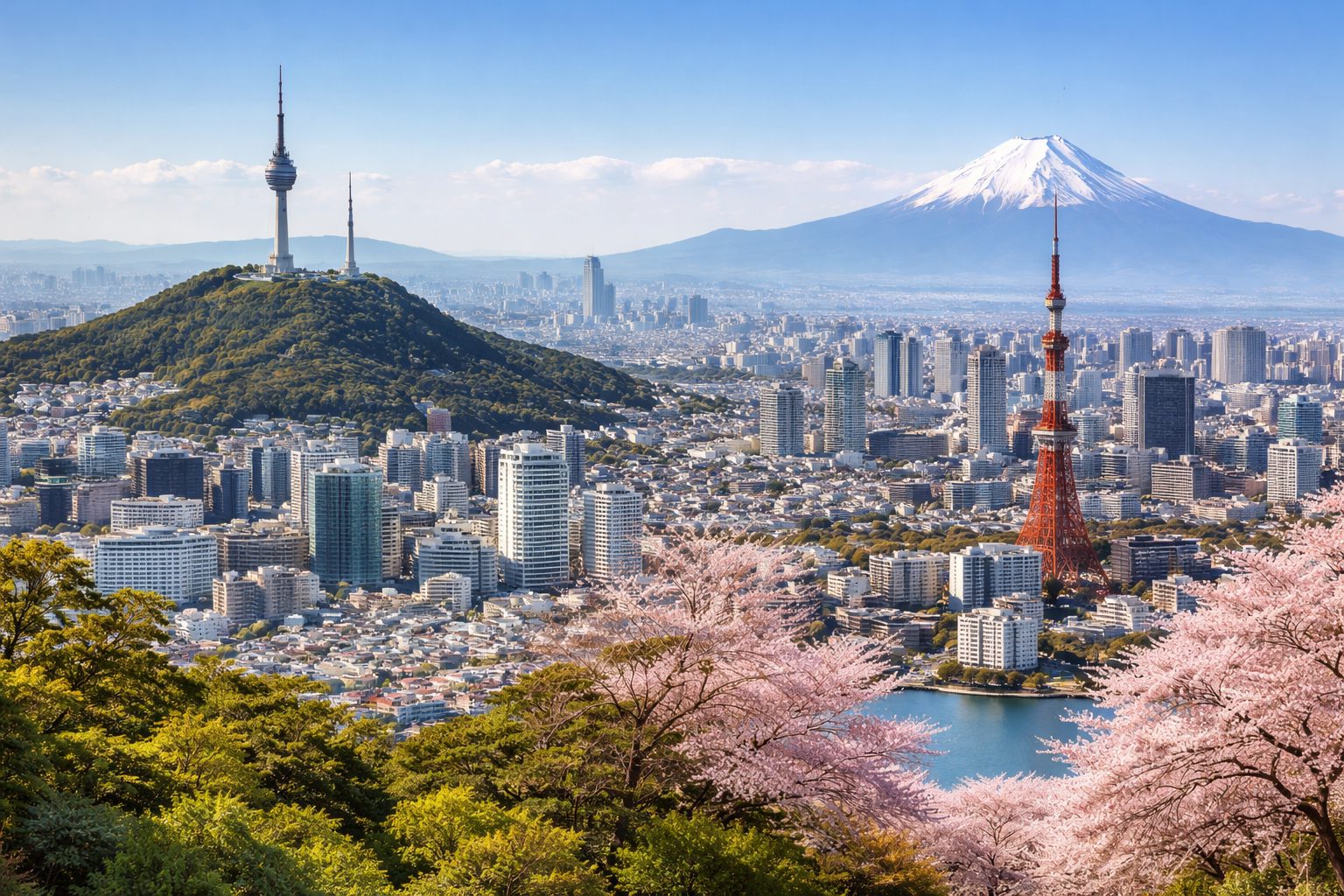
Both nations emerged from the ruins of the 20th century to become global economic leaders. South Korea’s rise was faster and more compressed, going from one of the poorest countries in the world after the Korean War to a high-income democracy in under five decades. Japan industrialized earlier and has been a developed economy since the mid-20th century.
What makes the south korea vs japan conversation interesting isn’t just statistics. It’s the way each country expresses modernity while maintaining its own traditions, navigates geopolitical pressures while pursuing economic goals, and competes on the world stage while staying deeply shaped by its own history.
Historical Context of South Korea and Japan
The history between these two countries is complicated, to put it mildly. Japan colonized Korea from 1910 to 1945, a period that left deep wounds that still affect diplomatic relations today. Issues like forced labor, the comfort women system, and the suppression of Korean language and culture remain sensitive topics that periodically resurface in political disputes.
Before colonization, both countries had centuries of interaction, not always hostile. There was cultural exchange, trade, and periods of mutual influence. Japan absorbed a great deal from Korean and Chinese civilizations, particularly in art, Buddhism, and governance structures.
After World War II, both countries rebuilt under very different circumstances. Japan came under U.S. occupation and developed a pacifist constitution. South Korea endured the Korean War from 1950 to 1953, which ended in an armistice rather than a peace treaty, leaving the peninsula technically still at war. Both became close U.S. allies during the Cold War, which shaped their foreign policy trajectories for decades.
Understanding this history matters if you want to understand current tensions. Trade disputes, historical revisionism claims, and territorial disagreements over islands like Dokdo (Takeshima in Japanese) are all rooted in this complicated past.
Cultural Differences Between South Korea and Japan
Language and Communication Styles
Korean and Japanese are linguistically distinct languages, though they share similar grammatical structures. Both use subject-object-verb sentence order and have complex honorific systems. But the vocabulary, phonology, and writing systems are entirely different.
Korean uses Hangul, a phonetic alphabet created in the 15th century specifically to improve literacy. Japanese uses a combination of three scripts: hiragana, katakana, and kanji (Chinese-derived characters). Japanese is generally considered harder for Western learners to read due to this complexity.
Communication styles differ in notable ways too. Japanese culture places enormous emphasis on indirectness, reading the room, and avoiding direct confrontation. Saying no outright is uncomfortable. Context carries heavy meaning. Koreans tend to be more direct, especially in professional or commercial contexts. That directness can catch visitors off guard if they’re expecting Japanese-style ambiguity. Neither is better, they’re just different tools shaped by different social histories.
Traditional Customs and Practices
Both cultures have Confucian roots that emphasize hierarchy, respect for elders, and group harmony. But the expression of these values differs. In Japan, this manifests as meticulous attention to social protocol, formality in business settings, and a visible discomfort with standing out. In Korea, Confucian values coexist with a more expressive emotional culture, where showing enthusiasm or frustration is more acceptable.
Bowing is common in both countries, but the depth and context vary. In Japan, bowing is an art form with specific angles for different situations. In Korea, bowing exists but handshakes in business settings are increasingly common, especially among younger generations.
Gift-giving, hospitality, and public behavior all follow different unwritten rules. In Japan, presentation matters enormously. Gifts are wrapped carefully and often not opened in front of the giver. In Korea, the emphasis is more on sincerity and relationship-building than on ritual.
Economic Comparison: South Korea vs Japan
Major Industries and Economic Strengths
Japan has the third-largest economy in the world by nominal GDP. South Korea ranks around 13th. But South Korea’s economy is considerably smaller in absolute terms, which makes its per-capita productivity all the more impressive.
Japan’s economy is built on a foundation of manufacturing, automotive production, and precision engineering. Companies like Toyota, Honda, Sony, and Panasonic defined entire global industries. The country also has a robust financial sector and strong retail and services industries.
South Korea’s economy is heavily concentrated in large conglomerates known as chaebols. Samsung, Hyundai, LG, and SK Group dominate not just the Korean economy but global markets in semiconductors, electronics, shipbuilding, and automobiles. The chaebol model created rapid growth but also led to concerns about corporate concentration and limited competition.
| Category | South Korea | Japan |
|---|---|---|
| GDP (nominal) | ~$1.7 trillion | ~$4.2 trillion |
| GDP per capita | ~$33,000 | ~$34,000 |
| Major exports | Semiconductors, cars, ships | Vehicles, electronics, machinery |
| Key companies | Samsung, Hyundai, LG | Toyota, Sony, Panasonic |
| Economic model | Chaebol-driven | Diverse corporate ecosystem |
Technology and Innovation
Both countries are global tech leaders, but they specialize differently. South Korea dominates semiconductor manufacturing, memory chips, and display technology. Samsung and SK Hynix produce a significant portion of the world’s DRAM and NAND flash memory. South Korea is also a leader in 5G deployment and battery technology for electric vehicles.
Japan excels in precision manufacturing, robotics, and materials science. Japanese companies lead in semiconductor equipment, industrial robots, and specialized chemicals critical to chip production. There’s also a strong tradition of incremental innovation, what the Japanese call kaizen, meaning continuous improvement.
South Korea invests heavily in R&D as a percentage of GDP, consistently ranking among the top nations globally. Japan does too, though there’s ongoing debate about whether Japanese innovation culture is agile enough to keep pace with faster-moving competitors in AI and software.
Education Systems: South Korea vs Japan
Structure and Curriculum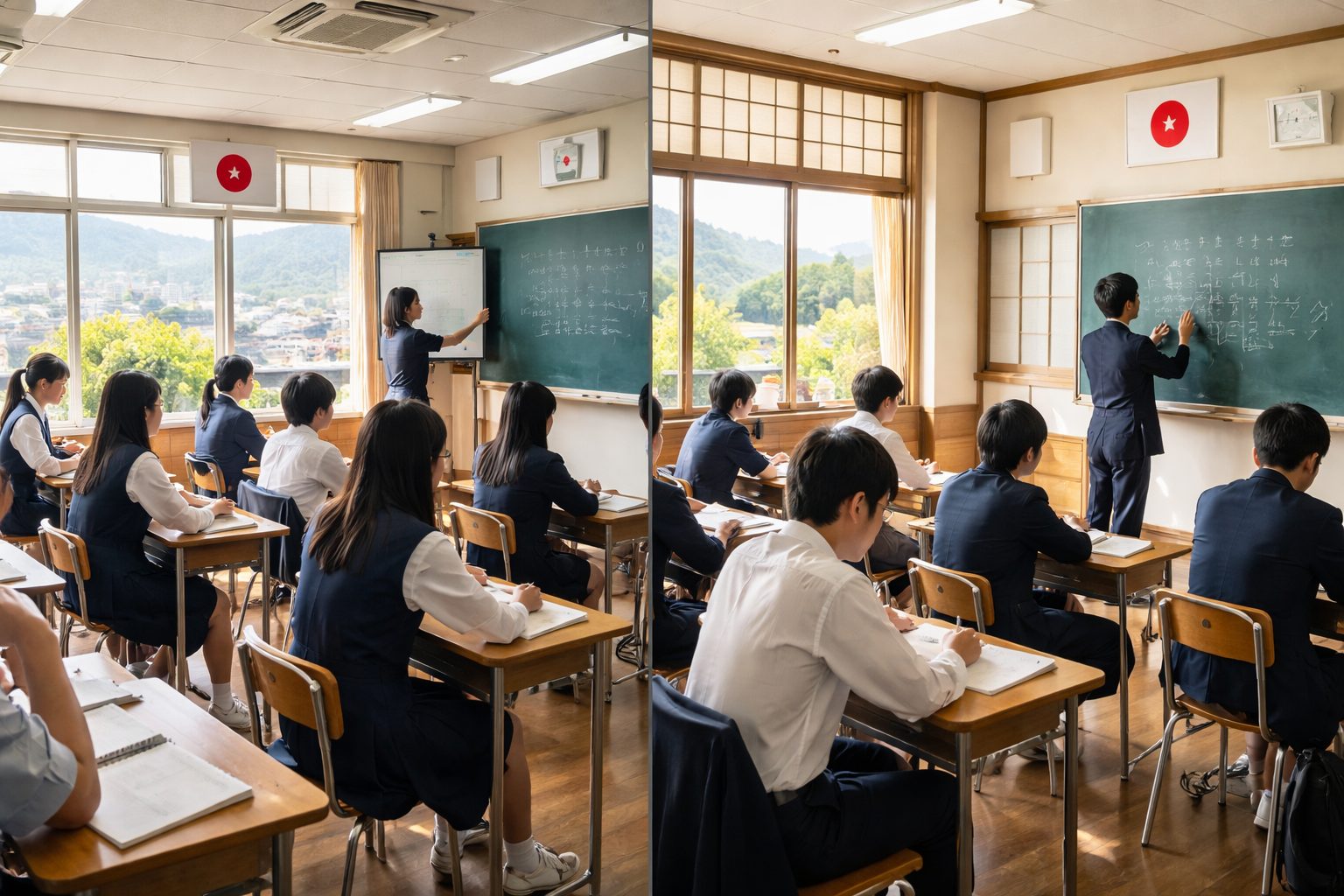
Both countries take education seriously to a degree that often surprises Western observers. The school year in both countries is longer than in most Western nations, and academic expectations are high from an early age.
South Korea’s system is famously intense. Primary school runs for six years, middle school for three, and high school for three. The college entrance exam, called Suneung, is the defining academic event of a student’s life. Preparation begins years in advance, and the hagwon industry (private tutoring academies) generates billions of dollars annually. Students routinely study until midnight or later.
Japan’s system is similarly rigorous but arguably slightly less exam-obsessed at the high school level. There are university entrance exams as well, and cram schools (juku) are common. However, once students enter university, the pressure often drops significantly, and university years are seen as a time for socializing and clubs. In South Korea, the pressure continues through university.
Global Rankings and Performance
Both countries consistently rank near the top of international education assessments. In the PISA rankings, which measure reading, math, and science skills in 15-year-olds, both South Korea and Japan regularly appear in the top 10 globally.
South Korean students tend to score particularly high in mathematics. Japanese students perform strongly across all three domains. Both systems produce highly literate, numerically capable graduates, which feeds directly into their technological and industrial workforces.
The downside of this performance is well-documented. Mental health issues, student burnout, and pressure-related stress are genuine problems in both countries. There’s growing public conversation in South Korea especially about whether the extreme exam culture is sustainable or desirable.
Tourism: South Korea vs Japan
Must-Visit Destinations
Japan has been a top global tourist destination for decades. Tokyo offers a sensory overload of modernity and tradition. Kyoto is Japan at its most historically preserved, with temples, geisha districts, and bamboo forests. Osaka is known for food and nightlife. Hiroshima offers sobering historical reflection. And rural Japan, from the Japanese Alps to the islands of Okinawa, provides experiences far removed from the urban intensity.
South Korea has grown rapidly as a tourist destination, fueled partly by the global popularity of K-pop and Korean dramas. Seoul is the anchor, a city that somehow feels both ancient and hyper-modern at the same time. Gyeongju is the Florence of Korea, full of ancient Silla kingdom sites. Jeju Island offers natural beauty, volcanic landscapes, and beaches. Busan is a coastal city with a relaxed energy and excellent seafood.
Travel Tips and Cultural Etiquette
In Japan, the unwritten rules are numerous and matter a lot to locals. Don’t eat while walking. Don’t speak loudly on trains. Always take off your shoes when entering a home or certain restaurants. Tipping is not just unnecessary, it can be seen as rude. Carry cash because many small establishments don’t accept cards.
South Korea is somewhat more flexible in its etiquette but has its own customs worth knowing. Pouring drinks for others before yourself is standard. Elders eat and drink before younger people. Shoes come off in homes. Unlike Japan, tipping is also not customary in Korea, though it’s generally met with polite refusal rather than offense.
Both countries have excellent public transportation. Tokyo and Seoul both have metro systems that are clean, punctual, and easy to navigate with apps. Getting around without a car is completely feasible in both capitals.
Food and Cuisine: South Korea vs Japan
Traditional Dishes and Popular Foods
Japanese cuisine has global recognition. Sushi and ramen are eaten worldwide. Tempura, soba, udon, tonkatsu, yakitori, and kaiseki represent just a fraction of the depth and variety within Japanese cooking. The philosophy of washoku emphasizes seasonal ingredients, visual presentation, and balance.
Korean cuisine is bolder and spicier, built around fermented flavors and communal eating. Kimchi, the fermented cabbage side dish, is present at almost every meal. Bulgogi (marinated grilled beef), bibimbap (rice with vegetables and meat), samgyeopsal (grilled pork belly), and tteokbokki (spicy rice cakes) are staples. Meals typically come with multiple small side dishes called banchan.
Both cuisines have passionate global fanbases. Japanese food has perhaps the more refined international reputation, with more Michelin-starred restaurants in Tokyo than in any other city in the world. Korean food has surged in global popularity recently, driven partly by cultural exports and the growing interest in fermented foods.
Culinary Influences and Trends
Japanese cuisine has influenced global cooking deeply, from the precision techniques adopted by chefs worldwide to the popularization of umami as a recognized flavor category. Japanese restaurants have spread to every major city across six continents.
Korean food is in a different phase of its global journey, more recent but accelerating fast. The spice-forward, fermented, and intensely flavored profile of Korean cooking has found enthusiastic audiences in the U.S., Europe, and Southeast Asia. Korean BBQ restaurants have become a mainstream dining category in many countries.
There’s also significant cross-pollination between the two cuisines. Korean-Japanese fusion food is common in both countries. Korean fried chicken, influenced in part by Japanese cooking techniques, has become iconic. And Japanese ramen has absorbed Korean flavors in interesting ways.
Lifestyle and Daily Life in South Korea and Japan
Work Culture and Social Norms
Work culture in both countries is demanding by global standards, though they express that demand differently. Japan has a concept called karoshi, which literally means death by overwork. Long hours, loyalty to the company, and a culture of staying late even when work is done have been defining features of Japanese corporate culture for decades. There’s been growing government effort to reform this, with mixed results.
South Korea has its own version of intense work culture. The term ppali ppali, meaning hurry hurry, captures the fast-paced, get-it-done energy that drives Korean business and daily life. Korea’s working hours have historically been among the highest in the OECD. Younger generations in both countries are pushing back against these expectations, though change comes slowly.
Social norms around age and hierarchy are strict in both cultures. In Korea, knowing someone’s age matters immediately because it determines how you speak to them. The Korean language has different speech levels depending on seniority. In Japan, hierarchy in the workplace is also clear, but the expression is often more subtle.
Entertainment and Leisure Activities
South Korea’s entertainment industry has become one of the most globally influential in history. K-pop, Korean dramas (K-dramas), and Korean films have massive international audiences. BTS, Blackpink, and dozens of other groups have fans on every continent. This cultural wave, known as Hallyu or the Korean Wave, has genuinely reshaped global pop culture.
Japan has its own rich entertainment exports: anime, manga, video games, and J-pop. Nintendo, Sony PlayStation, and a long list of game studios have shaped how the world plays games. Studio Ghibli films are loved globally. Anime has gone from a niche subculture to mainstream entertainment.
At home, both countries have vibrant leisure cultures. Koreans love noraebangs (private karaoke rooms), hiking, and PC bang gaming cafes. Japanese leisure culture includes izakayas (casual bars), onsen (hot spring baths), pachinko, and a strong tradition of outdoor festivals.
Sports and Recreation: South Korea vs Japan
Popular Sports and Achievements
Baseball is the most popular spectator sport in both South Korea and Japan. Both countries have strong domestic leagues and have produced players who went on to star in Major League Baseball. Shohei Ohtani from Japan is currently one of the most famous athletes in the world. Korean players like Chan Ho Park and Hyun-jin Ryu made their marks earlier.
Soccer is a major sport in both countries. Japan has had considerable international success, consistently qualifying for the World Cup and performing competitively. South Korea co-hosted the 2002 FIFA World Cup with Japan and famously reached the semifinals. Both national teams are among the strongest in Asia.
Taekwondo is South Korea’s contribution to global martial arts, now an Olympic sport. Korean athletes dominate the discipline internationally. Japan has its own martial arts traditions, including judo, karate, and kendo, with significant Olympic medal counts in these sports.
Major Sporting Events
Japan’s hosting of major international sporting events has been a source of national pride. The 1964 Tokyo Olympics were a landmark moment in Japan’s post-war rehabilitation on the world stage. Tokyo hosted again in 2021 (delayed from 2020 due to the pandemic), though under unusual circumstances without spectators.
South Korea hosted the 1988 Seoul Olympics, which were also a defining national moment tied to its economic rise. The 2002 FIFA World Cup co-hosted by south korea vs japan is one of the most memorable sporting events in both nations’ recent histories. South Korea also hosted the 2018 Winter Olympics in Pyeongchang.
The rivalry between the two countries in sports is real and emotionally charged. Matches between the national teams in baseball, soccer, or any other sport carry extra weight because of the historical relationship between the countries.
Environmental Issues: South Korea vs Japan
Pollution and Sustainability Efforts
Both countries face significant environmental challenges, though they differ in character. South Korea grapples seriously with air quality. Fine dust pollution, partly originating from China and partly from domestic sources, is a major public health issue. On bad days, outdoor air quality in Seoul can rival the worst in the world. Masks for air quality were common in Korea long before the COVID-19 pandemic made them universal.
Japan deals with a different set of environmental concerns. The aftermath of the 2011 Fukushima nuclear disaster reshaped Japan’s energy policy and raised long-term concerns about contaminated water disposal, which became an international issue when Japan began releasing treated water into the Pacific in 2023. Air quality in major Japanese cities is generally better than in Seoul, though historical industrial pollution has left a legacy in some areas.
Both countries face challenges related to aging infrastructure, urban heat islands, and the long-term environmental costs of dense industrialization.
Government Policies and Initiatives
South Korea has set ambitious targets for carbon neutrality by 2050 and has invested heavily in renewable energy, particularly solar and offshore wind. The country is also a major player in electric vehicle battery technology, which has both commercial and environmental implications.
Japan has similarly committed to carbon neutrality by 2050. The country has long been a leader in fuel-efficient vehicles, and its investment in hydrogen fuel cell technology is among the most significant in the world. Japan also has strong recycling infrastructure and waste management systems that serve as models globally.
Both governments have signed major climate agreements and pushed domestic policy, though critics argue that neither country has moved fast enough given the scale of the challenges. Energy security concerns, particularly given both countries’ reliance on energy imports, complicate the transition to renewables.
Technology and Digital Life: South Korea vs Japan
Internet Speed and Connectivity
South Korea consistently ranks among the top countries globally for internet speed. Its broadband infrastructure is exceptional, with near-universal access to high-speed fiber connections in urban areas. 5G coverage in South Korea is the most extensive in the world, both in terms of geography and the percentage of population served.
Japan has strong internet infrastructure, but it has historically lagged behind Korea in raw broadband speed and 5G deployment. Part of this is scale, Japan is a larger and more topographically varied country. Part of it is the slower uptake among older segments of the population. That said, Japan’s connectivity in major cities is excellent by any global standard.
There’s also a cultural dimension here. Japan is famous for a certain paradox: it’s a highly technological country that still relies on fax machines, physical seals called hanko for official documents, and cash transactions to a degree that surprises younger visitors. Digital transformation efforts are underway, but the pace has been slower than in Korea.
Mobile Technology and Innovations
South Korea’s smartphone market is dominated by Samsung, which also happens to be the world’s largest smartphone manufacturer. Korean consumers are often the first to adopt new Samsung and LG features, making the country something of a live testing ground for mobile innovation.
Japan has a unique relationship with mobile technology. In the late 1990s and early 2000s, Japan was actually ahead of the world in mobile internet and mobile payments. But the systems that developed were proprietary and Japan-specific, which meant the global smartphone revolution largely bypassed the native Japanese platforms. Today, iPhones are unusually popular in Japan compared to most markets.
Both countries are active in developing wearable technology, smart home systems, and AI-assisted applications. South Korea’s government has made AI a national strategic priority, with substantial investment aimed at competing with the U.S. and China.
Future Prospects: South Korea and Japan
Emerging Trends and Challenges
Both countries face a demographic challenge that will define their futures. Japan has one of the oldest populations in the world, with a shrinking workforce and a social security system under pressure. South Korea is following a similar trajectory and now has one of the lowest birth rates globally. The societal implications of demographic decline, from housing markets to pension systems to labor supply, are enormous.
Immigration remains a politically sensitive solution in both countries. Japan has traditionally been very restrictive about immigration, though recent labor shortages have pushed some loosening of policies. South Korea is similarly cautious but has seen growing numbers of foreign workers, particularly in manufacturing and agriculture.
Technological competition with China is another defining challenge. Both South Korea and Japan are deeply embedded in global semiconductor and electronics supply chains, and the intensifying rivalry between the U.S. and China puts them in complex positions. Managing relationships with both while protecting their technological advantages requires careful navigation.
Potential Collaborations and Conflicts
Despite their historical tensions, south korea vs japan relations have shown signs of pragmatic improvement in recent years, particularly under shared security concerns about North Korea and China. The three-way relationship between the U.S., South Korea, and Japan is a cornerstone of regional stability, and all three parties have incentive to manage bilateral friction carefully.
There are genuine areas for collaboration. Semiconductor supply chains, clean energy technology, and aging society solutions are all domains where Korean and Japanese expertise could complement each other. Cultural exchange continues to grow despite political friction, with Japanese tourists in Korea and Korean cultural exports in Japan both at high levels.
But conflicts don’t disappear easily. Historical grievances have deep emotional roots. Territorial disputes aren’t going away. And as both countries navigate their relationships with China and the U.S., their strategic interests won’t always align. The relationship between these two countries will remain one of the most important and complex bilateral dynamics in Asia for decades to come.
Frequently Asked Questions (FAQ)
What are the main similarities between South Korea and Japan?
Both countries are high-income democracies with strong manufacturing sectors, deep cultural traditions, and close security alliances with the United States. They share Confucian values around hierarchy and education, similar demographic challenges, and intense, high-performing education systems. Despite historical tensions, there’s significant cultural exchange and economic interdependence between the two.
How do the living costs compare in South Korea and Japan?
Seoul and Tokyo are both expensive cities by global standards, but they’re broadly comparable in overall cost of living. Housing in Tokyo is generally slightly more expensive than in Seoul, but the gap has narrowed. Dining out is affordable in both cities, especially at street food and local restaurant level. Public transportation is efficient and reasonably priced in both capitals.
Which country is better for expats: South Korea or Japan?
It depends heavily on what you’re looking for. Japan offers a more established expat infrastructure in cities like Tokyo and Osaka, with extensive English-language support for newcomers. South Korea, particularly Seoul, has a growing and highly active expat community, often younger and more connected to tech and creative industries. Both require real effort to learn the local language if you want to integrate meaningfully beyond the expat bubble.