India is one of those places that defies easy description. The sheer range of things to do in India, from hiking Himalayan passes to sipping chai in ancient bazaars, means that no two trips here look the same. I’ve traveled across a lot of countries, and India consistently surprises me. It’s loud, complex, layered, and deeply alive in a way that’s hard to articulate until you’ve stood at the ghats of Varanasi at dawn or watched the sun set over the Thar Desert. Whatever kind of traveler you are, India has something waiting for you.
This guide covers the full spectrum: iconic landmarks, hidden corners, adventurous activities, food trails, spiritual retreats, family outings, and hard-earned practical tips. I’ve organized it so you can dip into whatever interests you most, whether you’re planning a two-week trip or a months-long journey.
Introduction to India’s Diversity
India is the seventh-largest country in the world by area and the most populous. That alone tells you something. But statistics don’t quite capture what makes it extraordinary. Within a single country you’ll find tropical beaches, Arctic-altitude glaciers, ancient ruins, futuristic cities, dense rainforests, and shifting sand dunes. The cultural diversity is equally staggering, 22 officially recognized languages, hundreds of regional dialects, dozens of distinct cuisines, and religious traditions that span millennia.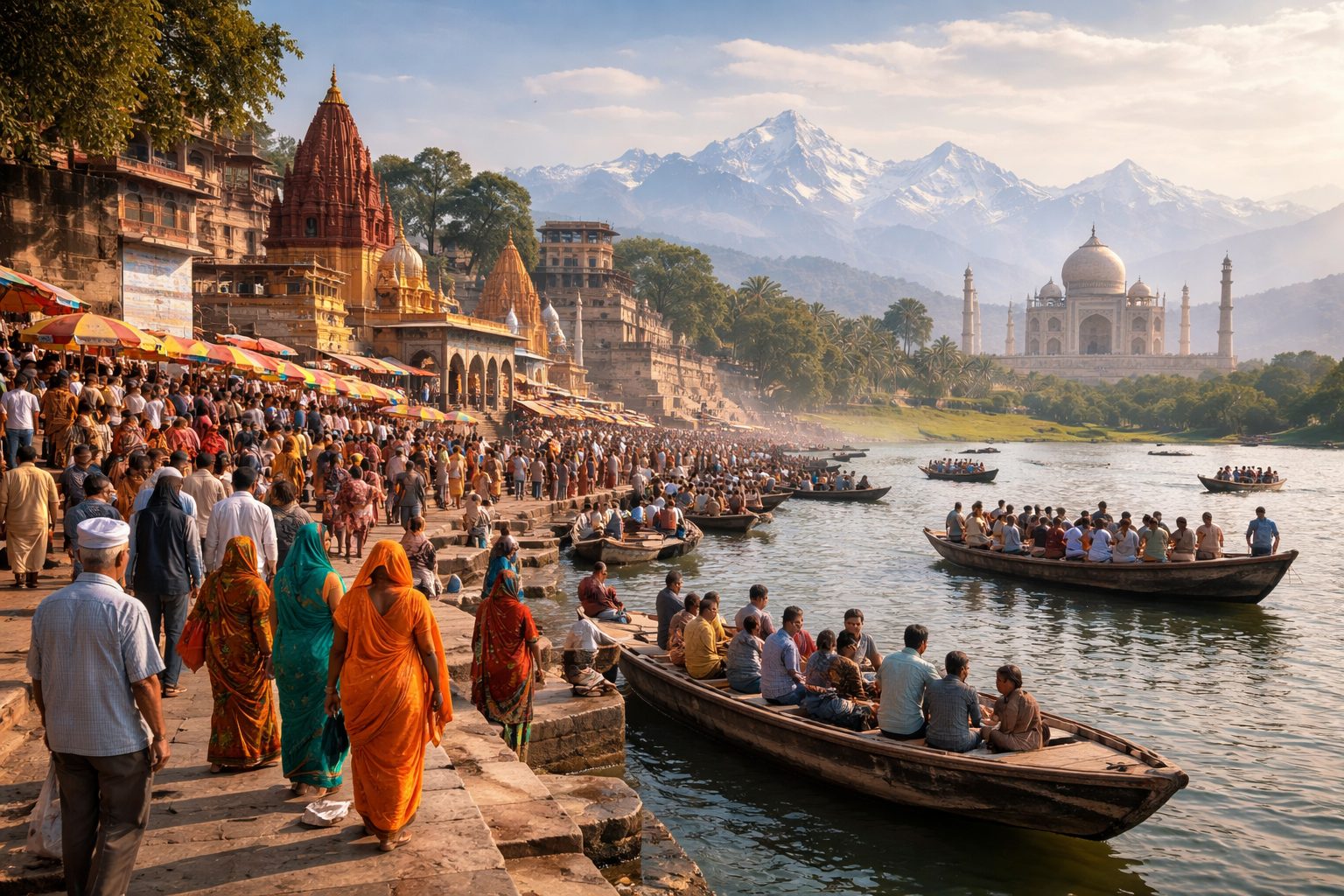
This diversity is both the challenge and the reward of traveling here. You can’t “do” India the way you might do a smaller country. You have to choose. And that means accepting that every trip will leave you with a long list of places to return to. I find that part of the appeal.
The experiences available also range wildly by region. The north is heavily influenced by Mughal and Rajput history. The south holds some of the oldest living cultural traditions on Earth. The northeast is culturally closer to Southeast Asia than to Delhi. Each region deserves attention on its own terms.
Top Tourist Destinations in India
Historical Landmarks
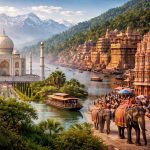
India’s historical landmarks are dense with meaning. The Taj Mahal in Agra is the obvious starting point, and it really does live up to the hype when you see it at sunrise before the crowds arrive. But it’s one data point in a much larger story.
Some historical sites worth prioritizing:
- Hampi (Karnataka), a UNESCO World Heritage Site with extraordinary boulder-strewn ruins of the Vijayanagara Empire
- Khajuraho (Madhya Pradesh), medieval temples with intricate and often explicitly erotic carvings
- Ajanta and Ellora Caves (Maharashtra), rock-cut Buddhist, Hindu, and Jain monuments dating back to the 2nd century BCE
- Red Fort and Qutub Minar (Delhi), Mughal-era architecture at two very different scales
- Rani Ki Vav (Gujarat), an elaborately carved stepwell that’s genuinely one of the most beautiful structures in the country
Don’t rush historical sites. Hire a knowledgeable local guide rather than relying on audio tours. The context makes an enormous difference.
Natural Wonders
The natural diversity here is remarkable. In the north, Ladakh offers landscapes that look like they belong on another planet, high-altitude lakes, stark brown mountains, and Buddhist monasteries perched on cliffs. The Valley of Flowers in Uttarakhand blooms with alpine wildflowers from July to September. Meghalaya in the northeast is one of the wettest places on Earth and home to living root bridges woven from the roots of rubber fig trees.
In the south, the Western Ghats are a biodiversity hotspot. Kerala’s backwaters offer a completely different experience, flat, green, and navigated by houseboat. The Sundarbans mangrove delta in West Bengal is the world’s largest, and it’s home to the Bengal tiger.
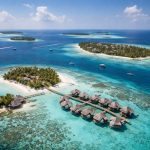
For beaches, Goa gets the most attention but Andaman and Nicobar Islands offer some of the cleanest water and least-developed coastline you’ll find in South Asia.
Urban Experiences
India’s cities are intense. Delhi, Mumbai, Kolkata, Chennai, Bengaluru, Hyderabad, each has a personality distinct enough that visiting two of them feels like visiting different countries.
Mumbai has its chaos but also the Art Deco architecture of Marine Drive, the colonial heritage of South Mumbai, excellent contemporary art, and a food scene that ranges from street-corner vada pav to world-class restaurants. Delhi gives you layered history in almost every neighborhood. Bengaluru has a craft brewery scene and a young, tech-driven creative culture. Kolkata still carries an intellectual and artistic tradition that goes back centuries.
Spending even two to three days in a major Indian city tends to reshape assumptions. The chaos is real, but so is the rhythm underneath it.
Cultural Sites
Beyond formal monuments, India’s living cultural sites are worth seeking out. The ghats of Varanasi are functioning places of worship, cremation, and daily ritual, not a performance for tourists. The Sikh Golden Temple in Amritsar operates a langar (community kitchen) that feeds up to 100,000 people a day, free of charge, regardless of religion. Both are open to respectful visitors.
Madhurai’s Meenakshi Amman Temple complex in Tamil Nadu is another one. It’s enormous, architecturally overwhelming, and actively used. The best time to visit these kinds of sites is early morning or during evening prayers, when they’re most alive.
Adventure Activities in India
Trekking and Hiking
India has some of the world’s best trekking, though it remains underrated compared to Nepal. The main Himalayan states, Himachal Pradesh, Uttarakhand, Sikkim, and Ladakh, each have trail networks that range from day hikes to multi-week expeditions.
Popular trekking routes include:
- Chadar Trek (Ladakh), a winter trek across the frozen Zanskar River, best for experienced cold-weather trekkers
- Roopkund Trek (Uttarakhand), leads to a glacial lake surrounded by human skeletons, genuinely eerie and beautiful
- Goecha La (Sikkim), close views of Kangchenjunga, the world’s third-highest peak
- Hampta Pass (Himachal Pradesh), crosses a dramatic pass connecting the Kullu Valley to Spiti
- Kedarkantha (Uttarakhand), a popular winter summit trek with good snow and manageable difficulty
The Western Ghats and northeast India also have trekking options that most visitors miss entirely. The Dzukou Valley in Nagaland, for instance, is remote and stunningly beautiful.
Water Sports
Goa is the main hub for water sports in India, with jet skiing, parasailing, banana boat rides, and scuba diving all available along the northern and southern coasts. The water clarity is better in southern Goa and especially along the Andaman and Nicobar Islands, where snorkeling and diving reveal coral reefs that are still largely intact.
River rafting on the Ganges near Rishikesh ranges from Grade I to Grade IV depending on the season and stretch. The season runs from September to June, with October through November and March through May offering the best conditions. Ziro Valley and Kaziranga in the northeast also have river experiences that feel completely wild.
Wildlife Safaris
India has a well-developed network of national parks and tiger reserves. Jim Corbett National Park in Uttarakhand is the oldest and one of the most famous, but Bandhavgarh (Madhya Pradesh) and Kanha (Madhya Pradesh) generally offer better tiger sighting probabilities. Ranthambore in Rajasthan is popular and accessible from Jaipur.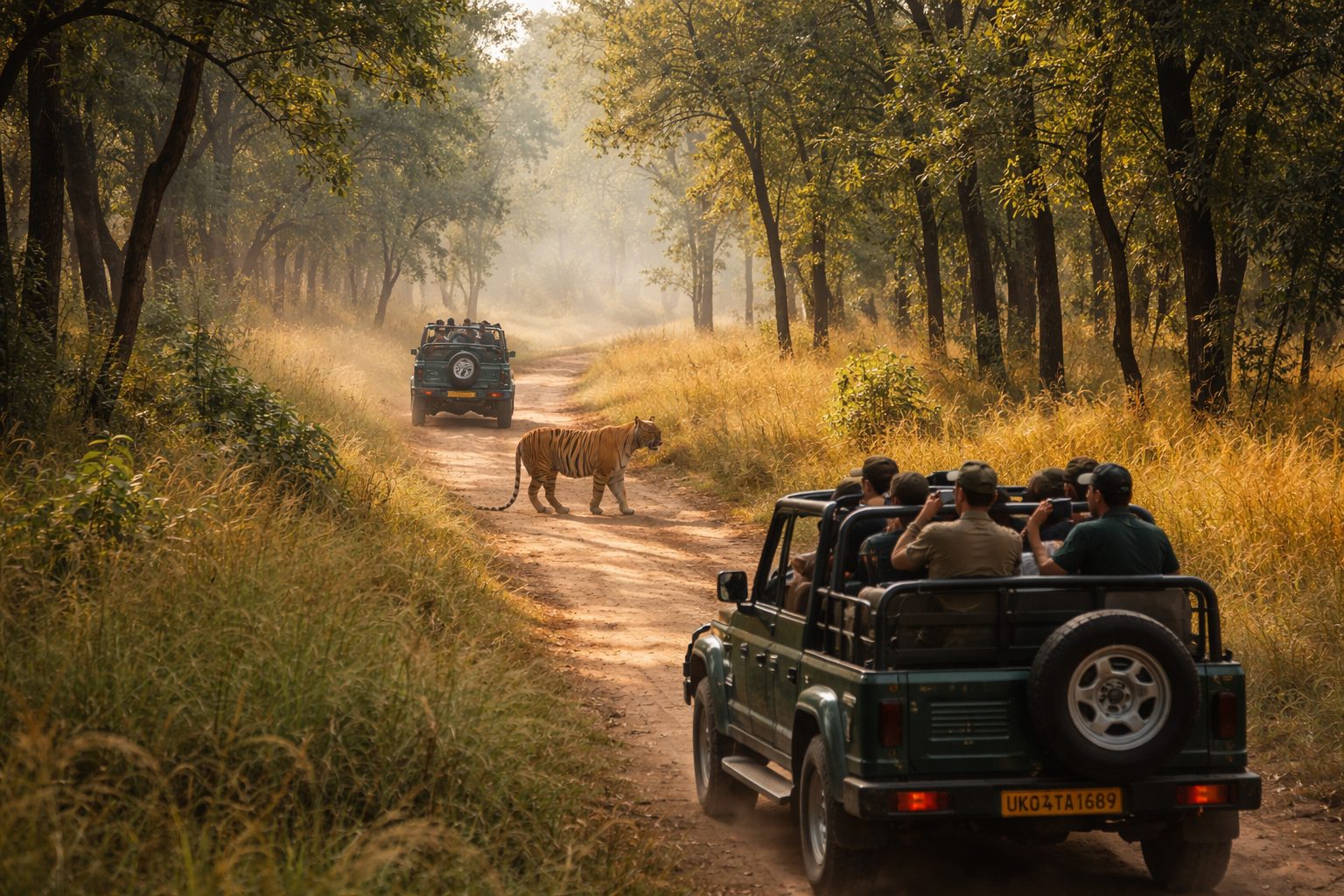
For wildlife beyond tigers:
- Kaziranga National Park (Assam), the best place in the world to see Indian one-horned rhinoceros
- Gir Forest National Park (Gujarat), the only place on Earth where Asiatic lions live in the wild
- Periyar Tiger Reserve (Kerala), elephants, gaur, and sometimes sloth bears in a lush hill station setting
- Sundarbans (West Bengal), brackish mangrove ecosystems accessible only by boat
Book safaris well in advance, especially from October through March. Morning drives generally yield more sightings than evening drives.
Extreme Sports
The options here have expanded significantly in recent years. Paragliding in Bir Billing (Himachal Pradesh) is world-class, Billing is considered one of the top paragliding sites in Asia. Bungee jumping is available at Rishikesh, which has built an entire adventure sports industry around its position near the Himalayas and the Ganges.
Rock climbing has a small but serious community, particularly in areas around Badami (Karnataka) and Hampi. Mountain biking tours are available in Spiti and Ladakh. Hot air ballooning operates seasonally near Jaipur and Pushkar.
Culinary Experiences in India
Regional Cuisines
The food in India varies more by region than most visitors expect. North Indian food, butter chicken, dal makhani, naan, is what most people know, but it represents a narrow slice of a much wider picture.
Here’s a quick regional breakdown:
| Region | Signature Dishes | Key Characteristics |
|---|---|---|
| North India | Biryani, Butter Chicken, Roti | Rich curries, wheat-based bread, dairy |
| South India | Dosa, Sambar, Rasam, Idli | Fermented rice dishes, tamarind, coconut |
| West India | Dhokla, Pav Bhaji, Vindaloo | Tangy, spiced, influenced by trade routes |
| East India | Macher Jhol, Rasgulla, Momos | Fish-heavy, mustard oil, sweet desserts |
| Northeast India | Bamboo shoot dishes, smoked meats | Tribal recipes, less spice, Southeast Asian influence |
Eating your way through these regional differences is one of the most rewarding things to do in India.
Street Food Tours
Street food is a serious subject here. In Delhi, the Paranthe Wali Gali in Chandni Chowk serves stuffed parathas that have been cooked in the same style for generations. Mumbai’s vada pav is a fried potato fritter in a bread roll, simple and perfect. Kolkata’s kati rolls (spiced meat or egg wrapped in a flaky paratha) are some of the best food I’ve eaten anywhere.
A few tips for eating street food safely:
- Look for stalls with high turnover, fresh food is safer food
- Avoid pre-cut fruit sitting in the open
- Stick to cooked food in the early days of your trip while your stomach adjusts
- Chai is almost always safe and a great way to start any street food exploration
Guided street food tours are available in most major cities and are worth it for a first visit. Guides know which stalls are reliable and can explain the history behind the food.
Cooking Classes
Learning to cook Indian food while you’re in India is a completely different experience from trying to replicate recipes at home. Spice markets here are overwhelming in the best way. A good cooking class will take you through the logic of spice combinations rather than just handing you a recipe.
Cooking classes are widely available in Jaipur, Varanasi, Kochi, and Udaipur. Many guesthouses offer classes, and the quality varies, look for small group settings where you actually cook, not just watch. Participating in a market run before the class adds real context.
Some classes focus on regional specialties. In Kochi, you can learn Kerala seafood cooking. In Varanasi, the focus tends to be on vegetarian Banarasi cuisine. In Jaipur, Rajasthani dishes that travel well in desert heat. Each tells you something about the place.
Festivals and Events in India
Popular Festivals
India’s festival calendar is packed year-round, and timing your trip around a major festival can transform the experience entirely.
Diwali, the festival of lights, falls between October and November and is celebrated nationwide with fireworks, sweets, oil lamps, and family gatherings. Holi in March is visually spectacular, powdered colors thrown in the streets, music, dancing, and an atmosphere that breaks down usual social barriers. Durga Puja in Kolkata is on a different scale entirely, with elaborate temporary structures (pandals) built across the entire city for five days.
Other festivals worth planning around:
- Pushkar Camel Fair (Rajasthan, November), livestock trading meets pilgrimage meets carnival
- Pongal (Tamil Nadu, January), a harvest festival with rice dishes, cattle ceremonies, and public celebrations
- Ganesh Chaturthi (Maharashtra, August/September), 10-day festival culminating in massive processions to immerse clay Ganesh statues in the sea
- Onam (Kerala, August/September), harvest festival with snake boat races and elaborate flower carpets
Cultural Events
Beyond religious festivals, India has a growing calendar of cultural events. The Jaipur Literature Festival in January is one of the largest in the world, drawing authors, thinkers, and readers from across the globe, and much of it is free to attend. The Kochi-Muziris Biennale, held in Kochi from December to April, is Asia’s largest contemporary art exhibition.
Classical music and dance festivals are held year-round in major cities. The Khajuraho Dance Festival takes place in front of the illuminated temples and showcases Bharatanatyam, Kathak, and other classical forms. These events are often underpriced relative to their quality.
Music and Dance Festivals
India’s performing arts scene has diversified. While classical traditions are maintained and celebrated, there’s also a thriving electronic music scene centered around Goa (particularly around New Year), festival culture in Bengaluru and Mumbai, and a growing indie music circuit in Delhi and Pune.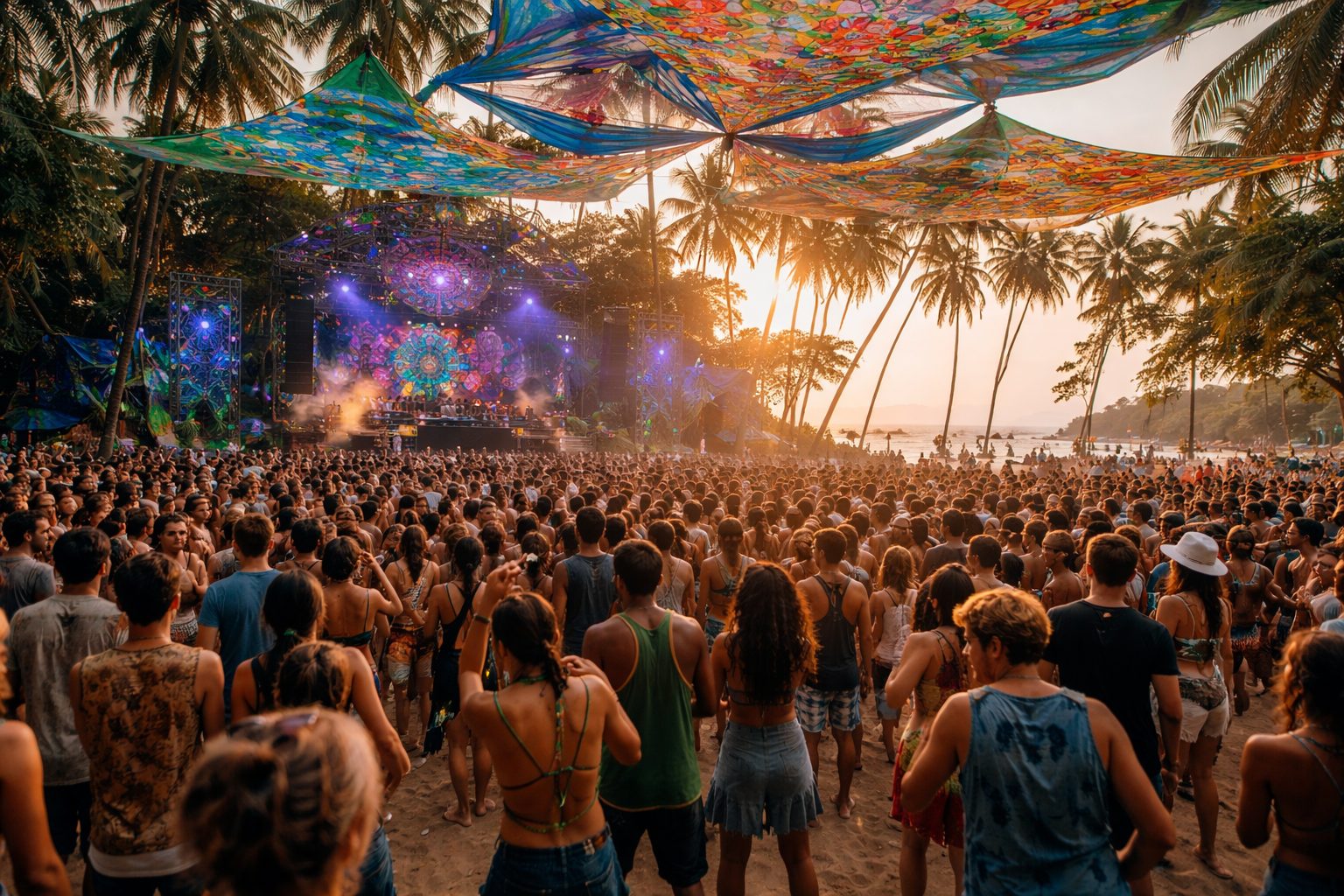
The Ziro Music Festival in Arunachal Pradesh is one of the more unusual music events in Asia, held in a valley surrounded by the Apatani tribe’s rice paddies, it draws independent musicians from across India and abroad. The intimacy and setting make it memorable.
For traditional performing arts, Kerala’s Kathakali performances are widely available for tourist audiences in Kochi and Thiruvananthapuram, but a full traditional performance lasts through the night and is worth seeking out at least once.
Wellness and Spiritual Retreats
Yoga and Meditation
Rishikesh is marketed heavily as the “Yoga Capital of the World,” and while that tagline is overused, the density of yoga schools and meditation centers there is real. It sits at the foothills of the Himalayas, next to the Ganges, and there’s a genuine spiritual atmosphere beyond the cafes and tourists. The ashrams along the banks offer everything from day classes to month-long residential programs.
Mysore in Karnataka is a more serious destination for traditional Ashtanga yoga study. Practitioners come from around the world to study at the Ashtanga Yoga Research Institute. It’s quieter than Rishikesh and more focused.
Dharamshala in Himachal Pradesh is home to the Tibetan government in exile and has a strong tradition of Vipassana meditation retreats. The 10-day silent Vipassana courses are free (you’re asked to donate after completion) and genuinely transformative, though demanding.
Ayurveda Treatments
Ayurveda is a 3,000-year-old system of medicine native to India, and Kerala is where the most authentic and skilled practitioners work. A proper Ayurvedic treatment program, called Panchakarma, involves multiple days of consultations, dietary changes, and specific therapies tailored to your constitution. It’s not the same as a spa massage, though those are also available and pleasant.
Certified Ayurvedic hospitals and resorts in Kerala include options ranging from basic guesthouses with a resident vaidya (practitioner) to high-end resorts with full medical programs. The Kerala Tourism board certifies centers, which is a useful filter for quality. Expect treatments to involve a lot of medicated oils and some procedures that are genuinely unfamiliar to most Western travelers.
Spiritual Tours
The Char Dham circuit in Uttarakhand, comprising Yamunotri, Gangotri, Kedarnath, and Badrinath, is one of the most important Hindu pilgrimage routes and can be done as a spiritual journey or as a serious mountain trek, depending on how you approach it. The Vaishno Devi shrine in Jammu is visited by millions of pilgrims annually and sits at 5,200 feet, requiring a trek of about 14 kilometers each way.
Beyond Hindu sites, the Buddhist circuit covering Bodh Gaya, Sarnath, Lumbini (across the border in Nepal), and Kushinagar traces the life of the Buddha and draws practitioners from across Asia. India also has important Jain pilgrimage sites, Sikh historical gurdwaras, and centuries-old churches in Kerala and Goa.
Shopping Experiences in India
Traditional Markets
India’s traditional markets, called bazaars or haats, are an experience in themselves. Chandni Chowk in Old Delhi is chaotic and wonderful, organized (loosely) by trade: fabric in one alley, spices in another, silver jewelry in another, electronics somewhere else. The density of goods and people is extreme.
Johari Bazaar in Jaipur is the place for gemstones and jewelry, and Rajasthan in general is excellent for textiles and block-printed fabrics. The Thieves Market in Kolkata (Chor Bazaar) has antiques, old books, and miscellaneous curiosities. Lal Darwaza in Hyderabad is known for lacquerware and traditional crafts.
Bargaining is expected in most unpriced markets. Start lower than you expect to settle, stay polite, and be willing to walk away. Prices for tourists are often significantly higher than for locals.
Modern Malls
India’s major cities have modern retail infrastructure alongside the traditional markets. Delhi’s Select Citywalk, Mumbai’s Phoenix Palladium, and Bengaluru’s UB City are proper high-end malls with international brands. These coexist with street markets within a few kilometers of each other.
For practical shopping needs, adapters, medications, sim cards, toiletries, modern malls and pharmacies are the most reliable. Chemist and pharmacy chains like Apollo Pharmacy and MedPlus are widely available and well-stocked.
Souvenirs and Handicrafts
India’s handicraft traditions are among the richest in the world, and buying directly from artisans or from certified craft cooperatives ensures both quality and fair compensation.
Worthwhile things to buy:
- Pashmina shawls (Kashmir), genuine Pashmina is hand-spun and expensive; be skeptical of cheap versions
- Block-printed cotton fabrics (Rajasthan), particularly from Jaipur and Bagru
- Bronze Dhokra castings (Chhattisgarh, Odisha), a lost-wax casting technique with tribal roots
- Madhubani paintings (Bihar), traditional folk paintings done on paper or cloth
- Ceramic pottery (Jaipur, Khurja), blue pottery is distinctive and fragile; pack carefully
- Sandalwood carvings (Karnataka), expensive but beautifully detailed
Government emporiums like the Cottage Industries Exposition (Cottage Emporium) in Delhi offer fixed prices and reliable quality across crafts from every state.
Offbeat Places to Visit in India
Hidden Gems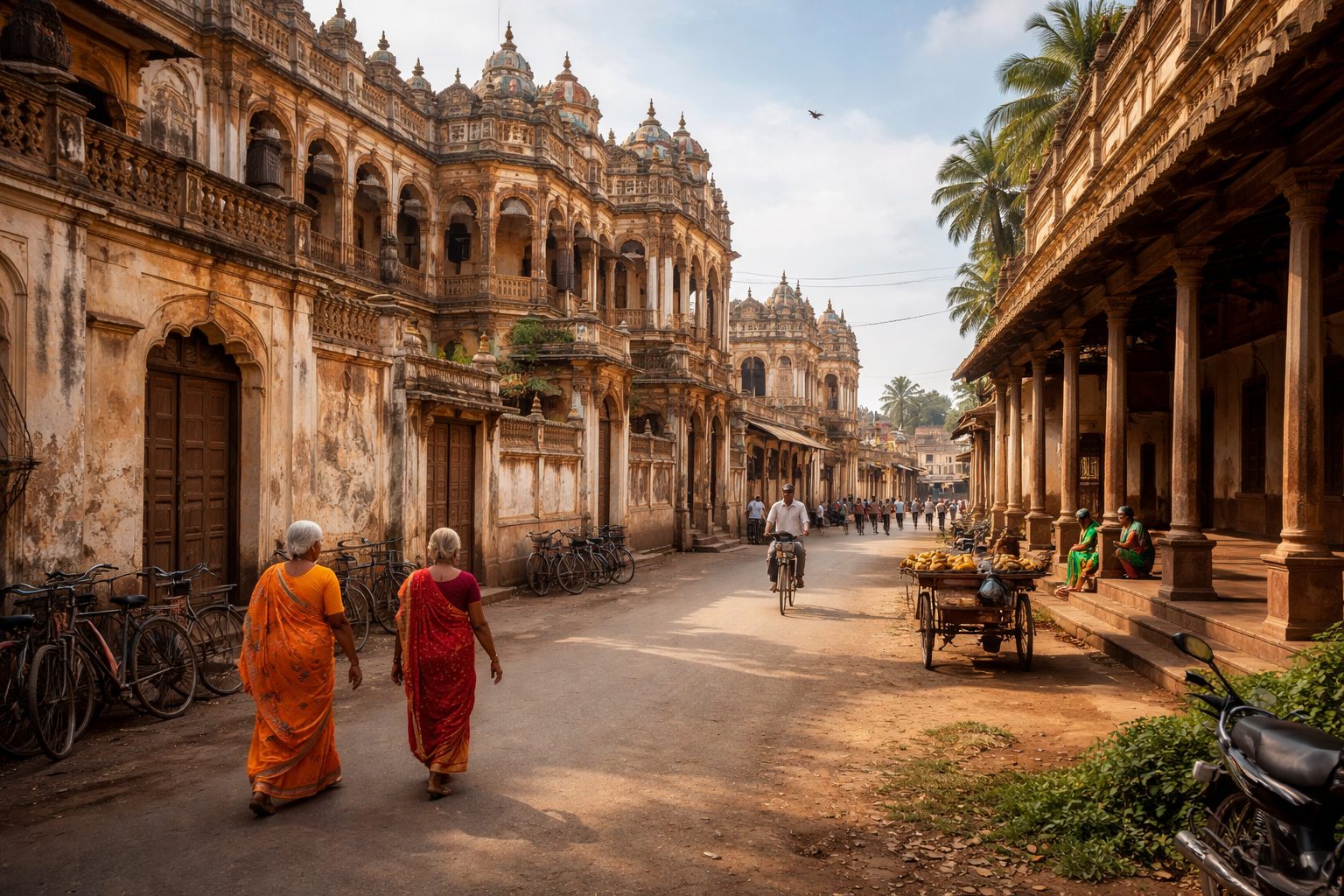
The most interesting experiences in India are often the ones not in the top ten lists. Chettinad in Tamil Nadu is a cluster of palatial mansions built by merchant families in the 19th century, many of them now quietly decaying and open to visitors. The Unakoti rock carvings in Tripura, massive faces carved into stone cliffs in a jungle setting, see a fraction of the visitors that more famous sites do.
Mawlynnong in Meghalaya has been called the cleanest village in Asia, and the area’s living root bridges are extraordinary. Ziro Valley in Arunachal Pradesh has rice paddies, traditional Apatani villages, and a pace of life that feels far from anything modern.
Lesser-Known Attractions
Beyond the famous circuit of Delhi-Agra-Jaipur (the “Golden Triangle”), India has historical and natural sites that are equally significant but far less crowded.
Some undervisited highlights:
- Mandu (Madhya Pradesh), a ruined city on a plateau with exceptional Afghan architecture
- Spiti Valley (Himachal Pradesh), a high-altitude cold desert with ancient monasteries and almost no tourist crowds
- Lepakshi (Andhra Pradesh), a 16th-century temple complex with a hanging pillar and one of India’s largest Nandi statues
- Little Rann of Kutch (Gujarat), a salt marsh that floods seasonally and is home to wild Indian asses and thousands of flamingos
- Tawang (Arunachal Pradesh), one of the largest Buddhist monasteries in Asia, near the Tibetan border
Unique Experiences
Some experiences in India are genuinely singular. Sleeping overnight on a houseboat in the Kerala backwaters is one. Attending the early morning aarti (prayer ceremony) at the Ganges in Varanasi is another, witnessing thousands of oil lamps float down the river while priests perform rituals with fire is something you won’t encounter anywhere else.
Witnessing the Changpa nomads moving their herds across Ladakh’s high-altitude pastures, or staying with a family in a tribal homestay in Nagaland, or watching a Theyyam ritual performance in north Kerala, these are all real and accessible with the right amount of planning.
Family-Friendly Activities in India
Theme Parks
India has developed a reasonable theme park infrastructure over the past two decades, concentrated in major cities. Imagica near Mumbai is the largest, with about 30 rides and attractions spread across a theme park, water park, and snow park. Wonderla operates parks in Bengaluru, Kochi, and Hyderabad, with a good mix of thrill rides and water attractions.
These parks are well-maintained by Indian standards and offer a break from the intensity of city sightseeing for families with kids who need some downtime.
Educational Tours
India is extraordinarily rich in educational travel for curious kids (and adults). Science City in Kolkata and Nehru Science Centre in Mumbai offer hands-on exhibits across multiple floors. The National Museum in Delhi has collections spanning 5,000 years of Indian history.
The Indian Institute of Astrophysics in Bengaluru and IUCAA in Pune occasionally run public programs. Many archaeological sites, including Hampi, have excellent on-site museums. Heritage walks in cities like Ahmedabad (which has UNESCO recognition as India’s first World Heritage City) combine architecture, history, and urban exploration at a pace that works for families.
Nature Parks
Beyond wildlife reserves, India has accessible nature parks and botanical gardens in and around most major cities. The National Zoological Park in Delhi is one of the better urban zoos in South Asia. The Arignar Anna Zoological Park in Chennai is the largest zoo in India by area.
Corbett National Park and Kaziranga are both suitable for families with older children who can manage early morning jeep safaris. The Periyar Tiger Reserve in Kerala offers boat rides on the lake, which gives children a chance to spot elephants without the bumpy jeep rides. For purely scenic nature, Coorg in Karnataka is an accessible hill station with coffee estates, waterfalls, and mild temperatures.
Practical Travel Tips for India
Best Time to Visit
India is large enough that the right time to visit depends entirely on where you’re going. A simple regional breakdown:
- North India (Rajasthan, Delhi, Agra): October to March, when temperatures are comfortable
- Himalayan regions (Ladakh, Spiti, Manali): June to September, when mountain passes are open
- South India (Kerala, Tamil Nadu, Karnataka): November to February, avoiding monsoon humidity
- Northeast India: October to April, with some areas accessible during summer as well
- Goa and coastal regions: November to February for dry, sunny beach weather
Monsoon season runs roughly from June to September across most of the country. Travel is harder, some attractions close, and some areas flood. But it’s also when India turns extraordinarily green, crowds thin out significantly, and prices drop. Certain experiences, like seeing Kerala’s lush backwaters at full water levels, are actually better during or just after monsoon.
Transportation Options
Getting around India has improved dramatically. Domestic flights are affordable and connect most major cities. The Indian Railways network is one of the largest in the world and is worth using, not just for practicality, but because train travel here is an experience in itself. Book train tickets as early as possible, especially for popular routes during peak season. The IRCTC website and app handle bookings but can be frustrating for non-Indian accounts; third-party booking services like Cleartrip or MakeMyTrip are often easier for visitors.
For shorter distances, ride-hailing apps Ola and Uber work well in most cities. Auto-rickshaws remain useful for shorter urban trips. For Himalayan areas, shared jeeps are the primary mode of transport once you leave the main highways. Renting a car with a local driver (not self-drive, which is genuinely difficult in India’s traffic conditions) is often the most comfortable way to cover a regional itinerary at your own pace.
Safety Tips
India is generally safe for travelers, but the usual common sense applies. Keep digital copies of all important documents. Use hotel safes for passports and extra cash. Be cautious with unmarked taxis at airports, use pre-paid taxi counters or booked rides instead.
Scams targeting tourists exist, particularly in Delhi and around major tourist sites. The most common involve “helpful” strangers who steer you toward overpriced shops or fake government tourism offices. If someone approaches you unsolicited with advice about changing your plans, be skeptical.
For health: drink only bottled or filtered water, be careful with ice, and carry a basic medical kit including oral rehydration salts and a broad-spectrum antibiotic (get a prescription before you travel). Many travelers experience stomach issues in the first week, it’s common and usually mild.
Solo female travelers do travel in India, and many report positive experiences. Some regions are more comfortable than others. Big cities have better infrastructure and more social norms around public behavior. Researching specific areas before you travel and connecting with other travelers’ recent experiences online is useful.
Frequently Asked Questions About Things to Do in India
What are the must-visit places in India?
The Taj Mahal, Varanasi’s ghats, Rajasthan’s forts and palaces, Kerala’s backwaters, and Ladakh’s mountain landscape each represent a different dimension of India. No single trip can cover everything, so prioritize based on what draws you most, whether that’s history, nature, spirituality, or food.
How to plan a trip to India?
Start by deciding your main interest and the regions that match it, then build around a realistic timeline. India rewards slow travel more than rushing. Give yourself at least three weeks for a first visit, factor in travel time between regions, and book accommodation and train tickets in advance during October through March.
What activities are suitable for solo travelers?
Solo travel in India is very feasible. Joining group tours for specific activities like safaris, trekking, or cooking classes is a good way to meet people and reduce logistics. Staying in hostels in major cities and popular tourist towns creates natural social opportunities. Backpacker hubs like Rishikesh, Pushkar, Hampi, and Varkala have well-developed solo traveler infrastructure.
Are there activities for budget travelers?
India remains one of the most affordable destinations in the world for travelers. Overnight trains save on accommodation. Street food keeps food costs extremely low. Many historical sites charge minimal entry fees for Indian nationals, with higher but still reasonable fees for foreign visitors. Free experiences, temples, ghats, markets, festivals, fill any itinerary with substance at no cost.
India doesn’t demand a large budget. What it demands is time, curiosity, and a willingness to let go of the itinerary when something unexpected appears, which it will. The best things to do in India are often the ones you didn’t plan for.