India is one of those rare countries that genuinely defies a single description. It’s ancient and modern at the same time, overwhelming and calming, loud and serene. I’ve spent years exploring it, and every trip still surprises me. Whether you’re drawn to snow-capped mountain passes, pristine beaches, centuries-old temples, or the controlled chaos of its mega-cities, the places to visit in india are so varied that no two travelers will come back with the same story.
This guide covers the essential destinations across the country, from the iconic to the underrated. I’ll walk you through must-see spots, natural wonders, cultural landmarks, and practical tips so you can plan a trip that actually works for you.
Introduction to India’s Diverse Attractions
India spans 3.3 million square kilometers and has 28 states, each with its own language, cuisine, architecture, and cultural rhythm. That’s not a travel brochure line. It genuinely means that a week in Rajasthan feels nothing like a week in Kerala, and both feel completely different from spending time in the Northeast.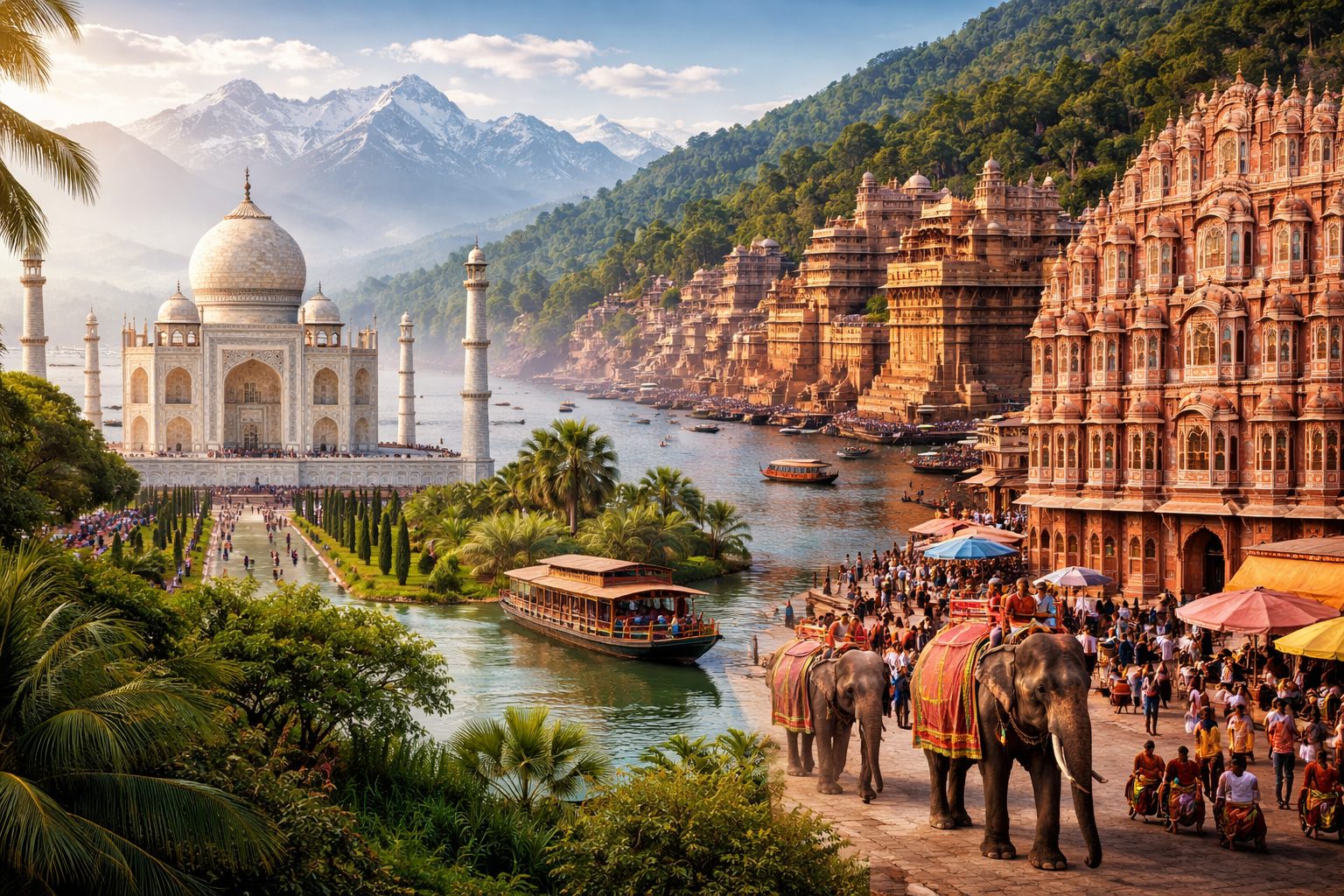
The places to visit in india range from UNESCO World Heritage Sites to remote villages that barely appear on maps. You can track tigers in Ranthambore, sail houseboats through Kerala’s lagoons, meditate at the ghats of Varanasi, or party on Goa’s beaches. The sheer range of experiences is hard to match anywhere else on Earth.
What makes India compelling beyond the landmarks is the density of life. Markets, festivals, street food, local trains, neighborhood rituals. The country never stops performing, and that energy is often what travelers remember most long after they’ve left.
Top 10 Must-Visit Places in India
If you’re trying to figure out where to start, these are the destinations that consistently deliver. Some are famous for obvious reasons. Others have a depth that photos don’t quite capture.
1. The Taj Mahal, Agra
No list of places to visit in india is complete without the Taj Mahal. I know it’s predictable to say that, but the monument earns its reputation. Built in the 17th century by Mughal emperor Shah Jahan for his wife Mumtaz Mahal, the structure is a study in symmetry and craftsmanship that still feels extraordinary.
Arrive early, before the crowds thin out the magic. The light at sunrise gives the white marble a soft pinkish glow that afternoon visits simply can’t offer. Agra also has the Agra Fort and the lesser-visited Fatehpur Sikri nearby, which are worth a day of your time.
2. Jaipur, The Pink City
Jaipur is the kind of city where history is still visibly alive. The Amber Fort, Hawa Mahal, Jantar Mantar, and the City Palace aren’t just landmarks. They’re part of daily life for residents and give visitors a sense of Rajputana grandeur that few places replicate.
The city gets its nickname from the terracotta-pink buildings that line its old city streets. It’s the starting point of the Golden Triangle tourist circuit along with Delhi and Agra, and for good reason. The food, the textiles, the jewelry markets, and the architecture make it one of the most photographed cities in the country.
3. Varanasi, The Spiritual Capital
Varanasi is unlike any place I’ve ever been. It’s one of the oldest continuously inhabited cities on Earth, sitting on the banks of the Ganges River in Uttar Pradesh. The city is a center of Hindu pilgrimage, and its ghats, where people bathe, pray, and perform cremation rituals, create a scene that’s simultaneously haunting and deeply human.
The Ganga Aarti ceremony at Dashashwamedh Ghat every evening is one of those experiences that stays with you. Varanasi doesn’t cater to tourists in a polished way. It’s raw and real, and that’s exactly what makes it essential.
4. Kerala Backwaters
The backwaters of Kerala are a network of interconnected lakes, rivers, and canals stretching nearly 900 kilometers along the southwestern coast. Renting a houseboat and drifting through these waterways at your own pace is one of the most peaceful ways to experience India.
Alleppey (Alappuzha) is the main hub for houseboat tours. The landscape is lush and unhurried. You’ll pass fishing villages, coconut groves, and small churches along the banks. Kerala’s backwaters offer a quieter, slower side of India that balances out the sensory intensity of northern cities.
5. Goa, The Beach Paradise
Goa is India’s smallest state and its most visited. The Portuguese colonial architecture, the seafood, the beaches, and the nightlife draw millions of visitors every year. But Goa has different faces depending on where you go.
The northern beaches like Baga and Calangute are busy and social. The south, around Palolem and Agonda, is calmer and better suited for long, quiet stretches by the water. Old Goa, inland, has stunning 16th-century churches that are UNESCO-listed. Goa works as a beach holiday and as a cultural detour.
6. Ladakh, The Land of High Passes
Ladakh is the kind of destination that rearranges your perspective. Sitting at an average elevation of over 3,000 meters in the far north of India, it has a landscape that feels extraterrestrial. The valleys, monasteries, lakes, and mountain passes are among the most striking scenery in Asia.
Pangong Lake, Nubra Valley, and the monasteries of Hemis and Thiksey are highlights. The region has a Tibetan Buddhist culture that feels entirely distinct from the rest of India. Getting there requires some preparation, especially for altitude acclimatization, but the effort pays off completely.
7. Rajasthan’s Forts and Palaces
Beyond Jaipur, Rajasthan offers a string of destinations that feel pulled from historical epics. Jodhpur with its blue-washed old city and imposing Mehrangarh Fort. Udaipur with its lake palaces and romantic setting. Jaisalmer with its golden sandstone fort rising from the Thar Desert.
The state has over 30 heritage sites and more forts than any other region in India. Staying in a heritage hotel, many of which are converted havelis and palaces, is part of the experience. It’s one of the most visually consistent regions for travel photography in the country.
8. Andaman and Nicobar Islands
The Andaman Islands sit in the Bay of Bengal, closer geographically to Southeast Asia than to mainland India. The water is a specific shade of turquoise that you don’t find on India’s main coastline, and the marine biodiversity is exceptional.
Radhanagar Beach on Havelock Island (officially Swaraj Dweep) regularly appears on lists of Asia’s best beaches, and it deserves the recognition. Scuba diving and snorkeling here are world-class. The remote location means the islands stay less crowded than you’d expect for beaches of this quality.
9. Mumbai, The City of Dreams
Mumbai is India’s commercial capital and its most cosmopolitan city. The Gateway of India, Colaba Causeway, Elephanta Caves, and the Dharavi neighborhood offer a condensed version of everything the country does at scale. Art deco buildings sit next to Victorian Gothic structures. Street food carts line up outside high-end restaurants.
The city never fully stops. Its energy is electric and exhausting in equal measure. But spending time here, especially exploring neighborhoods like Bandra, Juhu, and the Fort area, gives you a reading of urban India that no other city quite matches.
10. Mysore, The Heritage City
Mysore (officially Mysuru) in Karnataka is one of India’s most polished heritage destinations. The Mysore Palace, one of the most visited monuments in the country, is especially spectacular during the Dasara festival in October when it’s lit up with nearly 100,000 bulbs.
The city has a well-planned layout, good hotels, excellent silk shopping, and the Chamundi Hills nearby. It’s also the yoga capital of India, home to the Ashtanga yoga tradition, and draws practitioners from around the world. Mysore is calm by Indian standards, which makes it a rewarding stop after busier northern cities.
Exploring India’s Natural Wonders
India’s geography covers everything from the Himalayan peaks to tropical rainforests, from wetlands to high-altitude deserts. Its natural spaces are genuinely varied and often undervisited compared to its historical sites.
National Parks and Wildlife Sanctuaries
India has over 100 national parks and 500 wildlife sanctuaries. The Project Tiger initiative has brought Bengal tiger populations back from the brink, and several parks now offer reliable sightings.
- Ranthambore National Park in Rajasthan is one of the best places in the world to see tigers in the wild
- Jim Corbett National Park in Uttarakhand is India’s oldest national park and has strong elephant and tiger populations
- Kaziranga National Park in Assam has the highest density of one-horned rhinoceroses on Earth
- Sundarbans National Park in West Bengal is the world’s largest mangrove forest and home to the Royal Bengal Tiger
- Periyar Wildlife Sanctuary in Kerala is set around a reservoir and offers elephant and sambar deer sightings
Safari bookings for popular parks like Ranthambore fill up months in advance, especially during peak season from October to March. Book early and choose a reputable operator.
Hill Stations to Escape the Heat
India’s hill stations were originally developed during the British colonial period as retreats from the summer heat. Many have retained their colonial-era architecture and offer a genuinely cooler climate from May through August.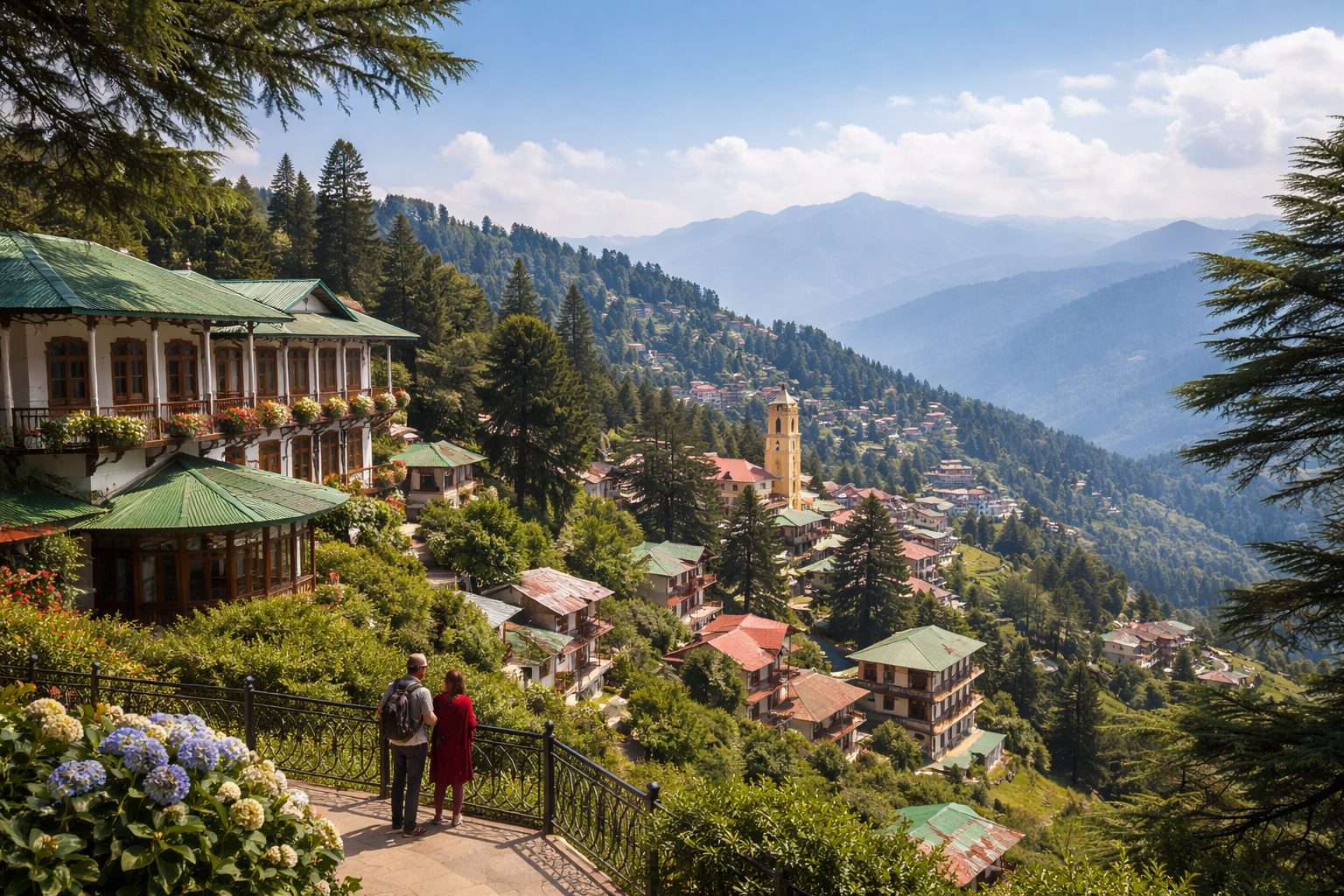
Shimla in Himachal Pradesh has Victorian-era buildings, a traffic-free mall road, and mountain views that make it one of North India’s most popular summer escapes. Ooty in Tamil Nadu sits at 2,240 meters in the Nilgiri Hills and is surrounded by tea estates. Darjeeling in West Bengal is built on steep hillsides with views of Kanchenjunga on clear days and produces some of the world’s finest tea.
Coorg in Karnataka is quieter than most hill stations and known for coffee plantations, waterfalls, and a distinct Kodava culture. Munnar in Kerala is another tea-country destination with rolling green landscapes that feel almost Irish on misty mornings.
Cultural and Historical Landmarks
India’s historical depth is staggering. Civilizations rose and fell here over thousands of years, and the physical evidence is everywhere if you know where to look.
Temples of Khajuraho
The temples of Khajuraho in Madhya Pradesh are among India’s most extraordinary architectural achievements. Built between 950 and 1050 CE by the Chandela dynasty, the temples are covered with intricate carvings depicting celestial beings, hunters, musicians, and erotic scenes that have made them famous worldwide.
Of the original 85 temples, about 25 remain. The Western Group is the most intact and most visited. What’s often overlooked is the sheer precision and artistry of the stonework across every surface. The erotic carvings represent only a fraction of the imagery. The majority depicts daily life, mythology, and devotion. It’s a site that rewards slow exploration.
Hampi’s Ancient Ruins
Hampi in Karnataka is the ruined capital of the Vijayanagara Empire, which was once one of the largest empires in the world. The site covers over 4,000 hectares and contains hundreds of monuments, temples, and ruins spread across a boulder-strewn landscape that looks almost surreal.
The Virupaksha Temple is still active after over 700 years. The Vittala Temple complex, with its stone chariot and musical pillars, is technically breathtaking. Hampi attracts a mix of history buffs, rock climbers, and backpackers who come for the atmosphere as much as the archaeology. It’s one of the most unusual places to visit in india and remains underrated by international visitors.
Adventure Activities in India
India offers serious adventure across its terrain. The Himalayas alone provide enough material for years of exploration, and the rivers, coastline, and forests add further variety.
Trekking in Himachal Pradesh
Himachal Pradesh is the starting point for some of India’s best trekking routes. The Spiti Valley circuit, Hampta Pass, Pin Parvati Pass, and the Triund trek above Dharamsala are among the most popular options across varying difficulty levels.
The Spiti Valley specifically is a high-altitude cold desert that sits between India and Tibet. The trekking here combines dramatic landscapes with ancient Buddhist monasteries. Treks typically run from June through September before winter snowfall makes higher routes inaccessible. Going with an accredited guide service is strongly recommended on technical routes.
River Rafting in Rishikesh
Rishikesh on the banks of the Ganges River in Uttarakhand is the adventure sports hub of northern India. White-water rafting on the Ganges is the main draw, with rapids ranging from Grade 1 to Grade 4 depending on the stretch.
The season runs from September to June. The 36-kilometer stretch from Shivpuri to Rishikesh is the most popular for full-day trips. Beyond rafting, the area offers bungee jumping, cliff jumping, kayaking, and camping on the riverbank. Rishikesh is also the world yoga capital, so the combination of adrenaline and meditation makes for an interesting few days.
Best Places for Food Lovers in India
Indian food is regional in a way that many travelers don’t anticipate. What you eat in Punjab tastes nothing like what you eat in Tamil Nadu or Bengal. The best approach is to eat where the locals eat, follow your nose, and be willing to try unfamiliar things.
Street Food in Delhi
Delhi’s street food culture is one of the great culinary experiences in the world. The lanes of Old Delhi, particularly Chandni Chowk, pack more flavor into a few hundred meters than most cities manage across entire districts.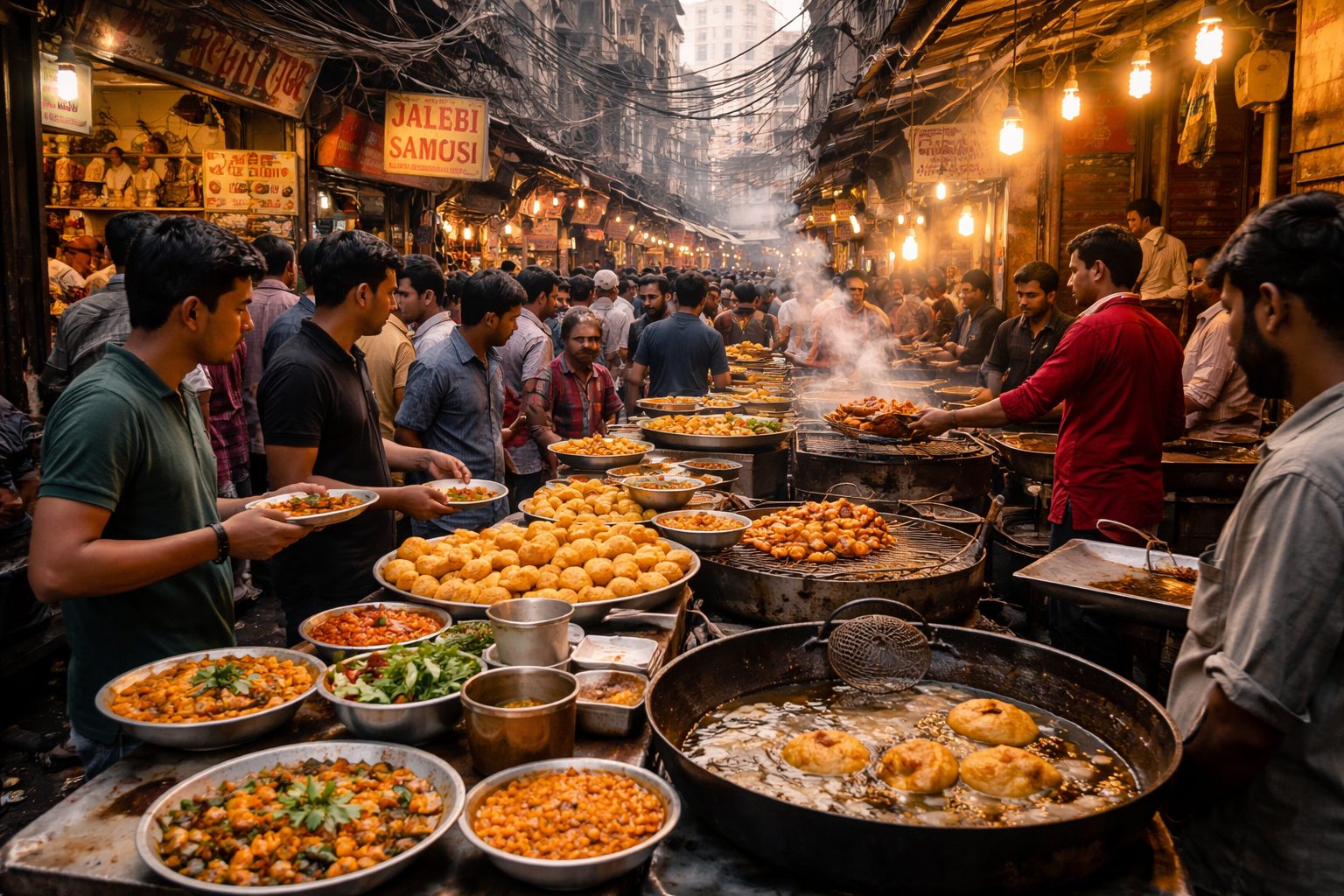
- Paranthe Wali Gali is famous for its stuffed flatbreads cooked on cast iron griddles
- Karim’s, operating since 1913, serves Mughal-era meat dishes that have barely changed in over a century
- Jalebi from the Old Delhi shops, made fresh and eaten hot, is one of those things that’s hard to describe accurately until you’ve tried it
- Chaat, particularly aloo tikki and papdi chaat, is the street snack language of Delhi
- Nihari, a slow-cooked meat stew eaten at breakfast, is a specialty of the old city
The best approach to eating in Delhi is to go with a local food walk guide who knows which stalls have been operating for generations.
Culinary Tours in Kolkata
Kolkata has a food culture that feels deeply tied to its intellectual and artistic identity. The city takes its cuisine seriously in a way that’s different from Delhi’s street energy. Bengalis are proud of their food and particular about preparation.
Mishti doi (sweetened yogurt), rosogolla (spongy milk-based sweets), kosha mangsho (slow-cooked mutton curry), and the various preparations of hilsa fish are the landmarks of Bengali cuisine. The New Market area and the lanes of Tiretti Bazaar are good places to start exploring. Kolkata also has a strong Chinese-Indian food tradition in its Chinatown, producing a cuisine called Calcutta Chinese that is entirely unique to the city.
Family-Friendly Destinations
India works well for families if you plan thoughtfully. The range of activities and the warmth toward children that’s common in Indian culture makes traveling with kids generally positive once you get past the logistics.
Theme Parks and Entertainment Zones
Several Indian cities have developed solid entertainment infrastructure for families.
- Imagica Theme Park near Mumbai is one of India’s largest and covers both outdoor and indoor attractions
- Wonderla Holidays has parks in Bengaluru, Hyderabad, and Kochi with water rides and rollercoasters popular with all age groups
- Snow World in Hyderabad provides a refrigerated snow experience in a tropical climate, which children find genuinely surprising
- Nicco Park in Kolkata has been a family institution since the 1980s and remains a consistent option in the east
- Adlabs Aquamagica in Pune is one of India’s better water parks with well-maintained facilities
These parks are most enjoyable during non-peak periods on weekdays to avoid weekend crowds.
Educational Tours and Museums
India has some exceptional museums and educational sites that work well for curious travelers of all ages.
The National Museum in New Delhi covers Indian history from the Indus Valley Civilization to the modern era with an extraordinary collection of artifacts. The Science City in Kolkata has interactive exhibits on space, evolution, and technology that work especially well for school-age children. The National Rail Museum in Delhi, with its collection of vintage locomotives and royal carriages, is something that adults often enjoy as much as kids.
The living history of sites like Fatehpur Sikri and Hampi provides context that no classroom can replicate. Walking through a 16th-century royal city that once had 500,000 inhabitants is an experience that tends to make history tangible in a way that stays with young travelers.
Comparison of Top Cities to Visit in India
Choosing where to spend your time is one of the harder decisions when planning an India trip. The differences between regions are real and significant.
North vs. South India
| Feature | North India | South India |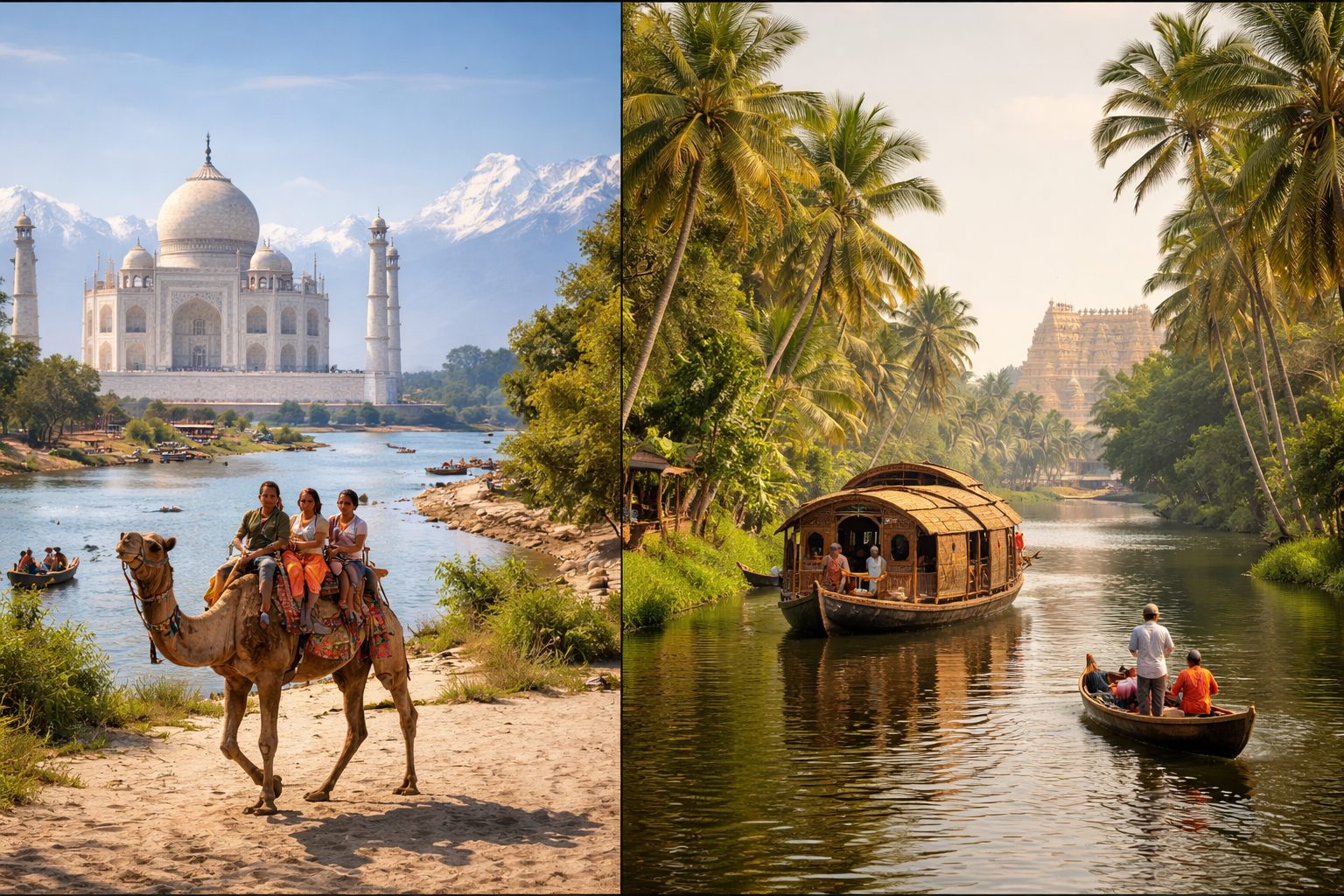
|—|—|—|
| Climate | Extreme summers, cold winters, monsoon July-Sept | Tropical year-round, two monsoon seasons |
| Architecture | Mughal, Rajput forts, Indo-Islamic structures | Dravidian temples, colonial buildings, gopurams |
| Food | Wheat-based, richer curries, tandoor cooking | Rice-based, coconut-heavy, seafood-forward |
| Language | Hindi-speaking belt, Punjabi, Rajasthani | Tamil, Telugu, Kannada, Malayalam |
| Tourism Type | Historical monuments, deserts, Himalayas | Beaches, backwaters, wildlife, temples |
| Pace | Generally faster, more intense | Generally slower, more relaxed |
| Best Season | October to March | October to February (varies by region) |
Neither north nor south is inherently better. They offer genuinely different travel experiences, and the ideal India trip combines both.
Urban vs. Rural Experiences
India’s cities are exhilarating but also exhausting. The rural alternatives are often where the country’s most authentic moments happen.
Urban destinations like Mumbai, Delhi, and Bengaluru offer world-class restaurants, nightlife, galleries, and infrastructure. Rural and semi-rural experiences, whether a village homestay in Rajasthan, a tea estate in Munnar, or a fishing community in coastal Karnataka, offer proximity to daily life that cities filter out.
Many travelers find that mixing urban and rural stretches across the same trip produces the most balanced experience. Spend three days in Jaipur, then spend two nights in a village near the Thar Desert. Spend time in Kerala’s cities, then board a houseboat for a few days of silence on the backwaters.
Practical Travel Tips for Visiting India
India rewards preparation. Knowing a few practical realities before you arrive makes the trip considerably smoother.
Best Time to Visit India
India doesn’t have one universally ideal travel season because different regions have different climates. That said, some general guidelines hold:
- October to March is the best time for most of North India, Rajasthan, and the Gangetic plain. Temperatures are comfortable and skies are clear.
- November to February works well for most of South India, though the eastern coast (Tamil Nadu, Andhra Pradesh) gets its northeast monsoon during October-December.
- April to June is brutal heat across the plains but excellent for Himachal Pradesh, Ladakh, and the Himalayan hill stations.
- July to September is monsoon season across most of the country. Kerala’s monsoon starts in June. This period brings lush landscapes but also flooding, landslides, and closed mountain passes.
- Ladakh is only accessible by road from approximately June to October before winter closes the high passes.
The shoulder seasons of September-October and February-March often offer better prices and fewer crowds at major sites.
Transportation Options Across Cities
India has a dense transportation network that’s genuinely accessible to independent travelers if you know the options.
- Trains are the backbone of Indian travel. The Indian Railways network is one of the largest in the world. Booking in advance on the official IRCTC portal is essential for long-distance routes, especially for sleeper and air-conditioned class carriages. Tourist quotas exist for popular routes.
- Domestic flights have become affordable, with carriers like IndiGo, Air India, and SpiceJet connecting all major cities. Booking 3-4 weeks ahead usually yields reasonable fares.
- Buses cover routes that trains don’t reach. State government buses are reliable and cheap. Private sleeper buses connect cities like Manali-Delhi and Bengaluru-Goa overnight.
- Auto-rickshaws and tuk-tuks are the standard for short city distances. Agree on a fare before getting in or use the meter where applicable.
- App-based taxis through Ola and Uber operate in all major cities and remove the negotiation entirely. They’re often the most practical option in unfamiliar urban areas.
- Renting a car with a driver is common for multi-day regional tours, especially in Rajasthan and South India, and is often more cost-effective than it sounds when split across a group.
Frequently Asked Questions
What are the safest places to visit in India?
The hill stations, the southern states like Kerala, Karnataka, and Tamil Nadu, and heritage cities like Jaipur and Udaipur are consistently reported as safe by international travelers. Urban areas like Delhi and Mumbai are safe if you use standard city precautions. Avoid isolated areas at night and use registered taxi services.
How to plan a budget trip to India?
India is genuinely affordable if you travel by train, stay in guesthouses or hostels, and eat at local restaurants rather than tourist-oriented establishments. A mid-range backpacker budget of around $30-50 USD per day covers accommodation, food, transport, and entry fees comfortably across most of the country.
Are there any travel restrictions in India?
Some regions require special permits for foreign nationals, including parts of Ladakh (Inner Line Permit for certain areas), Sikkim, Arunachal Pradesh, and the Andaman and Nicobar Islands. These permits are generally straightforward to obtain online or at regional offices. Always check current entry requirements before traveling to border areas or protected zones.
India is a country that rarely leaves travelers indifferent. The places to visit in india span thousands of years of history, dozens of distinct cultures, and every conceivable landscape type within a single country. Whether your first trip takes you to the Taj Mahal or to a houseboat in Kerala or to a monastery in Ladakh, you’ll find that the country has far more to offer than any single journey can hold. Most people who go once find themselves planning the next trip before they’ve even unpacked.