Istanbul is one of those cities that genuinely earns every superlative thrown at it. It sits across two continents, bridges over two thousand years of layered history, and somehow manages to feel both ancient and completely alive at the same time. I’ve traveled to a lot of cities, and few have the same density of remarkable experiences packed into a relatively walkable urban space. If you’re planning a visit and wondering about the best things to do in Istanbul, you’re in for a trip that will take real effort to fit into any reasonable itinerary. This guide covers everything from Byzantine basilicas to rooftop cocktail bars, from street-food carts to day trips into the Marmara Sea. Use it as a map, not a checklist.
Introduction to Istanbul
Brief Overview of Istanbul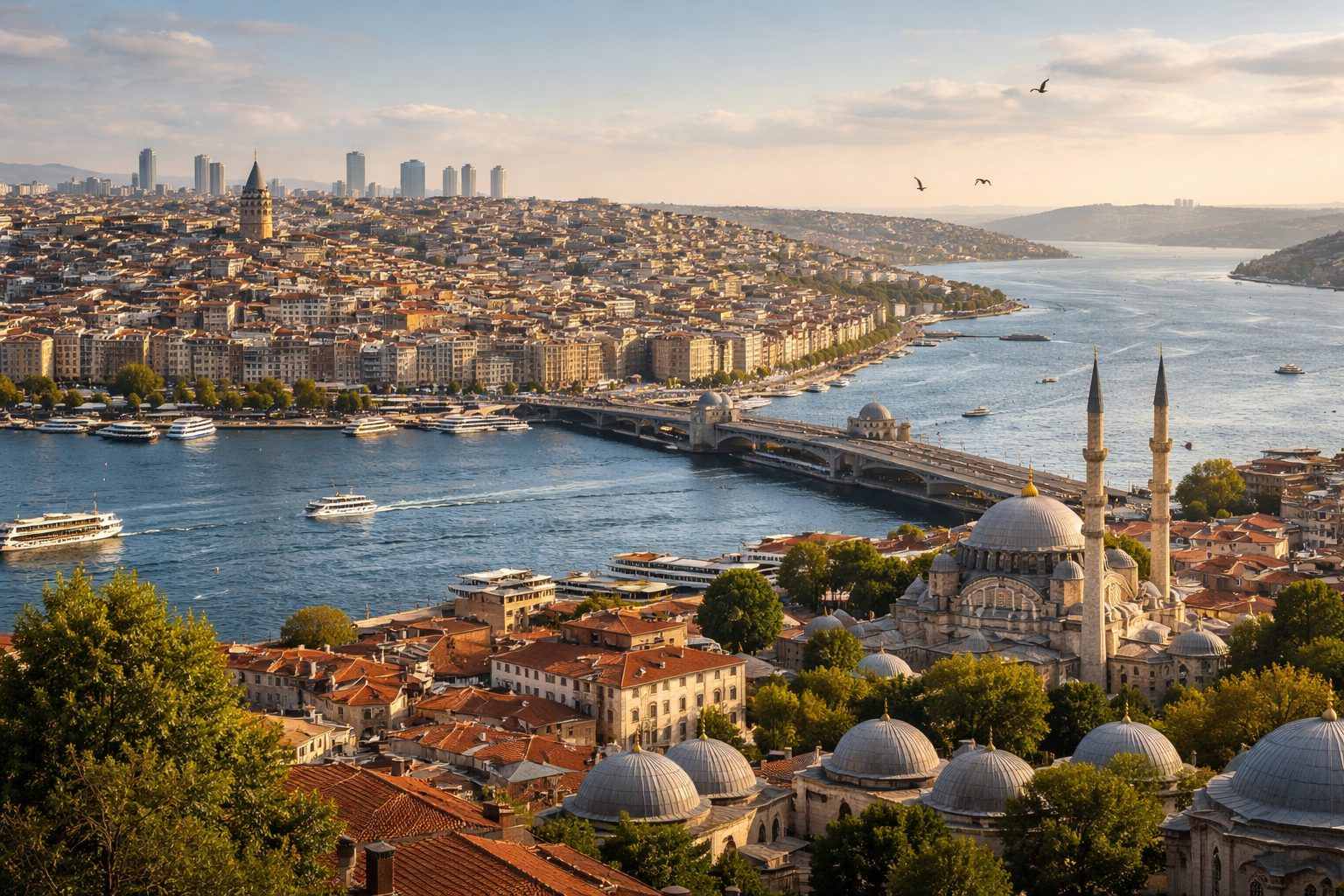
Istanbul straddles Europe and Asia across the Bosphorus Strait, making it the only major city in the world that physically spans two continents. The European side holds most of the major historical landmarks, with neighborhoods like Sultanahmet, Beyoglu, and Fatih packed tightly together. The Asian side, particularly Kadikoy and Uskudar, offers a more local, residential feel that’s worth experiencing if you have extra time.
The city has carried several names over the centuries. Constantinople, Byzantium, and finally Istanbul, which became the official name in 1930. Each era left something behind, and that’s what makes exploring here so rewarding. You’re not looking at a reconstructed history museum. You’re walking through a living city that has absorbed and preserved multiple civilizations simultaneously.
The population sits around 15 to 16 million, which makes Istanbul one of Europe’s largest cities by any measure. That scale can feel overwhelming at first, but the main tourist areas are well-connected and surprisingly manageable once you understand the transit system.
Importance as a Tourist Destination
Istanbul consistently ranks among the top ten most visited cities in the world, and it earns that position. The sheer variety of what’s available here is hard to match. You can spend a morning in a 1,500-year-old church, eat a fish sandwich on a floating boat at lunch, visit a cutting-edge contemporary art museum in the afternoon, and end the night in a rooftop bar watching cargo ships glide through the Bosphorus.
Tourism infrastructure is well-developed. English is spoken widely in the main tourist districts. The city has invested significantly in signage, transit, and visitor services. That said, it rewards travelers who go a bit deeper than the obvious highlights, and this guide tries to point toward both the iconic and the underappreciated.
Historical Attractions
The historical core of Istanbul is genuinely dense with things to do in istanbul that have defined world history. Sultanahmet alone contains more UNESCO-worthy sites per square kilometer than almost anywhere I can think of. Plan to spend at least two full days here, ideally three.
Hagia Sophia
Hagia Sophia is the kind of building that stops you mid-sentence when you first walk through the doors. Built in 537 AD under the Byzantine Emperor Justinian I, it was the largest cathedral in the world for nearly a thousand years. The dome engineering alone was a feat that wouldn’t be matched for centuries.
It has served as a cathedral, a mosque, a museum, and since 2020, a mosque again. Entry is free, but the interior is enormous and worth a full hour at minimum. Go early in the morning to avoid peak crowds and to see the light coming through the upper windows at an angle that makes the mosaics look almost electric.
Key things to know before visiting:
- Women need a headscarf inside, available at the entrance
- Prayer times close parts of the interior to visitors temporarily
- The upper gallery requires a separate entrance on the left side and holds some of the finest Byzantine mosaics anywhere
- Photography is permitted throughout
Topkapi Palace
Topkapi Palace was the administrative center of the Ottoman Empire for roughly four centuries, from the 1460s until the mid-1800s. The complex is vast, covering over 700,000 square meters, and contains multiple courtyards, pavilions, the imperial harem, and one of the finest collections of Ottoman artifacts in existence.
The Treasury section holds objects that feel almost mythological, including the Topkapi Dagger and the Spoonmaker’s Diamond. The Harem requires a separate ticket and a guided tour, but it’s worth it for the tile work and the understanding it gives you of Ottoman court life.
Budget at least three hours here. Most people underestimate how much there is to see, and the views of the Bosphorus from the outer terraces are outstanding.
Basilica Cistern
The Basilica Cistern sits underground just a short walk from Hagia Sophia, and it represents one of the most atmospheric spaces in the entire city. Built in the 6th century, it’s a vast underground reservoir supported by 336 columns, many of them salvaged from older Roman structures.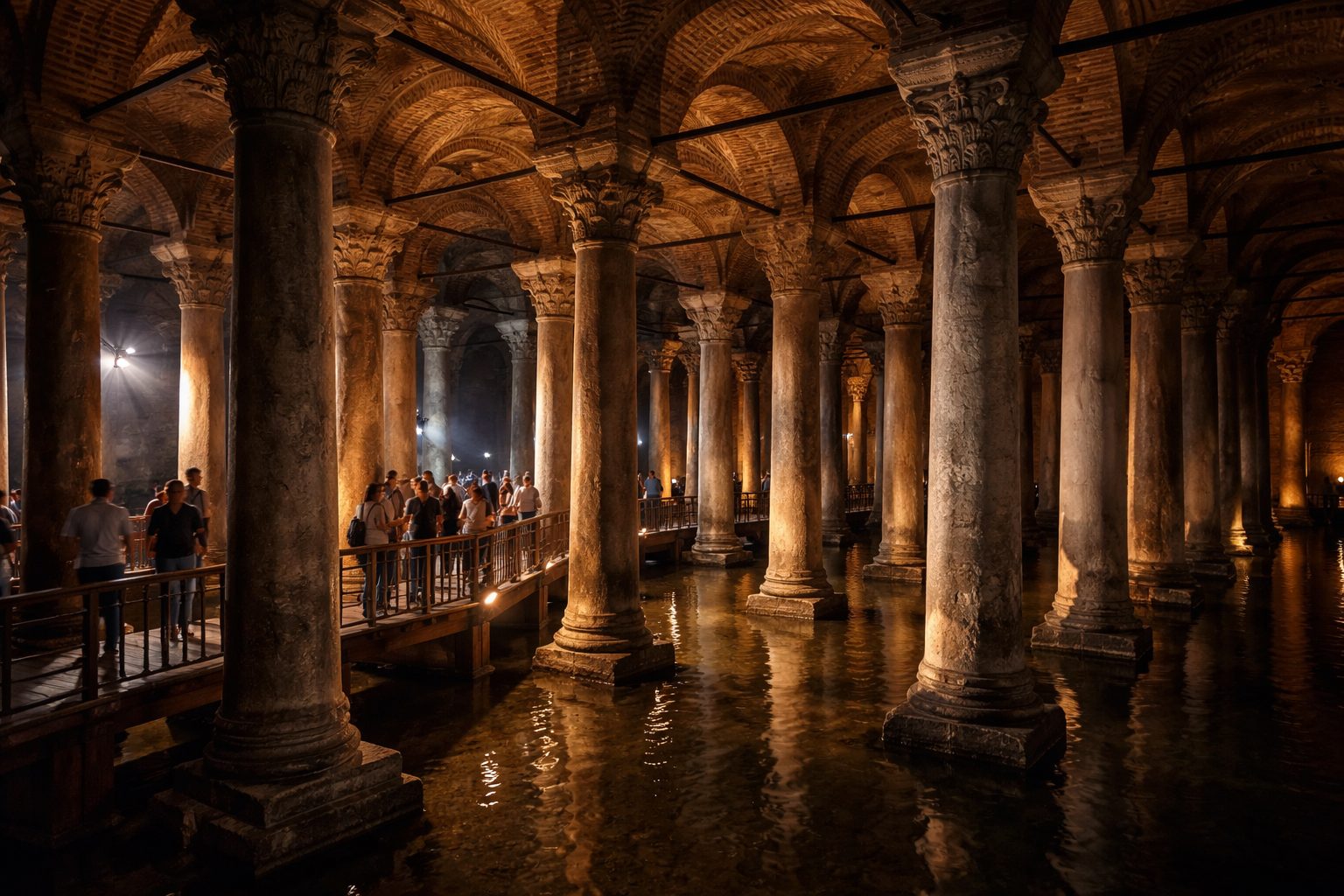
Recent renovations have dramatically improved the visitor experience. Lighting has been redesigned, the water level has been adjusted, and the famous Medusa head column bases are now better accessible and displayed. It’s cooler underground, which makes it a welcome stop during a hot summer afternoon.
The cistern held up to 80,000 cubic meters of water in its operational days. The scale of that engineering, built over fifteen centuries ago, is something that hits you when you’re standing inside it.
Blue Mosque
The Sultan Ahmed Mosque, known universally as the Blue Mosque, was built between 1609 and 1616 and remains an active place of worship. Its distinctive silhouette of six minarets dominates the Sultanahmet skyline. The interior gets its nickname from the roughly 20,000 handmade Iznik tiles in varying shades of blue that cover the walls and arches.
Because it’s still an active mosque, entry is free but restricted during the five daily prayer times. Dress modestly, remove shoes before entering, and visitors of all genders need to cover their shoulders and knees. Scarves for women are available at the entrance.
The exterior courtyard itself is worth spending time in. The proportions of the building from that angle, with the fountain in the center and the minarets rising around you, is one of those views that justifies the whole trip.
Cultural Experiences
Grand Bazaar
The Grand Bazaar is one of the oldest and largest covered markets in the world, with over 4,000 shops spread across 61 covered streets. It was established in the 1450s, and the basic structure has remained largely intact ever since. Walking through it for the first time feels like navigating a small city.
The merchandise ranges from genuine antiques and handmade carpets to tourist tchotchkes and knockoff sunglasses. Know what you’re looking at before you spend serious money. That said, the bazaar is excellent for:
- Handmade ceramic tiles and bowls
- Leather goods
- Gold and silver jewelry
- Spices and dried goods (though the Spice Bazaar is better for these)
- Textiles and scarves
Bargaining is expected at most stalls. Start lower than you intend to pay, stay relaxed, and don’t feel pressured. Most vendors are accustomed to tourists and aren’t aggressive.
Spice Bazaar
The Spice Bazaar, or Misir Carsisi, sits in the Eminonu neighborhood near the Galata Bridge and has been a center of the spice trade since the 1660s. It’s smaller and more navigable than the Grand Bazaar, and the concentration of things actually worth buying is higher.
Beyond spices, you’ll find:
- Turkish delight in every flavor imaginable
- Dried fruits and nuts
- Teas, including apple tea and traditional Turkish black tea blends
- Honeycomb and local preserves
- Herbal remedies and soaps
The area surrounding the bazaar in Eminonu is worth exploring too. The waterfront is busy and genuine, with ferries loading, fish being sold off boats, and a kind of productive chaos that feels distinctly Istanbul.
Turkish Baths (Hamam)
Visiting a hamam is one of those experiences that sounds like a tourist cliche until you actually do it, and then you understand why people have been doing it here for five centuries. A proper hamam visit involves a steam room, a full body scrub using a kese mitt, and a soap massage. You leave feeling like you’ve shed an entire layer of existence.
A few well-regarded options:
| Hamam | Location | Notes |
|---|---|---|
| Cagaloglu Hamami | Sultanahmet | Built in 1741, historic interior, tourist-friendly |
| Suleymaniye Hamami | Fatih | Restored original, slightly less crowded |
| Tarihi Galatasaray Hamami | Beyoglu | Central location, mixed and separate sections |
| Kiliç Ali Pasa Hamami | Karakoy | More modern renovation, premium experience |
Book in advance for weekends. Prices range from modest to upscale depending on the level of service and the historical cachet of the building.
Scenic Spots
Istanbul’s geography creates natural scenic vantage points at every turn. The things to do in istanbul that involve simply looking at the city from a good angle are numerous and often free.
Bosphorus Cruise
A Bosphorus cruise is close to mandatory. The strait connects the Black Sea to the Marmara Sea, and the shores on both sides are lined with yalis (wooden waterfront mansions), Ottoman fortresses, modern bridges, and fishing villages that feel a world away from the central city.
Public ferries run by Istanbul Sea Buses (IDO) and Sehir Hatlari offer the most affordable way to do this. The full Bosphorus tour runs from Eminonu up to Anadolu Kavagi on the Asian side, a round trip that takes most of the day. Shorter tours cover just the first bridge and back.
Private sunset cruises are also available and tend to be popular for good reason. The Bosphorus at dusk, with the minarets and hills silhouetted against the water, is the kind of view that stays with you.
Galata Tower
The Galata Tower dates back to 1348, originally built by the Genoese as part of their fortified settlement in Constantinople. It’s a 67-meter stone cylinder that rises above the Karakoy neighborhood and offers a 360-degree panoramic view of the city.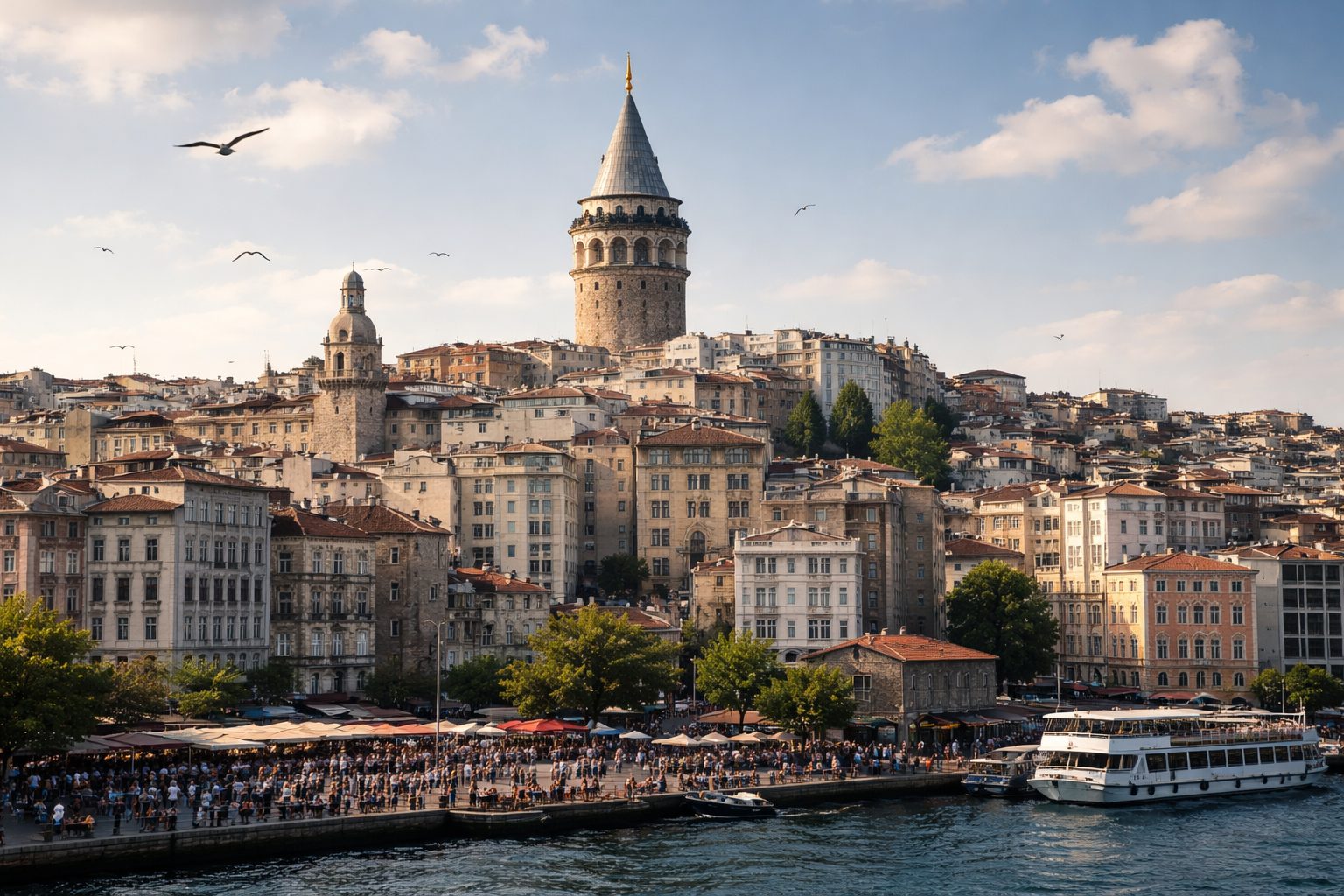
The lines can be long during peak tourist season, and the observation deck doesn’t have a lot of room. Go at opening time or late in the afternoon to minimize the wait. The view encompasses the Golden Horn, the Sultanahmet skyline, the Bosphorus, and the hills of the Asian side all at once.
The neighborhood around the tower, Galata itself, is one of the more interesting areas to walk around. Small streets, independent bookshops, coffee roasters, and instrument makers cluster in the surrounding blocks.
Pierre Loti Cafe
Pierre Loti is a hilltop cafe in the Eyup neighborhood, named after the French novelist who was reportedly a regular there in the late 1800s. It overlooks the Golden Horn from a high ridge, and the view is genuinely lovely in a quieter, more contemplative way than the Galata Tower.
You can take a cable car up from the Eyup waterfront, which is pleasant in itself. The cafe serves tea, coffee, and simple food. It’s less of a destination for the food and more of a place to sit, look out at the water and the minarets, and take a slow hour. The nearby Eyup Sultan Mosque is one of Istanbul’s holiest sites and worth visiting while you’re in the neighborhood.
Culinary Delights
Istanbul’s food culture is one of the most satisfying things about visiting, and it ranges from rough street-food carts to sophisticated meyhane dining that can last most of an evening.
Traditional Turkish Cuisine
Turkish cuisine is broader and more regional than most visitors expect. What gets called “Turkish food” internationally tends to be a narrow slice of kebabs and baklava. The actual range is enormous.
Core dishes worth seeking out in Istanbul:
- Meze spreads, small cold and warm dishes served as starters at traditional restaurants
- Balik ekmek, grilled fish in bread sold from floating boats at Eminonu
- Lahmacun, thin flatbread with minced meat, often rolled with salad
- Menemen, a pan of eggs, tomatoes, and peppers that makes an excellent breakfast
- Mercimek corbasi, red lentil soup that shows up everywhere and is almost always good
- Kuzu tandir, slow-cooked lamb that falls apart completely
Meyhane restaurants, the traditional Turkish tavern, are the best venue for a long, social meal. Order raki (the anise-flavored spirit) and work through rounds of meze before the main courses arrive.
Popular Street Foods
Street food is a serious part of daily life in Istanbul, not just a tourist attraction. Here’s what’s worth stopping for:
- Simit, sesame-crusted bread rings sold from carts and trays across the city
- Balik ekmek, the fish sandwich boats at Eminonu and Karakoy
- Midye dolma, mussels stuffed with spiced rice and sold by the shell along the Istiklal area
- Kumpir, massive baked potatoes loaded with toppings at Ortakoy
- Islak burger, a steamed slider sold from small windows in Taksim late at night
- Dondurma, Turkish ice cream known for its stretchy texture, sold with theatrical vendor performance
Don’t overlook the simit sellers. Buying one for breakfast with a glass of cay (tea) is one of those simple, genuine Istanbul experiences that costs almost nothing.
Best Restaurants in Istanbul
Istanbul has a restaurant scene that ranges from neighborhood ocakbasi grills to internationally recognized fine dining. A few categories worth knowing:
For classic Istanbul meyhane experience, the Nevizade Street area in Beyoglu has a concentration of old-school fish and meze restaurants that fill up on weekend evenings with extended family groups and get genuinely festive.
For contemporary Turkish cuisine with a more refined approach, neighborhoods like Karakoy, Cihangir, and the area around Istiklal Street have seen significant restaurant development over the past decade.
For a specific recommendation type: ocakbasi restaurants, where the grill is in the center of the room and you watch the cooking happen, are worth seeking out for a real grilled meat experience. Ordering the full range of offal and specialty cuts alongside the standard kebabs gives you a clearer picture of what Turkish grill cooking actually involves.
Modern Attractions
Things to do in istanbul aren’t limited to the historical. The city has developed a strong contemporary cultural and commercial identity, and several neighborhoods deserve attention for what they represent about Istanbul today.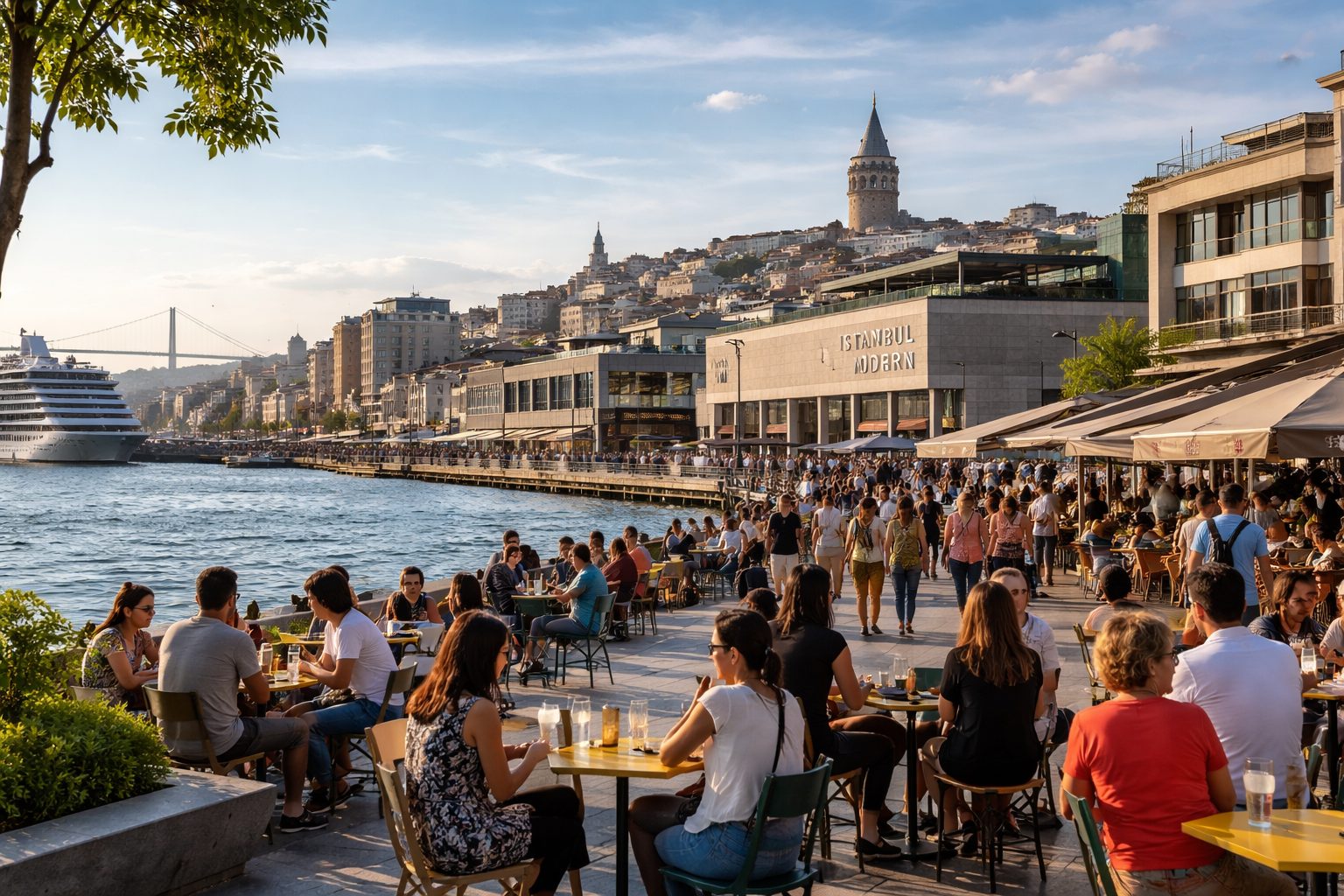
Istanbul Modern Art Museum
Istanbul Modern opened in 2004 and has established itself as the leading contemporary art institution in Turkey. The collection focuses primarily on 20th and 21st century Turkish art, which tends to be underrepresented in international museums and is often genuinely surprising to visitors who arrive with limited context.
The museum relocated to a new purpose-built space in Karakoy in 2023, designed by Renzo Piano. The building itself is worth seeing for its integration with the waterfront setting. Temporary exhibitions rotate regularly and often bring in significant international artists alongside Turkish practitioners.
Istiklal Street
Istiklal Caddesi is Istanbul’s central pedestrian boulevard, running roughly 1.4 kilometers from Taksim Square down to the Galata area. It’s busy at virtually all hours and serves as the commercial and social spine of the European city’s modern districts.
The street itself is a mix of international brands, independent shops, cinemas, and historic buildings. The side streets running off it are where things get more interesting: small music venues, independent cafes, bookstores, and restaurants that cater to a younger, local crowd.
The Pera neighborhood, just off Istiklal, has some of the better preserved 19th century apartment architecture in the city and several good museums, including the Pera Museum with its Ottoman-era paintings and the works of Osman Hamdi Bey.
Shopping in Nişantaşı
Nisantasi is Istanbul’s upscale shopping district, comparable to Mayfair or the Marais in terms of its retail profile. Turkish designers, international luxury brands, and high-end home goods stores cluster in a neighborhood that’s walkable and noticeably quieter than Istiklal.
The area also has some of the better cafe and restaurant options in the city for a leisurely afternoon. It’s a good choice if you want to see a different socioeconomic register of the city and understand how Istanbul functions as a genuinely cosmopolitan European capital.
Family-Friendly Activities
Istanbul works well for families, though it requires some planning to manage distances and heat during summer months. These are among the most reliably enjoyable options.
Miniatürk
Miniatürk is an outdoor miniature park on the Golden Horn that contains scaled models of over 100 significant Turkish monuments, from Hagia Sophia to Ataturk’s mausoleum in Ankara to the ruins of Ephesus. The models are well-constructed and the park is genuinely educational for children and adults who want a broader sense of Turkey’s architectural heritage before visiting sites in person.
It’s also simply pleasant to walk through, particularly in spring when the surrounding gardens are in bloom. Children tend to respond well to the scale shift of seeing familiar-looking structures at miniature size.
Vialand Theme Park
Vialand (officially named Istanbul’s Tema Istanbul) is a full-scale theme park in the Eyup district. It includes roller coasters, water rides, a mall, and a hotel, making it a reasonable full-day option for families with children who need a break from historical sightseeing.
The park is not as large as major European theme parks, but the ride quality is solid and the crowds are manageable compared to peak-season alternatives. It’s best visited on weekdays.
Istanbul Aquarium
Istanbul Aquarium in the Florya district is one of the larger aquariums in Europe, with thematic sections organized around different oceanic regions from the Amazon to the Pacific. The displays include sharks, rays, and a substantial collection of marine life that engages most age groups.
It’s connected to a small theme park area and a shopping mall, which makes logistics easier for families. Getting there requires either a private transfer or some navigation of western Istanbul transit, so it’s worth planning in advance.
Day Trips from Istanbul
The city’s location gives it excellent access to day trips that add significant variety to any visit.
Princes’ Islands
The Princes’ Islands (Adalar) are a chain of nine islands in the Marmara Sea, reachable by ferry from Eminonu or Kabatas in roughly an hour to ninety minutes depending on the destination. Buyukada is the largest and most visited, while Heybeliada and Burgazada offer a quieter experience.
The islands are car-free, which gives them an unusual tranquility compared to the mainland. Getting around means walking, cycling rented bikes, or riding horse-drawn carriages. The Victorian-era wooden architecture is beautiful, and the pace of life slows noticeably the moment you step off the ferry.
Best visited in spring and autumn. Summer weekends bring large crowds from Istanbul.
Bursa
Bursa, about two and a half hours from Istanbul by ferry and bus combination, was the first Ottoman capital and contains some of the finest early Ottoman architecture anywhere. The Green Mosque (Yesil Cami) and its associated tomb are masterpieces of 15th century tilework. The Grand Mosque (Ulu Cami) is an extraordinary interior space with 20 domes.
Bursa is also the origin of Iskender kebab, one of Turkey’s most well-known dishes, and eating it here, in the restaurants that claim to have invented it, is worth making the argument for a day trip.
The cable car up Uludag mountain offers views across the city and, in winter, skiing access.
Edirne
Edirne sits near the Greek and Bulgarian borders, about two to two and a half hours from Istanbul by bus. Its central landmark is the Selimiye Mosque, designed by the Ottoman master architect Sinan in 1575 and considered by many historians to be his greatest achievement, surpassing even the Suleymaniye in Istanbul.
The city is smaller and quieter than Istanbul, which makes experiencing it feel genuinely different. The old bazaar district around the Ali Pasa and Arasta markets is less commercialized than Istanbul’s equivalents and gives a clearer sense of what regional Ottoman market architecture actually looks like.
Nightlife in Istanbul
Best Bars and Clubs
Istanbul’s nightlife is concentrated in a few distinct areas, each with a different character. Beyoglu, particularly the streets around Istiklal and the Asmalimescit and Sofyali areas, has the highest density of bars ranging from casual to DJ-driven. Kadikoy on the Asian side runs a more local scene with live music bars and craft beer spots. Besiktas has a younger, student-oriented energy.
Clubs tend to cluster along the Bosphorus in areas like Ortakoy and the stretch toward the second bridge. These venues operate late and often have strict door policies and premium pricing.
Cultural Shows
Whirling dervish ceremonies (Sema) are a genuine Sufi spiritual practice and can be attended by visitors at several venues, including the Hodjapasha Cultural Center near Sirkeci and the Galata Mevlevihanesi in Beyoglu. The ceremony is meditative and quiet, lasting roughly an hour, and represents something genuinely different from conventional tourist performance.
The Istanbul State Opera and Ballet performs at Ataturk Cultural Center in Taksim, and the program tends to include both classical Western repertoire and Turkish works. Tickets are reasonably priced by international standards.
Rooftop Venues
Istanbul’s topography makes rooftop bars particularly rewarding. A few worth knowing:
- 360 Istanbul, near Istiklal, offers one of the broader panoramic views in the European district and transitions from restaurant to club after midnight
- The rooftop at the Pera Palace Hotel gives you a historically significant setting along with a Sultanahmet and Bosphorus view
- Numerous hotels in Sultanahmet have rooftop restaurants or terraces facing the Blue Mosque and Hagia Sophia, particularly effective at night when both are lit
Tips for Visiting Istanbul
Best Time to Visit
Spring (April to June) and autumn (September to November) are consistently the best times to visit. Temperatures are comfortable, the city is relatively uncrowded compared to summer, and the light is excellent for walking and photography.
Summer brings heat, high tourist volumes, and pressure on major sites. Winter is cooler and occasionally wet, but Istanbul in the off-season has a different, quieter quality that some travelers specifically seek. The city doesn’t shut down in winter, and accommodation prices drop significantly.
Ramadan timing shifts annually and is worth researching before travel if it affects your plans. During Ramadan, some restaurants have reduced hours during the day, but the evenings become more festive and interesting in local neighborhoods.
Transportation Options
Istanbul has an extensive transit network that makes getting around manageable once you understand the basics.
- Istanbulkart, a rechargeable travel card, works on metro, tram, bus, and ferries and costs significantly less per journey than single tickets
- The T1 tram line connects Sultanahmet to Karakoy and Kabatas, covering much of the main tourist route
- The M2 metro runs from Kabatas under Istiklal to Taksim and continues north toward the airport
- Ferries run between European and Asian sides frequently from Eminonu, Karakoy, Besiktas, and Kabatas
- Taxis are available but metered, and traffic congestion is a genuine factor in journey time calculations
Uber operates in Istanbul. Traditional taxis are generally reliable but always use the meter.
Cultural Etiquette
A few practical points that will make your visit smoother:
- Remove shoes before entering mosques and private homes
- Dress modestly at religious sites, shoulders and knees covered for both men and women
- Asking before photographing people, particularly in markets and residential areas, is appreciated
- Bargaining is normal in bazaars but not in fixed-price shops or restaurants
- Turkish hospitality involves offers of tea; accepting is appreciated, declining politely is also fine
- Tipping in restaurants runs roughly 10%, though this varies by venue type
FAQs about Things to Do in Istanbul
What are the must-see attractions?
Hagia Sophia, Topkapi Palace, the Basilica Cistern, and the Grand Bazaar are the core historical sites that most visitors prioritize. Add a Bosphorus ferry ride and at least one afternoon wandering Beyoglu for a more complete picture of the city. These represent the most concentrated return on time invested.
How to get around Istanbul?
The Istanbulkart transit card handles metro, tram, bus, and ferry travel with a single rechargeable card. For the main tourist areas, the T1 tram and the Bosphorus ferries cover most of what you need. Taxis and rideshare apps work well for neighborhoods not directly on transit lines.
Is Istanbul safe for tourists?
Istanbul is generally safe for tourists in the main visited areas. Standard urban precautions apply: watch for pickpockets in crowded bazaars and on busy transit, be aware of your surroundings at night in less central neighborhoods. The tourist districts have a visible security presence and are well-traveled.
What should I wear in Istanbul?
Casual, comfortable clothing works for most situations. Bring layers as weather shifts, particularly in spring and autumn. For mosque visits, have a scarf or shawl accessible for covering hair (for women) and ensure shoulders and knees are covered regardless of gender. Comfortable walking shoes matter more here than in most cities given the hills and cobblestones.
How many days should I spend in Istanbul?
Five to seven days gives you room to see the main historical sites without rushing, explore a couple of neighborhoods properly, do a day trip, and eat well. Three to four days covers the essential highlights at a reasonable pace. Less than three days means making real choices about what to skip.
Istanbul rewards returning visitors. It’s the kind of city where a second trip, approached with more local knowledge and clearer priorities, tends to be even better than the first.