
If you’ve ever stepped off a train at Shinjuku Station at midnight with a heavy bag and no idea where your hotel is, you know exactly why understanding the japanese taxi system matters. It’s one of those things that seems intimidating before you try it, but once you figure out how it works, it becomes one of the most reliable ways to get around in Japan. I’ve taken taxis in Tokyo, Kyoto, Osaka, and smaller cities, and the experience is consistently impressive in ways that are hard to explain until you see it for yourself.
This guide covers everything from the history and types of taxis available to fare structures, etiquette, tourist tips, and how Japan’s taxi scene compares to what you’d find in the US or Europe. Whether you’re planning your first trip or you’re a frequent visitor who wants to get more comfortable with this mode of transport, there’s something useful here for you.
Overview of Japanese Taxis
History of Taxi Services in Japan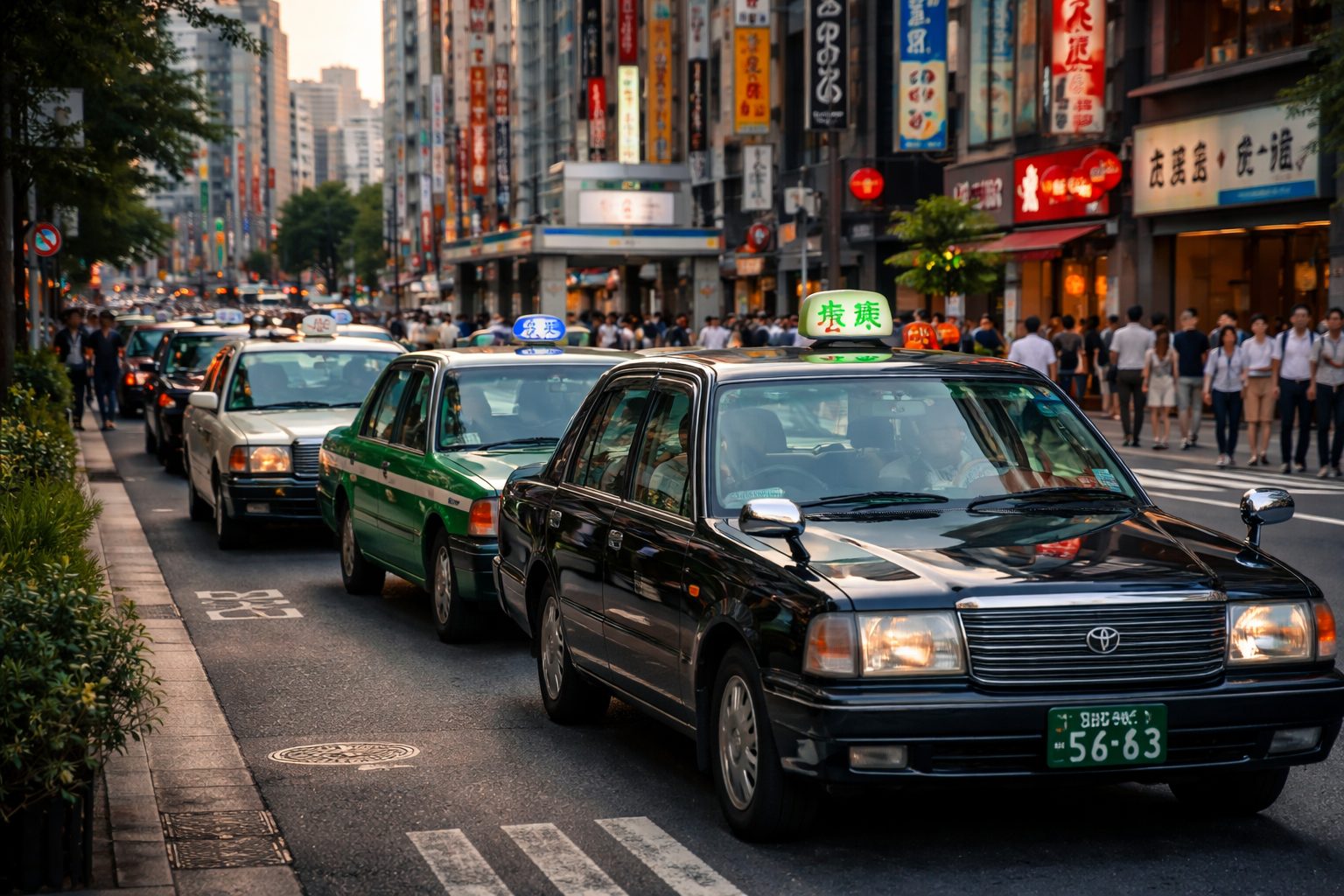
Japan’s taxi industry has a surprisingly long history. The first motorized taxi service started in Tokyo in 1912, just a few years after cars became practical for commercial use. By the 1920s, taxi companies had already begun establishing themselves as a legitimate transport option for urban residents.
The industry expanded rapidly after World War II as Japan rebuilt its cities and economy. Taxi companies grew into major urban employers, and the profession of taxi driver became a stable career path for many Japanese men. By the 1970s and 80s, taxis were everywhere in major cities, operating around the clock and serving both commuters and late-night entertainment district visitors.
Today, Japan has hundreds of taxi operators ranging from small regional firms to large national companies like Nihon Kotsu, Daiwa Motor Transportation, and Hinomaru Limousine. The industry has faced some pressure from changing commuter habits and an aging driver workforce, but it remains a core part of Japan’s transportation infrastructure.
Types of Taxis in Japan
Not all taxis in Japan are the same. Understanding the different types helps you choose the right one for your situation.
- Standard taxis are the most common. These are the regular sedans or compact cars you’ll see cruising most city streets. They’re metered, widely available, and perfectly suited for most trips.
- Jumbo taxis are larger vehicles, usually minivans, that can seat five to nine passengers. They’re useful for groups or families with a lot of luggage.
- Wheelchair-accessible taxis are equipped with ramps or lifts and can accommodate passengers in wheelchairs. More on this later.
- Luxury taxis or premium services offer higher-end vehicles, often used for business travel, airport transfers, or special occasions.
- Fixed-rate taxis operate on predetermined routes, such as airport-to-city routes, with set fares rather than metered pricing.
In rural areas and smaller towns, you might also encounter community taxis or dial-a-ride services, which operate more like a shared transport system than traditional metered taxis.
Key Features of Japanese Taxis
The features that set a japanese taxi apart from taxis in most other countries are mostly about design and service quality. The first thing you notice is the automatic doors. Almost every taxi in Japan has a passenger door that opens and closes automatically, controlled by the driver using a lever inside the cab. You don’t need to touch the door. It opens when you approach, and it closes after you get in.
The interiors are spotlessly clean. Drivers take care of their vehicles, and many wear white gloves. The seats often have lace covers on the headrests. It feels more like a private car service than a public cab.
Other standard features include:
- GPS navigation systems
- Card payment terminals (increasingly common)
- Touchscreen fare meters
- Seatbelts in all seats
- Non-smoking interiors
The vehicles themselves tend to be mid-size sedans, and in larger cities you’ll see a mix of Toyota Comfort (the classic boxy Japanese taxi), newer Toyota JPN Taxis (accessible minivan-style vehicles), and sometimes hybrid models.
Riding a Japanese Taxi
How to Hail a Taxi in Japan
Hailing a japanese taxi is straightforward once you know what to look for. The key thing is the light on the roof or dashboard. A red or orange light that says 空車 (kūsha) means the taxi is available. If the light is off or shows 賃走 (chinso, meaning “in service”), the taxi already has a passenger.
Here’s how to flag one down:
- Stand at the edge of the sidewalk near the curb.
- Wait for a taxi with the available light showing.
- Raise your hand clearly to signal you want to stop.
- The driver will pull over and the door will open automatically.
- Get in, tell the driver your destination, and you’re on your way.
At airports, train stations, and hotels, there are usually designated taxi stands with queues. It’s more organized and often faster than trying to flag a cab on the street. In busy areas like Shibuya or Shinjuku, the queue moves quickly because there’s a constant stream of vehicles.
Avoid hailing taxis at intersections or in spots where stopping would block traffic. Drivers will usually ignore these hails for safety reasons.
Understanding the Taxi Fare System
Fares for a japanese taxi are metered and regulated by local government authorities. This means there’s no haggling and no uncertainty about the price. The meter starts when you get in and reflects the actual distance traveled.
The basic fare structure works like this:
- Initial fare: A flat starting charge, usually for the first one to two kilometers. In Tokyo, the initial fare was around 500 yen for the first 1.096 km as of recent years.
- Distance increment: After the initial distance, the meter ticks up at regular intervals. In Tokyo, this is roughly every 255 meters.
- Time increment: When the taxi is moving slowly (under 10 km/h in most cases) or stopped in traffic, a time-based charge kicks in on top of the distance meter.
- Late-night surcharge: Between roughly 10 PM and 5 AM, a 20% surcharge applies in most cities. This is displayed on the meter automatically.
Fares vary by city. Tokyo and other major metropolitan areas tend to have higher starting fares and increments than rural areas. A short 10-minute trip in central Tokyo might cost 700 to 1,000 yen. A longer cross-town journey can easily run 3,000 to 5,000 yen.
There’s no tipping in Japan. It’s actually considered rude or confusing to try. Pay the metered amount, and that’s it.
Payment Options for Japanese Taxis
Cash has traditionally been the main payment method for a japanese taxi, and it’s still widely accepted everywhere. Most passengers carry 1,000 yen notes and coins for short trips. The driver can make change, but it’s polite to try to have something reasonably close to the fare amount.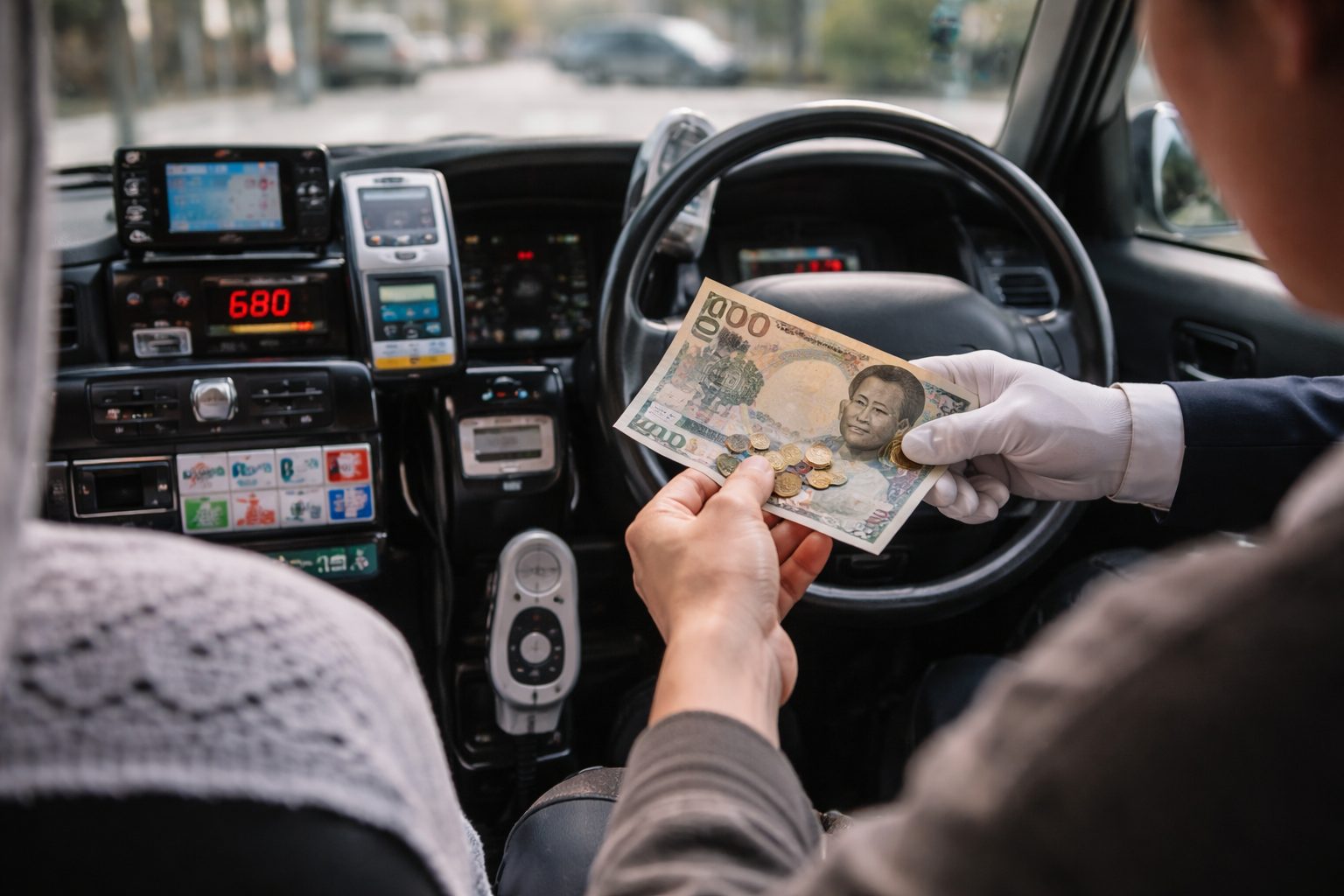
Card and electronic payment options have expanded significantly in recent years. Many taxis now accept:
- Major credit cards (Visa, Mastercard, JCB, American Express)
- IC cards like Suica and Pasmo (the same cards used for trains)
- QR code payments like PayPay and LINE Pay
That said, acceptance varies. Not every taxi in every city takes cards, and rural areas are more likely to be cash-only. If you’re planning to pay by card, it’s worth asking the driver before you start the trip, not at the end.
Taxi apps like GO (formerly JapanTaxi) and S.RIDE often have their own payment systems built in, so you can register a card in the app and pay automatically without dealing with cash at all.
Unique Aspects of Japanese Taxis
Taxi Etiquette in Japan
There’s a set of unspoken rules around riding a japanese taxi that most locals follow automatically. As a visitor, knowing these makes the experience smoother and shows respect for the driver.
- Don’t slam the door. The automatic door system means you never need to close it yourself. Trying to pull it shut manually is unnecessary and can look odd.
- Sit in the back. Unlike some countries where sitting in the front is friendly and normal, in Japan you always sit in the back unless the cab is full.
- Don’t eat or drink in the taxi. It’s not strictly illegal, but it’s considered impolite. Drivers keep their vehicles very clean.
- Don’t make phone calls unnecessarily. If you have to take a call, keep it brief and quiet.
- Speak clearly or show the address. If you have a destination written down or shown on a phone screen, hand it to the driver or show the screen. This avoids miscommunication.
Drivers are professional and courteous. They won’t initiate small talk, and that’s completely normal. The ride is a service transaction, and both parties tend to treat it that way without being cold or unfriendly.
The Role of Taxi Drivers in Japanese Culture
Taxi driving in Japan is a serious profession. Drivers go through licensing, local geography training, and ongoing assessments. Many of the older drivers have encyclopedic knowledge of their cities from decades of navigating before GPS became standard.
In many ways, the japanese taxi driver is a symbol of an older service ethic that’s become rare elsewhere. White gloves, pressed uniforms, impeccably maintained vehicles, and genuine concern for the passenger’s comfort are all standard. Some drivers keep a small notepad to write down passenger requests they can’t understand verbally. Others carry simple translation cards.
The profession skews older because younger Japanese workers often prefer other career paths. This has created a recruitment challenge for the industry, and companies have been experimenting with different approaches, including recruiting women and part-time drivers, to address the shortfall.
Safety Features of Japanese Taxis
Safety is a real strength of the japanese taxi experience. Crime in taxi cabs is extraordinarily rare. Drivers are licensed, tracked by dispatch systems, and operating under regulatory oversight. The risk of being scammed, overcharged, or driven to the wrong place deliberately is essentially zero.
The vehicles themselves are well maintained. Regulatory requirements ensure regular inspections, and companies have financial incentives to keep their fleets in good shape.
From a road safety standpoint, Japan has strict traffic law enforcement, and taxi drivers generally follow the rules carefully. Speeding, aggressive lane changes, and phone use while driving are not typical behaviors.
Additional safety features in many modern japanese taxis include:
- Dashcams (standard in most fleet vehicles)
- GPS tracking visible to dispatch
- Emergency call systems
- Collision avoidance technology in newer models
For solo travelers, especially women traveling alone at night, these factors make taxis a genuinely safe option in a way that’s not universal in other countries.
Comparing Japanese Taxis to Taxis in Other Countries
Japanese Taxi vs. American Taxi Services
The comparison between a japanese taxi and a typical American taxi service is stark. In cities like New York or Los Angeles, taxis are functional but rarely celebrated. The vehicles can be worn, the interiors are often just cleaned between rides, and driver knowledge varies widely.
| Feature | Japanese Taxi | American Taxi |
|---|---|---|
| Vehicle condition | Immaculate | Variable |
| Driver uniform | Typically formal | Varies widely |
| Automatic doors | Standard | Not common |
| Tipping | Not expected | Expected (15-20%) |
| Overcharging risk | Very low | Moderate in some cities |
| English support | Limited | Variable by city |
| App availability | Strong (GO, S.RIDE) | Strong (Lyft, Uber) |
| Fixed late-night surcharge | Yes, regulated | Varies by city |
America’s taxi industry has also been heavily disrupted by rideshare apps, which means traditional cab fleets in many US cities have shrunk significantly. Japan has seen some pressure from app-based services but maintains a strong traditional taxi culture alongside it.
Japanese Taxi vs. European Taxi Services
European taxis are generally more regulated and reliable than American ones, but the comparison with Japan is still interesting. In the UK, black cabs in London are famous for their quality and the rigorous knowledge test drivers must pass. Germany and France have their own regulated systems with good standards.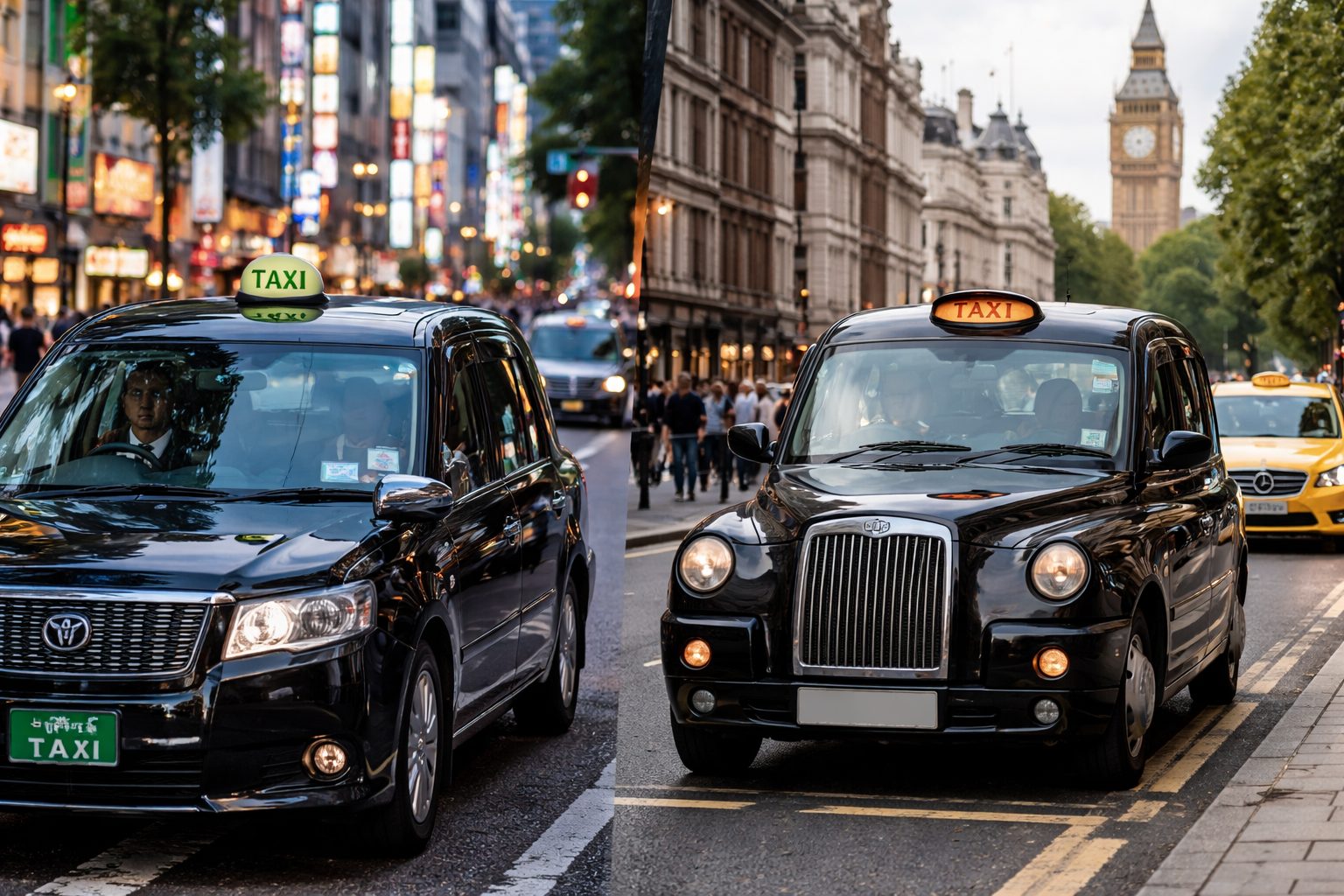
Where Japan stands apart is the consistency. A london black cab is excellent, but standards drop significantly once you’re outside major cities. In Japan, even in smaller cities and towns, the quality of service tends to remain high. The culture of professionalism doesn’t disappear at the city limits.
Pricing in Europe varies considerably by country. London and Zurich are among the most expensive taxi markets in the world. Paris and Berlin are more moderate. Japan’s fares are competitive for what you get, and the regulated structure means you’re never surprised by the bill.
Advantages of Using Japanese Taxis
There are situations where taking a japanese taxi is clearly the right call, even if other options exist:
- Late at night: When the trains stop (usually around midnight in major cities), taxis are often the only practical option for getting home.
- With luggage: Navigating train stations with heavy bags is challenging. A taxi from the airport or to a hotel is much simpler.
- With elderly companions or children: The comfort and door-to-door service makes it more practical than public transit.
- When you don’t speak Japanese: A written address or smartphone screen showing your destination is all you need.
- In smaller towns: Public transit options thin out outside major cities, making taxis more essential.
The combination of reliability, cleanliness, safety, and consistent service makes the japanese taxi a legitimate premium experience for a reasonable price.
Tips for Tourists Using Japanese Taxis
Essential Japanese Phrases for Taxi Rides
You don’t need to be fluent in Japanese to use a taxi successfully, but a few phrases go a long way toward making the experience smoother.
- ~までお願いします (~ made onegaishimasu), “Please take me to ~.” Just say the destination followed by “onegaishimasu.”
- ここで止めてください (koko de tomete kudasai), “Please stop here.”
- 左に曲がってください (hidari ni magatte kudasai), “Please turn left.”
- 右に曲がってください (migi ni magatte kudasai), “Please turn right.”
- まっすぐ行ってください (massugu itte kudasai), “Please go straight.”
- いくらですか? (ikura desu ka?), “How much is it?”
- 領収書をください (ryōshūsho o kudasai), “Please give me a receipt.”
Showing the driver a written address or your phone screen with a map is often more effective than trying to pronounce an unfamiliar address. Google Maps works well in Japan, and showing the destination on screen is completely normal and accepted.
Navigating with a Taxi App in Japan
Taxi apps have made using a japanese taxi significantly easier for visitors who might struggle with communication. The two main apps are GO and S.RIDE, both of which work across major cities and have at least basic English-language interfaces.
Here’s how taxi apps generally work in Japan:
- Download the app and register (you’ll need a phone number for verification).
- Enter your pickup location and destination.
- Request a taxi and watch it approach on the map.
- Confirm the driver and vehicle plate number when they arrive.
- Pay through the app or in the vehicle.
Some apps also allow you to input your destination as a text address, which the driver receives directly on their navigation system. This eliminates the communication barrier entirely. You can ride in complete silence and still end up exactly where you need to go.
Uber also operates in Japan, though it functions somewhat differently there. In most Japanese cities, Uber connects you with licensed taxi companies rather than independent drivers, so the experience is more like booking a regular taxi through a different app.
Best Practices for a Smooth Taxi Experience
A few practical habits make taking a japanese taxi noticeably easier, especially if you’re new to Japan.
- Always have your destination in writing. Either a Japanese address, a hotel business card (most hotels provide these for this exact reason), or a Google Maps screen showing the pin.
- Know roughly what the fare should be. Google Maps will give you an estimated cost for a taxi trip. It’s not exact, but it helps you verify the meter is in the right range.
- Use taxi stands at train stations. The queue is organized, the wait is predictable, and you won’t have to compete for cabs.
- Avoid the largest interchanges at rush hour. Traffic jams in cities like Tokyo mean the meter keeps running. If you have a few minutes to spare and a shorter walk to a better pickup point, it’s worth it.
- Keep 1,000 yen notes accessible. Even if you plan to pay by card, having cash as a backup avoids awkward moments if the card terminal has an issue.
The experience of taking a japanese taxi is genuinely pleasant when you’re prepared. Drivers are patient, the environment is calm, and the system works. There’s very little that can go wrong if you have your destination ready.
Frequently Asked Questions about Japanese Taxis
What to Do if You Forget Something in a Taxi?
Japan has an excellent system for recovering lost items from taxis. Contact the taxi company directly using the receipt you received, which will have the company name, vehicle number, and the date and time of your trip. The driver or company will check the vehicle and contact you if the item is found. Alternatively, report the loss to the nearest police station, as Japanese law requires drivers to turn in found items. Recovery rates for lost items in Japanese taxis are notably high.
How to Handle Language Barriers with Taxi Drivers?
Show rather than tell. Use Google Maps with your destination pinned, a hotel business card, or a written address in Japanese. Most drivers have GPS navigation and can enter a destination from a screen or slip of paper. Translation apps like Google Translate’s camera function can also help in a pinch. Don’t be embarrassed to mime or point, as drivers are accustomed to foreign passengers and will work with you.
Are Taxis in Japan Accessible for Disabled Passengers?
Yes, accessible taxis are available in most major cities. The Toyota JPN Taxi, which has become increasingly common across Japan’s urban fleets, is designed with a low floor and a folding ramp to accommodate wheelchair users without the need for a lift. You can specifically request a wheelchair-accessible vehicle through taxi apps or by calling a company’s dispatch line. Availability is higher in larger cities, and it’s worth calling ahead or booking through an app if you need a specific type of vehicle.
When I think about what makes the japanese taxi system work so well, it comes down to one thing: consistency. You know what you’re getting every single time. Clean vehicle, professional driver, metered fare, no surprises. In a country where that level of reliability extends across most of daily life, the taxi fits right in. For anyone traveling to Japan, knowing how to use one confidently removes one more point of friction from what’s already a fantastic travel experience.