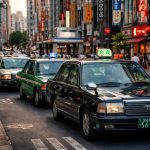
If there’s one thing that surprises first-time visitors more than anything else, it’s how easy it actually is to figure out how to get around in Japan. The country has built one of the most reliable, clean, and well-connected transportation networks in the world. Trains run on time to the minute. Buses have clear signage. Even taxis have a certain quiet efficiency that feels almost ceremonial. I’ve traveled through Japan multiple times, and every trip reinforces the same conclusion: once you understand the system, getting from place to place becomes one of the genuine pleasures of the journey rather than a source of stress.
Japan’s infrastructure is designed with both locals and visitors in mind. English signage is widespread at major stations, apps have caught up with the complexity of the rail network, and IC cards have made paying for rides almost effortless. That said, there is a learning curve. Tokyo’s metro map looks like a bowl of ramen at first glance, and knowing which pass makes financial sense for your trip takes some planning. This guide covers everything you need to know, from shinkansen bookings to hailing a taxi in a small city where nobody speaks English.
Understanding Transportation Options in Japan
Overview of Japan’s Public Transport System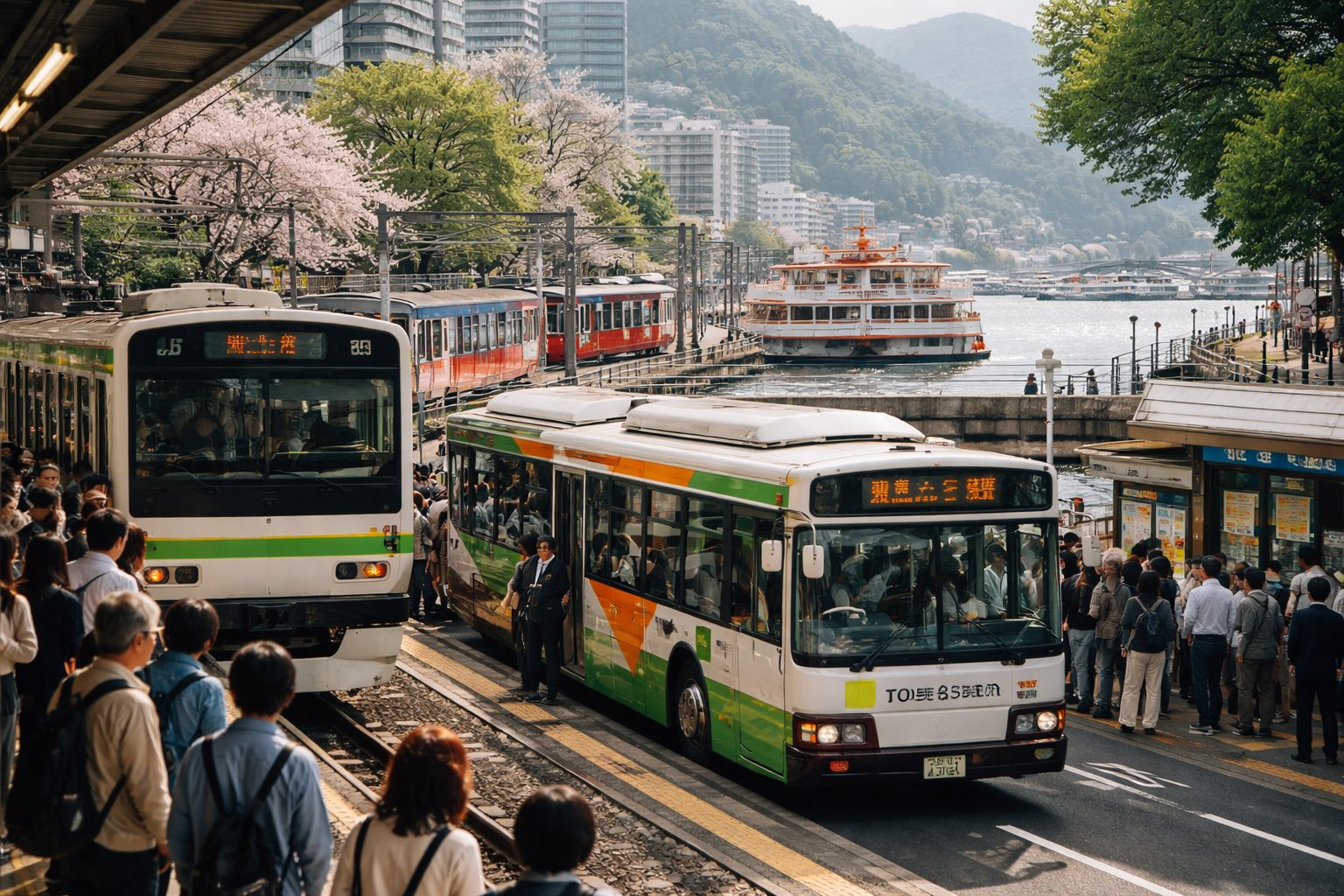
Japan’s public transport system is genuinely world-class. The network spans trains, subways, buses, ferries, and trams, connecting everything from hyper-dense urban centers to rural mountain towns. In major cities like Tokyo and Osaka, you can reach virtually any destination without needing a car. In less urban areas, a combination of regional trains and local buses handles most of the gaps.
The system is operated by a mix of public and private companies. Japan Railways (JR) is the main national rail operator, but dozens of private railway companies also run routes, particularly in and around cities. Understanding which company operates which line matters because it affects which passes you can use and which fares apply.
Types of Transportation: Trains, Buses, and Taxis
When thinking about how to get around in Japan, most travelers default to trains, and for good reason. Trains are fast, frequent, and cover the most ground. But buses fill important gaps, especially in cities like Kyoto where certain sightseeing routes are bus-centric, and in rural areas where train lines simply don’t exist.
Taxis are available everywhere but tend to be expensive compared to trains or buses. They’re most useful for late-night travel, getting to places without direct train access, or when you’re carrying heavy luggage. Ride-sharing apps have started gaining traction in Japan, though they work differently than they do in Western countries.
Here’s a quick comparison of the main modes of transport:
| Mode | Best For | Cost Level | English Availability |
|---|---|---|---|
| JR Trains | Long-distance and intercity travel | Medium-High | Good |
| Subway | City navigation | Medium | Good |
| Local Buses | Sightseeing routes, rural areas | Low-Medium | Variable |
| Long-Distance Bus | Budget intercity travel | Low | Limited |
| Taxi | Door-to-door, late night | High | Limited |
| Ride-Sharing | Urban areas, short trips | Medium | Improving |
Importance of Punctuality and Efficiency in Japanese Transport
Trains in Japan are famously on time. If a train is two minutes late, there may be a formal announcement and apology. This punctuality shapes the entire rhythm of traveling in the country. You can plan tight connections and generally trust that things will work as scheduled.
This efficiency extends to buses and even some taxis. It also means that if you miss a shinkansen, you usually have to wait for the next one rather than hoping to board anyway. Respecting the system’s structure makes the whole experience smoother for everyone.
Navigating the Train System
Introduction to Japan Rail (JR) Lines
JR Group operates an extensive network across all of Japan. It covers local commuter lines, regional express trains, and the legendary shinkansen bullet train network. JR lines are often the default choice for intercity travel and also useful for getting around within cities, particularly in Tokyo where the JR Yamanote Line loops around the city center.
JR tickets can be purchased at station ticket machines or counters. Most machines have an English mode, which makes buying simple local tickets straightforward. For reserved seats on express trains, you’ll need to either visit a Midori-no-madoguchi (JR Green Window) counter or use a ticket machine that handles reserved seat purchases.
Private railways like Hankyu, Keio, Tokyu, and Kintetsu operate many city and regional lines. These are often cheaper than JR for urban routes and just as reliable. They don’t accept the JR Pass but do accept IC cards.
How to Use the Shinkansen (Bullet Train)
The shinkansen is the crown jewel of Japanese rail travel. These high-speed trains connect cities across the main island of Honshu and beyond, traveling at speeds up to 320 km/h. A journey from Tokyo to Osaka on the Tokaido Shinkansen takes about two and a half hours. The same trip by car would take five to six hours under ideal conditions.
There are several shinkansen lines, each covering different routes:
- Tokaido Shinkansen: Tokyo to Osaka (via Nagoya, Kyoto)
- Sanyo Shinkansen: Osaka to Hiroshima and Fukuoka (Hakata)
- Tohoku Shinkansen: Tokyo north toward Aomori
- Hokuriku Shinkansen: Tokyo to Kanazawa
- Kyushu Shinkansen: Fukuoka down to Kagoshima
Each shinkansen has multiple service types. The Nozomi is the fastest on the Tokaido and Sanyo lines but is not covered by the standard JR Pass. The Hikari and Kodama are slower and do accept the JR Pass. If you’re using a pass, check which train types it covers before you book.
Booking a reserved seat is recommended, especially during peak travel seasons like Golden Week (late April to early May), Obon (mid-August), and New Year. Unreserved cars exist but can get crowded. Reserved seat bookings can be made at JR ticket counters up to one month in advance.
Regional Train Services: What You Need to Know
Beyond the shinkansen, regional limited express trains connect smaller cities and access areas like Hokkaido, Shikoku, and the more remote parts of Kyushu. These are slower but essential for reaching places like Hiroshima, Matsuyama, or Kushiro.
Local trains stop at every station and are the workhorses of commuter travel. They’re slow but cheap and run frequently in urban areas. IC cards work on virtually all of them, which removes any need to figure out exact fares before boarding.
In rural areas, some train lines run infrequently, sometimes only a few times a day. Checking schedules in advance is essential if you’re heading somewhere off the beaten track. Japan’s Hyperdia and Google Maps are both reliable for real-time route planning, though Google Maps has become increasingly accurate in recent years.
Buses: An Alternative to Trains
Local vs. Long-Distance Buses
Local city buses are an important part of how to get around in Japan, particularly in cities where the train network doesn’t cover everything. Kyoto is the best example. The city’s subway is limited, but its bus network is comprehensive and covers all the major temples and shrines. Osaka and Tokyo have buses too, though they’re less central to city navigation there.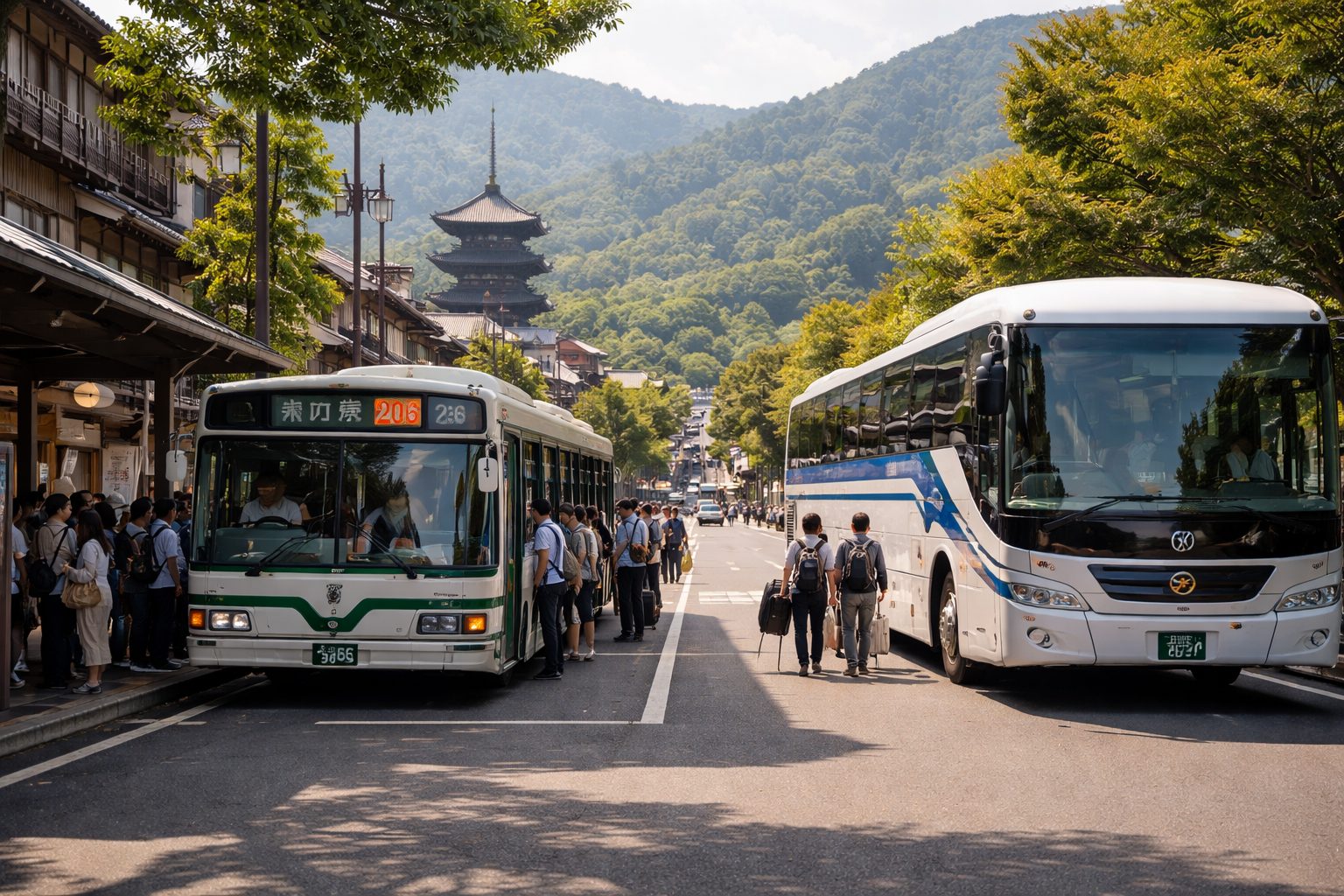
Long-distance highway buses (called “highway buses” or “kousoku bus”) are a budget-friendly alternative to the shinkansen. A Tokyo to Osaka overnight bus ticket can cost a quarter of the price of a shinkansen seat. The tradeoff is time: the overnight bus takes around eight hours. But for travelers on tighter budgets or those who prefer to sleep through the journey, it’s a genuinely practical option.
Popular bus operators include Willer Express, JR Bus, and various regional companies. Booking in advance online is usually the best way to secure seats, especially on popular routes.
How to Read Bus Schedules and Routes
Local bus routes in Japan are generally well-marked, but they can be confusing at first. Buses are typically numbered, and the destination is displayed on the front of the bus in Japanese and sometimes English. Bus stops show route numbers and schedules.
The main things to know:
- Board from the front door in most cities (you pay when boarding)
- In some areas, board from the back and pay when you exit
- The fare is often flat-rate within a city zone, or distance-based on longer routes
- IC cards work on most city buses
If you’re in a city where buses use the pay-on-exit distance system, you’ll get a numbered ticket when boarding. The fare display inside the bus shows the current amount owed for each ticket number. You pay that amount when you exit.
Tips for Using Bus Services in Japan
A few things make bus travel much easier:
- Use Google Maps or the Navitime app for Japan for route planning. Both show real-time bus information in major cities.
- In Kyoto, the one-day bus pass is excellent value if you’re doing a full day of temple-hopping.
- Carry small change. Some buses don’t give change, though IC cards solve this entirely.
- Don’t eat or drink on local city buses. It’s considered poor form.
- Stand clear of the door and let people exit before boarding.
Taxis and Ride-Sharing Services
Understanding Taxi Fares and Payment Methods
Japanese taxis are metered, clean, and driven with calm professionalism. Drivers typically wear white gloves and are unfailingly polite. The tradeoff is cost. Starting fares vary by city and company but generally begin around 500 to 700 yen for the first kilometer or so, then increase by roughly 80 to 100 yen per additional 400 to 500 meters.
Waiting time at traffic lights also adds to the fare. In heavy urban traffic, a short-seeming taxi ride can add up quickly. For most solo or duo trips within a city, trains will almost always be cheaper.
Payment methods have improved in recent years. Many taxis now accept IC cards and major credit cards in addition to cash. But in smaller cities and rural areas, cash is still the safest assumption.
How to Hail a Taxi in Japan
Hailing a taxi in Japan is straightforward. Look for the illuminated sign on top of the car. A red light means the taxi is available. A green light means it’s occupied or off-duty.
- Stand at the curb and raise your hand as the taxi approaches.
- The driver will pull over and the rear left door will open automatically. Don’t touch it.
- Tell the driver your destination. Having the address written in Japanese or pulled up on your phone makes this much easier.
- When you arrive, the door opens automatically again. Don’t slam it.
In major cities, taxi ranks outside train stations and hotels are common. These are usually the easiest place to find a cab, especially late at night.
Popular Ride-Sharing Apps for Tourists
Uber operates in Japan but functions differently than in most countries. In most Japanese cities, Uber dispatches licensed taxis rather than private drivers. This means pricing is similar to regular taxis, not the discounted fares you might expect from ride-sharing in the US or Europe.
GO is Japan’s dominant ride-hailing app and is widely used. It aggregates taxis from multiple companies and allows in-app payment, which removes any awkwardness around communication or payment. The app is available in English and is genuinely useful, especially in cities where taxis are plentiful.
S.RIDE is another major option popular in Tokyo. DiDi also operates in several Japanese cities. All of these apps work similarly: enter your destination, book a nearby cab, and pay through the app.
Getting Around Major Cities
Tokyo: The Best Ways to Navigate the City
Tokyo has one of the most complex train and subway networks in the world, but once you understand the structure, it’s manageable. The city is served by JR lines, the Tokyo Metro, and the Toei subway system. The Yamanote Line is your best friend as a tourist. It’s a JR loop line that connects Shinjuku, Shibuya, Harajuku, Akihabara, Ueno, and Tokyo Station, among others.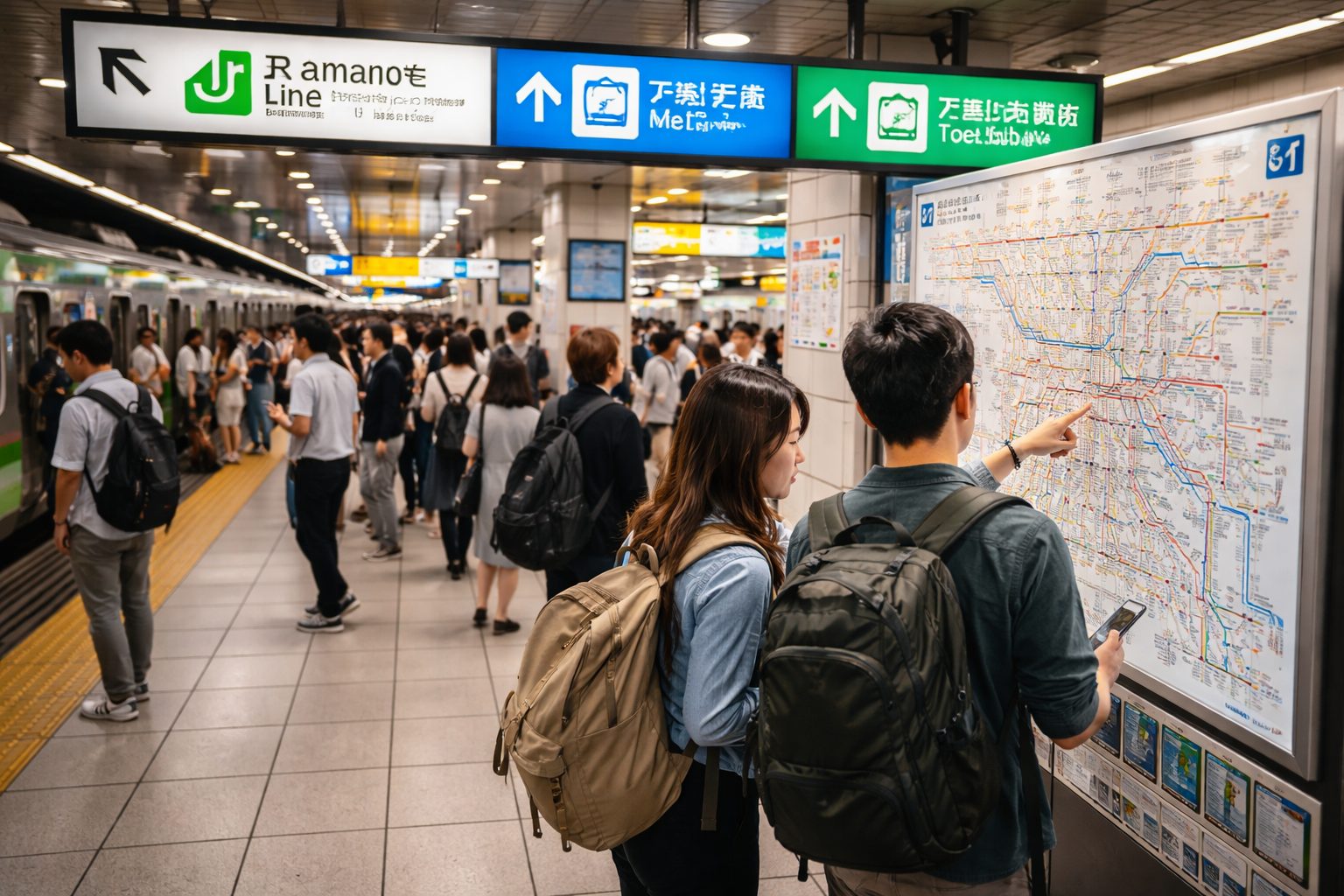
For getting deeper into neighborhoods, the Metro covers most of the city comprehensively. Buy a Suica or Pasmo IC card at any major station and use it across all lines without worrying about which operator runs which train.
Key stations to know in Tokyo:
- Shinjuku: transport hub, multiple JR lines and multiple subway lines intersect here
- Shibuya: major hub for southern Tokyo and private lines heading to Yokohama
- Tokyo Station: central hub for shinkansen departures
- Ueno: access to Asakusa, the zoo, and shinkansen north
Buses exist in Tokyo but most tourists don’t need them given the train density.
Kyoto: Transportation Options for Sightseeing
Kyoto is more compact than Tokyo, but its sightseeing spots are spread across a wide area. The city has two subway lines (Karasuma Line and Tozai Line) that cover the center and some key areas, but many major temples and shrines are not directly on these lines.
Buses are central to how to get around in Japan’s ancient capital. The city bus network is comprehensive and reaches most attractions. A one-day bus pass (currently 700 yen) offers unlimited rides on city buses and some subway routes, making it excellent value for a busy sightseeing day.
Taxis are readily available near major sightseeing clusters like Gion and Arashiyama. For Arashiyama specifically, you can also take the Hankyu Arashiyama Line or the JR San-in Line depending on where you’re coming from.
Cycling is popular in Kyoto and rental shops are easy to find. The city is relatively flat in its central area, making cycling a pleasant option in good weather.
Osaka: Efficient Travel Methods for Tourists
Osaka’s subway system is excellent and covers the city comprehensively. The Midosuji Line is the main north-south artery, connecting Shin-Osaka (shinkansen terminal), Umeda (the northern shopping and entertainment district), Namba (southern hub), and beyond.
The Osaka Amazing Pass is worth looking at if you plan to hit multiple major attractions. It includes unlimited subway rides and free entry to dozens of museums and sites.
For getting to Kyoto from Osaka, you have multiple options:
- JR Special Rapid (Shinkaisoku): Osaka to Kyoto in about 14 minutes from Shin-Osaka, 28 minutes from Osaka Station. Fast and covered by JR Pass.
- Hankyu Railway: from Umeda to Kyoto in about 44 minutes. Cheaper than JR but not covered by JR Pass.
- Keihan Railway: connects Osaka to central Kyoto and is convenient for Gion and Fushimi Inari.
Getting to Kansai International Airport from Osaka is easy via the Nankai Airport Express Rapi:t or the JR Haruka, which also connects directly to Kyoto.
Using Transportation Passes
Overview of IC Cards: Suica and Pasmo
If you only do one thing to prepare for getting around in Japan, load money onto an IC card. Suica (issued by JR East) and Pasmo (issued by a consortium of Tokyo-area operators) are the two most common, but they’re accepted interchangeably across the country.
IC cards work on virtually all trains, subways, and buses in Japan. They also work at convenience stores, vending machines, and some restaurants near stations. You tap in and tap out at train gates, and the correct fare is automatically deducted. No need to figure out ticket prices before boarding.
You can get a Suica at any major JR station or at Tokyo, Narita, and Haneda airports. Load them with as much or as little yen as you like. The card itself has a 500 yen deposit which is refunded when you return it.
In 2024, Japan reintroduced Suica and Pasmo for international visitors after a pause due to IC chip shortages, though availability can vary. There’s also a mobile Suica option available through Apple Wallet if you have an iPhone.
Regional Passes: Which One to Choose?
For tourists making multi-city trips, regional and national rail passes can offer significant savings. The most well-known is the JR Pass, which allows unlimited travel on most JR lines including the shinkansen (except the Nozomi and Mizuho), for a set period.
JR Pass options:
- 7-day pass: around 50,000 yen (adult)
- 14-day pass: around 80,000 yen (adult)
- 21-day pass: around 100,000 yen (adult)
Whether the JR Pass saves you money depends entirely on your itinerary. A round trip Tokyo-Kyoto on the shinkansen alone costs roughly 28,000 yen, so if you’re doing that plus several other shinkansen trips, the 7-day pass can pay for itself.
Regional passes offer focused value for specific areas:
- Kansai Area Pass: covers Osaka, Kyoto, Nara, Kobe, Himeji
- Hokkaido Rail Pass: for exploring Hokkaido by train
- Kyushu Rail Pass: for traveling around Kyushu
- Sanyo-San’in-Northern Kyushu Area Pass: a newer option covering a broad western Japan corridor
All JR Passes must be purchased before arriving in Japan, either through authorized travel agents or JR’s online system.
Cost-Effectiveness of Transportation Passes
The honest answer is that passes are not always the best value. If your trip is concentrated in one city, day passes for that city’s subway or bus system often make more financial sense than a national JR Pass.
Calculate your expected train journeys before buying. Add up the individual ticket costs versus the pass price. If the individual tickets come out cheaper, skip the pass and use an IC card instead.
For a two-week trip covering Tokyo, Kyoto, Hiroshima, and possibly Hiroshima and Fukuoka, the 14-day JR Pass is likely worth it. For a week in Tokyo and Kyoto only, it might not be.
Accessibility in Japanese Transportation
Transportation Options for Disabled Travelers
Japan has made real progress on accessibility in its transportation network, particularly in major cities. Most large train stations have elevators, escalators, and tactile paving throughout. Station staff are generally trained to assist travelers with disabilities, and at many major stations, assistance can be arranged in advance.
Wheelchair users can travel on shinkansen. There are designated wheelchair spaces in specific cars, and these need to be reserved in advance. The station staff and JR staff are usually very helpful in facilitating boarding and assistance at the platform.
Accessible toilets are available at most major stations and are generally well-maintained. Many stations in Tokyo, Osaka, and Kyoto have been retrofitted with accessibility infrastructure ahead of the 2020 Olympics.
Information on Wheelchair Accessibility
Most major subway and train stations in cities like Tokyo, Osaka, Kyoto, and Nagoya have elevators. Smaller suburban and rural stations may not. Before planning a trip that involves specific stations, it’s worth checking the station’s accessibility information on the JR or Metro website.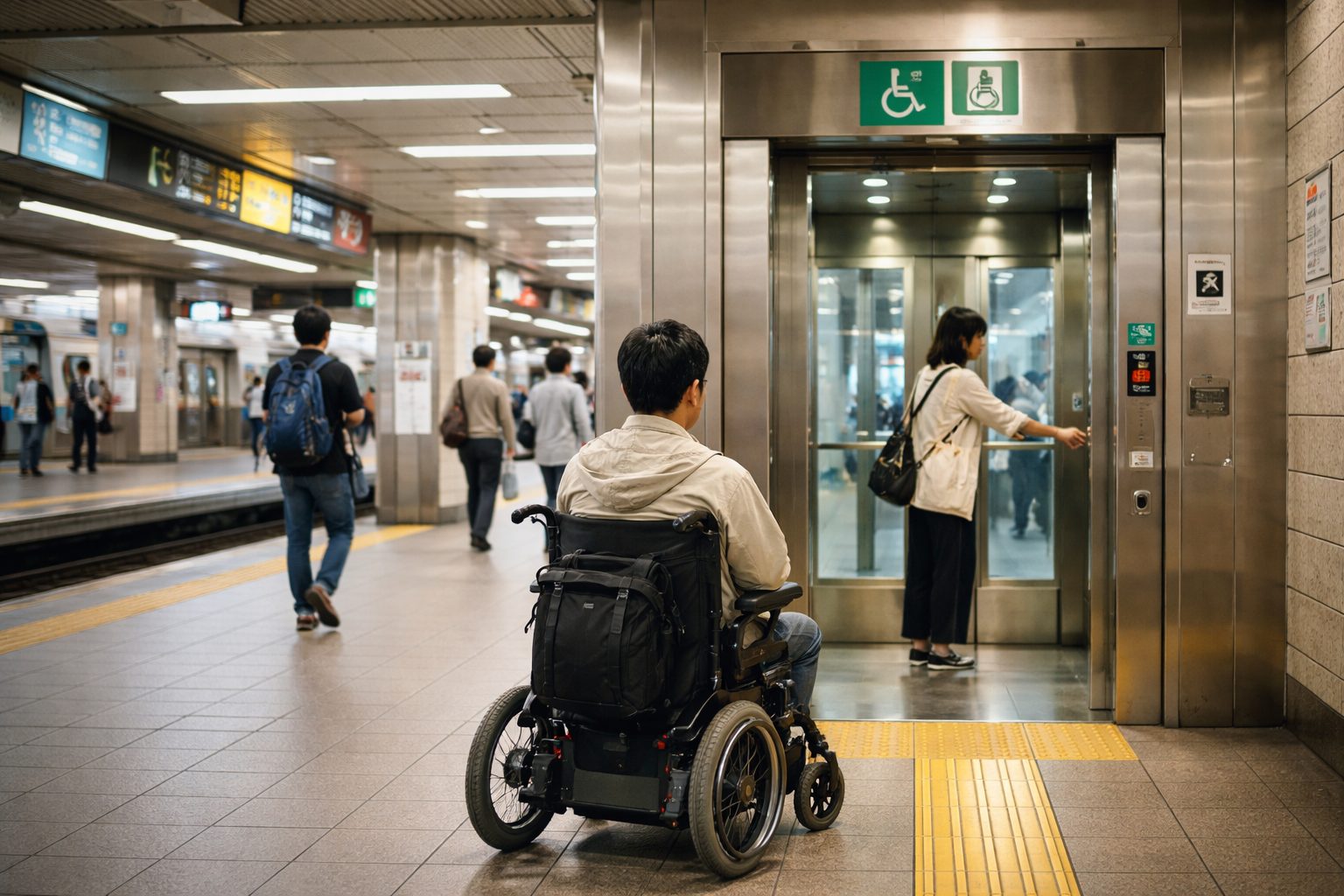
Bus accessibility varies. Many city buses in major cities are low-floor designs with wheelchair space, but older buses may not be. Taxi companies operate accessible vans in some cities, and these can be requested specifically.
A few practical tips for wheelchair users:
- Book shinkansen wheelchair spaces at the JR counter as early as possible, since there are limited slots per train.
- Download the Japan Accessible Tourism Center’s resources before your trip.
- Station staff assistance (called “escort service”) is free at most JR and Metro stations and can be arranged with a brief request.
Practical Tips for Tourists
Language Barriers: How to Overcome Them
English proficiency among transport staff varies widely. Major stations in Tokyo, Osaka, Kyoto, and Fukuoka generally have staff with workable English. Smaller cities and rural stations often don’t.
The most useful strategies:
- Use Google Maps for navigation. It’s accurate for Japanese trains and buses and provides step-by-step instructions in English.
- Have your destination address saved in Japanese. Showing a taxi driver or station staff your destination on your phone screen bypasses most language issues.
- Google Translate’s camera mode can read Japanese signs and menus in real time. It’s not perfect but it’s helpful.
- Download the Navitime for Japan Travel app. It’s built specifically for tourists navigating Japanese transit.
The Japan National Tourism Organization’s (JNTO) website has downloadable guides and a tourist information hotline.
Understanding Etiquette on Public Transport
Japanese public transport comes with a clear set of unwritten rules that are worth knowing before you board.
- Keep your phone on silent. Taking calls in a regular speaking voice is generally avoided.
- Priority seats near the doors are intended for elderly passengers, pregnant women, and people with disabilities. Vacate them if someone who needs them boards.
- Don’t eat on trains or subways. Eating is acceptable on long-distance bullet trains and some tourist-specific rail routes but not on commuter lines.
- Keep the volume of conversations low. Loudness in a quiet train car tends to draw uncomfortable attention.
- Stand on the correct side of the escalator. In Tokyo, stand on the left. In Osaka, stand on the right.
- Form a queue at the marked spots on train platforms. Don’t push to board before exiting passengers have cleared the doors.
These aren’t rules that are enforced with penalties, but following them makes for a smoother experience and shows basic respect for other passengers.
Safety Tips for Traveling in Japan
Japan is one of the safest countries in the world for travelers. Petty crime is rare, and public spaces including stations are generally very safe even late at night. That said, a few sensible practices apply.
- Keep your belongings close in crowded stations during rush hour.
- If you’re on the last train late at night, stay aware of which stop you need. Missing the last train can leave you needing an expensive taxi.
- In case of emergency, station staff are always available during operating hours. Emergency call boxes exist at most platforms.
- Lost and found in Japan is remarkably honest. If you leave something on a train, there’s a reasonable chance it’ll be handed in. Contact the station’s lost property office or the operating company’s lost and found.
Frequently Asked Questions (FAQs)
What is the best way to get around in Japan?
For most visitors, the best way to get around in Japan is a combination of the shinkansen for intercity travel and the local metro or subway for city navigation. Load a Suica or Pasmo IC card for day-to-day transit and consider a JR Pass if you’re covering significant ground between cities.
How much does public transportation cost in Japan?
Costs vary by route and mode. A subway ride within Tokyo typically costs between 170 and 320 yen. A shinkansen ticket from Tokyo to Kyoto costs around 14,000 yen one way without a pass. Long-distance bus tickets between major cities can be as low as 3,000 to 5,000 yen.
Are there discounts for tourists on transportation?
Yes. The JR Pass is exclusively available to foreign tourists visiting on a short-term visa. Regional passes like the Kansai Area Pass and Hokkaido Rail Pass also offer tourist-specific pricing. City-specific day passes for subways and buses are available to anyone and are worth calculating against individual ticket costs.
Is it necessary to book train tickets in advance?
For shinkansen travel during peak periods such as Golden Week, Obon, and New Year, advance booking is strongly recommended. During quieter periods, you can often board unreserved cars without a booking, or purchase a reserved seat ticket the same day. For regular local and express trains, advance booking is generally not necessary.
Can I use credit cards on public transport in Japan?
Most ticket machines at major stations accept credit cards for purchasing individual tickets. IC cards can be loaded with cash or sometimes via credit card depending on the machine and card type. Tapping directly with a credit card (contactless payment) is increasingly available but not yet universal. For the smoothest experience, keep your Suica or Pasmo card loaded with enough cash for your day’s travel.
Knowing how to get around in Japan before you arrive takes some of the uncertainty out of your first day and lets you focus on the actual experience of being there. The country’s transport system is genuinely impressive, and using it well, rather than fighting against it, becomes part of the pleasure of the trip.