If you’ve ever stood at the edge of a mountain lake with cold water lapping at your feet and nothing but pine trees stretching to the horizon, you already know why so many people dedicate their vacations, their weekends, and sometimes their entire lives to chasing water. The best lakes in the US offer something that’s genuinely hard to find anywhere else: a mix of raw natural beauty, outdoor recreation, and the kind of quiet that resets something deep in your chest. From massive freshwater seas in the Midwest to volcanic crater lakes in the Pacific Northwest, this country has an extraordinary range of lake destinations worth knowing about.
I’ve spent years exploring lakes across the country, and what I’ve found is that no two are alike. Each has its own personality, its own crowd, its own season. This guide covers the top spots, what makes them worth visiting, and how to make the most of your time at the water.
Introduction to the Best Lakes in the US
The United States is home to over 250,000 lakes if you count natural water bodies of all sizes. That number alone tells you something about how much water defines the American landscape. But not all lakes are created equal. Some are shallow, warm, and perfect for a lazy summer afternoon. Others are deep and cold enough to take your breath away. A few have geological stories so compelling they’d belong in a textbook.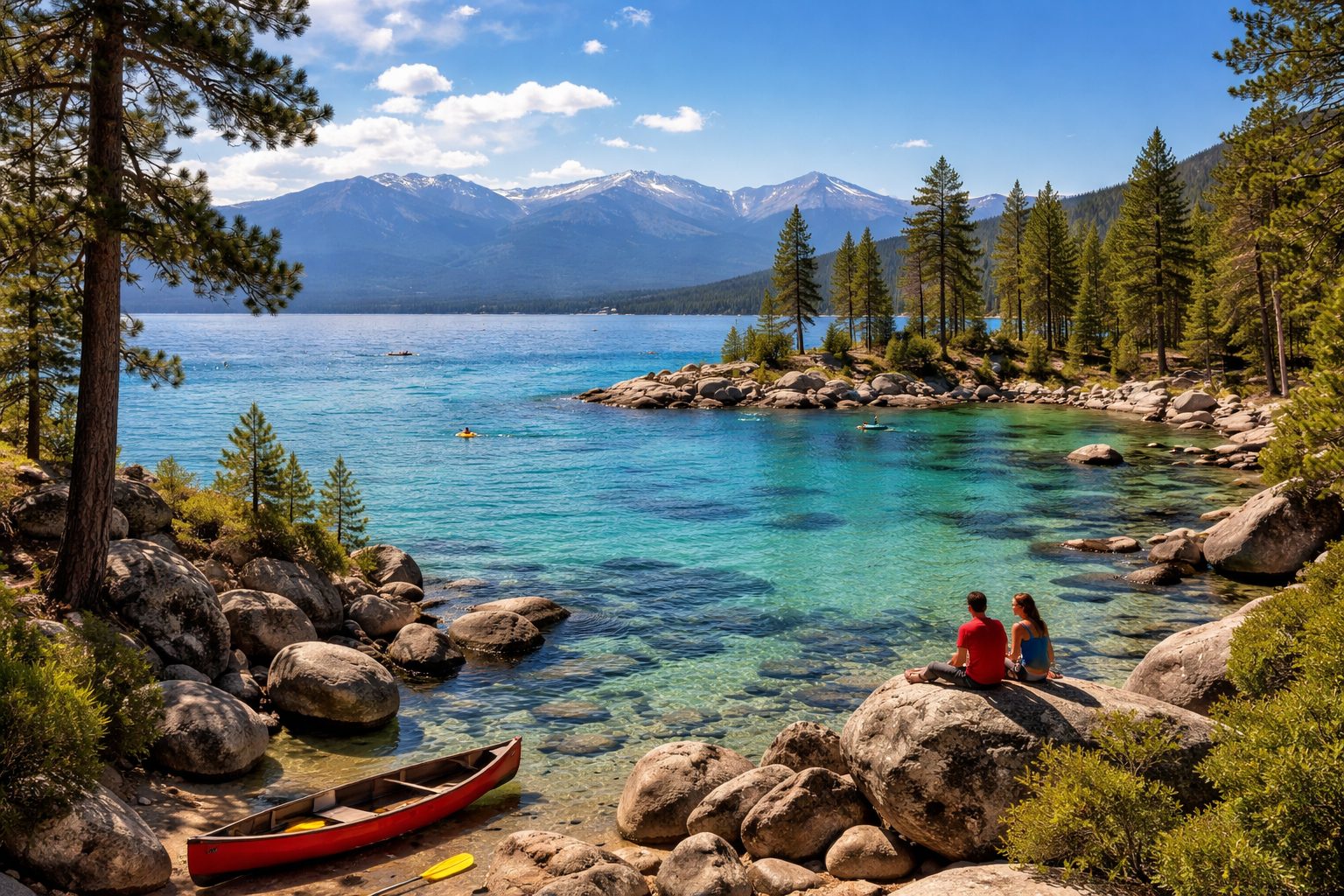
What separates the best lakes in the US from the ordinary ones usually comes down to a combination of factors: water clarity, surrounding scenery, access to recreation, and the kind of atmosphere that makes you want to stay longer than you planned. I look for places where the environment feels intact, where you can hike, swim, fish, or just sit without feeling like you’re in a parking lot.
This guide is organized to give you both the big picture and the practical details. Whether you’re planning a road trip, a family vacation, or just looking for your next solo escape, you’ll find something useful here.
Overview of the Largest Lakes in the US
Before diving into individual lakes, it helps to understand scale. The Great Lakes alone hold about 21% of the world’s surface fresh water, and four of the five lie at least partially within US borders. These aren’t lakes in the usual sense. They behave more like inland seas, with shipping lanes, tidal-like seiches, and weather systems that form entirely over the water.
Beyond the Great Lakes, the US has a remarkable variety of large natural lakes. Here’s a quick overview of the biggest ones:
- Lake Superior (shared with Canada): approximately 31,700 square miles
- Lake Michigan (entirely US): approximately 22,400 square miles
- Lake Huron (shared with Canada): approximately 23,000 square miles
- Lake Erie (shared with Canada): approximately 9,910 square miles
- Lake Ontario (shared with Canada): approximately 7,340 square miles
- Great Salt Lake (Utah): approximately 1,700 square miles, but highly variable
- Lake Okeechobee (Florida): approximately 730 square miles
- Iliamna Lake (Alaska): approximately 1,000 square miles
Size isn’t everything, though. Crater Lake in Oregon covers only 20 square miles but reaches depths of nearly 2,000 feet, making it the deepest lake in the US. Lake Tahoe sits at 6,225 feet elevation and has water so clear you can see objects 70 feet below the surface. The variety is genuinely staggering.
Top 10 Best Lakes in the US
Choosing a top ten is always going to involve some judgment calls. I’ve weighted factors like natural beauty, accessibility, recreational options, and the overall experience of being there. These are places I’d send a friend without hesitation.
Lake Superior
Lake Superior is the largest of the Great Lakes by surface area and the largest freshwater lake in the world by that same measure. It sits along the northern border of Minnesota, Wisconsin, and Michigan, and it feels ancient in a way that’s hard to describe. The water is strikingly cold even in summer, rarely warming above 55 degrees Fahrenheit in the open lake. The shoreline varies from sandy beaches to dramatic rocky cliffs, particularly in places like Pictured Rocks National Lakeshore in Michigan.
What I find most impressive about Superior is the light. On a clear morning, the lake stretches to the horizon like an ocean, and the way the sunlight hits the water is something you don’t forget. Duluth, Minnesota serves as one of the main gateway cities, and the surrounding forests offer world-class backpacking along the Superior Hiking Trail.
- Best for: scenic drives, backpacking, kayaking, sea glass hunting
- Peak season: July through September
- Notable access points: Duluth MN, Marquette MI, Bayfield WI
Lake Tahoe
Lake Tahoe straddles the California-Nevada border in the Sierra Nevada mountain range, and it’s one of the most visually stunning lakes anywhere in the country. The water is deep blue, almost impossibly clear, and surrounded by peaks that hold snow well into summer. It’s a year-round destination: ski resorts dominate the winters, while summers bring boating, hiking, and swimming from sandy beaches along the south shore.
The lake itself is about 22 miles long and 12 miles wide, deep enough (1,645 feet) to hold the entire state of California under about 14 inches of water if you could somehow tip it over. The clarity comes from low nutrient levels and the surrounding geology. Emerald Bay on the western shore is probably the most photographed spot, and it deserves the attention.
- Best for: scenic beauty, skiing, boating, hiking
- Peak season: June through August for water activities, December through March for skiing
- Notable access points: South Lake Tahoe CA, Tahoe City CA, Incline Village NV
Lake Michigan
Lake Michigan is the only Great Lake located entirely within the United States, and it’s often the one people feel most connected to. The eastern shore, running through Michigan, has some of the most beautiful freshwater beaches in the world: wide, sandy, with dunes that in places reach 400 feet high at Sleeping Bear Dunes National Lakeshore. The water in the shallows runs turquoise in summer, and the sunsets over the lake from the eastern shore are legendary.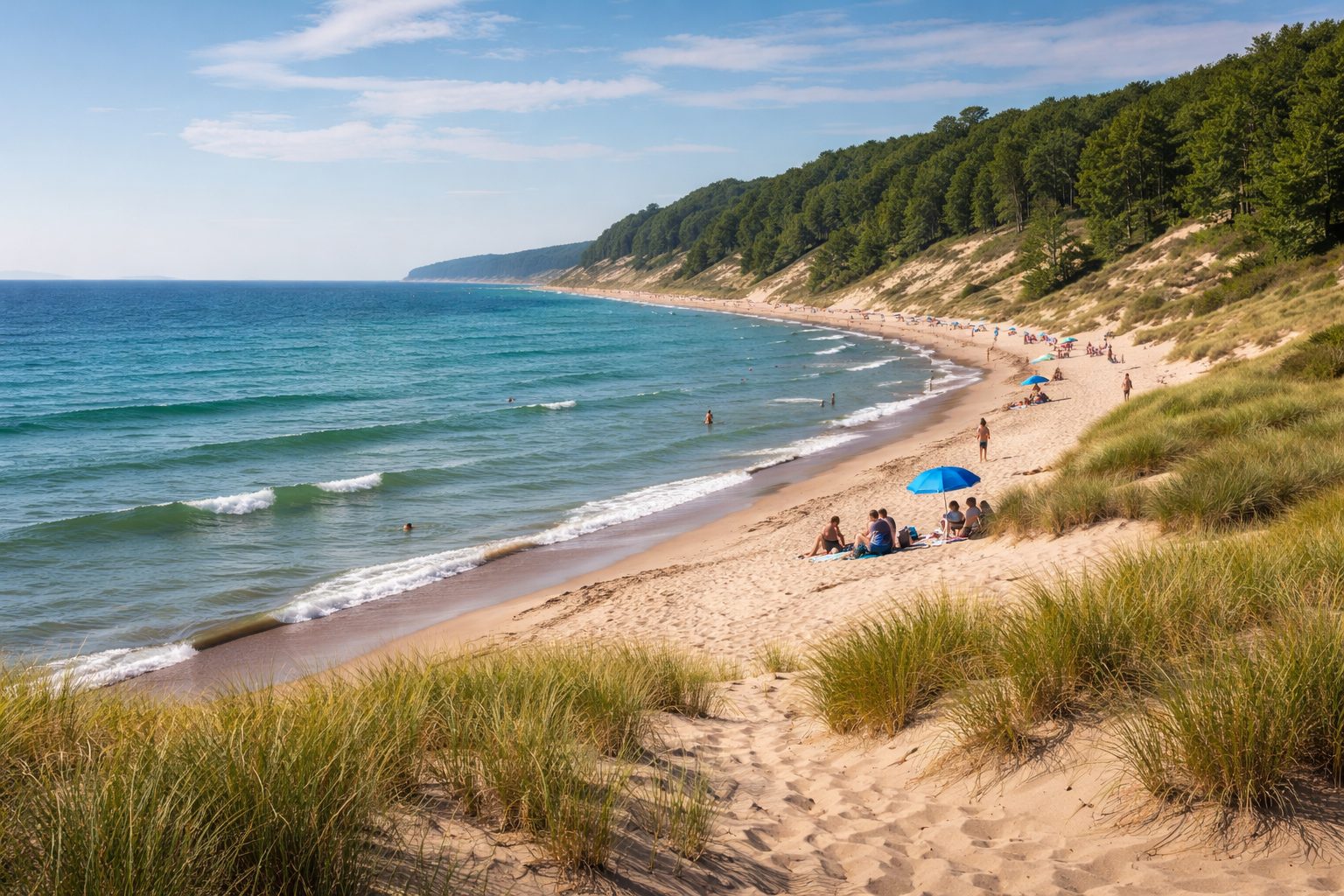
Chicago sits on the southwestern corner of the lake and has done more than any other city to integrate its lakefront into daily life. But for the real lake experience, head north into the Leelanau Peninsula or take the ferry to Mackinac Island, where no motorized vehicles are allowed.
- Best for: beach vacations, dune hiking, sailing, city lakefront access
- Peak season: July through early September
- Notable access points: Chicago IL, Holland MI, Traverse City MI
Crater Lake
Crater Lake sits inside the collapsed caldera of an ancient volcano called Mount Mazama, which erupted catastrophically about 7,700 years ago. The lake has no inlet or outlet rivers. It fills entirely from rain and snowmelt and loses water only through evaporation and seepage. That closed system, combined with the absence of river sediment, gives the water a blue color that seems almost artificial.
The lake reaches 1,943 feet at its deepest point, making it the deepest in the US. Crater Lake National Park surrounds it, and the Rim Drive offers 33 miles of road with continuous views of the water. You can hike down to the shoreline at Cleetwood Cove, the only legal way to reach the water’s edge. In winter, the park is largely closed to vehicles but open to snowshoers and cross-country skiers.
- Best for: scenic drives, photography, hiking, swimming from the dock
- Peak season: July through September
- Notable access points: Rim Village, Cleetwood Cove Trail
Lake Havasu
Lake Havasu spans the Arizona-California border along the Colorado River, and it’s built a reputation as one of the liveliest lake destinations in the Southwest. The water is warm, the weather is hot, and the main appeal is on the water rather than around it. Boating, jet skiing, and water sports are the main draws. The lake is also home to the London Bridge, which was purchased, dismantled, and shipped here from England in the late 1960s, a fact that still surprises most people who hear it.
The surrounding landscape is desert, which means the contrast between the blue water and the red rock is genuinely striking. Spring break draws large crowds, but fall is actually my preferred time, when the temperatures drop to something manageable and the lake is quieter.
- Best for: boating, water sports, warm-weather escapes
- Peak season: April through June, September through October
- Notable access points: Lake Havasu City AZ
Flathead Lake
Flathead Lake in northwestern Montana is the largest natural freshwater lake west of the Mississippi River, covering about 197 square miles. It sits at the base of the Mission Mountains in the Flathead Valley, and the scenery is the kind that makes people decide to move to Montana. The water is cold and very clear. Wild Horse Island State Park sits in the middle of the lake and is accessible only by boat, home to wild horses, bighorn sheep, and bald eagles.
The surrounding area includes Glacier National Park to the northeast, which makes Flathead a natural stopping point for anyone exploring that region. Cherries grown in the orchards along the lake’s eastern shore are considered some of the best in the country and ripen in July.
- Best for: boating, fishing, scenic drives, visiting Glacier NP
- Peak season: June through September
- Notable access points: Polson MT, Bigfork MT, Lakeside MT
Lake George
Lake George in the Adirondacks of upstate New York is called the “Queen of American Lakes,” a title given by Thomas Jefferson. The name holds up. The lake stretches 32 miles through a valley flanked by forested mountains, with water clear enough to see the bottom in the shallows. It’s a historic destination with a colonial-era fort (Fort William Henry) at its southern end and a chain of small islands accessible by kayak or canoe.
The village of Lake George is touristy in the best and worst senses of the word: there’s a lot of kitsch, but the proximity to the Adirondack backcountry means you’re never more than a few miles from real wilderness. The lake freezes hard enough in winter for ice fishing, and the fall foliage season in late September and October is spectacular.
- Best for: history, family vacations, kayaking, fall foliage
- Peak season: July through August, late September for foliage
- Notable access points: Lake George Village NY
Lake Caddo
Lake Caddo, on the Texas-Louisiana border, is unlike anything else on this list. It’s a shallow cypress swamp lake, the only naturally occurring lake in Texas, and it has an otherworldly atmosphere that I find genuinely hard to compare to anything. Ancient bald cypress trees rise from the water with their knees sticking up from the surface, Spanish moss hanging from the branches, and alligators moving silently through the channels. It feels like a different country.
The lake is a premier bass fishing destination and is particularly popular with kayakers and canoeists who want to explore the maze of channels through the cypress forest. Paddling here at dawn, when the mist is still on the water, is one of the more memorable things you can do outdoors in the South.
- Best for: fishing, kayaking, wildlife photography, swamp exploration
- Peak season: Spring and fall
- Notable access points: Caddo Lake State Park TX, Uncertain TX
Lake Champlain
Lake Champlain forms part of the border between New York and Vermont, extending north into Quebec. It’s 120 miles long and has played a significant role in American and colonial history, with naval battles fought on its waters during both the Revolutionary War and the War of 1812. The scenery is gentler than some of the more rugged western lakes but deeply beautiful, with the Adirondacks to the west and the Green Mountains to the east framing the water from both sides.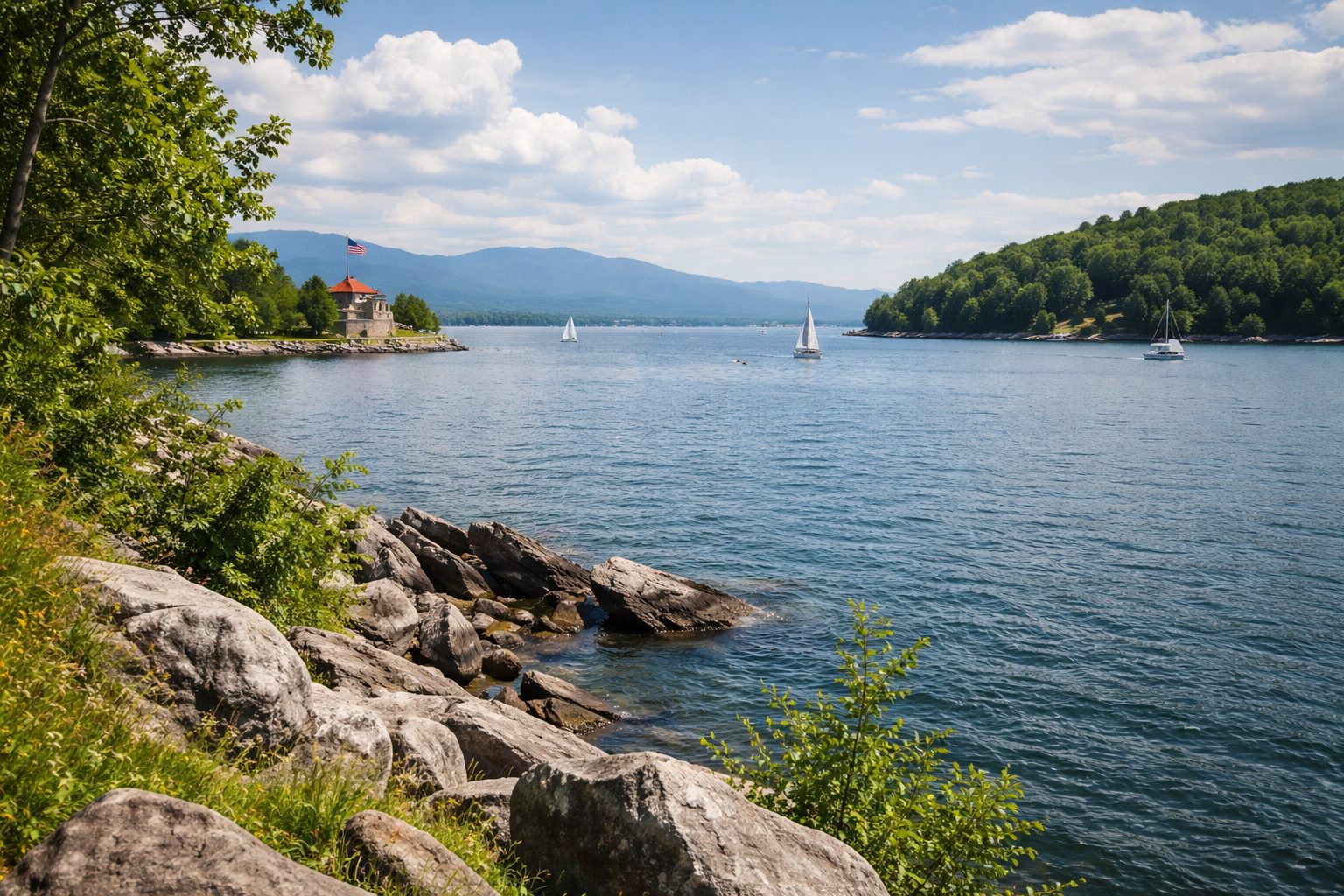
Burlington, Vermont sits on the eastern shore and is one of the most livable small cities in the country. The lakefront has been well-developed for public use, with a bike path and swimming areas. The lake also has its own local legend, a serpentine creature called “Champ,” allegedly sighted in the water for centuries.
- Best for: sailing, cycling, history, waterfront dining
- Peak season: June through September
- Notable access points: Burlington VT, Plattsburgh NY
Lake of the Woods
Lake of the Woods straddles the borders of Minnesota, Ontario, and Manitoba, making it a genuinely international body of water. The US portion lies in northern Minnesota’s Boundary Waters country, and it’s best known for walleye fishing that many anglers consider the best in North America. The lake has over 14,000 islands, an absurd number that creates an endless maze of channels, bays, and hidden coves. Navigating it requires a map and some patience, but the reward is a sense of remoteness that’s hard to find this close to civilization.
The town of Baudette, Minnesota, serves as the main US entry point, and there are dozens of resorts and outfitters along the shore. This is a fishing-first destination, but the wildlife viewing, including moose, bears, and nesting eagles, adds another layer.
- Best for: walleye fishing, boating, wildlife watching, island exploration
- Peak season: May through September
- Notable access points: Baudette MN, Warroad MN
Unique Features of the Best Lakes in the US
What makes American lakes stand out globally is the sheer diversity. Within a single country, you can find volcanic crater lakes, glacially carved alpine lakes, shallow subtropical swamp lakes, and massive freshwater seas. That range doesn’t exist quite like this anywhere else.
A few features worth highlighting:
- Water clarity: Crater Lake and Lake Tahoe consistently rank among the clearest lakes on earth, not just in the US. The Secchi depth at Crater Lake averages around 100 feet.
- Geological origins: Many of the best lakes have fascinating origin stories. Crater Lake formed from a volcanic collapse. The Great Lakes were carved by glaciers over tens of thousands of years. Caddo Lake formed partly due to a natural log jam that backed up water across a wide floodplain.
- Biodiversity: Lake Superior holds 88 species of fish. Crater Lake, with its cold, isolated water, supports two fish species: kokanee salmon and rainbow trout, both introduced. Caddo Lake shelters over 200 bird species.
- Elevation: Lake Tahoe sits above 6,000 feet. Flathead Lake and Lake George are at low elevations. The elevation differences produce very different ecosystems and experiences.
Each lake has something specific that sets it apart, and that specificity is part of what makes planning a lake trip rewarding. You’re not interchangeable destinations. You’re choosing a completely different kind of experience each time.
Activities to Enjoy at the Best Lakes
Fishing
Fishing is the activity that ties together more lake destinations in the US than any other. From ice fishing on Lake of the Woods in February to catching largemouth bass in Caddo Lake in April, the range of fishing experiences across American lakes is vast.
The most popular target species vary by region:
- Walleye: Lake of the Woods, Lake Erie, Flathead Lake
- Largemouth bass: Lake Caddo, Lake Havasu, Lake Okeechobee
- Lake trout: Lake Superior, Lake Michigan, Lake Champlain
- Kokanee salmon: Flathead Lake, Lake Tahoe
- Rainbow trout: Crater Lake, Lake Tahoe
Most lakes require a valid state fishing license, and some have specific regulations around certain species, seasons, and gear. Always check state fish and wildlife websites before heading out.
Boating
Boating gives you access to parts of these lakes you simply can’t reach any other way. On a big lake like Superior or Michigan, a boat opens up remote stretches of shoreline, sea caves, and offshore islands. On Caddo Lake, a flat-bottomed jon boat gets you through the shallow cypress channels.
Rental options are available at most major lake destinations, and you don’t need to own a boat to enjoy the water. Pontoon rentals are common and accessible for families. For something more adventurous, sailboat charters operate on Lake Tahoe, Lake Michigan, and Lake Champlain.
A few practical points:
- Most lakes require motorized boats to be registered with the state
- Invasive species inspections are increasingly common and required at many launch ramps
- Life jackets are required by law and should be sized for every person on board
Swimming
Swimming conditions vary enormously. Lake Superior is cold enough to be genuinely dangerous without a wetsuit except in shallow nearshore areas in late summer. Lake Havasu can feel like bath water by July. Knowing what to expect before you arrive matters.
Best swimming lakes by water temperature and beach quality:
- Lake Michigan (eastern shore): warm shallows, sandy beaches, safe for families
- Lake George: clear, swimmable, designated beaches in the village area
- Lake Tahoe (south shore): Sand Harbor and Pope Beach offer swimming in clear water
- Lake Havasu: consistently warm, numerous sandy coves
Rip currents are a real concern on the Great Lakes, particularly Lake Michigan, which sees more drowning deaths than any other Great Lake. Watch for warning flags at beaches and pay attention to wind conditions.
Camping
Camping is one of the best ways to actually experience a lake rather than just visit it. Waking up a few hundred feet from the water, having your morning coffee while watching the fog lift, is a different thing entirely from checking into a hotel nearby.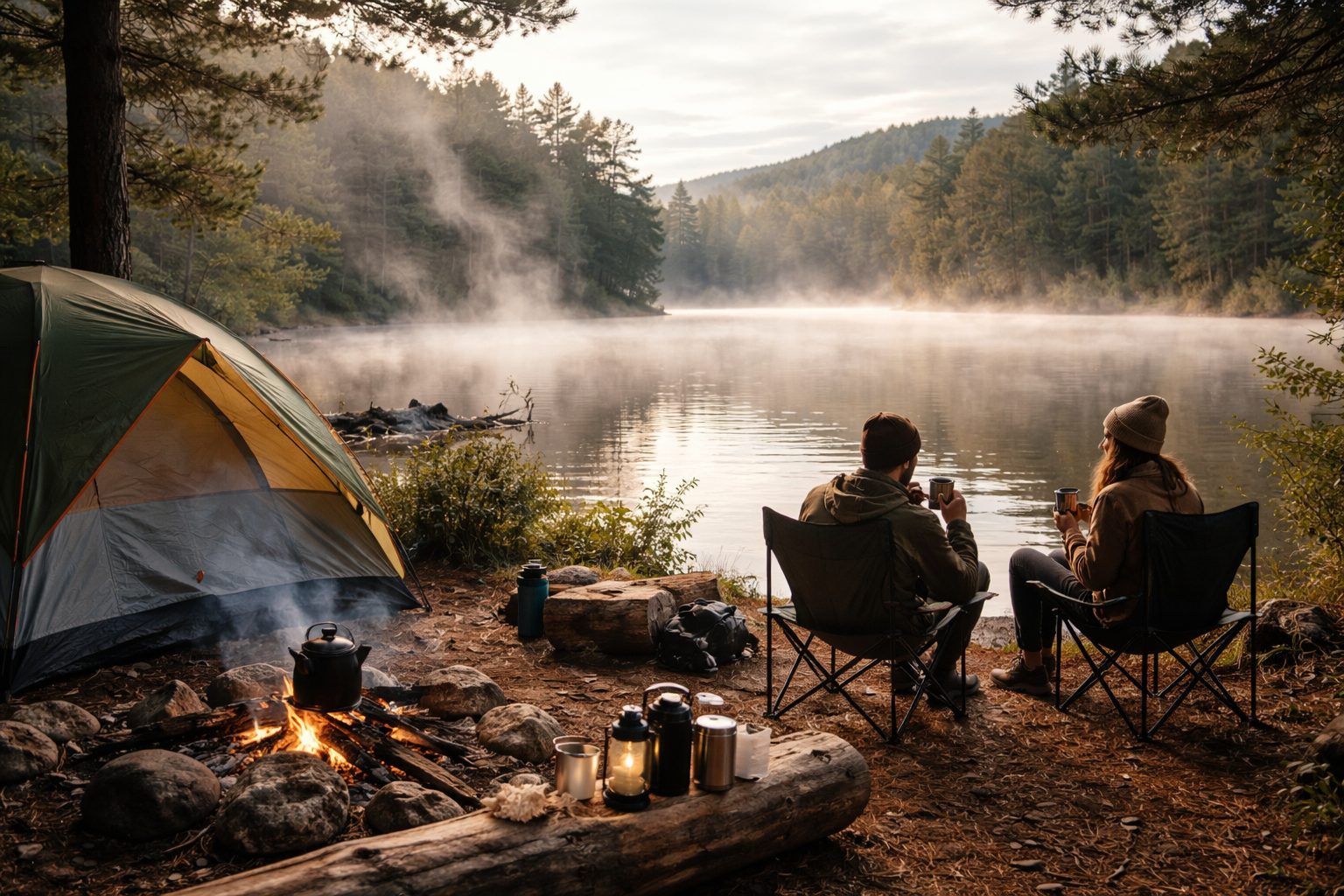
Top camping options by lake:
- Lake Superior: Pictured Rocks National Lakeshore has backcountry camping along the shore
- Crater Lake National Park: Mazama Campground has over 200 sites
- Flathead Lake: Wayfarers State Park and West Shore State Park offer sites near the water
- Lake George: dozens of island campsites accessible only by boat in Lake George Islands State Park
Reservations are essential for summer weekends at most of these locations. Book several months in advance for peak season sites, especially at national park campgrounds.
Best Lakes for Family-Friendly Activities
Not every great lake destination works equally well for families with young children. Depth, water temperature, available amenities, and the surrounding area all factor in. Based on my experience, these lakes tend to work best for family trips:
-
Lake Michigan (South Haven, Holland, or Traverse City, MI): Sandy beaches, warm water, beach towns with good food and lodging, and the dunes provide something active for older kids. The water can have dangerous currents, so choose supervised beaches.
-
Lake George, NY: The combination of history, boat tours, and accessible swimming beaches in the village make it easy to fill several days. Younger kids especially enjoy the ferry rides to the islands.
-
Lake Havasu, AZ: The warm desert water and calm coves are ideal for water sports with kids. The town has good infrastructure and the London Bridge is genuinely interesting for curious kids.
-
Flathead Lake, MT: The surrounding valley has farm stands, wildlife, and easy access to Glacier National Park, which provides that national park experience kids remember for years.
-
Lake Champlain, VT: Burlington is a walkable, family-friendly city with good food, and the lakefront park makes for easy afternoons near the water without complex logistics.
Best Lakes for Adventure Seekers
If your idea of a lake trip involves more adrenaline and fewer beach chairs, several lakes deliver that consistently.
Lake Superior stands at the top of this list. The Superior Hiking Trail runs 310 miles along the Minnesota shore, and the sea kayaking around the Apostle Islands (accessible from Bayfield, WI) involves open-water crossings, sea caves, and some of the most demanding conditions you’ll find on fresh water. Waves on Superior can exceed 20 feet during storms. This is serious water.
Crater Lake is the best jumping-off point for exploring the broader Cascade Range. Day hikes from the rim connect to longer backcountry trails, and Mount Scott, the highest point in the park at 8,929 feet, offers panoramic views on clear days.
Lake Tahoe’s Desolation Wilderness sits directly west of the lake and is accessible via several trailheads on the California side. Overnight backpacking in the granite basins above Tahoe, with the lake visible thousands of feet below, is one of the finer experiences in American wilderness.
For paddlers, Caddo Lake offers technical navigation through dense cypress stands, and Lake of the Woods presents the challenge of open water crossings between islands in a lake large enough to generate serious waves.
Comparison of Lakes: Size, Depth, and Activities
| Lake | Size (sq mi) | Max Depth (ft) | Best Activities |
|---|---|---|---|
| Lake Superior | 31,700 | 1,332 | Kayaking, hiking, scenic drives |
| Lake Michigan | 22,400 | 923 | Swimming, boating, beaches |
| Lake Tahoe | 191 | 1,645 | Skiing, boating, hiking |
| Crater Lake | 20 | 1,943 | Scenic drives, swimming, hiking |
| Lake Havasu | 25 | 90 | Boating, water sports |
| Flathead Lake | 197 | 370 | Fishing, boating, wildlife |
| Lake George | 28 | 187 | Kayaking, history, camping |
| Lake Caddo | 26 | 8 | Fishing, kayaking, wildlife |
| Lake Champlain | 490 | 400 | Sailing, cycling, history |
| Lake of the Woods | 1,679 (US portion) | 68 | Fishing, boating |
The depth column is particularly interesting. Crater Lake is only 20 square miles but is the deepest lake in the country. Caddo Lake is only 8 feet deep on average, which is part of what makes it feel like a swamp rather than a traditional lake. Size and depth tell very different stories about what a lake is like to be on.
Tips for Visiting the Best Lakes in the US
After spending time at lakes across the country, I’ve developed a short list of things that consistently make the difference between a good trip and a great one.
-
Check seasonal access before booking. Crater Lake’s Rim Drive is closed by snow from October to late June in most years. Lake of the Woods fishing resorts fill up entirely in walleye season. Knowing what’s actually open when you go saves real frustration.
-
Book campsites and popular lodging early. Recreation.gov reservations for national park campgrounds open six months in advance, and popular sites fill within minutes. For Lake George island campsites or Crater Lake’s Mazama Campground, set a calendar reminder for the opening date.
-
Respect water temperature. The Great Lakes and Crater Lake are cold enough to cause cold water shock and incapacitation within minutes. Don’t swim far from shore in these lakes without a wetsuit, and never jump from cliffs into unknown water.
-
Bring bug protection for northern and swampy lake areas. Caddo Lake in spring has mosquitoes. Lake of the Woods in early summer has both mosquitoes and black flies. Deet or permethrin-treated clothing makes a significant difference.
-
Learn the local regulations. Many of these lakes have specific rules about motorized boats, camping locations, fire restrictions, and fishing. The fines for violations can be substantial, but more importantly, the rules usually exist to protect something worth protecting.
-
Arrive midweek when possible. Lake Tahoe on a Saturday in August is a traffic jam. The same lake on a Tuesday in early September is a different experience entirely. Flexibility in timing pays off at nearly every destination on this list.
-
Pack for variable weather. Even in July, Lake Superior’s shoreline can see temperatures drop 30 degrees when a storm rolls in. Lake Tahoe has afternoon thunderstorms in August. Mountain and northern lakes require layers even in summer.
Frequently Asked Questions about the Best Lakes in the US
What are the most scenic lakes in the US?
Crater Lake in Oregon and Lake Tahoe on the California-Nevada border consistently rank at the top for sheer visual beauty. Both have extraordinary water clarity and dramatic surrounding landscapes. Flathead Lake in Montana and Lake George in New York are strong regional choices, particularly in fall.
Which lakes have the best fishing?
Lake of the Woods in Minnesota is widely considered the top walleye fishing lake in North America. Lake Erie, though not on this top ten list, has the largest walleye population of any Great Lake. Caddo Lake is exceptional for bass, and Flathead Lake has outstanding kokanee salmon and bull trout fishing in fall.
Are there any lakes with beaches in the US?
Yes, many. Lake Michigan’s eastern shore in Michigan has dozens of sandy beaches, including those at Sleeping Bear Dunes National Lakeshore and Oval Beach in Saugatuck. Lake Tahoe’s Sand Harbor in Nevada and Pope Beach in California are well-known. Lake George has town beaches, and Lake Champlain has public swimming access in Burlington. Lake Havasu has calm sandy coves throughout.
What is the best time to visit the lakes?
It depends heavily on the lake and what you want to do. For swimming and beaches, late July through mid-August is generally peak. For fishing, spring and fall tend to be more productive than the height of summer. For fall foliage at Lake George or Lake Champlain, late September to mid-October is ideal. Crater Lake and Lake Tahoe are accessible year-round but dramatically different in winter versus summer.
How do I choose the right lake destination?
Start with what you actually want to do. If your priority is warm-water swimming with kids, Lake Michigan or Lake Havasu makes more sense than Lake Superior. If you want serious backcountry wilderness, Superior or the Tahoe backcountry beats a resort lake. If fishing is the point, Lake of the Woods or Caddo Lake are hard to beat. Match the lake to the experience, not the other way around. The best lakes in the us are only the best if they match what you’re looking for.