
If you’ve ever looked at your bank account and wondered whether a real trip is even possible, I’ve been there too. The good news is that knowing where to travel cheap changes everything. Budget travel isn’t about roughing it or sacrificing every comfort. It’s about making smarter decisions, choosing the right destinations, and spending your money where it actually matters to you. I’ve spent years traveling on tight budgets across four continents, and what I’ve learned is that the world is far more affordable than most people think.
The biggest barrier isn’t money. It’s information. People overpay because they don’t know the alternatives. This article is about closing that gap.
Introduction to Budget Travel
What is Budget Travel?
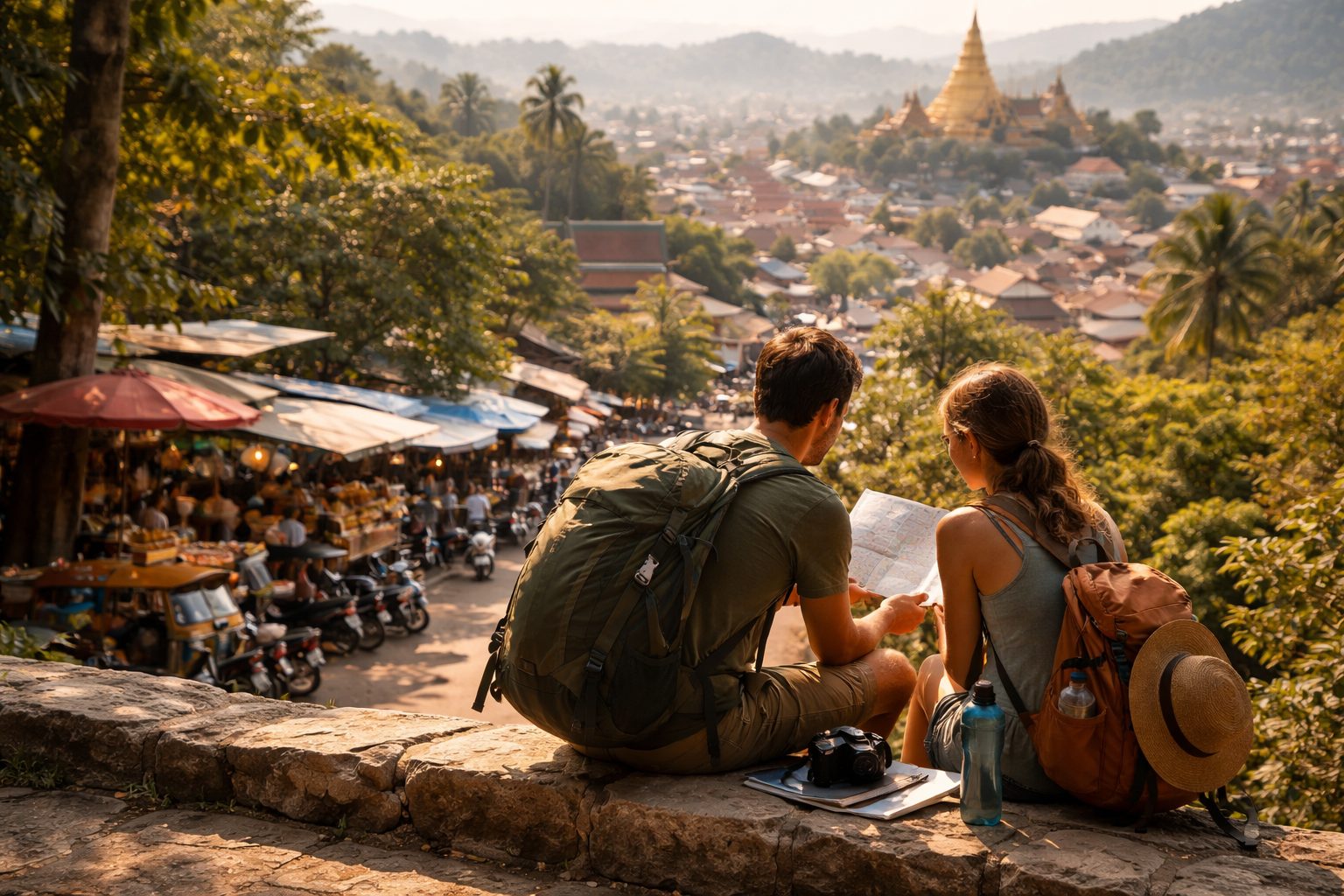
Budget travel means getting the most out of a trip without spending more than you need to. It’s not a fixed dollar amount. What counts as cheap in Norway would be luxurious in Cambodia. The core idea is stretching your money so that the experience outweighs the cost.
Most experienced budget travelers aim to spend less on logistics and accommodation so they have more left for food, experiences, and spontaneity. That’s a healthier framing than just cutting everything to the bone.
Importance of Affordable Travel Options
Affordable travel opens up the world to people who thought it was out of reach. A nurse working long shifts, a student between semesters, a family trying to give their kids something memorable on a tight budget. These are the people budget travel is actually for.
Beyond the personal angle, there’s a practical reality. The travel industry has expanded dramatically. Low-cost carriers, short-term rental platforms, and flexible booking systems have pushed prices down in real terms. Knowing how to navigate that landscape is a genuine skill, and it’s one worth building.
Top Cheap Travel Destinations
Finding out where to travel cheap starts with understanding which regions offer the best value for the currency you’re spending. Some places are cheap because of exchange rates. Others are cheap because the local cost of living is genuinely low. Both work in your favor.
Destinations in Europe
Europe has a reputation for being expensive, and it is, if you stick to Paris, London, or Zurich. But the continent is enormous and the variation in costs is dramatic.
- Albania is currently one of Europe’s best-kept secrets. Beaches, mountains, Ottoman architecture, and prices that feel closer to Southeast Asia than Western Europe.
- North Macedonia offers a similar experience. Ohrid, in particular, is a stunning lakeside city that most travelers have never heard of.
- Romania gives you medieval castles, the Carpathians, and one of the most vibrant cities in Eastern Europe (Bucharest) at a fraction of what you’d pay farther west.
- Bulgaria pairs a Black Sea coastline with a surprisingly rich interior and some of the cheapest accommodation in Europe.
- Portugal is not as cheap as it once was, but compared to Spain, France, or Italy, it still offers solid value, especially in the Alentejo region and the interior.
The key in Europe is to avoid peak season and look east. Countries that joined the EU more recently tend to have lower price levels even while offering comparable infrastructure.
Destinations in Asia
Asia is where budget travel really comes into its own. The combination of low local costs, rich culture, excellent food scenes, and increasing transport connectivity makes it the go-to region for travelers who want to maximize every dollar.
- Vietnam runs along a single spine from north to south and is genuinely affordable at every step. Hanoi, Hoi An, Ho Chi Minh City, and the countryside in between all deliver exceptional value.
- Cambodia is compact, historically significant, and one of the cheapest countries in the region. Siem Reap is the obvious anchor, but don’t overlook Kampot or the coast.
- Laos moves at a slower pace and costs less than its neighbors. The town of Luang Prabang is spectacular and still relatively unhurried despite growing popularity.
- Nepal is cheap domestically once you arrive. Trekking permits and flights to Kathmandu are the main costs, but day-to-day spending is very low.
- Georgia (the country, not the state) sits at the intersection of Europe and Asia and is extraordinarily affordable. Tbilisi has a compelling food and wine culture, and it’s easy to explore.
- Sri Lanka has some infrastructure challenges but offers beautiful scenery, excellent cuisine, and competitive pricing, especially outside the high-end beach resorts.
Destinations in South America
South America is often underestimated as a budget destination. It varies considerably by country, but several offer exceptional value.
- Bolivia is consistently one of the cheapest countries on the continent. Salt flats, Amazonian lowlands, and colonial cities are all accessible at low cost.
- Colombia has changed remarkably in the last two decades. Medellín and Cartagena both attract visitors, and the exchange rate works strongly in favor of travelers from North America or Europe.
- Peru is anchored by Machu Picchu, which isn’t free, but the rest of the country is remarkably affordable. Cusco, the Sacred Valley, and the Amazon basin all offer great value.
- Ecuador is a useful and often overlooked choice. It uses the US dollar but local prices are still low. The Galápagos is a premium experience, but the mainland and the Andes are very accessible.
Argentina presents a more complex picture. Inflation has been severe, but that same economic instability has sometimes made it surprisingly cheap for foreigners depending on exchange rates. Worth researching current conditions before booking.
Destinations in Africa

Africa is a continent many travelers overlook because they assume it’s either inaccessible or expensive. The truth is more nuanced. Some parts are genuinely cheap, and others offer extraordinary value relative to the experience.
- Morocco is one of the most popular budget destinations on the continent. Marrakech, Fes, the Sahara, and the Atlantic coast are all reachable at modest cost. Street food alone is reason enough to visit.
- Tanzania has high park fees for safaris, but Zanzibar, Dar es Salaam, and smaller towns are affordable. Budget safari options exist if you book through local operators rather than international agencies.
- Ethiopia is a fascinating choice. Ancient churches, a distinct cuisine, a totally separate calendar system, and some of the most dramatic landscapes in Africa. And costs are very low.
- Egypt remains one of the most affordable ways to see ancient world history at scale. Cairo, Luxor, Aswan, and the Sinai coast all fall within reach of most budgets.
Destinations in Central America
Central America is underrated for budget travel. It’s close to North America, English is widely spoken in tourism contexts, and several countries deliver excellent value.
- Guatemala is the standout. Lake Atitlán, Antigua, and the Mayan ruins at Tikal are all incredible, and costs are low by any reasonable standard.
- Nicaragua is very affordable and still sees relatively few visitors. León and Granada are compelling colonial cities, and the Pacific coast has surf and scenery without inflated prices.
- Honduras offers the cheapest diving in the Caribbean through the Bay Islands, particularly Utila. For anyone interested in learning to dive, this is a serious consideration.
- El Salvador is compact and improving its tourism infrastructure. It’s often overlooked because of its historical reputation, but it’s increasingly worth a look for the adventurous traveler.
Tips for Finding Cheap Travel Deals
Knowing where to travel cheap is only part of the equation. The other half is knowing how to find and lock in affordable deals before prices change.
Use of Travel Search Engines
Travel search engines have become remarkably powerful. A few I use consistently:
- Google Flights is the best starting point for most searches. Its calendar view and price grid features let you compare entire months at a glance, which is invaluable for flexible travelers.
- Skyscanner covers more low-cost carriers than some other aggregators and has a useful “Everywhere” search if you’re genuinely open about destination.
- Kayak offers price forecasts and flexible date searches with good coverage across regions.
- Momondo often surfaces cheaper options than the bigger platforms, particularly for European routes.
For accommodation, Hostelworld and Booking.com are the standard tools. Airbnb can be competitive for groups or longer stays. Always check the property directly, since some places offer discounts for booking outside the platform.
Best Times to Book Flights and Accommodation
Timing matters more than most people realize. Here’s what consistently holds true:
- Book international flights 6 to 8 weeks out for short-haul and 3 to 5 months out for long-haul routes.
- Tuesday and Wednesday flights are typically cheaper than Friday and Sunday.
- Shoulder season, the period just before or after peak season, usually offers the best combination of lower prices and decent weather.
- Last-minute deals exist but are unreliable. For serious budget planning, book ahead.
- Set price alerts on Google Flights or Skyscanner and let the tools do the monitoring.
How to Use Reward Points and Travel Credits
Frequent flyer programs and credit card rewards are legitimately valuable if used correctly. The trick is not to overspend chasing points but to redirect everyday spending.
- Sign-up bonuses on travel credit cards can be worth hundreds or even thousands of dollars in flights if you meet the spending threshold with purchases you’d make anyway.
- Transfer partners between bank points programs and airlines or hotels often unlock better redemption rates than booking through the card’s own portal.
- Airline miles work best for long-haul business or first class redemptions where cash prices are highest. Using points for budget economy seats often isn’t the best value.
Budget Travel Comparison
When you’re figuring out where to travel cheap, you’ll face practical decisions about how to move around and where to sleep. These choices have real cost implications.
Low-Cost Airlines vs. Traditional Airlines
| Factor | Low-Cost Carriers | Traditional Airlines |
|---|---|---|
| Base fare | Usually lower | Often higher |
| Baggage fees | Frequent, can be high | Often included |
| Flexibility | Limited changes | More options |
| Comfort | Basic | More variation |
| Route coverage | Strong on popular routes | Broader network |
| Reliability | Variable | Generally better |
Low-cost carriers like Ryanair, Wizz Air, easyJet, AirAsia, or IndiGo are useful tools, but only if you read the fine print. Bag fees, seat selection charges, and change fees can easily eliminate the savings. Pack light, book early, and know the rules.
Hostels vs. Hotels: Which is Cheaper?

Hostels win on price in almost every comparison. A bed in a well-rated hostel dorm costs a fraction of the cheapest hotel room in the same city. For solo travelers especially, hostels offer both savings and the chance to meet other travelers.
That said, private rooms in hostels are often comparable in price to budget hotels and sometimes better value. Many modern hostels have raised their standards significantly. The “backpacker hostel” of ten years ago is not the same as what you’ll often find today.
Budget hotels, guesthouses, and locally-run B&Bs are worth considering for couples or for situations where sleep quality is a priority. In Asia and Central America especially, family-run guesthouses can be cheap and far more characterful than chains.
Group Tours vs. Independent Travel
This one depends heavily on the destination and your experience level.
- Group tours make sense for complex logistics destinations like Antarctica, some parts of Africa, or regions with significant language or cultural barriers. They also provide built-in safety and community.
- Independent travel is almost always cheaper if you know what you’re doing. You control the pace, the choices, and the spending. But it requires more planning and comfort with uncertainty.
For first-time travelers to Southeast Asia or South America, a short guided segment at the start can help build confidence before going independent. It doesn’t have to be either/or.
Practical Advice for Traveling on a Budget
Once you’ve decided where to travel cheap and how to get there, the day-to-day decisions matter just as much as the big ones.
Packing Essentials for Budget Travelers
Packing light saves money in tangible ways. Carry-on only avoids baggage fees on low-cost carriers. A smaller bag means more flexibility and less time at luggage carousels.
Core packing list for budget travelers:
- One versatile pair of walking shoes (doubles for evening)
- A lightweight rain jacket
- A microfiber towel (saves rental fees at hostels)
- A universal power adapter
- A padlock (for hostel lockers)
- Reusable water bottle with filter (avoids buying plastic bottles)
- A small first-aid kit with basics
- Download-ready maps and offline translation apps
Merino wool clothing packs well, resists odor, and works across temperature ranges. It costs more upfront but earns its place quickly.
How to Save on Food While Traveling
Food is one of the biggest variable costs in travel, and it’s one of the easiest to control without sacrificing quality.
- Eat where locals eat. Street food and market stalls in most of Asia, Latin America, and Africa are not just cheaper than restaurants. They’re often better.
- Have your biggest meal at lunch. Many restaurants offer set lunch menus at prices far below the dinner equivalent.
- Shop at local markets for breakfast. Fruit, bread, yogurt, and coffee from a market stall beats hotel breakfast pricing every time.
- Avoid restaurants directly adjacent to major tourist attractions. Walk two blocks and prices drop noticeably.
- Learn the phrase for “local restaurant” in the local language. It opens doors that menus in English don’t.
Cooking for yourself is an option in longer stays. Apartments with kitchens, or hostels with shared kitchens, let you prepare at least some meals and cut costs significantly over time.
Free and Low-Cost Activities in Popular Destinations
Most cities have more free or low-cost options than guidebooks suggest.
- Most national museums in the UK are free.
- Many cities offer free walking tours run on a tip basis, which are excellent for orientation and context.
- Churches, temples, and religious sites are often free or very cheap and are frequently the most architecturally significant buildings in a city.
- Parks, hiking trails, and coastal paths cost nothing. In countries with strong nature tourism (Iceland, New Zealand, Costa Rica), the best experiences are often outdoors.
- City tourism cards offer bundled access to transport and attractions. Run the numbers carefully since they’re not always better value than paying individually.
Volunteering programs sometimes offer accommodation and meals in exchange for work, which can dramatically extend a travel budget. Organizations like Workaway or Worldpackers connect travelers with hosts globally.
Frequently Asked Questions (FAQs)
How can I travel cheap internationally?
Focus on destinations where your home currency converts favorably and local costs are low. Combine that with flexible dates, carry-on only packing, and booking flights in advance. Southeast Asia, Eastern Europe, and Central America are consistently strong options.
What are the best apps for finding cheap flights?
Google Flights is the most powerful for flexible searches. Skyscanner is useful for broader comparisons and the “Everywhere” feature. Hopper predicts whether prices are likely to rise or fall, which helps with timing decisions.
Is it safe to travel to budget destinations?
Safety varies by specific location rather than by price level. Many of the world’s cheapest destinations are very safe for travelers. Always research current conditions through government travel advisories and recent traveler forums before booking.
How can I save money on accommodation?
Book in advance for the best hostel and budget hotel rates. Consider private rooms in hostels over cheap hotels. For longer stays, negotiate directly with guesthouses or use platforms like Booking.com with free cancellation to keep options open.
What should I avoid when traveling on a budget?
Avoid airport food and drink, hotel minibars, and tourist-area restaurants. Don’t book tours through hotel concierges since street-level prices are usually lower. Watch out for baggage fees on low-cost carriers by checking restrictions before you book rather than at the gate.
Figuring out where to travel cheap is genuinely one of the most empowering things you can do as a traveler. The world has more affordable corners than most people realize, and accessing them takes far less planning than it used to. Start with a flexible date, an open mind about destination, and the knowledge that cheap travel doesn’t mean a worse trip. Often it means a better one.