Vietnam has a way of getting under your skin. I’ve spoken to dozens of travelers who planned a two-week trip and ended up extending it by months. This vietnam guide exists because the country deserves more than a generic list of highlights. It’s a place with staggering geographic variety, a cuisine that rivals any in the world, and a history so layered it takes time to absorb. Whether you’re planning your first Southeast Asian adventure or you’ve already ticked off Thailand and Cambodia, Vietnam offers something genuinely different. From the limestone karsts of Ha Long Bay to the chaotic energy of Ho Chi Minh City, this guide walks you through everything you need to know before you go.
Introduction to Vietnam
Overview of Vietnam’s Geography and Climate
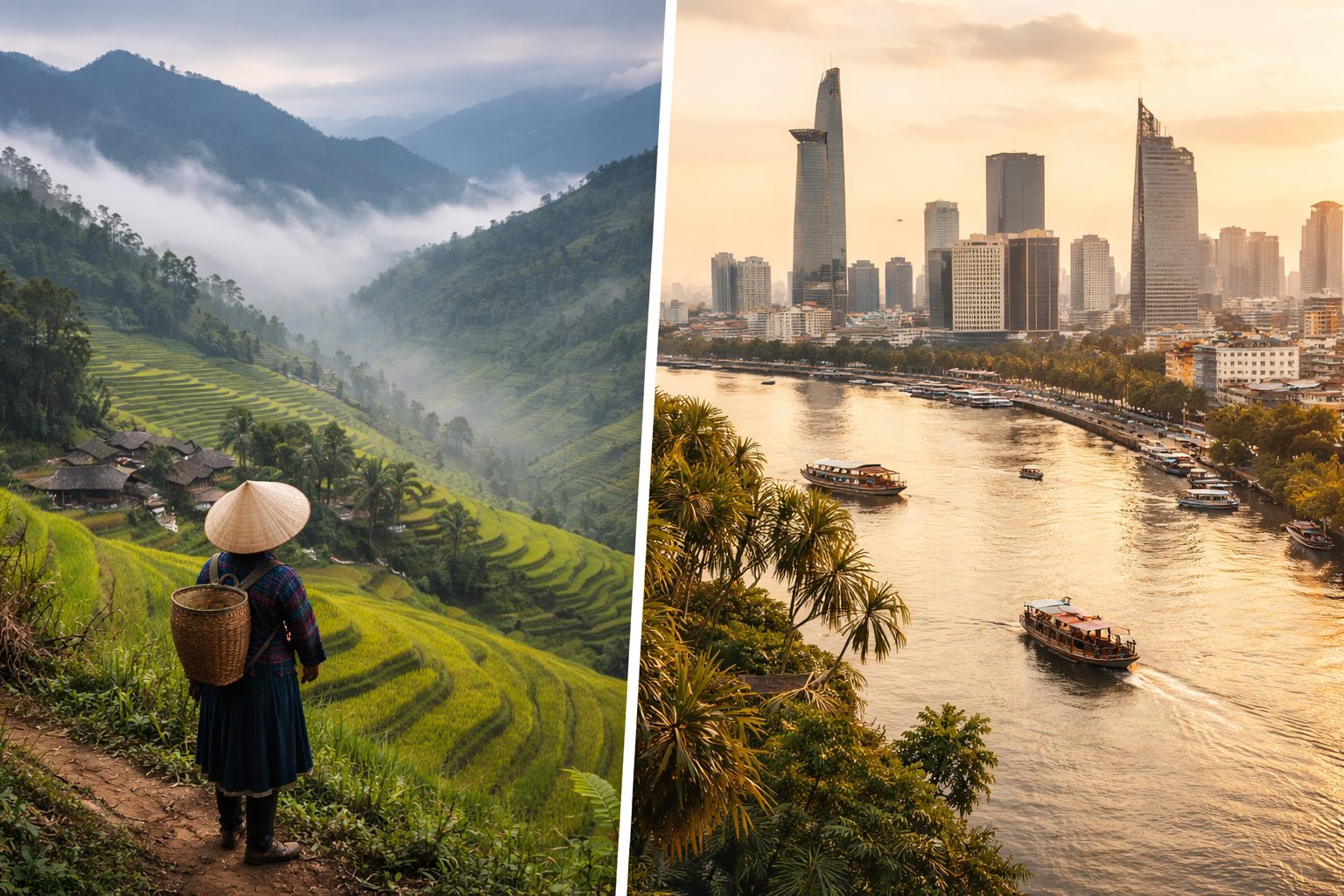
Vietnam stretches roughly 1,650 kilometers from north to south, which means the weather in Hanoi and the weather in Ho Chi Minh City can be completely different at the same time of year. The north has four distinct seasons, including a real winter. The central region gets hit hard by typhoons between September and January. The south runs on a simpler wet and dry cycle, with the dry season roughly from November to April.
The country shares borders with China, Laos, and Cambodia. To the east runs the South China Sea, giving Vietnam a coastline of over 3,000 kilometers. You’ve got mountains in the northwest, flat river deltas in the south, and everything in between. This geographic range is a big part of why traveling the full length of Vietnam feels like visiting multiple countries.
Historical Significance of Vietnam
The history here is dense. Vietnam spent nearly a thousand years under Chinese rule, then French colonial administration from the mid-19th century, then decades of conflict that culminated in the Vietnam War ending in 1975. What strikes most visitors is how the country has processed all of this without wallowing in it. The War Remnants Museum in Ho Chi Minh City is confronting, but the attitude of most Vietnamese people toward American visitors is remarkably open.
Before any of the modern conflicts, Vietnam had the Cham civilization in the central region and the Khmer influence in the south. The ancient town of Hoi An preserves trading-port architecture from the 15th century onward. You can’t walk through this country without brushing up against history at every turn.
Cultural Diversity in Vietnam
Vietnam has 54 officially recognized ethnic groups. The Kinh make up the majority at around 86%, but the highlands and border regions are home to communities like the Hmong, Dao, Tay, and Muong. Each group has its own language, clothing traditions, and agricultural practices. This diversity is most visible in places like Sapa and Ha Giang in the north.
Buddhism is the dominant religion, but you’ll see Taoist and Confucian influences woven into daily life. Ancestor veneration is taken seriously. Family structures are tight. There’s a formality in social interaction that coexists with genuine warmth toward outsiders.
Top Destinations in Vietnam
Hanoi: The Heart of Vietnam
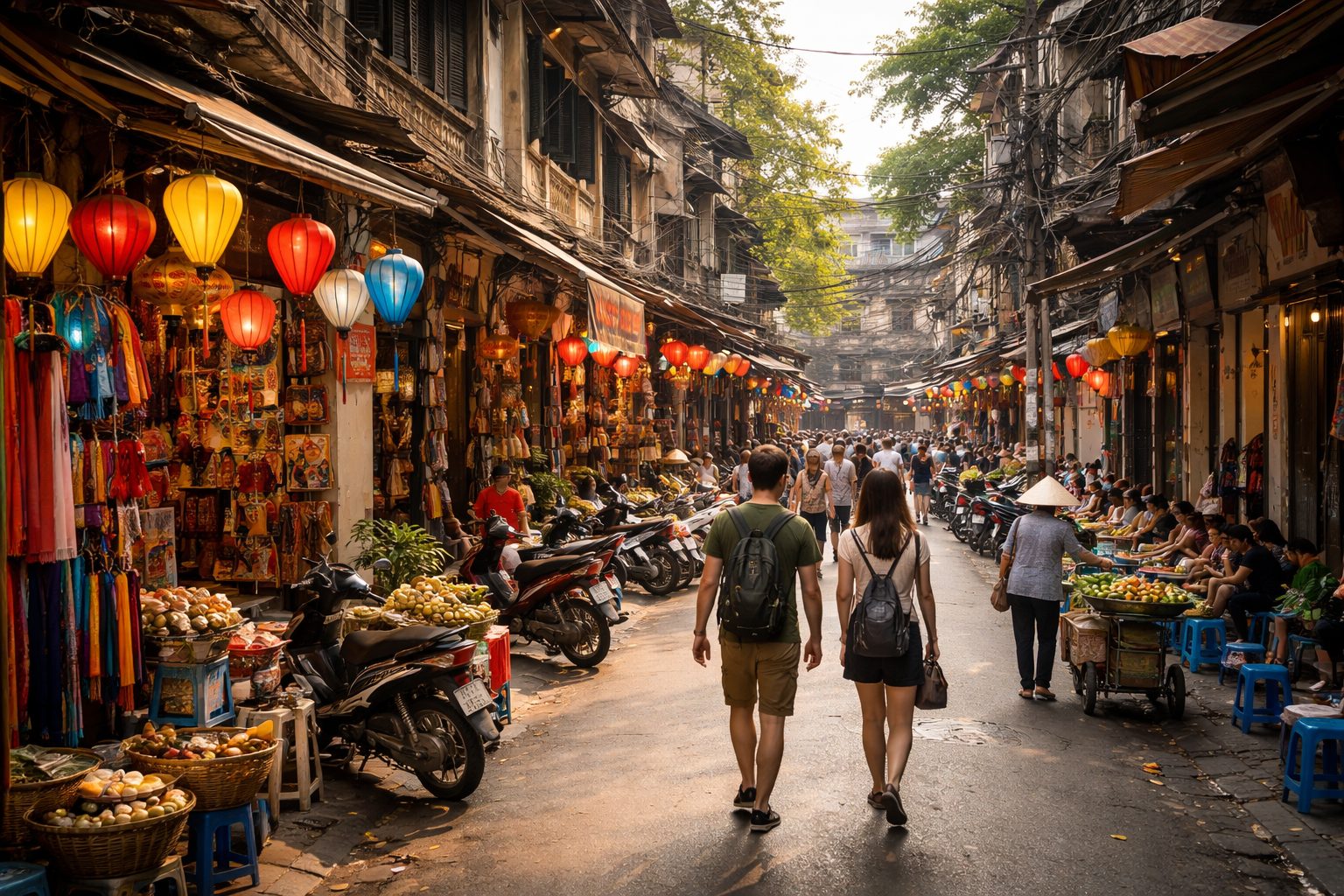
Hanoi is one of those cities that rewards slowing down. The Old Quarter is a tangle of 36 streets, each historically named after the trade it hosted. Silk Street, Paper Street, Tin Street. Walking it without a destination is one of the better ways to spend a morning. The Temple of Literature, Vietnam’s first university founded in 1070, is worth a couple of hours. Hoan Kiem Lake anchors the city center and is best visited at dawn when locals do tai chi around its edges.
The food scene in Hanoi is legitimately excellent. Pho here is the northern style, cleaner and more restrained than the southern version. Bun cha, grilled pork with noodles, is a lunchtime institution. The city has a café culture that feels built for lingering.
Ho Chi Minh City: The Vibrant Metropolis
Ho Chi Minh City, still called Saigon by most locals, moves fast. The motorbike traffic alone is worth experiencing. Crossing the street is an exercise in trusting the flow. The city’s energy is commercial and ambitious in a way that feels distinct from Hanoi’s more bureaucratic pace.
District 1 holds most of the tourist infrastructure. The Reunification Palace, Ben Thanh Market, and the War Remnants Museum are all within reach of each other. But the more interesting neighborhoods are in Districts 3 and 5. Cholon, the Chinese district, has pagodas and market activity that feels a world away from the tourist center.
Ha Long Bay: Natural Wonder
Ha Long Bay is one of those places that lives up to its photographs. Around 1,600 limestone islands and islets rise from the Gulf of Tonkin, many of them hollow with caves. The standard approach is a two or three-day cruise, and the quality of experience depends heavily on which operator you choose. Budget boats are crowded. Mid-range options are fine. Splurging a bit here genuinely pays off.
Kayaking through the karsts at dawn, before the day-trippers arrive, is one of the better travel memories I’ve heard described. If you want more space, consider Lan Ha Bay just to the south. It’s less famous and noticeably less crowded.
Hoi An: A UNESCO World Heritage Site
Hoi An is the most immediately beautiful town in Vietnam. The Ancient Town, a UNESCO World Heritage Site, has kept its trading-port architecture from the 15th through 19th centuries intact. Japanese covered bridge, Chinese merchant houses, colonial shop fronts. It’s small enough to walk and compact enough to feel knowable.
The town is popular and it knows it. Prices are higher than elsewhere in Vietnam, and the main streets can feel touristy in the middle of the day. But stay a few nights, rent a bicycle, and cycle out to the rice paddies or to An Bang Beach nearby. The charm reasserts itself.
Sapa: The Mountain Retreat
Sapa sits at around 1,500 meters elevation in Lao Cai province, close to the Chinese border. The surrounding Muong Hoa Valley has terraced rice fields that are genuinely spectacular, especially during planting season in May-June or harvest in September-October. The hill-tribe villages around Sapa, home to Hmong, Dao, and Tay communities, are the main draw for trekkers.
The town itself has been overdeveloped, with large hotels that feel out of place in a mountain valley. But stay a night in a home stay in the surrounding villages and the experience shifts completely. It’s cold at altitude, even in summer. Bring layers.
Vietnamese Cuisine
Traditional Dishes to Try
Vietnamese food is one of the great cuisines of the world, and I say that without hesitation. It relies on fresh herbs, balanced flavors, and a skill for layering textures. Here are the dishes worth tracking down:
- Pho: the iconic noodle soup, broth-based with either beef or chicken
- Bun bo Hue: spicier noodle soup from the central region
- Banh mi: the French-influenced baguette sandwich, now distinctly Vietnamese
- Com tam: broken rice with grilled pork, a southern staple
- Cao lau: a noodle dish specific to Hoi An, made with water from local wells
- Banh xeo: crispy rice-flour crepe filled with shrimp and pork
- Che: sweet dessert soups made with beans, jelly, and coconut milk
The portions are typically modest. Eating multiple dishes across a meal is the norm.
The Influence of Regional Cuisines
The regional differences in Vietnamese cooking are significant enough that food itself becomes a reason to travel the full length of the country. Northern food is plainer, relying more on quality of ingredients and subtle seasoning. Central Vietnamese food is the spiciest, heavily influenced by the imperial court cuisine of Hue. Southern food is sweeter, with Chinese and Khmer influences and more sugar added to sauces and soups.
This isn’t just about pho variations. Banh mi differs region to region. The fillings, bread texture, and condiments change depending on where you buy it. Paying attention to these regional nuances turns eating in Vietnam into an ongoing education.
Popular Street Food in Vietnam
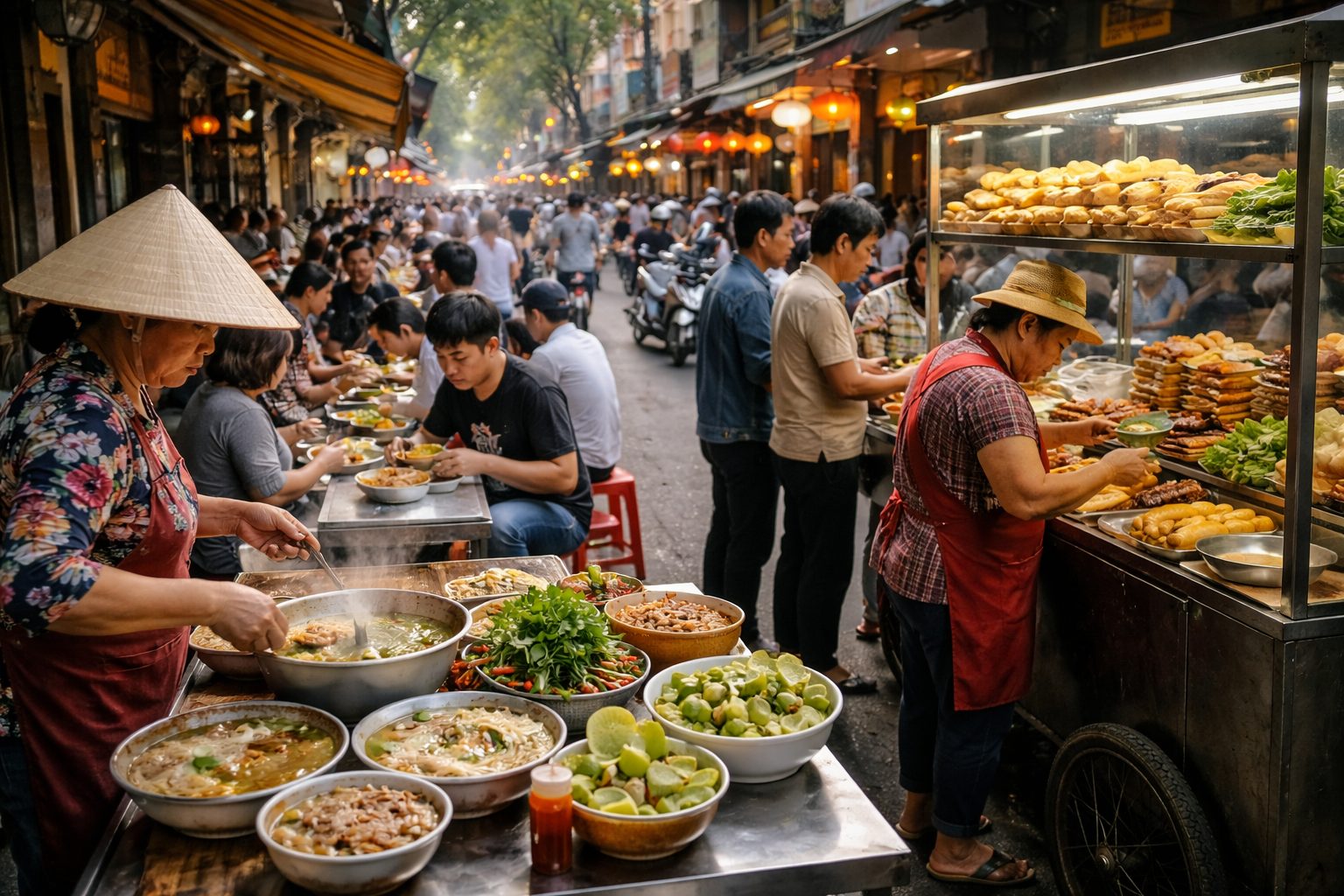
Street food in Vietnam is abundant and cheap. A bowl of pho at a street stall costs under a dollar in many cities. Banh mi from a cart runs similar. The quality is often better than sit-down restaurants because the vendors specialize in one or two things and do them well.
Some reliable street finds:
- Bun thit nuong: cold noodles with grilled pork and fresh herbs
- Banh trang tron: rice paper salad mixed with green mango, dried shrimp, and quail eggs
- Bot chien: fried rice flour cakes with egg, a popular evening snack
- Nuoc mia: freshly pressed sugarcane juice
- Banh cuon: steamed rice rolls with minced pork and mushroom filling
Eating where locals eat is the simplest rule. If the plastic stools are full at 7am, the food is worth trying.
Traveling in Vietnam
Best Time to Visit Vietnam
There’s no single best time to visit Vietnam because the country’s climate zones don’t align. Here’s a practical breakdown:
- November to April is generally the most reliable for the south and central coast.
- October to April works well for the north if you don’t mind cooler temperatures.
- May to September brings heat and rain to the south but is actually fine in the north.
- September to January sees heavy rain and occasional typhoons in the central region.
If you’re doing a full north-to-south or south-to-north trip, the shoulder months of March-April and October-November give you the best chance of reasonable weather across all regions.
Transportation Options: Getting Around
Vietnam has a functioning infrastructure for travelers at almost every budget level.
- Flights: Budget airlines like VietJet and Bamboo Airways connect major cities for very little. Booking in advance is worth it.
- Trains: The Reunification Express runs the full length of the country from Hanoi to Ho Chi Minh City. Slow but scenic. The overnight sleeper to Da Nang or Hue is a good option.
- Buses: Open-tour buses connect tourist hubs cheaply. Sleeper buses are widely used for longer routes.
- Motorbike taxis and rideshares: Grab operates in major cities and is the cleanest way to get around urban areas.
- Renting a motorbike: Common for travelers with riding experience. The roads vary dramatically in quality.
Accommodation Types and Recommendations
Vietnam has a full range of accommodation from five-dollar dorm beds to luxury resorts. The mid-range sweet spot is strong here. A clean, well-located guesthouse or boutique hotel for twenty to fifty dollars a night is easy to find in most cities.
Homestays in rural areas like Sapa and the Mekong Delta offer something genuinely different. You eat with the family, help in the kitchen sometimes, and get a window into daily life that no hotel provides. In beach destinations like Da Nang and Phu Quoc, resort options compete with international markets at better prices than you’d pay in Thailand.
Activities and Experiences
Outdoor Adventures: Trekking and Hiking
The northern highlands offer some of the best trekking in Southeast Asia. Sapa is the most accessible entry point, but Ha Giang Province has become increasingly popular for motorcycle loops through the Dong Van Karst Plateau Geopark. The scenery is dramatic and the routes pass through minority villages with minimal tourist infrastructure.
Phong Nha-Ke Bang National Park in the central region is home to the world’s largest cave, Son Doong. Most visitors access the smaller but still spectacular Paradise Cave and Phong Nha Cave on guided tours. For serious cavers, multi-day expeditions into Son Doong run through a single licensed operator at significant cost.
Cultural Experiences: Festivals and Traditions
Tet, the Vietnamese Lunar New Year, is the biggest cultural event in the country. It typically falls between late January and mid-February. The week surrounding Tet sees mass movement of people returning to home provinces. Traveling during Tet itself is complicated but fascinating if you can arrange accommodation in advance and are open to disrupted services.
Other events worth knowing:
- Hoi An Full Moon Lantern Festival: monthly on the 14th of the lunar calendar, the old town goes lantern-lit
- Hue Festival: biennial arts and culture festival drawing international performers
- Kate Festival: Cham cultural celebration in Ninh Thuan Province, usually in October
Shopping in Vietnam: Markets and Souvenirs
The best shopping in Vietnam is for things that are actually made here. Silk, lacquerware, hand-embroidered goods, and ceramics are all well-crafted and reasonably priced if you buy from reputable sources rather than tourist traps.
Hoi An is famous for custom tailoring. A well-fitted suit or dress made from good fabric can be turned around in 24-48 hours. The quality depends entirely on the tailor, so ask for recommendations from other travelers. Ben Thanh Market in Ho Chi Minh City and Dong Xuan Market in Hanoi are large and lively but require bargaining and a tolerance for persistent sales tactics.
Practical Travel Tips
Visa Requirements and Entry Regulations
Vietnam introduced e-visas for citizens of most countries, valid for 90 days, single or multiple entry. The application is done online and typically processes within three business days. Citizens of a select group of countries, including South Korea, Japan, and several European nations, have visa-free access for stays up to 45 days.
Always check current requirements before travel because policies update. Entry via land border versus air can sometimes have different conditions. Keep a printed copy of your e-visa approval and have it accessible at immigration.
Health and Safety Tips for Travelers
Vietnam is generally safe for travelers. Petty theft in busy tourist areas is the most common issue, particularly bag snatching from motorbikes in Ho Chi Minh City. Keep valuables close and avoid using your phone while standing on a street.
Health-wise:
- Drink bottled or filtered water. Tap water is not safe.
- Street food is generally fine if it’s cooked to order and served hot.
- Mosquito protection is advisable, particularly in rural and coastal areas.
- Standard travel vaccinations apply: hepatitis A and B, typhoid, tetanus.
- Travel insurance that covers motorbike accidents is essential if you plan to ride.
Currency and Payment Methods in Vietnam
The Vietnamese Dong (VND) is the currency. The exchange rate makes the numbers feel large: one US dollar is roughly 25,000 VND. ATMs are widely available in cities and tourist areas. Withdraw from bank-affiliated ATMs rather than standalone machines to minimize fees.
Cash is still king for street food, local markets, and smaller guesthouses. Credit cards are accepted at hotels, upscale restaurants, and larger shops. Avoid exchanging money at airports if you can, as the rates are poor. Jewelry shops in cities often offer competitive exchange rates, which is an odd quirk of Vietnam’s economy worth knowing.
Comparing Vietnam to Other Southeast Asian Destinations
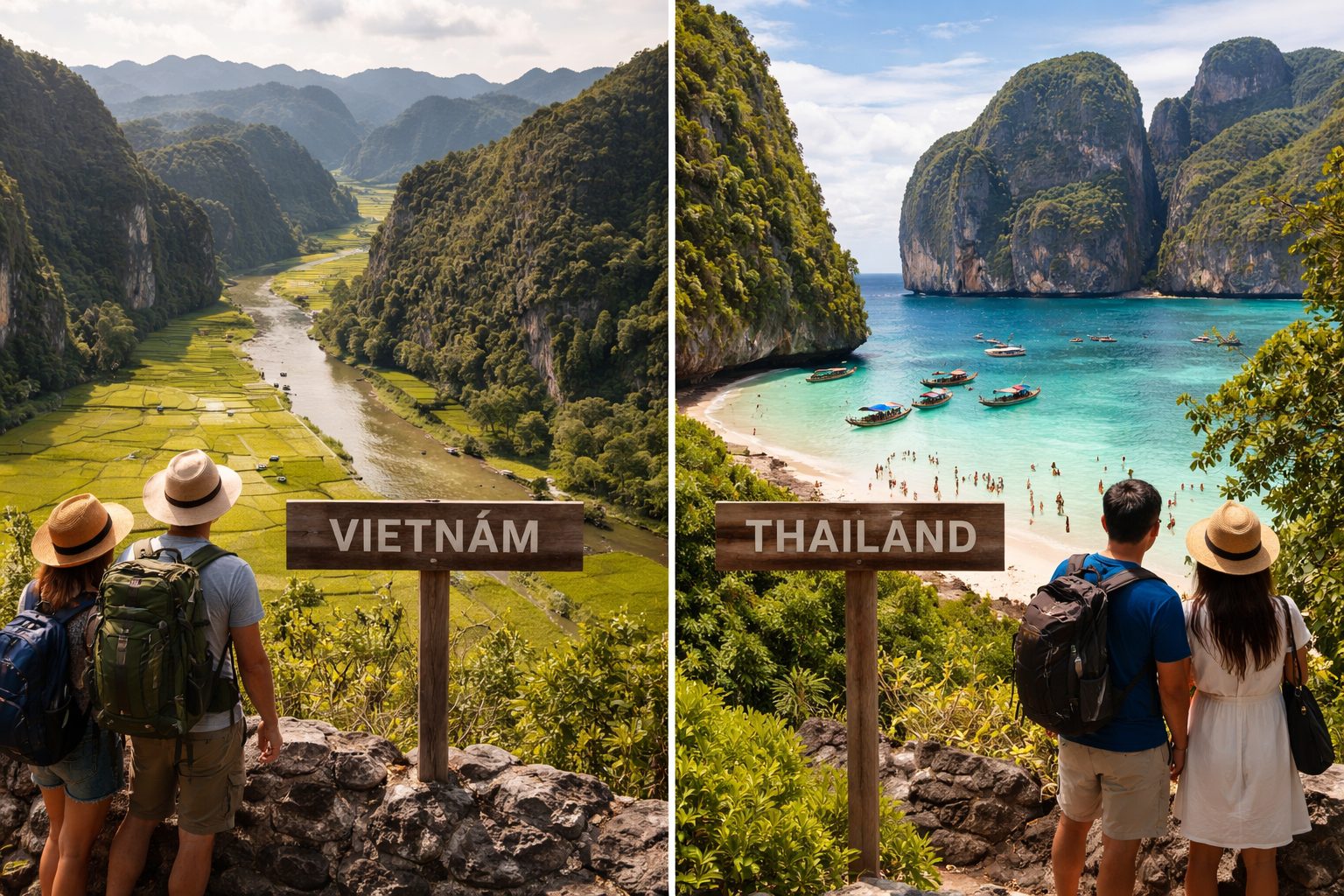
Vietnam vs. Thailand: A Comparative Analysis
| Factor | Vietnam | Thailand |
|---|---|---|
| Cost of travel | Lower overall | Moderate, tourist areas more expensive |
| Food culture | More regional variety | More globally familiar |
| Infrastructure | Developing rapidly | More established in tourist areas |
| Beaches | Strong, less crowded | More developed, more crowded |
| Nightlife | Mostly beer halls and street scenes | More developed party scenes |
| Cultural depth | Extensive, layered history | Strong, with different character |
| Crowd levels | Growing but still lower | Higher tourist density in key spots |
Thailand has a more established tourist infrastructure and a well-worn backpacker trail. Vietnam feels slightly more raw in parts, which is either a drawback or an asset depending on what you’re after. The food in Vietnam is arguably more interesting in terms of regional variation. Thailand wins on island beach quality and nightlife development.
Vietnam vs. Cambodia: Similarities and Differences
Cambodia and Vietnam share a border and some overlapping history, but they feel quite different as destinations. Cambodia’s anchor attraction, Angkor Wat, is one of the great archaeological sites on earth. The rest of the country is thinner on developed tourism infrastructure.
Vietnam has more geographic and culinary variety, more developed transportation links, and a stronger mid-range accommodation sector. Cambodia is cheaper and quieter in parts. The Mekong Delta in Vietnam and the Tonle Sap region in Cambodia share a similar landscape but very different cultural expressions. Many travelers do both on a single trip, typically combining a Vietnam itinerary with Angkor Wat in Siem Reap.
Vietnam vs. Indonesia: Travel Experience Comparison
Indonesia is an archipelago of over 17,000 islands, which makes the comparison somewhat lopsided. Bali alone draws millions of visitors annually. But comparing Vietnam to Bali directly is useful. Bali has a more resort-heavy, wellness-oriented travel culture. Vietnam is more diverse in terms of what it offers across geography, history, and food.
Java has Borobudur and Yogyakarta’s cultural richness. Lombok and the Gili Islands offer quieter beach alternatives. But getting around Indonesia involves more flights and more logistical complexity than moving through Vietnam, which is a single landmass with a functioning rail and road network. For a first-time Southeast Asia trip, Vietnam tends to be more navigable.
Frequently Asked Questions (FAQs)
What is the Best Way to Experience Vietnam?
The best approach is to move slowly and pick fewer places rather than rushing through every highlight on a checklist. Three cities and one rural area in three weeks gives you more depth than ten cities in the same time. Local transportation and street-level eating will give you more than tour buses and hotel restaurants.
How to Respect Local Customs and Etiquette?
Dress modestly when visiting temples and pagodas, covering shoulders and knees. Remove shoes when entering homes and some businesses. Avoid touching people on the head, which is considered disrespectful. Pointing with your finger is rude; use an open hand gesture instead. A little effort with greetings in Vietnamese goes a long way with locals.
What Are the Must-See Attractions in Vietnam?
Ha Long Bay, Hoi An Ancient Town, Hue’s Imperial Citadel, the rice terraces around Sapa, and the War Remnants Museum in Ho Chi Minh City are consistently compelling. Phong Nha Caves in the central region and the Mekong Delta are strong secondary picks. Don’t over-schedule; leave room for what you find by wandering.
Is Vietnam Safe for Travelers?
Yes, Vietnam is generally safe. The main risks are traffic-related, particularly if you ride a motorbike. Petty theft exists in tourist-heavy areas. Food safety is reasonable if you follow basic precautions. Solo female travelers generally find Vietnam manageable, though the usual awareness applies in busy nightlife areas.
How to Plan an Itinerary for Vietnam?
Start by deciding direction: north to south or south to north. Two weeks is the minimum for a north-south run. Three to four weeks lets you breathe. Build the itinerary around two or three anchor destinations and fill in transport days realistically. Vietnam is long; overland travel between cities takes more time than maps suggest. Budget at least a full day for major transport legs.
A good starting point for a three-week vietnam guide itinerary would be: Hanoi (3 nights), Ha Long Bay cruise (2 nights), Hue (2 nights), Hoi An (3 nights), Da Nang (1 night), Da Lat or Nha Trang (2 nights), Ho Chi Minh City (3 nights), Mekong Delta day trip. That leaves a few flex days for delays or extended stays. No itinerary survives contact with a place you love more than expected, so build in the slack.