India is home to some of the most extraordinary military architecture in the world. From the sun-baked plains of Rajasthan to the rocky highlands of the Deccan plateau, these structures tell stories that no textbook can fully capture. If you’ve ever wanted to understand what makes the top 10 forts in India so compelling, you need to look beyond the stone and mortar. These were living cities, centers of power, and symbols of ambition built by dynasties that shaped the subcontinent’s history.
I’ve spent years exploring these places, and each one surprised me in a different way. Some are breathtakingly large. Others are hauntingly atmospheric. All of them deserve your time.
Introduction to Indian Forts
Importance of Forts in Indian History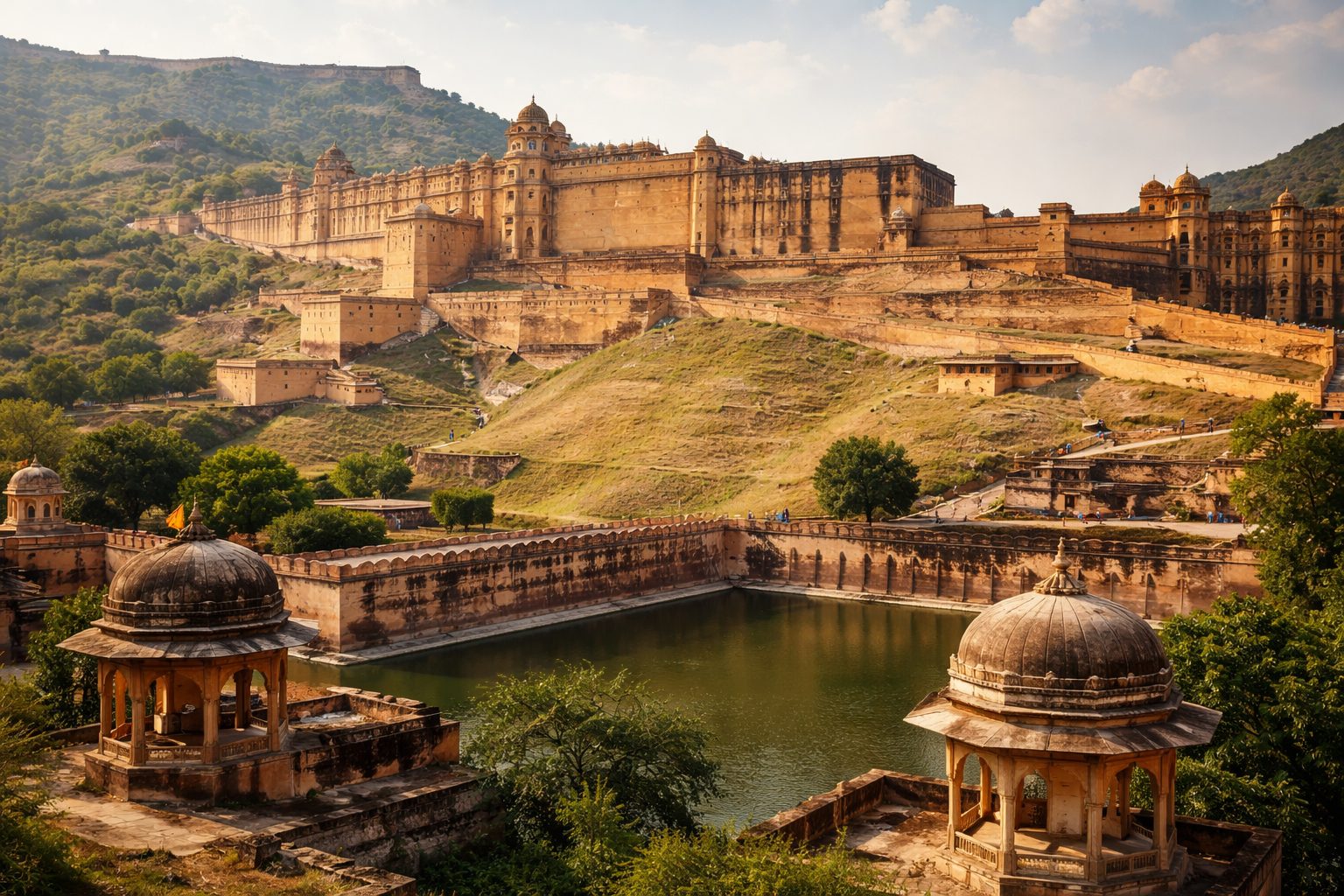
Forts in India were never just defensive structures. They served as administrative capitals, royal residences, treasury vaults, and religious centers all rolled into one. The rulers who built them were making a statement about permanence and power. A fort on a hill was a message to everyone in the valley below.
India’s long history of invasions, trade rivalries, and regional conflicts made fortification an absolute priority. From the Rajput clans who held their mountain strongholds against Mughal armies to the Mughals themselves who built city-fortresses along the Yamuna, the fort was the single most important feature of any medieval Indian kingdom.
What’s remarkable is how these structures outlasted the dynasties that built them. Many forts changed hands dozens of times, absorbing new construction, new religious spaces, and new cultural layers with each conquest. Walking through one is like reading a palimpsest of Indian history.
Architectural Diversity of Indian Forts
One thing that consistently surprises visitors is how different these forts look from each other. There’s no single “Indian fort” style. Rajput forts tend toward steep hillside positions with elaborate palace complexes inside. Mughal forts favor red sandstone and elegant symmetry. Deccan sultanate forts often feature massive cannon emplacements and water-harvesting systems built for long sieges.
The diversity reflects geography as much as culture. Coastal forts like those in Maharashtra were built to control trade routes. Hill forts in Rajasthan were designed for visual dominance and natural defense. River forts in the Gangetic plain relied on water barriers and massive walls.
Understanding this variety is part of what makes exploring the top 10 forts in India so rewarding. You’re not seeing variations on a theme. You’re seeing completely different solutions to the same fundamental challenge.
The Top 10 Forts in India
Here’s a breakdown of what I consider the ten most significant and impressive forts in India. This list balances historical weight, architectural quality, and the experience they offer to visitors today.
1. Red Fort, Delhi
The Red Fort in Delhi is probably the most recognized fort in the country. Built by Mughal Emperor Shah Jahan in the 17th century, it served as the main residence of Mughal emperors for nearly 200 years. The massive red sandstone walls stretch for about two kilometers, enclosing palaces, audience halls, and gardens.
Every year on Independence Day, the Prime Minister of India addresses the nation from its ramparts. That tradition alone tells you something about how deeply the fort is woven into India’s national identity. The Lahori Gate entrance, the Diwan-i-Aam public hall, and the Rang Mahal are highlights inside the complex.
I’d recommend going early in the morning to avoid the tourist crowds. The light on that red sandstone at sunrise is genuinely spectacular.
2. Jaipur Fort, Rajasthan
When people say Jaipur Fort, they usually mean the Amber Fort, which sits on a hill just outside Jaipur city. It’s one of the finest examples of Rajput architecture in existence. The fort was built in the late 16th century and expanded over the following century by successive Kachhwaha rulers.
The Sheesh Mahal, or Hall of Mirrors, is the most famous interior space. Thousands of tiny mirror pieces embedded in the ceiling and walls create an effect that defies easy description. At night, a single candle could supposedly illuminate the entire room.
The approach through the Maota Lake reflection is one of those views that stays with you. It’s genuinely beautiful, and it photographs well at almost any time of day.
3. Mehrangarh Fort, Jodhpur
Mehrangarh is the fort that convinced me these structures can be as awe-inspiring as anything in Europe. It rises 122 meters above the blue city of Jodhpur, and the walls at the base are up to 36 meters thick. The sheer scale is hard to process until you’re standing at the base looking up.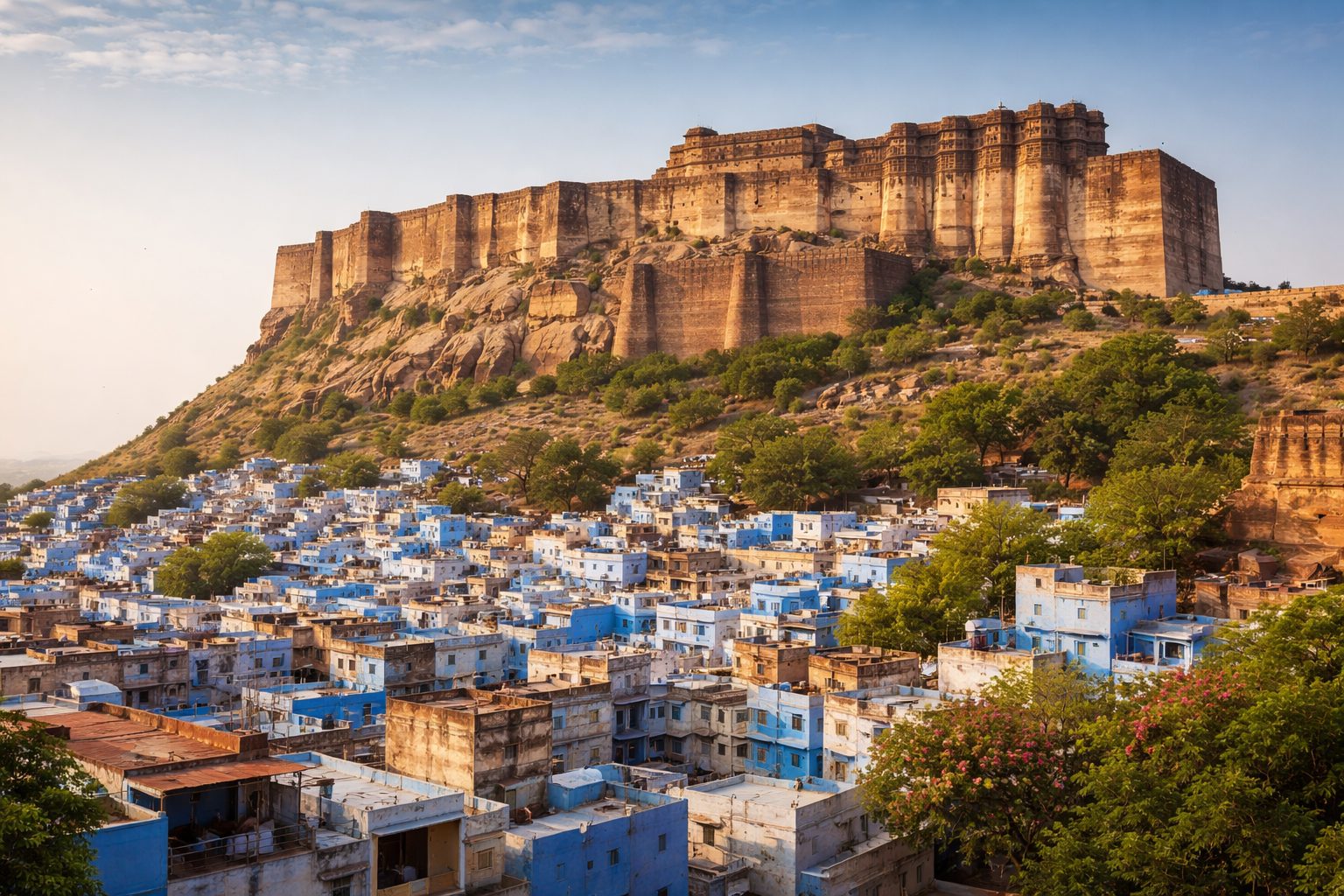
Built by Rao Jodha in 1459, it has been expanded and modified by generations of Rathore rulers. The fort houses one of the best fort museums in India, with an outstanding collection of Rajput weapons, palanquins, royal cradles, and miniature paintings.
The views from the battlements over Jodhpur’s blue-painted old city are extraordinary. If you visit only one Rajput fort, make it this one.
4. Agra Fort, Agra
Most visitors to Agra go straight to the Taj Mahal and spend minimal time at Agra Fort, which is a mistake. The fort is a UNESCO World Heritage Site in its own right, and it contains some of the finest Mughal architecture anywhere.
Akbar began building the present structure in 1565, though a fort had existed on the site for centuries before. Shah Jahan, who built the Taj, was actually imprisoned by his son Aurangzeb in Agra Fort for the last eight years of his life. From certain rooms, he could see the Taj across the river. That detail alone makes the place emotionally resonant in a way few historic sites manage.
The Jahangiri Mahal, built for Akbar’s Rajput wife, blends Hindu and Islamic design elements in a way that feels genuinely ahead of its time.
5. Gwalior Fort, Madhya Pradesh
Gwalior Fort sits on a sandstone plateau 100 meters above the city of Gwalior, and it’s been called the Gibraltar of India. The site has been fortified since at least the 6th century, making it one of the oldest continuously inhabited forts in the country.
The fort contains multiple palaces, temples, and water tanks built across different eras. The Man Mandir Palace, built by Raja Man Singh Tomar in the early 16th century, features striking blue and yellow tile work on the outer walls. That tiling is unlike anything else you’ll see on a fort in India.
Tansen, one of the nine gems in Akbar’s court and a legendary musician, is buried near the fort. There’s a music festival held in his honor here each year.
6. Chittorgarh Fort, Rajasthan
Chittorgarh is the largest fort in India by area, spreading across roughly 700 acres on a hilltop plateau. It was the capital of the Mewar kingdom and the site of three famous sieges. Two of those sieges are associated with the practice of Jauhar, the mass self-immolation of Rajput women to avoid capture.
The fort holds enormous cultural weight in Rajasthan. The story of Rani Padmini, the queen whose beauty allegedly sparked a siege by Alauddin Khilji in 1303, is one of the most debated and retold narratives in Indian history. The Vijay Stambha, or Tower of Victory, built by Rana Kumbha in the 15th century, is the iconic landmark inside the complex.
Walking through Chittorgarh takes at least a full day. It’s less a single monument than an entire landscape of ruins and monuments.
7. Golconda Fort, Hyderabad
Golconda is one of those places that rewards curiosity. Most people know it as the source of the Koh-i-Noor diamond and other legendary gems, since the fort controlled the diamond mining trade of the Deccan for centuries. But the fort itself is remarkable for reasons beyond its gemological history.
Built by the Bahmani sultanate and later held by the Qutb Shahi dynasty, Golconda developed an acoustic signaling system that allowed whispers at the entrance gate to be heard clearly at the summit 300 meters away. That system still works today, and watching guides demonstrate it for visitors never gets old.
The light and sound show held here in the evenings is one of the better ones at any Indian fort. The ruins are extensive and atmospheric, especially at dusk.
8. Jaisalmer Fort, Rajasthan
Jaisalmer Fort is unique among major Indian forts because it’s still inhabited. About 3,000 people live inside its walls, which is both what makes it special and what threatens it. The weight of the buildings and the water usage from the inhabitants has been causing structural damage to the ancient sandstone foundations for years.
The fort rises from the Thar Desert like a mirage. The yellow sandstone walls blend into the desert at certain times of day, giving it the name Sonar Quila, the Golden Fort. It was built in 1156 by Rawal Jaisal and became a prosperous trading post on the old camel trade routes between India and Central Asia.
The Jain temples inside the fort are exceptional. The carving work on their ceilings and pillars is as fine as anything in the subcontinent.
9. Kangra Fort, Himachal Pradesh
Kangra Fort is less known than the Rajasthani entries on this list, but it deserves far more attention. Situated in the Kangra Valley in Himachal Pradesh, it’s thought to be one of the oldest forts in the Himalayas and possibly in Asia. Ancient texts mention it, and it was known to Alexander the Great’s generals.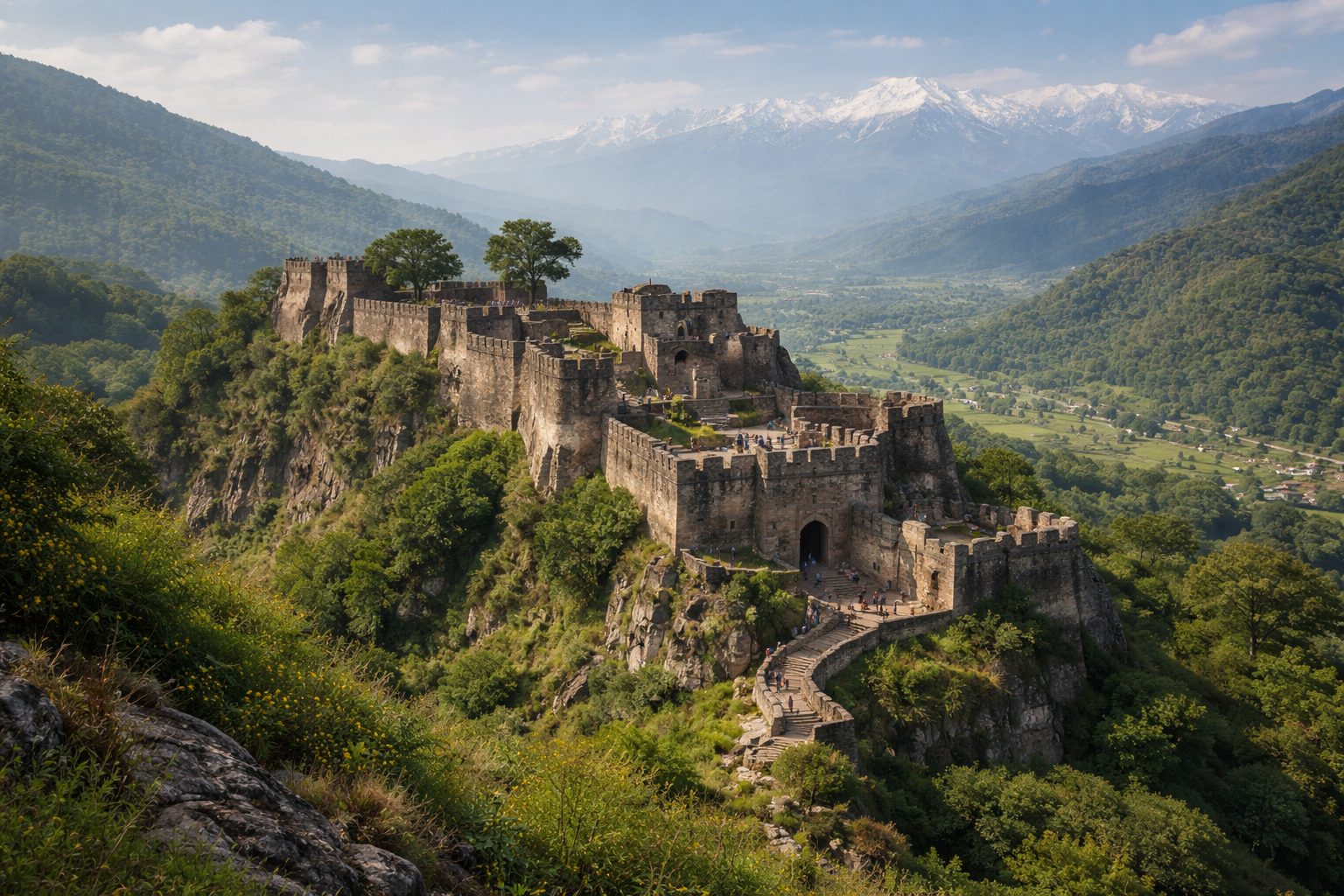
The fort sits at the confluence of the Banganga and Manjhi rivers and was considered almost impregnable for most of its history. Despite that reputation, it was captured multiple times, including by Mahmud of Ghazni in 1009 and later by the Mughals under Akbar.
A major earthquake in 1905 caused significant damage, and much of the fort is in ruins now. But the setting in the foothills of the Dhauladhar range, with snow-capped peaks behind it, makes visiting genuinely beautiful.
10. Daulatabad Fort, Maharashtra
Daulatabad Fort, near Aurangabad in Maharashtra, is the most unusual on this list. In the 14th century, Sultan Muhammad bin Tughluq famously attempted to move the entire capital of the Delhi Sultanate from Delhi to Daulatabad, forcing the population on a 1,500-kilometer march that killed thousands. The experiment failed after a few years, but it says something about how strategically valuable the site was considered.
The fort sits on a 200-meter conical hill and features one of the most elaborate defensive systems of any fort in India. To reach the inner citadel, attackers had to navigate multiple walls, a water-filled moat, a narrow causeway, and a pitch-dark spiral tunnel filled with bat droppings and, historically, with fire traps. The tunnel is still there, and you can walk through it.
It’s not as famous as Mehrangarh or Agra Fort, but Daulatabad might be the most defensively ingenious fort in the country.
Historical Significance of Each Fort
Key Events Associated with the Forts
The top 10 forts in India are inseparable from the events that defined medieval Indian history. Here’s a summary of some of the most significant:
- Red Fort: Site of the last Mughal Emperor Bahadur Shah Zafar’s defeat and capture by British forces in 1857 after the Indian Rebellion.
- Chittorgarh: Three sieges between 1303 and 1568, including the final conquest by Mughal Emperor Akbar that ended Mewar’s control.
- Golconda: Held out against Aurangzeb’s Mughal army for eight months in 1687, one of the longest sieges in Indian history.
- Agra Fort: Scene of Shah Jahan’s imprisonment and the consolidation of Mughal imperial power under multiple emperors.
- Gwalior Fort: Briefly held by Rani Lakshmibai of Jhansi during the 1857 rebellion. She died in battle near here.
- Daulatabad: Focus of Tughluq’s failed capital transfer scheme in the 1320s.
- Kangra: Controlled the fertile Kangra Valley, making it a target for every major power in northern India for centuries.
These events aren’t just historical footnotes. They explain why these sites were built where they were, why they look the way they do, and why they still matter to the people who live near them.
Influential Figures in Fort Histories
Many of the most significant figures in Indian history are directly connected to these fortresses:
- Akbar: Built or significantly expanded Agra Fort and Red Fort. Captured Chittorgarh in 1568 and Gwalior.
- Rana Kumbha: Expanded Chittorgarh significantly and built the Vijay Stambha after defeating the Gujarat Sultanate.
- Rao Jodha: Founded Mehrangarh Fort in 1459 after abandoning the previous capital at Mandore.
- Shah Jahan: Built the Red Fort in its current form and was later imprisoned in Agra Fort.
- Rawal Jaisal: Founded Jaisalmer Fort in 1156, establishing the trade route city in the Thar Desert.
- Qutb Shahi Sultans: Built Golconda into a major commercial and military power.
These rulers didn’t just build for defense. They built to project authority, and the scale of what they created reflects the resources and ambitions of some of the most powerful states in pre-modern Asia.
Architectural Features of the Top 10 Forts
Unique Design Elements
Each fort developed features suited to its specific geography, era, and the threats it faced. Some standout design elements across the top 10 forts in India include: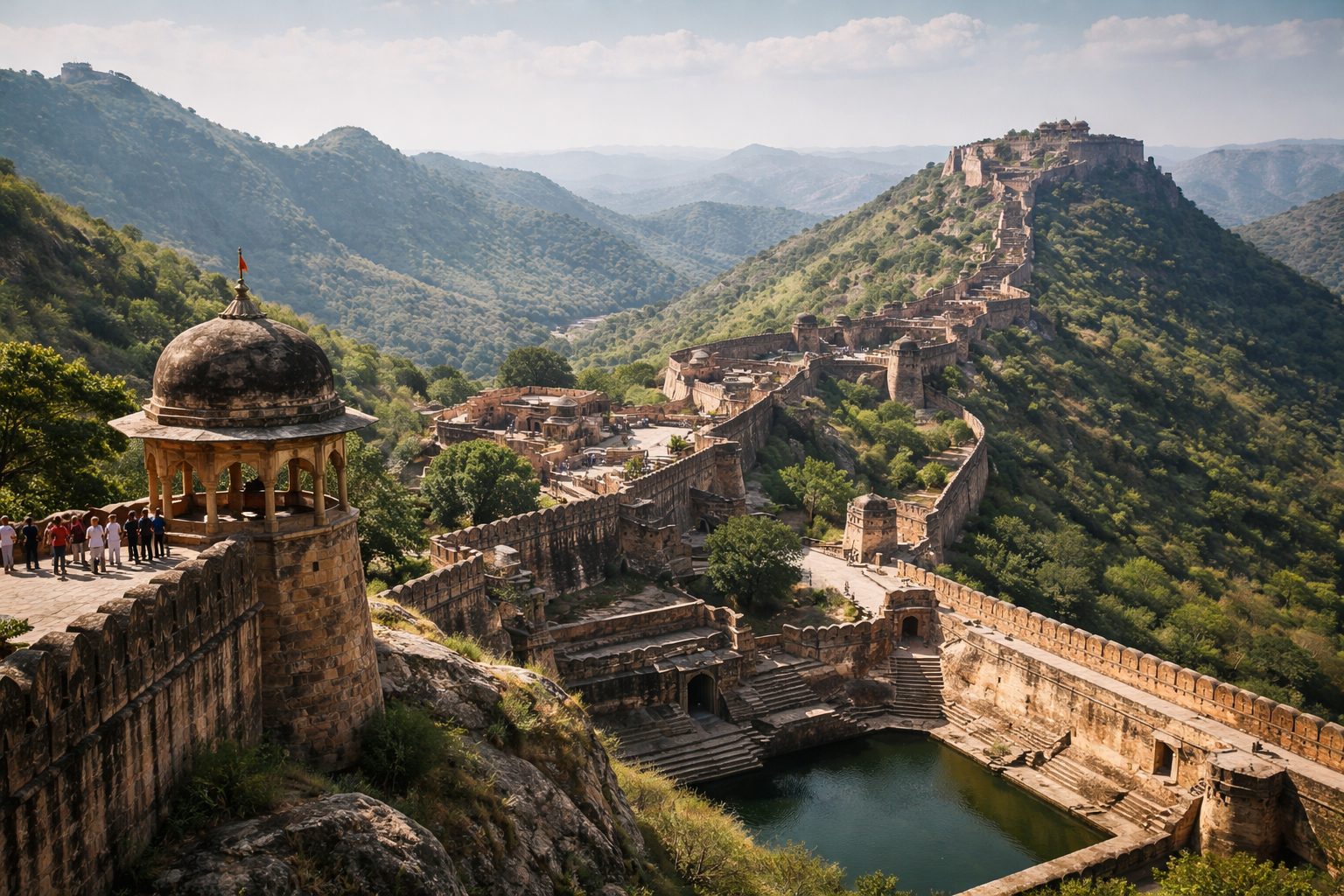
- Acoustic signaling systems at Golconda Fort, designed to pass whispered messages from gate to summit.
- The Sheesh Mahal mirror work at Amber Fort, which used tiny convex mirrors to amplify candlelight throughout the room.
- The defensive tunnel at Daulatabad, which incorporated total darkness, heat traps, and controlled access through a single narrow passage.
- The blue and yellow ceramic tile work on the Man Mandir Palace at Gwalior, unusual for the period and the region.
- The living city model at Jaisalmer, where the fort functions as a residential and commercial space rather than a museum.
- The sheer wall thickness at Mehrangarh, where the base walls reach 36 meters in width to resist cannon fire.
No single fort has all of these. But taken together, they illustrate the range of solutions Indian military architects developed over centuries.
Comparison of Fort Styles Across Regions
| Fort | Region | Primary Material | Style | Key Feature |
|---|---|---|---|---|
| Red Fort | North India | Red sandstone | Mughal | Royal residential complex |
| Amber Fort | Rajasthan | Sandstone and marble | Rajput-Mughal | Sheesh Mahal |
| Mehrangarh | Rajasthan | Sandstone | Rajput | Hilltop, massive walls |
| Agra Fort | North India | Red sandstone | Mughal | Blend of Hindu and Islamic design |
| Gwalior Fort | Central India | Sandstone | Mixed | Ceramic tile facade |
| Chittorgarh | Rajasthan | Sandstone | Rajput | Largest area in India |
| Golconda | Deccan | Granite | Qutb Shahi | Acoustic system |
| Jaisalmer | Rajasthan | Yellow sandstone | Rajput | Living fort |
| Kangra | Himachal Pradesh | Stone | Hill fort | River confluence position |
| Daulatabad | Maharashtra | Basalt rock | Deccan | Spiral defensive tunnel |
The Mughal forts tend to be more ornamental and residential in character. The Rajput forts prioritize height and natural defense. The Deccan forts, built in harder volcanic rock, favor complex defensive layering. These aren’t rigid categories, but they reflect genuine regional differences in military philosophy and available materials.
Visiting the Top 10 Forts
Best Times to Visit
India’s climate varies enormously by region, so timing your fort visits matters.
- October to March is the best window for Rajasthan forts. Temperatures are manageable and the light is excellent for photography. Avoid April through June when temperatures regularly exceed 45 degrees Celsius in the Thar Desert region.
- Red Fort and Agra Fort are worth visiting year-round, but October through March avoids the worst of the summer heat and the monsoon humidity.
- Golconda Fort in Hyderabad is best visited between November and February. The light and sound show runs evenings year-round, but the grounds are more pleasant outside of summer.
- Kangra Fort is best in spring and autumn. The monsoon from July to September makes the hillsides lush but the paths slippery.
- Daulatabad Fort can be visited year-round, but the tunnel section is particularly uncomfortable in peak summer heat.
Most forts open around sunrise and close at sunset. Arriving early means cooler temperatures, smaller crowds, and better light.
Travel Tips for Fort Exploration
A few practical notes from experience:
- Wear comfortable, closed-toe shoes. Fort floors are often uneven, and some areas involve steep climbs on stone surfaces.
- Carry water. Many forts have minimal facilities inside, especially away from the main entrance areas.
- Budget more time than you think you need. Chittorgarh in particular requires a full day to cover properly. Mehrangarh needs at least three to four hours for the fort and museum.
- Audio guides are available at most major forts and are often worth the extra cost. The context they provide transforms what you’re looking at.
- For Red Fort and Agra Fort, book tickets online in advance, especially during peak season and national holidays. Queues for walk-in tickets can be long.
- At Jaisalmer Fort, be respectful of the fact that people live there. It’s a functioning community, not just a tourist site.
- The light and sound show at Golconda Fort runs in multiple languages. Check the schedule before you go.
If you’re planning to cover several forts in one trip, Rajasthan offers the highest concentration. A circuit through Jaipur, Jodhpur, Jaisalmer, and Chittorgarh covers four of the top 10 in a single journey.
Conclusion
Summary of the Cultural Heritage of Indian Forts
The top 10 forts in India represent something larger than military history. They’re physical records of how people organized power, defended territory, created beauty, and adapted to their environments over centuries. Standing inside them, you feel the weight of time in a way that’s genuinely hard to replicate in a museum or a textbook.
Each fort on this list has shaped the region around it. Cities grew at their feet. Trade routes bent toward them. Wars were fought over them. And now, millions of visitors come each year not to besiege them but to understand them.
What strikes me most, after visiting many of these places, is how human they feel. Behind every massive wall and every ornate palace room, there were people making decisions about how to live, how to rule, and how to survive. The stones they chose, the tunnels they dug, the mirrors they arranged on palace ceilings: all of it reflects those choices. Exploring these forts is, in the end, a way of getting closer to those people and the world they built.
Frequently Asked Questions (FAQs)
What are the most famous forts in India?
Red Fort in Delhi, Amber Fort in Jaipur, and Mehrangarh Fort in Jodhpur are consistently among the most visited. Agra Fort and Chittorgarh Fort are also among the most historically significant. Each attracts large numbers of visitors and holds UNESCO or national heritage status.
How to reach the top forts in India?
Most major forts are well connected by road and accessible from nearby cities with airports or railway stations. Red Fort is in central Delhi, Agra Fort is a short drive from Agra Junction railway station, and Mehrangarh is easily reached from Jodhpur city. For remote forts like Kangra, driving from Dharamsala or Pathankot is the most practical option.
Are the forts open to visitors year-round?
Yes, most forts are open throughout the year, though hours and access may vary during national holidays and special events. Some smaller sections within forts may be closed for conservation work. It’s worth checking current opening hours before visiting.
What is the best time to visit Indian forts?
October through March is generally the best period across most of India. The weather is cooler and drier, which makes walking through large open-air sites much more comfortable. Rajasthan forts in particular should be avoided during the summer months when temperatures can become extreme.
Can you stay overnight at any of the forts?
Some forts or their immediate precincts have been converted into heritage hotels. Neemrana Fort near Delhi and parts of the Jaisalmer Fort precinct offer accommodation within or adjacent to fort walls. Most of the major forts on this list do not allow overnight stays within the protected monument itself.