
India is a land where spirituality runs deep into daily life, and nowhere is that more visible than in its temples. When people ask me about the top 10 famous temples in india, I never give a quick answer, because each one deserves its own story. These are not just places of worship. They are living monuments to centuries of faith, art, craftsmanship, and cultural identity. I’ve traveled to several of these sites personally, and the experience of standing before them is something no photograph ever fully captures.
Across the country, from the southern tip of Tamil Nadu to the northern plains of Delhi, temples define the landscape and the rhythm of community life. They draw millions of pilgrims and tourists every year, not just for religious reasons but because they represent one of the greatest concentrations of architectural and artistic achievement anywhere in the world.
Introduction to Famous Temples in India
Significance of Temples in Indian Culture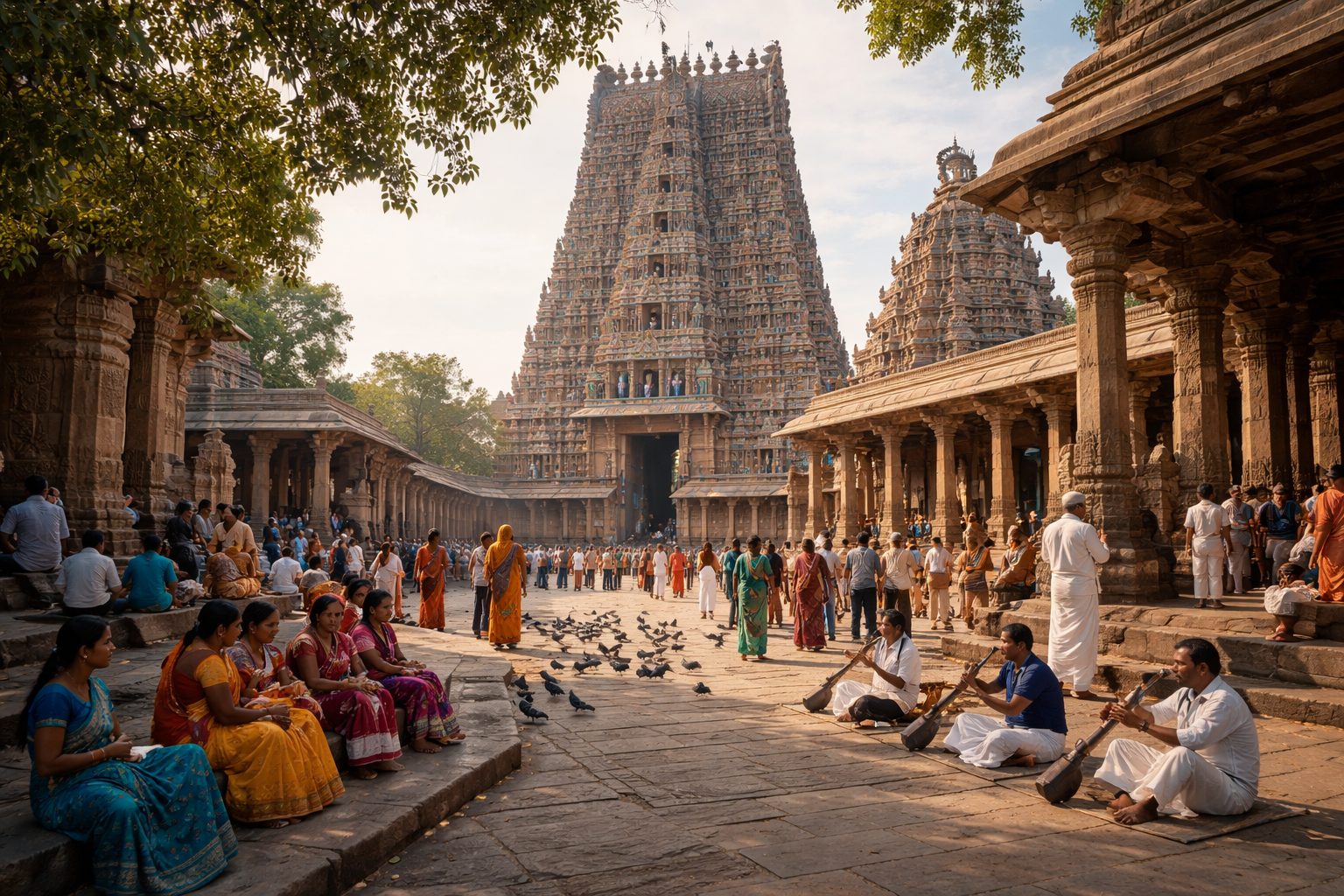
In India, a temple is rarely just a building. It functions as a social hub, an artistic center, a place of learning, and a community anchor. Temples have historically served as patrons of classical music, dance, and literature. Many of the country’s oldest universities and hospitals were attached to temple complexes.
The act of visiting a temple, known as darshan, is considered a spiritual necessity for most Hindu families. But even beyond Hinduism, temples associated with Sikhism, Jainism, and other traditions play a central role in shaping local identity and collective memory. The rituals, festivals, and daily offerings that take place inside these structures have remained largely unchanged for hundreds of years.
What strikes me most is how temples continue to function as living institutions, not preserved ruins. Priests still conduct daily rituals, musicians still perform, and pilgrims still line up before dawn for morning prayers. There’s an uninterrupted chain of tradition stretching back in some cases over a thousand years.
Overview of Architectural Styles
India’s temple architecture can be broadly divided into three main styles: Nagara from the north, Dravida from the south, and Vesara, which blends the two. Each carries its own logic and visual grammar.
- Nagara temples are characterized by a curvilinear tower called a shikhara that rises directly above the sanctum. The forms tend to be vertical and pointed, like a cluster of ascending spires.
- Dravida temples feature a pyramidal tower called a gopuram, often elaborately decorated with painted sculptures. These towers mark the temple entrances and can be seen from kilometers away.
- Vesara temples combine elements of both, typically found in the Deccan plateau region.
Beyond these major categories, regional sub-styles create enormous variety. The intricate latticed screens of Hoysala temples look nothing like the austere stone pillars of early Pallava shrines, even though both fall within the broader Dravidian tradition.
The Top 10 Famous Temples in India
Putting together a list of the top 10 famous temples in india is genuinely difficult because there are hundreds of candidates. I’ve focused on a combination of historical importance, architectural significance, spiritual relevance, and widespread recognition across India and beyond.
1. Brihadeeswarar Temple, Thanjavur
Built by the Chola emperor Rajaraja I around 1010 CE, the Brihadeeswarar Temple in Thanjavur is one of the most extraordinary structures in the world. The vimana, the tower above the sanctum, rises to about 66 meters and was the tallest temple tower in India at the time of its construction.
What makes this temple especially remarkable is the engineering. The shadow of the main tower reportedly never falls on the ground at noon. The granite capstone at the top weighs approximately 80 tons, and no one is entirely certain how the Chola builders placed it there over a thousand years ago. The temple is a UNESCO World Heritage Site and a cornerstone of Dravidian architecture.
Inside, the walls are covered with original Chola-period murals and sculptures of exceptional quality. This is a place that rewards slow attention. The more time you spend looking, the more detail you find.
2. Akshardham Temple, Delhi
The Akshardham Temple in Delhi is a much newer construction, completed in 2005, but it has quickly become one of the most visited religious sites in the country. Built by the BAPS Swaminarayan Sanstha organization, it spreads across 100 acres on the banks of the Yamuna River.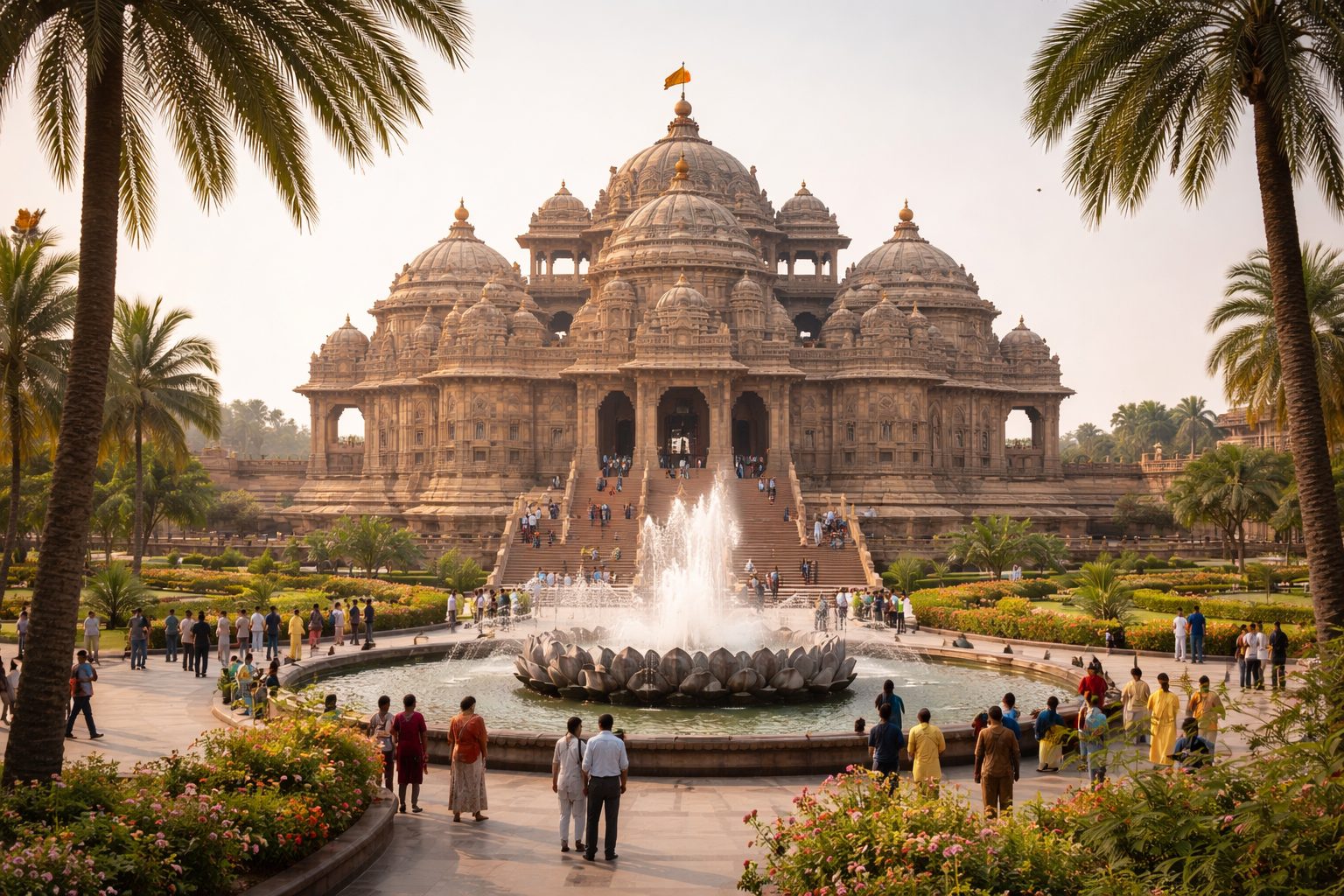
The main monument is built from pink sandstone and white marble without using any steel. Over 3,000 artisans worked on the carvings for several years. The result is a structure dense with sculptural detail, featuring thousands of individual figures across its exterior.
The complex includes exhibitions, gardens, musical fountains, and a boat ride through Indian history. It’s a very different kind of temple experience from the ancient sites, more organized and visitor-focused, but the craftsmanship is genuinely impressive and worth seeing.
3. Golden Temple, Amritsar
The Harmandir Sahib, commonly known as the Golden Temple, is the holiest shrine in Sikhism. Located in Amritsar, Punjab, it sits at the center of a large sacred pool called the Amrit Sarovar, which gives the city its name.
The upper floors of the temple are covered with gold leaf, which reflects brilliantly in the surrounding water. The effect at sunrise and sunset is unlike anything else I’ve seen. Thousands of pilgrims walk the marble pathway around the pool at all hours of the day and night, creating a continuous, meditative circulation.
One of the most meaningful things about this site is the langar, the community kitchen, which serves free meals to anyone who visits regardless of religion, caste, or background. On busy days it feeds over 100,000 people. That combination of spiritual beauty and practical generosity makes the Golden Temple genuinely special.
4. Meenakshi Temple, Madurai
The Meenakshi Amman Temple in Madurai is a masterpiece of Dravidian architecture and one of the oldest continuously operating temple complexes in India. It covers about 14 acres in the heart of the city and is built around the goddess Meenakshi, a form of Parvati, and her consort Sundareshwara, a form of Shiva.
The temple has 14 gateway towers, or gopurams, the tallest rising to about 52 meters. Every surface of these towers is covered with painted stucco figures, some estimates put the total number of sculptures in the tens of thousands. The colors are vivid and the effect is almost overwhelming when you first encounter them.
Inside the complex there are multiple halls, pillared corridors, and a sacred tank with a golden lotus. The Thousand Pillar Hall is worth spending time in specifically. Each pillar is carved, and the detail work shows a level of skill that’s hard to fully absorb in a single visit.
5. Jagannath Temple, Puri
The Jagannath Temple in Puri, Odisha, is one of the four sacred dhams in Hinduism, the four holy sites that devout Hindus aspire to visit at least once in their lifetime. The temple is dedicated to Lord Jagannath, a form of Vishnu, along with his siblings Balabhadra and Subhadra.
The main tower stands at about 65 meters and is topped with a flag and the Sudarshana Chakra, both of which are changed daily. The temple serves an enormous prasad, or sacred food offering, using a traditional kitchen that reportedly cooks for anywhere from 2,000 to 100,000 people daily, in the same earthen pots, using the same wood-fire methods that have been used for centuries.
The annual Rath Yatra chariot festival, when the deities are brought outside the temple on massive wooden chariots and pulled through the streets, draws millions of devotees and is one of the largest religious gatherings in the world.
6. Kashi Vishwanath Temple, Varanasi
The Kashi Vishwanath Temple in Varanasi is one of the most sacred Shiva temples in existence. Varanasi itself is considered the oldest continuously inhabited city on earth, and the temple has been at its spiritual center for as long as anyone can trace.
The current structure dates primarily from the 18th century when it was rebuilt by Maratha queen Ahilyabai Holkar after it had been destroyed. In recent years a major renovation project has created the Kashi Vishwanath Corridor, which opened in 2021 and significantly expanded the complex while connecting it to the Ganga ghats.
Visiting this temple is an intense experience. The lanes approaching it are narrow, crowded, and loud. Pilgrims come from across India to take a dip in the Ganga and then offer prayers here. The belief is that dying in Kashi guarantees liberation from the cycle of rebirth, which is why the city has been a destination for the dying for millennia.
7. Somnath Temple, Gujarat
The Somnath Temple in Gujarat holds a particular place in Indian historical memory because it has been destroyed and rebuilt multiple times, most famously raided by Mahmud of Ghazni in the 11th century. The current structure was rebuilt after Indian independence and inaugurated in 1951 by Sardar Vallabhbhai Patel, making it a symbol of national renewal as much as a religious site.
The temple stands at the edge of the Arabian Sea on what is considered the first of the twelve Jyotirlinga shrines of Shiva, the most sacred form of Shiva represented as a column of light. The coastal location gives the setting a dramatic quality, and the sound of waves against the nearby shore adds to the atmosphere.
The rebuilding of Somnath was a deliberate act of cultural and political statement. For many Indians it represents resilience and continuity in the face of historical destruction.
8. Hoysaleswara Temple, Halebidu
Of all the temples on this list, the Hoysaleswara Temple at Halebidu in Karnataka is perhaps the most underappreciated. Built in the 12th century by the Hoysala dynasty, it never received a full roof and was never completed, yet what exists is among the most detailed stone carving ever produced in India.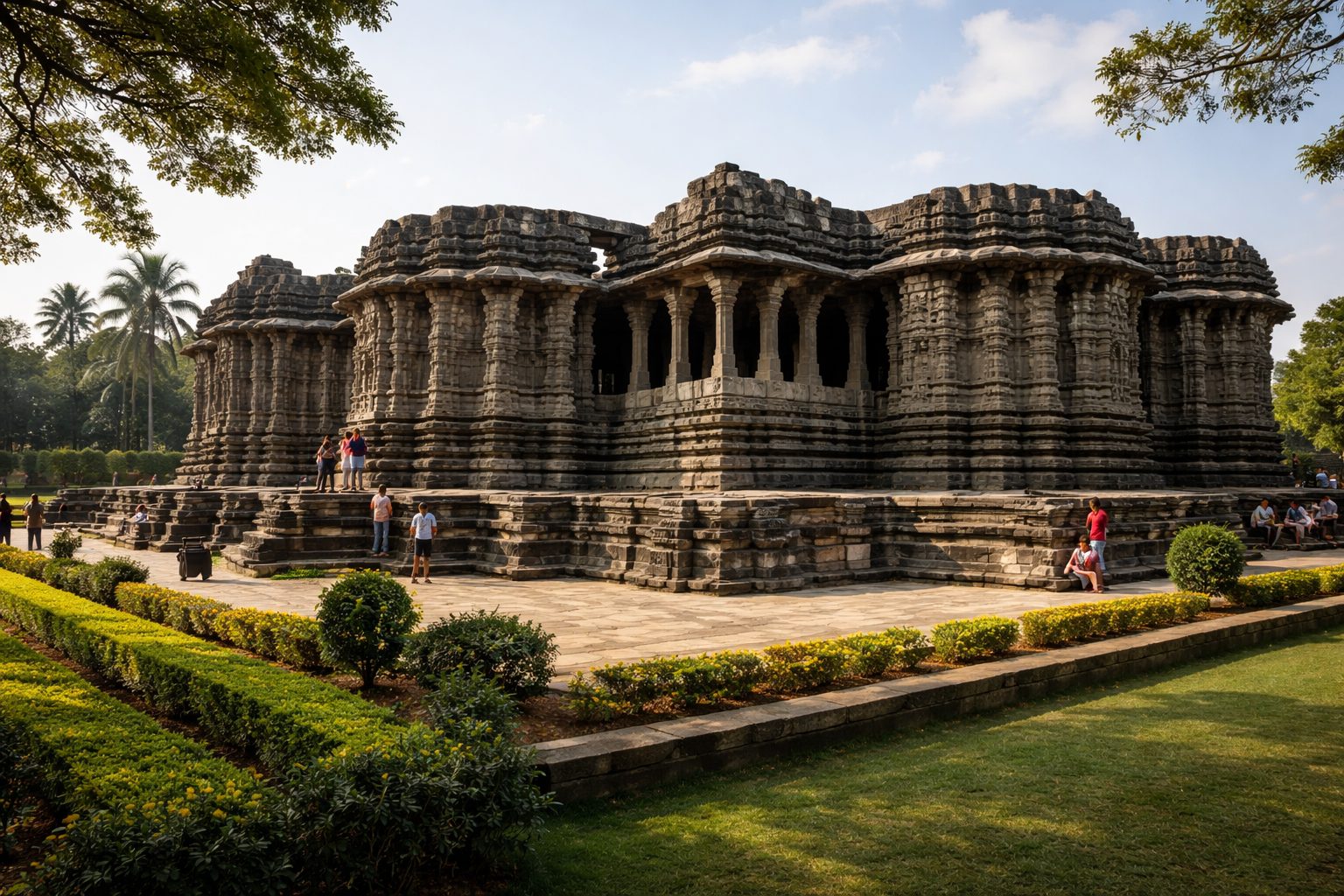
The outer walls of the temple are covered in horizontal bands of sculpture arranged in a specific sequence: elephants, horses, scrolling foliage, scenes from epics, geese, and deities. Walking around the exterior is like reading a visual encyclopedia of Hoysala mythology and artistic convention.
Unlike the vertical drama of Dravida gopurams or Nagara shikharas, the Hoysala style emphasizes horizontal richness and extreme sculptural density. Every figure is distinct, and the technical precision of the stone cutting, done in soft chloritic schite that hardens over time, is remarkable even by modern standards.
9. Lingaraja Temple, Bhubaneswar
The Lingaraja Temple in Bhubaneswar, Odisha, is one of the finest examples of Kalinga architecture, the distinctive temple style that developed in coastal eastern India. Built primarily in the 11th century, the main tower rises to about 55 meters and is surrounded by smaller subsidiary shrines that cluster around it organically.
The temple is dedicated to Harihara, a combined form of Shiva and Vishnu, which makes it unusually syncretic even by Indian standards. Both Shaiva and Vaishnava devotees worship here.
Bhubaneswar itself is often called the City of Temples because it once had over 700 temples, of which several hundred survive. The Lingaraja is the largest and most significant, but walking through the older parts of the city reveals an extraordinary concentration of medieval religious architecture within a small area.
10. Sun Temple, Konark
The Sun Temple at Konark in Odisha was built in the 13th century by the Ganga dynasty king Narasimhadeva I and is designed as a colossal chariot for the sun god Surya. The base of the temple features 24 intricately carved stone wheels, each about three meters in diameter, and seven horses pull the chariot forward.
The structure was once even taller than it is today. The main sanctum tower collapsed centuries ago, leaving only the assembly hall and the entrance porch standing. But even in its incomplete state the scale and the carving quality are extraordinary.
The wheels of the Sun Temple are now one of the most recognizable images in Indian iconography. One of them appears on the national flag of India as the Ashoka Chakra, which is a measure of how deeply this symbol has entered the national consciousness.
Architectural Features of Indian Temples
Common Elements in Temple Design
Despite enormous regional variation, most Hindu temples share a core set of spatial and conceptual elements.
- Garbhagriha: the innermost sanctum where the deity resides. This is always a small, dark, enclosed space meant to replicate a cave or womb.
- Mandapa: a pillared hall or series of halls leading toward the sanctum, used for congregational activities.
- Pradakshina patha: a circumambulatory passage around the sanctum for ritual circumambulation.
- Shikhara or vimana: the tower that marks the location of the deity below.
- Gopuram: the gateway tower marking the entrance, especially prominent in southern temples.
The overall layout often follows cosmological principles, with the temple representing Mount Meru, the mythological axis of the universe, and the garbhagriha representing the cave at its heart.
Water tanks are another common element. Most major temple complexes include a sacred pond or tank used for ritual purification and sometimes for festival activities involving decorated boats carrying the deity images.
Regional Variations in Temple Architecture
The differences between temple traditions across India are substantial enough that an expert can usually identify the region of origin from a photograph without knowing the temple’s name.
| Style | Region | Key Feature | Example Temple |
|---|---|---|---|
| Nagara | North India | Curvilinear shikhara | Lingaraja, Bhubaneswar |
| Dravida | South India | Pyramidal gopuram | Meenakshi, Madurai |
| Vesara | Deccan | Hybrid forms | Many Karnataka temples |
| Kalinga | Odisha | Clustered tower complex | Sun Temple, Konark |
| Hoysala | Karnataka | Horizontal sculptural bands | Hoysaleswara, Halebidu |
| Chola | Tamil Nadu | Massive vimana, fresco interiors | Brihadeeswarar, Thanjavur |
Each style developed over centuries in response to local materials, political patronage, and theological emphasis. Stone types vary dramatically, from the red sandstone of Rajasthan to the black basalt of Deccan temples to the soft chloritic schite of Hoysala buildings to the granite of Tamil Nadu.
The transition between styles isn’t always clean. Temples in border regions sometimes blend elements in ways that don’t fit neatly into any category, and individual patrons sometimes imported craftsmen from distant regions, creating interesting hybrids.
Pilgrimage and Tourism
Importance of Pilgrimage in Indian Culture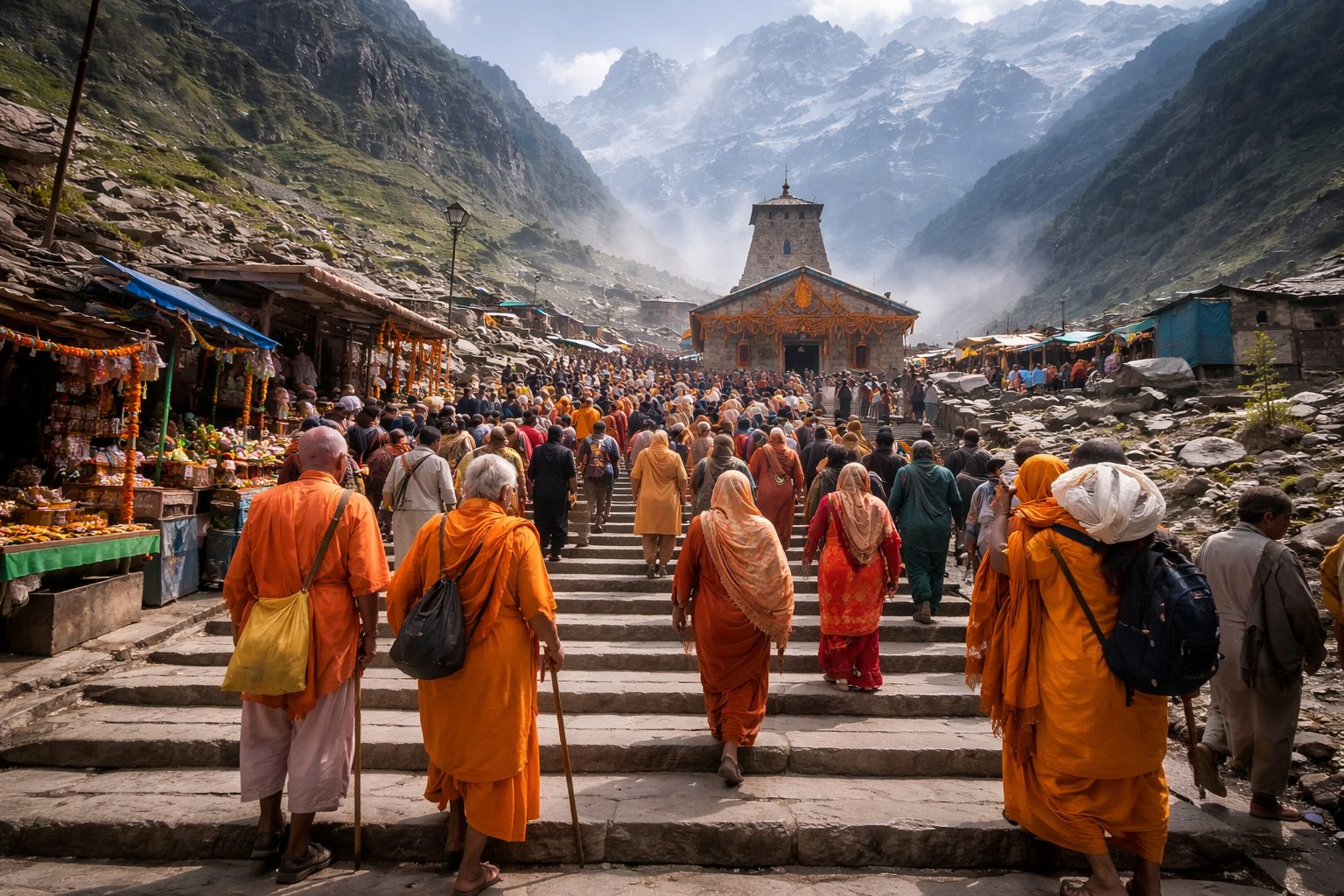
Pilgrimage in India, called tirtha yatra, is a practice with roots going back thousands of years. The word tirtha literally means a ford or crossing, a place where the boundary between the human and divine is thin. Temples located on riverbanks, hilltops, or coastal cliffs often occupy sites that were considered sacred long before any structure was built there.
For most Hindu families, visiting certain temples is not optional. The four dhams, Badrinath, Dwarka, Puri, and Rameswaram, form a circuit that many devout Hindus aspire to complete. The twelve Jyotirlinga shrines of Shiva form another such circuit. Completing these journeys is considered to bring spiritual merit and sometimes specific religious benefits like the resolution of longstanding problems or the fulfillment of vows.
Modern pilgrimage in India is a massive logistical enterprise. State governments maintain dedicated pilgrimage infrastructure including trains, buses, and accommodations specifically designed for pilgrims. Events like the Kumbh Mela, which draws over 100 million people during certain iterations, require coordination on a scale comparable to organizing a small city from scratch.
Best Time to Visit These Temples
Timing matters enormously when planning visits to these sites. Peak pilgrimage seasons, while spiritually charged, also mean very large crowds, long queues, and sometimes limited access to the most important parts of the complex.
- Brihadeeswarar, Thanjavur: November to March offers the most comfortable weather. Avoid the summer months when Tamil Nadu gets intensely hot.
- Golden Temple, Amritsar: The temple is open 24 hours and worth visiting at dawn or late evening for the most atmospheric experience. Baisakhi in April draws enormous crowds.
- Meenakshi Temple, Madurai: October through March is ideal. The Meenakshi Tirukalyanam festival in April/May is spectacular but very crowded.
- Jagannath Temple, Puri: Rath Yatra in June/July is the most significant time to visit, but crowd management is critical. October through February for quieter visits.
- Kashi Vishwanath, Varanasi: Maha Shivaratri in February/March is the peak festival period. November through February is generally the best time for manageable crowds.
- Sun Temple, Konark: October through February is most comfortable. The Konark Dance Festival in December draws classical performers from across India.
For almost all these temples, arriving very early in the morning, typically before 6 AM, gives you the best combination of spiritual atmosphere and manageable crowds.
Conclusion
Recap of the Top 10 Temples
Looking at the top 10 famous temples in india as a complete picture, what stands out is the sheer range of what “temple” means in this country. From the living faith of the Golden Temple’s community kitchen to the ruined grandeur of Konark’s chariot wheels, from the meticulous stone lattices of Halebidu to the soaring granite vimana of Thanjavur, these are not variations on a single theme but genuinely distinct expressions of human creativity and religious feeling.
The list also spans roughly 1,800 years of construction, from the early medieval period to 2005, which shows that this tradition is not frozen in the past. New temples of genuine artistic merit continue to be built.
If you’re planning to explore the top 10 famous temples in india, I’d suggest grouping them by geography rather than trying to visit them in ranked order. The Tamil Nadu cluster (Thanjavur, Madurai) makes logical sense as one circuit. Odisha (Puri, Konark, Bhubaneswar) is another tight cluster. Varanasi and Amritsar can anchor north India trips. Delhi, Gujarat, and Karnataka each stand somewhat alone but reward dedicated visits.
How to Respect the Sacred Spaces
These are working religious sites, not museums. Treating them with appropriate respect is both ethically important and practically necessary for continued visitor access.
- Remove footwear before entering temple premises. This is universal across all traditions.
- Dress modestly. Cover shoulders and legs. Many temples offer cloth wraps at the entrance for visitors who need them.
- Don’t photograph inside the sanctum, and always ask before photographing rituals or priests.
- Be quiet and move slowly in the inner sanctum areas. These spaces are designed for reverence, not tourism.
- Follow queue systems. Trying to bypass lines at major temples is disrespectful to the thousands of pilgrims who may have waited much longer than you.
- Accept prasad, the sacred food offering, with your right hand.
- Don’t enter restricted areas. Many temples limit access to non-Hindus in certain inner sections, and those boundaries should be respected.
The best way to experience these places is to arrive with genuine curiosity and humility, to watch what regular devotees do and follow their lead. You don’t need to be Hindu to feel the weight and meaning of these spaces. You just need to approach them on their own terms.
Frequently Asked Questions (FAQ)
What are the most visited temples in India?
The Tirupati Venkateswara Temple in Andhra Pradesh is typically the most visited temple in India and one of the most visited religious sites in the world, drawing around 50,000 to 100,000 pilgrims daily. The Golden Temple in Amritsar and the Vaishno Devi shrine in Jammu also draw tens of millions annually.
Are there any dress codes for visiting temples?
Yes, almost all temples require visitors to remove footwear and dress modestly, covering shoulders and legs. Some temples, particularly in Tamil Nadu, require men to remove shirts before entering the inner sanctum. A few temples prohibit non-Hindus from entering certain sections, so it’s worth checking the rules for specific sites before visiting.
What is the historical significance of these temples?
Many of these temples served as centers of political power, art patronage, and community governance for their ruling dynasties. The Brihadeeswarar Temple, for instance, was built to showcase Chola imperial power. The Somnath Temple has been a symbol of Hindu cultural continuity given its history of destruction and rebuilding over centuries.
How do these temples contribute to local economies?
Major temples are significant economic engines. The Tirupati temple alone manages donations worth billions of rupees annually, employs thousands of staff, and supports a vast ecosystem of accommodation, food, and transport services. Smaller temple towns like Madurai and Puri similarly depend heavily on pilgrimage tourism for local livelihoods.
Can non-Hindus visit these temples?
Most temples in India welcome visitors of all faiths for the outer premises and general viewing. However, some temples restrict entry to the inner sanctum or garbhagriha for non-Hindus. The Golden Temple is explicitly open to all. The Jagannath Temple in Puri traditionally restricts non-Hindus from entering the main complex, though this policy has been subject to ongoing public debate.