
Portugal’s capital sits right on the edge of the Atlantic, which means the beach is never far away. When people think of Lisbon, they picture the trams, the pastéis de nata, the viewpoints over the Tagus. But beach lisbon portugal is a real thing, not just a travel blog cliché. Within 20 to 40 minutes from the city center, you can be standing on wide stretches of Atlantic sand with waves rolling in and the kind of light that makes everything look cinematic. I’ve visited several times and spent enough time on these shores to give you a genuinely useful picture of what to expect.
The beaches around Lisbon range from busy urban strands packed with city locals to wild, cliff-backed coves that feel completely remote. Some are great for families with small children. Others draw serious surfers chasing consistent Atlantic swells. The variety is real, and it’s one of the things that makes exploring beach lisbon portugal so rewarding for different types of travelers.
Introduction to Beaches in Lisbon, Portugal
Lisbon is not a coastal city in the way Barcelona or Nice is. The city itself sits along the Tagus estuary, not directly on the ocean. But the Atlantic coastline begins almost immediately to the west and south, running along the Estoril Coast and the Setubal Peninsula. This geography means you get a wide selection of beaches within a reasonable distance.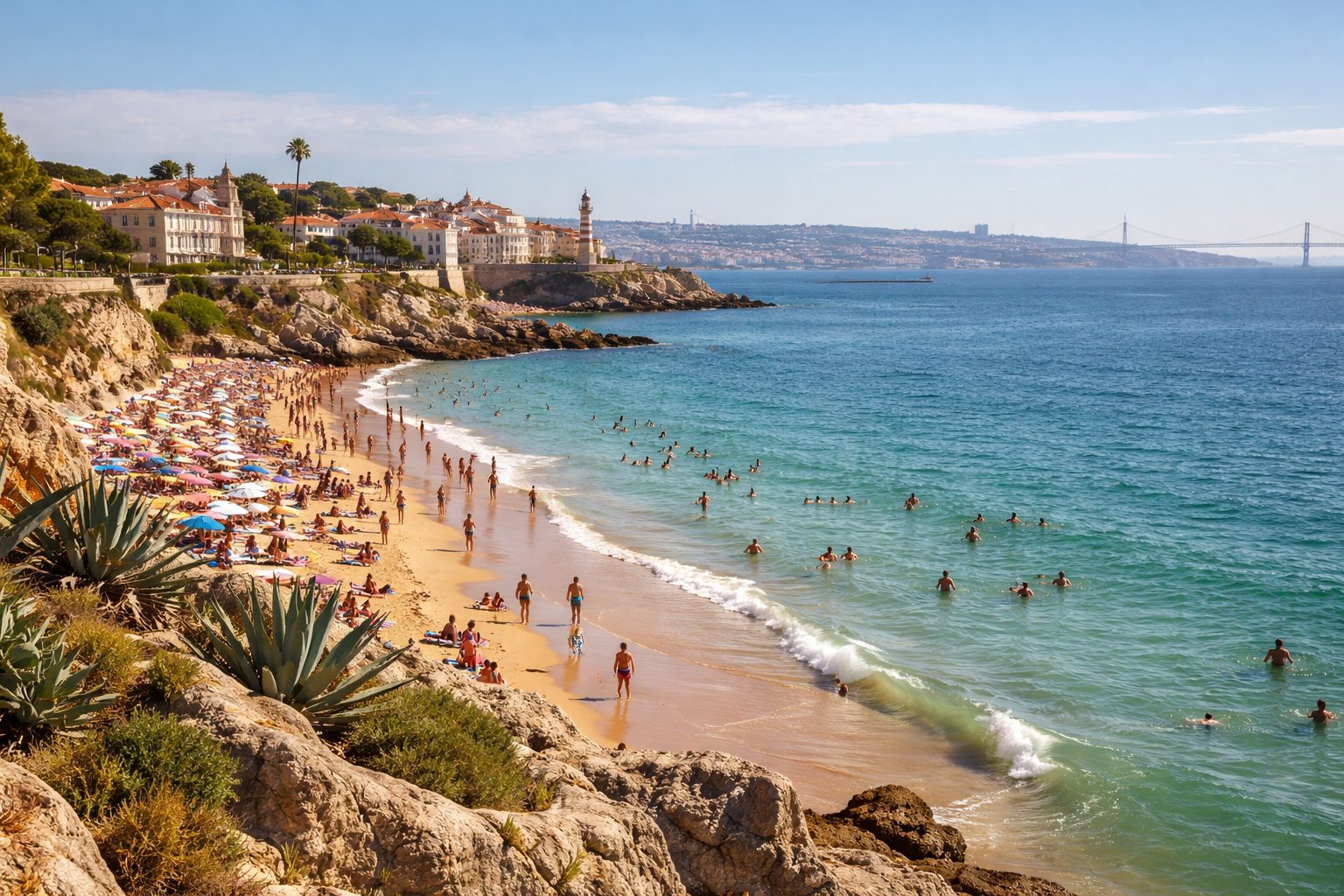
The beaches split roughly into two zones. The Cascais and Estoril coastline runs west from Lisbon along the train line, passing through upscale resorts and eventually reaching wilder terrain near Cabo da Roca, Europe’s westernmost point. The Setubal coast to the south, across the Tagus, includes some of the most dramatic and unspoiled beaches in the region.
Water temperatures here are honest Atlantic: refreshing in summer, genuinely cold the rest of the year. The Canary Current keeps things cooler than Mediterranean beaches at similar latitudes. Expect 18 to 21 degrees Celsius in peak summer. It’s swimmable, but you’ll feel it when you first get in.
Best Beaches in Lisbon
There are dozens of beaches within reach of the city. These five stand out for different reasons, and between them they cover most of what you might be looking for.
Praia de Carcavelos
Carcavelos is the closest proper ocean beach to central Lisbon, about 20 minutes by train. It’s a long, wide strip of sand with consistent waves that have made it one of the most popular surf spots in Portugal. You’ll find surf schools, rentals, beach bars, restaurants, and all the infrastructure you’d expect from a beach that doubles as a serious recreational hub for locals.
It’s crowded on summer weekends. That’s just the reality. But on a weekday morning in June or September, Carcavelos is genuinely excellent. The beach is big enough that you can always find space. The train connection from Cais do Sodré station makes it the easiest beach in Lisbon to reach without a car.
Praia da Adraga
Adraga sits north of Cascais, past Sintra, and it requires either a car or a bus connection from Cascais. The effort is worth it. This is a compact, sheltered bay with dramatic rock formations on either side and a reliable seafood restaurant right on the sand. The scenery is genuinely striking.
Swimming here can be strong, with some wave action depending on the swell. It’s not the calmest beach for young children, but for adults who want something visually spectacular and less overrun than the main coastal spots, Adraga delivers consistently.
Praia do Guincho
Guincho is about 10 kilometers north of Cascais and sits inside the Sintra-Cascais Natural Park. It’s wide, exposed, and wild. The wind here is strong and reliable, which is why it’s considered one of Europe’s top kitesurfing destinations. If you’re into wind sports, this is a must-visit.
For regular sunbathing and swimming, Guincho is less relaxing than other options. The wind kicks up sand and makes settling in a bit challenging unless the conditions are calm. But the beach is beautiful in a raw, elemental way, and the surrounding landscape of dunes and scrubland feels genuinely unspoiled.
Praia de São Julião
São Julião is a long, relatively quiet beach north of Ericeira, accessible by car from Lisbon in about an hour. It’s popular with locals who want to escape the crowds closer to the city. The beach has a relaxed, unhurried atmosphere and decent waves for surfing, with a couple of small beach bars for drinks and snacks.
It doesn’t have the same level of facilities as Carcavelos, which is exactly the point for many people who make the drive. If you want space and quiet without going fully remote, São Julião is a solid choice.
Praia da Ursa
Ursa is one of those places that requires a bit of commitment. Getting there involves a steep, unmarked trail down a cliff, and the beach itself has no facilities whatsoever. But if you make the effort, you’re rewarded with one of the most dramatic coastal settings in Portugal: towering rock stacks, turquoise water, and often very few other people.
Swimming at Ursa needs caution. The currents can be strong and there’s no lifeguard. This is strictly a beach for fit, experienced visitors who understand the risks and plan accordingly. Don’t bring children. Do bring water and snacks, because there’s nothing down there.
How to Get to Beaches from Lisbon City Center
Getting to the beach from Lisbon is genuinely straightforward if you know your options. The city has good connections to the main coastal areas, and you don’t necessarily need a car.
Public Transportation Options
The Cascais Line train runs from Cais do Sodré station along the northern coast of the Tagus estuary, stopping at Estoril, Cascais, and all the beaches in between including Carcavelos. Trains run frequently throughout the day and the journey to Carcavelos takes about 20 minutes. Tickets are inexpensive and the service is reliable.
For beaches further west, like Adraga or Guincho, you can take the train to Cascais and then pick up a bus or taxi. The Scotturb bus network covers Cascais and the surrounding area, including Sintra, and connects several of the beaches in the natural park. It takes longer and requires more planning, but it’s doable without a car.
Driving to the Beaches
Driving is the most flexible option and makes sense if you’re visiting beaches that aren’t on the train line, like Adraga, Guincho, or São Julião. The motorway west from Lisbon (A5) connects quickly to Cascais, and from there the coastal roads to the natural park beaches are well-signed. Parking at the main beaches can be tight on summer weekends, especially at Guincho where the small car park fills up early. Arriving before 10am solves most parking problems.
For the south bank beaches, you’ll need to cross the Tagus. The April 25th Bridge is the fastest option for drivers. Ferries also cross to Setúbal and connect to beaches on the Arrábida coast, which is a different experience but worth knowing about.
Bike Rentals and Cycling Routes
The Cascais coast has a dedicated cycling path running along the waterfront from Oeiras to Cascais, passing near Carcavelos. It’s a pleasant route and can be done in a few hours. Bike rentals are available in Cascais and some shops near Cais do Sodré. The route is mostly flat and manageable for casual cyclists.
Cycling to wilder beaches like Guincho involves more elevation and distance, which makes it better suited to more experienced riders. But if you’re fit and have the time, cycling the Cascais coast and continuing to Guincho is a genuinely memorable day out.
Activities at Lisbon Beaches
The beaches around Lisbon aren’t just for lying down. There’s a lot going on depending on where you go and what you’re after.
Surfing and Water Sports
Carcavelos and Guincho are the two main hubs for water sports. Carcavelos has multiple surf schools operating on the beach during summer, offering lessons for complete beginners through to intermediate surfers. The waves here are forgiving enough for beginners but still interesting for more experienced riders. Bodyboarding is also popular and rental boards are easy to find.
Guincho is a different story. The wind is the dominant force here, which makes it ideal for kitesurfing and windsurfing. Kite schools operate from the beach and the consistent conditions attract serious practitioners from across Europe. Stand-up paddleboarding is available at calmer beaches like Estoril and Cascais town beach.
Beach Volleyball and Sports Facilities
Carcavelos has permanent beach volleyball courts and they’re usually busy on summer afternoons. Games are informal and pickup play is common. The beach also has football pitches and areas used for casual sports. It has the feel of a true local beach, not just a tourist destination, which I find refreshing.
Some of the smaller beaches have simpler facilities, just the sand and the sea, which suits plenty of people perfectly. If sports facilities matter to you, Carcavelos is the clear choice among the beaches within easy reach of the city.
Relaxation and Sunbathing
Most beaches around Lisbon are well set up for a simple day of sun and sea. Sunbeds and parasol rentals are available at Carcavelos and the main Estoril and Cascais beaches. At more remote spots like Ursa or Adraga, you bring your own everything.
The light in Lisbon is genuinely exceptional, especially in late afternoon. Even on a busy day at Carcavelos, there’s a quality to the atmosphere that feels distinctly Portuguese. The beach culture here is relaxed without being sleepy. People are enjoying themselves without performing it for social media.
Local Beach Bars and Restaurants
Beach bars, known locally as beach clubs or beachside cafés, are part of the experience. Carcavelos has several solid options serving everything from grilled fish to cold beer to proper coffee. Adraga’s restaurant is particularly well regarded for seafood and the setting is hard to beat. Cascais town nearby has a range of restaurants for longer lunches away from the sand.
Prices at beach bars are reasonable by western European standards. A cold Sagres beer is typically 2 to 3 euros. Grilled sardines, when they’re in season in summer, are worth ordering anywhere along this coast. They’re simple, fresh, and as Portuguese as it gets.
Family-Friendly Beaches in Lisbon
Not every beach is equally suited to families. Some are better set up for children, with calmer water, easier access, and proper facilities. Here’s what to look for.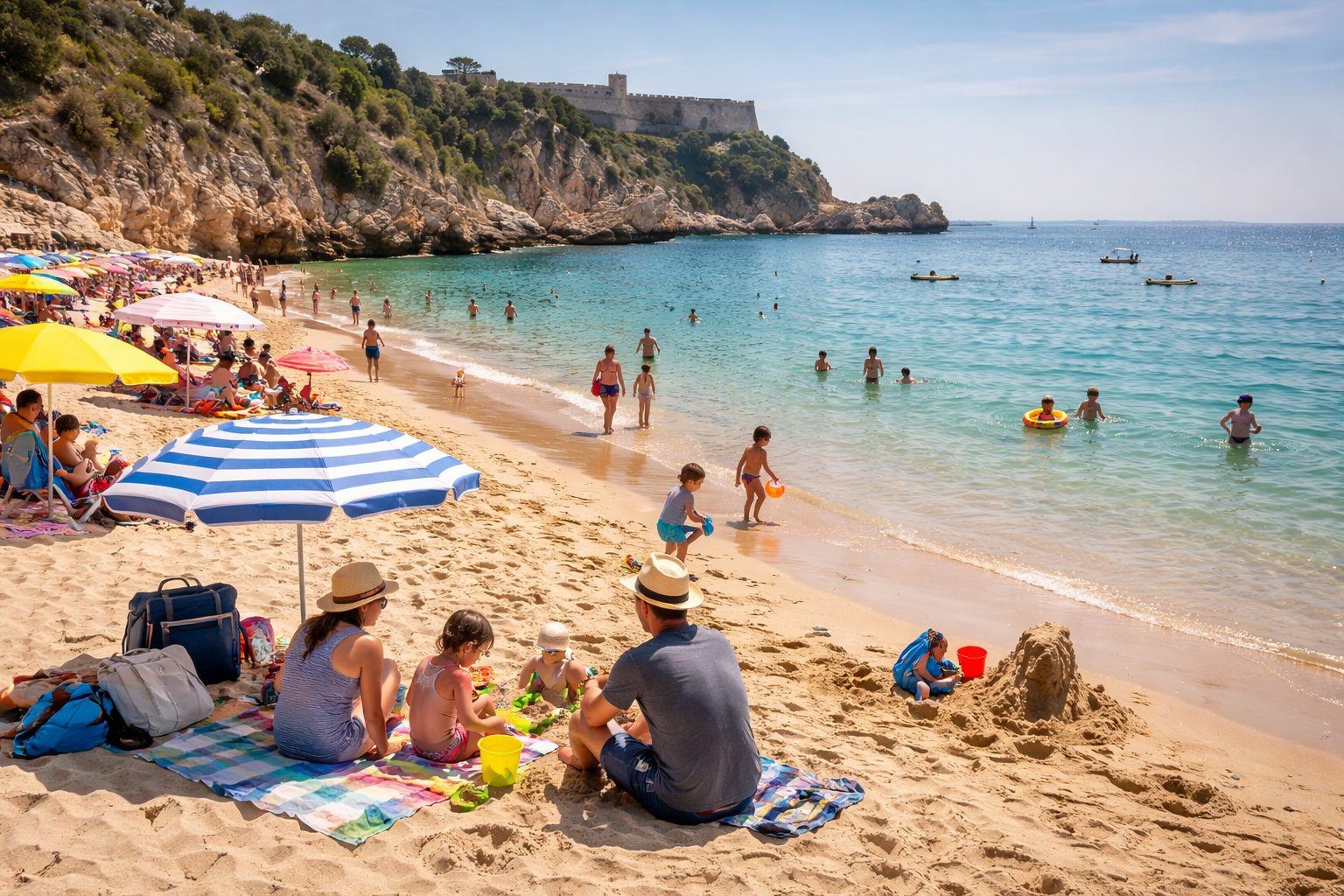
Facilities for Children
Carcavelos is the most complete option for families. It has lifeguard coverage during summer months, public toilets and showers, food options nearby, and enough space that you can set up comfortably with all the gear that comes with a family beach day. The beach is wide enough that you can find calmer spots away from the main surf break.
The beaches directly in Cascais town, especially Praia da Rainha and Praia da Conceição, are very calm and sheltered. They’re smaller, but the water is gentle and ideal for young children who aren’t confident swimmers yet. These town beaches are also steps from the cafés and restaurants of Cascais, which makes the logistics of a family day much easier.
Estoril also has a calm beach with gentle waves and is well-connected by train. It’s a good middle-ground option for families traveling without a car.
Safety and Supervision
Portuguese beaches use a flag system that’s worth understanding before you swim anywhere. Green means safe swimming conditions. Yellow means caution, swim only close to shore. Red means the beach is closed to swimming. Purple flags indicate jellyfish. Always check the flag when you arrive.
Lifeguard coverage runs from June to September at the main beaches. Outside those months, you’re largely on your own. Wild beaches like Ursa never have lifeguards regardless of season. The Atlantic currents in this region can be strong, and even experienced swimmers should be cautious about rip currents. If in doubt, ask the lifeguard or stay in shallow water.
How to Choose the Right Beach in Lisbon
With so many options, it helps to match the beach to what you actually want from the day. A few practical considerations will narrow it down quickly.
Factors to Consider: Proximity, Amenities, and Atmosphere
Proximity matters most if you’re short on time or don’t have a car. In that case, Carcavelos wins easily. It’s the most accessible, the most complete in terms of facilities, and genuinely enjoyable even if it’s not the most picturesque beach in the area.
Atmosphere varies significantly. Carcavelos is energetic and social. Guincho is wild and windswept. Adraga is scenic and quieter. Ursa is remote and raw. The Cascais town beaches are relaxed and convenient. Think about what kind of day you want and choose accordingly rather than defaulting to whatever is most famous.
Comparing Popular Beaches
| Beach | Distance from Lisbon | Access | Best For | Facilities |
|---|---|---|---|---|
| Praia de Carcavelos | 20 min | Train | Surf, families, locals | Full |
| Praia da Adraga | 50 min | Car/Bus | Scenery, seafood | Minimal |
| Praia do Guincho | 45 min | Car/Bus | Kite/windsurfing | Basic |
| Praia de São Julião | 60 min | Car | Quiet, space | Basic |
| Praia da Ursa | 55 min | Car + hike | Dramatic scenery | None |
This comparison assumes driving times. Train routes add a different dimension and make Carcavelos the obvious choice for car-free visitors.
Best Time to Visit Beaches in Lisbon
Timing your beach visit makes a noticeable difference. The shoulder seasons are often the best choice if you have flexibility.
Seasonal Weather Overview
Lisbon’s beach season runs roughly from late May through early October. July and August are the hottest months with temperatures regularly above 30 degrees Celsius inland, though sea breezes keep the coast more comfortable. Sea temperatures peak in August at around 20 to 21 degrees, making it the warmest window for swimming.
Spring and early autumn are genuinely pleasant. May and June see warm sunshine, smaller crowds, and lower prices. September and early October are often exceptional, with summer warmth lingering, the worst of the tourist crowds gone, and the water still warm enough for comfortable swimming. If you can visit in September, I’d recommend it over August for most travelers.
Winter is mild by northern European standards but genuinely unsuitable for beach days. December through February can be stormy and cool, with daytime highs around 15 degrees. The beaches are deserted but dramatic if you just want to walk.
Peak Tourist Seasons
August is the peak of peak season. Carcavelos and the Cascais coast are at their busiest, train carriages fill up, and parking becomes a genuine challenge. Hotels and accommodation in Cascais charge premium rates. If you’re visiting in August, go early in the morning or after 5pm when the intensity of the day has passed.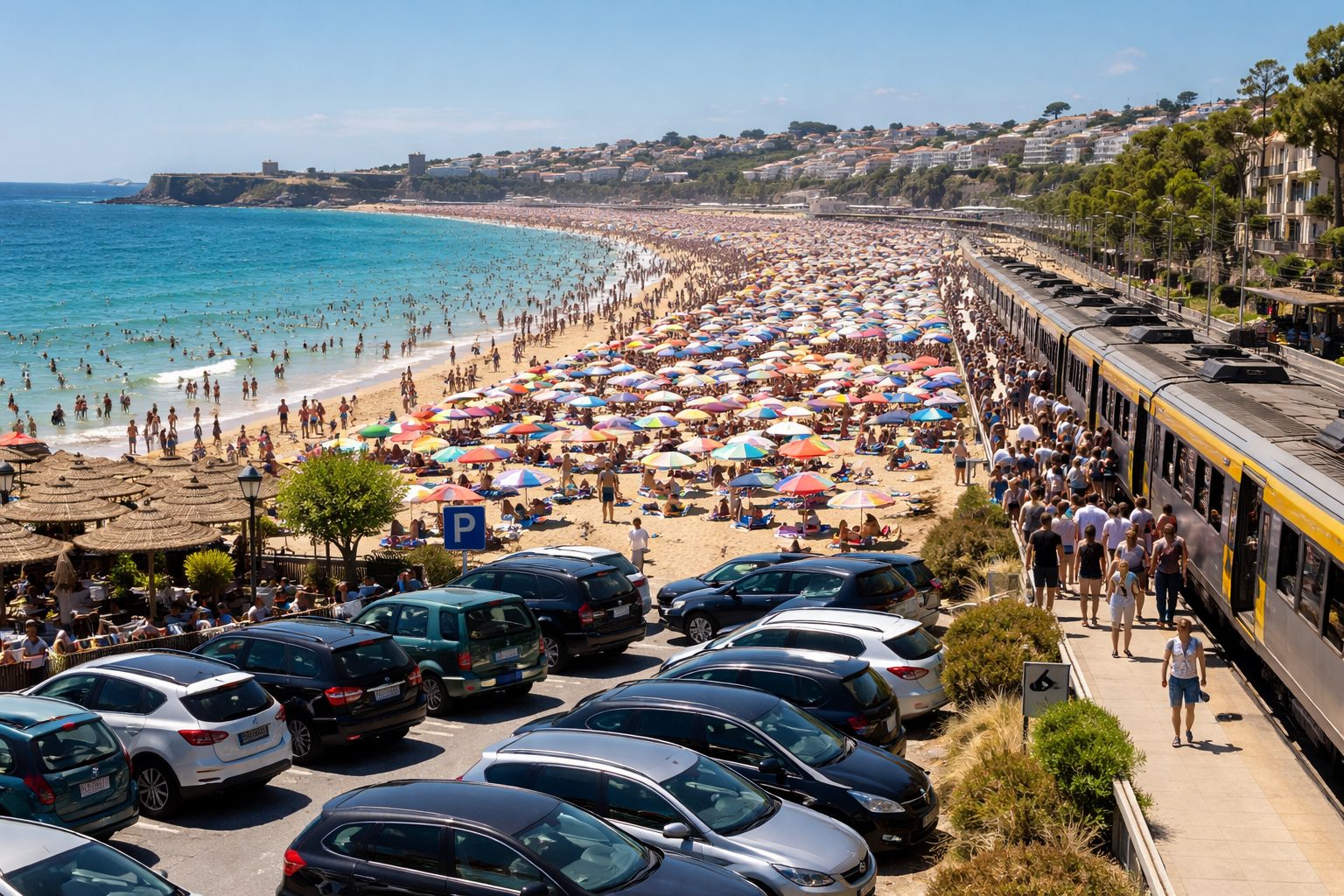
July is busy but slightly less extreme. June is noticeably more manageable. The combination of warm weather, decent sea temperatures, and thinner crowds makes June one of the better months to experience beach lisbon portugal without the August intensity.
National holidays, particularly the June saints festivals around Santo António (June 12-13), bring local crowds to Lisbon’s streets rather than beaches. But summer Saturdays consistently draw large numbers to Carcavelos, so weekday visits are always more comfortable.
Tips for Visiting Beaches in Lisbon
A few practical things that will make your beach day better and avoid the common missteps.
What to Pack for a Day at the Beach
- Sunscreen with high SPF. The Atlantic light is strong and the reflection off the sand amplifies it.
- A reusable water bottle. Hydration matters more than people expect.
- Cash for beach bars and parking, since some spots don’t accept cards.
- A windbreaker or light jacket, especially for Guincho or any evening visit.
- Snacks if you’re heading to a beach without facilities.
- A good book or something offline. Phone signals at Ursa and Adraga can be weak.
- Reef-safe sunscreen if you’re swimming in protected natural park areas.
For the remote beaches like Ursa, add sturdy shoes for the trail, a full water bottle, and tell someone where you’re going. The access paths aren’t formally maintained and can be slippery.
Beach Etiquette in Portugal
Portuguese beach culture is relaxed but there are norms worth knowing. Noise levels are generally kept moderate. People aren’t aggressive about space but expect a reasonable gap between groups. Topless sunbathing is accepted and common at most beaches. Nudism is generally not permitted except at designated nudist areas.
Dogs are not allowed on most main beaches during summer season, typically June through September. Out of season, this rule relaxes considerably. Litter is taken seriously and bins are available at the main beaches. The Portuguese are genuinely proud of their coastline and you should leave the beach as you found it.
Smoking on the beach is technically restricted in many areas but enforcement is inconsistent. Being considerate of people around you is the guiding principle more than strict adherence to signage.
Frequently Asked Questions about Beaches in Lisbon
Are the beaches in Lisbon suitable for swimming?
Yes, the main beaches like Carcavelos and the Cascais town beaches are safe for swimming during summer with lifeguard supervision. Water temperatures are comfortable from July through September. Always check the flag system before entering the water, as conditions change with the Atlantic swell.
What are the best beaches for families?
Carcavelos is the most practical for families due to its full facilities, lifeguard coverage, and easy train access. The Cascais town beaches, particularly Praia da Rainha, have calmer water that’s better suited to young children. Both are within 40 minutes of central Lisbon.
How do I avoid crowds at Lisbon beaches?
Go on weekdays rather than weekends, and arrive before 10am or after 5pm in July and August. Visiting in June or September instead of the peak August period makes a significant difference. Choosing beaches further from the city, like Adraga or São Julião, also means fewer crowds than Carcavelos or the Estoril coast.
Can I rent beach equipment in Lisbon?
Yes. Sunbeds, parasols, and surfboards are available for rent at Carcavelos and the main Cascais beaches. Surf schools at Carcavelos include equipment in their lesson packages. More remote beaches have no rental options, so bring your own gear or plan to rent before you go.
Are there any nudist beaches in Lisbon?
There are designated naturist areas near Lisbon, primarily on the Setubal coast south of the Tagus. Praia de Meco is the most well-known nudist beach in the greater Lisbon region, accessible by car. It’s an official naturist beach and the norms are clearly established there. At standard beaches, nudism is generally not accepted.
The coastline around Lisbon rewards curiosity. Whether you’re chasing perfect surf at Carcavelos, dramatic scenery at Adraga, or simply a few quiet hours in the sun without the crowds of August, beach lisbon portugal offers more range than most visitors expect from a capital city. Pick the beach that matches your pace, go at the right time, and you’ll understand why the Portuguese treat the coast less like a destination and more like a regular part of life.