
Portugal is one of those countries that genuinely rewards exploration. Whether you’re wandering through Lisbon’s hilltop neighborhoods, tracing the Douro Valley by rail, or chasing Atlantic sunsets along the Algarve coast, figuring out how to get around in Portugal is the first real decision every traveler has to make. The good news is that the country has a solid mix of transport options covering every budget and pace. Public trains are fast and affordable on many routes, city metro systems are reliable, and rental cars open up the quieter interior and coastal villages that buses simply don’t reach. I’ve spent a fair amount of time moving around this country, and what strikes me most is how manageable it all is once you understand the basic structure. This guide breaks it down clearly so you can plan your movements with confidence.
Overview of Transportation Options in Portugal
Portugal is small by European standards, which works in your favor. The mainland stretches roughly 550 kilometers from north to south, and most of the popular destinations sit within a few hours of each other by rail or road. Understanding the full range of options before you land makes a real difference to how smoothly your trip runs.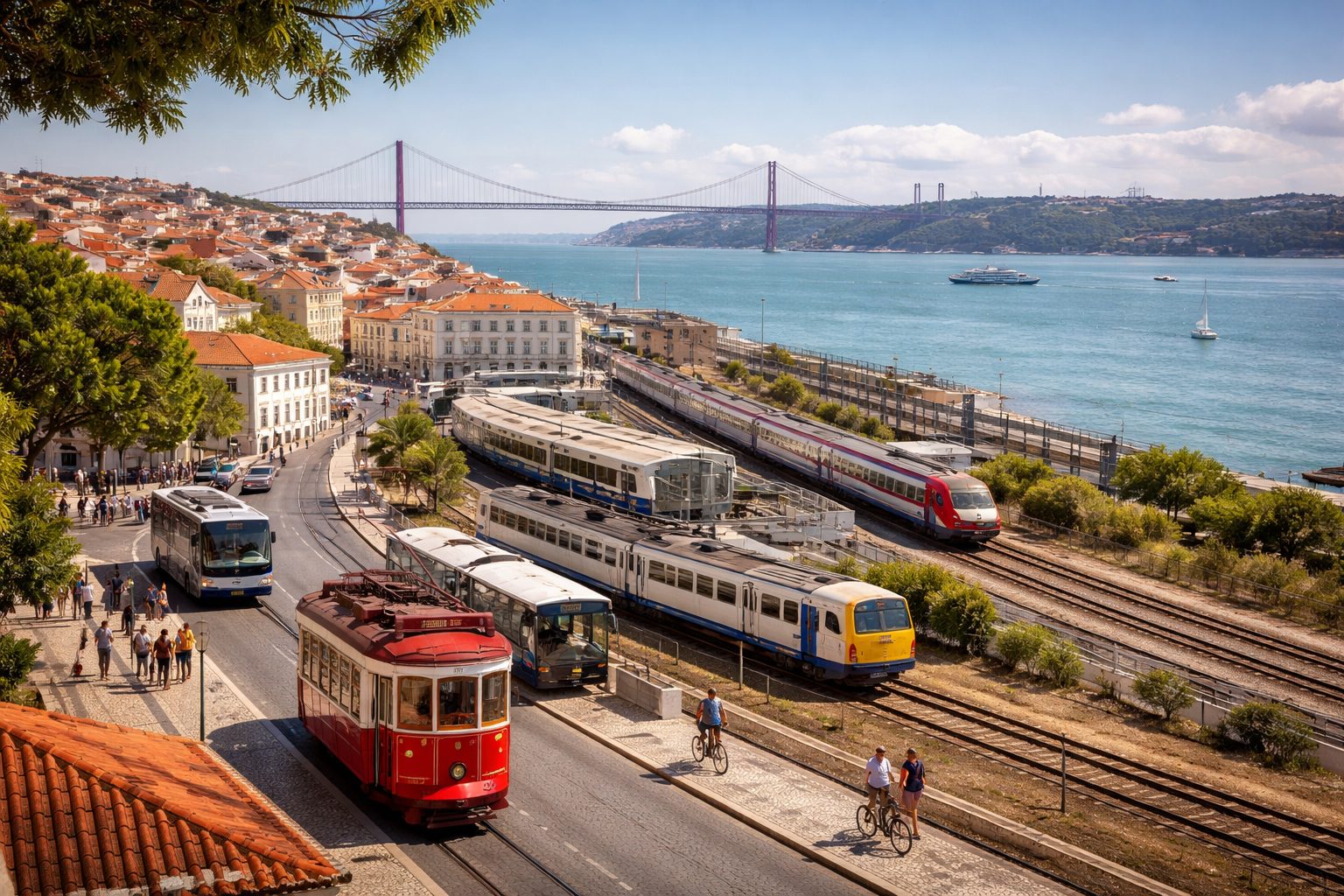
Types of Transportation Available
The main ways to move around Portugal include:
- National and regional trains operated by CP (Comboios de Portugal), connecting major cities and many smaller towns
- Intercity and express coaches, with Rede Expressos being the dominant national bus network
- Urban metro systems in Lisbon and Porto
- Local city buses and trams, particularly prominent in Lisbon
- Taxis and rideshare apps such as Uber and Bolt, available in most urban areas
- Car rentals, available at airports and city centers
- E-bikes and traditional bike rentals in cities and tourist areas
- Ferries, mainly crossing the Tagus in Lisbon and connecting to the Setúbal peninsula
Each option serves a different purpose. Trains work well for intercity travel. Metro lines handle urban movement efficiently. Rental cars give you freedom in rural areas. Taxis and rideshares fill the gaps.
Benefits of Using Public Transport
Public transport in Portugal is genuinely cost-effective. A single metro ride in Lisbon costs around €1.50, and a monthly Viva Viagem card loaded with credit gives you access to metro, bus, tram, and even some suburban train lines under one system. On intercity routes, train tickets are often cheaper than equivalent journeys in France, Germany, or the UK, sometimes by a significant margin.
Beyond cost, using public transport keeps you out of city traffic, eliminates parking stress, and often puts you closer to the real urban experience. Sitting on a tram grinding up a steep Lisbon hill next to locals heading home from work is a different experience entirely from following a GPS in a rental car.
Getting Around Major Cities
Portugal’s three main urban entry points each have distinct transport personalities. Knowing what to expect in each city saves time and frustration.
Lisbon: A Transportation Hub
Lisbon has the most developed urban transport network in the country. The metro runs four lines covering most of the city center and extends out to the airport, Oriente train station, and the western suburbs. It’s clean, well-maintained, and runs from around 6:30am to 1am.
On top of the metro, Carris operates the city’s buses and the famous trams. Bus coverage is extensive, though routes can feel complicated at first. The network map takes a bit of reading. One practical approach is to download the Carris app and plan individual trips rather than trying to memorize the whole system.
Taxis are plentiful and metered, but Uber tends to be more transparent on pricing for tourists. For short hops across the center, walking is often the fastest option given traffic and the city’s compact layout in many areas.
Porto: Navigating the City
Porto’s metro is a light rail system rather than a traditional subway, with six lines. It connects the airport to downtown, reaches the coastal suburb of Matosinhos, and links the city to Gaia across the river. For most tourist movement, the metro covers the key points well.
The city also has a network of trams, though far fewer than Lisbon. Tram line 1 running along the Douro riverfront is worth taking at least once, though it’s slower than other options. Buses fill in the gaps, and Uber works reliably here too.
Porto is also very walkable in its historic center, though the riverside Ribeira district involves a lot of stairs and steep lanes. Good shoes matter.
Faro: Exploring the Algarve Region
Faro is the Algarve’s main city and transport hub. The city itself is small and walkable in its historic center, but the Algarve region stretches east and west along the coast for over 150 kilometers. Getting around the region requires more planning.
Regional trains run along the southern coast connecting Lagos in the west through Faro to Tavira and Vila Real de Santo António in the east. This train line is slow but scenic and cheap. Buses operated by EVA Transportes and Vamus reach towns and villages not served by rail, including much of the western Algarve around Sagres.
For the beaches, car rental is honestly the most practical option. Many of the best spots require a car or a taxi to reach, and services are limited outside peak season. Rideshare apps work in Faro itself but coverage drops off quickly in smaller Algarve towns.
Public Transportation in Portugal
The public transport network covers the country reasonably well, though coverage thins out significantly once you move away from the urban centers and main corridors.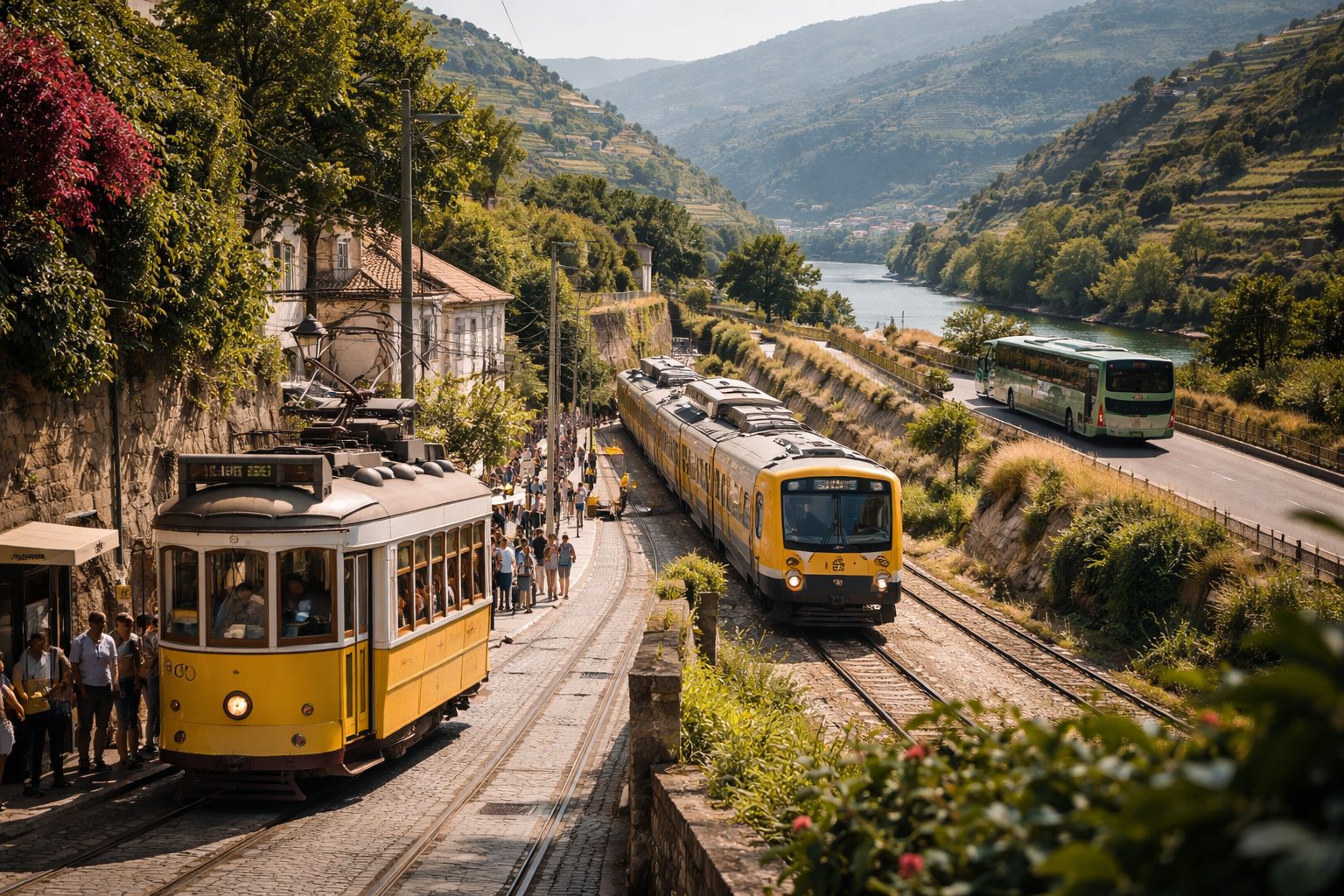
Buses: Local and Intercity Services
Rede Expressos is the main national coach operator, running comfortable air-conditioned buses between Lisbon, Porto, Faro, Coimbra, Évora, and dozens of other cities and towns. Tickets are cheap, often in the range of €10 to €20 for a two to three hour journey, and can be booked online in advance.
For local services within regions, operators like STCP in Porto and Carris in Lisbon handle urban routes, while regional companies serve smaller towns. Quality and frequency vary considerably. On popular routes and in cities, services run frequently throughout the day. In rural areas, you might find two or three buses per day at most.
Intercity coaches are often the best option for destinations not well served by train, particularly in the Alentejo and interior regions where rail coverage is sparse.
Trains: Regional and National Connections
CP operates the national rail network with several service categories:
- Alfa Pendular, the fast intercity service connecting Lisbon to Porto (about 3 hours) and continuing north to Braga and south to Faro
- Intercidades, intercity trains slightly slower than Alfa Pendular, serving a broader range of stops
- Regional, slower trains stopping at smaller stations, good for scenic journeys and reaching smaller towns
- Urbanos, suburban commuter trains operating around Lisbon and Porto
Booking ahead for Alfa Pendular and Intercidades services saves money. Regional trains can usually be bought on the day. The CP website and app both work for booking, though the interface is a little dated. Comboios.pt aggregates schedules from multiple operators and is easier to navigate.
Trams: A Unique Way to Explore
Lisbon’s historic trams are iconic. The famous Tram 28 winds through the Alfama, Graca, and Estrela neighborhoods, covering some of the steepest streets in the city. It’s genuinely useful for getting between neighborhoods, but it’s also a tourist magnet, so expect crowds and watch your belongings.
Porto’s vintage tram line along the Douro riverbank is pleasant but more of a tourist attraction than a practical commuting tool. For day-to-day movement in Porto, the metro and buses are more efficient.
In Lisbon, funiculars (known as elevadores) provide short but steep connections between lower streets and hilltop neighborhoods. The Bica, Glória, and Lavra funiculars are all covered by the Viva Viagem card.
Alternative Transportation Methods
Not every journey fits neatly onto a train or bus schedule, especially when you want to reach quieter places at your own pace. These alternatives fill important gaps.
Car Rentals: Pros and Cons
Renting a car is the single best way to explore rural Portugal, the Alentejo plains, the Douro Valley wine country, and the less-accessible stretches of coastline. It gives you the freedom to stop whenever something looks interesting and stay in small villages that simply aren’t reachable by public transport.
The pros are clear: flexibility, access to remote areas, the ability to carry luggage without thinking about it, and the convenience of your own schedule.
The cons are equally real:
- Parking in Lisbon and Porto is stressful and expensive
- Portuguese city driving involves narrow historic streets, confusing one-ways, and aggressive local traffic habits
- Tolls on motorways add up, and Portugal uses an electronic toll system that requires a pre-registered device or a toll card arranged through the rental company
- Fuel costs apply
- International driver’s licenses are technically required for some non-EU visitors, though enforcement varies
My honest take: rent a car for rural exploration, use public transport in cities. That combination covers Portugal well.
Biking: Bike Rentals and Trails
Cycling has grown significantly as a transport and leisure option in Portuguese cities. Lisbon and Porto both have bike-sharing schemes (Gira in Lisbon, Bicicleta in Porto) offering short-term rentals. Electric bikes are increasingly available through these schemes, which matters in Lisbon given its hills.
Dedicated cycling infrastructure is improving but still patchy in many areas. The waterfront paths along the Tagus in Lisbon and the Douro in Porto are excellent for cycling. Inland trails and the Ecovia do Litoral coastal cycling route in the Algarve appeal to more dedicated cyclists.
For long-distance touring, routes like the EuroVelo 1 Atlantic Coast route pass through Portugal, though significant portions require comfort with road cycling alongside traffic.
Walking Tours: Discovering Portugal on Foot
Portugal’s historic city centers reward walking in ways that no vehicle can match. Lisbon’s Alfama district, Porto’s Ribeira, and Évora’s walled city center are all dense with detail that you’ll miss entirely at speed.
Organized walking tours are widely available in Lisbon and Porto, ranging from free tip-based walks to private guided experiences focusing on specific themes like food, architecture, or history. These are genuinely worthwhile for a first visit, as local guides provide context that turns a pleasant stroll into something more meaningful.
For longer walks, the Camino de Santiago routes pass through northern Portugal, and the Rota Vicentina on the southwest coast offers some of the best coastal walking in Europe.
Tips for Using Public Transportation
Getting the most from Portugal’s public transport system comes down to a few practical habits that make a real difference.
Buying Tickets and Passes
In Lisbon, the Viva Viagem card is the standard fare card. It costs €0.50 to buy and can be loaded with either a set number of trips or credit (zapping). The Navegante card is available for longer stays and covers all transport modes in the Lisbon metropolitan area for a flat monthly fee. For tourists staying more than a few days and moving around the city frequently, the monthly Navegante card often pays for itself quickly.
In Porto, the Andante card works similarly across metro, bus, and tram. Zones determine the price, with Zone 2 covering most tourist areas in the city center.
For intercity trains, book Alfa Pendular and Intercidades tickets in advance through CP’s website or app. Tickets bought well ahead can be significantly cheaper than same-day purchases.
Understanding Schedules and Routes
Public transport in Portugal generally runs reliably to schedule during peak hours in cities. Off-peak and late night services run less frequently, so checking the last service time before you go out at night is worth doing.
Regional buses outside major cities often run only a few times a day, sometimes timed around local school or market schedules rather than tourist convenience. Always check the return journey before committing to a destination by bus.
Google Maps works well for transit navigation in Lisbon and Porto. For trains, the CP app or Comboios.pt gives accurate departure information. For regional buses, local operator websites (often in Portuguese only) may be the most reliable source.
Safety Tips for Travelers
Portuguese public transport is safe by European standards. That said, a few sensible habits apply:
- Keep bags in front of you on crowded trams, particularly Tram 28 in Lisbon, which is a known spot for pickpockets targeting tourists
- Don’t leave bags unattended on bus seats or train overhead racks
- On night buses, stay aware of your surroundings
- Keep your transport card and wallet in a secure inner pocket rather than easily accessible outer pockets
- If you feel uncomfortable on a quiet night bus, moving to the front near the driver is always an option
Portugal doesn’t have a serious crime problem, but tourist-heavy routes attract opportunistic theft in the way that any major European destination does.
Comparing Transportation Costs
Understanding relative costs helps you make decisions that fit your budget without cutting into experiences that matter.
Public Transport vs. Car Rentals
| Option | Typical Cost | Best For |
|---|---|---|
| Metro single ride (Lisbon/Porto) | €1.50 | Short urban hops |
| Daily metro/bus pass (Lisbon) | €6.40 | Full urban exploration days |
| Intercity coach (Lisbon to Porto) | €12 to €20 | Budget intercity travel |
| Alfa Pendular train (Lisbon to Porto) | €25 to €45 | Fast intercity, booked ahead |
| Basic car rental (per day) | €25 to €50+ | Rural and coastal exploration |
| Motorway tolls (Lisbon to Porto) | approx. €20 | Additional driving cost |
Car rental appears affordable per day but toll costs, parking, and fuel add up quickly in cities. For urban-focused itineraries, public transport is almost always cheaper. For rural exploration, the car often becomes cost-competitive when you factor in convenience and time.
Cost of Taxis and Rideshares
Taxis in Portugal use meters and are generally honest. A city-center taxi ride of two to three kilometers typically costs €5 to €8. Airport transfers from Lisbon airport to the city center run €15 to €25 depending on traffic and luggage.
Uber and Bolt are available in Lisbon, Porto, and increasingly in other cities. They’re often slightly cheaper than taxis for standard rides and have the advantage of showing the price before you confirm. For late-night returns from restaurants or bars, rideshares are often the most practical option.
Budget-Friendly Transportation Options
The most cost-effective approach for most travelers combines a Viva Viagem or Andante card in cities with advance-booked intercity trains for long-distance moves.
- Use zapping (loaded credit) for occasional metro and bus trips in cities
- Switch to a day pass if you’re planning more than four rides in a day
- Book Alfa Pendular tickets two to four weeks ahead for the cheapest fares
- Use Rede Expressos coaches for routes where the bus is competitive with train time
- Walk whenever you’re in a compact historic area, which saves money and shows you more
Avoiding car rental in Lisbon and Porto specifically saves the most money. City parking alone can cost €15 to €25 per day in central areas.
Popular Transportation Apps
The right apps turn what could be a confusing transit system into something straightforward to navigate.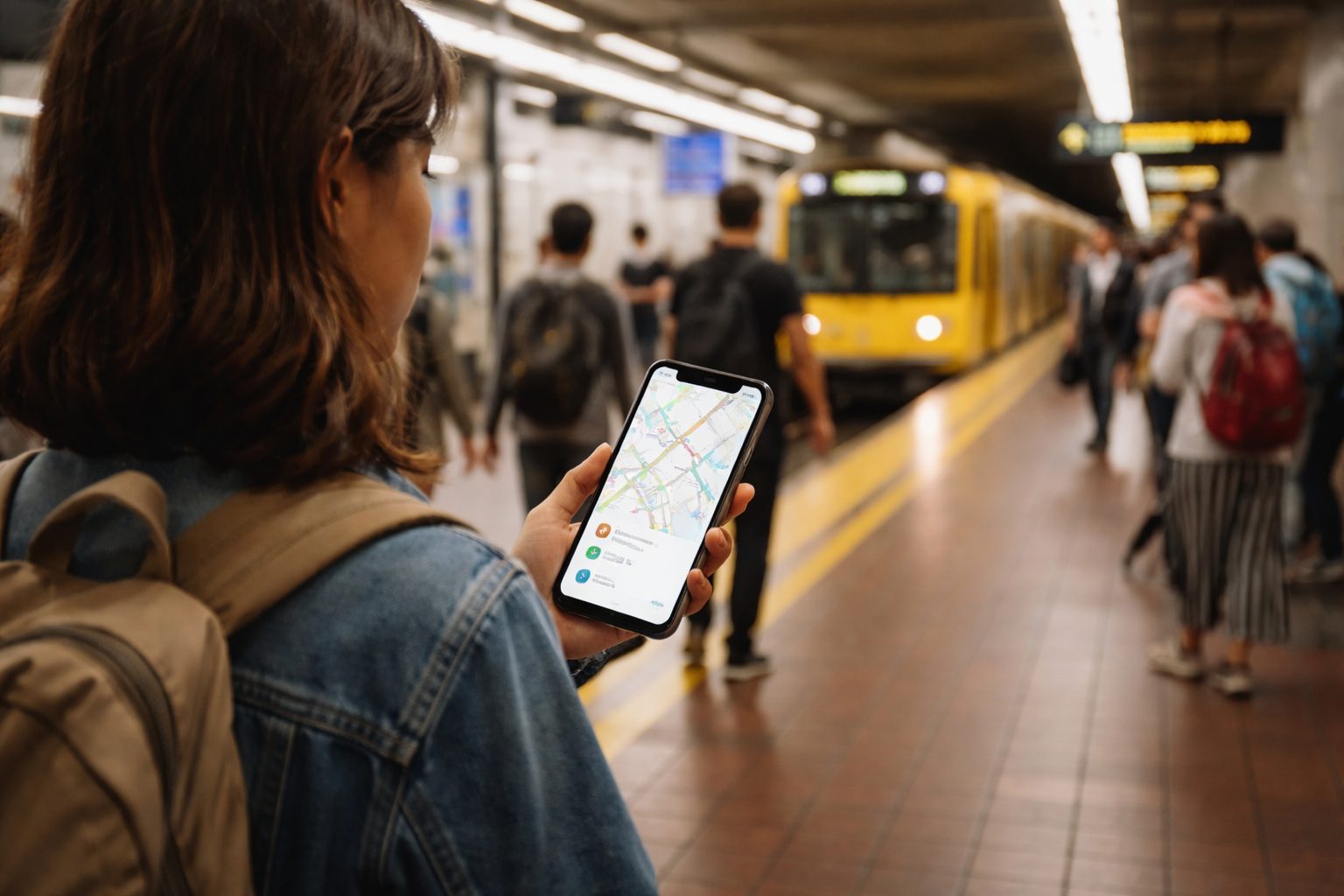
Navigation Apps for Travelers
Google Maps covers transit routing in Lisbon and Porto well. It pulls real-time metro and bus data and gives accurate walking directions through the city. For most urban navigation, it’s the first tool to reach for.
Moovit is a solid alternative with good coverage of local transport networks across Portugal. It sometimes handles regional bus connections better than Google Maps, which can be patchy outside major cities.
For driving, Waze and Google Maps are both reliable. Waze is particularly popular in Portugal and tends to route around traffic effectively on the main highways.
Booking Apps for Public Transport
The CP app handles national train booking and includes schedule information. It’s functional rather than elegant but works for purchasing tickets and managing bookings.
Rede Expressos has its own booking platform accessible via browser, which works better than the app for most users. Booking ahead guarantees a seat on busy routes during holidays and summer weekends.
For Lisbon urban transport, the Carris Metropolitana app covers bus, tram, and ferry routes with real-time departure information. It’s useful for planning specific journeys rather than just consulting maps.
Car Rental Apps Overview
Major international rental platforms like Rentalcars.com, Kayak, and Discover Cars aggregate offers across multiple rental companies and are worth using to compare prices. Booking in advance through these platforms is almost always cheaper than walking up to an airport counter.
Local Portuguese operators sometimes offer competitive rates and tend to be more flexible on small vehicle categories. It’s worth comparing local names like Guerin and Goldcar alongside the international brands.
Always read the insurance terms carefully. Portugal’s roads are generally good, but narrow village streets and coastal car parks invite the minor scrapes that become expensive without proper coverage.
Accessibility in Portugal
Portugal has been improving accessibility infrastructure over the past decade, but the country’s historic urban areas present genuine challenges for travelers with mobility limitations.
Transportation for People with Disabilities
Lisbon’s metro system has elevators at most stations, though coverage is not universal and elevators are sometimes out of service. The CP national rail network includes reserved wheelchair spaces on trains and can arrange assistance with advance notice through their accessibility service. Airport transfers can be arranged with accessible vehicles through specialized transport companies operating at Lisbon and Porto airports.
The national bus network has modern coaches with wheelchair spaces on intercity routes, though older local buses in some regional areas may not have equivalent access.
Accessibility on Public Transport
Within Lisbon, the historic trams and funiculars are largely inaccessible for wheelchair users due to their age and the steep, narrow streets they serve. Low-floor buses cover many of the same routes as compensation. Porto’s metro system is generally more accessible than Lisbon’s older metro stations, with level boarding on most lines.
Taxis and rideshare services can accommodate mobility aids but typically require advance booking for accessible vehicles. Uber Assist provides adapted vehicles in Lisbon and Porto, though availability at peak times can be limited.
Tips for Navigating with Mobility Challenges
- Plan metro routes using Lisbon’s accessibility map, which shows which stations have elevator access
- Book train assistance at least 48 hours in advance through CP’s dedicated service
- In the Algarve, car hire with hand controls can be arranged through specialist suppliers with advance notice
- Many of Portugal’s older pavements in historic areas are uneven cobblestones, which are challenging for wheelchairs and mobility scooters
- Ask accommodation providers for local accessible transport recommendations, as they often have practical knowledge that official resources lack
Portugal is not the most accessible European destination for travelers with significant mobility challenges, but careful planning removes most barriers on popular routes.
Unique Experiences: Scenic Routes
Some journeys in Portugal are destinations in themselves rather than just a means to get somewhere.
Train Journeys with Breathtaking Views
The Douro Valley line from Porto to Pocinho is consistently named among the most beautiful train routes in Europe. Running alongside the terraced vineyards of the Douro River, the journey winds through a landscape that changes with the seasons. The section between Régua and Pinhão is the most celebrated stretch, taking roughly 25 minutes and packing in views that justify the entire trip.
The Tâmega Valley narrow-gauge line no longer operates, but the main north-south corridor offers its own pleasures, particularly through the green hills of the Minho and the approach to Porto from the north with the river appearing below the bridge.
The overnight Santa Apolónia to Faro intercity journey, while slower than flying, crosses through the Alentejo plains during daylight hours in a way that reveals a very different Portugal from the coastline.
Coastal Bus Routes: The Best Scenic Drives
The Algarve coastal routes between Lagos and Sagres pass through some of the most dramatic cliff scenery in western Europe. While not regular tourist bus routes in the traditional sense, scheduled services do connect these towns and the journey itself merits attention.
In the Setúbal Peninsula south of Lisbon, buses and ferries connect the Arrábida coast, where limestone cliffs drop to clear turquoise water. The ferry crossing from Lisbon to Setúbal across the Tagus estuary is a peaceful way to begin a southern coastal exploration.
Along the Silver Coast north of Lisbon, regional buses connect fishing villages that see relatively few tourists, and the coastal road offers consistently interesting scenery.
Historic Trams in Lisbon
Lisbon’s yellow trams are as much a part of the city’s identity as its tiles and fado music. Tram 28 is the most famous route, running from Martim Moniz through the Alfama, passing São Jorge Castle and descending through the Estrela neighborhood to Campo de Ourique. The full journey takes around 40 minutes end to end and crosses some of the city’s most historically layered ground.
Trams 12E and 15E offer other useful routes, and the three funiculars add their own vertical perspective to the city. The Bica funicular in particular drops through a photogenic street so steep that a tram on rails feels entirely logical.
Environmental Considerations
Tourism puts pressure on transport infrastructure in ways that become visible when you think about them.
Sustainable Transportation Options
Portugal has been expanding its electric vehicle infrastructure, and EV rentals are increasingly available at major airports. Charging networks cover the main highways reasonably well, though rural coverage remains patchy.
Urban cycling infrastructure is growing in Lisbon and Porto, with dedicated lanes appearing on more routes each year. The Gira bike-sharing scheme in Lisbon is expanding and now includes a significant proportion of electric bikes, which makes the city’s hills less of a deterrent.
Trains remain the most environmentally favorable option for intercity travel. Portuguese rail runs predominantly on electricity from a grid that draws increasingly from wind and solar sources, making train journeys significantly lower in carbon terms than flying short domestic hops or driving.
The Impact of Tourism on Local Transport
High season puts real strain on popular routes. Tram 28 in Lisbon operates at capacity for much of the day from April through October. The Alfa Pendular between Lisbon and Porto books out on Friday afternoons and Sunday evenings. The Douro Valley train line requires booking weeks ahead during harvest season.
These pressures are not just inconveniences. The concentration of tourists on a handful of iconic routes crowds out local residents using the same transport for everyday needs. Choosing less famous routes, traveling off-peak where possible, and using transport options that disperse visitors more evenly across the network helps reduce the pressure.
Eco-Friendly Travel Tips
- Take the train between Lisbon and Porto rather than flying or driving
- Use metro and buses within cities rather than defaulting to taxis or rideshares
- Book an electric rental car if your itinerary requires a car
- Consider staying longer in fewer places rather than racing between destinations, which reduces overall transport use
- Walk more. Portugal’s historic centers genuinely reward it, and it generates zero environmental impact
Small choices compound when millions of tourists make them. The sustainable options in Portugal are also often the cheapest and most enjoyable, which is a useful alignment.
Frequently Asked Questions
What is the best way to get around Portugal?
The best approach combines intercity trains for major routes between Lisbon, Porto, and Faro, metro and bus for city movement, and a rental car for rural and coastal areas where public transport is sparse. No single option works for every situation, but this combination covers most itineraries well.
Are there travel passes for tourists?
The Lisboa Card offers unlimited metro, bus, tram, and suburban train travel in Lisbon along with free or discounted museum entry. It’s available for 24, 48, or 72 hours and pays off quickly if you’re doing several museum visits. Porto has a similar Porto Card. For national rail, CP offers tourist passes but they’re less widely promoted and worth checking for longer itineraries heavy on train travel.
How safe is public transportation in Portugal?
Portugal’s public transport is safe and comfortable by European standards. Petty theft on crowded tourist trams is the main risk, particularly on Tram 28 in Lisbon. Standard precautions like keeping bags closed and in front of you handle this effectively. The metro, trains, and buses are clean, well-maintained, and run by reliable operators.
Understanding how to get around in Portugal ultimately comes down to mixing the options that fit your specific itinerary rather than committing to a single approach. The country is compact enough that long journeys are rarely necessary, and the transport network, while not perfect everywhere, covers the ground that most visitors want to cover. Plan ahead on busy intercity routes, get a transport card in whichever city you’re based in, and don’t underestimate how much ground you can cover on foot.