
If you’ve been looking for a place in Europe where your money actually goes far, you’ve found it. Traveling portugal on a budget is not just possible, it’s genuinely enjoyable. Portugal manages to offer world-class food, stunning coastlines, medieval architecture, and a relaxed pace of life at prices that would feel embarrassingly cheap in Paris or Amsterdam. I’ve spent real time traveling this country on tight budgets and comfortable ones, and the honest truth is the cheaper trips were often more memorable. Local markets, small family restaurants, and off-the-beaten-path villages tend to deliver the most authentic experiences anyway.
This guide covers everything you need to know to plan a smart, affordable trip: where to go, where to stay, what to eat, and how to get around without bleeding cash at every step.
Best Times to Visit Portugal for Budget Travelers
Timing matters a lot when you’re watching your spending. Portugal has a clear high season from June through August, especially along the Algarve coast. Prices for accommodation can double or even triple during that window, and popular sites get crowded enough to make them less enjoyable.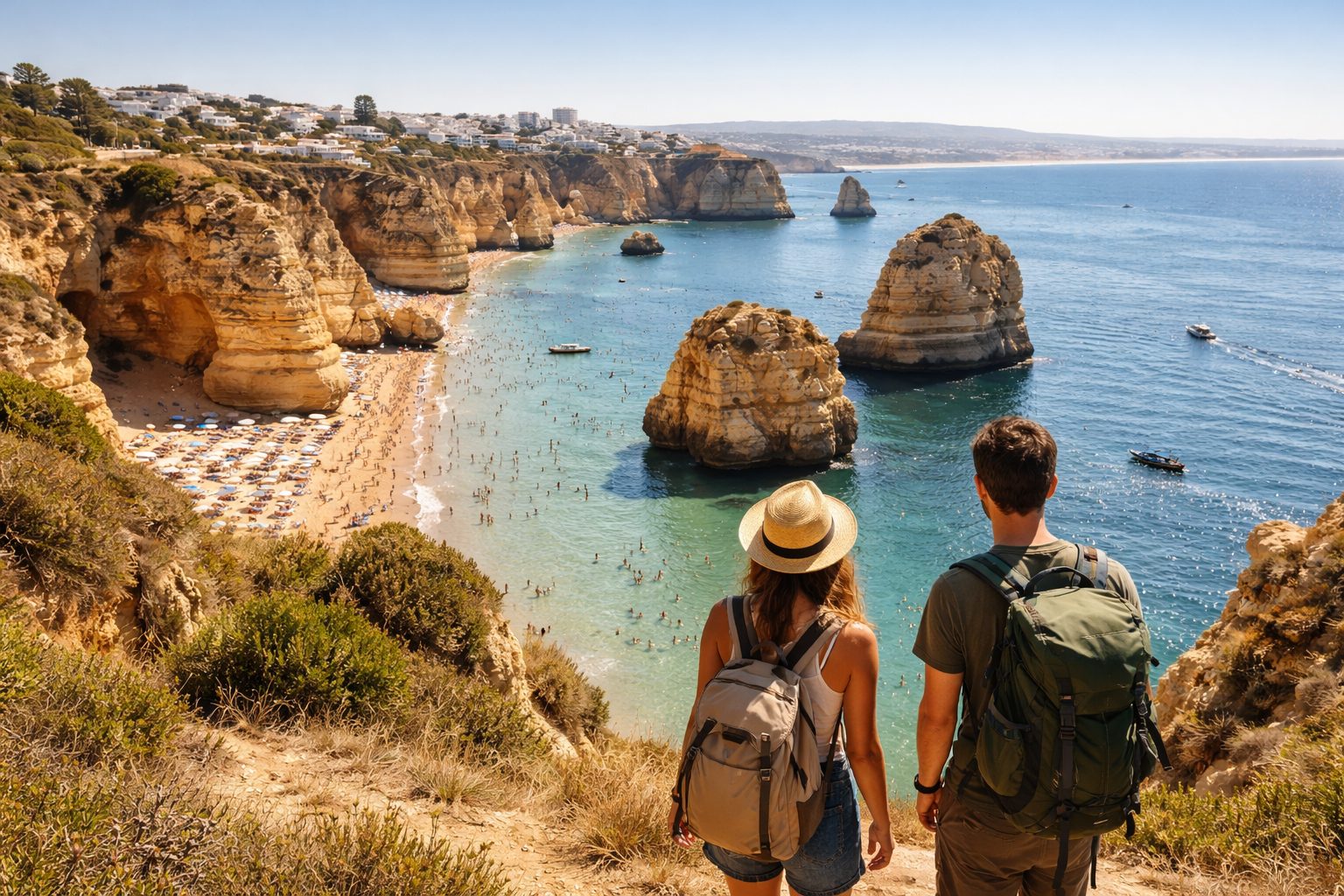
The sweet spots for budget travelers are:
- Shoulder season (April, May, September, October): Mild weather, fewer tourists, and noticeably lower prices across accommodation and activities.
- Low season (November through March): Cheap flights, nearly empty beaches, and serious deals on hotels. Some coastal areas feel quieter, but Lisbon and Porto stay lively year-round.
- Midweek travel: Flights and hostels are consistently cheaper Tuesday through Thursday compared to weekend arrivals.
Spring is my personal favorite. The countryside turns green, almond trees bloom in the Alentejo, and you can walk around Sintra without fighting through tour groups.
Affordable Destinations in Portugal
Not every city in Portugal hits the wallet equally. Some areas cater heavily to tourists and price accordingly. Others remain genuinely local and affordable.
Lisbon on a Budget
Lisbon has gotten more expensive over the past decade, but it’s still manageable if you’re strategic. The city’s historic neighborhoods like Mouraria, Intendente, and Mouraria still have cheap tascas serving lunch menus for 7 to 10 euros including a drink. The famous trams are charming but overpriced and crowded. Walking is almost always faster and free.
A few practical moves for keeping costs low in Lisbon:
- Get a rechargeable Viva Viagem card for buses and the metro instead of buying single tickets.
- The Belem district is walkable from the city center if you’re fit and the weather cooperates.
- Many national museums offer free entry on Sunday mornings.
- Miradouros (viewpoints) like São Pedro de Alcântara and Santa Catarina cost nothing and are genuinely beautiful.
Accommodation in Lisbon can be expensive in prime neighborhoods. Stay in Mouraria, Anjos, or even across the river in Almada if you want cheaper options without sacrificing access.
Porto on a Budget
Porto remains slightly more affordable than Lisbon, and in my experience it’s easier to navigate on foot. The city is compact, hilly, and full of atmospheric streets that reward slow exploration.
Budget tips for Porto:
- The famous Port wine cellars in Vila Nova de Gaia often have free or cheap self-guided tours with a tasting included.
- Francesinha sandwiches are a local specialty and filling enough to count as a full meal. Prices range from 8 to 12 euros.
- The Bolhão market area has cheap coffee and pastries at prices locals actually pay.
- Metro access connects the airport to the city center for around 2 euros, avoiding expensive taxis.
Porto’s hostel scene is strong and well-priced. You can find well-reviewed dorm beds for 15 to 20 euros a night.
Algarve on a Budget
The Algarve is Portugal’s most tourist-heavy region, and prices reflect that, especially in July and August. But it’s not impossible to visit on a tight budget if you plan carefully.
- Travel in May, June (early), or September for significantly lower accommodation rates.
- Smaller towns like Tavira, Olhão, and Lagos offer cheaper options than the main resort areas.
- Many of the region’s best beaches are a short bus ride from town centers, making a car less necessary.
- Self-catering accommodation can dramatically cut food costs since markets in the Algarve are well-stocked and inexpensive.
The dramatic rock formations and sea caves near Lagos and Ponta da Piedade are free to explore on foot. You don’t need a boat tour to appreciate the landscape.
Coimbra and Évora on a Budget
These two cities are serious budget gems and often overlooked by travelers rushing between Lisbon and Porto.
Coimbra is a university city with a vibrant local atmosphere. Prices for food and accommodation are noticeably lower than in the major tourist cities, and the old town is compact and walkable. The university complex is one of the most impressive in Europe and worth the modest entrance fee.
Évora in the Alentejo region offers Roman ruins, a medieval cathedral, and one of Portugal’s stranger attractions in the Chapel of Bones, all at very reasonable costs. The surrounding region is excellent for wine and local food. Guesthouses here are often family-run and genuinely affordable.
Budget Accommodation Options
Accommodation is typically the biggest expense in any trip. Portugal gives you real options at every price point.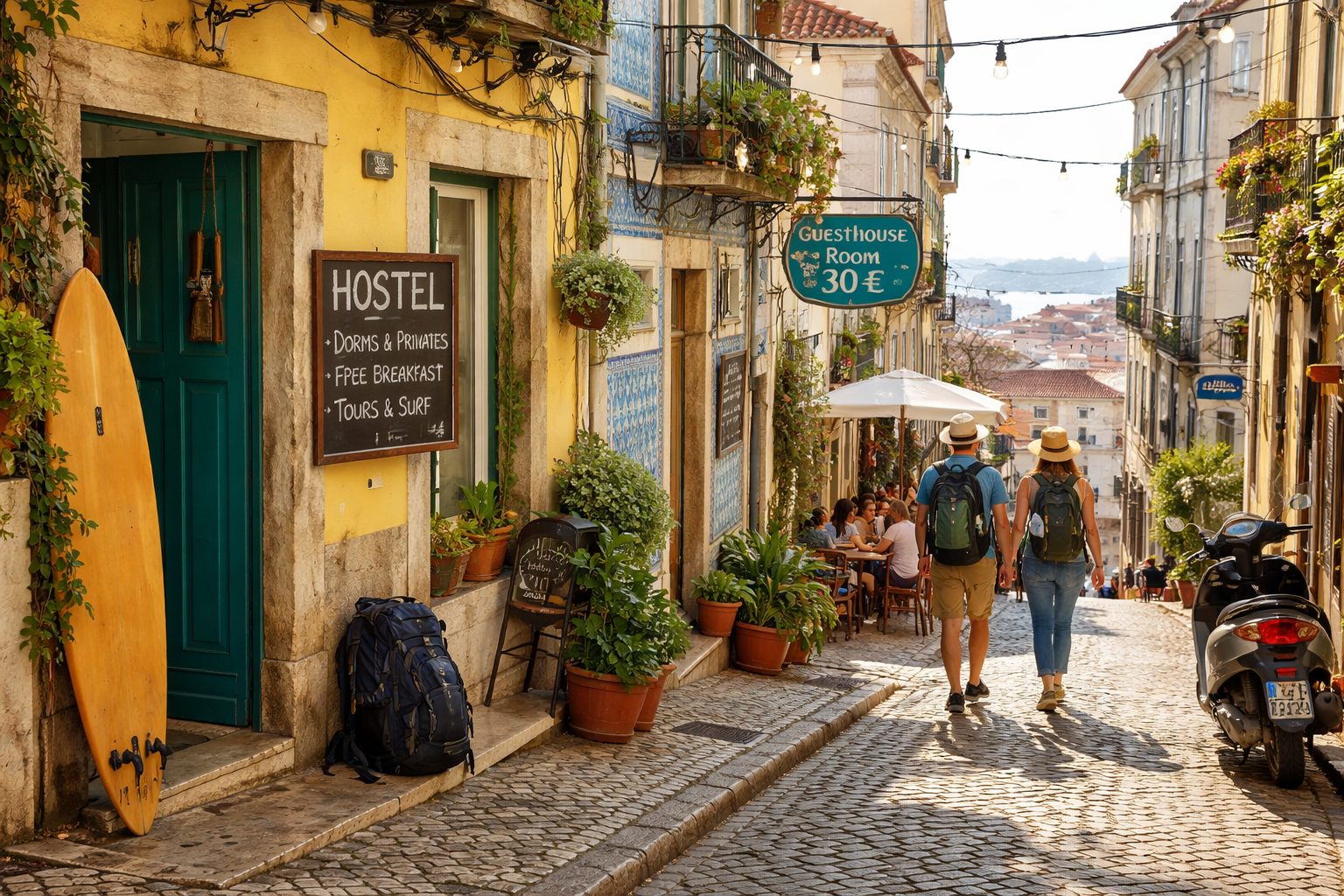
Hostels and Guesthouses
Portugal has an outstanding hostel culture. Lisbon in particular has some of the most-awarded hostels in Europe, and the quality-to-price ratio is hard to beat. Expect to pay:
- 15 to 25 euros per night for a dorm bed in Lisbon or Porto
- 10 to 18 euros in smaller cities like Coimbra or Évora
- Prices go up in summer, especially in coastal areas
Many hostels offer free breakfast, social events, and city tours, which adds real value. Guesthouses (often called pensões or residenciais) are another good option, usually offering private rooms for 35 to 60 euros per night depending on location and season.
Budget Hotels
Mid-range hotel chains like Ibis operate across Portugal and can be found for 50 to 80 euros per night in most cities. Booking directly with smaller locally-owned hotels sometimes gets you a better rate than through major booking platforms, especially if you call ahead or email.
It’s worth checking prices on multiple platforms. Deals can vary significantly between sites for the same property.
Alternative Accommodation (Airbnb, Camping)
Apartments through Airbnb or similar platforms can work out cheaper than hotels if you’re traveling with a group or staying somewhere for a week or more. Self-catering saves money on food and gives you more flexibility.
Camping is a legitimate option, particularly in the Alentejo and Algarve. Portugal has a decent network of official campsites with reasonable facilities. Prices range from 5 to 15 euros per person per night. Wild camping is technically regulated, but well-organized free camping areas exist in some rural regions.
Transportation Tips for Budget Travelers
Getting around Portugal doesn’t have to be expensive, but it does require some planning.
Public Transport in Cities
Both Lisbon and Porto have functional, affordable metro and bus systems. The Viva Viagem card in Lisbon and the Andante card in Porto are reusable contactless cards that give you access to all public transport modes. Single rides on the metro cost around 1.50 euros. Day passes are available if you’re planning a lot of travel.
Lisbon’s historic trams are famous but slow, crowded, and more tourist attraction than practical transport. For getting around efficiently, buses and the metro are faster and cheaper.
Budget Airlines and Trains
For getting to Portugal from elsewhere in Europe, budget carriers like Ryanair, EasyJet, and Vueling serve multiple Portuguese airports including Lisbon, Porto, and Faro. Book in advance and avoid checked bags to keep costs minimal.
Within Portugal, the train network run by CP (Comboios de Portugal) connects major cities. The Lisbon to Porto journey takes around three hours by Alfa Pendular (express) and costs around 25 to 40 euros. Slower regional trains are cheaper. Booking ahead gets you lower fares.
Intercity buses through Rede Expressos are another affordable option, often with more coverage to smaller towns than the rail network provides.
Car Rentals and Ridesharing
Renting a car opens up rural areas, particularly in the Alentejo, Douro Valley, and the interior of the Algarve. Prices vary seasonally but you can find reasonable deals in the off-season, especially if you book through comparison sites and avoid airport pickup fees.
Fuel in Portugal sits around the European average. Toll roads are common and can add up. The A1 motorway between Lisbon and Porto has electronic tolls that charge even rental car drivers.
For shorter city-to-city trips, apps like BlaBlaCar operate in Portugal and offer a cheap way to share rides with locals.
Cheap Eats and Dining in Portugal
Food is one of the great pleasures of traveling portugal on a budget. The quality is high and the prices are genuinely low compared to most of Western Europe.
Traditional Portuguese Cuisine on a Budget
The lunch menu (menu do dia or prato do dia) is your best friend. Served at most traditional restaurants from noon to 3pm, it typically includes a starter or soup, a main course, a dessert or coffee, and a drink. All for between 7 and 12 euros. That’s a full, hot, home-cooked-style meal at a price that feels almost too good.
Classic dishes to look out for:
- Bacalhau (salt cod) prepared any of dozens of ways
- Caldo verde, a simple kale and potato soup
- Frango no churrasco, grilled chicken with piri piri
- Bifanas, pork sandwiches sold at counters and cafés
- Pastéis de nata, custard tarts that cost around 1 euro each
Avoid restaurants around major tourist attractions. Even a block or two away, prices drop and quality often improves.
Street Food and Local Markets
Markets are excellent for fresh, cheap food. The Mercado da Ribeira in Lisbon and the Bolhão market in Porto are the most famous, but smaller municipal markets in regional towns are often more affordable and just as good.
Street food options include:
- Grilled sardines, especially during summer festivals in Lisbon
- Tosta mista, a simple ham and cheese toasted sandwich, usually under 2 euros at a local café
- Prego rolls, beef in a bread roll
- Queijadas and other regional pastries
Grab a cheap espresso (uma bica) at a local café for around 0.70 to 0.90 euros rather than ordering at tourist-facing spots where it can cost twice that.
Affordable Restaurants and Cafés
Look for restaurants with handwritten menus on a board outside rather than laminated tourist menus with photos. Cervejarias (beer halls) often serve excellent seafood at reasonable prices. Tabernas and tascas are the quintessential local eateries and usually your best bet for honest cooking at honest prices.
Self-catering a few meals per week makes a meaningful difference if you’re on a strict budget. Portuguese supermarkets like Pingo Doce and Continente are well-stocked and reasonably priced.
Free and Low-Cost Activities in Portugal
A lot of what makes Portugal worth visiting costs little or nothing at all.
Exploring Nature and Beaches
Portugal’s coastline is extensive and the beaches are largely free to access. From the dramatic cliffs of the Algarve to the wild surf beaches of Sagres and Ericeira, to the quieter coves in the north near Viana do Castelo, there’s enormous variety at no cost.
Natural parks offer free hiking:
- Parque Natural da Arrábida near Setúbal has some of the clearest water in the country
- Peneda-Gerês in the north is Portugal’s only national park, excellent for hiking
- Serra da Estrela is worth visiting in winter for snow and in summer for mountain trails
Cultural and Historical Sites
Many of Portugal’s best sites have low or free admission:
- National museums in Lisbon and Porto offer free entry on Sunday mornings
- Castles in smaller towns often charge under 5 euros or nothing at all
- The Jerónimos Monastery in Lisbon offers free entry to the church, with a fee only for the cloisters
- Fado music can sometimes be heard for free at cultural events or at less touristy venues
Sintra is worth the day trip from Lisbon, though entrance fees for all the palaces add up. Pick one or two highlights rather than trying to do everything.
Free Walking Tours
Tip-based free walking tours operate in Lisbon, Porto, Faro, and several other cities. The quality varies but is often quite good. Guides are typically well-informed locals or expats who know the city well. Pay what you think the tour was worth. These tours are a great way to orient yourself in a new city and pick up local recommendations that you won’t find in a guidebook.
Money-Saving Tips for Travelers
Budgeting Your Trip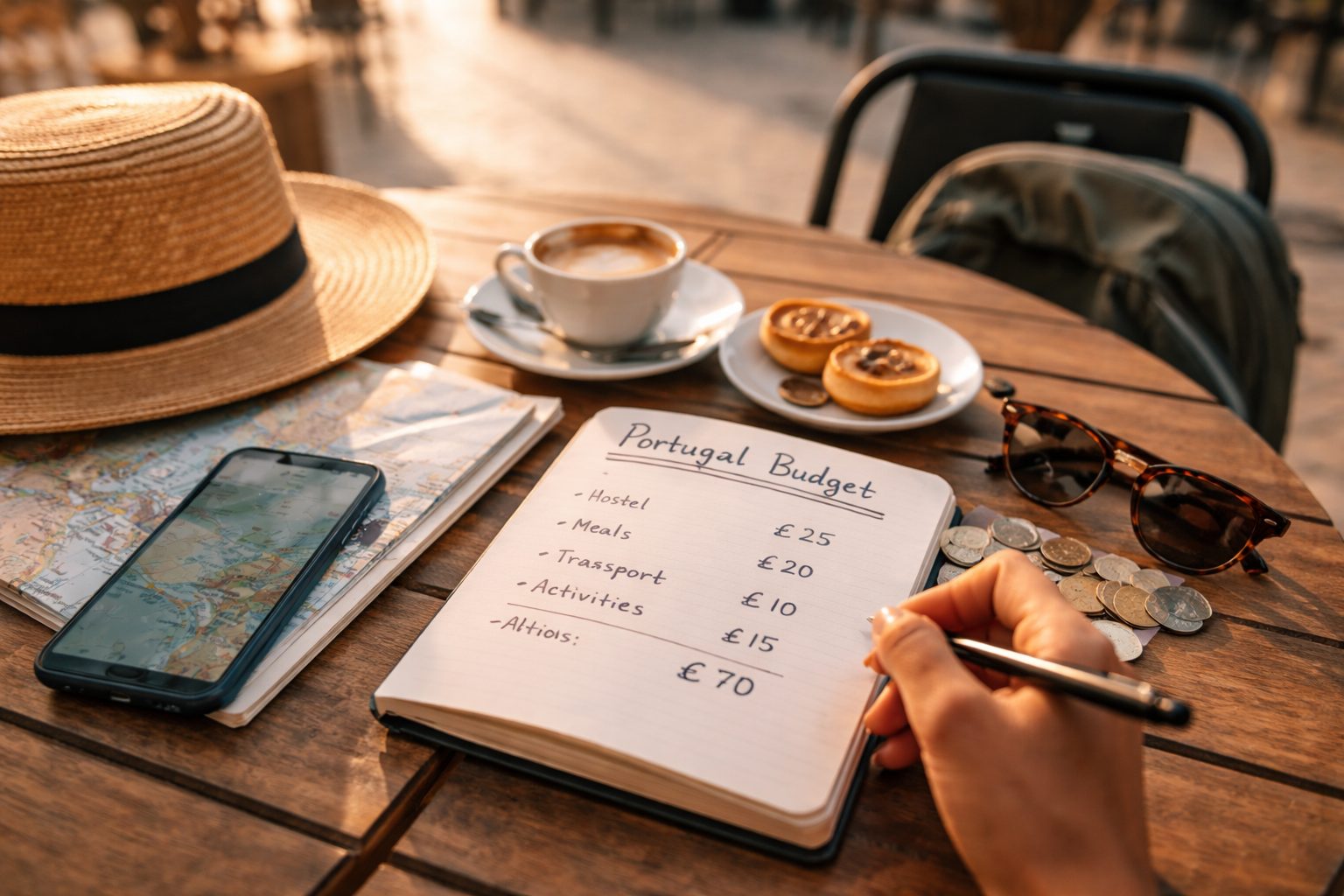
A realistic daily budget for portugal on a budget travel looks something like this:
| Category | Budget traveler | Mid-range |
|---|---|---|
| Accommodation | 15-25 EUR (hostel) | 50-80 EUR (hotel) |
| Food | 15-25 EUR | 35-55 EUR |
| Transport | 5-10 EUR | 10-20 EUR |
| Activities | 0-10 EUR | 15-30 EUR |
| Total per day | 35-70 EUR | 110-185 EUR |
These are rough estimates and will vary by city, season, and travel style. Lisbon and Porto are more expensive than smaller cities. The Algarve in summer is the priciest region.
Discounts and Tourist Passes
Some passes are genuinely good value, others less so:
- Lisboa Card: includes free entry to many museums and unlimited public transport. Worth it if you plan to visit several paid sites in a short time.
- Porto Card: similar structure, good value for museum-heavy days.
- Rail passes for Portugal specifically can work out if you’re doing multiple long-distance journeys, but individual ticket purchases are often cheaper for shorter trips.
Student discounts are available at many sites. Always carry your student card or ISIC card if you’re eligible. Senior discounts (over 65) are also common.
Avoiding Tourist Traps
A few things worth knowing:
- The Alfama area in Lisbon has some excellent spots but also plenty of overpriced restaurants targeting tourists. Look for packed local tables, not English menus in big fonts.
- Avoid exchanging currency at airport booths or hotel desks. Use a fee-free card or an ATM from a major bank.
- Avoid accepting menus in English pushed on you at the door of a restaurant near major sights. Walk a few streets away.
- Don’t pay for bottled water at sit-down restaurants if you’re budget-conscious. Ask for tap water (água da torneira), which is safe to drink throughout Portugal.
Comparing Costs: Portugal vs. Other European Destinations
One of the strongest arguments for choosing Portugal is how it stacks up against comparable destinations. Here’s a practical comparison:
| Destination | Avg. hostel dorm (EUR) | Budget meal (EUR) | Espresso (EUR) | Daily budget (EUR) |
|---|---|---|---|---|
| Portugal | 18-22 | 8-12 | 0.70-0.90 | 40-65 |
| Spain | 20-28 | 10-15 | 1.20-1.50 | 50-80 |
| Italy | 25-35 | 12-18 | 1.00-1.30 | 60-95 |
| France | 30-45 | 14-20 | 2.00-3.00 | 75-120 |
| Germany | 28-40 | 10-15 | 2.50-3.50 | 65-100 |
Portugal consistently comes out as one of the most affordable Western European destinations. And unlike some budget destinations, the infrastructure is solid, the food quality is high, and the country is safe and easy to navigate.
Practical Travel Tips for Budget Travelers
Packing Wisely
Packing light saves money directly. Budget airlines charge for checked bags, sometimes more than the ticket itself. A carry-on size bag that fits the Ryanair or EasyJet dimensions will save you 20 to 50 euros each way.
Portugal’s weather is generally mild but variable. Pack in layers rather than heavy items. A light waterproof jacket handles most situations. Good walking shoes matter more here than anywhere. Lisbon and Porto are famously hilly and the cobblestone streets are rough on inadequate footwear.
Staying Connected (Wi-Fi and SIM Cards)
Free Wi-Fi is common in cafés, hostels, and public spaces. If you need reliable data, buying a local SIM card is the cheapest solution. NOS, MEO, and Vodafone all offer prepaid SIM cards that can be purchased at airport kiosks, phone shops, or supermarkets. A basic data plan starts at around 10 to 15 euros for a month of reasonable coverage.
Using your home country SIM with a European roaming plan works if you’re from an EU country. Otherwise, a local SIM is almost always cheaper.
Language Tips for Budget Travelers
Portuguese is the official language and locals appreciate any effort to speak it. English is widely spoken in cities, tourist areas, and most accommodation. In rural areas and among older residents, English is less common.
A few useful phrases go a long way:
- “Obrigado” (thank you, masculine) / “Obrigada” (feminine)
- “Por favor” (please)
- “Quanto custa?” (how much does it cost?)
- “Tem um menu do dia?” (do you have a set lunch menu?)
Speaking even a few words of Portuguese often results in warmer service and sometimes better prices at local spots.
Frequently Asked Questions About Traveling to Portugal on a Budget
How much should I budget for a trip to Portugal?
For a genuine budget trip, plan on 40 to 60 euros per day covering accommodation, food, transport, and a few paid activities. Staying in hostels, eating lunch menus, and using public transport keeps costs at the lower end. Cities like Évora and Coimbra cost less than Lisbon or the Algarve in high season.
Is Portugal an affordable destination compared to other European countries?
Yes, consistently. Portugal ranks among the most affordable destinations in Western Europe across nearly every category from food and accommodation to entry fees and transport. It’s cheaper than Spain, significantly cheaper than France or Italy, and offers comparable or better quality in many areas.
What are the best budget-friendly activities in Portugal?
The beaches are free and some of the finest in Europe. Hiking in Peneda-Gerês or Arrábida costs nothing. Free walking tours run in major cities. National museum entry is free on Sunday mornings. Miradouros, historical town centers, and local festivals are all free to enjoy.
How can I save money on food in Portugal?
Order the menu do dia at lunch, your biggest meal of the day, for 7 to 12 euros. Eat at local tascas and tabernas rather than restaurants near tourist sights. Shop at municipal markets and supermarkets. Drink coffee standing at the bar rather than sitting at a table, which sometimes costs more. And avoid bottled water by drinking tap, which is safe across the country.
Portugal rewards travelers who want real experiences over packaged tourism. The country’s character comes through most clearly in its everyday rhythms: the morning coffee counter, the market stall, the afternoon lunch crowd at a neighborhood restaurant. Going portugal on a budget isn’t a compromise. Often it’s the best way to actually experience the place.