Portugal doesn’t get enough credit as a hiking destination. Most people think of Lisbon’s pastéis de nata or Porto’s wine cellars, and while those are worth the trip on their own, the country’s trail network is genuinely world-class. I’ve spent time on paths from the Algarve coast up to the northern mountains, and I keep coming back. Hiking in Portugal offers a rare combination of dramatic scenery, mild climate, rich history, and trails that suit everyone from first-time walkers to seasoned trekkers looking for serious elevation.
Introduction to Hiking in Portugal
Overview of Portugal’s Hiking Landscape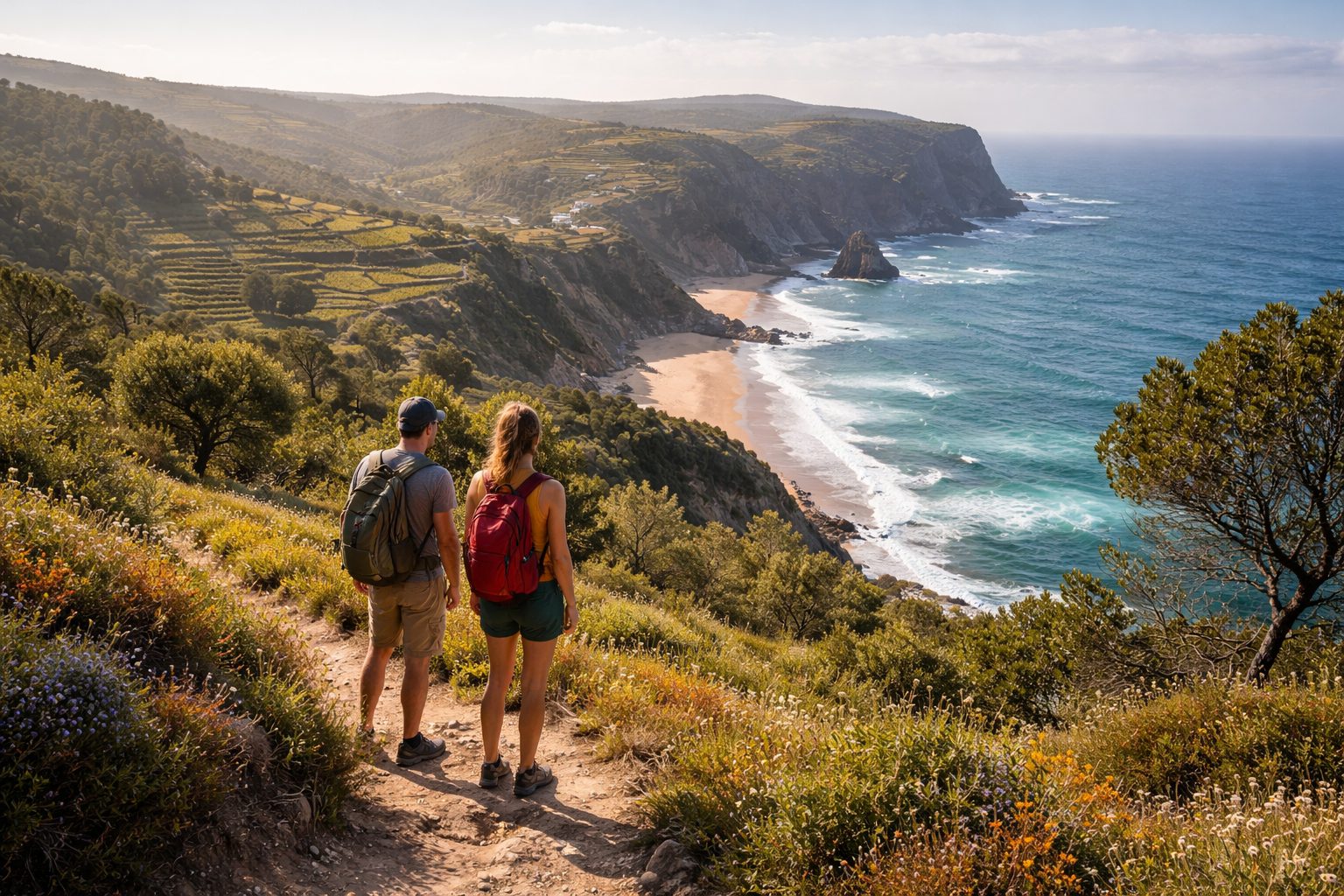
Portugal is smaller than most people expect, but it packs an extraordinary variety of landscapes into that compact territory. You’ve got rugged Atlantic coastline, ancient cork oak forests, terraced vineyards dropping into river valleys, volcanic island ridgelines, and the highest mountain range on the Iberian Peninsula. The trail infrastructure has improved considerably over the past decade, with well-marked routes, regularly updated signage, and a growing network of trail apps and printed guides.
What strikes me most about hiking in Portugal is how uncrowded the trails feel compared to similarly beautiful destinations in France or Spain. Even on popular routes, you can often walk for hours without seeing more than a handful of other people. That solitude is increasingly rare in Europe.
Best Time to Hike in Portugal
Timing matters here more than in some other destinations. Portugal’s climate varies significantly by region, and getting the season right makes a real difference.
- Spring (March to May) is the best overall window for most of mainland Portugal. Wildflowers are everywhere, temperatures are comfortable, and the landscape is green after winter rains.
- Autumn (September to November) is nearly as good, with more stable weather and fewer tourists.
- Summer works well in the north and at altitude, but the Algarve and Alentejo can be brutally hot, with temperatures regularly exceeding 40°C.
- Winter is mild in the south and along the coast, making it viable for low-elevation walks. The north gets cold and wet, but Madeira is a year-round option.
For Madeira specifically, the climate is consistent enough that any month works reasonably well, though spring brings the most dramatic floral displays.
Popular Regions for Hiking
Five regions stand out as the main draws for walkers and trekkers:
- The Algarve coast and Vicentine Coast in the southwest
- The Douro Valley in the northeast
- Peneda-Gerês in the far north
- Serra da Estrela in the central interior
- Madeira Island in the Atlantic
Each offers a completely different experience. The coastal routes are dramatic and accessible. The mountain areas demand more fitness and planning but reward you with genuine wilderness. The island trails exist in a category of their own.
Top Hiking Trails in Portugal
Rota Vicentina
The Rota Vicentina is probably the trail that put hiking in Portugal on the international map. It runs roughly 450 kilometers along the southwest coast, split into two main paths: the Fishermen’s Trail (Trilho dos Pescadores) hugging the clifftops and beaches, and the Historical Way (Caminho Histórico) cutting inland through cork oak forests and small villages.
The Fishermen’s Trail is the more dramatic option. You’re walking along some of the wildest Atlantic coastline in Europe, with the ocean crashing against red and ochre cliffs below you. The path isn’t technical, but it can be sandy and slow-going in places. Most people do it in sections over multiple days rather than attempting the full route end to end.
The Historical Way suits people who want more of a cultural experience alongside the scenery. You pass through rural Alentejo villages where not much has changed in decades, and you start to understand why Portugal’s interior feels like a different country from the tourist-heavy coast.
Douro Valley Trails
The Douro Valley is UNESCO-listed wine country, and hiking through it feels like walking through a painting. The terraced vineyards climb impossibly steep hillsides above the deep green river. Trail options range from short walks between quintas to multi-day routes that follow the river for dozens of kilometers.
I’d recommend spending at least three days here if you can. The light in the late afternoon is unlike anywhere else I’ve been in Europe. The trails themselves aren’t particularly challenging by mountain standards, but the heat in summer can be punishing. Go in October during harvest season if you want to combine walking with wine tourism.
Peneda-Gerês National Park
Peneda-Gerês is Portugal’s only national park, and it’s worth the trek to get there. The park sits in the far northwest corner of the country, bordering Spain’s Galicia region, and it has a distinctly Celtic feel: granite villages, ancient stone roads, wolves (rarely seen but present), and weather that can change fast.
The park has an excellent network of marked trails. The Trilho de Tourém and the routes around the Gerês mountains offer real challenge and genuine remoteness. You’ll find Celtic castros (hilltop settlements), Roman roads, and medieval granaries called espigueiros along the way. It’s one of the few places in Portugal where you genuinely feel far from civilization.
Pack for rain regardless of what the forecast says. The park sits in one of the wettest parts of the Iberian Peninsula.
Serra da Estrela
Serra da Estrela is mainland Portugal’s highest mountain range, topping out at Torre at 1,993 meters. It’s not as dramatic as the Pyrenees or the Alps, but it has a stark, open beauty that I find compelling. In winter, it occasionally gets snow and becomes a ski destination. In summer, it’s a high-altitude walking paradise.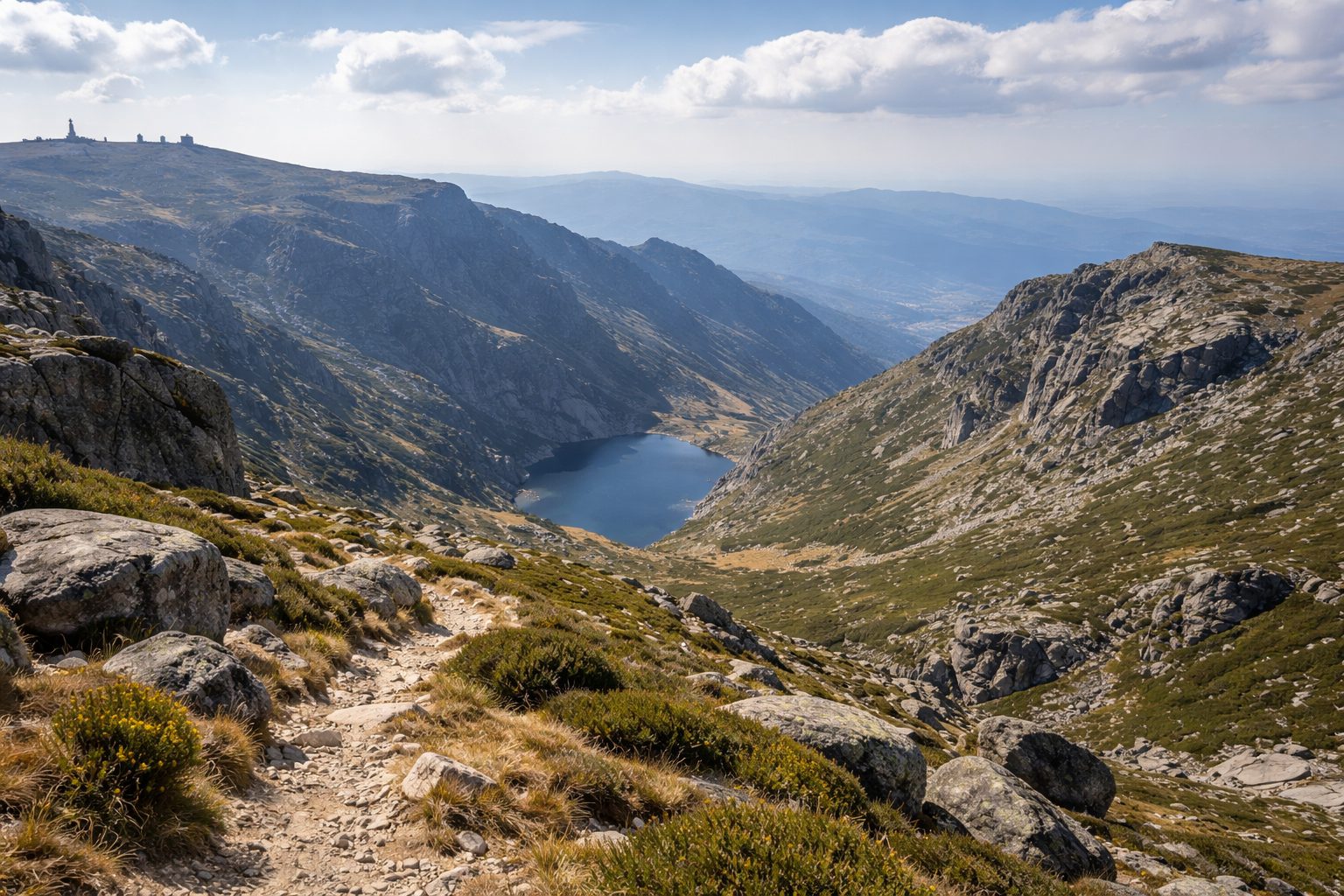
The landscape shifts noticeably as you gain elevation. Pine and oak forests give way to open heath and bare granite. The Vale do Zêzere is a glacial valley that cuts through the range and offers some of the best walking in the area. The village of Manteigas makes a good base.
Serra da Estrela is also home to Portugal’s most famous cheese, queijo da Serra, and some of the best smoked meats in the country. Practical hiking tip: the drive up to Torre is straightforward, so you can use the car to access higher starting points.
Madeira Island Trails
Madeira operates by different rules. The island was formed by volcanic activity, and the landscape reflects that: steep forested ridges, dramatic sea cliffs, and the famous levadas, which are irrigation channels dating back to the 15th century. The levada paths are unique to Madeira and represent one of the most distinctive hiking experiences anywhere in Europe.
The levadas are narrow walkways running alongside water channels that were built to carry water from the wet north to the drier south of the island. They thread through laurisilva forest (a UNESCO World Heritage laurel forest ecosystem), along cliff edges, and through tunnels. Some are easy, flat walks suitable for families. Others require nerve: the Levada do Caldeirão Verde passes through multiple tunnels in near-total darkness.
The PR1 Vereda do Areeiro, connecting Pico do Areeiro to Pico Ruivo, is Madeira’s most famous trail. It’s a serious mountain walk with significant elevation change and vertiginous drops on both sides, but the views are extraordinary on a clear day.
Types of Hiking Experiences
Family-Friendly Hikes
Portugal is genuinely good for family hiking, and not just in the “there are some flat paths” sense. You’ll find well-maintained, waymarked routes that are short enough to hold a child’s attention and interesting enough to keep adults engaged.
Good options for families include:
- Levada walks in Madeira at lower elevations (the Levada dos Balcões is short, flat, and ends at a viewpoint full of parrots)
- The Rota Vicentina’s inland sections, which are mostly flat and pass through working farms
- The Douro Valley’s shorter walks between wine estates
- Trails in the Arrábida Natural Park south of Lisbon, which combine coastal scenery with swimmable beaches
Always bring more water than you think you need, even in cooler weather. Shade can be limited on exposed sections.
Challenging Hikes for Adventurers
If you’re after something that’ll genuinely test you, Portugal delivers. The GR22 trans-Portugal route covers the entire length of the country and takes serious planning and fitness. Within Peneda-Gerês, the high-altitude circuits around the Gerês mountains are remote and demanding. Serra da Estrela’s winter conditions require proper alpine experience.
Madeira’s Vereda do Areeiro to Pico Ruivo is the most famous challenge on the island, but the ridge traverses of the Paúl da Serra plateau in poor weather are another level entirely. Some sections of the Rota Vicentina’s Fishermen’s Trail through beach sand are deceptively tiring, especially in summer heat.
For genuinely challenging multi-day experiences, consider:
- The GR22 through the Alentejo interior
- A full circuit of the Peneda section of Peneda-Gerês
- The Vereda dos Pastores ridge walk in Madeira
- A winter traverse of Serra da Estrela with snow gear
Scenic Coastal Hikes
The Atlantic coast is Portugal’s greatest hiking asset, in my opinion. The Vicentine Coast between Sagres and Porto Covo is almost entirely undeveloped by European standards. The cliffs are enormous, the beaches are wild, and you can walk for days without seeing a resort.
The Arrábida Peninsula near Setúbal offers a different kind of coastal walking: limestone mountains dropping steeply to turquoise water, with forested ridges that smell of wild herbs. It’s only an hour from Lisbon but feels completely separate from the city.
Further north, the Costa Verde between Viana do Castelo and the Spanish border has its own character: green, rocky, backed by sand dunes in places, and almost entirely off the tourist trail.
Historical Trails
Portugal has been continuously settled for thousands of years, and the trails reflect that. The old Roman road network is still partially walkable in several regions, particularly in the Douro and in the far north. The Portuguese Camino de Santiago passes through the country’s northwest, following a route used by pilgrims for over a thousand years.
Walking the Camino Português is a genuinely moving experience, even if you’re not religious. The route passes through ancient towns, crosses rivers on medieval bridges, and climbs through vineyards to hilltop churches. You don’t need to walk all the way to Santiago either. The section between Porto and Valença do Minho is excellent as a standalone walk.
Essential Hiking Gear for Portugal
Clothing Recommendations
Portugal’s weather is more variable than its sunny reputation suggests. The north is genuinely wet, the mountains get cold, and even in the south you can encounter cold wind on exposed clifftops.
My standard kit for Portugal hiking:
- Light merino base layer for temperature regulation
- Mid-layer fleece for mountain and cooler weather
- Lightweight waterproof jacket that packs small (always)
- Sun hat and sunscreen for coastal and summer walks
- Quick-dry shorts or hiking trousers depending on the terrain
Avoid cotton next to your skin on longer walks, especially if you’ll be doing elevation. It takes too long to dry and provides no warmth when wet.
Footwear for Different Terrains
The terrain varies enormously across Portugal, so footwear choice matters. Here’s a practical breakdown:
| Terrain | Recommended Footwear |
|---|---|
| Levada paths in Madeira | Trail running shoes or light hiking shoes |
| Coastal paths (Rota Vicentina) | Trail shoes with good grip; sandals to cross streams |
| Mountain terrain (Serra da Estrela, Gerês) | Waterproof ankle-support boots |
| Douro Valley vineyard paths | Light hiking shoes or trail runners |
| Technical ridge walks (Madeira) | Sturdy mid-cut waterproof boots |
I’ve done the Rota Vicentina in trail running shoes and had no complaints. But for Peneda-Gerês or Serra da Estrela, I’d always go for proper waterproof boots with ankle support.
Safety Gear and Navigation Tools
Mobile coverage in rural Portugal can be patchy, so don’t rely entirely on your phone for navigation. Download offline maps before you leave (Wikiloc and AllTrails both work well for Portuguese trails). A physical map and compass are worth carrying in the mountains.
Essential safety items:
- Fully charged power bank
- Emergency foil blanket
- Basic first aid kit with blister treatment
- Headtorch with spare batteries
- Whistle
- Enough water for the full route plus extra
Tell someone your planned route and expected return time if you’re going into remote areas. This sounds obvious but a lot of people skip it.
Local Wildlife and Flora
Overview of Portugal’s Biodiversity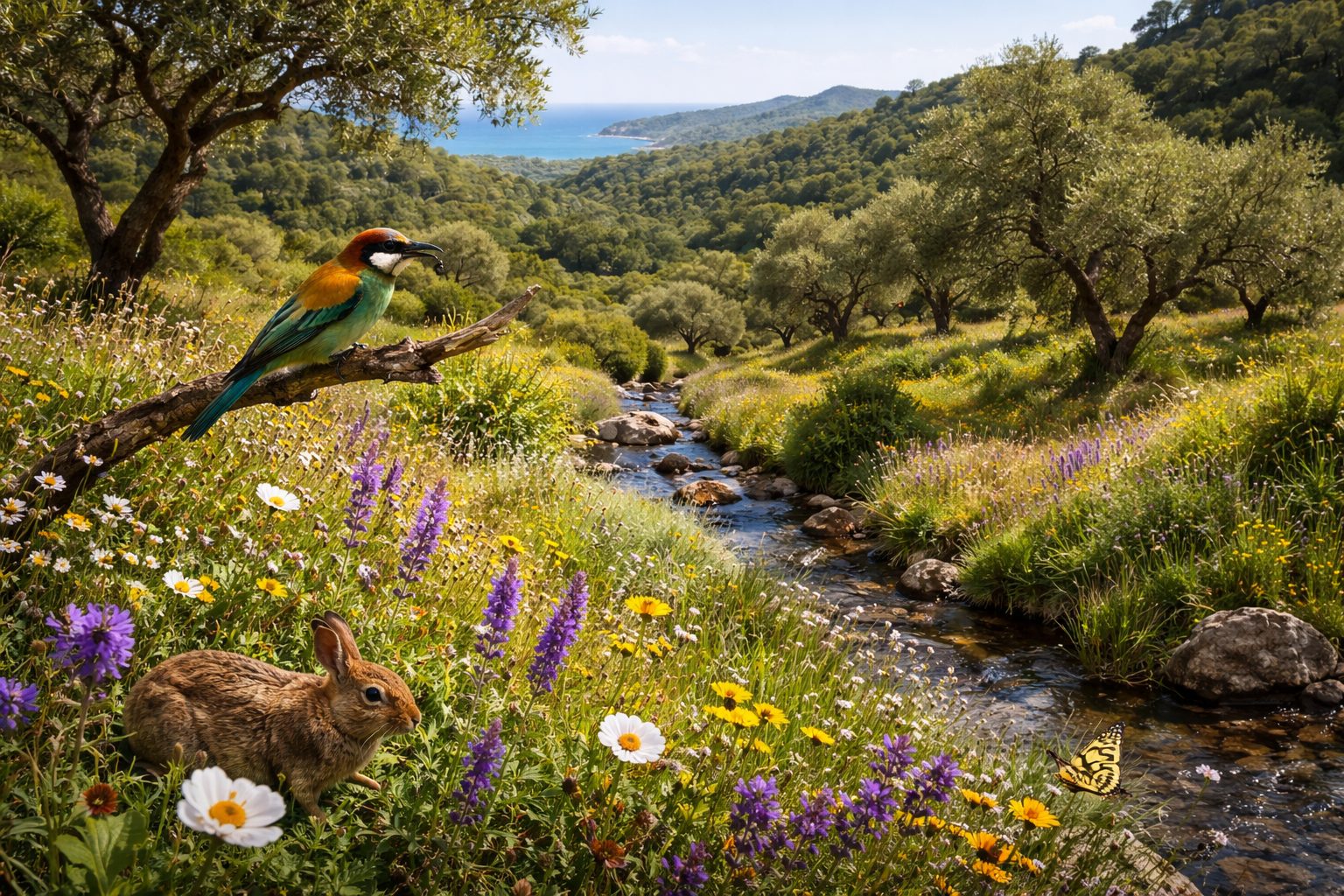
Portugal is one of the most biodiverse countries in Europe, partly because it escaped the worst of industrial agriculture and partly because of the variety of habitats packed into a small area. The Atlantic coast, Mediterranean scrubland, mountain heath, and the unique laurisilva forests of Madeira each support distinct ecosystems.
The Iberian wolf survives in the far north, mostly in and around Peneda-Gerês. The Iberian lynx, once nearly extinct, is making a slow comeback in the Alentejo and Algarve regions. You’re unlikely to see either in the wild, but knowing they’re there adds something to walking in those landscapes.
Common Wildlife Encounters on Trails
More commonly, you’ll encounter:
- Griffon vultures soaring on thermals over the Douro Valley and Serra da Estrela
- Wild boar, usually heard rather than seen, crashing through the undergrowth
- Red deer in Peneda-Gerês, especially at dawn and dusk
- Golden eagles over mountain areas
- Otters along rivers in the north
- A huge variety of reptiles basking on warm rock surfaces
Madeira has its own endemic bird species worth watching for, including the Madeira firecrest and the Zino’s petrel. Birders could spend weeks on the island and the Azores.
Unique Plants to Look Out For
The flora is one of the quiet pleasures of hiking in Portugal. Spring transforms the Alentejo into a sea of wildflowers. The Serra da Estrela has endemic plant species that exist nowhere else on Earth. And Madeira’s laurisilva is a relic ecosystem left over from before the last Ice Age, preserving plant communities that once covered much of Europe.
Specific plants worth noting:
- Cistus (rockrose) covers huge areas of southern Portugal and flowers in pink and white from March to May
- Wild lavender and rosemary grow alongside trails in the Alentejo and Algarve
- The Madeira orchid (Dactylorhiza foliosa) is an endemic species found in mountain meadows
- Cork oak is everywhere in the south; you’ll often see trees with their bark harvested in patches, a practice that doesn’t harm the tree
Cultural Aspects of Hiking in Portugal
Traditional Portuguese Cuisine for Hikers
One of the genuine pleasures of hiking in Portugal is what you eat after (or during) a long day on the trail. Portuguese food is unpretentious, filling, and deeply regional. In the Alentejo, you’ll encounter açorda (a bread-based soup with herbs and egg) and slow-cooked lamb. In the north, it’s all about caldo verde (kale and potato soup) and grilled river trout. In the Algarve, fresh fish is cheap and consistently excellent.
Trail snacks worth buying from local shops:
- Queijo da Serra in the central mountains
- Smoked chouriço and presunto (cured ham)
- Broa (cornbread), which travels well and doesn’t go stale quickly
- Local honey, which varies dramatically by region
Coffee culture is strong everywhere. A short espresso (bica in Lisbon, cimbalino in Porto) for €0.80 in a village café is one of life’s small pleasures.
Local Customs and Etiquette
Portuguese people in rural areas are generally warm and hospitable toward hikers, but a few things are worth keeping in mind.
Always greet people you encounter on trails or in villages. “Bom dia” (good morning) or “Boa tarde” (good afternoon) goes a long way. People in remote areas may not speak English, but basic courtesy transcends language.
Ask permission before camping on private land, and be respectful of agricultural land. The cork oak forests are working landscapes, not parks. Avoid picking wildflowers or disturbing wildlife nesting areas, which is particularly important in protected areas like Peneda-Gerês.
Festivals and Events Related to Hiking
Several events are worth building a trip around:
- The Rota Vicentina Walking Festival (usually held in March) organizes guided group walks along the trail with local cultural events
- The Trilhos do Gerês is an annual trail running and hiking event in the national park
- Village festivals (festas) happen throughout summer and early autumn in rural areas; stumbling onto one while on a multi-day walk is one of those travel experiences you can’t plan
Madeira’s Flower Festival in May is one of the island’s major annual events and coincides with excellent walking conditions.
Hiking Tours and Guides
Comparing Self-Guided vs. Guided Tours
Both approaches have genuine merit, and the right choice depends on what you want from the experience.
| Factor | Self-Guided | Guided Tour |
|---|---|---|
| Cost | Lower | Higher |
| Flexibility | High | Lower |
| Navigation | Your responsibility | Handled |
| Local knowledge | Limited unless researched | Included |
| Social experience | Solo or small group | Usually larger group |
| Logistics | Full planning required | Handled by operator |
| Difficulty | Depends on your research | Matched to group |
Self-guided hiking in Portugal is very manageable. The trail marking on major routes like the Rota Vicentina and the levadas is generally clear. Accommodation options along popular routes are well-established, and you can book in advance without a tour operator.
Guided tours make the most sense for more remote areas like Peneda-Gerês, for multi-week routes where logistics are complex, or for people who want local cultural interpretation built into the experience.
Recommended Hiking Tour Companies
Several operators specialize in Portuguese trails and have solid reputations:
- Rotas do Vento is a Portuguese company with deep local knowledge and a strong focus on the Rota Vicentina and other national trails
- Headwater runs well-organized guided and self-guided trips across several Portuguese regions
- The Slow Cyclist covers the Douro Valley and other areas with a pace-of-life approach that suits people who want cultural immersion alongside walking
- Sherpa Expeditions handles baggage transfers and accommodation booking for self-guided walkers on popular routes
Always check whether accommodation and luggage transfer are included in quoted prices, as the cost can vary significantly.
Cost of Guided Hiking Tours
Prices vary widely depending on accommodation standard, group size, and route. As a rough guide:
- Budget self-guided packages (logistics only, simple accommodation): €80 to €120 per person per day
- Mid-range guided tours with good accommodation and meals: €150 to €200 per person per day
- Premium guided tours with boutique accommodation and private guides: €250 and above per person per day
These figures include accommodation but not flights. Self-arranging a trip costs considerably less if you’re comfortable with planning. Budget accommodation along the Rota Vicentina runs €25 to €50 per night, and meals in village restaurants are €10 to €15 for a full lunch.
Hiking Safety Tips
Preparing for Unpredictable Weather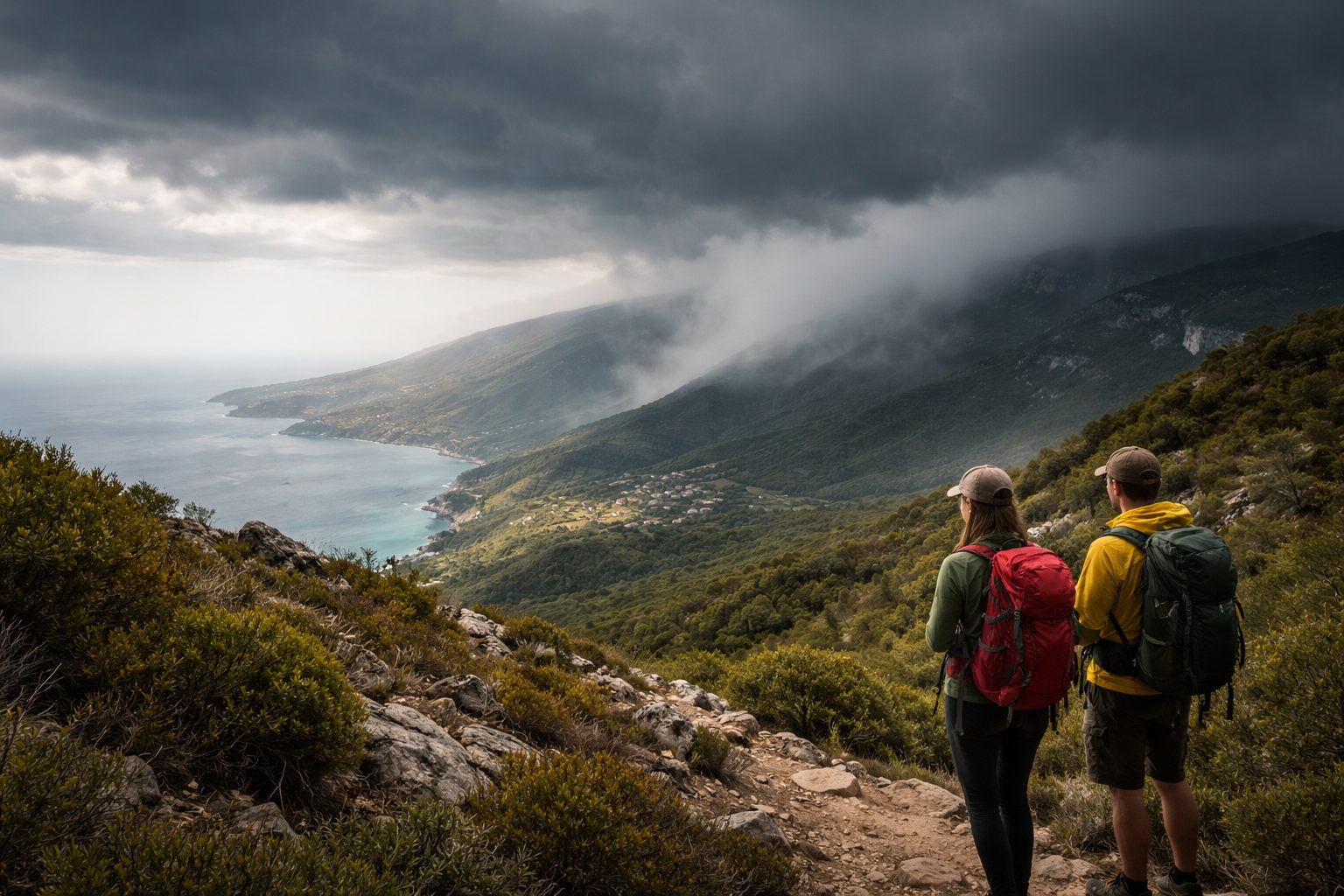
Weather in Portugal’s mountains and along its coast can change quickly, and underestimating this is one of the most common mistakes hikers make. The Algarve might be sunny and warm in the valley, but the Monchique mountains above can be cold and foggy. Madeira’s ridges create their own microclimates; the north of the island can be pouring while the south is dry.
Check forecasts for the specific area you’re hiking in, not just the nearest city. The IPMA (Portuguese meteorological service) website and app gives detailed regional forecasts. Always pack your waterproof jacket, even if it’s 25°C at the trailhead.
Staying Safe on Remote Trails
The main safety considerations for hiking in Portugal outside the popular routes:
- Heat and dehydration in summer, particularly in the Alentejo and Algarve. Carry at least two liters of water per person for any walk over two hours in warm weather.
- Getting lost in Peneda-Gerês or Serra da Estrela, where trails can be less well-marked than on the coastal routes. Download offline maps before you leave civilization.
- Flash flooding is rare but possible after heavy rain in narrow valleys and coastal ravines.
- Fire risk is a real concern in summer. Never light fires in the countryside, check fire alert maps before heading into forested areas, and have an exit plan if you see smoke.
What to Do in Case of an Emergency
Portugal’s emergency number is 112, which covers police, fire, and ambulance. In Madeira and the Azores, the same number applies.
For mountain rescue in Peneda-Gerês, the GNR (national police) has a dedicated mountain rescue unit. The emergency services are generally responsive, but in truly remote areas, a rescue can take several hours.
Before heading into remote terrain:
- Register your planned route and expected return time with your accommodation
- Carry a fully charged phone with offline maps downloaded
- Know your coordinates or nearest waypoint if you need to give your position
- Have travel insurance that covers mountain rescue, which can be expensive
If you’re lost and not in immediate danger, stop moving, find shelter, and wait. Continuing to move when disoriented often makes the situation worse.
Eco-Friendly Hiking Practices
Leave No Trace Principles
The principles are simple and worth repeating because not everyone follows them.
- Pack out everything you bring in. This includes orange peel, apple cores, and wet wipes, none of which decompose quickly in arid conditions.
- Stay on marked trails, especially in sensitive areas like Madeira’s laurisilva forest, where the fern and moss ecosystems are easily damaged.
- Use designated camping areas where they exist. Wild camping is restricted or prohibited in national parks and protected areas.
- Don’t disturb wildlife. This especially applies to nesting birds and resting reptiles.
- Use biodegradable soap and make sure any washing water is well away from water sources.
The Rota Vicentina has a specific “leave no trace” charter that trail users are expected to follow, and local volunteers do actively monitor the route.
Supporting Local Communities
One of the best things about hiking in Portugal is that it’s possible to do it in a way that genuinely benefits local communities. The rural areas that many trails pass through face real economic challenges, and spending money locally makes a difference.
Stay in local guesthouses rather than booking through chains. Eat at village restaurants, even if they seem basic from the outside. Buy local produce at markets. Hire local guides where possible. These aren’t just feel-good gestures; they’re what keeps rural communities viable and keeps the trails and landscapes maintained.
Sustainable Hiking Gear Options
The outdoor gear industry has improved considerably on sustainability, though there’s still plenty of room for growth.
A few practical considerations:
- Merino wool base layers from companies like Icebreaker or Smartwool last for years and are biodegradable at end of life
- Patagonia and Cotopaxi use recycled materials extensively and have take-back programs for worn-out gear
- Buying second-hand gear is genuinely effective; platforms like eBay or local outdoor gear swaps often have excellent condition kit at lower prices and environmental cost
- Renting gear for a single trip (particularly items like trekking poles) makes more sense than buying if you don’t hike regularly
The most sustainable piece of kit is the one you already own and use for multiple seasons.
Frequently Asked Questions about Hiking in Portugal
What are the best beginner trails in Portugal?
The lower-elevation levada walks in Madeira are ideal for beginners because they’re flat, clearly marked, and offer spectacular scenery without demanding fitness. On mainland Portugal, the coastal sections of the Rota Vicentina between Vila Nova de Milfontes and Almograve are well-marked and manageable for most fitness levels. The Douro Valley’s shorter vineyard trails are another good starting point.
Are there any permits required for hiking?
Most trails in Portugal don’t require permits. Peneda-Gerês National Park has some areas with access restrictions, particularly around the Mata de Albergaria forest, and camping requires prior permission. Some of Madeira’s more sensitive areas also have access regulations. It’s worth checking the specific trail or protected area’s official website before visiting.
How to navigate trails in rural areas?
Download the Wikiloc or AllTrails app and save offline maps before you leave an area with mobile coverage. Portuguese national trails (GR and PR routes) use standard European waymarking: red and white stripes for GR routes, yellow and red for PR routes. Physical trail guides are available for most major routes. When in doubt, ask locals; people in rural areas are generally helpful and used to walkers asking for directions.
What are the top tips for solo hikers?
Tell someone your planned route and expected return time before you set out. Carry a fully charged phone and a power bank. Start early to avoid afternoon heat in summer and to give yourself time to handle any navigation issues before dark. Trust your instincts about weather. And don’t be so focused on completing a planned distance that you ignore warning signs that conditions are deteriorating.
Can I hike in Portugal during winter?
Yes, and the south is actually excellent in winter. The Rota Vicentina and Algarve coastal paths are ideal from November through March, with mild temperatures and far fewer people. Madeira is a year-round destination. The mountains, particularly Serra da Estrela and Peneda-Gerês, require appropriate gear in winter and can have snow and ice at higher elevations. The central and northern interior can be cold and wet, but lowland walks remain accessible.
Hiking in Portugal has genuinely changed how I think about the country. It’s not just a beach destination or a wine destination, though it’s both of those things in the best possible way. It’s a country with extraordinary terrain, a long history of people moving through that terrain on foot, and a trail network that keeps getting better. Whether you’ve got a weekend or three weeks, there’s a route here that’s worth your time.