
Planning a thailand itinerary can feel overwhelming at first. There are so many islands, temples, cities, and jungle towns to choose from that narrowing it down takes real thought. I’ve traveled through Thailand multiple times, and each trip has taught me something new about how to structure the experience better. Whether you’re coming for two weeks or just a long weekend, having a solid plan makes all the difference between a trip that feels rushed and one that feels just right.
Thailand rewards the prepared traveler. But it also rewards flexibility. This guide is designed to give you a strong foundation so you can adapt based on your interests, budget, and how long you’ve got.
Introduction to Thailand Itinerary
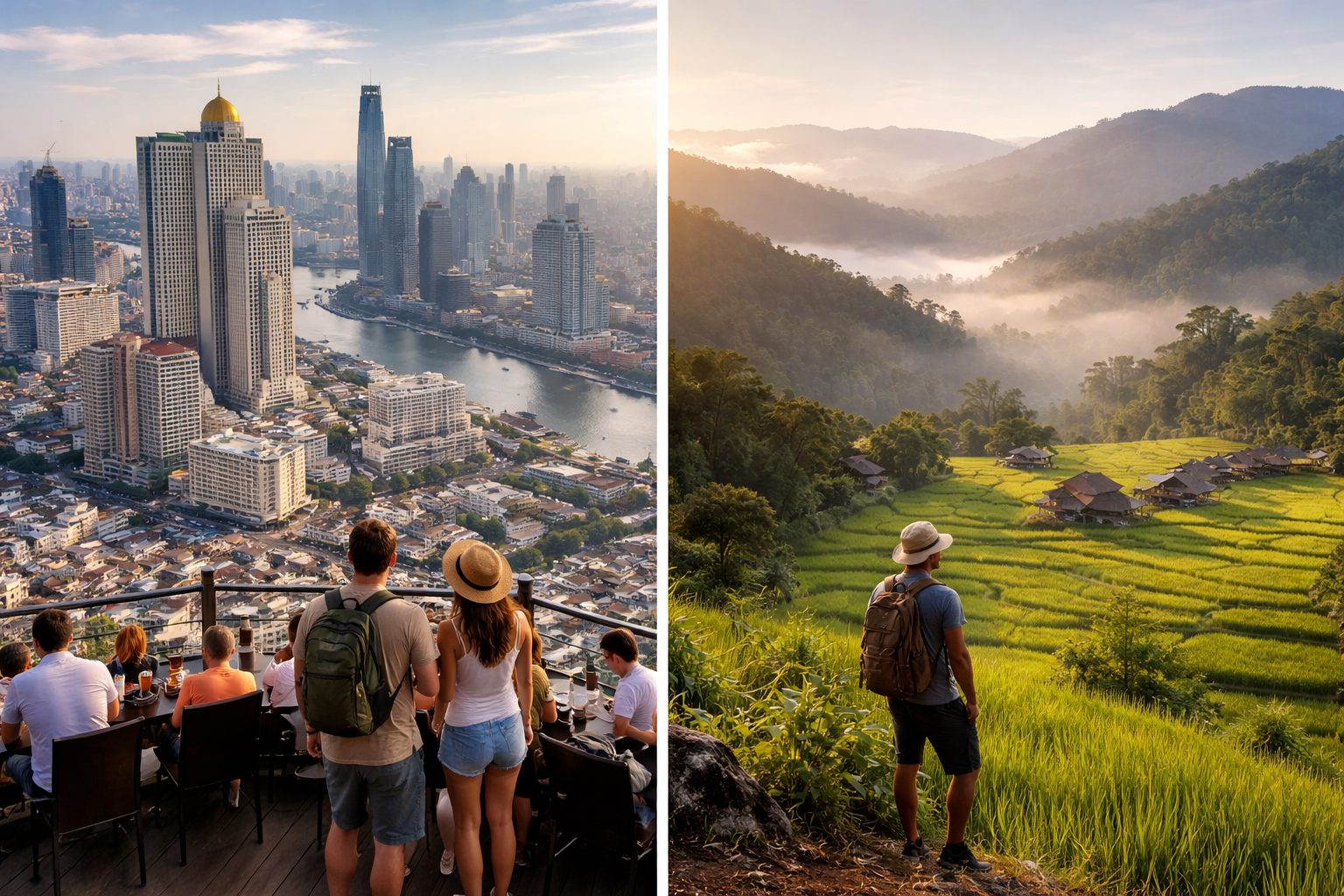
A well-built thailand itinerary isn’t just a list of places. It’s a sequence that makes logical sense geographically and emotionally. Moving from the chaos of Bangkok to the serenity of northern mountains to the quiet of southern beaches creates a natural arc that mirrors the country’s own personality.
Thailand has something for almost every type of traveler. Culture seekers, beach lovers, food obsessives, adventure junkies, and people who just want to sit somewhere beautiful and rest. What makes this country special is how effortlessly it handles all of those needs at once.
The infrastructure is solid. Flights between cities are cheap. Trains and buses connect most places. And the food scene, whether street stalls in a night market or a rooftop restaurant in Bangkok, is genuinely world-class. Once you understand the lay of the land, building your own plan becomes intuitive.
Best Time to Visit Thailand
Thailand has a tropical climate, but the timing varies significantly by region. Getting this wrong can mean dealing with flooding, cancelled ferries, or just grey skies every afternoon.
- November to February is the peak season across most of Thailand. Dry skies, lower humidity, and cool evenings make this the most comfortable period.
- March to May brings increasing heat, especially in the north and central regions. It’s quieter and cheaper, but you’ll feel it.
- June to October is monsoon season on the west coast (Phuket, Krabi). The east coast (Koh Samui, Koh Tao) has its own rain season from October to December.
If you’re heading to the south, timing your visit around the coast you’re visiting matters a lot. The Gulf of Thailand and the Andaman Sea have opposite wet seasons, which means there’s almost always somewhere dry to go.
For most first-timers, November through February is the sweet spot. Festivals like Yi Peng in Chiang Mai (November) and Songkran (April) are worth planning around if you’re interested in cultural events.
Overview of Thailand’s Regions
Thailand is divided into distinct regions, each with its own character, cuisine, and climate rhythm. Understanding this before you book anything saves a lot of backtracking.
Northern Thailand Itinerary
The north is dominated by Chiang Mai, but the region also includes Pai, Chiang Rai, and the Golden Triangle. The landscape is mountainous, covered in jungle and rice fields. The culture feels more Lanna than Central Thai, with distinct temples, art, and food.
A northern thailand itinerary typically revolves around:
- Temple hopping in Chiang Mai’s old city
- Day trips to Doi Inthanon National Park
- Cooking classes and night markets
- The White Temple and Blue Temple in Chiang Rai
- Trekking in the hill tribe villages
The pace here is slower. Chiang Mai draws digital nomads and long-term travelers for a reason. It’s affordable, liveable, and endlessly interesting.
Central Thailand Itinerary
Central Thailand includes Bangkok, Ayutthaya, and Kanchanaburi. It’s where history, modernity, and Thai culture collide most visibly. Bangkok anchors everything, but the ancient capital of Ayutthaya is only 90 minutes north by train.
This region is often the starting and ending point for most trips. If you’re flying into Suvarnabhumi or Don Mueang, you’re landing here. Give Bangkok at least three days if it’s your first time. It rewards depth.
Southern Thailand Itinerary
The south is what most people imagine when they picture Thailand: turquoise water, limestone cliffs, long-tail boats, and white sand. The Andaman coast includes Phuket, Krabi, Koh Lanta, and the Similan Islands. The Gulf coast covers Koh Samui, Koh Phangan, and Koh Tao.
A southern thailand itinerary can go in very different directions depending on whether you want party beaches, diving, quiet coves, or jungle interior. Choose carefully because they feel quite different from each other.
Northeastern Thailand Itinerary
Isaan is Thailand’s most overlooked region and probably its most authentic. The food here is spicier and more rustic. There are fewer tourists, more local life, and genuinely impressive historical sites like Phimai Historical Park and the Khmer temple ruins at Phanom Rung.
It’s not the right fit for everyone’s first trip, but for repeat visitors or travelers who want to go off the main path, Isaan is a revelation.
Must-See Destinations in Thailand
Bangkok Itinerary Highlights
Bangkok is massive, loud, and completely addictive. First-timers often feel overwhelmed, but the city is organized enough once you understand its neighborhoods.
Key highlights worth building into any Bangkok itinerary:
- Wat Phra Kaew and the Grand Palace complex
- Wat Arun at sunset from across the river
- Chatuchak Weekend Market (one of the world’s largest)
- Khao San Road for backpacker energy or just people-watching
- The Chao Phraya River by ferry or longtail boat
- Yaowarat (Chinatown) for some of the best street food in the city
The BTS Skytrain and MRT make getting around straightforward. Tuk-tuks are fun for short hops but agree on the price before you get in.
Chiang Mai Itinerary Highlights
Chiang Mai is the cultural heart of the north. The old city sits inside a moat with temples around every corner. The food scene here is excellent, and the surrounding mountains offer easy day trips.
Don’t miss:
- Doi Suthep Temple above the city, especially at dusk
- Sunday Walking Street for handicrafts and food
- A Thai cooking class (the city has dozens of good ones)
- Elephant sanctuaries outside the city (ethical ones only, please)
- The Night Bazaar for an evening wander
Chiang Mai is a place that people plan for three days and end up staying for two weeks. The pace is gentle, the costs are low, and the community of travelers and expats makes it easy to settle in.
Phuket Itinerary Highlights
Phuket is Thailand’s most visited island, and it’s earned both the praise and the criticism that comes with that. Patong Beach is hectic and commercial. But move north toward Surin or Kamala and the island changes tone entirely.
Worth including in a Phuket itinerary:
- Phang Nga Bay day trip (the limestone karsts are breathtaking)
- Kata and Karon beaches for a more relaxed vibe
- Old Phuket Town for colonial architecture and great cafes
- Snorkeling or diving trips to the outer islands
- Rawai seafood market in the south
The best strategy in Phuket is to use it as a base for island-hopping rather than staying on it the entire time.
Ayutthaya Itinerary Highlights
Ayutthaya was the Thai capital for 400 years before it was sacked by Burmese forces in 1767. What remains is a haunting landscape of ruined temples, headless Buddhas, and crumbling prangs spread across a small island city.
This is one of Southeast Asia’s great historical sites and it’s completely manageable as a day trip from Bangkok or an overnight stop.
Highlights include:
- Wat Mahathat (the famous Buddha head in tree roots)
- Wat Chaiwatthanaram beside the river
- Ayutthaya Historical Study Centre
- Cycling between the ruins at your own pace
The light here in the late afternoon is extraordinary. If you can time it right, staying one night and seeing the temples at sunrise is worth it.
Suggested Thailand Itinerary Lengths
7-Day Thailand Itinerary
Seven days is tight but very doable if you’re strategic. The key is to avoid trying to do everything and instead go deep in two or three places.
Suggested structure:
- Day 1-3: Bangkok (Grand Palace, Wat Arun, street food, river)
- Day 4: Day trip to Ayutthaya
- Day 5-7: Chiang Mai (old city, Doi Suthep, cooking class)
This covers the cultural and historical core of Thailand without burning out on travel days. It skips the south, which is a real sacrifice, but it keeps the experience coherent.
Alternatively, you could swap Chiang Mai for a southern island, but I’d recommend against trying to do both in seven days unless you’re comfortable with a lot of flights.
10-Day Thailand Itinerary
Ten days opens things up considerably. Now you can add the south without feeling rushed.
Suggested structure:
- Day 1-3: Bangkok
- Day 4: Ayutthaya
- Day 5-7: Chiang Mai
- Day 8-10: Phuket or Krabi
This thailand itinerary hits the major highlights without being frantic. Fly from Chiang Mai to Phuket directly (there are multiple daily flights) and you avoid backtracking through Bangkok.
Budget around 2,000-3,000 THB per domestic flight. They’re worth it. Overnight trains are romantic but slow.
14-Day Thailand Itinerary
Two weeks is the sweet spot for a first trip. You get the culture, the history, the mountains, and the beach without feeling like you’re racing through it.
Suggested structure:
- Day 1-3: Bangkok
- Day 4: Ayutthaya (day trip or overnight)
- Day 5-7: Chiang Mai
- Day 8: Fly to Krabi or Phuket
- Day 9-11: Koh Lanta or Koh Phi Phi
- Day 12-13: Koh Samui or Koh Phangan (if using Gulf coast)
- Day 14: Return to Bangkok for the flight home
The exact islands you choose depend on the time of year. Check which coast is in dry season and plan accordingly.
| Duration | Regions Covered | Best For |
|---|---|---|
| 7 days | Bangkok + North OR South | Short trips, first-timers |
| 10 days | Bangkok + North + South | Most travelers |
| 14 days | Bangkok + North + Islands + extras | Ideal first-timers |
| 21+ days | All regions including Isaan | Repeat visitors, slow travelers |
Tips for Planning Your Thailand Itinerary
Budgeting for Thailand Travel
Thailand can be incredibly cheap or surprisingly expensive depending on your choices. Here’s an honest breakdown:
Budget traveler (hostels, street food, local transport):
* Accommodation: 300-600 THB/night
* Food: 150-300 THB/day
* Transport: 100-300 THB/day depending on distance
* Total: roughly 800-1,500 THB/day
Mid-range traveler (guesthouses, restaurants, occasional taxis):
* Accommodation: 800-2,000 THB/night
* Food: 400-800 THB/day
* Transport: 300-600 THB/day
* Total: roughly 2,000-4,000 THB/day
Comfort traveler (boutique hotels, sit-down meals, private transfers):
* 5,000-10,000+ THB/day
Don’t forget to budget for entrance fees. Grand Palace alone is 500 THB. Temples across the country charge 50-200 THB each. It adds up.
Transportation Options in Thailand
Getting around Thailand is easy once you understand your options:
- Domestic flights: AirAsia, Bangkok Airways, and Nok Air cover most major routes. Book ahead for the best prices.
- Trains: The State Railway of Thailand runs overnight trains between Bangkok and Chiang Mai, and Bangkok to the south. Comfortable and scenic.
- Buses: VIP overnight buses are cheap and cover most long-distance routes. Quality varies.
- Songthaews: Shared pickup trucks used in Chiang Mai and many smaller towns. Very cheap, slightly chaotic.
- Ferries: Essential for island travel. Book in advance during peak season.
- Grab: Thailand’s version of Uber. Works in Bangkok, Chiang Mai, and Phuket. Removes the need to negotiate tuk-tuk prices.
My honest advice: use Grab in cities and fly between regions. The time saved is worth the extra cost, especially on a shorter trip.
Cultural Etiquette to Remember
Thailand is genuinely welcoming, but there are a few things you should know before you go:
- Remove shoes before entering temples and many guesthouses
- Cover shoulders and knees at temples (carry a scarf)
- Don’t touch anyone’s head, including children’s
- Don’t point your feet at people or sacred objects
- The monarchy is deeply respected; keep opinions private
- Buddha images are sacred, not props for photos
- Bargaining is normal in markets, but not aggressive bargaining
Smiling matters here. A genuine, calm demeanor goes a long way in navigating any situation. If you mess something up, a respectful apology and a smile will usually sort it.
Thailand Itinerary Examples
Family-Friendly Thailand Itinerary
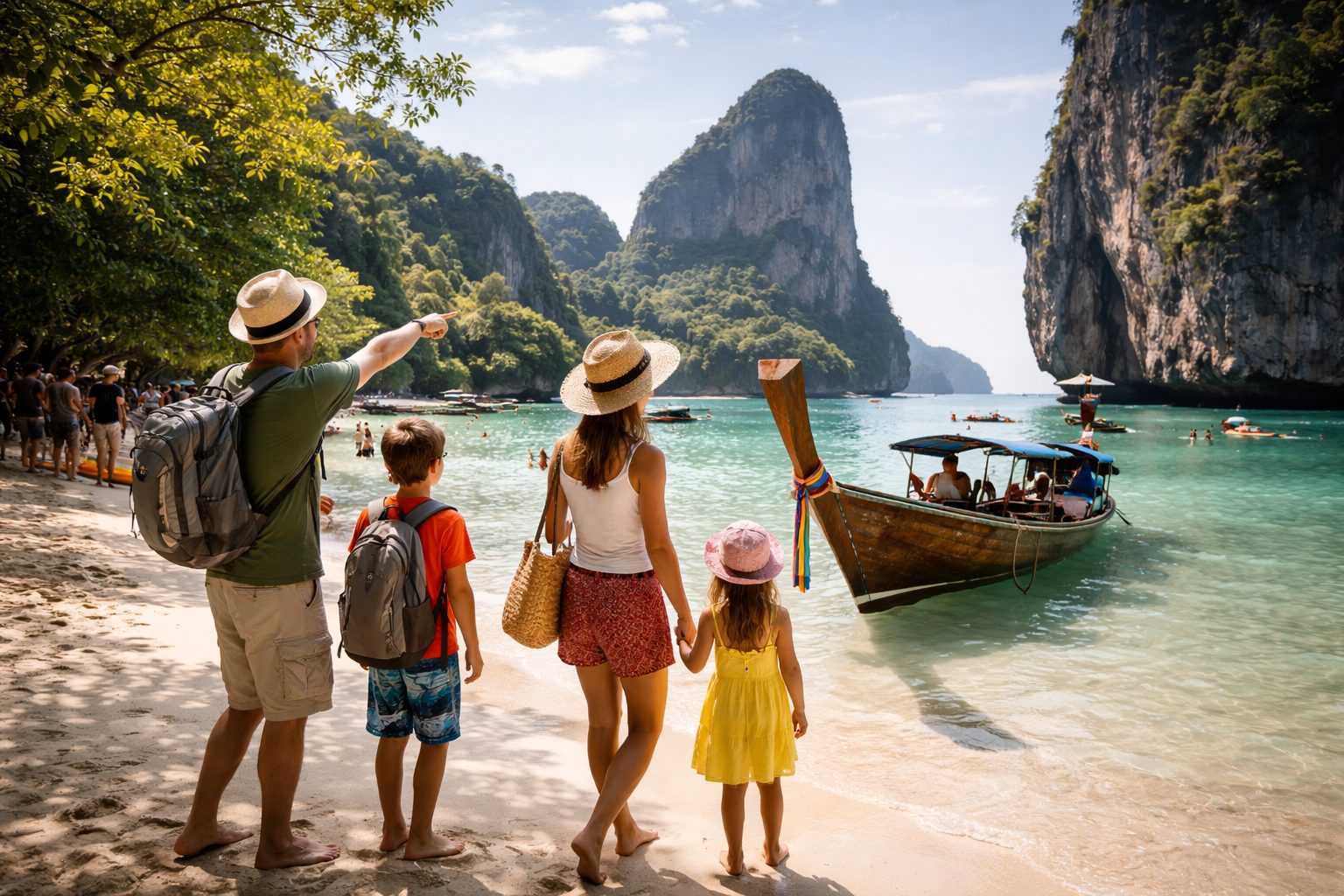
Thailand is excellent for families, especially with kids who are old enough to handle the heat and stimulation. The key is mixing activity with downtime and not over-scheduling.
Suggested 10-day family itinerary:
- Day 1-2: Bangkok – Lumphini Park, river cruise, street food tasting
- Day 3: Damnoen Saduak Floating Market day trip
- Day 4: Ayutthaya (hire a tuk-tuk to move between ruins)
- Day 5-6: Chiang Mai – cooking class, elephant sanctuary (ethical), Night Bazaar
- Day 7-10: Koh Samui – calm beaches, snorkeling, pool time
Key tips for families:
- Stay in hotels with pools. The heat is real and kids need cooling off.
- Stick to well-reviewed elephant sanctuaries that don’t offer riding
- Build in rest afternoons during the hottest hours (noon to 3pm)
- 7-Eleven is everywhere and a lifesaver for snacks and cold drinks
Adventure-Focused Thailand Itinerary
For travelers who want to push past the temples and beaches, Thailand has a genuine adventure scene.
10-day adventure itinerary:
- Day 1-2: Bangkok (fuel up, sort gear)
- Day 3-5: Pai – motorbike the hills, hot springs, canyon hike
- Day 6: Chiang Rai – trekking day near the Myanmar border
- Day 7-8: Fly to Krabi – rock climbing at Railay Beach
- Day 9-10: Koh Tao – open water diving course or dive trips
Railay Beach is one of the best rock climbing locations in Southeast Asia. Koh Tao has some of the cheapest and most accessible dive certification programs in the world. Pair those two with the mountain north and you’ve got a genuinely varied adventure trip.
Romantic Thailand Itinerary
Thailand is one of the most popular honeymoon and couples destinations in Southeast Asia, and for good reason.
7-day romantic itinerary:
- Day 1-2: Bangkok – rooftop dinner, Chao Phraya dinner cruise, spa day
- Day 3: Ayutthaya at sunset, private longtail boat on the river
- Day 4-7: Koh Samui or Koh Yao Noi – private villa, snorkeling, candlelit beach dinners
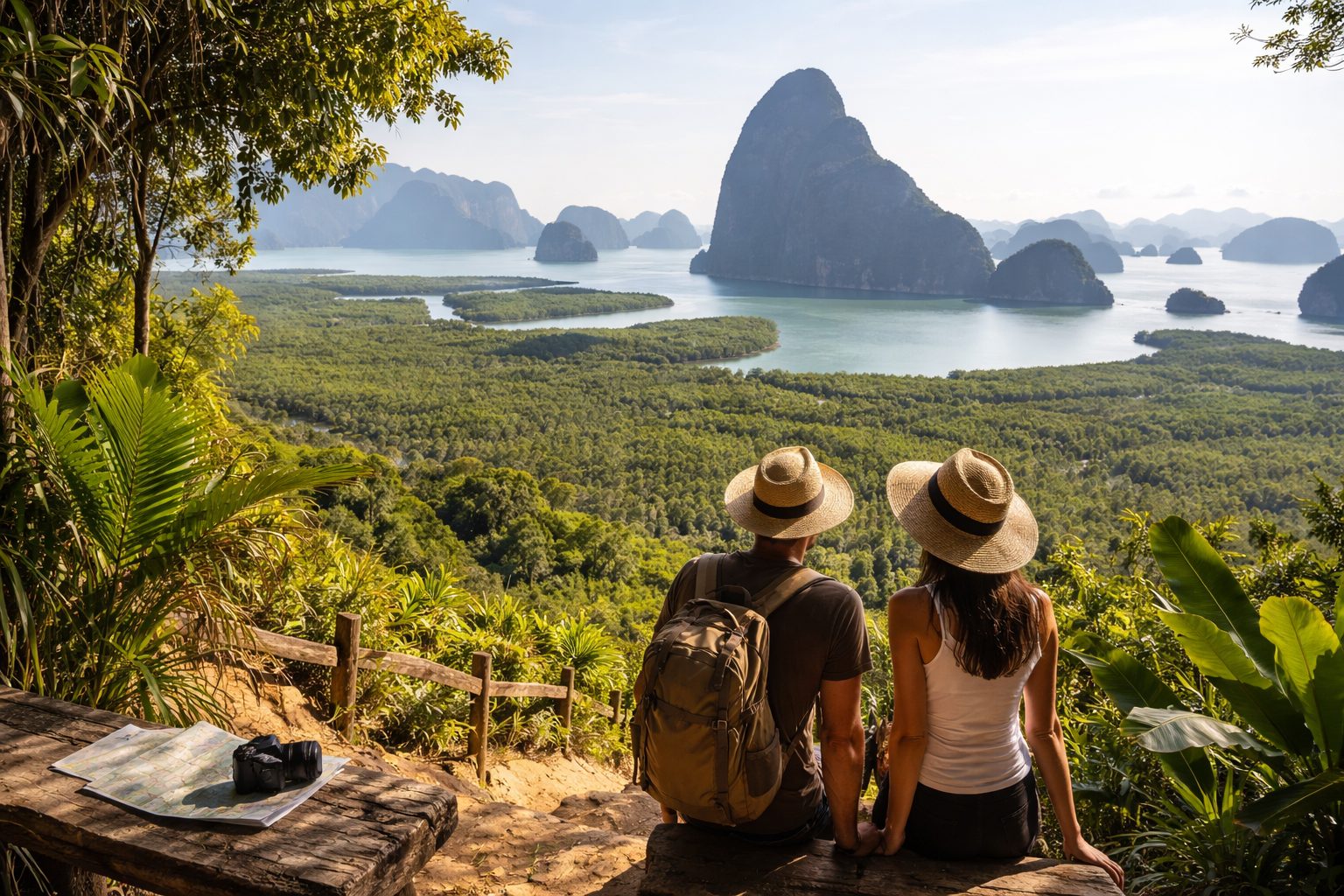
Koh Yao Noi is the quieter, more intimate alternative to Phuket. It sits in Phang Nga Bay with stunning views of the limestone karsts and very little tourist infrastructure. For couples who want something special rather than something popular, it’s one of the best islands in Thailand.
Frequently Asked Questions about Thailand Itinerary
What to Pack for Thailand?
Pack light and breathable. Linen and lightweight cotton handle the humidity better than synthetics. Always carry a light scarf for temple visits and a small rain jacket during shoulder seasons. Decent sandals that can handle uneven ground are essential.
How to Customize Your Thailand Itinerary?
Start with your interests first, then build the geography around them. If diving is your priority, anchor the trip in Koh Tao. If culture is the focus, center it on Bangkok and Chiang Mai. Avoid trying to mix too many different types of experiences in one short trip.
Safety Tips for Traveling in Thailand
Thailand is generally very safe for tourists. The main concerns are petty theft in crowded areas, scams around major tourist sites (especially in Bangkok), and road safety if you’re renting a motorbike. Use reputable transport, keep copies of important documents, and trust your instincts in unfamiliar situations.
Thailand has been a destination that’s rewarded careful planning and relaxed attitude in equal measure every time I’ve visited. The more you invest in thinking through your thailand itinerary before you land, the more you’ll get out of the time you have on the ground. Start with the region that excites you most, add a few anchor experiences you won’t compromise on, and let the rest evolve once you’re there.