There’s something genuinely disorienting about standing under a cherry blossom tree in full bloom. The petals fall in slow motion, the light turns soft and pink, and for a moment the world feels completely unhurried. I’ve been chasing cherry blossom season across different countries for years now, and I’ll say this plainly: it never gets old. If you’re trying to figure out the best places to see cherry blossoms, you’re asking the right question at the right time. More destinations than ever are worth your attention, and the experience differs wildly depending on where you go.
Introduction to Cherry Blossoms
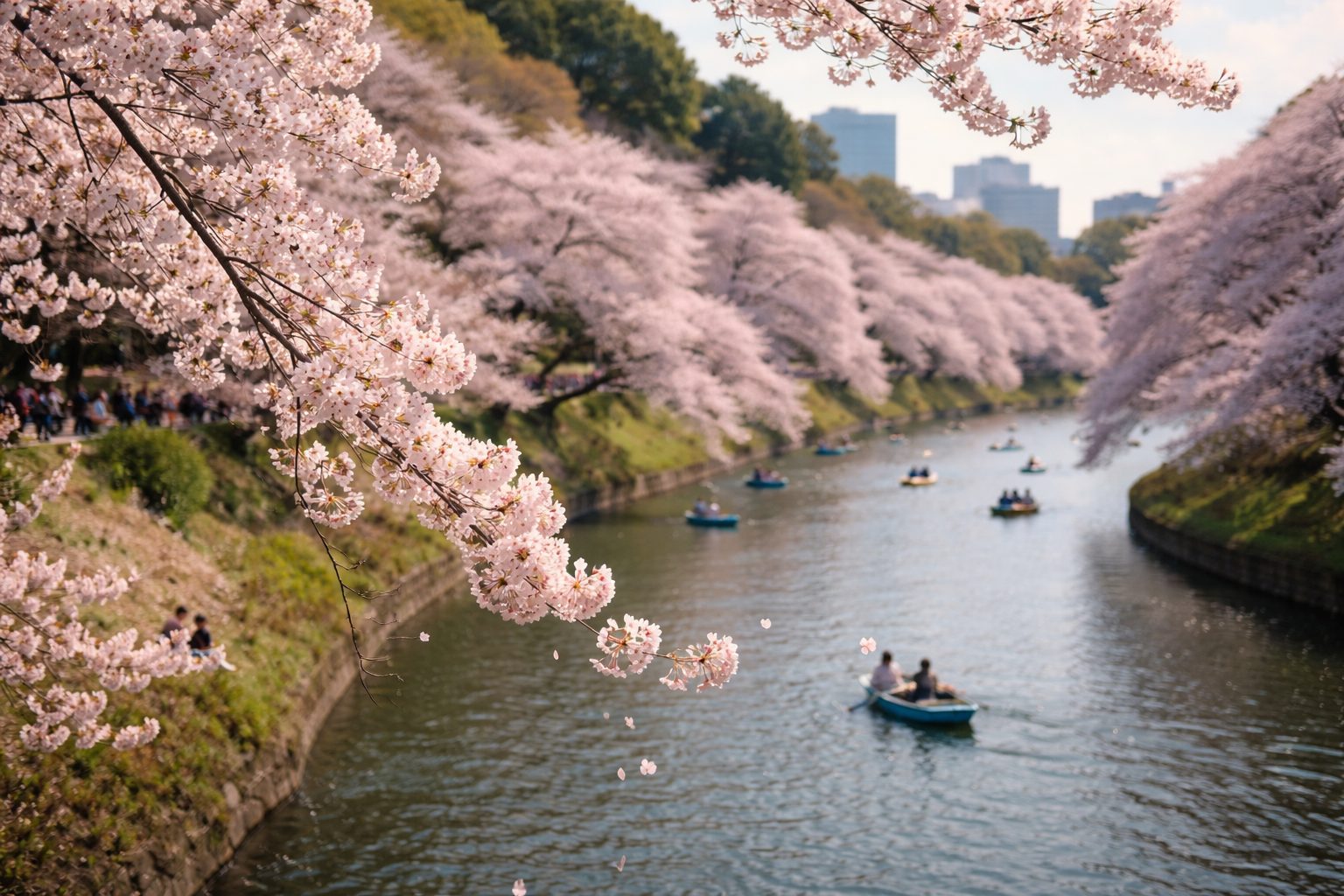
Cherry blossoms, known in Japanese as sakura, are the flowers of several species within the genus Prunus. The most commonly celebrated is Prunus serrulata, though many cultivars exist with slightly different bloom times, petal shapes, and colors ranging from pure white to deep rose.
What makes them so visually striking is their brevity. The trees spend most of the year looking ordinary. Then, for a few weeks, they transform into something extraordinary. After the blossoms peak, the petals drop in what the Japanese call hanafubuki, or flower snowstorm, which is arguably even more beautiful than the blooms themselves.
The cultural resonance of cherry blossoms has spread well beyond Japan. Today, festivals, parks, and public gardens across six continents celebrate the annual bloom. Each place brings its own atmosphere, timing, and character to the experience.
Importance of Cherry Blossom Viewing
In Japan, cherry blossom viewing is called hanami, which translates literally to “flower viewing.” It’s been practiced for over a thousand years, originally as an aristocratic ritual and later as a celebration for all social classes. Today, it involves picnics under blooming trees, shared food and drink, and a collective appreciation for something fleeting.
That fleeting quality is the whole point. Cherry blossoms are a direct reminder that beautiful things don’t last, and that’s precisely why they matter. The Japanese concept of mono no aware, which roughly means the bittersweet awareness of impermanence, is deeply tied to how people experience the blossoms.
Beyond the philosophy, the practical importance is significant. Cherry blossom season drives enormous tourism in Japan, South Korea, Washington D.C., and other major destinations. Local economies benefit substantially, and communities use the season as a reason to gather outdoors after winter.
For travelers, aligning a trip with peak bloom is one of the most rewarding forms of seasonal travel. It requires planning, some flexibility, and a willingness to move quickly when conditions line up.
Top 10 Best Places to See Cherry Blossoms Worldwide
The list below covers the destinations I consider genuinely worth planning a trip around. These aren’t just places that happen to have a few cherry trees. Each one offers a distinctive experience that justifies the effort.
1. Tokyo, Japan
Tokyo is the undisputed capital of cherry blossom viewing. The city has thousands of trees across dozens of parks and riversides, which means you can experience multiple different atmospheres without ever leaving the metro area.
Ueno Park is the most famous spot, and it earns that reputation. During peak bloom, the park fills with picnickers from morning to night, food stalls line the paths, and the canopy of blossoms overhead is genuinely dense. It’s loud, crowded, and wonderful.
For something quieter, the Meguro River walk offers cherry trees that arch over the water, with lanterns lit at night for yozakura (nighttime viewing). Shinjuku Gyoen has a broader variety of cherry tree species, extending the viewing window by a week or two compared to other parks.
Peak bloom in Tokyo typically falls between late March and early April. The Japan Meteorological Corporation publishes annual forecasts that are surprisingly accurate and worth checking before you book.
2. Washington D.C., USA
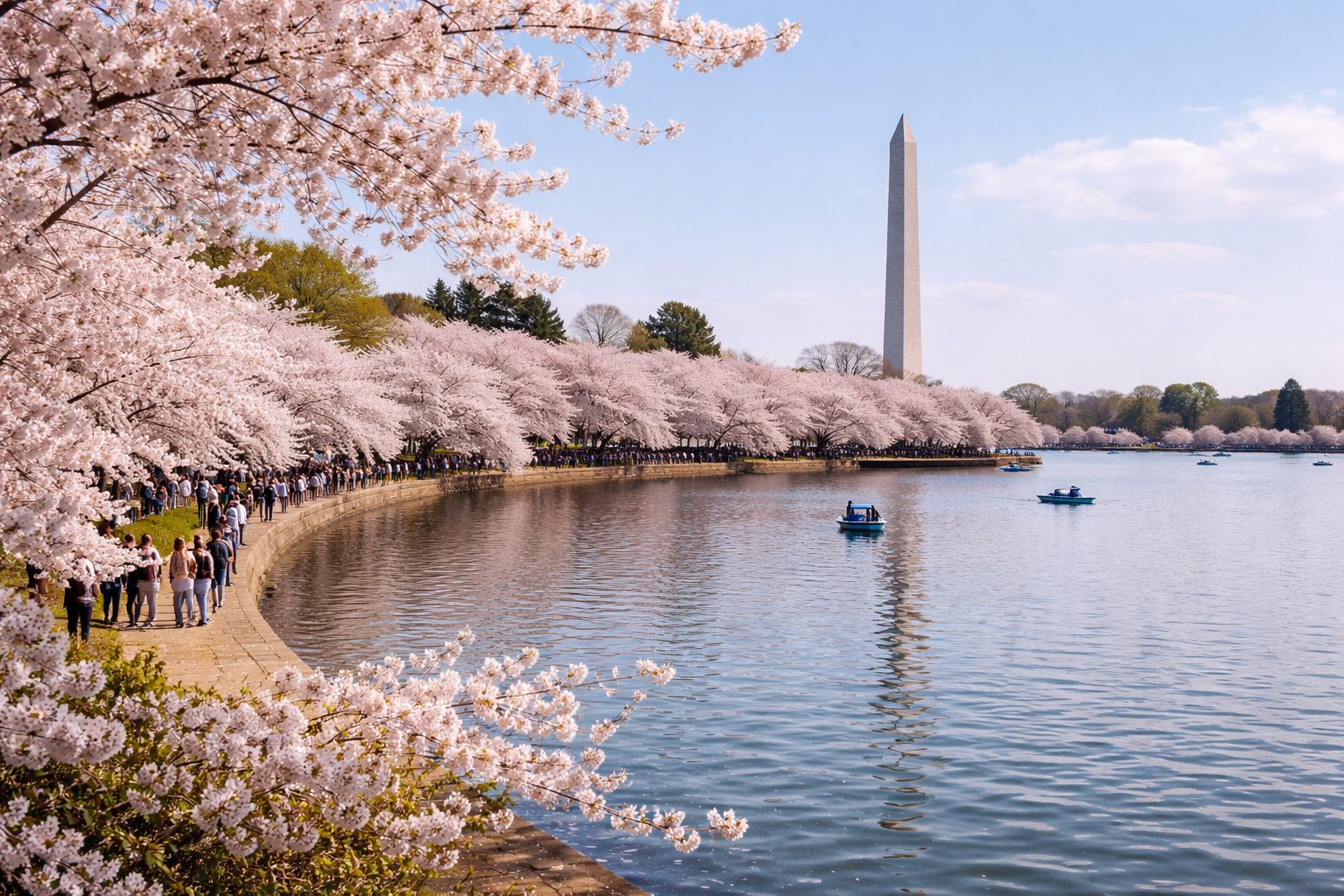
Washington D.C. hosts one of the most iconic cherry blossom displays outside Japan. The original trees were a gift from Japan in 1912, and their descendants now number over 3,000 along the Tidal Basin and throughout the National Mall.
The annual National Cherry Blossom Festival runs for several weeks each spring, with a schedule of events that includes a parade, kite festival, and various cultural programming. But the trees themselves are the main attraction.
Early morning is the best time to visit. The light is soft, the crowds are thin, and the Jefferson Memorial reflected in the Tidal Basin behind a foreground of blossoms is one of the most photographed scenes in America for good reason. Plan for late March to mid-April, with the exact timing shifting by a week or two depending on winter temperatures.
3. Kyoto, Japan
If Tokyo offers quantity and energy, Kyoto offers atmosphere and depth. The old imperial capital has cherry blossom spots that feel genuinely ancient, surrounded by temple architecture, stone lanterns, and moss-covered paths.
Maruyama Park is the social heart of Kyoto’s hanami season, centered around a large weeping cherry tree that’s illuminated at night. The surrounding park fills with locals and visitors alike, and the vibe is relaxed and festive.
Philosopher’s Path is a canal-side walk lined with hundreds of cherry trees, connecting several major temples over about two kilometers. Walking it during peak bloom, with petals drifting into the water, is the kind of experience that stays with you.
The timing in Kyoto closely follows Tokyo, usually late March to early April, though Kyoto can occasionally peak slightly later.
4. Vancouver, Canada
Vancouver has invested seriously in urban cherry trees over the decades, and the result is one of the best cherry blossom experiences in North America outside the U.S. capital.
The Vancouver Cherry Blossom Festival celebrates the season across the city, with events, walks, and community gatherings. The West End neighborhood, particularly along streets like Comox and Barclay, becomes a tunnel of pink blossoms during peak weeks. Queen Elizabeth Park and VanDusen Botanical Garden also offer excellent viewing.
What sets Vancouver apart is the backdrop. The combination of snow-capped mountains, ocean views, and blooming cherry trees in the same frame is genuinely unusual. Peak bloom typically arrives in late March, slightly earlier than many other destinations.
5. Paris, France
Paris isn’t the first city that comes to mind for cherry blossoms, but it probably should be. The city has a remarkable number of ornamental cherry trees planted throughout its parks and along its boulevards.
Parc de Sceaux, about 30 minutes south of central Paris by train, hosts what may be the most underrated cherry blossom display in Europe. The formal French garden layout, with its grand allées and reflecting pools, creates a completely different context for the blossoms than anything you’d find in Japan or the U.S.
The Trocadéro gardens and certain sections of the Jardin des Plantes also have notable trees. The bloom window in Paris runs from late March into April, depending on the year’s weather patterns.
6. Seoul, South Korea
Seoul takes cherry blossom season seriously in a way that rivals Japan. The city’s Yeouido district, home to the National Assembly, lines its main boulevard with hundreds of cherry trees that create an extraordinary canopy during peak bloom.
Jinhae, technically its own city near Busan, hosts the Jinhae Gunhangje Festival and is arguably South Korea’s most spectacular cherry blossom destination. The combination of blossoms reflecting in the canal and the mountain backdrop draws enormous crowds for good reason.
Seoul’s bloom typically peaks in late March to early April, closely tracking Tokyo’s timing.
7. Bonn, Germany
Bonn is a genuine surprise for most travelers who stumble upon its cherry blossom season. The Heerstraße in the Altstadt Nordstadt neighborhood is lined with double-flowered cherry trees that arch over the street to create a pink tunnel unlike anything else in Europe.
The trees bloom in late April, which is later than most destinations on this list. That timing makes Bonn a useful option if you’ve missed the early season elsewhere or want to extend your cherry blossom travels across multiple countries.
The local atmosphere during bloom is relaxed and genuinely local, without the intense tourist infrastructure of the major Japanese and American destinations.
8. Taipei, Taiwan
Taiwan’s cherry blossom season tends to start earlier than Japan’s, with some mountain locations seeing blossoms as early as late January. Yangmingshan National Park, just above Taipei, is the most celebrated destination and draws large crowds during the annual Cherry Blossom Season event.
The combination of subtropical temperatures, mountain fog, and dense groves of both Prunus campanulata (the Taiwan cherry, which blooms in vivid pink) and later-blooming varieties makes the experience distinctively Taiwanese.
For the best viewing, the mountain areas around Alishan in central Taiwan are also exceptional, with cherry trees combined with ancient cypress forests and dramatic elevation changes.
9. Manila, Philippines
Cherry blossoms in Manila might seem unexpected, but the La Trinidad valley in Benguet province and the highland city of Baguio host blooms of Prunus campanulata that attract growing numbers of visitors each year.
The timing is very early, typically February, which aligns with the cooler highland temperatures. The experience is completely different from Japan or Korea in terms of infrastructure and atmosphere, but the trees themselves are genuinely beautiful and the highlands are worth visiting independently of the blossoms.
This is a destination for travelers who want something off the well-worn cherry blossom circuit, and who are comfortable navigating less tourist-optimized destinations.
10. Sydney, Australia
Sydney’s cherry blossom season runs in spring, which in the Southern Hemisphere means August through October. The Auburn Botanic Gardens hosts an annual Cherry Blossom Festival that draws thousands of visitors and includes Japanese cultural performances, food, and garden walks.
The species and cultivars in Sydney differ somewhat from the classic Japanese varieties, but the visual effect during peak bloom is genuinely impressive. It’s also one of the few places where you can see cherry blossoms against autumn-colored trees, since the seasons don’t align the way they do in the Northern Hemisphere.
Best Cherry Blossom Festivals Around the World
Cherry blossom festivals vary enormously in scale and character. Some are massive, organized events with weeks of programming. Others are informal community celebrations that happen organically around the bloom.
Here are some of the most notable:
- National Cherry Blossom Festival, Washington D.C. – Runs for about four weeks each spring, with a parade, kite festival, and cultural events centered around the Tidal Basin.
- Jinhae Gunhangje Festival, South Korea – One of the country’s largest spring festivals, held in early April along the Yeojwacheon Stream.
- Vancouver Cherry Blossom Festival, Canada – A city-wide celebration with guided walks, haiku contests, and neighborhood events.
- Auburn Cherry Blossom Festival, Sydney – The Southern Hemisphere’s most established cherry blossom festival, held in late August or September.
- Hirosaki Cherry Blossom Festival, Japan – Held at Hirosaki Castle in Aomori prefecture, considered one of Japan’s most beautiful castle-and-blossom settings.
- Bonn Cherry Blossom Walks, Germany – Less formal but well-organized walks through the famous Heerstraße and surrounding streets.
Each festival adds a layer of cultural programming that enriches the experience beyond just the flowers themselves.
Seasonal Timing for Cherry Blossom Viewing
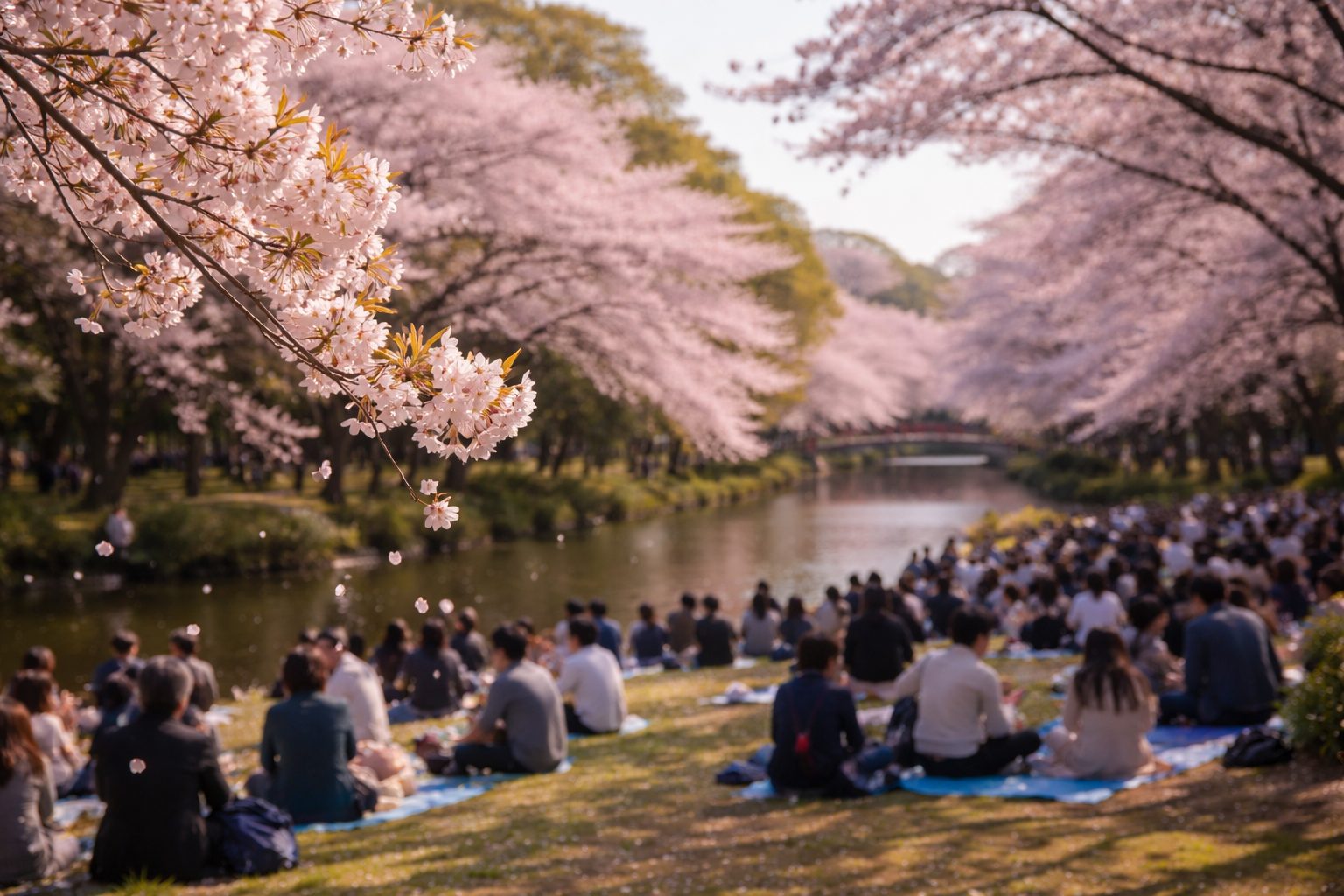
Timing is everything with cherry blossoms. The window between early bud and full petal drop is often just one to two weeks at any given location. Miss it, and you’ll wait a full year.
Here’s a general timing guide by region:
| Destination | Typical Peak Bloom |
|---|---|
| Manila / Baguio, Philippines | Late January to February |
| Taipei / Yangmingshan, Taiwan | Late February to March |
| Tokyo, Japan | Late March to early April |
| Kyoto, Japan | Late March to early April |
| Seoul, South Korea | Late March to early April |
| Washington D.C., USA | Late March to mid-April |
| Vancouver, Canada | Late March to early April |
| Paris, France | Late March to mid-April |
| Bonn, Germany | Late April |
| Sydney, Australia | Late August to September |
Several factors influence the exact timing each year:
- Winter temperature averages – Warmer winters tend to push bloom earlier.
- Spring temperature spikes – A sudden warm spell can accelerate bloom dramatically.
- Elevation – Higher elevation locations bloom later than lower ones in the same region.
- Tree variety – Different cultivars within the same park can bloom one to three weeks apart.
Following local forecast services and cherry blossom tracking websites like Japan Meteorological Corporation’s forecasts or the U.S. National Park Service updates is the most reliable approach.
Tips for Photographing Cherry Blossoms
Cherry blossoms are photogenic almost regardless of conditions, but a few approaches will consistently produce stronger images.
Timing and light:
- Shoot in the golden hour, the first hour after sunrise and last hour before sunset, for warm, directional light.
- Overcast days actually work well for blossoms, since diffused light prevents harsh shadows and saturates the pink tones.
- Night photography with lantern lighting can produce extraordinary results at locations like Maruyama Park in Kyoto or the Meguro River in Tokyo.
Composition techniques:
- Use a wide aperture (f/1.8 to f/2.8) to isolate individual branches against a blurred background.
- Include water reflections when available. Ponds, rivers, and canals all multiply the visual impact.
- Look for negative space. A single branch against a clear sky often outperforms a cluttered frame of many trees.
- Shoot upward through the canopy for abstract, graphic compositions.
Practical tips:
- Arrive early, ideally before 8 a.m., to avoid crowds in your frames.
- Bring a tripod for low-light and night shooting.
- Use a polarizing filter to manage glare and deepen sky color on sunny days.
- Shoot in RAW format if your camera supports it, for maximum post-processing flexibility.
Best Cherry Blossom Viewing Spots in the U.S.
The United States has more excellent cherry blossom destinations than most people realize. Washington D.C. gets most of the attention, but several other cities offer experiences that are genuinely worth seeking out.
Popular Parks and Gardens
- Tidal Basin, Washington D.C. – The classic American cherry blossom experience. Over 3,000 trees along the water with the Jefferson Memorial as backdrop.
- Brooklyn Botanic Garden, New York City – The Japanese Hill-and-Pond Garden and the Cherry Esplanade offer a dense urban blossom experience. The annual Sakura Matsuri festival brings Japanese cultural programming.
- Balboa Park, San Diego – The Japanese Friendship Garden has cherry trees alongside traditional garden design. Bloom timing here is slightly earlier than the East Coast.
- Portland Japanese Garden, Oregon – One of the most authentic Japanese garden settings outside Japan, with cherry trees integrated into the traditional design.
- Fairmount Park, Philadelphia – Home to over 100 Yoshino cherry trees, often overlooked in favor of nearby D.C.
Hidden Gems
Not every great cherry blossom spot is well-known. Some of the most rewarding experiences come from finding quieter locations.
- Branch Brook Park, Newark, New Jersey – Contains more cherry trees than the Tidal Basin in D.C., yet draws a fraction of the crowds. An extraordinary and undervisited destination.
- Kenwood neighborhood, Bethesda, Maryland – A residential neighborhood where private and street-side cherry trees create dense tunnel effects along the roads. Locals love it; tourists mostly overlook it.
- Descanso Gardens, La Cañada Flintridge, California – A botanical garden with a notable cherry tree collection that blooms earlier than most U.S. destinations.
- UW Quad, Seattle, Washington – The University of Washington’s central quad is lined with Yoshino cherry trees that create a spectacular canopy during peak weeks in March.
Cultural Significance of Cherry Blossoms
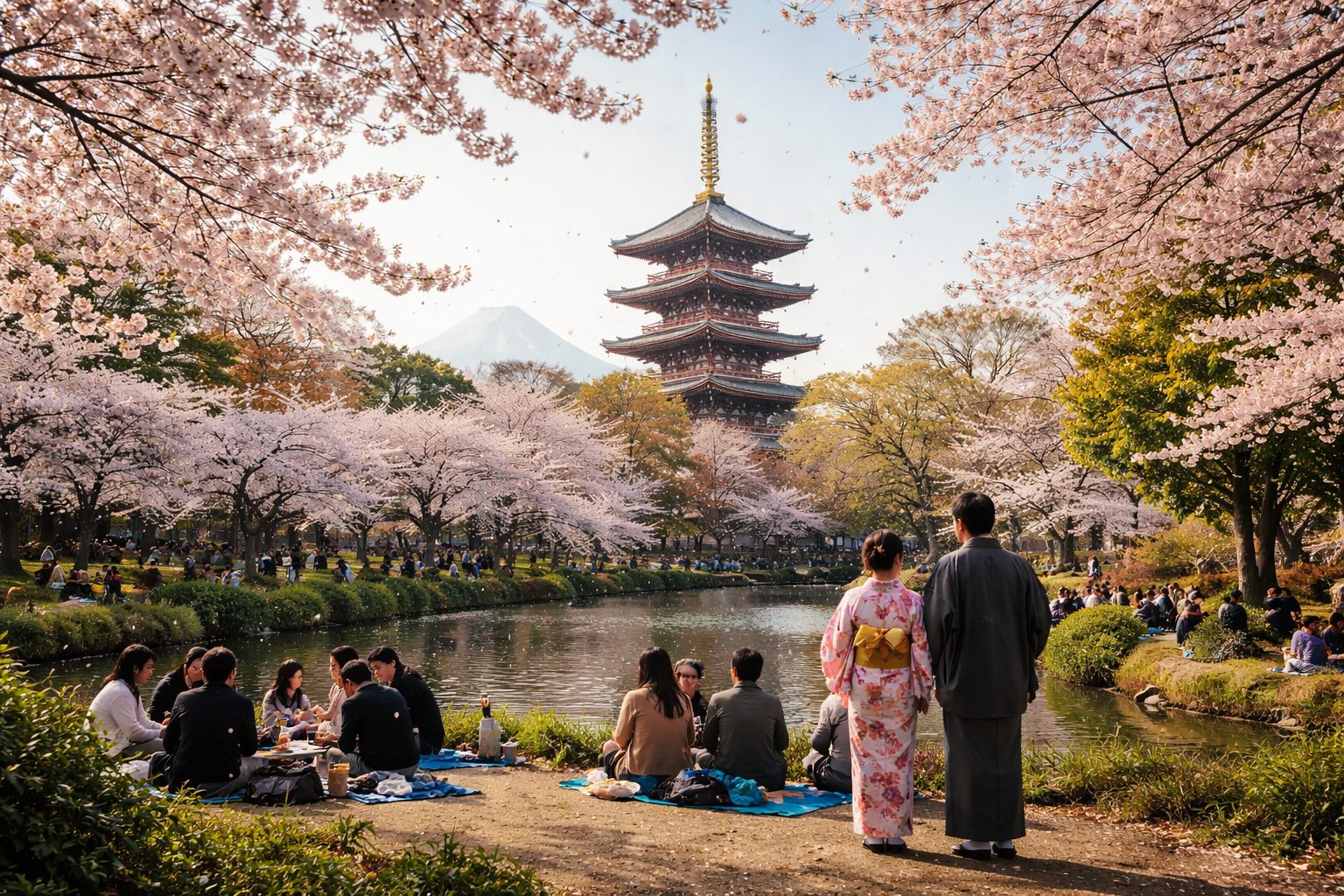
Cherry blossoms carry meaning that varies considerably across the cultures that celebrate them.
In Japan, the connection between sakura and impermanence runs deep. Samurai culture used cherry blossoms as a symbol of the warrior’s acceptance of death, since the blossoms fall at the height of their beauty. Contemporary Japanese society still connects the bloom to renewal, new beginnings, and the start of the academic and fiscal year in April.
In Korea, cherry blossoms arrived largely through Japanese colonial-era planting programs, which created complicated feelings about the tradition. Modern Korean culture has reclaimed the celebration on its own terms, particularly in destinations like Jinhae where the setting is distinctly Korean.
In the United States, the cherry blossom trees of Washington D.C. represent a diplomatic friendship that survived World War II and decades of international tension. Their continued presence along the Tidal Basin carries a quiet geopolitical meaning alongside their beauty.
In Chinese tradition, cherry blossoms represent femininity, love, and the power of beauty. In Buddhist contexts across several Asian cultures, the blossoms reinforce teachings about the temporary nature of all phenomena.
Understanding these layers of meaning doesn’t change what the blossoms look like, but it does change how the experience feels.
Cherry Blossom Varieties to Look For
Not all cherry blossoms are the same. Knowing a few key varieties helps you plan better and appreciate what you’re seeing.
- Yoshino (Prunus x yedoensis) – The most common variety in Japan and the U.S. Produces white to pale pink flowers that bloom early. Most of Washington D.C.’s Tidal Basin trees are Yoshino.
- Somei Yoshino – A specific cultivar of Yoshino, almost all specimens are clones, which means they bloom simultaneously across large areas. The synchrony is part of what creates the dramatic peak bloom effect in Japan.
- Weeping Cherry (Prunus pendula) – Recognized by its cascading branches. A single large weeping cherry in full bloom is one of the most visually striking trees in nature.
- Kanzan – A double-flowered variety with dense, pom-pom-like blossoms in deep pink. Blooms later than Yoshino, usually two to three weeks after. Common in the UK and parts of Europe.
- Taiwan Cherry (Prunus campanulata) – The species dominant in Taiwan and parts of the Philippines. Produces vivid reddish-pink flowers in late winter, earlier than Japanese varieties.
- Shidarezakura – Japanese name for weeping cherry varieties. Maruyama Park in Kyoto’s famous centerpiece tree is a shidarezakura.
- Somei Yoshino vs. Kanzan comparison: Yoshino blooms first, flowers before leaves appear, and is white-pink. Kanzan blooms later, flowers appear with or after leaves, and is deep pink with double petals.
FAQs About Cherry Blossoms
When is the best time to see cherry blossoms?
It depends entirely on your destination. In Japan, late March to early April is the standard window. In the Philippines and Taiwan, blooms arrive in January and February. In Sydney, the season runs from August to September. Always check local forecasts rather than relying on calendar averages, since bloom timing shifts by several weeks depending on the year’s weather.
How long do cherry blossoms bloom?
At any individual tree or location, peak bloom typically lasts one to two weeks. The full season, counting early-blooming varieties through late-blooming ones, can stretch across four to six weeks in a place like Shinjuku Gyoen in Tokyo. Rain and wind can shorten the peak window significantly, while cool, dry conditions extend it.
What should I wear during cherry blossom season?
Dress in layers. Spring weather during blossom season is frequently unpredictable, especially in Japan, Korea, and the northeastern United States. Morning temperatures can be cold while afternoons warm significantly. Comfortable walking shoes are essential since most of the best viewing requires extended walking. Light, neutral-colored clothing photographs well against the blossoms without competing visually.
Are cherry blossoms edible?
Yes, though the flowers themselves are mildly bitter and not particularly flavorful raw. In Japan, cherry blossoms are preserved in salt and used to flavor traditional foods like sakura mochi (a sweet rice cake), sakura tea, and various wagashi confections. The leaves are also edible when preserved similarly. Commercially, sakura flavor appears in seasonal everything from Starbucks drinks to Kit Kat bars in Japan.
Can cherry blossoms be seen outside of Japan?
Absolutely. Some of the best places to see cherry blossoms are outside Japan entirely. Washington D.C., Vancouver, Seoul, Bonn, Taipei, and Sydney all offer exceptional cherry blossom seasons with their own distinct characters. The experience of seeing blossoms against the Capitol Dome, or in a French formal garden, or along a Korean canal, is genuinely different from Japan and worth seeking out on its own terms.
Cherry blossom season is one of those rare natural events that rewards attention and planning without punishing casual visitors. Whether you end up in Tokyo or Newark, Kyoto or Vancouver, the experience of standing under a tree in full bloom and feeling the petals fall is one that most people find quietly transformative. The best places to see cherry blossoms are ultimately wherever you can get to when the timing is right, because the trees themselves do the rest of the work.