If you’ve ever floated face-down over a coral reef and watched a parrotfish glide beneath you, you already know the pull. Snorkeling is one of the most accessible ways to experience the ocean, and the world is full of extraordinary spots waiting to be explored. I’ve spent years seeking out the best places to snorkel, from shallow lagoons to remote atolls, and this guide brings together everything I’ve learned. Whether you’re a first-timer or a seasoned underwater explorer, you’ll find something here worth adding to your list.
Introduction to Snorkeling
What is Snorkeling?
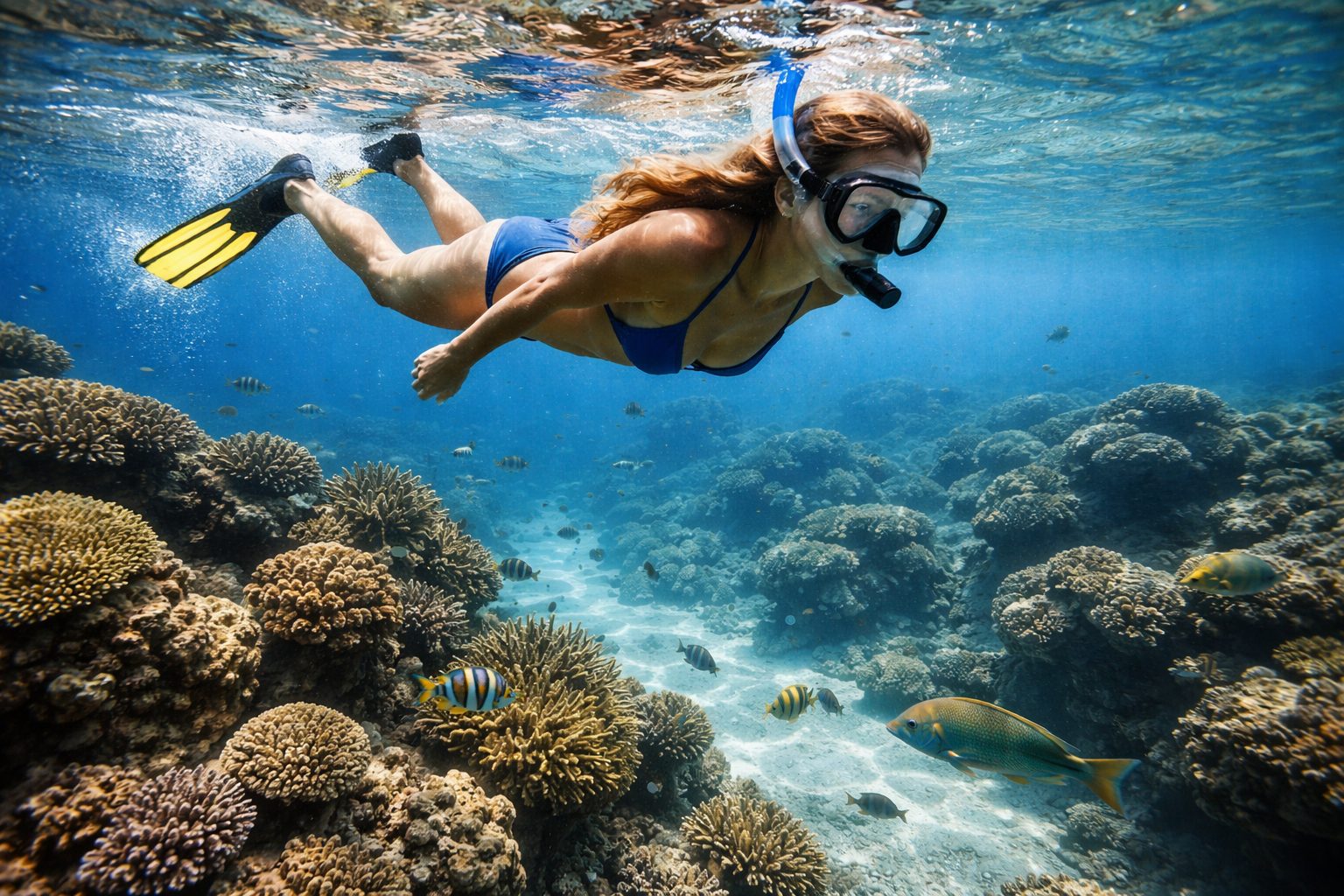
Snorkeling is a surface-level diving activity where you swim face-down wearing a mask, snorkel tube, and usually fins. You breathe through the tube while floating on the surface, observing the underwater world below. It requires no certification, no tank, and very little training. That simplicity is exactly what makes it so popular.
The gear is minimal. The learning curve is short. And the reward is immediate access to marine ecosystems that most people never get to see. You don’t need to go deep. A lot of the most vibrant reef life sits just a few meters below the surface.
Benefits of Snorkeling
Beyond the obvious visual thrill, snorkeling offers real physical and mental benefits. It’s a full-body low-impact workout that builds lung capacity and improves breath control over time.
- It reduces stress through focused, rhythmic breathing
- It builds core strength and improves swimming technique
- It connects you to natural environments in a genuinely immersive way
- It’s affordable compared to scuba diving
- It can be done almost anywhere with a coastline or reef
For families especially, it’s an activity that works across ages and fitness levels. A six-year-old and a sixty-year-old can share the same snorkeling experience in calm, shallow water.
Top 10 Best Places to Snorkel Worldwide
This list isn’t ranked by prestige. These are places I’d actually go back to, or am actively planning to visit. The criteria: water clarity, marine biodiversity, accessibility, and how the experience actually feels in the water.
1. Great Barrier Reef, Australia
The Great Barrier Reef stretches over 2,300 kilometers along Queensland’s northeast coast, and it’s the largest coral reef system in the world. The numbers are staggering: over 1,500 species of fish, 4,000 types of mollusk, and 30 species of whale and dolphin that pass through.
The best snorkeling sections are around the Outer Reef, particularly near Cairns and Port Douglas. Day trips depart daily from both towns. Visibility on calm days can exceed 20 meters. You’ll see everything from massive sea turtles to reef sharks to clouds of small tropical fish moving like a single organism.
The reef faces serious bleaching pressure from warming ocean temperatures, which makes visiting and supporting responsible tour operators more important than ever.
2. Hanauma Bay, Hawaii
Hanauma Bay on Oahu’s southeast coast is one of the most visited snorkeling spots in the United States, and for good reason. It’s a protected marine sanctuary formed inside a volcanic crater, which means calm, enclosed water and an extraordinary concentration of sea life.
You’ll reliably see green sea turtles, spinner dolphins (seasonally), and dozens of reef fish species. The bay limits daily visitor numbers, so you’ll want to book ahead. The educational center at the entrance is genuinely worth your time before you hit the water.
It’s shallow enough for beginners but interesting enough to keep experienced snorkelers engaged for hours.
3. Belize Barrier Reef, Belize
Belize has the second-largest barrier reef in the world and some of the most biodiverse waters in the Caribbean. The reef runs parallel to the coast for nearly 300 kilometers, with three major atolls sitting further offshore.
Turneffe Atoll and Glover’s Reef offer world-class snorkeling in relatively remote settings. The Great Blue Hole, made famous by Jacques Cousteau, is accessible by liveaboard or boat tour. Even the shallow patch reefs near the coast are dense with life.
Nurse sharks, eagle rays, and hawksbill turtles are common sightings. The water is warm year-round and visibility is typically excellent.
4. Maldives
The Maldives is a chain of 26 coral atolls sitting in the Indian Ocean, and almost every island comes with its own house reef. That means stepping off your resort jetty directly into some of the clearest, most biodiverse water in the world.
Whale sharks pass through seasonally around South Ari Atoll. Manta rays are common at cleaning stations around Baa Atoll. Reef life is dense and varied. Water temperatures stay between 26 and 29 degrees Celsius year-round with visibility regularly exceeding 30 meters.
The Maldives sits at the premium end of the budget spectrum, but there are guesthouses on local islands that offer a much more affordable experience.
5. Key West, Florida
Key West sits at the southern tip of Florida and offers access to the only living coral reef in the continental United States. The Florida Keys National Marine Sanctuary protects the reef and the species within it.
John Pennekamp Coral Reef State Park, just north of Key Largo, is one of the best-managed snorkeling areas in the country. Looe Key is another exceptional spot further down the Keys. Parrotfish, angelfish, barracuda, and moray eels are all common.
Water clarity is best in summer. The reef is shallower and more accessible than many international destinations, making it a solid option if you’re traveling within the US.
6. Bonaire, Caribbean
Bonaire is a small island off the Venezuelan coast and arguably the best shore snorkeling destination in the Caribbean. The entire coastline is a protected marine park, and the reef starts just meters from shore in many locations.
You can rent gear, drive to one of dozens of marked entry points, and be in the water within minutes. No boat required. The reef is in genuinely good health compared to much of the Caribbean, largely because fishing has been banned for decades.
Seahorses, flying gurnards, frogfish, and huge loggerhead turtles are among the more unusual sightings. This is a place that rewards slow, patient observation.
7. Galápagos Islands, Ecuador
The Galápagos are unlike anywhere else on Earth. The marine life here evolved largely without fear of predators, which means animals approach you with a curiosity that borders on disconcerting. Sea lions will play with your fins. Marine iguanas will swim past your face. Penguins will torpedo through your field of vision.
The water is cooler than most tropical snorkeling destinations, around 18 to 25 degrees Celsius depending on the season and location. You’ll want a wetsuit. But the experience is worth every degree of cold.
Access is through licensed tour operators. Independent snorkeling outside designated areas is restricted, which helps preserve the ecosystem.
8. Red Sea, Egypt
The Red Sea offers some of the most consistently excellent snorkeling in the world, combined with infrastructure and affordability that makes it accessible to almost any budget. Sharm el-Sheikh, Hurghada, and Dahab are the main hubs.
Visibility regularly reaches 30 meters. The water is warm almost year-round. And the reef walls at places like Ras Mohammed National Park or the Blue Hole near Dahab are breathtaking even from the surface.
Thistlegorm wreck is a short boat ride away for those interested in combining snorkeling with wreck exploration. The Red Sea also has exceptional coral health compared to many other global reefs.
9. Cozumel, Mexico
Cozumel sits in the Caribbean off the Yucatan Peninsula and is famous primarily as a dive destination, but the shallow reef sections are exceptional for snorkeling too. The Mesoamerican Barrier Reef runs along the island’s western coast.
Palancar Reef, Colombia Reef, and Chankanaab National Park are the main snorkeling zones. Splendid toadfish, which are endemic to Cozumel, are a unique local sighting. Currents here can be strong, which is actually helpful: drift snorkeling in the current is an easy way to cover a lot of reef with minimal effort.
Water temperatures average around 27 degrees Celsius, and visibility is frequently above 30 meters.
10. Fiji
Fiji’s 300-plus islands sit in the South Pacific and contain some of the most vibrant soft coral formations in the world. The Beqa Lagoon and the Somosomo Strait (Rainbow Reef) are particularly spectacular.
The water is warm, visibility is excellent, and the mix of hard and soft coral makes for visually stunning environments. Mantis shrimp, octopus, and an enormous variety of reef fish are common sightings.
Fiji is also genuinely friendly and well-set-up for tourism, which makes logistics easy. Many resorts have direct access to good snorkeling from the beach.
Best Places to Snorkel for Beginners
Equipment Needed for Beginners
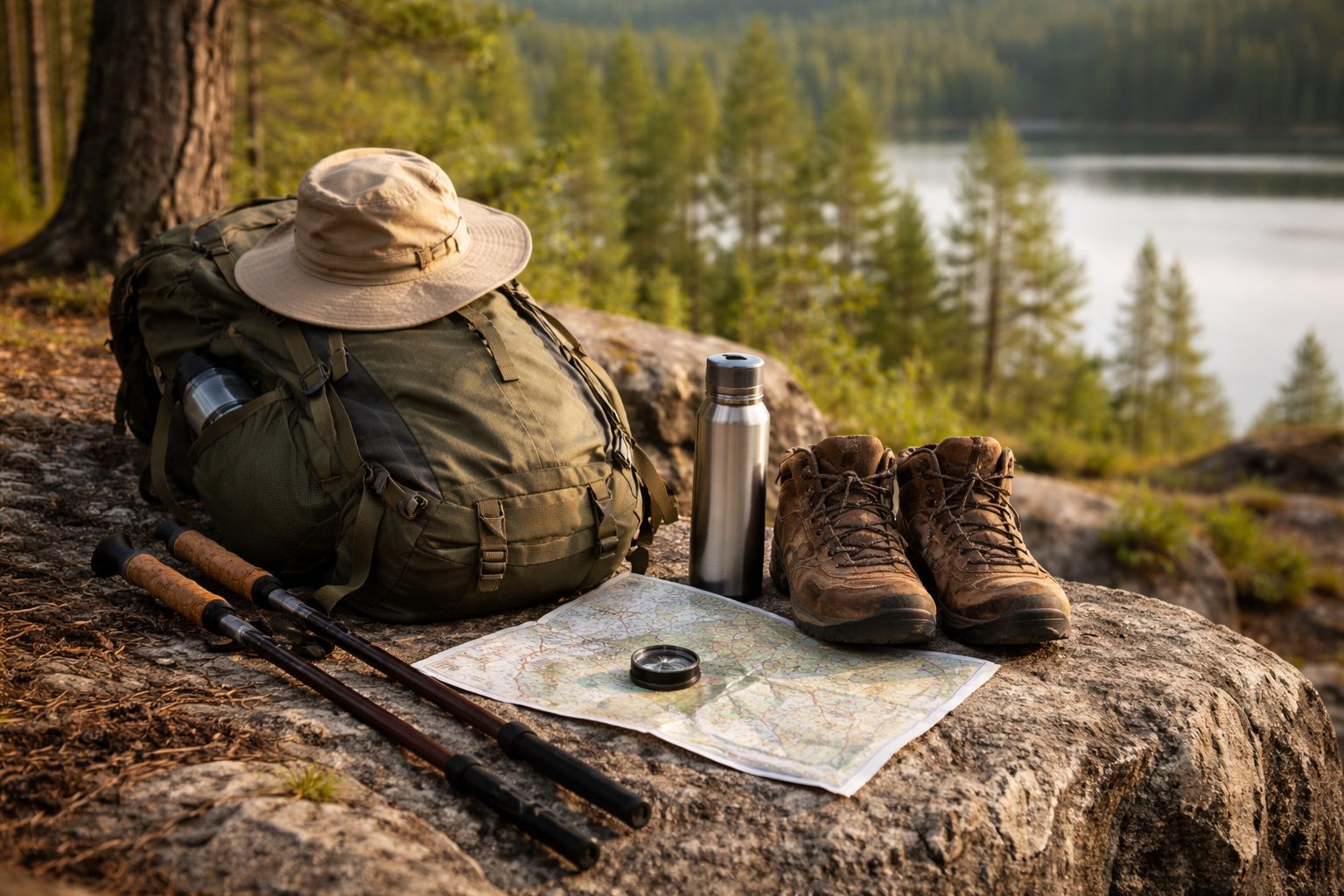
Getting started doesn’t require much, but quality gear makes an enormous difference in how comfortable the experience is.
- Mask: The fit matters more than anything. A leaking mask ruins the experience. Test by pressing the mask to your face without the strap and inhaling gently through your nose. It should hold without the strap.
- Snorkel: A simple J-shaped tube is fine. Dry-top snorkels with valves can feel restrictive but prevent water ingress.
- Fins: Full-foot fins are warmer and easier to use for beginners. Open-heel fins with booties offer more control.
- Wetsuit or rash guard: Even in warm water, a rash guard protects against sunburn and minor jellyfish stings.
Renting from a reputable operator at your destination is a perfectly reasonable option if you don’t want to travel with gear.
Recommended Locations for Beginners
The best beginner destinations are calm, shallow, and have protected entry and exit points. Strong currents, boat traffic, and deep water are the main risks to avoid early on.
- Hanauma Bay, Hawaii: Enclosed, calm, with a sandy bottom and excellent visibility
- Cayo Coco, Cuba: Shallow protected lagoons with easy access
- Shark Bay, Turks and Caicos: Calm, crystal-clear water with friendly nurse sharks in the shallows
- Ningaloo Reef, Australia: Vast and accessible, with calm conditions along much of the coast
- Oludeniz, Turkey: Warm, sheltered lagoon water with easy entry points
Start in knee-deep water to practice breathing through the snorkel before you swim out. Take your time.
Best Places to Snorkel for Advanced Snorkelers
Challenges and Unique Experiences
Advanced snorkeling isn’t just about going further or staying down longer. It’s about seeking out conditions and environments that reward experience and comfort in the water.
Strong currents, deeper reef features, encounters with larger pelagic species, and freediving down to get a closer look at specific formations all fall into this category. Some destinations require a genuine understanding of tides, currents, and safety protocols before you go in.
Night snorkeling is another level entirely. The reef transforms after dark, and creatures that hide during the day, like octopus and large crustaceans, are suddenly active and visible.
Recommended Locations for Advanced Snorkelers
- Galápagos Islands: Cold water, strong currents, and extraordinary animal encounters
- Komodo, Indonesia: Strong tidal currents and massive manta ray populations
- Palau: Jellyfish Lake (unique experience), cave snorkeling, and pelagic species
- Socorro Islands, Mexico: Remote, cold, and home to giant manta rays and whale sharks
- Cocos Island, Costa Rica: Hammerhead sharks and strong currents in open water
These spots require physical fitness, comfort with currents, and ideally some experience with freediving techniques.
Snorkeling vs. Scuba Diving: Which is Better?
Key Differences
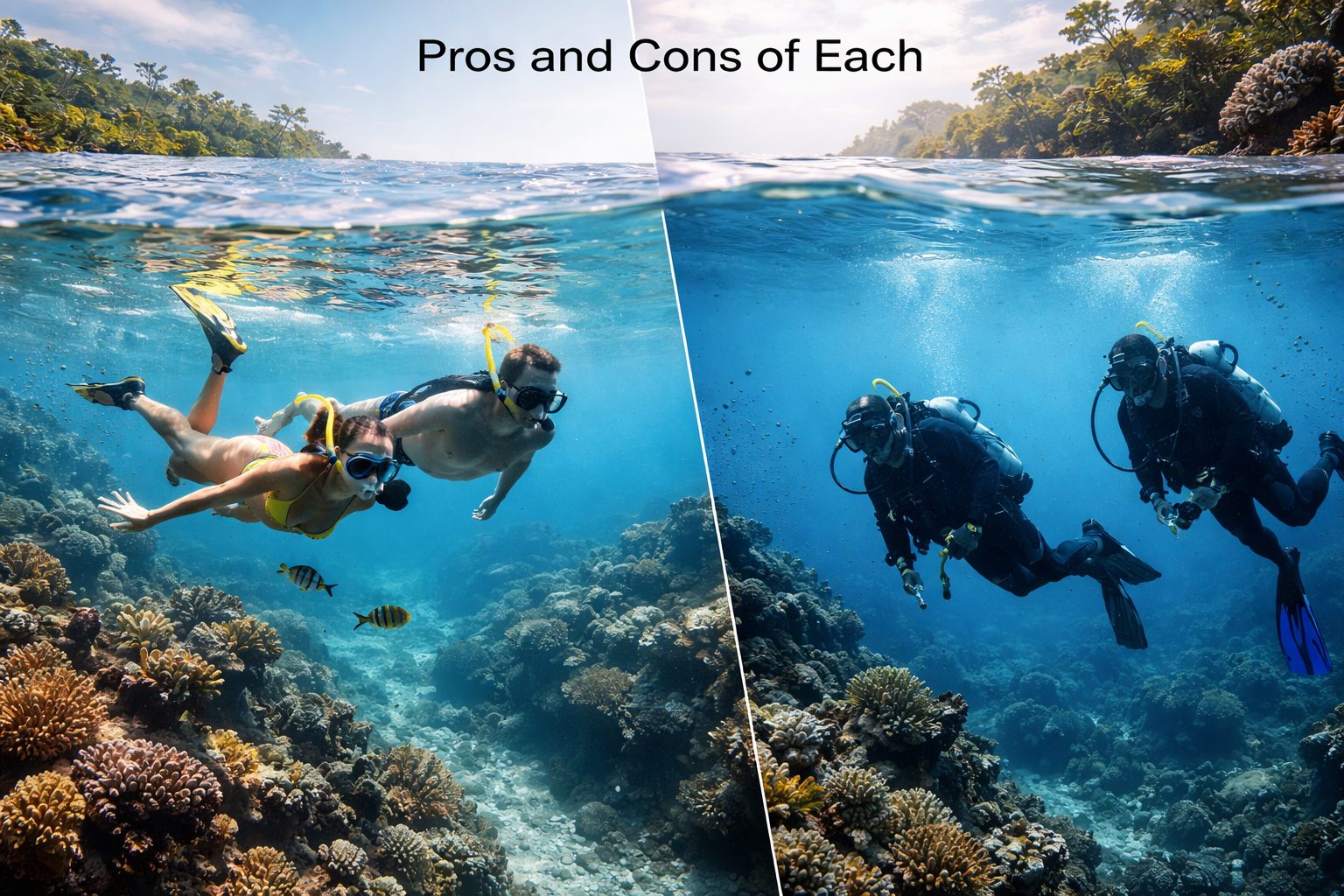
The honest answer is that neither is objectively better. They offer fundamentally different experiences, and the right choice depends on what you’re looking for.
Snorkeling keeps you on the surface. You can breathe continuously, stay out as long as you want, and get in and out of the water easily. You’re limited to what’s visible from above.
Scuba diving takes you down to the reef at depth. You can explore structures that aren’t visible from the surface, interact with life at different depth levels, and spend extended time at depth. But it requires certification, equipment, a buddy, and dive planning.
Pros and Cons of Each
| Feature | Snorkeling | Scuba Diving |
|---|---|---|
| Cost | Low | High |
| Certification required | No | Yes |
| Equipment | Minimal | Extensive |
| Depth access | Surface only | 30–40m typical |
| Duration limit | Unlimited | Tank-limited (45–60 min) |
| Accessibility | All ages/fitness levels | Requires fitness screening |
| Marine life access | Reef surface | Full reef and deeper |
| Learning curve | Hours | Several days minimum |
For most casual ocean lovers, snorkeling delivers 80% of the visual experience at 20% of the complexity. For people who want to really explore the underwater world in depth, scuba opens a completely different dimension.
Essential Tips for Snorkeling
Safety Tips
Snorkeling is low-risk, but it’s not zero-risk. A few habits keep you safe.
- Never snorkel alone, especially in open water
- Check the current direction before you enter, and enter upcurrent so you drift back to your exit point
- Wear a bright-colored inflatable safety marker or tow float so boats can see you
- Learn to equalize ear pressure before freediving below the surface
- Respect your energy limits. Fatigue in water is dangerous.
- Don’t touch coral, shells, or marine life. Beyond environmental impact, some species bite or sting.
Sun exposure is a real hazard. You can burn the back of your legs, neck, and arms badly without feeling it while you’re in the water. A full rash guard or wetsuit is the best protection.
How to Choose the Right Gear
Good gear isn’t necessarily expensive gear, but cheap masks with poor seals will ruin your trip. Here’s what to prioritize:
- Mask: Tempered glass lens, silicone skirt, and adjustable strap. Try it on before you buy.
- Snorkel: A simple bore design with a comfortable mouthpiece. Purge valves make clearing easier.
- Fins: Matched to your swimming ability. Stiffer fins are more powerful but harder work. Softer fins are more comfortable for casual use.
- Wetsuit: 3mm for warm water (above 24°C), 5mm for cooler conditions
Avoid full-face snorkel masks. They’ve been linked to CO2 buildup in certain conditions and are not recommended for active snorkeling.
Environmental Considerations
Snorkeling puts you in direct contact with fragile ecosystems. Your behavior in the water matters.
- Use reef-safe sunscreen only. Oxybenzone and octinoxate are banned in Hawaii and Palau for their toxicity to coral.
- Never stand on, touch, or anchor near coral reefs
- Don’t collect anything, including shells. They’re part of the ecosystem.
- Choose operators who follow sustainable practices
- Keep at minimum one meter of distance from turtles, rays, and other large marine animals
The reefs that exist today are the product of thousands of years of growth. A casual act of carelessness can damage structures that took decades to form.
Snorkeling Destinations by Region
Best Places to Snorkel in the Caribbean
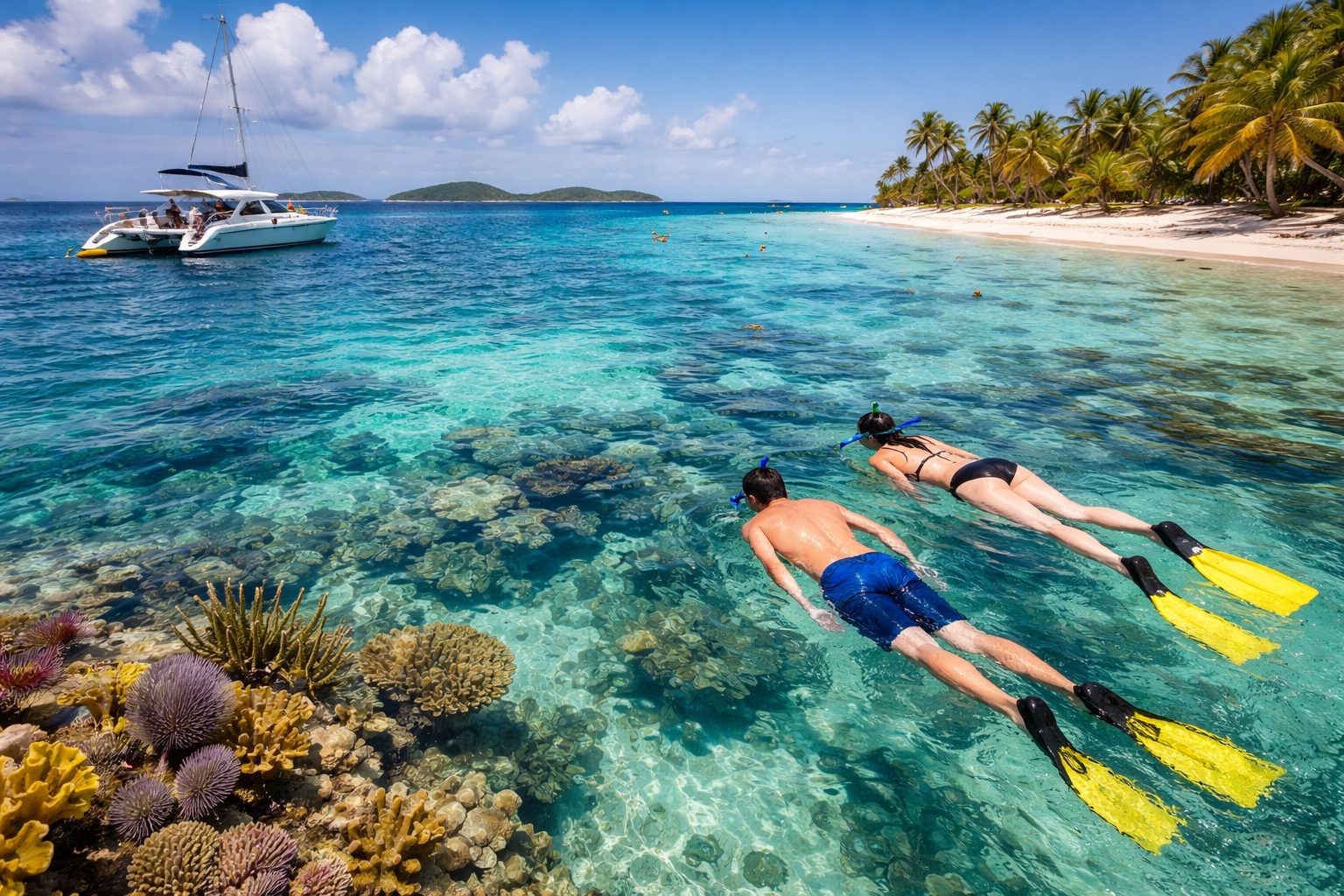
The Caribbean has dozens of excellent snorkeling spots scattered across island chains from the Bahamas down to Trinidad. Bonaire is consistently at the top for reef health. The Turks and Caicos, particularly Grace Bay and the barrier reef beyond, offer exceptional clarity.
Barbados has a surprisingly good snorkeling scene along its west coast. Antigua has protected reefs near English Harbour. And the British Virgin Islands, particularly around Virgin Gorda and Anegada, have calm, clear water with good reef coverage.
Water temperatures across the Caribbean stay between 26 and 30 degrees Celsius year-round, which means no wetsuit necessary for most people.
Best Places to Snorkel in the Pacific
The Pacific is enormous and the snorkeling quality varies enormously. But the high points are extraordinary.
Palau’s Rock Islands are one of the most biodiverse marine environments on the planet. Micronesia generally offers pristine reefs with relatively few visitors. The Coral Triangle, which spans parts of Indonesia, the Philippines, and Papua New Guinea, contains more marine species than anywhere else on Earth.
Closer to shore, places like the Similan Islands in Thailand, Komodo in Indonesia, and Tubbataha Reef in the Philippines are exceptional.
Best Places to Snorkel in the Indian Ocean
The Indian Ocean combines warm, clear water with dramatic reef systems and year-round accessibility in many locations. The Maldives leads the list by any measure.
Sri Lanka has underrated snorkeling, particularly around Pigeon Island off Trincomalee. The Seychelles offers remote, pristine reefs around Aldabra Atoll. Zanzibar in Tanzania has coral gardens at Mnemba Atoll that are genuinely world-class.
Ningaloo Reef in Western Australia also sits in the Indian Ocean and deserves far more attention than it typically gets internationally.
Snorkeling with Kids: Family-Friendly Locations
Safety Considerations for Kids
Kids can start snorkeling young, but the experience needs to be tailored to their comfort and ability. Starting in very shallow, calm water where they can stand if needed builds confidence without risk.
A few key considerations:
- Ensure the mask fits properly. Children’s masks in the right size make a huge difference.
- Use a flotation vest for younger children who aren’t strong swimmers
- Never let children snorkel without an adult in the water alongside them
- Avoid areas with boat traffic, strong currents, or surge
- Start with short sessions to avoid fatigue
Children tire more quickly in the water than adults realize. Watch for shivering, pale skin, or signs of anxiety as indicators to get back to shore.
Recommended Family-Friendly Snorkeling Spots
- Hanauma Bay, Hawaii: Shallow, calm, enclosed, with lifeguards on duty
- Buck Island Reef, US Virgin Islands: A protected national monument with calm, shallow reef
- Anse Lazio, Seychelles: Crystal-clear shallow water with a sandy, easy entry
- Kealakekua Bay, Hawaii: Remote but calm, accessible by kayak or boat
- Molokini Crater, Hawaii: A partially submerged crater that provides a perfectly calm interior
Anywhere with a sandy entry and exit, calm water, and no boat traffic within the snorkeling zone works well for families. Avoid rocky shore entries with young children.
Preparing for Your Snorkeling Trip
What to Pack
Beyond your gear, a few additional items make any snorkeling trip more comfortable.
- Defogger spray or gel for your mask lens (or just use a drop of dish soap rinsed out)
- Reef-safe sunscreen, SPF 50 or above
- Rash guard or lightweight wetsuit
- Dry bag to keep your phone and wallet safe on the boat
- Motion sickness medication if you’re prone to seasickness on boat trips
- Reusable water bottle. You’ll be more dehydrated than you realize after a session in the water.
- Snorkeling logbook or app if you want to record species sightings
A waterproof camera or underwater housing for your phone adds a lot to the experience. Even a cheap action camera captures extraordinary footage in clear water.
Best Times to Go Snorkeling
Timing your snorkeling sessions makes a real difference. Conditions in the morning are usually calmer and clearer before afternoon winds pick up. Marine life is often more active in the early morning hours too.
Seasonally, the best time varies by destination:
- Caribbean: December to April (dry season, calm seas)
- Maldives: November to April (northeast monsoon, clearest water)
- Red Sea: Year-round, but March to May and September to November are optimal
- Great Barrier Reef: June to October (cooler, clearer water, calmer conditions)
- Hawaii: Year-round, but summer months bring the calmest conditions on the south coasts
Avoid snorkeling after heavy rain or storms. Runoff and surge dramatically reduce visibility and can stir up sediment that makes the experience poor.
Frequently Asked Questions (FAQ)
What is the best time of year for snorkeling?
It depends entirely on the destination. Most tropical destinations have a dry season with calmer, clearer water that’s ideal for snorkeling. Check wind patterns, seasonal currents, and jellyfish seasons for your specific location. As a general rule, avoid monsoon or storm seasons.
How do I find the best snorkeling spots?
Local dive shops and snorkeling operators are the most reliable source of current information. Online communities like Snorkel Around the World or regional dive forums also have detailed, up-to-date reports. Google Maps satellite view can help you identify reef structures close to shore that might be worth investigating.
Is snorkeling safe for non-swimmers?
Non-swimmers can snorkel with a flotation vest or life jacket, but they should stay in very shallow water with a supervising adult and avoid any area with current. Some tour operators offer guided sessions specifically for non-swimmers. It’s a manageable experience with the right support, but honesty about your abilities with the operator is important.
What marine life can I expect to see while snorkeling?
This varies by location, but most tropical reef environments offer reef fish, sea turtles, rays, and various invertebrates at minimum. In high-biodiversity locations like the Coral Triangle or the Maldives, the variety can be extraordinary. Research the specific species present at your destination before you go so you know what to look for.
Knowing what you’re seeing in the moment makes the experience significantly richer, and field guides or snorkeling ID apps are worth downloading before your trip.