
Traveling to japan with kids is one of those experiences that genuinely surprises most families. You expect the food to be tricky, the language barrier to be exhausting, and the crowds to be overwhelming. Instead, you get a country that treats children with warmth, runs on predictable schedules, and offers so much variety that even the most restless eight-year-old stays entertained. I’ve traveled Japan with a toddler and again with older kids, and each time I come back thinking it’s one of the most family-friendly destinations in the world. That opinion holds whether you’re visiting for a week or a month.
Introduction to Japan with Kids
Japan rewards families who take the time to plan well. The country isn’t effortless by any means. Long bullet train rides, jet lag, and unfamiliar food require preparation. But the infrastructure is excellent, safety is rarely a concern, and people go out of their way to help you even when there’s no shared language.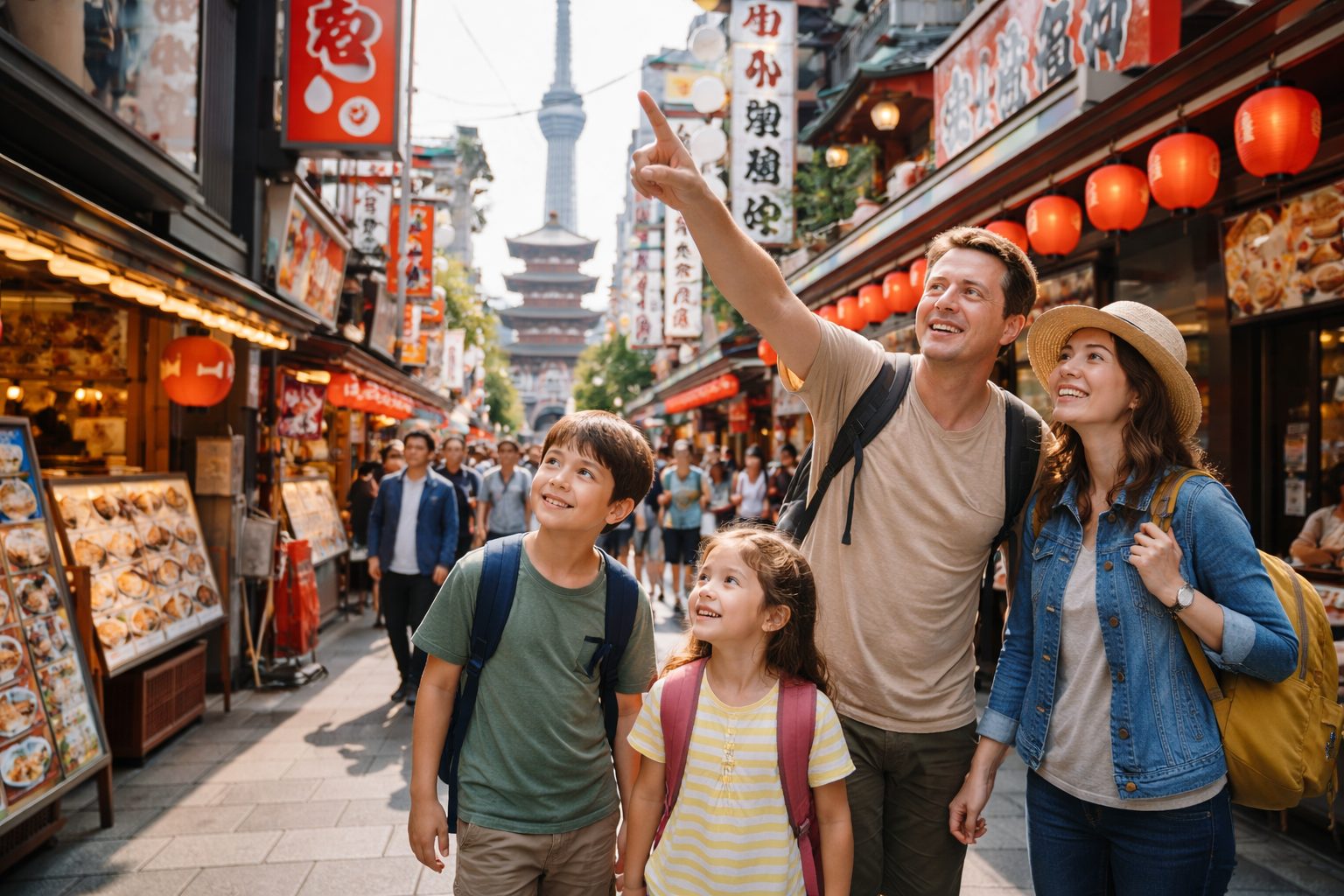
What makes japan with kids so manageable is the predictability. Trains run on time. Convenience stores stock everything from baby food to snacks. Hotels and guesthouses understand family needs. And children are genuinely welcomed in restaurants, temples, and public spaces in a way that feels natural rather than performative.
The key is calibrating your expectations and pace. Japan is not a country where you rush through ten cities in two weeks with young children. Pick fewer places, allow slower mornings, and build in time for the unexpected. That’s when the real memories happen.
Why Choose Japan for Family Travel?
There are dozens of reasons families keep coming back to Japan, but a few stand out consistently.
- Safety: Japan consistently ranks among the safest countries in the world. Children can move through public spaces with a level of independence that’s rare in most destinations.
- Cleanliness: Streets, public toilets, restaurants, and transport hubs are exceptionally well-maintained. For parents traveling with young kids, this matters more than it sounds.
- Food variety: From ramen to rice bowls to udon to bento boxes, Japanese cuisine naturally suits kids. Portions are well-sized, and menus in tourist areas often have pictures.
- Cultural novelty: Japan offers experiences that are genuinely unlike anything kids encounter at home, from robot restaurants to fox villages to century-old temples still in active use.
- Transport efficiency: The train network is remarkable. Getting between cities is easy, comfortable, and punctual.
Beyond logistics, Japan offers something harder to quantify: a sense of discovery. Every neighborhood has something unusual, every market has something delicious, and every season brings a different kind of beauty. Traveling to japan with kids means you’re constantly answering “what’s that?” and that curiosity is worth a lot.
Best Times to Visit Japan with Kids
The best time to visit depends on what you want your family to experience.
Spring (late March to early May) is the most popular season, largely due to cherry blossoms. The pink blooms create an atmosphere that’s genuinely magical, even for kids who can’t quite articulate why. The downside is crowds and premium prices, especially around Golden Week at the start of May.
Autumn (October to mid-November) is my personal preference for traveling with children. The weather is mild, the foliage is spectacular, and the crowds are slightly lower than spring. Kids love jumping in fallen leaves, and the temperatures make walking cities much more comfortable than summer.
Summer (July to August) is hot and humid, particularly in central and southern Japan. That said, summer brings festivals, fireworks, and beach trips to Okinawa that kids absolutely love. Just expect heat and plan your days around shade and cool indoor activities during peak hours.
Winter (December to February) is underrated for families. Hokkaido becomes a snow paradise, and ski resorts welcome children with gear rentals and lessons. Tokyo and Kyoto are cold but manageable, and the lack of crowds makes iconic sights more accessible.
| Season | Best For | Watch Out For |
|---|---|---|
| Spring | Cherry blossoms, mild weather | Crowds, Golden Week prices |
| Summer | Festivals, beaches, fireworks | Heat, humidity |
| Autumn | Foliage, comfortable weather, fewer crowds | Typhoon risk in September |
| Winter | Snow activities, Hokkaido skiing | Cold in Honshu, closures |
School holiday timing in your home country will inevitably shape your decision. If you have flexibility, late October through early November is a particularly strong window.
Top Family-Friendly Destinations in Japan
Japan has more destinations worth visiting than any two-week trip can cover. For families, some cities stand out above the rest.
Tokyo: A Kid’s Paradise
Tokyo is an overwhelming city for adults. For kids, it’s something close to a dream. The scale, the density, and the sheer variety of things to see and do make it endlessly stimulating.
Shibuya’s scramble crossing alone can hold a child’s attention for ten minutes. Akihabara’s electronics and gaming shops are sensory overload in the best possible way. Harajuku offers fashion and crepes in a compact strip. And neighborhoods like Yanaka give you a quieter, older side of Tokyo that feels worlds away from the neon-lit center.
The most iconic family stops in Tokyo include:
- TeamLab digital art museums (there are several locations)
- Ueno Zoo and Ueno Park
- Tokyo Disneyland and DisneySea
- Shinjuku Gyoen for open space and picnics
- Odaiba for interactive science museums and waterfront views
- Akihabara for gaming culture and arcades
DisneySea in particular deserves a mention. It’s regularly voted one of the best theme parks in the world, and unlike the American Disney parks, it feels genuinely original. Lines are long, so arrive early and use the app to manage queues.
Kyoto: Culture and Fun
Kyoto is where Japan’s history feels most tangible. Ancient temples, traditional tea houses, bamboo groves, and geisha districts all coexist in a city that’s entirely manageable on bike or on foot.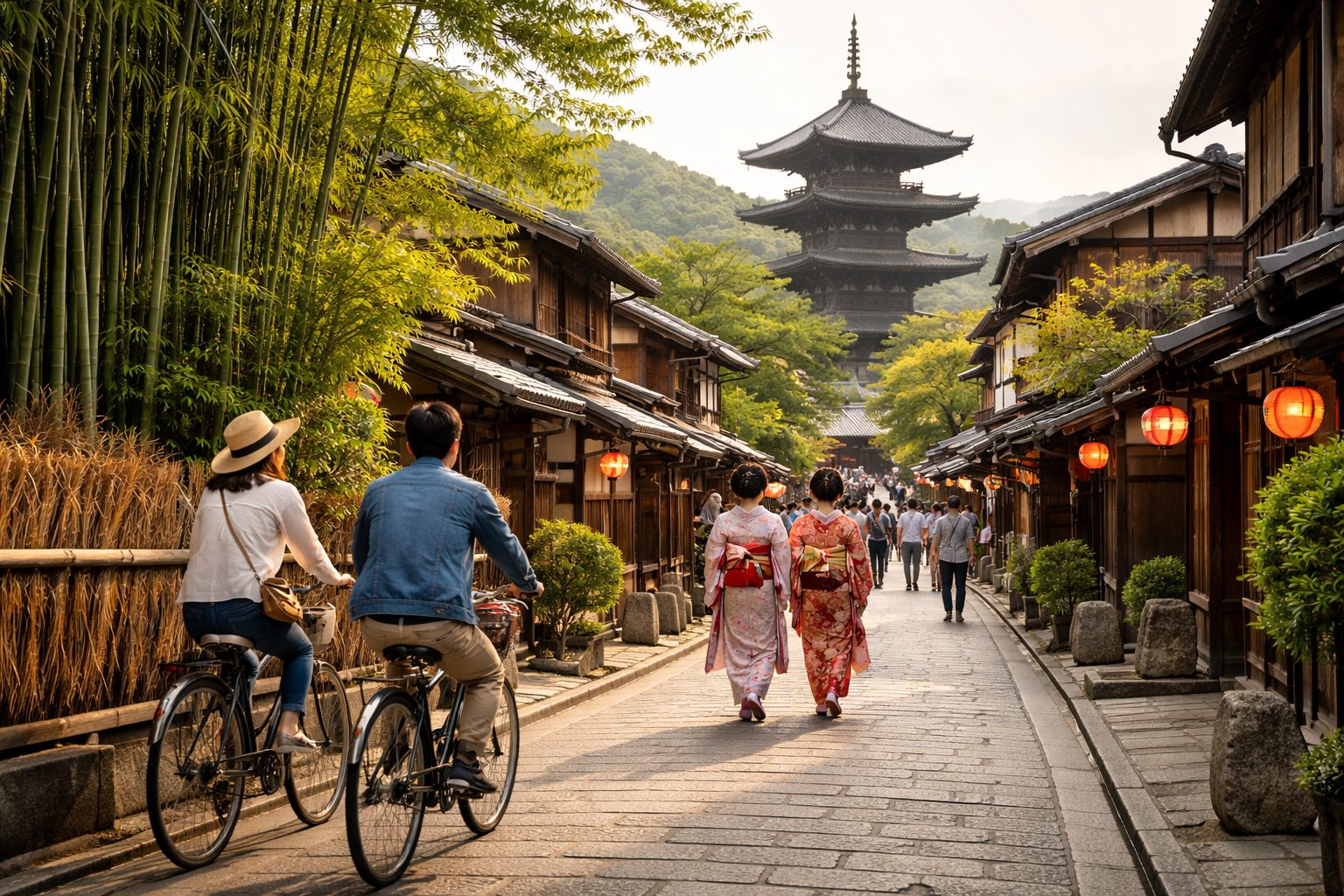
For kids, Kyoto can sometimes feel like a lot of “quiet looking.” The trick is mixing temple visits with more tactile experiences. Nishiki Market is an excellent sensory detour: smells, textures, samples, and vendors who are often happy to explain what they’re selling. Arashiyama’s bamboo grove is a short walk that genuinely impresses children of all ages.
Some Kyoto highlights for families:
- Fushimi Inari shrine with its thousands of torii gates (kids love the tunnel effect)
- Arashiyama bamboo grove and boat rides
- Nishiki Market for food exploration
- Toei Kyoto Studio Park, a working film set and samurai theme park
- The train to Kurama for a mountain hiking experience
Renting bikes in Kyoto is one of the best decisions you can make with kids old enough to ride. The city is flat and cycle-friendly, and it gives children a sense of freedom and ownership over the day.
Osaka: Food and Amusement Parks
Osaka is Japan’s food capital, and kids respond to that immediately. Takoyaki (octopus balls), okonomiyaki (savory pancakes), and yakitori skewers are street foods that even picky eaters tend to try. The city has an energy and a humor to it that differs from Tokyo’s intensity or Kyoto’s reverence.
Dotonbori is the place to start. The neon signs, the giant mechanical crab, the street food stands, and the canal make it one of the most visually engaging neighborhoods in Japan. Kids find it exciting without needing any cultural context.
Universal Studios Japan is in Osaka and draws families from across the region. The Wizarding World of Harry Potter is impressively realized, and there are enough rides and shows to fill a full day easily.
Beyond USJ, families can explore:
- Osaka Aquarium Kaiyukan, one of the largest in the world
- Osaka Castle and its park grounds
- Cup Noodles Museum in nearby Ikeda (kids can design their own instant noodle cup)
Hokkaido: Nature Adventures
Hokkaido is Japan’s northern island and it operates at a completely different pace. In summer, lavender fields, wildlife, and hiking trails make it an outdoor paradise. In winter, the snowfall transforms it into one of Asia’s premier ski destinations.
Families who love nature gravitate toward Hokkaido more than any other region. Noboribetsu has bear parks and volcanic hell valleys. Shiretoko is a UNESCO World Heritage site where brown bears fish for salmon in autumn. Furano’s flower fields in July are something out of a postcard.
For ski families, Niseko is the benchmark. It offers English-language ski schools, beginner terrain, excellent resort infrastructure, and some of the best powder snow in the world. Children’s ski programs are well-organized and genuinely fun.
Okinawa: Beaches and Relaxation
Okinawa is a different Japan entirely. The culture, the food, the architecture, and the landscape owe as much to Southeast Asia as they do to the Japanese mainland. And the beaches are excellent.
For families wanting a beach holiday with Japanese convenience and safety, Okinawa delivers well. The water is warm and clear from April through October, snorkeling is accessible for kids, and the resorts around Naha and the outer islands cater specifically to families.
Okinawa Churaumi Aquarium is one of the best in Asia and houses whale sharks in a tank large enough to feel genuinely awe-inspiring. The aquarium alone justifies the flight for younger children.
Kid-Friendly Activities in Japan
Visiting Theme Parks in Japan
Japan’s theme park culture is serious. The country doesn’t do half-measures when it comes to immersive entertainment.
Tokyo Disneyland and DisneySea operate at a level that Disney parks in other countries often don’t match. DisneySea in particular is designed with more adult and family-oriented rides, and the theming is extraordinarily detailed.
Universal Studios Japan in Osaka competes hard for the top spot. The Harry Potter section is expertly built, and seasonal events like Halloween Horror Nights (better for teens) and USJ’s family events make repeat visits worthwhile.
Fuji-Q Highland near Mount Fuji specializes in extreme roller coasters, which suits older kids and teenagers better than families with very young children. Sanrio Puroland in Tokyo is the opposite end of the spectrum and genuinely delights children in the three to eight age range.
Lesser-known but excellent options include:
- Huis Ten Bosch in Nagasaki (Dutch-themed resort with seasonal light shows)
- Toei Kyoto Studio Park (samurai shows and hands-on experiences)
- Nikko Edo Village (historical theme park with ninja shows)
Exploring Museums with Kids
Japanese museums are often underestimated by visiting families. Many are exceptionally well-designed for children.
The National Museum of Nature and Science in Ueno has interactive exhibits on natural history, technology, and space that engage kids from about age five upward. The Miraikan science museum on Odaiba is similarly hands-on and includes robotics demonstrations and a giant globe display showing real-time satellite data.
The Ghibli Museum in Mitaka is arguably the most beloved museum in Japan for families with children who know Studio Ghibli films. It’s small, whimsical, and beautifully designed. Tickets sell out weeks in advance, so book well before you travel.
For history-oriented families, the Hiroshima Peace Memorial Museum handles its subject with care and precision. It’s appropriate for older children and teenagers, and the experience is genuinely moving rather than gratuitously graphic.
Nature Activities for the Whole Family
Japan’s natural landscapes are as diverse as the country’s urban offerings. Mountains, coastlines, forests, and volcanic terrain are all accessible within a reasonable distance from major cities.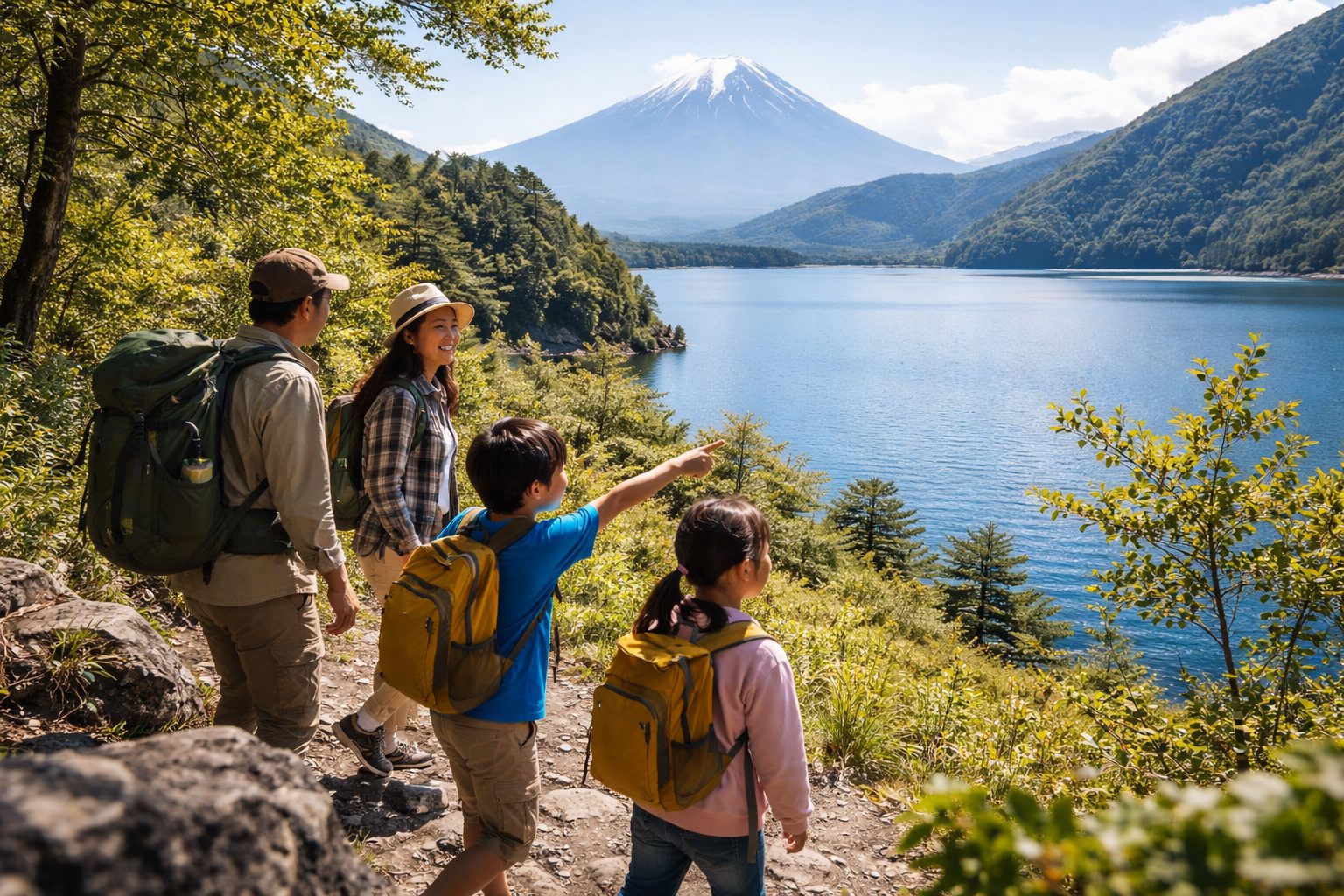
Hiking in Japan is family-friendly once you choose the right trail. The Kumano Kodo pilgrimage route in the Kii Peninsula has shorter day sections accessible to children. Mount Takao near Tokyo is an easy half-day hike for families with kids aged five and up. Nikko’s forest trails are magnificent in autumn.
Deer parks at Nara are a perennial family favorite. The deer wander freely through the park and will eat crackers from children’s hands. It’s charming and occasionally chaotic in the best way.
Snow monkey parks in Nagano, where Japanese macaques bathe in hot spring pools, are extraordinary for families. Watching monkeys in their natural behavior is genuinely educational, and the walk through the forested path to reach the park adds to the experience.
Cultural Experiences: Festivals and Traditions
Japanese festivals, or matsuri, happen throughout the year and throughout the country. For families, they offer something no museum can fully replicate: living culture in motion.
Summer festivals typically feature:
- Yukata (light kimono) dressing
- Street food stalls selling kakigori (shaved ice), yakisoba, and taiyaki
- Traditional dance performances
- Fireworks displays that rank among the best in the world
Autumn harvest festivals and lantern festivals carry their own atmosphere. Kyoto’s Gion Matsuri in July is one of Japan’s largest and most theatrical.
Many cultural experiences are available in organized formats specifically for tourists. Kimono dressing, tea ceremony participation, calligraphy lessons, and taiko drumming workshops can all be booked in major tourist areas. These work especially well for kids aged eight and up who can engage with instruction.
Practical Tips for Traveling in Japan with Kids
Navigating Public Transport with Children
Japan’s train system is extraordinary but can be confusing on first encounter. The key tools are:
- Get an IC card (Suica or Pasmo) for every member of the family. These rechargeable cards work on nearly all trains, buses, and even convenience stores.
- Download Google Maps before you arrive. It reads Japanese transit timetables accurately and gives you platform numbers and transfer instructions.
- Know that stroller rules vary by train. On busy urban lines, folding your stroller during peak hours is expected. On Shinkansen bullet trains, reserving the rear-most seats gives you space to park a stroller.
- Children under six ride free on most trains and buses. Ages six to eleven pay child fares at roughly half the adult price.
The Shinkansen is genuinely exciting for kids. Most children who’ve never ridden a bullet train before are thrilled by the speed and the views. Build it in as an experience, not just transport.
Accommodation Options for Families
Japan offers more accommodation variety than most countries, and several formats suit families particularly well.
Traditional ryokan inns are an excellent choice if your children are old enough to understand the house rules. You sleep on futons, eat kaiseki meals, and bathe in onsen baths. Children over a certain age (often five or six) are welcome at most ryokan, but confirm before booking. The cultural immersion is unmatched.
Business hotels like Dormy Inn, APA Hotel, and Toyoko Inn are efficient and affordable. Connecting room options are available in larger properties. These are practical choices for city nights when you’re prioritizing budget over atmosphere.
Family-oriented resort hotels, particularly in Okinawa and Hokkaido, offer Western-style rooms large enough for families, kids’ clubs, and pools. These resorts feel familiar to families who want ease alongside the cultural experience.
Apartment rentals through platforms like Airbnb or Rakuten STAY are worth considering for stays of four nights or more. Having a kitchen saves money on meals and gives children (and parents) the downtime they need.
Dining Out: Family-Friendly Restaurants
Eating in Japan with kids is easier than it first appears. Japanese cuisine is not inherently spicy, and many staples like noodles, rice, grilled chicken, and miso soup are universally liked by children.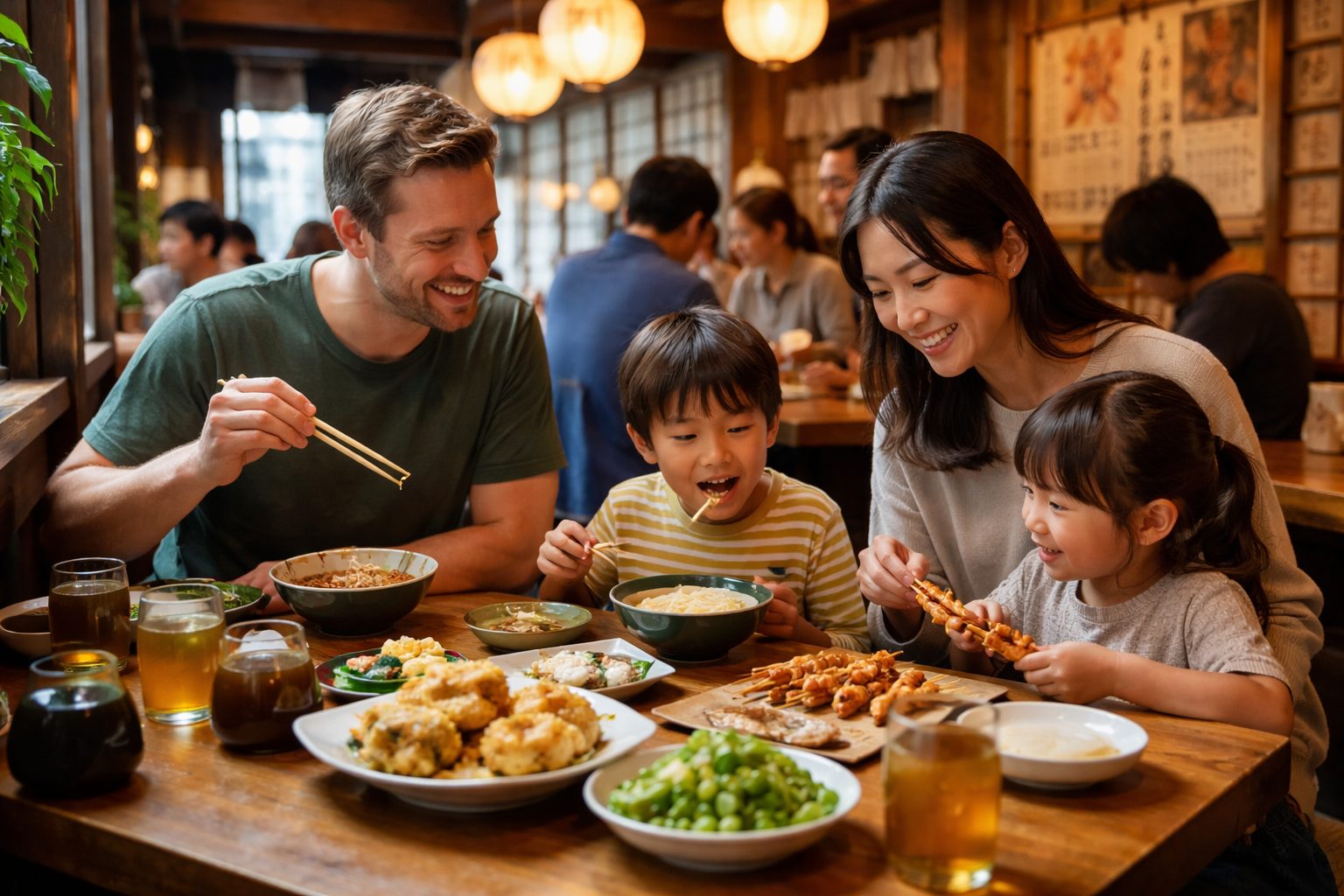
Conveyor belt sushi restaurants (kaiten-zushi) are a win for almost every family. Kids love the novelty of selecting plates as they pass, and the variety means everyone finds something. Prices are clearly labeled, usually per plate.
Family restaurant chains (called famiresu in Japan) exist in every major city. Denny’s in Japan is a different beast from Denny’s in the US, offering a wide menu of Japanese and Western options with picture menus and efficient service. Gusto, Saizeriya, and Joyfull are others in the same category.
Ramen shops, udon shops, and tempura restaurants all welcome children without ceremony. The etiquette rules you might worry about (no talking, formal dress) don’t apply to casual restaurants, which make up the vast majority of dining options.
Convenience store food should not be dismissed. Onigiri rice balls, sandwiches, hot foods from the counter, and an impressive range of snacks mean a konbini run can substitute for a meal on busy days without anyone feeling deprived.
Safety Tips for Traveling with Kids in Japan
Japan is genuinely safe for families, but some basic precautions remain sensible.
- Give each child a small card with your hotel address and a phone number in both English and Japanese. Most hotels will print this for you.
- Talk to older children about what to do if they get separated on a train or in a crowd. Agreed meeting points, staying at a konbini, and asking station staff for help are all practical strategies.
- Japanese police boxes (koban) are located throughout every city and town. Officers are generally helpful even without shared language and are a reliable resource if you need assistance.
- The sun in Japan, especially in summer and in Okinawa, is intense. Sunscreen, hats, and hydration matter more than parents often anticipate.
- Tap water in Japan is safe and excellent. Carry reusable bottles and refill at taps, fountains, or the excellent vending machines found on nearly every street.
Budgeting for a Family Trip to Japan
Japan has a reputation for being expensive that’s somewhat outdated. It’s not cheap, but it’s also far more affordable than it was a decade ago, partly due to currency shifts and partly due to the sheer volume of budget options.
Here’s a realistic breakdown for a family of four:
- Accommodation: Budget around 15,000 to 25,000 yen per night for a decent business hotel in a major city. Ryokan stays run 30,000 to 60,000 yen per night including meals.
- Food: 10,000 to 15,000 yen per day for a family eating a mix of convenience store meals, ramen shops, and one sit-down dinner.
- Transport: The JR Pass is worth calculating per trip. For families doing Tokyo, Kyoto, and Osaka over two weeks, it often pays for itself. Run the math against individual Shinkansen tickets before purchasing.
- Attractions: Major theme parks run 8,000 to 10,000 yen per person. Many parks, gardens, and temples cost between 500 and 1,500 yen per adult, with children often reduced or free.
Total daily budget excluding flights and accommodation: roughly 25,000 to 40,000 yen for a family of four doing moderate activity.
Ways to reduce costs:
- Eat lunch at sit-down restaurants and save dinner for convenience stores or noodle shops
- Visit free parks, shrines, and neighborhoods as part of your itinerary
- Use the JR Pass strategically for long-distance travel
- Book flights well in advance, as airfare is often the largest single expense
How to Pack for Japan with Kids
Packing for traveling to japan with kids requires thinking about both practical logistics and cultural context.
Essentials most families underpack:
- Good walking shoes for everyone. You will walk several kilometers per day in any Japanese city.
- A compact umbrella or rain poncho. Weather changes quickly in Japan, and being caught in rain with children is miserable without them.
- Medicines from home. Japanese pharmacies are good, but finding English-labeled children’s fever reducers or specific prescriptions can be challenging.
- A portable charger. Navigation apps drain phone batteries quickly.
- Reusable bags. Plastic bag regulations in Japan mean you’ll often need to carry your own at shops and markets.
What you don’t need:
- Towels at most hotels (provided everywhere except some budget hostels)
- Heavy clothing for summer travel
- Large amounts of foreign currency before you arrive. IC cards, convenience store ATMs (especially at 7-Eleven), and Japan Post ATMs accept international cards reliably.
Keep luggage manageable if you’re moving between cities frequently. Japan’s train stations have escalators and elevators, but navigating stairs with a large stroller and multiple bags is exhausting. Consider shipping luggage between hotels using takuhaibin (luggage delivery services), which are inexpensive and extremely reliable.
Specific items worth packing for young children:
- Portable white noise machine or app for hotel room naps
- Snacks from home for the first few days while kids adjust to local food
- A small backpack each child can carry their own items in
- Light layers for air-conditioned spaces, which are aggressively cold in summer
- A favorite comfort item for jet-lagged, overwhelmed nights
Conclusion: Making Memories in Japan with Your Family
Japan is a country that rewards curiosity, and children are naturally curious. That’s the core reason traveling to japan with kids works so well. The novelty never really runs out. Every temple has a different story. Every neighborhood has a different personality. Every market has something unfamiliar to smell, taste, or try.
The practical concerns that worry parents before the trip, namely the language, the food, the transport, the customs, tend to dissolve quickly once you’re there. Japan is too well-organized and too welcoming to let logistics become the story. The story ends up being your daughter bowing back at a shopkeeper who bowed first, or your son requesting ramen for breakfast because he decided it’s his new favorite food, or the whole family standing in a forest of bamboo too tall to see the tops.
Plan thoughtfully, travel slowly enough to absorb rather than just tick off, and let your kids lead occasionally. Japan’s cities, temples, mountains, and coastlines will do the rest.
Frequently Asked Questions about Traveling to Japan with Kids
What are the best family hotels in Japan?
For central city stays, Dormy Inn properties offer excellent value with large communal baths and well-sized rooms. For luxury family travel, the Park Hyatt Tokyo and Four Seasons Kyoto cater specifically to families with children’s amenities and excellent service. In Okinawa, resort properties like the ANA InterContinental Manza Beach offer pools, beach access, and kids’ clubs.
How can I travel around Japan with young children?
The Shinkansen bullet train is comfortable for families and children under six travel free. IC cards cover urban trains and buses in major cities. For families with strollers, reserve end-carriage seats on long-distance trains and use elevator-equipped station exits, which are well-marked in most major stations.
Are there any kid-friendly attractions in rural Japan?
Absolutely. Nara’s deer park, Nagano’s snow monkey park, Nikko’s temples and forests, and the rural rice terraces of Niigata and Ishikawa all offer genuine experiences outside major cities. Rural Japan often delivers slower, quieter moments that can be more memorable than crowded urban highlights.
What is the food like for children in Japan?
Japanese food suits most children well. Ramen, udon, sushi (especially tamago and salmon), rice dishes, edamame, and teriyaki chicken are reliably popular. Convenience store onigiri and bento boxes are practical options. The food is generally mild and not spicy unless specifically ordered that way.
How do I manage jet lag for kids traveling to Japan?
Get on Japan time as quickly as possible. Keep children awake until local evening on the first day, even if it’s hard. Morning outdoor light helps reset circadian rhythms faster. Avoid long midday naps during the adjustment period, and plan lighter activity for the first two days to accommodate the fatigue without missing everything.