
Thailand is one of those countries where getting from A to B is half the adventure. I’ve traveled through Bangkok’s chaotic streets, hopped between islands in the south, and navigated northern mountain roads, and every time I come back, the transport system surprises me in some new way. Whether you’re a first-timer or a returning visitor, understanding how to get around in Thailand will save you money, time, and a fair amount of frustration. The options range from cheap public buses to air-conditioned rideshares, from longtail boats to tuk-tuks that weave through traffic like they’re playing a video game. This guide covers everything you need to know, with practical detail and honest perspective.
Overview of Transportation Options in Thailand
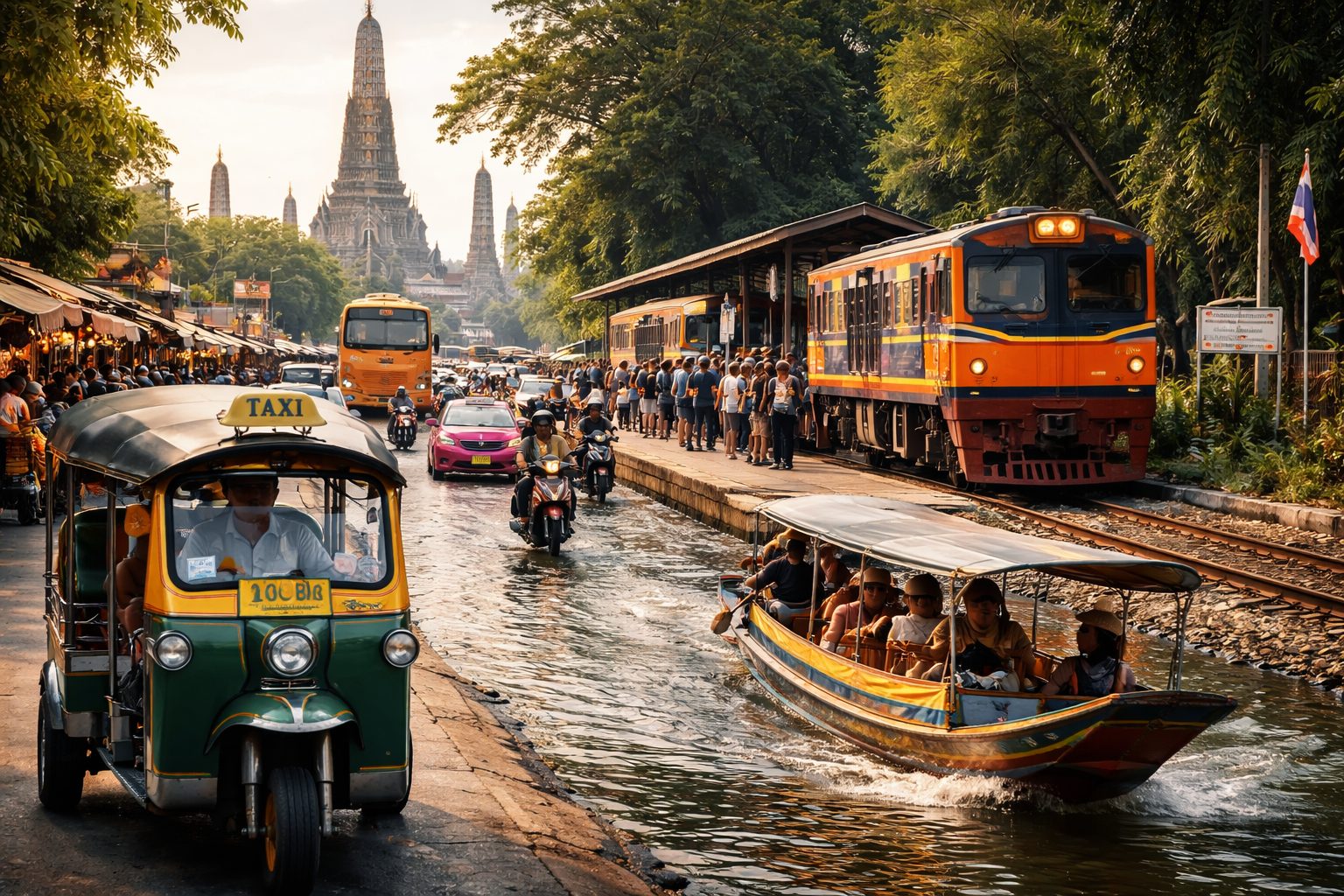
Importance of Transportation in Thailand
Thailand is a large country with a huge variety of landscapes. Bangkok alone takes serious planning to navigate. Getting around efficiently shapes your entire experience, from how much you spend to how much you actually see. A bad transport decision can cost you hours sitting in traffic or baht you didn’t need to spend.
The good news is that Thailand’s transport infrastructure has improved significantly over the last decade. The BTS Skytrain expanded, Grab became widely available, and intercity buses got more comfortable. Knowing your options gives you real control over your trip.
Overview of Major Cities and their Transport Systems
Bangkok has the most developed system, with the BTS Skytrain, MRT metro, river ferries, and a dense network of buses and taxis. Chiang Mai is more compact and cycling-friendly, though tuk-tuks and red songthaews (shared pickup trucks) dominate. Phuket relies heavily on private transport since its public system is thin. Pattaya, Koh Samui, and other tourist hubs each have their own quirks.
Understanding which city you’re in matters because the same strategy that works in Bangkok might leave you stranded in Krabi. Adjust your expectations and approach based on location.
Public Transportation in Thailand
Buses: Types and Routes
Bangkok’s bus network is vast and genuinely cheap. Fares often start at around 8 to 15 baht depending on whether the bus is air-conditioned. The tradeoff is complexity. Routes aren’t always intuitive for foreigners, and signage is mostly in Thai. Apps like ViaBus and Google Maps have improved this, but expect a learning curve.
Outside Bangkok, intercity buses connect most major destinations. Companies like Nakhon Chai Air and Transport Co run comfortable coaches between Bangkok, Chiang Mai, Chiang Rai, and southern towns. Night buses are popular for long routes and save you the cost of a night’s accommodation.
Local buses within smaller cities are often replaced by songthaews, which are shared pickup trucks with bench seating in the back. You flag them down, agree on a price or pay a fixed rate, and share the ride. They’re common in Chiang Mai and useful once you understand the routes.
Skytrain and Metro Systems
Bangkok’s BTS Skytrain and MRT metro are the backbone of urban mobility for both tourists and locals. The BTS runs above ground along two main lines, covering the central and eastern parts of the city. The MRT goes underground and links key hubs including Chatuchak Market, Lumphini, and Silom. A third system, the Airport Rail Link, connects Suvarnabhumi Airport to Phaya Thai station.
Fares are distance-based and range from about 16 to 59 baht on the BTS. You can buy single-journey tokens or load a Rabbit Card for BTS travel, which makes things much smoother. The trains are clean, frequent during peak hours, and almost always on time. For anyone staying near a BTS or MRT line in Bangkok, this should be your first choice.
The systems don’t fully overlap yet, though integration has improved. Sometimes you’ll need to exit one system and walk to another, which can add time but is still faster than sitting in Bangkok traffic.
Ferries and Boats: Navigating Thailand’s Waterways
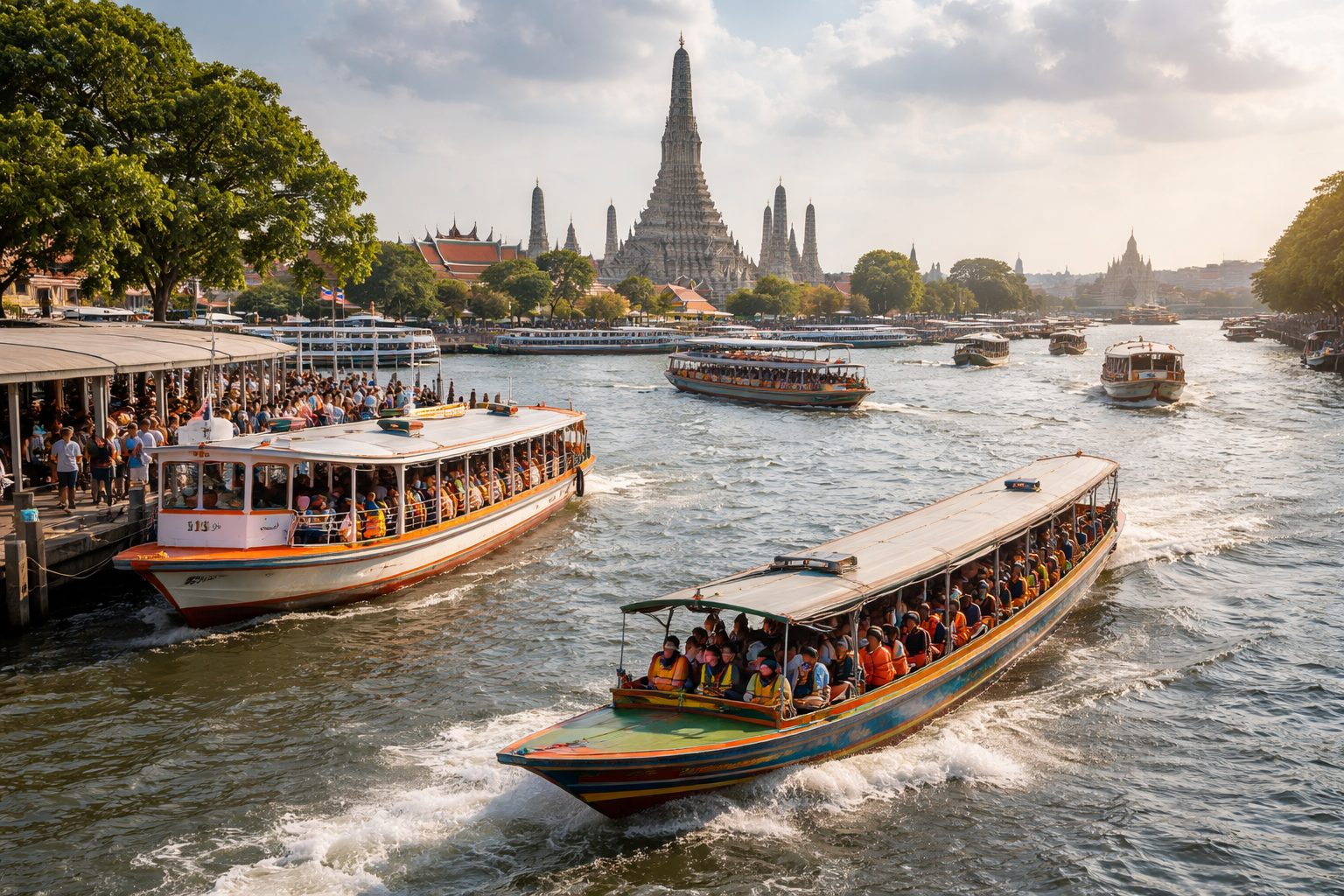
Water transport is essential in Thailand, especially for island hopping and river travel. In Bangkok, the Chao Phraya Express Boat runs regularly along the river and connects to canal boats that go deep into the older neighborhoods. Fares are low, around 15 to 40 baht depending on the route. It’s practical and gives you a completely different perspective on the city.
For island travel, ferries and speedboats operate from piers in Surat Thani, Chumphon, Krabi, and other coastal towns. Routes to Koh Samui, Koh Phangan, Koh Tao, and the Phi Phi Islands run daily. Schedules vary by season, so always check in advance and book during high season.
Longtail boats are the traditional local option for shorter coastal and river trips. They’re loud, fast, and an experience in themselves. Prices are negotiated directly with the driver unless you’re on a fixed-rate route.
Taxi and Ride-Sharing Services
Traditional Taxis: How to Use Them
Bangkok taxis are metered and generally reliable if you know what to do. Always insist the driver uses the meter. If they refuse, find another cab. The starting fare is 35 baht, and it ticks up steadily from there. Most rides within central Bangkok cost between 50 and 150 baht.
Communication can be a barrier. Having your destination written in Thai helps enormously. Many drivers have limited English, and street names can be tricky to pronounce correctly. A map screenshot or a written address goes a long way.
Outside Bangkok, metered taxis are rarer. You’ll negotiate a flat fare in advance, which means knowing a rough market price before you start. Ask your guesthouse or check forums for current rates.
Ride-Sharing Apps: Grab and More
Grab is the dominant ride-hailing app across Southeast Asia, and it works well throughout Thailand. You set your destination, get a fixed price upfront, track your driver, and pay by card or cash. For tourists, it removes the negotiation headache entirely.
In Bangkok, Grab offers GrabCar, GrabBike (motorbike taxis), and GrabTaxi. GrabBike is useful for short trips when traffic is bad. It’s faster than a car but not everyone is comfortable on the back of a motorbike in city traffic. That’s a fair call.
Bolt is also available in Bangkok and occasionally cheaper than Grab. It’s worth having both apps installed to compare prices on longer rides.
Cost Comparison: Taxis vs. Ride-Sharing
| Transport Type | Short Trip (5 km) | Medium Trip (15 km) | Notes |
|---|---|---|---|
| Metered Taxi | 60-80 baht | 120-170 baht | Plus expressway tolls |
| GrabCar | 80-120 baht | 180-250 baht | Fixed price, no haggling |
| GrabBike | 30-50 baht | 60-100 baht | Motorbike, faster in traffic |
| Tuk-Tuk | 100-200 baht | Rarely used long distance | Negotiate, tourist-priced |
| BTS/MRT | 25-44 baht | 44-59 baht | Fixed, only on rail lines |
Taxis beat Grab on cost for most trips, but Grab wins on convenience and predictability. For budget travelers, the BTS and MRT win every time when the route works.
Renting a Vehicle in Thailand
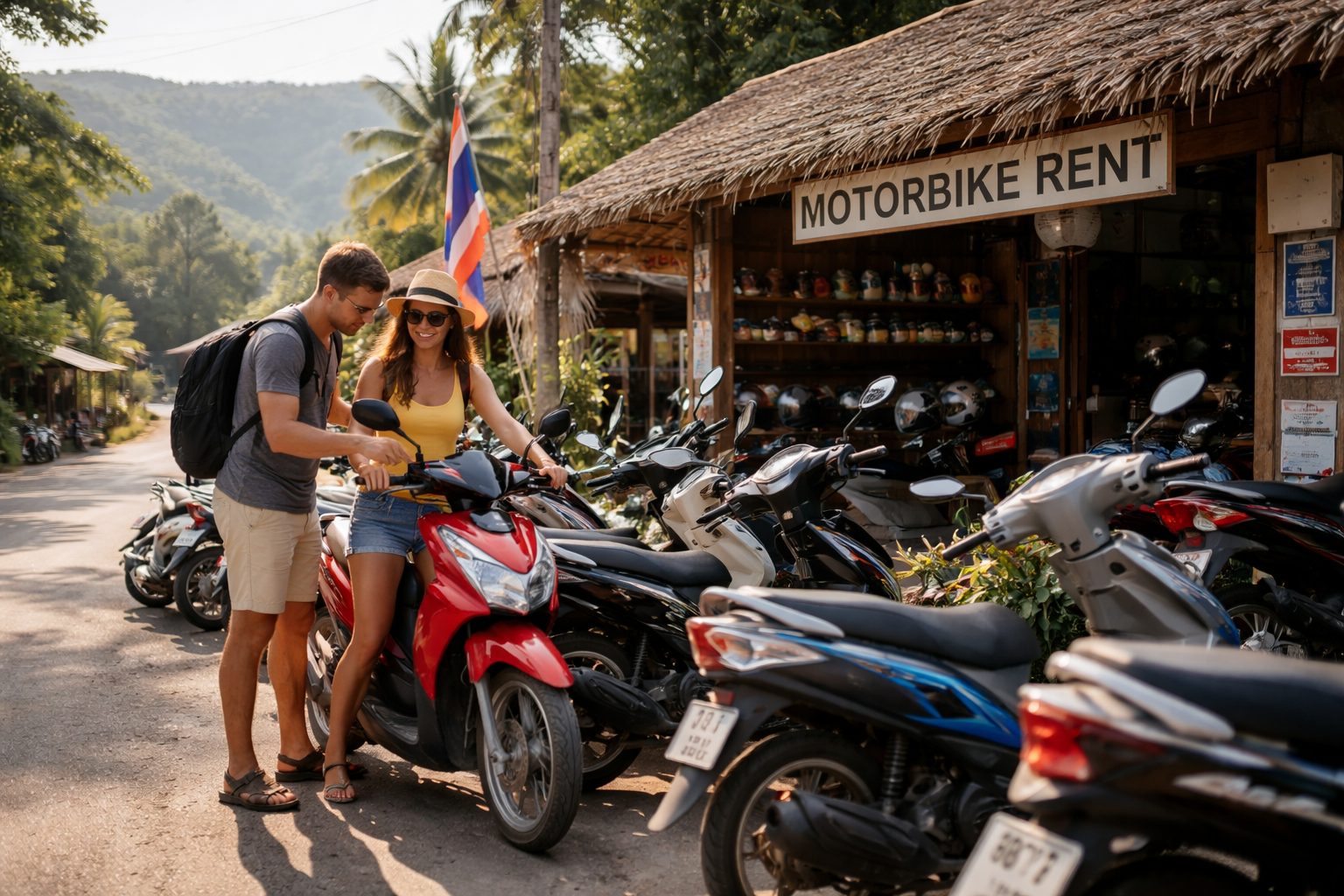
Motorcycle Rentals: What to Know
Renting a motorbike is one of the most popular ways to explore places like Pai, Koh Lanta, or the countryside around Chiang Mai. Prices typically run from 150 to 300 baht per day depending on the size of the bike and the location. Most rental shops want only a passport as deposit, though leaving your passport is risky. Try to pay a cash deposit instead.
A valid motorcycle license from your home country is technically required. In practice, many rental shops don’t check. But your travel insurance may not cover you without one, which is the real issue.
Check the bike carefully before you rent. Look for existing scratches, dents, tire condition, and brakes. Take photos. Some shops will try to charge you for pre-existing damage when you return.
Car Rentals: Requirements and Tips
Major rental companies like Avis, Budget, and local operators are available at airports and in tourist areas. You need a valid international driving permit plus your original license. Rates start around 800 to 1,500 baht per day for a basic vehicle.
Renting a car makes most sense for exploring rural areas, national parks, or when traveling with a group that makes the cost worthwhile. Driving in Bangkok itself is not recommended for visitors. Traffic is dense, signage can be confusing, and parking is a real challenge.
Book in advance for high season, especially around major holidays. Last-minute rentals can be expensive or unavailable.
Safety Considerations for Renting Vehicles
Thailand has one of the highest road fatality rates in the world. That’s not meant to scare you off, but it is worth taking seriously. Helmets are legally required for motorbike riders and are just good sense. Wear one every time, including for short trips.
Drive defensively. Larger vehicles expect right of way, road conditions vary, and some rural roads have unexpected surfaces or hazards. Avoid driving at night in unfamiliar areas.
Make sure your travel insurance covers vehicle rental and specifically motorbikes if that’s your plan. Many standard policies exclude two-wheeled vehicles above a certain engine size.
Exploring Thailand by Bicycle
Popular Cities for Cycling
Chiang Mai and the surrounding countryside are ideal for cycling. The old city is compact, flat, and manageable on two wheels. Roads leading out toward Doi Suthep or the surrounding villages offer beautiful scenery without extreme elevation changes on most routes.
Sukhothai is another standout. The ancient historical park is best explored by bicycle, and rentals are available at the park entrance for under 50 baht per day. It’s one of the most pleasant cycling experiences in the country.
Bangkok is increasingly bike-friendly along the riverside and in some districts, though cycling in heavy traffic zones is not advisable. Chiang Rai and Pai also have good cycling culture.
Bicycle Rentals and Tours
Rentals are widely available near tourist areas in cycling-friendly cities. Basic bikes rent for 50 to 100 baht per day. For longer distances or better quality, hybrid and mountain bikes are available from specialty shops for 200 to 400 baht per day.
Guided cycling tours are worth considering if you want local knowledge and a planned route. Tours around Chiang Mai, the countryside near Bangkok, and river delta areas around Ayutthaya are popular. They typically include the bike, guide, water, and sometimes lunch.
Ask your accommodation for recommendations. They usually know the most reliable rental spots and can help you avoid bikes that shouldn’t be on the road.
Safety Tips for Cyclists in Thailand
Wear a helmet even on short rides. Sun protection matters too. Thailand’s heat is serious, and cycling at midday is uncomfortable and potentially dangerous. Early morning rides are far better.
Stick to designated cycling paths when available. On roads shared with traffic, stay left and be predictable. Assume drivers don’t always see you. A bell is useful in areas with pedestrians.
Carry water, a small repair kit, and a charged phone with offline maps downloaded. Cell coverage is generally good, but rural areas can have gaps.
Walking and Exploring on Foot
Best Walking Areas in Major Cities
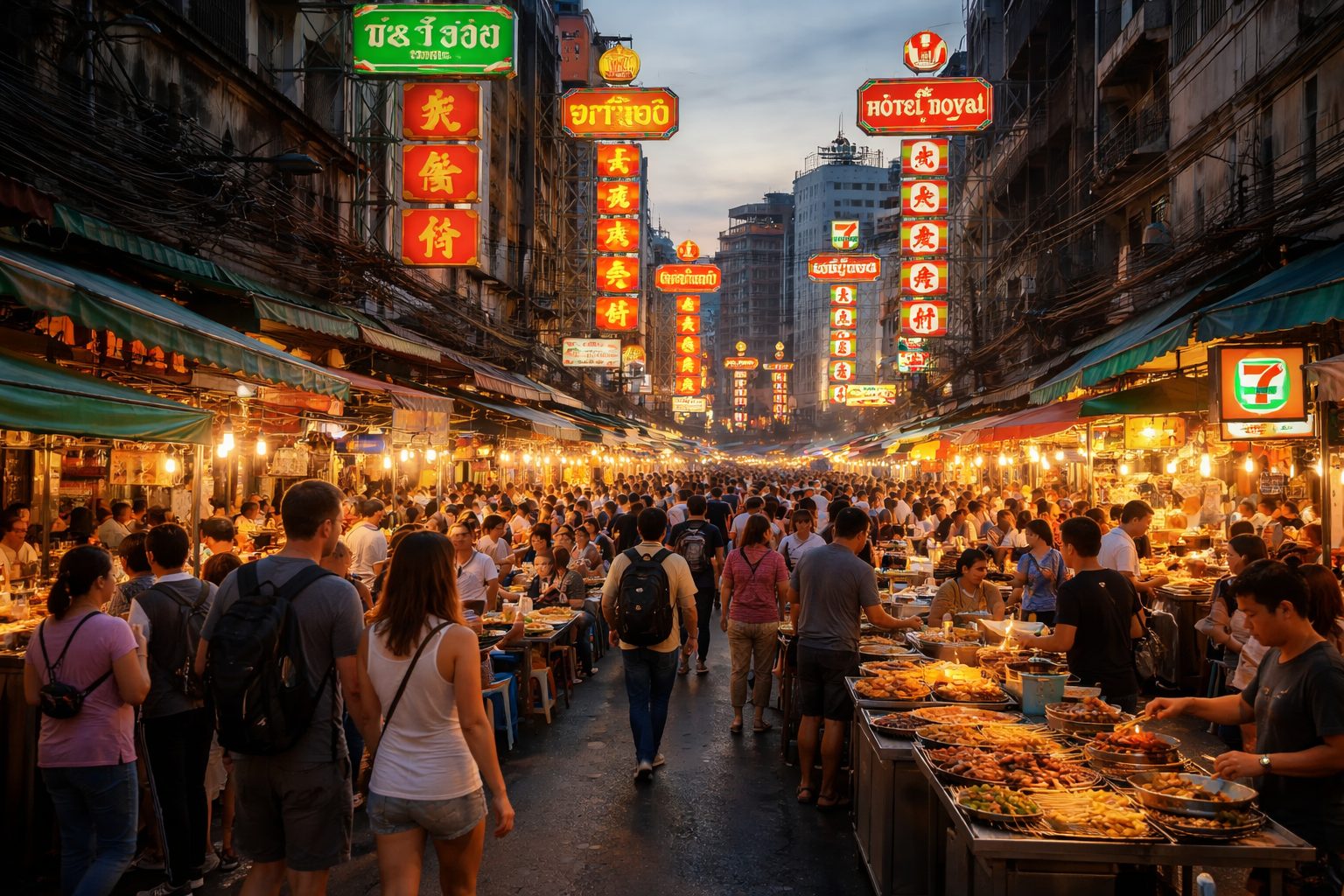
Bangkok has some excellent walking areas if you know where to look. Chinatown (Yaowarat) is best explored on foot, especially in the evening when the street food scene comes alive. The old town around Rattanakosin, with the Grand Palace and Wat Pho, is very walkable. Lumphini Park offers a peaceful green escape within the city.
In Chiang Mai, the old city enclosed by the moat is compact and easy to walk. Most temples, cafes, and markets are within a manageable distance of each other. The Night Bazaar area is also very pedestrian-friendly.
Pai, Hua Hin, and smaller beach towns generally have walkable centers. Big beach resorts sometimes feel less walkable because infrastructure is spread out and heat makes long walks uncomfortable.
Cultural Etiquette While Walking
Remove your shoes before entering temples and many guesthouses. This is non-negotiable and applies without exception. Dress respectfully near religious sites. Shoulders and knees should be covered, or you’ll be turned away or asked to borrow a sarong.
Don’t point your feet toward people or sacred objects. It’s considered rude. Public displays of affection are generally frowned upon. Keep interactions respectful and patient, especially if things move slower than you expect.
If someone seems to be guiding you helpfully toward a shop or attraction you didn’t ask for, you’re probably being steered toward a commission-based situation. It’s fine to politely decline and continue on your own.
Combining Walking with Public Transport
The most efficient way to get around in Thailand’s big cities is to combine the train or metro with short walks. In Bangkok, identify the nearest BTS or MRT station to your destination, ride to the closest stop, and walk the last stretch. This beats taxi traffic most of the time.
Apps like Google Maps and Citymapper handle BTS and MRT routing well now. Use them to plan multi-modal trips. For longer gaps between the station and your destination, a GrabBike can cover the last mile quickly.
Tips for Navigating Thailand’s Transportation System
Language Barriers and Communication Tips
English is widely spoken in tourist areas but much less so outside them. Learning a few key Thai phrases helps and is always appreciated. Basic directional words and numbers go a long way.
Have key addresses saved in Thai script on your phone. Google Translate can do this instantly and offline mode is worth downloading. For taxis and tuk-tuks, showing the driver your destination in Thai avoids misunderstandings.
WhatsApp and Line are the main messaging apps in Thailand. Line in particular is extremely popular for local businesses, including guesthouses and transport operators who communicate via it.
Currency and Payment Methods for Transport
Most public transport in Thailand operates on cash. BTS and MRT accept cash at machines or let you use a stored-value card. Taxis, buses, songthaews, ferries, and tuk-tuks are almost always cash only.
Grab and Bolt accept both card and cash, which is convenient. Keep small bills handy for local transport. Exact change is appreciated and sometimes necessary, as drivers don’t always have change for large notes.
ATMs are widespread in cities but less common in rural areas. Withdraw enough cash before heading into more remote regions.
Understanding Traffic Rules and Road Safety
Thailand drives on the left, which takes some adjustment if you’re from a right-hand traffic country. Traffic lights are respected in cities, though the seconds immediately after a red light can be chaotic.
Motorbikes often run on the footpath or move between lanes in ways that feel unexpected. As a pedestrian or driver, always check both directions and move predictably. Sudden stops and unexpected turns are common.
Expressways require tolls, which are paid in cash at booths. If renting a car, keep coins and small bills accessible. Some routes have electronic toll options but not universally.
Comparing Transportation Costs
Budgeting for Transportation in Thailand
Thailand is affordable for transport by most standards, but costs add up if you’re not paying attention. A budget traveler relying mostly on public transport in Bangkok might spend 100 to 200 baht per day on getting around. Someone using Grab and taxis regularly can easily spend 500 to 800 baht or more per day.
For island travel, factor in ferry costs which can range from 150 baht for a short crossing to 800 baht or more for longer routes. Speedboats are faster but cost significantly more. Budget your transport in advance if you’re on a tight itinerary.
Long-distance buses are remarkably affordable. Bangkok to Chiang Mai by VIP bus costs around 600 to 900 baht and takes about 9 to 10 hours. The same journey by train can cost 300 to 1,200 baht depending on class.
Cost Analysis: Public vs. Private Transport
| Transport Mode | Average Daily Cost | Best For |
|---|---|---|
| BTS/MRT (Bangkok) | 80-150 baht | Urban commuting on rail lines |
| Public buses | 30-80 baht | Budget travel, flexible routing |
| Taxis (metered) | 200-400 baht | Comfort, heavy luggage |
| Grab/Bolt | 250-600 baht | Convenience, fixed pricing |
| Motorbike rental | 150-300 baht | Rural areas, flexible itinerary |
| Car rental | 800-1,500 baht | Groups, remote destinations |
Public transport wins on cost almost every time. Private options win on comfort and flexibility. The right balance depends on your budget and travel style.
Hidden Costs to Consider
Expressway tolls in Bangkok add 25 to 75 baht per journey segment and are usually charged to the passenger in taxis. Confirm with the driver beforehand who pays the toll.
Luggage surcharges aren’t formally standard in Thailand but some drivers informally expect extra for large bags. Tuk-tuks and informal taxis may quote one price and then adjust at the end. Agree clearly upfront.
Ferry and boat tickets sometimes don’t include transfer to the pier. An extra songthaew or taxi ride can add 100 to 200 baht to your total. Factor this into your planning, especially for early morning departures.
Eco-Friendly Transportation Options
Overview of Sustainable Transport in Thailand
Sustainable travel is gaining traction in Thailand, though it’s still catching up with some other countries in the region. Public transport by default is more eco-friendly than private options, and Thailand’s train network is one of the greener ways to cover long distances.
Cycling infrastructure has improved in cities like Chiang Mai, and Bangkok has been investing in riverside bike paths. Some tour operators now explicitly offer low-impact travel experiences. It’s a growing space.
Choosing accommodation near BTS or MRT stations in Bangkok significantly reduces your need for taxis and rideshares. It’s a simple decision that also saves money.
Electric Vehicle Options and Charging Stations
Electric tuk-tuks are now operating in parts of Bangkok and Chiang Mai, introduced as a cleaner alternative to the traditional two-stroke models. They’re quieter and produce zero direct emissions. Several tourist circuits now specifically feature them.
Electric scooter rentals are becoming more available in resort areas. Charging infrastructure is still developing but improving. Apps like PlugShare can help locate charging points if you’re renting an electric vehicle.
Some hotel chains and eco-resorts offer electric golf carts for property transport or local village trips. It’s a niche option but growing. Thailand has set national targets for EV adoption that are pushing infrastructure development forward.
Eco-Friendly Travel Tips
Take the train instead of flying for distances under 600 kilometers when time allows. Thailand’s rail network covers Bangkok to Chiang Mai, Ayutthaya, and several southern routes.
Use reusable water bottles and avoid single-use plastics where possible. Hydration matters in Thailand’s heat, and buying plastic bottles constantly adds up financially and environmentally.
Walk or cycle where the destination is close and conditions allow. Beyond the environmental benefit, it’s genuinely one of the better ways to see a new place. You notice things from ground level that you’d miss from the back of a taxi.
Frequently Asked Questions
What is the best way to get around Bangkok?
The BTS Skytrain and MRT metro are the fastest and most reliable options for getting around Bangkok’s central districts. Combine them with Grab or metered taxis for destinations not near a station.
Is it safe to use public transport in Thailand?
Yes, public transport in Thailand is generally safe for tourists. The main risks are petty theft in crowded areas, so keep valuables secure and stay aware in busy stations and markets.
How much should I budget for transportation?
Budget travelers can manage on 100 to 200 baht per day using public buses and rail in Bangkok. A more comfortable travel style using Grab and occasional taxis might run 400 to 800 baht daily depending on how much you move around.
Can I use my international driver’s license in Thailand?
Yes, an international driving permit is accepted in Thailand for both cars and motorbikes. You need it alongside your original home country license. Check that your travel insurance covers you before renting any vehicle.
What are the best apps for navigating transportation in Thailand?
Google Maps works well for BTS, MRT, and walking routes. Grab is essential for ride-hailing. ViaBus helps with Bangkok bus routes. Download offline maps on Maps.me or Google Maps before heading to areas with limited connectivity.