Planning a trip to Southeast Asia and only have a week? A thailand itinerary 5 days is honestly one of the smartest ways to experience this country without feeling like you’re sprinting through a museum. Five days is enough time to hit Bangkok’s temples, breathe in the cooler air of Chiang Mai, and still squeeze in a beach afternoon in Phuket. It’s a tight schedule, but with the right plan, it flows surprisingly well. I’ve put this route together based on actual travel experience, not just a list of popular Google results.
Thailand rewards travelers who show up curious and flexible. The food alone is worth the flight. But beyond the pad thai and the Instagram temples, there’s a texture to this country that takes a few days to settle into. This guide will help you get there faster.
Overview of Thailand Itinerary 5 Days
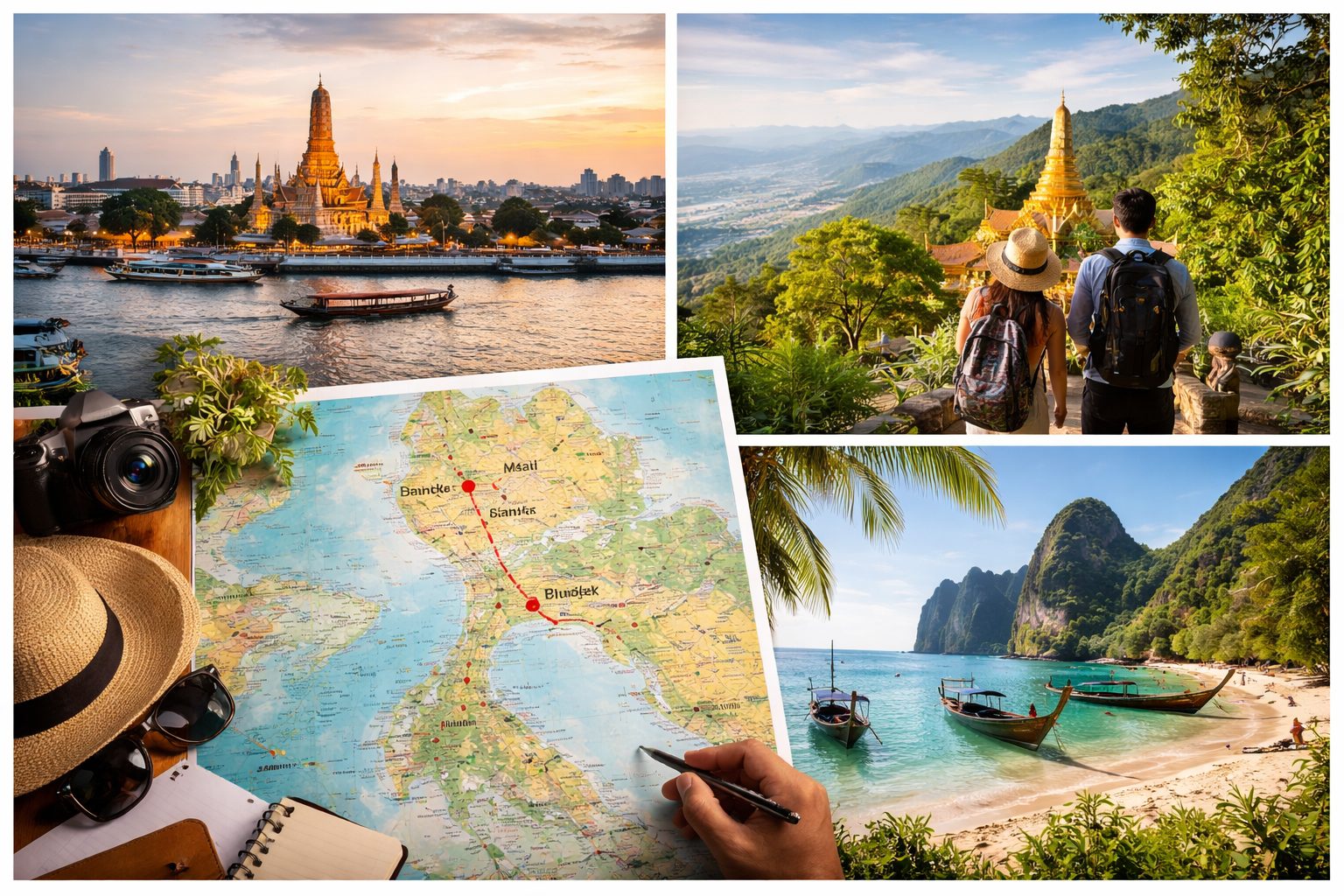
This five-day route covers three distinct regions: the urban chaos of Bangkok, the northern mountain city of Chiang Mai, and the southern island energy of Phuket. Each leg of this thailand itinerary 5 days requires at least one domestic flight, so budget planning matters. Flights between these cities are cheap and frequent, usually under $50 if booked a few weeks out.
Here’s the basic structure at a glance:
- Day 1: Arrive in Bangkok, temples and a dinner cruise
- Day 2: Day trip to Ayutthaya, the ancient capital
- Day 3: Fly to Chiang Mai, visit Doi Suthep, evening at the Night Bazaar
- Day 4: Elephant sanctuary in the morning, cooking class in the afternoon
- Day 5: Fly to Phuket, beach time, and a taste of the nightlife
The itinerary moves north before heading south, which makes logistical sense if you’re flying into Bangkok’s Suvarnabhumi Airport (BKK). Most international arrivals land there, and it’s a natural starting point.
Why Visit Thailand?
Thailand consistently ranks as one of the most visited countries in the world, and it earns that reputation. The combination of affordability, accessibility, food culture, and natural beauty is hard to match anywhere else in Asia.
- Street food costs between $1 and $3 per meal in most cities
- English is widely spoken in tourist areas
- The transport infrastructure is well-developed for travelers
- There’s genuine variety within a relatively small geographic area
Beyond the practical reasons, Thailand has a warmth that’s difficult to describe until you’ve experienced it. Locals take hospitality seriously. Even in the busy tourist zones, interactions feel genuine more often than not.
The country also offers something for almost every type of traveler. History lovers gravitate toward Ayutthaya and Sukhothai. Nature people head for national parks or diving sites around Koh Tao. Beach seekers have dozens of island options. A five-day trip can’t cover all of it, but it gives you a real taste.
Best Time to Travel to Thailand
Thailand has three seasons, and they affect your experience significantly.
| Season | Months | What to Expect |
|---|---|---|
| Cool and Dry | November to February | Best weather, busy crowds, higher prices |
| Hot and Dry | March to May | Intense heat, fewer tourists, good deals |
| Monsoon | June to October | Rain, lower prices, lush landscapes |
The cool dry season from November through February is widely considered the best time to visit. Temperatures in Bangkok hover around 28-32°C, while Chiang Mai stays cooler. Phuket is ideal from November to April before the southwest monsoon kicks in.
That said, the hot season isn’t unbearable if you’re strategic. Visit temples in the early morning before 9am, rest midday, and come back out in the late afternoon. The monsoon season has its appeal too. Prices drop, crowds thin out, and the greenery is spectacular. Just pack a light rain jacket.
Day 1: Arrival in Bangkok
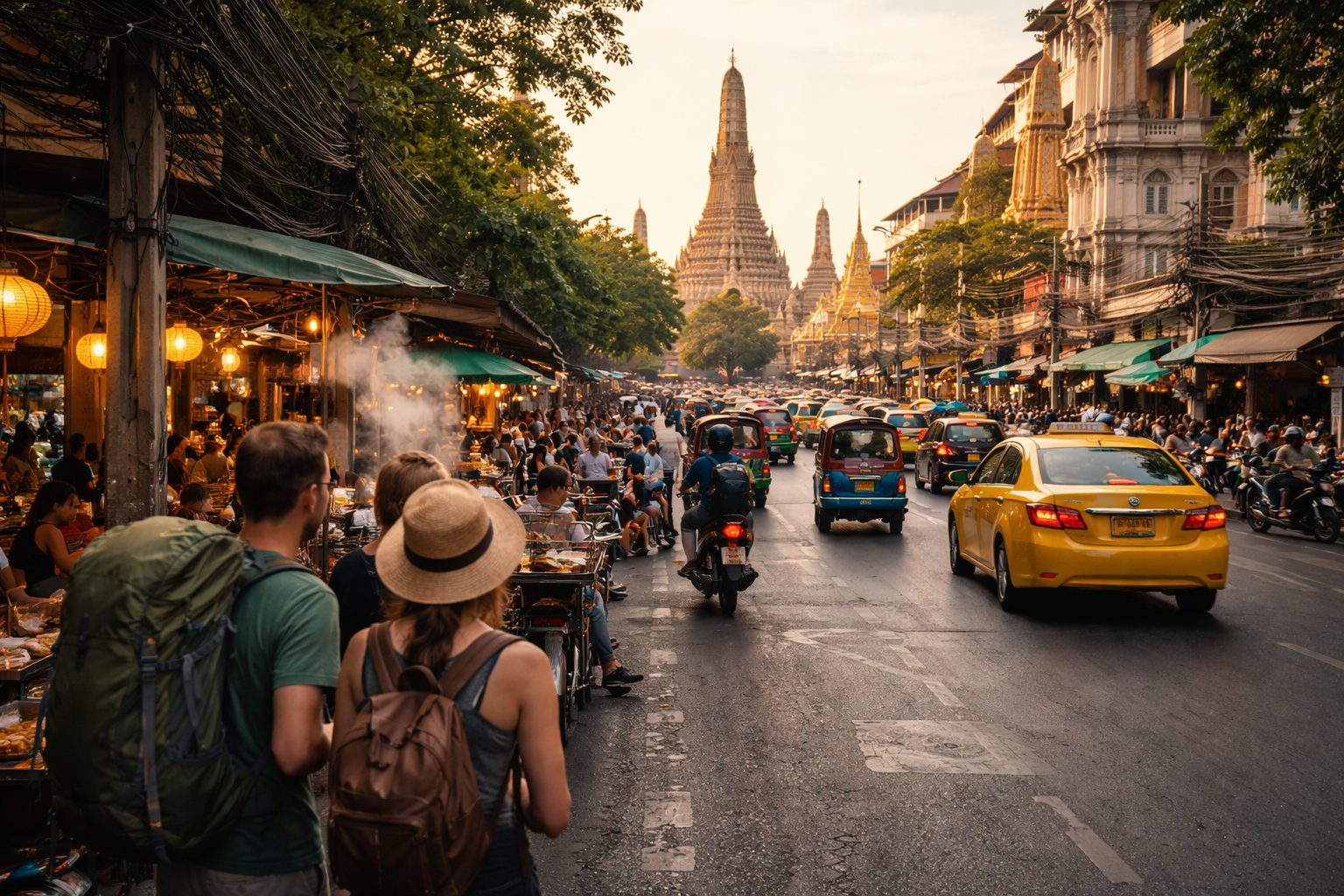
Bangkok is one of those cities that hits you immediately. The traffic, the smells, the temple spires cutting through the skyline. Give yourself an afternoon and evening to ease in rather than trying to cover too much ground.
Morning: Explore the Grand Palace
If you arrive on an overnight flight, you might get a few hours of rest before heading out. The Grand Palace opens at 8:30am and I’d strongly recommend arriving as close to opening time as possible. By 10am, tour groups flood in and the heat starts building.
The palace complex covers over 200,000 square meters and includes Wat Phra Kaew, the Temple of the Emerald Buddha. Budget at least two hours here. Dress appropriately: shoulders and knees must be covered. They do rent sarongs at the entrance, but it’s easier to just wear the right clothes from your hotel.
Entry costs 500 Thai baht per person. That’s roughly $14, which is fair for the scale of what you’re seeing.
Afternoon: Visit Wat Pho
Wat Pho is a short walk from the Grand Palace and is often overlooked in favor of the more famous complex next door. That’s a mistake. The reclining Buddha here is 46 meters long and covered in gold leaf. It’s genuinely impressive in a way that photos don’t fully capture.
Wat Pho is also the birthplace of traditional Thai massage. There’s a reputable massage school on the grounds where you can book a session for around 260 baht for 30 minutes. After a long travel day, that’s exactly what your body needs.
- Entry: 200 baht
- Hours: 8am to 6:30pm
- Best time to visit: Late afternoon when the light is softer
Evening: Experience a Dinner Cruise on the Chao Phraya River
The Chao Phraya River runs through the center of Bangkok and looks completely different at night. A dinner cruise gives you a moving view of Wat Arun, the royal palace lit up along the banks, and the Rama VIII Bridge. It’s one of those experiences that feels more memorable than it sounds on paper.
Cruises typically run 2 hours and include a buffet dinner. Prices range from 1,200 to 2,500 baht depending on the operator. Chao Phraya Princess and Grand Pearl Cruise are both solid choices with English-friendly service.
Book in advance during peak season. These fill up fast in December and January.
Day 2: Bangkok to Ayutthaya
Ayutthaya was the capital of the Siamese Kingdom for over 400 years before being sacked by Burmese forces in 1767. What remains is a sprawling historical park full of weathered temples, headless Buddha statues, and a quiet melancholy that’s unlike anything in Bangkok.
Morning: Travel to Ayutthaya
Ayutthaya is about 80 kilometers north of Bangkok. You have a few transport options:
- Train from Hua Lamphong Station (about 1.5 hours, 15-20 baht for third class)
- Minivan from Mo Chit Bus Terminal (about 1 hour, 60 baht)
- Private taxi or car (about 1 hour, 1,200-1,800 baht)
The train is the most atmospheric option. The old third-class carriages with open windows and locals heading to market have a charm that’s hard to replicate. I’d take the early train to get there by 9am and make the most of the cooler morning hours.
Afternoon: Explore Historical Ruins
The Ayutthaya Historical Park is a UNESCO World Heritage Site. You won’t see all of it in one afternoon, so be selective.
The highlights worth prioritizing:
- Wat Mahathat: Famous for the Buddha head entwined in tree roots
- Wat Ratchaburana: Towering prangs with underground crypts
- Wat Phra Si Sanphet: The most important temple in the old royal palace grounds
- Wat Chaiwatthanaram: Stunning riverside location, especially at sunset
Renting a bicycle is the best way to get around the historical park. Shops near the train station rent them for around 50-80 baht per day. Alternatively, tuk-tuks are available and drivers often offer half-day packages for around 300 baht.
Evening: Return to Bangkok
Head back to Bangkok by late afternoon to catch sunset from the train if possible. Eat dinner in the city. The area around Khao San Road has good street food energy, or if you want something calmer, the riverside area near Tha Tien Pier has excellent local options.
Get some sleep. Tomorrow is an early morning.
Day 3: Bangkok to Chiang Mai
Chiang Mai is a completely different version of Thailand. Slower, cooler, surrounded by mountains, and deeply rooted in Lanna culture. The north has its own food traditions, its own temple aesthetic, and its own rhythm.
Morning: Flight to Chiang Mai
Domestic flights from Bangkok to Chiang Mai take about 70 minutes. Both Suvarnabhumi (BKK) and Don Mueang (DMK) airports serve this route. Thai AirAsia, Nok Air, and Thai Lion Air all operate it cheaply. Book ahead and you’ll pay $30-50 each way.
Arrive in Chiang Mai, check into your accommodation, and eat a bowl of khao soi. This northern noodle curry is the city’s signature dish and one of the best things you’ll eat in Thailand. Get it at Khao Soi Khun Yai or Khao Soi Maesai near the old city.
Afternoon: Visit Doi Suthep Temple
Doi Suthep is the golden temple perched on the mountain above Chiang Mai. It’s been a pilgrimage site since the 14th century and the views over the city from the top are genuinely worth the climb.
A red songthaew (shared pickup truck) from the old city costs around 60 baht per person each way. Once at the base, you climb 309 steps flanked by naga serpent balustrades, or take the cable car for 30 baht. The entry fee is 30 baht.
Go in the mid-afternoon when the morning tour buses have cleared out. The golden chedi at the center of the complex catches the afternoon light beautifully.
Evening: Explore Chiang Mai Night Bazaar
The Night Bazaar runs along Chang Khlan Road and connects to several covered markets. This is good for handmade goods, textiles, hill tribe crafts, and cheap street food. It’s touristy, yes, but genuinely fun and worth a couple hours.
For something more local, the Saturday Walking Street on Wualai Road or the Sunday Walking Street on Thanon Wualai are better for authentic Chiang Mai crafts. Check which day of the week your visit falls on and plan accordingly.
Eat dinner at one of the night market food stalls. Budget 100-200 baht for a full meal with a drink.
Day 4: Chiang Mai Adventures
This is the day most people say is their favorite. There’s nothing quite like spending a morning with elephants and an afternoon learning to cook Thai food.
Morning: Elephant Sanctuary Visit
Chiang Mai has become a hub for ethical elephant tourism after years of problematic mahout camps that offered riding and circus performances. The ethical sanctuaries let elephants live more naturally while still allowing visitors to observe, feed, and walk with them.
Reputable options include:
- Elephant Nature Park: The most well-known, founded by Lek Chailert, supports rescued elephants
- Elephant Jungle Sanctuary: Multiple camps, feeding and bathing experiences
- Following Giants: Smaller, more intimate experience in the jungle
Full-day programs typically run from 8am to 4pm and cost $70-100 per person including transport and lunch. Half-day options are available for around $50. Book directly through the sanctuary’s website to avoid commission-heavy tour operators.
Afternoon: Cooking Class Experience
Thai cooking classes in Chiang Mai are excellent value. A half-day class typically runs 3-4 hours and you’ll make 4-6 dishes from scratch. Most include a trip to a local market to source ingredients, which is itself worth the ticket price.
Popular dishes covered in most classes:
- Tom kha gai (coconut galangal soup)
- Pad thai or pad see ew
- Green or red curry with fresh paste
- Mango sticky rice
Classes run from about 1,500 to 2,500 baht and most operators pick you up from your hotel. Zabb-E-Lee and Asia Scenic Thai Cooking are both consistently well-reviewed.
Evening: Traditional Khantoke Dinner
A khantoke dinner is a traditional northern Thai ceremonial meal. You sit on low cushions around a raised tray (the khantoke) and eat a set menu of northern dishes including kaeng hang lay (pork curry), nam prik nong (chili relish), and steamed vegetables. Traditional dance performances accompany the meal.
It’s somewhat touristy but genuinely cultural if you go to the Old Chiang Mai Cultural Center. Expect to pay around 600-800 baht per person including the performance. It’s a fitting cap to the most culturally rich day of this trip.
Day 5: Chiang Mai to Phuket
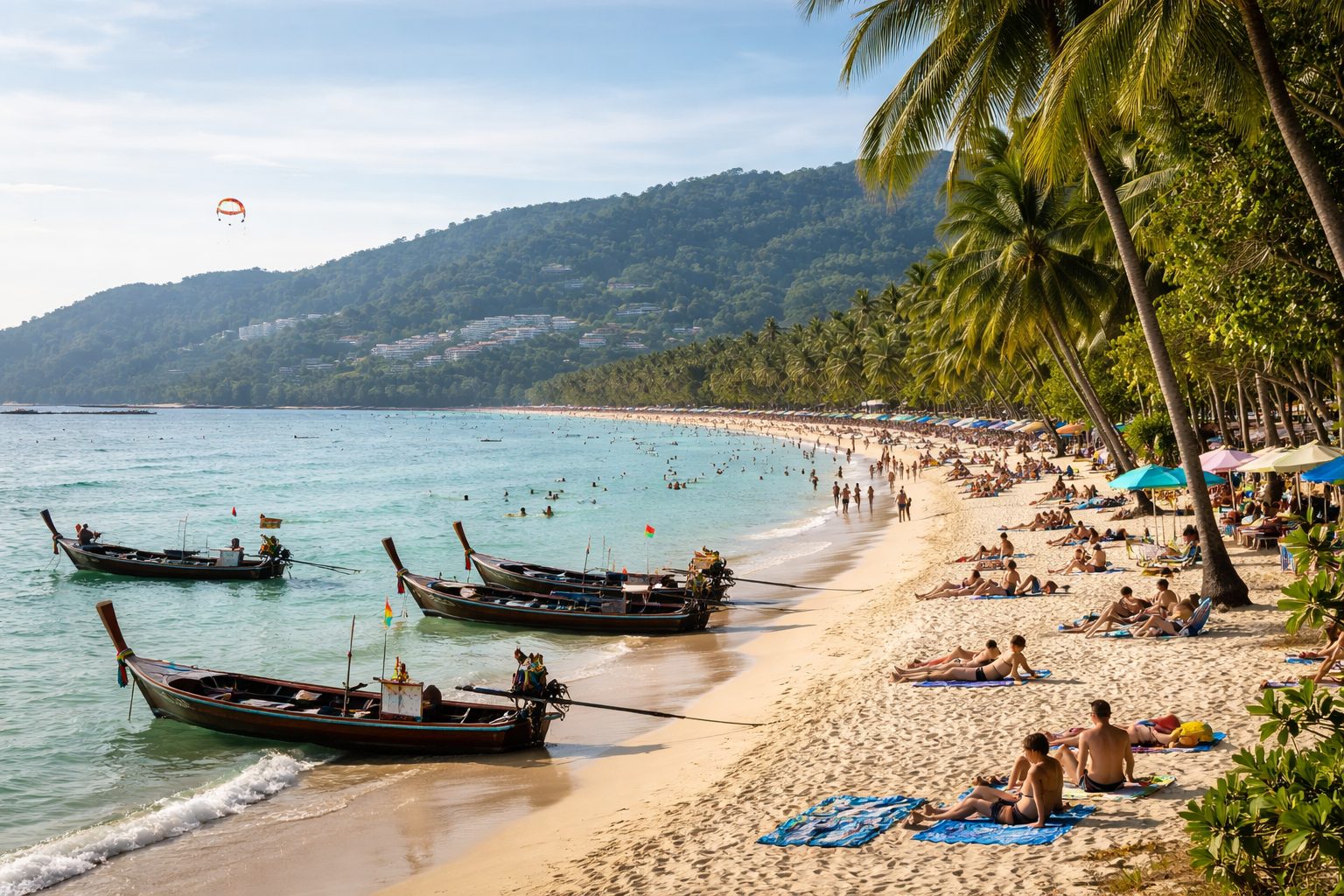
The final day takes you south to Thailand’s most famous beach destination. Phuket is loud, colorful, and unashamedly commercial in places. But it’s also genuinely beautiful, and an afternoon on the beach is exactly the right note to end a five-day trip on.
Morning: Flight to Phuket
Chiang Mai to Phuket is a roughly 2-hour flight. Book with Thai AirAsia or Bangkok Airways. This leg can cost a bit more than the Bangkok to Chiang Mai route, around $50-80 depending on timing.
Check out of your hotel, head to Chiang Mai International Airport, and grab a mango smoothie from one of the airport shops before boarding. You’ve earned it.
Afternoon: Relax on Patong Beach
Patong is Phuket’s main beach and it’s busy. The sand is genuinely good though: soft, wide, and clean enough that you can happily spend a few hours there.
Rent a beach chair and umbrella (around 200 baht for the set), order a fresh coconut, and decompress. You’ve covered a lot of ground in four days. This is the reward.
If the Patong crowds aren’t your thing, Kata Beach and Karon Beach are quieter alternatives a short drive south. Both have calmer water and fewer vendors.
- Patong: Lively, central, great for people-watching
- Kata: More relaxed, good surf spot from May to October
- Karon: Long beach, fewer tourists, good for walking
Evening: Nightlife in Phuket
Patong Beach Road and Bangla Road make up Phuket’s nightlife epicenter. It’s energetic, a bit chaotic, and genuinely entertaining even if you’re not a party person. Street food vendors, night markets, and live music venues line the streets alongside the louder bars.
For something more upscale, Catch Beach Club in Surin Beach has a rooftop atmosphere with cocktails and live sets that attract a more mixed local and international crowd. For casual drinks, any of the beachside bars in Kata or Kamala Beach are relaxed and scenic.
Eat seafood before you call it a night. Phuket’s seafood is excellent. Try a crab curry or garlic prawns at one of the local restaurants near the Phuket Fishing Village for something less touristy.
Tips for Traveling in Thailand
Getting the logistics right makes a meaningful difference in how much you enjoy the trip.
- Get a local SIM card at the airport on arrival. AIS and DTAC both offer tourist plans with 30GB of data for around 300 baht.
- Download offline maps on Google Maps before you fly. Internet access isn’t always available in transit.
- Carry small bills. Many street vendors and tuk-tuks don’t have change for 500 or 1,000 baht notes.
- Use Grab (Southeast Asia’s version of Uber) for transparent pricing on taxis and motorbike taxis.
- Book domestic flights at least two to three weeks in advance to secure lower fares.
- Always negotiate tuk-tuk prices before getting in. Agree on a number and confirm it’s in Thai baht, not dollars.
ATMs are widely available but charge withdrawal fees of around 200-220 baht per transaction for foreign cards. Kasikorn Bank (KBank) and Bangkok Bank machines tend to have slightly better rates.
Cultural Etiquette and Local Customs
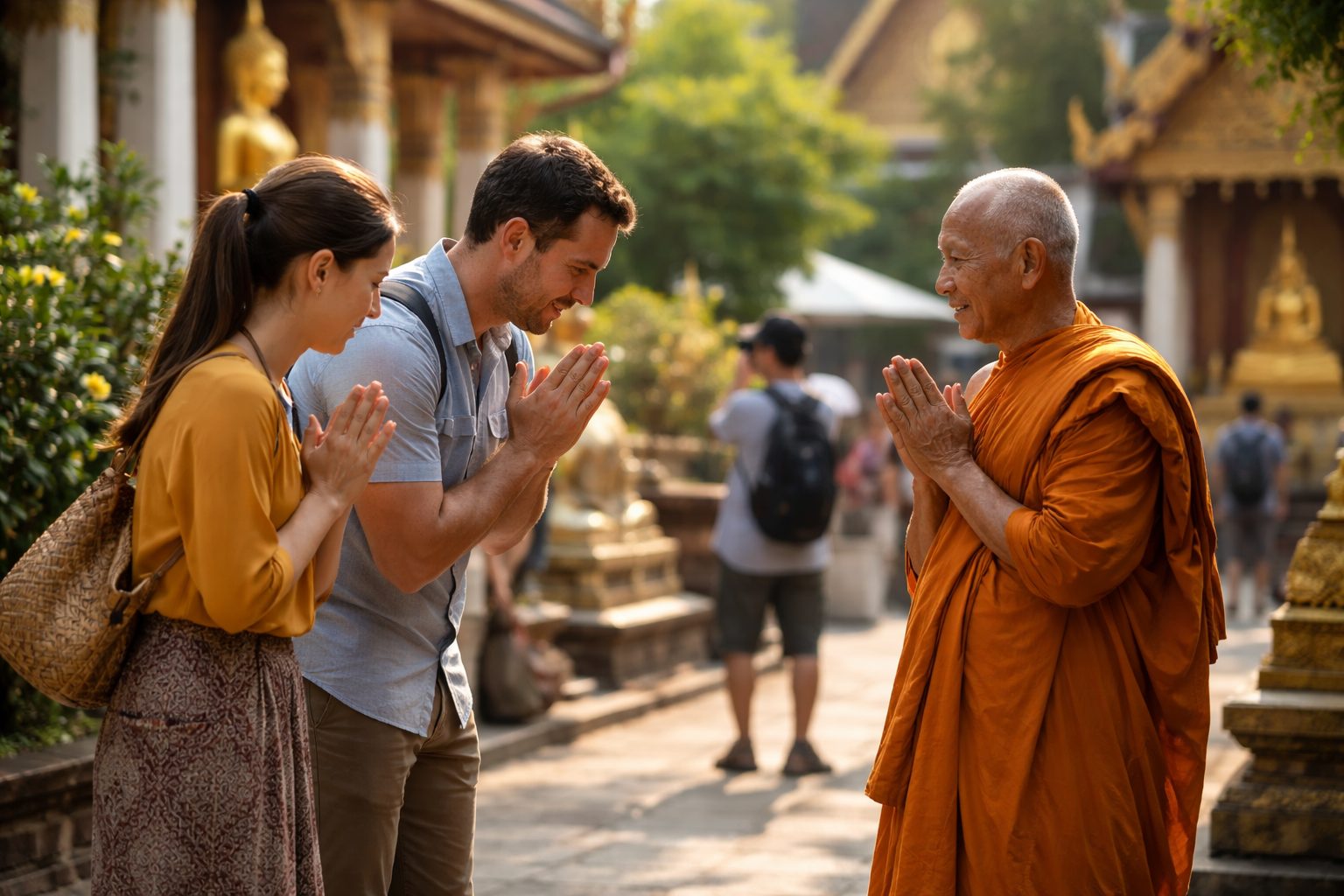
Thailand is a deeply Buddhist country with a strong sense of hierarchy and respect. Understanding a few basics will make your interactions smoother and more genuine.
- The wai (pressing palms together and bowing slightly) is the standard greeting. You don’t need to initiate it, but returning it is polite.
- Remove shoes before entering temples and most traditional homes. Look for shoes at the entrance if you’re unsure.
- Never touch a Thai person’s head. It’s the most sacred part of the body.
- Don’t point your feet at Buddha images or at people. It’s considered disrespectful.
- Dress modestly at temples. No shorts, sleeveless tops, or low necklines.
- The Thai royal family is treated with enormous reverence. Avoid any negative comments about the monarchy.
- Keep your voice down in temples. It’s a place of worship, not a photo backdrop.
Public displays of affection are generally frowned upon, especially in more traditional areas. What’s normal in a Western context might draw uncomfortable attention in a small town or temple setting.
Recommended Packing List for Thailand
Pack light. You’ll thank yourself when you’re moving between three cities in five days.
Clothing:
- 2-3 lightweight, breathable shirts
- 1 pair of long pants or a wrap skirt (for temple visits)
- 1 pair of shorts
- Comfortable walking sandals
- A pair of shoes that slip on and off easily (for temples)
- Light rain jacket or packable poncho
Essentials:
- High-SPF sunscreen (local options are often whitening cream-based, not UV protection)
- Insect repellent with DEET
- Hand sanitizer and small tissue packets
- Portable power bank
- Universal adapter (Thailand uses Type A, B, and C outlets)
- Copies of your passport, travel insurance, and flight confirmations
Health:
- Basic medication kit: antihistamines, ibuprofen, diarrhea tablets, and rehydration salts
- Water purification tablets or a filtered bottle (tap water isn’t safe to drink)
- Any prescription medication in original packaging with a doctor’s note
Best Local Foods to Try in Thailand
One of the best parts of any thailand itinerary 5 days is the eating. Thai food varies significantly by region, so use the route to sample different styles.
Bangkok:
- Pad kra pao (stir-fried basil with meat and egg) — order it from a street cart
- Tom yum goong (spicy prawn soup)
- Boat noodles along the Chao Phraya river
Chiang Mai:
- Khao soi (coconut curry noodle soup with crispy noodles on top)
- Sai ua (northern Thai sausage with lemongrass and kaffir lime)
- Larb moo (spicy pork salad with toasted rice powder)
Phuket:
- Moo hong (braised pork belly in soy and five spice)
- Pad cha seafood (stir-fried with galangal and fresh peppercorns)
- Roti with banana and condensed milk from street carts
Drink:
- Thai iced tea (cha yen) — sweet, creamy, served in a plastic bag with a straw
- Fresh coconut water
- Nam manao (fresh lime juice with a choice of sweet or salty seasoning)
Avoid eating anything that’s been sitting out in the sun for too long. Freshly cooked food from busy stalls is almost always safe. Busy means the turnover is high, which means the ingredients are fresh.
Frequently Asked Questions About Thailand Itinerary 5 Days
Is 5 days enough to see Thailand?
Five days gives you a real introduction to Thailand across three distinct regions. You won’t see everything, but you’ll experience Bangkok’s energy, northern culture in Chiang Mai, and southern beaches in Phuket. It’s a strong foundation and often inspires people to return for longer.
How much does a 5-day Thailand trip cost?
Budget travelers can manage on $60-80 USD per day including accommodation, food, and local transport. Mid-range spending of $120-180 per day gets you comfortable hotels, cooking classes, and elephant sanctuaries. Domestic flights are an additional $100-150 on top of that.
Do I need a visa for Thailand?
Citizens from many countries including the US, UK, EU nations, and Australia currently receive visa-free entry for 60 days. Always verify current visa rules through the Royal Thai Embassy website before you travel, as policies can change.
What’s the best way to get around between cities?
Domestic flights are the most practical option for this thailand itinerary 5 days route. They’re cheap, fast, and reliable. Trains and buses work well for the Bangkok to Ayutthaya segment, but flying is necessary to cover the Bangkok to Chiang Mai and Chiang Mai to Phuket legs efficiently within the timeframe.
Is Thailand safe for solo travelers?
Thailand is generally safe for solo travelers, including solo women. Standard precautions apply: don’t leave drinks unattended, be cautious with strangers in nightlife areas, and use registered taxis or Grab rather than unmarked vehicles. The tourist infrastructure is well-developed and locals are generally helpful if you’re lost or in trouble.