Thailand has a way of getting under your skin. I’ve traveled across Southeast Asia more times than I can count, and this country keeps pulling me back. Whether you’re a first-timer or a repeat visitor, the best things to do in Thailand span such an enormous range that no two trips ever feel the same. From ancient temple complexes to electric night markets, from jungle treks to crystal-clear dive sites, the country packs more variety into its borders than almost anywhere else on earth. This guide covers it all, in the kind of honest, practical detail that actually helps you plan.
Introduction to Thailand’s Attractions
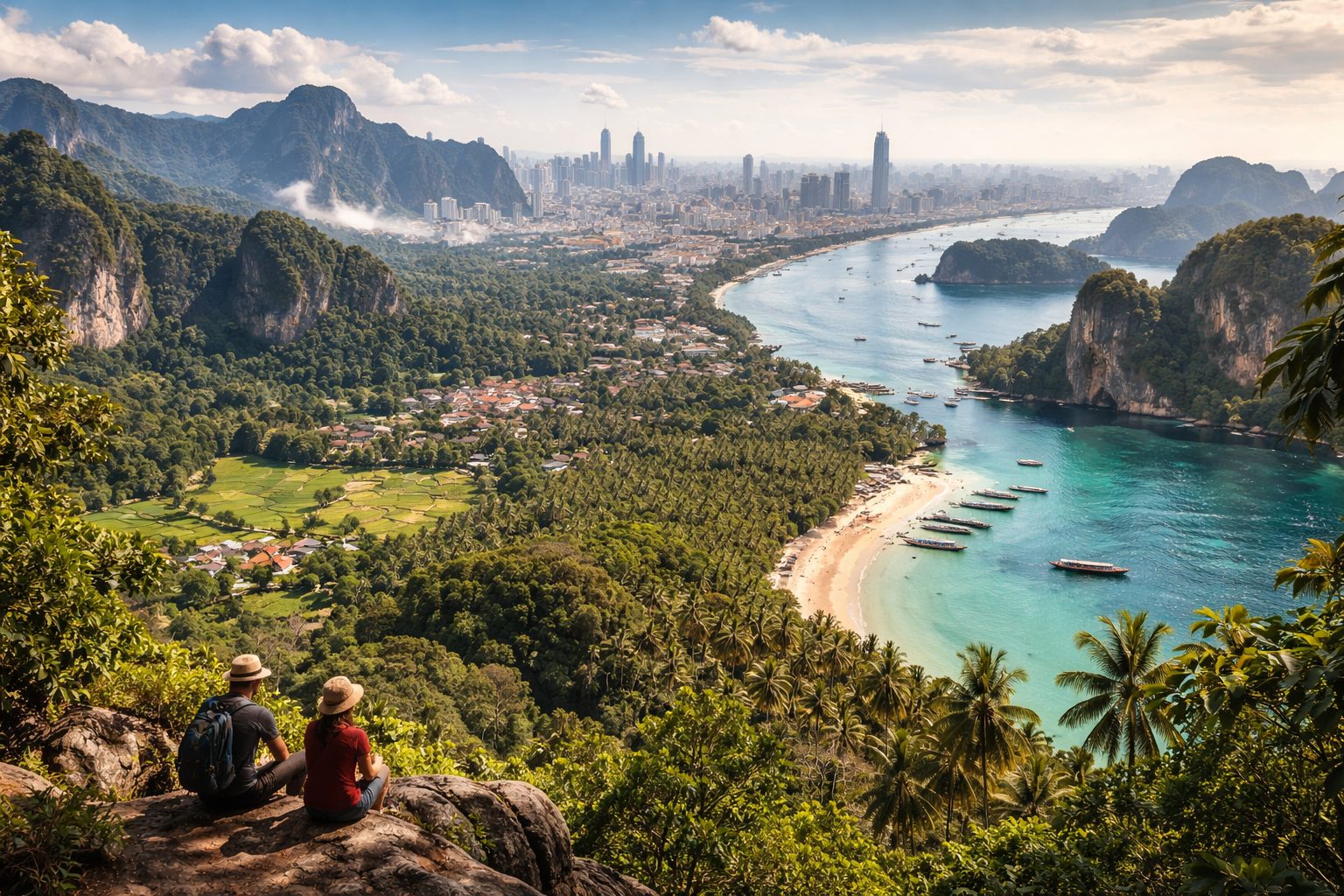
Thailand sits at a geographical sweet spot. You’ve got mountains in the north, coastline wrapping around the south, a thriving urban core in the center, and a northeast region that most tourists skip entirely — which only makes it more interesting. The country’s appeal is genuinely broad. Families come for the beaches and the food. Solo travelers come for the culture, the energy, and the cost. Couples come for the romance. Adventurers come for the diving, climbing, and trekking. And almost everyone stays longer than they planned.
What makes the best things to do in Thailand so compelling is that the experiences rarely feel manufactured. Yes, there’s a tourism industry, and it’s a large one. But scratch the surface of even the most popular destinations and you find something real underneath. Temples that locals actually use. Markets that exist because people need to eat. Festivals that have been running for centuries without any help from a tourism board.
The infrastructure has improved enormously over the past decade. Getting around is easier, accommodation options are wider, and information is more accessible. That also means certain spots get crowded. I’ll tell you which ones and how to handle it.
Top 10 Must-See Destinations in Thailand
Narrowing down a country this rich to ten destinations is an exercise in painful editing. These are the places that deliver the most, whether you’re coming for culture, scenery, or straight-up enjoyment.
Bangkok: The Bustling Capital
Bangkok is the kind of city that doesn’t ease you in gently. It hits you all at once — the heat, the traffic, the smell of street food, the gold of temple spires catching the sun. And then, somehow, you love it.
The Grand Palace and Wat Phra Kaew are obligatory stops, and they’re worth every bit of the queue and the dress code enforcement. Wat Arun across the river is quieter and, architecturally, more interesting to me. Beyond the temples, Bangkok rewards wandering. The Ari and Silom neighborhoods have coffee shops and restaurants that could compete with any major city. Chinatown’s Yaowarat Road at night is one of the best street food experiences in Asia.
- Spend at least three days in Bangkok
- Use the BTS Skytrain and river ferries to avoid traffic
- Visit Chatuchak Weekend Market if you’re there on Saturday or Sunday
- The Jim Thompson House is a genuinely excellent museum that most visitors skip
Chiang Mai: Cultural Heritage and Nature
Chiang Mai operates at a completely different pace from Bangkok. It’s a city, but it feels like a town. The old walled city in the center contains dozens of temples, and you can walk between most of them in a morning.
Doi Suthep, the temple on the hill above the city, is worth the trip up for the views alone. The city’s Sunday Walking Street market along Wualai Road is one of the best markets in the country, selling locally made crafts rather than mass-produced souvenirs. Chiang Mai is also the base for most northern Thailand trekking trips and for visits to ethical elephant sanctuaries.
- Base yourself inside or just outside the old city
- Rent a bicycle or scooter for local exploration
- The food here is genuinely different from Bangkok — try khao soi and sai oua
Phuket: Beaches and Nightlife
Phuket is Thailand’s largest island and one of its most visited. It earned its reputation on the back of genuinely beautiful beaches, and some of those beaches — particularly on the west coast — are still stunning. Kata and Karon have held up better than Patong, which has become extremely commercial.
The island is more than its beaches though. The Old Town area has well-preserved Sino-Portuguese architecture, good restaurants, and a slower atmosphere that surprises many visitors who assumed Phuket was all about the party scene.
- Patong is the entertainment hub but can feel overwhelming
- Rawai and Ao Yon in the south are quieter and more local
- Day trips to the Phi Phi Islands and Phang Nga Bay are both excellent
Ayutthaya: Ancient Temples and Ruins
Ayutthaya is about 80 kilometers north of Bangkok and easily done as a day trip, though staying overnight lets you see the ruins at dawn when they’re nearly empty. The city was the Siamese capital for over 400 years before being sacked by the Burmese in 1767, and what’s left is genuinely haunting.
The Buddha heads set into tree roots at Wat Mahathat are the iconic image, but the broader park of ruins spread across the island city rewards a full day of cycling. Rent a bicycle from near the ferry crossing and go at your own pace.
- Take the train from Bangkok Hua Lamphong station for a scenic and cheap ride
- Hire a tuk-tuk to cover the more spread-out temple complexes
- Combine with Bang Pa-In Royal Palace for a full day out of Bangkok
Krabi: Stunning Islands and Cliffs
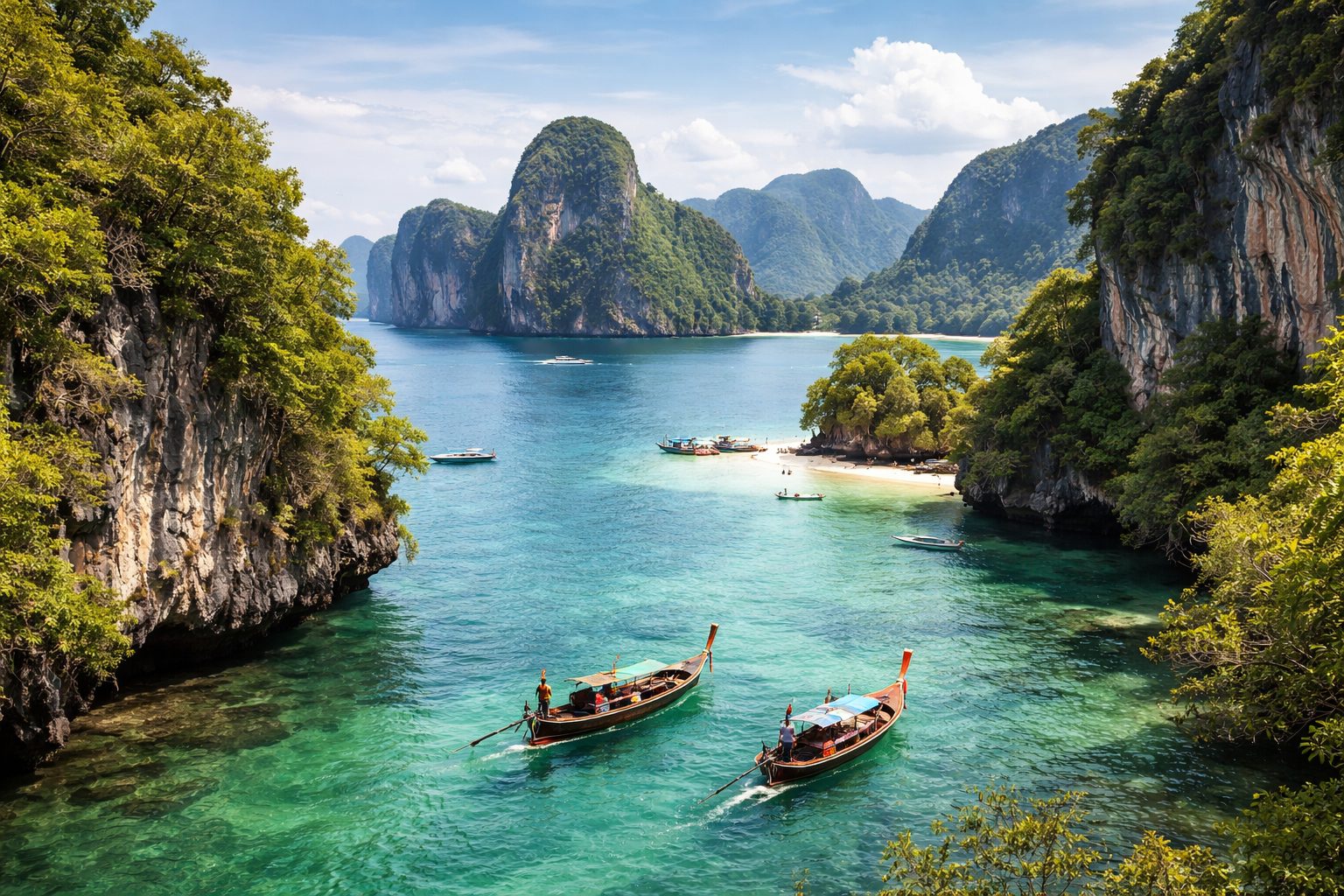
Krabi province on the Andaman coast contains some of the most dramatic scenery in the country. The karst limestone cliffs rising out of the sea, the mangrove-lined channels, the islands you can reach by longtail boat — it’s a landscape that still manages to feel remote even with the tourism that’s arrived.
Railay Beach is accessible only by boat and feels genuinely separate from the mainland. Koh Lanta is larger, quieter, and better for week-long stays. Ao Nang is the main hub, useful as a base but not particularly charming in itself.
- The Four Islands tour from Ao Nang is a reliable half-day trip
- Visit between November and April for the best weather on the Andaman coast
- Rock climbers specifically come to Krabi for world-class sport routes
Pai: A Hidden Gem in the Mountains
Pai is a small town about three hours from Chiang Mai by a road with 762 curves (the signs tell you). It sits in a valley surrounded by forested hills and has attracted a blend of long-term expats, backpackers, and Thai weekenders who come to decompress.
There’s no single unmissable attraction. The pleasure of Pai is pace. Hot springs, a modest canyon, bamboo bridges, and waterfalls nearby give you reasons to get out. But mostly you walk, eat well, drink coffee on a porch, and breathe slower than you have in a while.
- The drive from Chiang Mai requires motion sickness tablets for many people
- Several excellent guesthouses operate along the river
- Go during the cool season (November to February) for the best conditions
Koh Samui: Luxury and Relaxation
Koh Samui is Thailand’s second-largest island and has positioned itself at the higher end of the market over the past two decades. There’s a wide range of accommodation, but the island is known for its luxury resorts, particularly on the north and east coasts.
Chaweng is the busiest beach and has the most nightlife. Bophut and its Fisherman’s Village area is more atmospheric and better suited for a relaxed stay. The interior of the island is still mostly undeveloped and worth exploring by scooter.
- Fly from Bangkok (about an hour) or ferry from the mainland
- The Full Moon Party on nearby Koh Phangan is either your scene or it isn’t
- Spa and wellness retreats are genuinely good here and well-priced by international standards
Sukhothai: A Journey Through History
Sukhothai is the kind of place that makes you think about time differently. This was Thailand’s first capital, founded in the 13th century, and the historical park that preserves its ruins is both UNESCO-listed and remarkably unbusy compared to Ayutthaya.
The central zone of the park is best explored by bicycle. Temples emerge from lotus ponds, stone Buddhas sit in quiet fields, and the whole thing has a serenity that’s hard to describe and easy to feel. It’s further from Bangkok than Ayutthaya — about 430 kilometers north — but worth the extra travel.
- Combine with a visit to nearby Si Satchanalai for even fewer crowds
- The light in the late afternoon makes the ruins particularly photogenic
- Stay in New Sukhothai town, which has good guesthouses and restaurants
Hua Hin: A Beach Destination for Families
Hua Hin is a beach resort town about 200 kilometers south of Bangkok, popular with Thai royalty and Thai families. It’s gentler than Phuket and doesn’t have the same party reputation, which is precisely its appeal for many visitors.
The beach is long and swimmable. The night market is excellent. The town has good seafood restaurants and a pleasant small-city atmosphere. Day trips to nearby Khao Sam Roi Yot National Park, with its mangroves and caves, are easy to arrange.
- Easily reached from Bangkok by bus, minivan, or train
- Cicada Market on weekends is one of the better night markets in the region
- Better for a relaxed trip than a bucket-list adventure
Pattaya: Vibrant Entertainment and Water Sports
Pattaya has a complicated reputation, but it’s evolved considerably. Yes, there’s a significant entertainment industry here. There’s also a genuinely busy waterfront, good water sports, a large expat community, and some unexpectedly good day trip options.
Koh Larn island, accessible by ferry, has clear water and reasonable snorkeling. Nong Nooch Tropical Garden is genuinely impressive as a botanical attraction. The city is close enough to Bangkok — about two hours — that it works as a weekend trip without needing to fly.
- Walking Street is the entertainment hub and operates on its own logic
- Water sports rentals are available along Pattaya Beach and Jomtien Beach
- Go with clear expectations about what kind of trip you want
Unique Experiences to Try in Thailand
Beyond the destinations, there are experiences that define what the best things to do in Thailand actually feel like. These are things worth specifically seeking out, not just stumbling on.
Thai Cooking Classes
Thai cuisine is one of the world’s great food traditions, and learning to cook it properly changes how you eat for the rest of your life. Cooking classes are available almost everywhere tourists go, but the quality varies.
Look for classes that include a market visit in the morning, since that context makes everything make sense. Classes in Chiang Mai and Chiang Rai often focus on northern Thai cuisine, which is distinct from the central Thai food most people associate with the country. Small group sizes (eight people or fewer) make a meaningful difference.
- Budget around 1,200 to 2,500 THB for a half-day class
- Some guesthouses run their own classes, which can be more personal
- You’ll cook four to six dishes and eat all of them at the end
Traditional Thai Massage
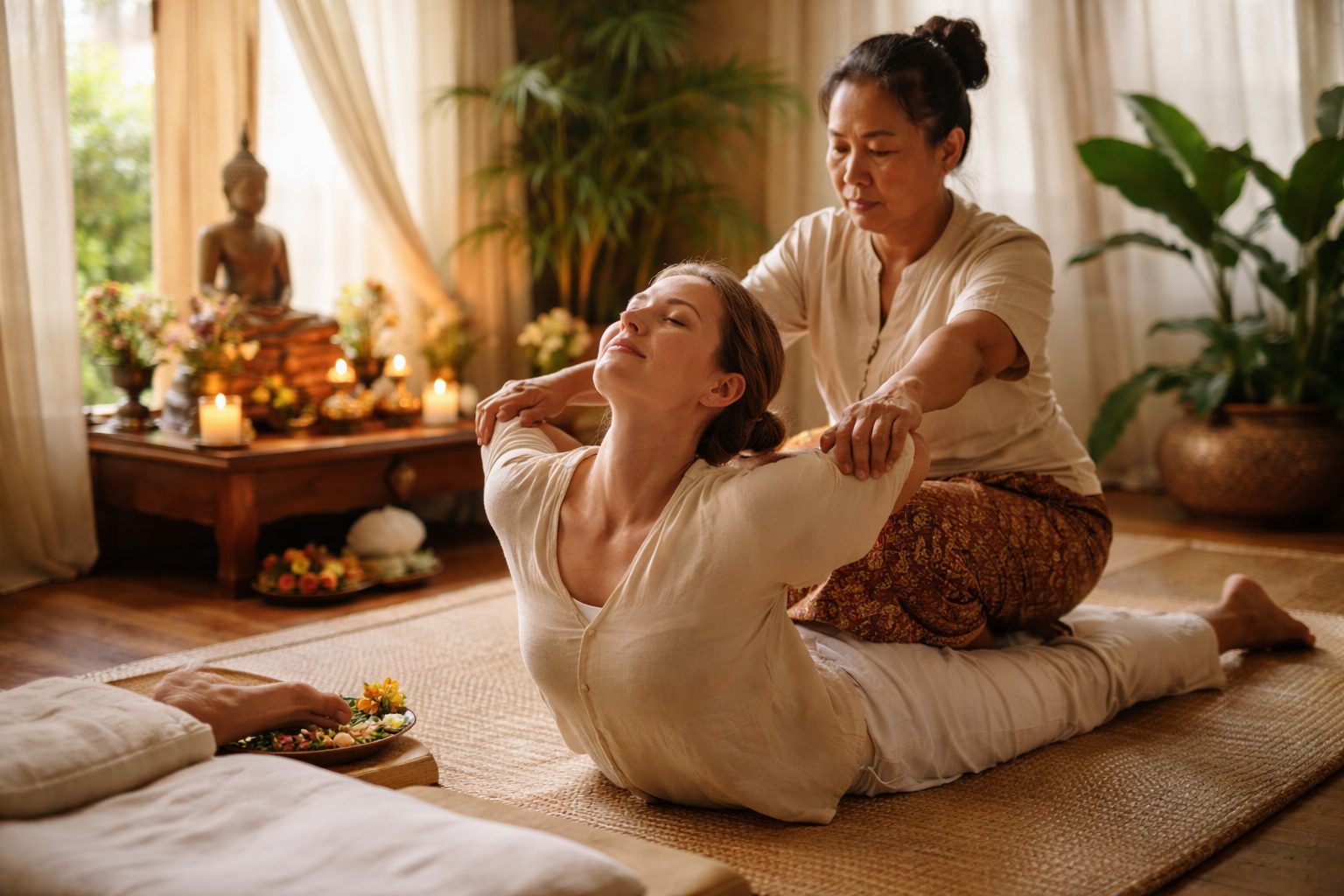
Thai massage is nothing like a Swedish massage. It’s active, sometimes intense, and involves a lot of stretching and applied pressure on sen lines — the energy channels in traditional Thai medicine. You leave feeling like you’ve been taken apart and reassembled correctly.
Wat Pho in Bangkok is the most famous school and training center. The massage pavilions in the temple complex are legitimately good, not just a tourist trap. In Chiang Mai, the Chiang Mai Traditional Medicine Hospital runs well-regarded training and public massage services.
- A one-hour traditional massage typically costs 250 to 500 THB at reputable shops
- Foot massages are gentler and a good entry point if you’re nervous about the full treatment
- Avoid places with no visible credentials or with staff loitering outside pressuring passersby
Elephant Sanctuaries and Ethical Tourism
This is a topic worth getting right. Elephant riding at commercial camps involves training methods that are harmful to the animals. Ethical sanctuaries operate differently — you observe, feed, bathe, and walk with elephants without any riding or performances.
Elephant Nature Park in Chiang Mai was one of the first ethical operators and remains among the best. There are now several others across northern Thailand and in other regions. A day visit costs around 2,500 to 3,500 THB and includes transport, food, and a guide.
- Research any sanctuary before booking — look for no riding, no shows, no hooks
- Full-day visits give a better understanding of the animals than half-days
- The experience of watching elephants in a more natural setting is genuinely moving
Exploring Thailand’s Night Markets
Night markets are one of the genuinely great pleasures of traveling here. They range from massive weekly affairs to nightly food-focused clusters, and they’re where a huge amount of local life happens after dark.
Chiang Mai’s Saturday and Sunday walking streets are probably the best in the country for craft shopping. Bangkok’s Or Tor Kor and Rod Fai markets cover different ends of the spectrum. Smaller towns often have their own version that’s less polished but more authentic.
- Arrive early before peak crowds, usually around 6 to 7 pm
- Bring small bills — most vendors prefer cash
- Follow the Thais when deciding what to eat
Adventure Activities in Thailand
For travelers who want to push past sightseeing, the best things to do in Thailand include some world-class outdoor and adventure options.
Scuba Diving in Koh Tao
Koh Tao is one of the cheapest places in the world to get a PADI Open Water certification, and the diving is genuinely good. The island sits in the Gulf of Thailand with visibility that frequently exceeds 20 meters. Whale sharks appear seasonally, and the reef diversity is solid.
A full PADI course costs around 9,000 to 11,000 THB and takes three to four days. Fun dives for certified divers run about 1,200 to 1,500 THB per dive. The island gets crowded during high season (December to March), so booking dive schools in advance matters.
- Sail Rock, reachable from Koh Tao or Koh Phangan, is one of the best dive sites in the Gulf
- Visibility is best in the dry season
- Accommodation on the island can book out quickly during peak periods
Zip Lining in Chiang Mai
The jungle around Chiang Mai has been developed into several excellent zip line operations. Flight of the Gibbon is the most famous and one of the longest zip line courses in Asia, running through old-growth forest with platforms set in canopy trees.
The experience is more nature immersion than pure adrenaline, which suits it well. You’re moving through forest at height, spotting gibbons and birds, and getting a perspective on the landscape that you simply can’t get from below. Half-day and full-day tours operate from the city.
- Book in advance during high season as popular operators fill up
- Weight and height restrictions apply — check before booking
- Full-day tours often include a treehouse lunch
Rock Climbing in Krabi
Krabi is a legitimate world-class climbing destination. The karst limestone cliffs around Railay Beach and Tonsai Beach have hundreds of established sport routes at all grades, and the setting — ocean views, white sand below, climbers silhouetted against limestone — is spectacular.
Several operators on the beach offer instruction and guided climbs. Half-day sessions for beginners typically run around 1,000 to 1,500 THB and include all equipment. Experienced climbers can rent gear and head out independently to well-documented routes.
- The best climbing is during the dry season, November to April
- Deep water soloing (DWS) is possible here — climbing without ropes above the sea
- Tonsai Beach has a climbing community that’s friendly to visiting climbers
Jungle Trekking in Northern Thailand
The hills around Chiang Mai, Chiang Rai, and Mae Hong Son contain a network of trekking routes through forested mountains. Multi-day treks typically include stays in hill tribe villages, though the ethics of those arrangements have become more nuanced over the years.
Day treks are straightforward to arrange from Chiang Mai. Two or three-day routes reach deeper into less-visited areas and include river crossings, bamboo rafting sections, and nights in remote settings. Go with a licensed guide — the forest navigation is genuinely complex.
- Doi Inthanon National Park, the highest point in Thailand, has good day hiking options
- Trekking during the cool season (November to February) is far more comfortable
- Ask guides specifically about community benefit from village visits before booking
Cultural Experiences and Festivals
Songkran: The Thai New Year Water Festival
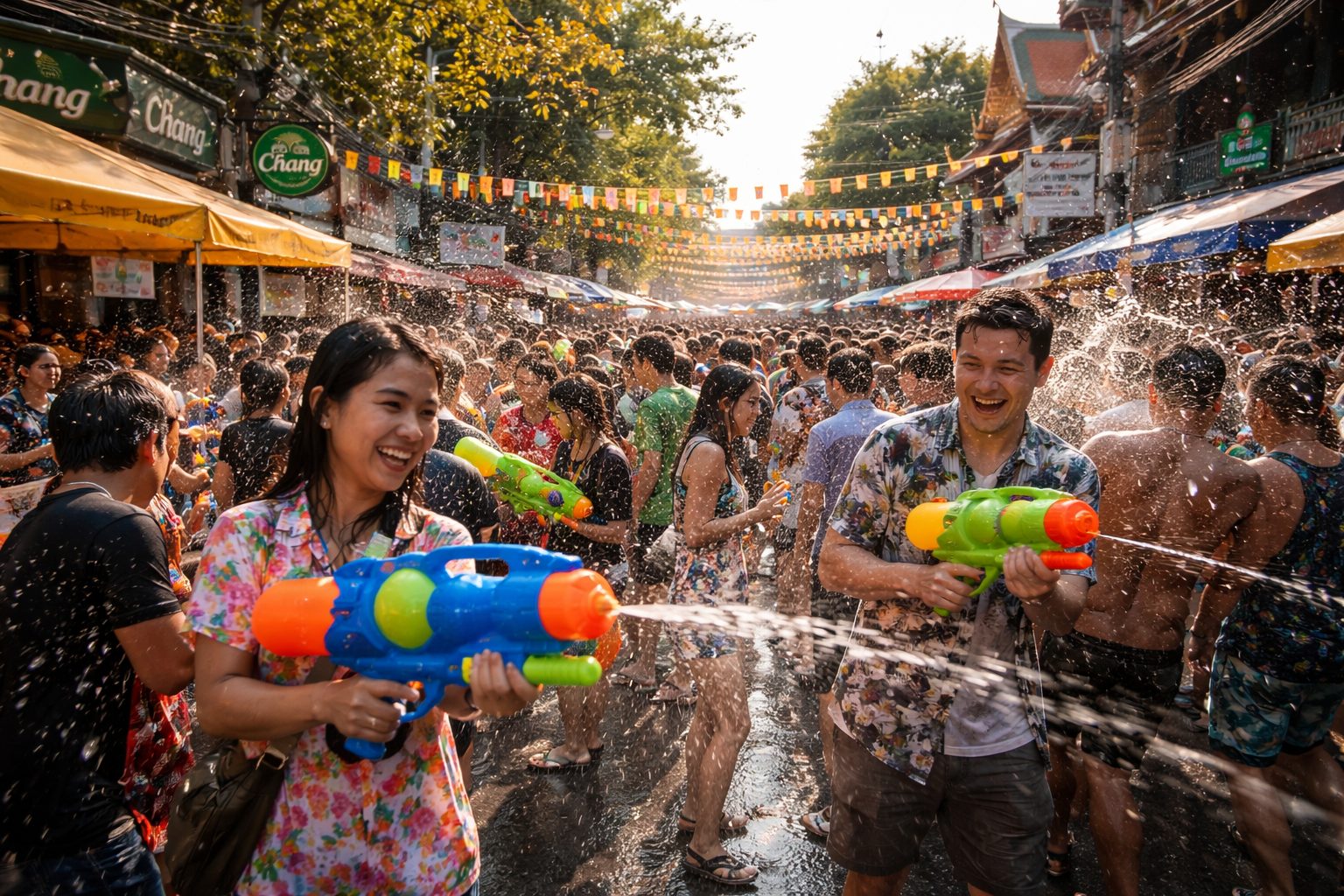
Songkran runs from April 13 to 15 and is Thailand’s most famous festival. The country-wide water fight that characterizes it began as a gentle ritual of water blessing and has evolved into something genuinely exuberant and chaotic. Major streets in Bangkok, Chiang Mai, and other cities turn into outdoor water battles lasting all day.
Chiang Mai has the most intense Songkran celebrations, centered on the old city moat. If you’re going, bring a waterproof phone case and accept that you will be soaked within minutes of stepping outside. The festival also has a quieter, ceremonial dimension — temple visits, sand pagoda building, and the pouring of scented water on elders’ hands.
- April is also the hottest time of year in Thailand, so the water is genuinely welcome
- Some businesses close for the full three days
- Valuables should be kept in your accommodation during street celebrations
Loy Krathong: The Festival of Lights
Loy Krathong takes place on the full moon of the twelfth lunar month, usually in November. People float small decorated vessels (krathong) made of banana leaves and flowers on rivers, canals, and lakes, releasing them as an offering and a symbolic letting go of grudges and bad luck.
In Chiang Mai, the festival coincides with Yi Peng, when thousands of paper lanterns are released into the sky simultaneously. The sky above the city fills with floating lights drifting upward, and it’s one of the most visually remarkable things I’ve seen anywhere. The combination of lanterns above and krathong on the water is extraordinary.
- Book accommodation months in advance if you want to be in Chiang Mai for Yi Peng
- Smaller celebrations in towns and villages across the country are often more intimate
- The environmental impact of lanterns and krathong is an ongoing discussion — opt for biodegradable materials
Local Markets and Festivals to Attend
Beyond the major festivals, Thailand’s calendar is full of smaller events worth catching. The Vegetarian Festival in Phuket each October involves street processions, elaborate temple ceremonies, and some extreme acts of religious devotion. The Bo Sang Umbrella Festival near Chiang Mai in January features local artisan products and traditional performances.
Local markets throughout the country often have festival weekends tied to temple anniversaries. Ask locally or check provincial tourism offices for what’s happening during your visit — the smaller events are often the most memorable.
Practical Tips for Traveling in Thailand
Best Time to Visit Thailand
Thailand has three seasons: hot (March to May), rainy (June to October), and cool (November to February). The cool season is generally the best time to visit, especially for northern Thailand. The islands split between coasts — the Andaman side (Phuket, Krabi) is best from November to April, while the Gulf coast (Koh Samui, Koh Tao) is generally better from December to September.
| Region | Best Months | Avoid |
|---|---|---|
| Bangkok and Central | Nov – Feb | Apr – May (extreme heat) |
| Northern Thailand | Nov – Feb | Jun – Sep (heavy rain) |
| Andaman Coast | Nov – Apr | May – Oct (monsoon) |
| Gulf Coast | Dec – Sep | Oct – Nov (east coast storms) |
The rainy season isn’t a complete washout — prices drop, crowds thin, and the landscape turns dramatically green. Many experienced travelers prefer it in the north.
Transportation Options: Getting Around
Thailand has good internal flight connections. Bangkok Airways and Thai Lion Air cover routes that would otherwise take many hours overland. For shorter distances, trains are comfortable and scenic, especially the northern line from Bangkok to Chiang Mai.
Buses cover almost everywhere and are cheap. Minivans are faster on shorter routes but the driving standards can be alarming. Songthaews (shared pickup trucks) are the main local transport in northern cities. Tuk-tuks are for short hops and tourists — always agree on a price before getting in.
- Grab (the regional Uber equivalent) works in most cities and is reliable
- Renting a scooter is practical but carry an international license and wear a helmet
- Long-distance overnight trains are a genuine pleasure on the right routes
Accommodation: Where to Stay
The range runs from 150 THB dormitory beds to 50,000 THB resort suites. The middle ground is exceptionally good value. A well-located guesthouse in Chiang Mai or Bangkok will run 600 to 1,500 THB for a clean, comfortable private room with air conditioning.
Boutique hotels in converted shophouses are some of my favorite places to stay in Thailand. They tend to have more character than chain hotels and are often run by people with genuine local knowledge. Hostel culture is well-developed, especially among younger travelers.
- Booking.com and Agoda both have strong Thailand coverage
- During festivals and high season, book well in advance
- Read recent reviews — quality can shift quickly with management changes
Local Etiquette and Customs
A few things matter here and will genuinely affect how your trip goes. The monarchy is regarded with deep reverence — critical comments in public are both illegal and genuinely offensive to most Thais. The wai (pressing palms together in greeting) is a sign of respect. Return it when it’s offered to you.
Dress modestly at temples. Shoulders and knees should be covered — most major temples have sarongs available if you arrive underprepared. Remove your shoes before entering temple buildings and private homes. Public displays of frustration or anger are deeply counterproductive and will lose you goodwill immediately. Thais navigate disagreement indirectly and with humor.
- Never touch someone’s head — it’s spiritually the highest part of the body
- Feet are considered the lowest and pointing them at people or Buddha images is rude
- Bargaining is appropriate in markets but not in shops with fixed price tags
Frequently Asked Questions
What are the best things to do in Thailand for first-time visitors?
Start in Bangkok for two or three days, then head north to Chiang Mai or south to the islands depending on your interests. The best things to do in Thailand for a first visit include the Grand Palace, a cooking class, a night market, and at least one beach destination. Don’t try to cover everything in one trip.
How to travel between islands in Thailand?
Most island hopping is done by ferry or speedboat. Joint tickets that combine buses and ferries are widely available from travel agents in any tourist town. Flying is worthwhile for longer distances — Bangkok to Koh Samui, for example, takes an hour by air versus eight hours by bus and ferry.
What is the food like in Thailand?
Thai food is regional, varied, and generally excellent. Bangkok and central Thailand have the dishes most people recognize — pad thai, green curry, tom kha. Northern Thailand has its own distinct cuisine: khao soi, nam prik noom, sai oua sausage. Southern food is spicier and uses more seafood and coconut. Street food is almost always good and street vendors often specialize in a single dish they’ve been perfecting for years.
Are there any travel restrictions in Thailand?
Thailand is generally open to tourists from most countries with visa-on-arrival or visa-exempt entry for stays up to 30 or 60 days depending on nationality. Check the Royal Thai Embassy website for your specific country before traveling, as policies update periodically. Some border crossings and national parks have their own entry requirements or fees.
What are the best places for nightlife in Thailand?
Bangkok’s RCA (Royal City Avenue) and Silom neighborhoods have club-focused nightlife. Khao San Road is backpacker-central and lively in its own way. Phuket’s Bangla Road in Patong is the island’s entertainment strip. Koh Phangan’s Full Moon Party draws crowds from across the region once a month. Chiang Mai has a more relaxed bar scene centered around Nimman Road and the old city’s Night Bazaar area.
Thailand rewards travelers who approach it with curiosity and a degree of flexibility. The best things to do in Thailand aren’t always on the top ten lists — sometimes they’re the side street you wander down, the meal you eat at a plastic table outside a market stall, or the conversation you have with a guesthouse owner who’s been watching tourists pass through for thirty years. Go with a plan, but leave room to be surprised.