Japan is one of those destinations that genuinely rewrites what you think travel can be. The first time I landed at Narita, I had a list of japan travel tips I’d collected from blogs and guidebooks. Some were useful. Many missed the mark entirely. What I actually needed was honest, practical guidance from someone who’d navigated the country’s particular logic: the punctual trains, the unspoken social codes, the vending machines on every corner, the sheer density of things to see and do and eat. This guide is what I wish I’d had. Whether you’re planning your first visit or returning for the third time, the real value is in the details that most traveler resources gloss over.
Essential Travel Tips for Japan
Japan rewards preparation. Not rigid, itinerary-every-hour preparation, but the kind where you understand the basics before you arrive. The country operates on its own rhythm, and getting aligned with it early makes everything smoother.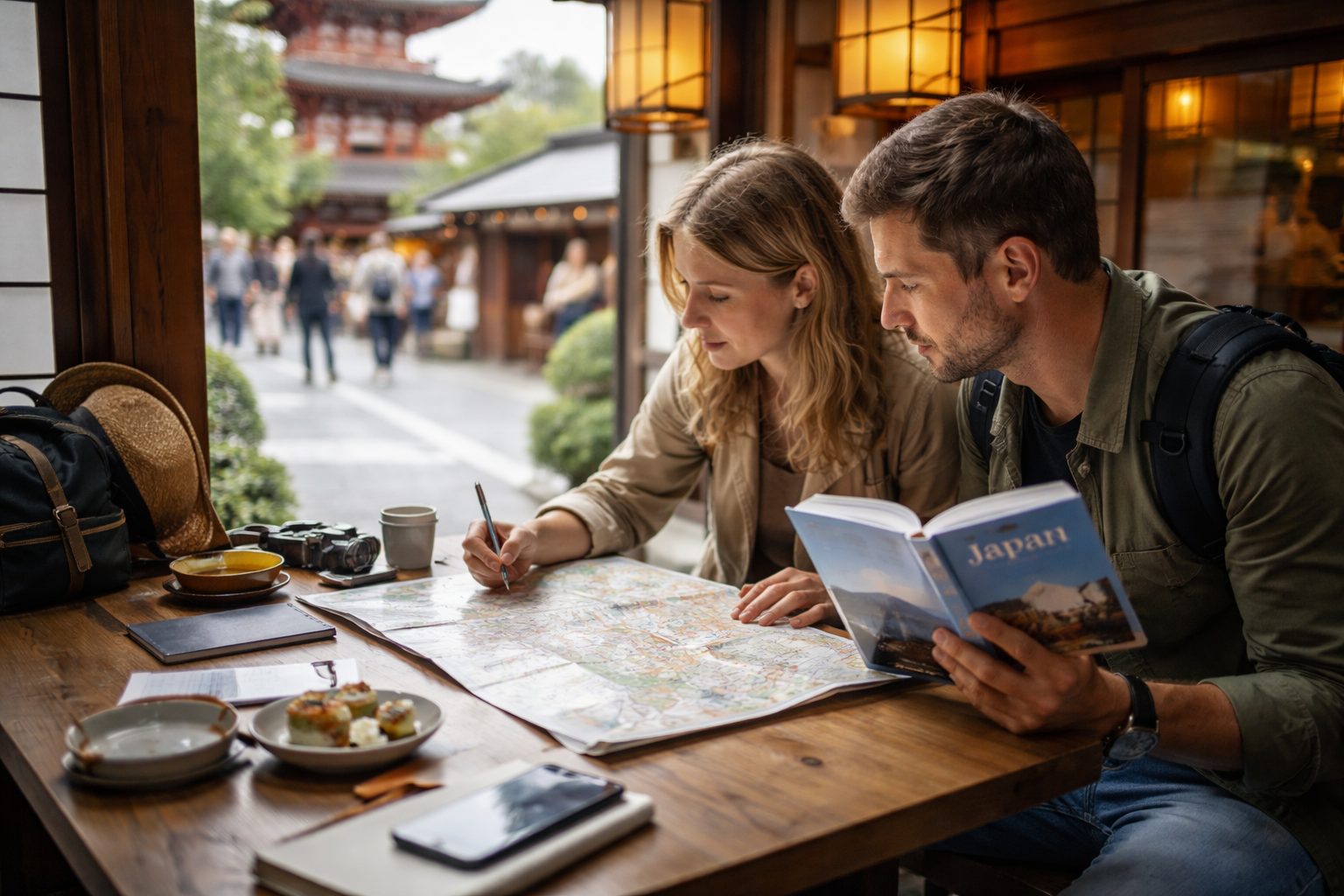
Understanding Japanese Culture and Etiquette
Respect is the cornerstone of daily life in Japan. It shows up in small gestures that might seem minor to outsiders but carry real weight locally.
- Remove your shoes when entering someone’s home, many traditional accommodations, and some restaurants. Look for a raised floor or a genkan (entryway) as your cue.
- Bow slightly when greeting or thanking someone. You don’t need to perfect the angle; a sincere nod goes a long way.
- Keep your voice low in public spaces, especially on trains and buses. Loud phone calls are genuinely frowned upon.
- Eating or drinking while walking is generally avoided in most cities, though it’s more accepted near street food stalls in tourist areas.
- Queue properly. Japanese lines are orderly and people take them seriously.
Tattoos can be an issue at some onsen (public baths) and gyms. Policies vary, so check in advance if this applies to you. It’s not personal; it’s a longstanding cultural association that’s slowly changing but hasn’t disappeared.
Language Tips for Travelers
English signage is common in major cities and tourist areas. Train stations typically have English translations on signs and ticket machines. But once you step outside central Tokyo, Osaka, or Kyoto, English drops off quickly.
A few practical moves:
- Download Google Translate and enable the camera translation feature. It’s genuinely useful for menus and signs.
- Learn a handful of basic phrases: arigatou gozaimasu (thank you), sumimasen (excuse me), and ikura desu ka (how much is this?) will serve you often.
- Carry a translation app that works offline. Connectivity isn’t always reliable in rural areas.
- Writing down your destination in Japanese characters to show to taxi drivers or locals is old-school but still effective.
Japanese people are generally willing to help even when there’s a language gap. A bit of effort on your part goes a long way toward getting assistance.
Money Matters: Currency, ATMs, and Tipping
Japan remains heavily cash-dependent, especially outside major urban centers. Credit cards are becoming more accepted, but plenty of restaurants, local shops, and smaller accommodations still prefer yen in hand.
- The Japanese yen (JPY) is the currency. Exchange rates fluctuate, so check before you go.
- 7-Eleven, FamilyMart, and Japan Post ATMs reliably accept foreign cards. Bank ATMs often do not.
- Withdraw enough cash to cover a few days at a time, especially if you’re heading somewhere rural.
- Tipping is not a custom in Japan. It can actually cause confusion or mild discomfort. Don’t do it.
Carrying a mix of small bills and coins is useful. Many coin lockers at train stations, vending machines, and small eateries work exactly as you’d expect, and exact change makes transactions faster.
Planning Your Trip to Japan
Getting the planning right sets everything else up. You don’t need to over-schedule, but a loose framework is genuinely helpful given how much there is to see.
Best Time to Visit Japan
The two most popular windows are spring (late March to early May) and autumn (mid-October to mid-November). Both offer spectacular scenery and comfortable temperatures.
| Season | Highlights | Drawbacks |
|---|---|---|
| Spring | Cherry blossoms, mild weather | Very crowded, prices spike |
| Summer | Festivals, lush greenery | Hot and humid, rainy season |
| Autumn | Fall foliage, crisp air | Popular, some congestion |
| Winter | Snow scenery, fewer crowds, skiing | Cold, some attractions close |
Cherry blossom season is extraordinary, but the crowds are real. If you want the blossoms without the chaos, aim for weekday mornings or head to smaller cities where the same scenery is 80% as good with 20% of the people.
Winter in Japan is underrated. Cities like Kanazawa and Hokkaido in January are cold but magical, and accommodation prices drop noticeably.
How Long Should You Stay in Japan?
Ten to fourteen days is the sweet spot for a first visit. It gives you enough time to cover a few major cities without feeling rushed, while also allowing for one or two slower-paced days.
A common first-timer route: Tokyo (3-4 days), a day trip to Nikko or Kamakura, a night in Hakone, then the Kansai region covering Kyoto (2-3 days), Osaka (2 days), and a half-day in Nara. That’s roughly twelve days and covers a solid range without becoming a death march.
If you only have a week, be honest with yourself about the pace. Trying to cram Tokyo, Kyoto, Hiroshima, and Osaka into seven days is doable but exhausting. Better to go deeper in fewer places.
Creating an Itinerary: Must-See Destinations
Japan has no shortage of must-visit places, and the hardest part of planning is cutting things down to what’s actually realistic.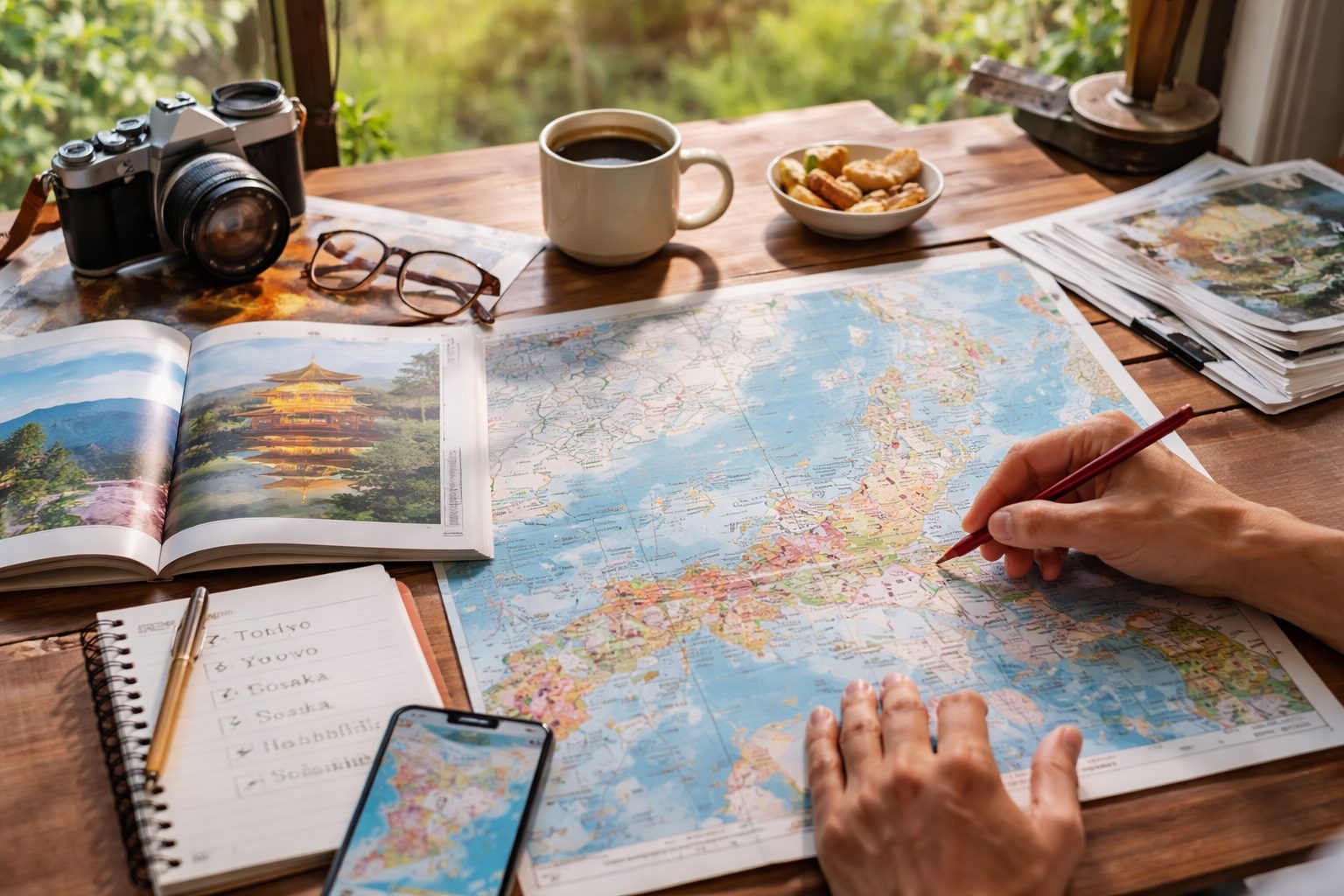
Core destinations worth anchoring your trip around:
- Tokyo: The most overwhelming and rewarding city I’ve spent time in. Shibuya, Shinjuku, Yanaka, and Akihabara each feel like a different city.
- Kyoto: Temples, shrines, geisha districts, and incredibly good food. It’s touristy but for good reason.
- Osaka: More relaxed than Tokyo, cheaper food, genuinely warm people.
- Hiroshima and Miyajima: Historically significant and beautiful. The day trip combination is one of the best in Japan.
- Hakone: Access to Mt. Fuji views and excellent onsen. A useful stop between Tokyo and Kyoto.
- Kanazawa: Often called “little Kyoto” and far less crowded. Kenroku-en garden is worth the detour.
If you’re a second or third timer, places like Tohoku, the Kumano Kodo trail, or Kyushu offer a different side of the country entirely.
Transportation in Japan
Getting around Japan is genuinely one of the pleasures of visiting. The train network is dense, punctual to a fault, and covers almost everywhere you’d want to go.
Navigating Public Transportation
Japanese trains run on time. Not “pretty much on time” but actually on time. A two-minute delay is considered noteworthy. This reliability makes planning straightforward.
In Tokyo, the subway and JR lines can feel overwhelming at first. The IC card system simplifies things enormously. Suica or Pasmo cards are rechargeable smart cards that work across trains, buses, and even many convenience stores and vending machines. Load one up at the airport when you arrive and tap in and out without worrying about buying individual tickets.
Google Maps works extremely well for navigating Japanese public transit. Input your destination, and it’ll give you train lines, transfer points, and journey times with impressive accuracy.
Understanding the Japan Rail Pass
The Japan Rail Pass (JR Pass) gives you unlimited travel on most JR-operated trains, including most Shinkansen (bullet trains). It’s sold in 7, 14, and 21-day increments and must be purchased before you arrive in Japan.
Whether it’s worth buying depends on your route. Do the math on your planned journeys using the actual ticket prices before committing.
- If you’re traveling between Tokyo and Kyoto (round trip on the Shinkansen), the 7-day pass roughly breaks even.
- Add Hiroshima and Osaka to the mix, and the pass saves money.
- If you’re staying mostly in Tokyo or Osaka, it’s probably not worth it.
The pass covers most Shinkansen lines but not the fastest Nozomi or Mizuho trains. You’ll use the slightly slower Hikari or Sakura trains instead. Practically speaking, the time difference is modest.
Alternatives to Trains: Buses and Taxis
Highway buses are considerably cheaper than the Shinkansen for long-distance travel. Overnight buses are especially cost-effective since they double as accommodation. Willer Express and JR Bus are the main operators. Useful if you’re on a tighter budget or have flexibility on timing.
Taxis are clean and reliable but expensive. In Tokyo, they’re rarely the right choice for long distances. For short hops late at night when trains have stopped, they’re practical. Drivers may not speak English, so having your destination written in Japanese helps.
Rental cars make sense outside major cities, especially in Hokkaido or rural areas where public transport is sparse. International driving permits are required, and driving is on the left side of the road.
Accommodation Options in Japan
Japan’s range of accommodation is genuinely one of the country’s highlights. You can sleep in a business hotel, a budget hostel, or a traditional inn, and each experience adds something different to the trip.
Types of Lodging: Hotels, Ryokans, and Hostels
- Business hotels are the backbone of affordable accommodation in Japan. Chains like Toyoko Inn, Dormy Inn, and APA offer clean, compact rooms at reasonable prices in central locations. They’re not glamorous, but they’re efficient.
- Ryokans are traditional Japanese inns. Staying in one is a genuine cultural experience: tatami floors, futons laid out by staff, communal or private baths, and multi-course kaiseki meals. Prices vary widely, from budget options around 8,000 yen per person to luxury inns that can top 50,000 yen.
- Capsule hotels are worth trying at least once. They’re compact, clean, and often come with good shared facilities. Not suitable if you’re claustrophobic or traveling with a partner wanting privacy.
- Hostels in Japan tend to be well-run, social if you want them to be, and centrally located. Good option for solo travelers watching their budget.
How to Book Accommodations in Japan
Book early, particularly for spring and autumn travel. Popular ryokans in Kyoto during cherry blossom season fill up months in advance. Accommodation comparison sites like Booking.com and Agoda cover most hotel options, while Jalan and Rakuten Travel have better coverage of traditional Japanese inns.
For budget travelers, HostelWorld has solid coverage of hostels across Japan. Some smaller guesthouses and ryokans book directly through their own websites or require email inquiries in Japanese.
Cancellation policies vary. Read them carefully, especially in high season.
Tips for Staying in a Ryokan
The ryokan experience has its own etiquette. Get it right and it’s deeply relaxing. Show up confused and it can feel stressful.
- Check-in times are usually strict. Dinner is often served at a fixed time, and the inn plans accordingly.
- Wear the yukata (cotton robe) provided in your room. It’s meant to be worn to meals and the bath.
- Use the onsen facilities in the correct order: shower thoroughly before entering the communal bath.
- Most ryokans include breakfast and dinner in the room rate. The meals are often the highlight.
- Quiet hours are taken seriously. These places aren’t designed for late-night socializing.
The cultural immersion of a ryokan stay is worth the cost at least once, particularly in places like Hakone, Kyoto, or Kinosaki.
Food and Dining in Japan
Japanese food culture deserves more attention than it typically gets in travel planning. The country has one of the most developed food cultures in the world, and eating well doesn’t require spending a lot of money.
Must-Try Japanese Dishes
The obvious entries: sushi, ramen, tonkatsu, tempura. But the list worth exploring goes considerably further.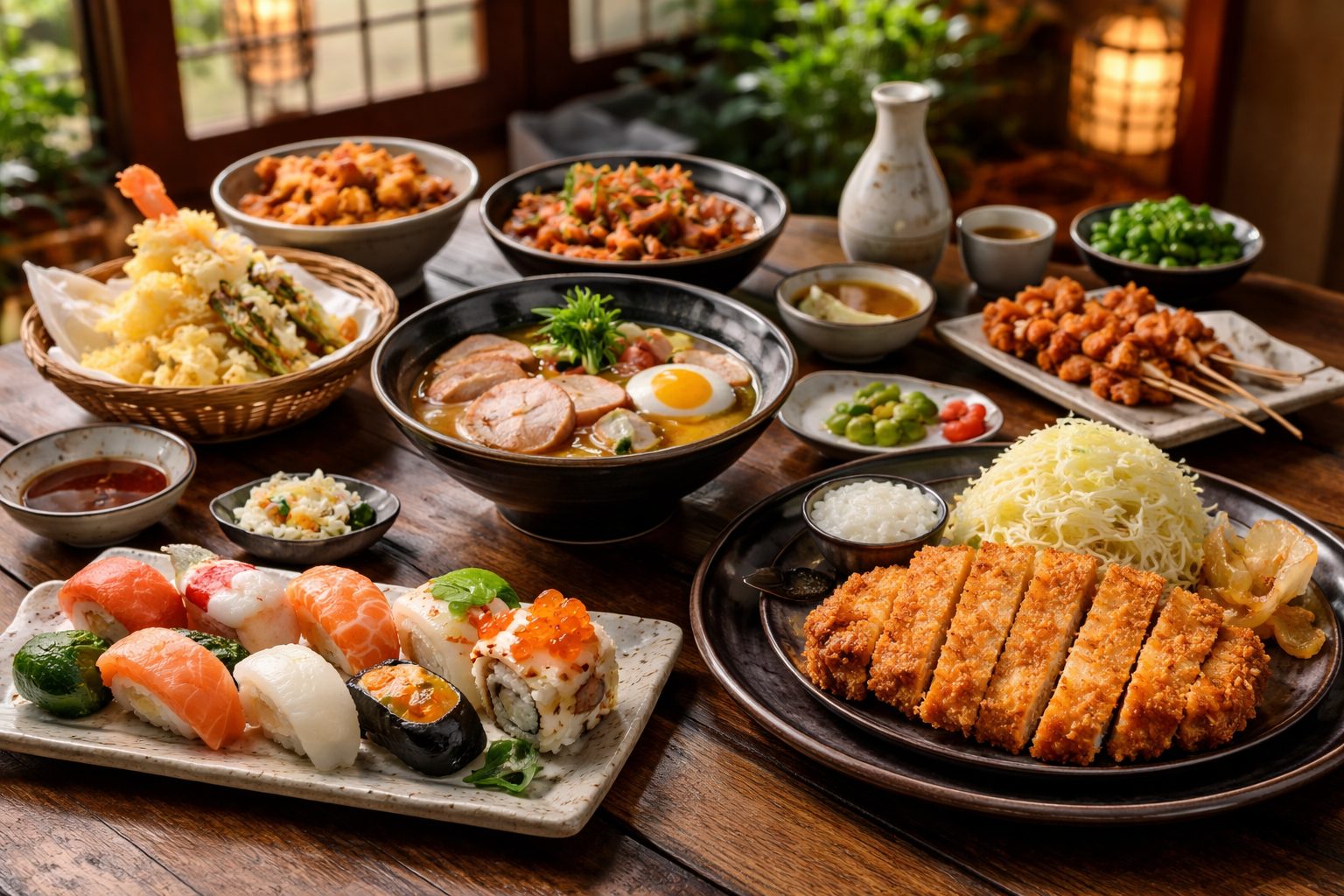
- Ramen: Regional variations are significant. Sapporo is known for miso ramen, Fukuoka for hakata tonkotsu, Tokyo for shoyu, and Kyushu for rich pork-based broths. Each city has its own character.
- Yakitori: Grilled chicken skewers from a street stall or a proper yakitori bar. Simple and exceptional.
- Kaiseki: The Japanese multi-course dining tradition. Expensive but remarkable if you can fit it into the budget once.
- Conveyor belt sushi (kaiten-zushi): Affordable, fun, and genuinely good quality at places like Sushiro or Kura Sushi.
- Convenience store food: Sounds like a joke but isn’t. 7-Eleven, FamilyMart, and Lawson in Japan sell onigiri, sandwiches, hot foods, and prepared meals that are actually good.
- Okonomiyaki: A savory pancake with various toppings, cooked on a griddle. Osaka and Hiroshima each have their own version, and the rivalry between them is semi-serious.
Dining Etiquette in Japan
A few things to know before you sit down:
- Most restaurants have a water or tea service that arrives automatically. It’s free.
- Slurping noodles is not only acceptable but considered a compliment to the chef. Don’t fight the instinct.
- Splitting a bill (warikan) is common among friends but may confuse a server if the dynamic isn’t obvious. Some places don’t split bills at all.
- Many restaurants display plastic food models or picture menus outside. These are useful for pointing at what you want.
- It’s polite to say “itadakimasu” before eating and “gochisousama deshita” when you’re done. Nobody expects you to get these right, but the attempt is appreciated.
Where to Find Affordable Eats
Japan doesn’t have to be expensive for food, even in Tokyo.
- Gyudon chains (Yoshinoya, Sukiya, Matsuya) serve beef rice bowls from around 350-500 yen. Fast, filling, open late.
- Standing sushi bars and ramen counters near train stations are often excellent and inexpensive.
- Department store basement food halls (depachika) have tremendous variety. Buying prepared food there for a picnic in a nearby park is one of my favorite Japan moves.
- Lunch sets at restaurants that would be expensive at dinner are often remarkably affordable. The teishoku (set meal) is typically 800-1,500 yen and includes a main dish, rice, miso soup, and pickles.
Unique Experiences in Japan
Part of getting real value from japan travel tips is knowing which experiences are worth the time and which are overhyped. Japan has both categories covered well.
Cultural Activities: Tea Ceremonies and Festivals
Tea ceremonies (chado) are widely offered to tourists, especially in Kyoto. Some are genuine, others are abbreviated performances for tour groups. Look for ones held in actual tea houses rather than converted shops, and ideally book through a cultural center or traditional inn recommendation.
Festivals (matsuri) are worth timing your trip around if possible:
- Gion Matsuri in Kyoto (July): One of Japan’s most famous festivals, with elaborate floats paraded through the city.
- Awa Odori in Tokushima (August): A spectacular dance festival that takes over the whole city.
- Sapporo Snow Festival (February): Ice sculptures and snow constructions on a massive scale.
- Hanami (cherry blossom viewing) in spring: Less structured, more of a season-long picnic culture. Join in wherever you find a park with blossoms.
Outdoor Adventures: Hiking and Nature
Japan’s outdoor options are underutilized by many first-time visitors who focus entirely on cities.
- Climbing Mt. Fuji: Officially open in July and August. The routes are well-marked and manageable for reasonably fit hikers. Start at night to reach the summit at dawn. It’s worth the effort.
- Nakasendo Trail: A historic route connecting Kyoto and Tokyo through mountain villages. You can walk sections of it between Magome and Tsumago in a day.
- Yakushima Island: Dense ancient cedar forests. Some of the trees are over a thousand years old. The hiking is serious but the scenery is extraordinary.
- Kamikochi in the Northern Alps: One of the most beautiful alpine valleys in the country. Accessible by bus and requires no technical climbing.
- Kumano Kodo: A UNESCO World Heritage pilgrimage trail through the Kii Peninsula. Multi-day trekking through forest, shrines, and villages.
Nightlife and Entertainment Options
Japan’s nightlife ranges from izakayas (casual drinking spots with food) to sophisticated cocktail bars to full-scale club districts.
- Izakayas are the most accessible entry point. Order drinks and small dishes over a few hours. The atmosphere is relaxed and social.
- Tokyo’s Golden Gai district in Shinjuku is a cluster of tiny bars, each seating around eight people. Each one has its own character and regular crowd. It’s worth an evening.
- Osaka’s Dotonbori is more chaotic, neon-heavy, and fun for people-watching.
- Karaoke is everywhere and genuinely enjoyable. Private rooms mean no stage fright required. Most chains have English song selections.
- For electronic music, Tokyo’s club scene around Shibuya and Roppongi is serious. Ageha is one of Asia’s largest clubs.
Safety Tips for Travelers in Japan
Japan consistently ranks among the safest countries in the world for travelers. That doesn’t mean caution is irrelevant, but the calculus is different here.
General Safety Precautions
Petty crime is rare in most parts of Japan. Lost wallets are often turned in. Violent crime against tourists is genuinely uncommon. That said, basic awareness still applies.
- Keep your belongings with you in crowded tourist areas and on packed trains.
- Earthquakes happen. Hotels and major buildings are constructed to modern seismic standards. Learn the basic safety response: away from windows, under a sturdy table, or in a doorframe.
- Traffic moves on the left. Look right first before crossing the street if you’re from a country that drives on the right.
- Stay aware of your alcohol consumption. Getting seriously drunk in public is frowned upon and creates practical risks.
- Natural disasters including typhoons occur between June and October. Monitor weather warnings during that period.
Emergency Contacts and Resources
- Police emergency: 110
- Fire and ambulance: 119
- Japan Visitor Hotline (tourist assistance in multiple languages): 050-3816-2787
- Most major hospitals in cities have some English-speaking staff or translation services available.
Japan’s NHK World and the Japan Meteorological Agency provide English-language emergency alerts during disasters. Install the Safety tips app from Japan Tourism Agency for real-time disaster notifications.
Health and Travel Insurance Recommendations
Travel insurance is strongly recommended for Japan. Medical care is high quality but not free. Even a single urgent care visit can cost several hundred dollars out of pocket.
Prescription medications: bring enough for your entire trip plus a few extra days. Getting foreign prescriptions filled in Japan is complicated. Carry documentation of what you’re taking.
Japan is not a significant health risk destination in terms of tropical diseases or food safety. Tap water is safe to drink everywhere.
Pharmacies (yakkyoku or kusuriya) are easy to find, but many common foreign-brand medications aren’t available. Pack your own supply of anything you rely on regularly.
Cultural Insights for a Meaningful Visit
Understanding cultural context turns a good trip into a genuinely enriching one. Japan’s cultural depth is real, and engaging with it honestly changes how you experience the country.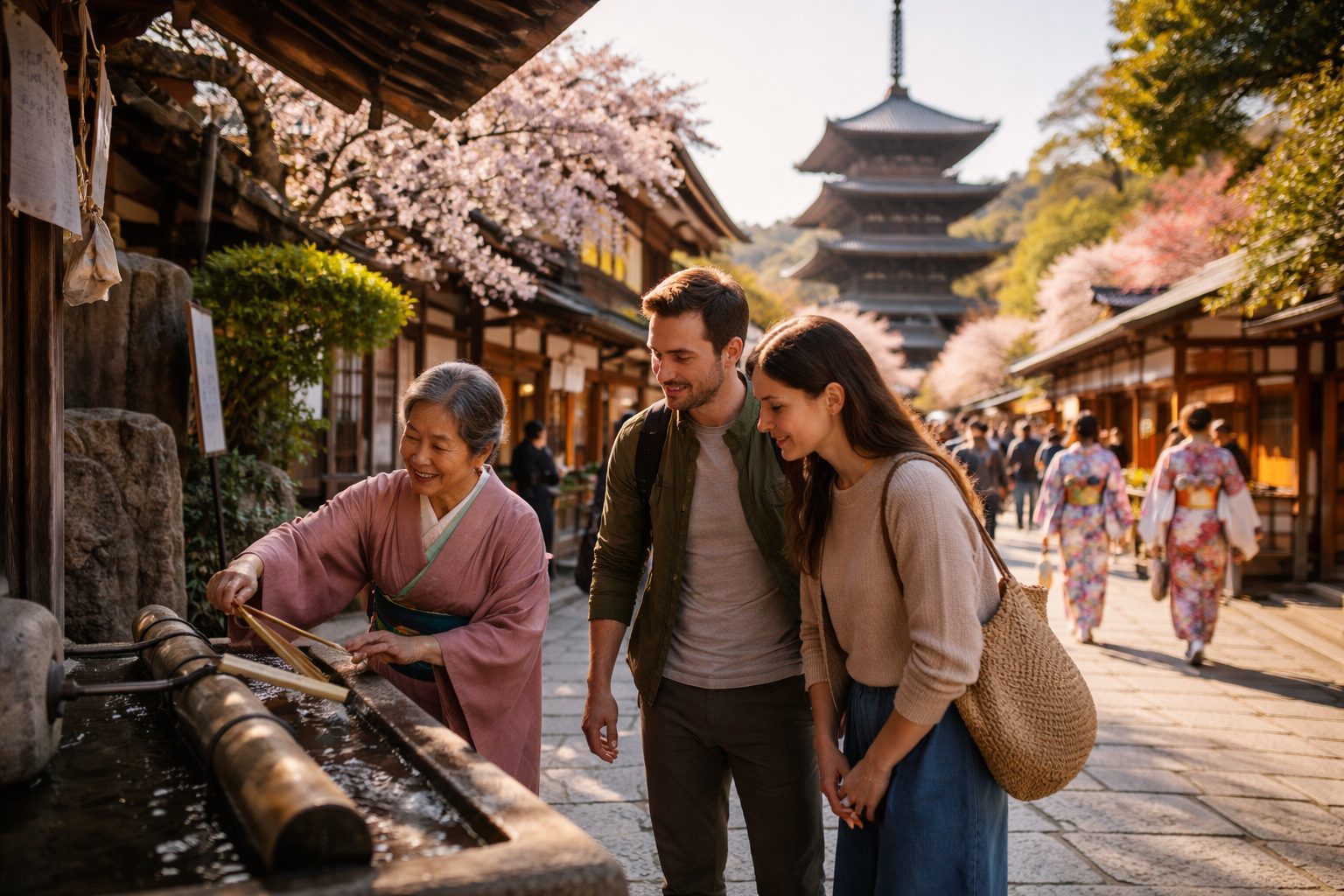
Understanding Japanese Customs and Traditions
Harmony and group cohesion are foundational values in Japanese culture. This shapes behavior in ways that can seem puzzling or overly formal to outsiders but make complete sense within the system.
- Indirect communication is the norm. Saying “no” directly is considered impolite. Learn to read softened responses like “it might be difficult” as meaning no.
- Gifts are a significant social currency. If you’re visiting someone’s home or staying with a host, bringing a wrapped gift (omiyage) from your home country or city is expected and appreciated.
- Waste is managed carefully. Carry a small bag for your trash on days when you can’t find a bin, which is often.
- Business card exchange (meishi koukan) is a formal practice in professional settings. Handle cards with both hands and genuine attention.
Festivals and Local Events to Experience
Japan’s festival calendar is rich throughout the year. Beyond the major ones mentioned earlier, smaller local matsuri offer a more authentic window into community life.
- Setsubun (early February): Bean-throwing rituals at temples and shrines to mark the end of winter. Funny and participatory.
- Tanabata (July): Star Festival with colorful paper decorations strung along shopping streets.
- Obon (mid-August): Buddhist festival honoring ancestors. Cities quiet down as people return to their hometowns. Less ideal for tourism logistics but culturally significant.
- New Year (Oshogatsu): The most important Japanese holiday. Shrines are packed at midnight on December 31st. An incredible atmosphere if you’re there.
Checking local event listings for wherever you’re visiting pays off. Regional festivals often happen on schedules that aren’t widely covered in international travel media.
Engaging with Locals: Do’s and Don’ts
Most Japanese people are polite and patient with foreign visitors. There are ways to make interactions better.
Do:
* Try to use basic Japanese phrases even imperfectly. The effort is genuinely appreciated.
* Be patient at shops and restaurants. Rushing or showing impatience is counterproductive.
* Respect spatial norms. Don’t stand too close, don’t block walkways, and stay aware of the flow of pedestrian traffic.
Don’t:
* Speak loudly in quiet spaces or on public transport.
* Walk and eat outside of designated areas or festival contexts.
* Enter a tatami room or genkan with shoes on.
* Assume everyone wants to be photographed. Ask permission, especially at traditional events and when photographing people.
The more genuine respect you show for the social environment, the more generosity you tend to get in return. Japan operates on reciprocity in ways that are subtle but consistent.
FAQs about Traveling to Japan
What to Pack for Your Trip to Japan?
Pack light and practical. Japan’s laundry infrastructure (coin laundromats in or near most accommodations) makes it easy to rewash clothes. Comfortable walking shoes are essential because you’ll walk significantly more than you expect. A small day bag, a rain-resistant jacket, and an IC card case or wallet are all you really need beyond the basics.
Is Japan Solo Travel-Friendly?
Very much so. Japan is one of the best solo travel destinations in the world. Single rooms are widely available, dining alone is completely normal (many restaurants have counter seating designed for it), and the safety profile makes independent movement straightforward. Solo female travel in particular gets strong reviews from experienced travelers.
How to Stay Connected in Japan?
A pocket Wi-Fi rental or a prepaid SIM card are both practical options. Pocket Wi-Fi devices can be picked up at the airport on arrival. Major carriers like IIJmio and KDDI offer data SIMs that work well. Most accommodation also provides Wi-Fi, but having a mobile connection makes navigation considerably easier.
Conclusion: Your Journey Awaits in Japan
Recap of Key Japan Travel Tips
The most important japan travel tips I can offer come down to a few consistent principles. Go with respect for the culture and you’ll find it opens up. Learn the IC card system and train network basics before you arrive. Carry cash, especially outside major cities. Book accommodation well in advance for peak seasons. And resist the urge to over-schedule, because the best moments in Japan often come from following a morning market, a temple side street, or a local recommendation somewhere unplanned.
Food will be better than you expect. Transport will be more straightforward than it looks. The language barrier is real but manageable. And the combination of ancient culture, extraordinary food, natural beauty, and modern urban life is genuinely unlike anywhere else.
Encouragement to Explore and Discover Japan
Japan is a country that reveals itself gradually. First-time visitors leave with a long list of things they’d do differently or want to return for. That’s not a sign of failure; it’s how Japan works. The depth is real, and it takes more than one trip to even begin to scratch it.
Go with curiosity, patience, and a willingness to let things unfold on their own terms. Use whatever japan travel tips help you get oriented, then set them aside and pay attention to what’s actually in front of you. That’s where the real experience lives.