If you’ve ever dreamed of crystal-clear water, white sand under your feet, and a horizon that stretches forever, the Maldives is exactly what you’re imagining. I’ve spent time researching and traveling through this archipelago, and the amount of planning that goes into a successful trip here is often underestimated. These maldives travel tips are designed to help you skip the rookie mistakes, make smart choices with your budget, and actually enjoy one of the most beautiful places on the planet.
Introduction to the Maldives
Overview of the Maldives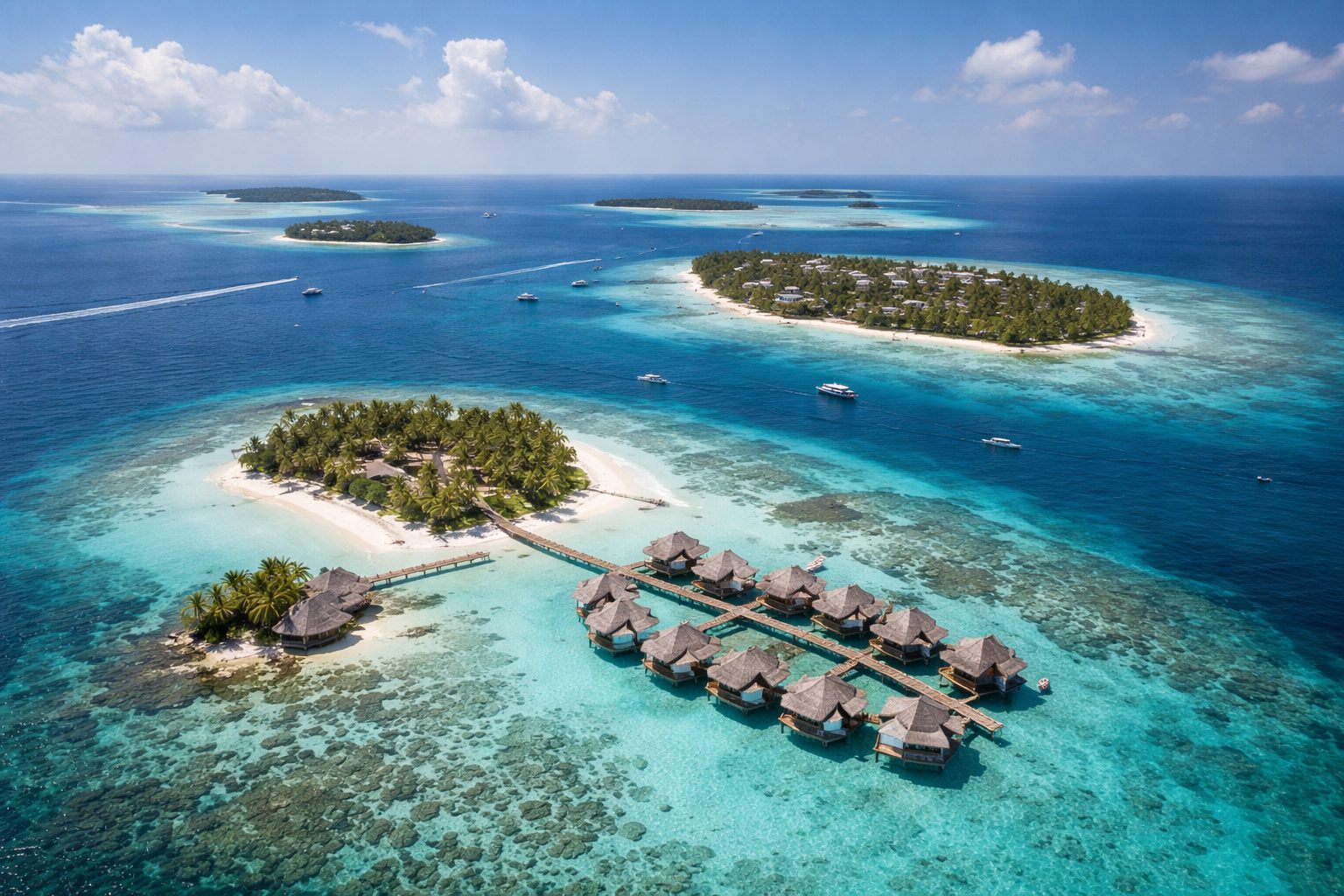
The Maldives is a small island nation in the Indian Ocean, located southwest of Sri Lanka and India. It’s made up of about 1,200 coral islands grouped into 26 atolls, though only around 200 of those are inhabited. The total land area is tiny, but the marine territory spans roughly 90,000 square kilometers. What makes this country genuinely unique is that it sits just above sea level, with an average ground elevation of around 1.5 meters. That low profile is part of its charm and also its environmental vulnerability.
Most tourists fly into Velana International Airport in Malé, the capital, and then transfer to their resort island by speedboat or seaplane. The country runs almost entirely on tourism, fishing, and increasingly on remote work infrastructure. English is widely spoken in tourist areas, and the local currency is the Maldivian Rufiyaa, though US dollars are accepted almost everywhere guests interact with businesses.
The vibe varies significantly depending on where you stay. Resort islands are private, alcohol-licensed, and designed for total relaxation. Local islands, meanwhile, offer a more grounded, authentic experience with guesthouses, local restaurants, and a quieter pace. Understanding this distinction before you book will shape your entire trip.
Best Time to Visit the Maldives
The Maldives has two distinct seasons. The dry season runs from November to April, driven by the northeast monsoon. This is when you get calm seas, clear skies, and excellent visibility for diving and snorkeling. Prices are at their highest during this window, particularly around Christmas and New Year when resorts are fully booked months in advance.
The wet season runs from May to October, brought on by the southwest monsoon. Rain comes in short, heavy bursts rather than all-day drizzles, and the weather is still warm throughout. Visibility underwater can decrease, but whale shark sightings actually peak between May and November in some atolls. Prices drop significantly, and you’ll find more availability.
My honest recommendation is to target January through March if you want the best weather and don’t mind paying for it. If budget matters more than perfect skies, late September to October gives you a strong value window with fewer crowds and manageable weather.
Planning Your Maldives Trip
How to Get to the Maldives
The main entry point is Velana International Airport in Malé, served by numerous international carriers including Emirates, Qatar Airways, Singapore Airlines, Sri Lankan Airlines, and Turkish Airlines. Direct flights exist from several hubs in Europe, the Middle East, and Asia. From North America, you’ll typically connect through the Middle East or Europe, which adds travel time.
Once you land in Malé, getting to your final destination depends on where you’re staying:
- Speedboat transfers are the most common option for resorts and guesthouses within 30 to 60 minutes of the airport. Cost ranges from $20 to $150 per person depending on the resort.
- Seaplane transfers are used for resorts farther away, offering spectacular aerial views. These can cost anywhere from $300 to $600 per person round trip and only operate during daylight hours.
- Domestic flights connect to atolls that are too far for speedboats but not well-served by seaplanes. This option is worth considering if you’re traveling on a tighter schedule.
- Local ferries are the cheapest option for budget travelers staying on local islands, running on fixed schedules that don’t always align with flight arrivals.
Book your transfers in advance. Seaplane slots fill up quickly during high season, and missing your connection because of a late international flight is a genuine risk if you haven’t coordinated with the resort.
Essential Travel Documents for the Maldives
Citizens of most countries receive a free 30-day visa on arrival, which can be extended to 90 days. You’ll need a passport valid for at least six months beyond your travel dates, a confirmed return or onward ticket, proof of accommodation, and evidence of sufficient funds for your stay. Customs is generally smooth, but the Maldives has strict rules around what you can bring in.
Prohibited items include alcohol (though resorts are licensed to serve it), pork products in some contexts, and any materials considered contrary to Islamic law, since the Maldives is a Muslim country. Carrying your own alcohol onto local islands is illegal. Being respectful of local customs, especially when visiting inhabited islands, matters more than most travelers realize.
Travel insurance is strongly recommended. Medical facilities outside of Malé are very limited, and evacuation costs can be extreme. Make sure your policy covers water sports if you plan to dive or snorkel.
Choosing the Right Accommodation
Types of Accommodations in the Maldives
Accommodation in the Maldives broadly falls into two categories: resort islands and local island guesthouses.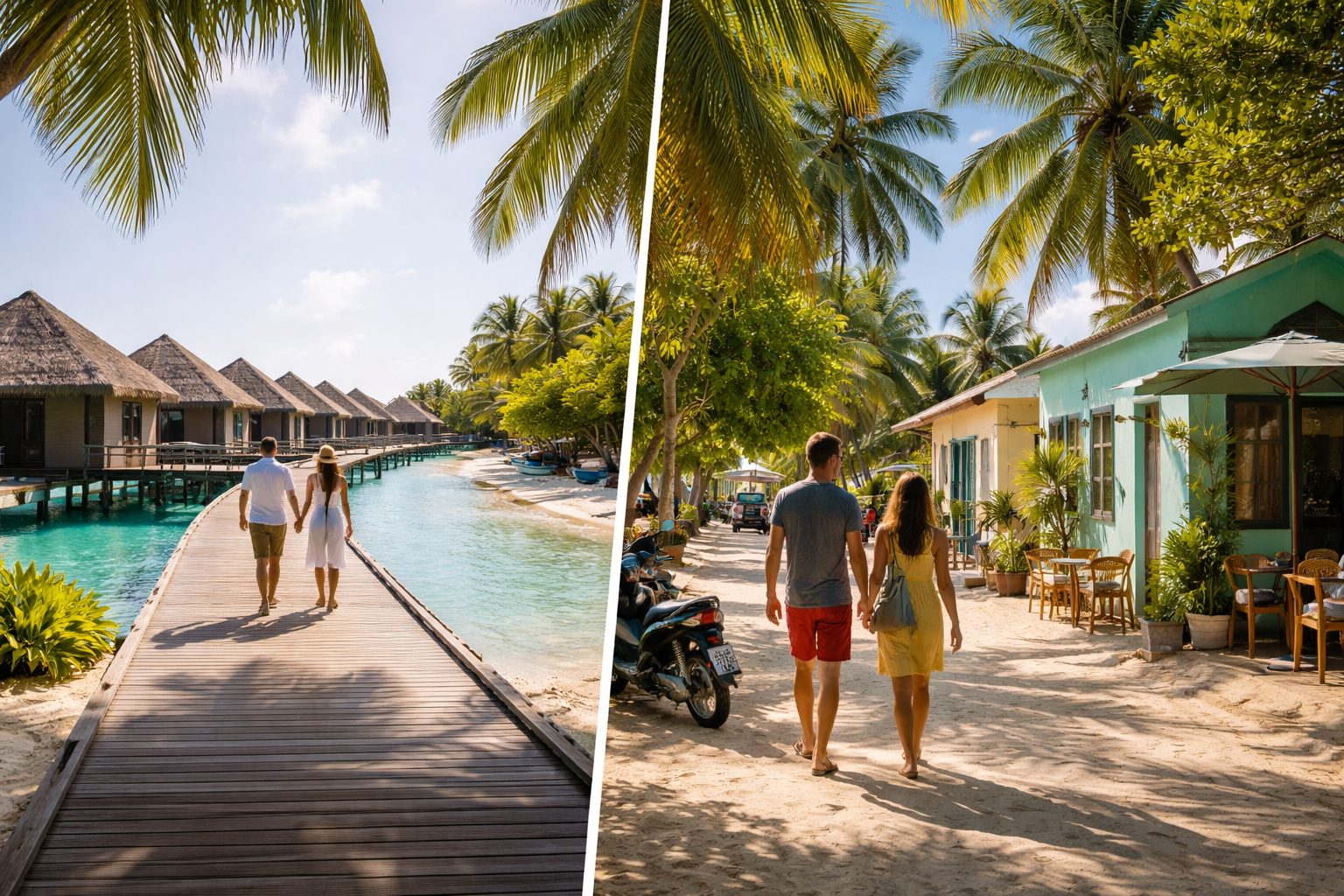
Resort islands are private. One island equals one resort. You’re completely separated from local communities, and everything, including food, activities, and drinks, is purchased through the resort. Most world-famous luxury resorts operate this way. Alcohol is available, dress codes are relaxed near the pool, and the overall experience is curated and seamless.
Local island guesthouses have grown significantly over the past decade following a policy change that opened up guesthouse tourism. On inhabited islands like Maafushi, Thulusdhila, and Dhigurah, you’ll find affordable accommodation, restaurants run by locals, and a more unfiltered look at Maldivian life. Bikini beaches are designated areas on these islands, separate from the main shoreline, where swimwear is permitted.
The choice depends entirely on what you’re after. Honeymooners and those seeking total seclusion usually prefer resorts. Budget travelers, solo visitors, and people curious about local culture often find guesthouses far more rewarding.
Top Luxury Resorts in the Maldives
Luxury in the Maldives is genuinely world-class. A few properties consistently rank among the best:
- Soneva Fushi in Baa Atoll offers exceptional overwater and beachfront villas with a strong focus on sustainability and barefoot luxury.
- Gili Lankanfushi near Malé is known for its overwater bungalows and the famous “no news, no shoes” policy.
- Four Seasons Landaa Giraavaru in Baa Atoll combines a UNESCO Biosphere Reserve setting with outstanding marine biodiversity.
- One&Only Reethi Rah in North Malé Atoll features one of the largest private beach villas in the country and excellent water sports facilities.
- Cheval Blanc Randheli offers a French-inspired aesthetic with private pools and butler service.
All-inclusive packages at these resorts can cost anywhere from $1,000 to $5,000+ per night. If you’re going to spend this much, book directly with the resort or through a trusted travel specialist who can negotiate extras or room upgrades.
Budget-Friendly Stays in the Maldives
Staying on local islands cuts costs dramatically. Guesthouses on islands like Maafushi, Fulidhoo, and Guraidhoo charge between $50 and $150 per night for clean, comfortable rooms with breakfast included. Many offer excursions, snorkeling trips, and diving packages at rates far below what resort guests pay.
The trade-off is that you’ll need to dress modestly outside the designated bikini beach, alcohol isn’t available on the island itself (though some arrange day trips to resort sandbanks where drinks are served), and the food selection is more limited. For travelers who prioritize value without sacrificing beautiful scenery and water access, guesthouses are an excellent choice.
Booking through local guesthouse websites or aggregators like Booking.com generally gives you better pricing than larger OTAs. Email the guesthouse directly for extended stays and ask about package deals.
Activities and Experiences
Popular Water Sports in the Maldives
Water sports are the main draw for most visitors, and the variety is impressive. Here’s what’s widely available across both resorts and local islands:
- Snorkeling: Accessible from nearly every island, with house reefs offering immediate access to coral, reef sharks, turtles, and rays.
- Scuba diving: Dozens of world-class dive sites across all atolls. Night dives, wreck dives, and drift dives are all popular options.
- Surfing: The Maldives has a growing surf culture, particularly around South Malé Atoll and Addu Atoll. June through September is peak surf season.
- Kitesurfing and windsurfing: Best during the windy season between May and October.
- Stand-up paddleboarding: Widely available at resorts and many guesthouses.
- Kayaking: A calm and easy way to explore lagoons and reef edges.
- Jet skiing and parasailing: Offered at most resorts as paid extras.
If diving is a priority, research the specific atoll before booking accommodation. Baa Atoll, South Ari Atoll, and Lhaviyani Atoll are known for exceptional biodiversity, including manta rays and whale sharks.
Cultural Experiences to Enjoy in the Maldives
Most visitors stick to their resort and never see the real Maldives. That’s a shame, because the local culture is genuinely interesting. Visiting inhabited islands offers a window into a way of life that’s been shaped by fishing, Islam, and Indian Ocean trade for centuries.
A few things worth doing:
- Visit Malé, the capital, for its Friday Mosque, the National Museum, and the busy fish market near the harbor.
- Attend a traditional bodu beru performance, a drumming and dance tradition that predates Islam in the islands.
- Watch local artisans weave lacquer work and traditional mat designs on islands like Baa Atoll.
- Time your visit around Eid al-Fitr or Eid al-Adha if you want to see communal celebrations, though accommodation books up fast during these periods.
Respecting local customs is non-negotiable on inhabited islands. Dress conservatively when walking through villages, don’t eat or drink in public during Ramadan, and ask before taking photos of people.
Best Islands for Snorkeling and Diving
The Maldives has no shortage of exceptional underwater spots, but some atolls stand out:
| Atoll | Best For | Highlight |
|---|---|---|
| Baa Atoll | Manta rays, whale sharks | Hanifaru Bay aggregation site |
| South Ari Atoll | Whale sharks year-round | Maamigili Island area |
| North Malé Atoll | Accessibility, variety | Banana Reef, HP Reef |
| Lhaviyani Atoll | Pristine reefs, pelagics | Fushivaru Thila |
| Addu Atoll | Wrecks, undercrowded diving | British Loyalty wreck |
Hanifaru Bay in Baa Atoll is a UNESCO-protected area where manta rays congregate in large numbers between June and November. Entry is regulated and requires a permit, which most local dive operators handle for you.
Dining and Cuisine
Traditional Maldivian Dishes to Try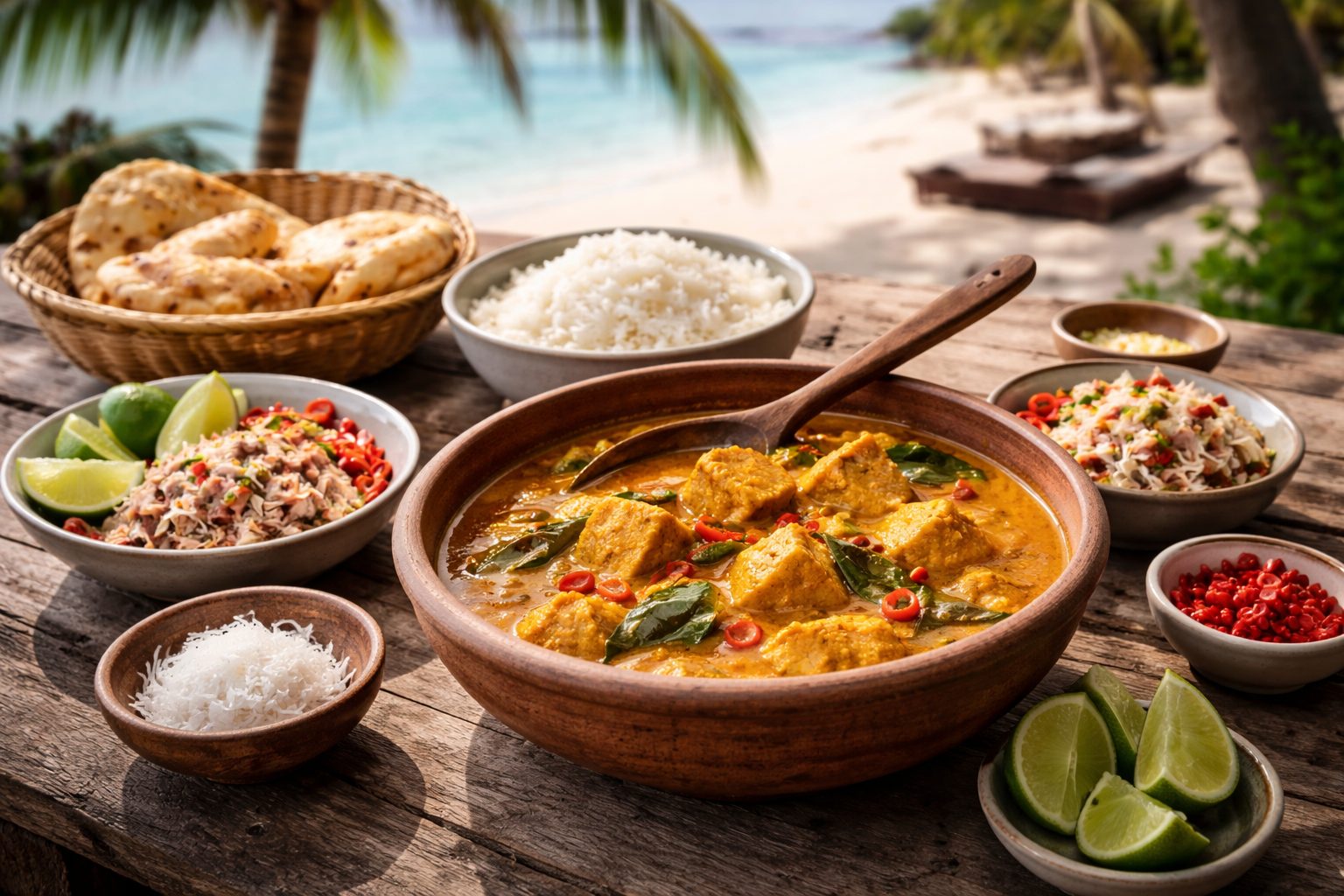
Maldivian cuisine is built around fish, coconut, and rice. The national dish is mas riha, a tuna curry cooked with coconut milk and a blend of spices. It’s rich, warming, and distinctly local.
Other dishes worth trying:
- Garudhiya: A clear tuna broth served with rice, lime, and chili. It’s a staple and genuinely delicious in its simplicity.
- Bis keemiya: A fried pastry filled with tuna, egg, and cabbage, similar to a samosa.
- Fihunu mas: Grilled fish marinated in spices and chili, typically eaten at local restaurants.
- Rihaakuru: A thick tuna paste that’s intensely savory. It’s an acquired taste but shows up in many local recipes.
- Short eats (hedhikaa): Small savory snacks sold at local teahouses, including tuna-stuffed pastries, fish balls, and coconut flatbreads.
If you’re staying at a resort, you’ll likely eat international food most of the time. Make a point of at least one meal at a local teahouse or restaurant on an inhabited island. The food is better and significantly cheaper than resort dining.
Best Restaurants in the Maldives
Restaurant quality varies enormously. Here’s a realistic breakdown:
At luxury resorts, the dining is typically excellent. Properties like Soneva Fushi, Joali Maldives, and The St. Regis Maldives have restaurants that compete with top international venues. Expect to pay $100 to $200 per person for dinner, often more with drinks.
On local islands, the best meals come from small family-run restaurants that don’t necessarily have much of an online presence. Ask your guesthouse owner for recommendations. You’ll often find fresh grilled fish, curry, and rice for under $10 a meal.
Malé has a more developed dining scene than most visitors expect. Seagull Café House near the harbor has been a local institution for decades. SaltBistro and The Marina Club both offer good food in a more contemporary setting.
Travel Budgeting for the Maldives
Average Costs for Accommodation and Activities
The Maldives has a wide range of price points, but it’s never cheap by regional standards. Here’s a realistic breakdown:
| Category | Budget Option | Mid-Range | Luxury |
|---|---|---|---|
| Accommodation (per night) | $50-$100 (guesthouse) | $200-$500 (mid resort) | $1,000+ (luxury resort) |
| Meals (per day) | $15-$30 | $50-$100 | $200+ |
| Snorkeling excursion | $20-$40 | $50-$80 | Included in package |
| Diving (per dive) | $40-$70 | $70-$100 | $100-$150 |
| Seaplane transfer | $300-$600 round trip | Same | Same |
| Domestic flight | $100-$200 one way | Same | Same |
The biggest variable in your budget is accommodation. Luxury resorts include many activities and meals in the rate, so the all-in cost per day can sometimes be more predictable than it looks at first glance.
Tips for Saving Money in the Maldives
The Maldives can be done on a budget if you approach it strategically. Here’s what actually works:
- Stay on local islands. Guesthouses are a fraction of resort costs and still give you access to the reef and marine life.
- Travel during the shoulder or wet season. Prices can drop by 30 to 50 percent between May and October.
- Book accommodation directly with guesthouses rather than through large booking platforms to avoid commission markups.
- Use local ferry services instead of private speedboats where schedules allow.
- Eat at local teahouses and restaurants rather than relying on resort or guesthouse meal packages.
- Book dive packages rather than individual dives. Most dive centers offer significant discounts for 5 or 10-dive packages.
- Avoid buying bottled water. Many guesthouses and resorts offer filtered water stations.
One underrated option is booking a last-minute liveaboard diving trip. Liveaboards that haven’t filled their cabins often discount heavily in the week before departure. You get access to remote atolls and multiple dive sites per day at prices that beat most mid-range resorts.
Health and Safety Tips
Health Precautions for Travelers
Healthcare in the Maldives outside of Malé is limited. The capital has ADK Hospital and Indira Gandhi Memorial Hospital, both reasonably well-equipped for a nation of this size. But most islands have only basic medical facilities, and serious conditions require evacuation to Malé or abroad.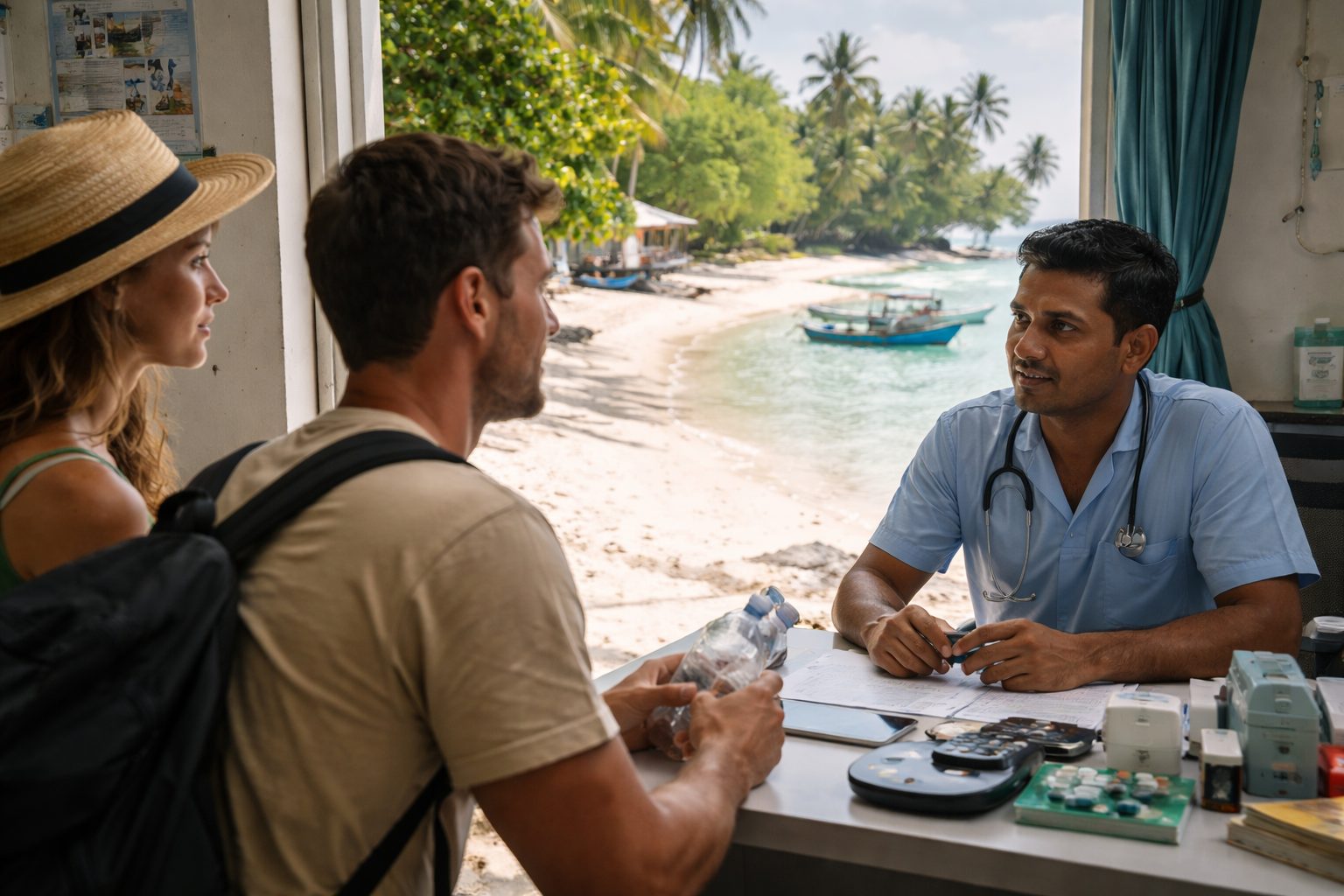
Before you travel:
- Make sure your routine vaccinations are up to date (tetanus, hepatitis A and B).
- No specific vaccinations are required for the Maldives, but hepatitis A and typhoid are recommended.
- Dengue fever is present in the Maldives. Use insect repellent, especially around dawn and dusk.
- Sun exposure is intense. Bring high-SPF reef-safe sunscreen, a hat, and rash guards for snorkeling.
- Dehydration is a real risk. Drink water consistently throughout the day.
Travel insurance with medical evacuation coverage is essential. Standard policies sometimes exclude evacuation, so read the fine print. Coverage of at least $100,000 for medical evacuation is a reasonable baseline.
Safety Tips While Traveling in the Maldives
The Maldives is generally a very safe destination. Violent crime against tourists is rare. That said, there are specific risks to be aware of:
- Ocean conditions can change quickly. Always check with local guides before entering the water, particularly around channels and passes where currents are strong.
- Coral cuts get infected fast in tropical conditions. Clean any cuts thoroughly and seek medical attention if there’s any sign of infection.
- Sun and heat can cause serious problems. Pace yourself on full-day excursions and don’t underestimate how quickly dehydration sets in.
- Petty theft is uncommon but not unheard of in Malé. Keep valuables secure when moving through the capital.
- Respect the reef. Don’t stand on coral, don’t touch marine life, and don’t buy coral or shell souvenirs.
On water sports and diving, always dive or snorkel with a buddy. Solo ocean activities are genuinely risky, even for experienced swimmers.
Sustainable Travel in the Maldives
Eco-Friendly Practices to Follow
The Maldives is on the front lines of climate change. Sea level rise, coral bleaching, and plastic pollution are real threats to both the ecosystem and the tourism economy. Traveling responsibly here isn’t just idealistic, it’s practical.
A few things that make a genuine difference:
- Use reef-safe sunscreen. Standard sunscreen formulas containing oxybenzone and octinoxate contribute to coral bleaching. Mineral-based sunscreens using zinc oxide are a better option.
- Avoid single-use plastics. Bring a reusable water bottle and refuse plastic straws and bags.
- Don’t remove anything from the reef, including shells, coral fragments, and sea glass.
- Book with operators that practice responsible dive and snorkel etiquette and actively discourage touching marine life.
- Stay on designated paths when visiting uninhabited islands and protected areas.
- Choose accommodations with documented sustainability commitments. Several resorts in the Maldives have invested heavily in solar energy, waste management, and reef conservation.
The ocean here is the entire reason this destination exists. What you do in it and around it matters more than in most places.
Responsible Tourism in the Maldives
Beyond environmental impact, responsible tourism in the Maldives means respecting the local culture and contributing positively to the communities that exist outside the resort bubble.
Shopping local is one of the simplest ways to do this. Buying handicrafts directly from artisans on local islands, eating at family-run restaurants, and booking excursions through locally-owned operators keeps money circulating in communities that don’t directly benefit from resort-only tourism.
On inhabited islands, dress modestly. Women should cover shoulders and knees when walking through villages. Men should avoid going shirtless outside beach areas. This isn’t just about following rules, it’s about showing basic respect for a culture that opens its home to visitors.
Photography deserves thought as well. Ask permission before photographing people, particularly women. Some communities have strong feelings about this, and a missed photo is never worth making someone uncomfortable.
Frequently Asked Questions (FAQs)
What is the Currency Used in the Maldives?
The official currency is the Maldivian Rufiyaa (MVR). In practice, US dollars are widely accepted at resorts, guesthouses, tour operators, and most tourist-facing businesses. It’s worth having some small denomination US dollar bills for tips and small purchases, as change in Rufiyaa isn’t always convenient to use elsewhere.
Do I Need a Visa to Visit the Maldives?
Citizens of most countries receive a free 30-day visa on arrival. You’ll need a valid passport, a confirmed return ticket, proof of accommodation, and evidence of sufficient funds. No advance visa application is required for most travelers, though it’s worth checking current entry requirements for your specific nationality before departure.
What Should I Pack for My Maldives Trip?
Pack light, breathable clothing, a good rash guard, reef-safe sunscreen, and a reusable water bottle. Bring snorkeling gear if you have it, since rental gear quality varies widely. For local island stays, include modest clothing for walking through villages. A dry bag is useful for boat transfers. And given the limited pharmacy access outside Malé, bring any prescription medication in sufficient quantity for your entire trip.
Following solid maldives travel tips from the planning stage through to your final day on the water will make the difference between a trip that meets expectations and one that genuinely surprises you. The Maldives rewards travelers who prepare well, choose their accommodation thoughtfully, and approach the destination with a mix of curiosity and respect.