There’s something uniquely freeing about hitting the open road in Japan. Unlike the shinkansen, where you’re moving between cities at bullet speed, a japan road trip gives you the chance to actually see the country unfold around you. The rural highways, the mountain passes, the coastal stretches that no guidebook bothers to mention. I’ve driven through Japan three times now, and each trip has left me with a completely different picture of the country. If you’ve only ever seen Japan from train windows, you’re missing a lot.
Introduction to Japan Road Trips
Benefits of a Road Trip in Japan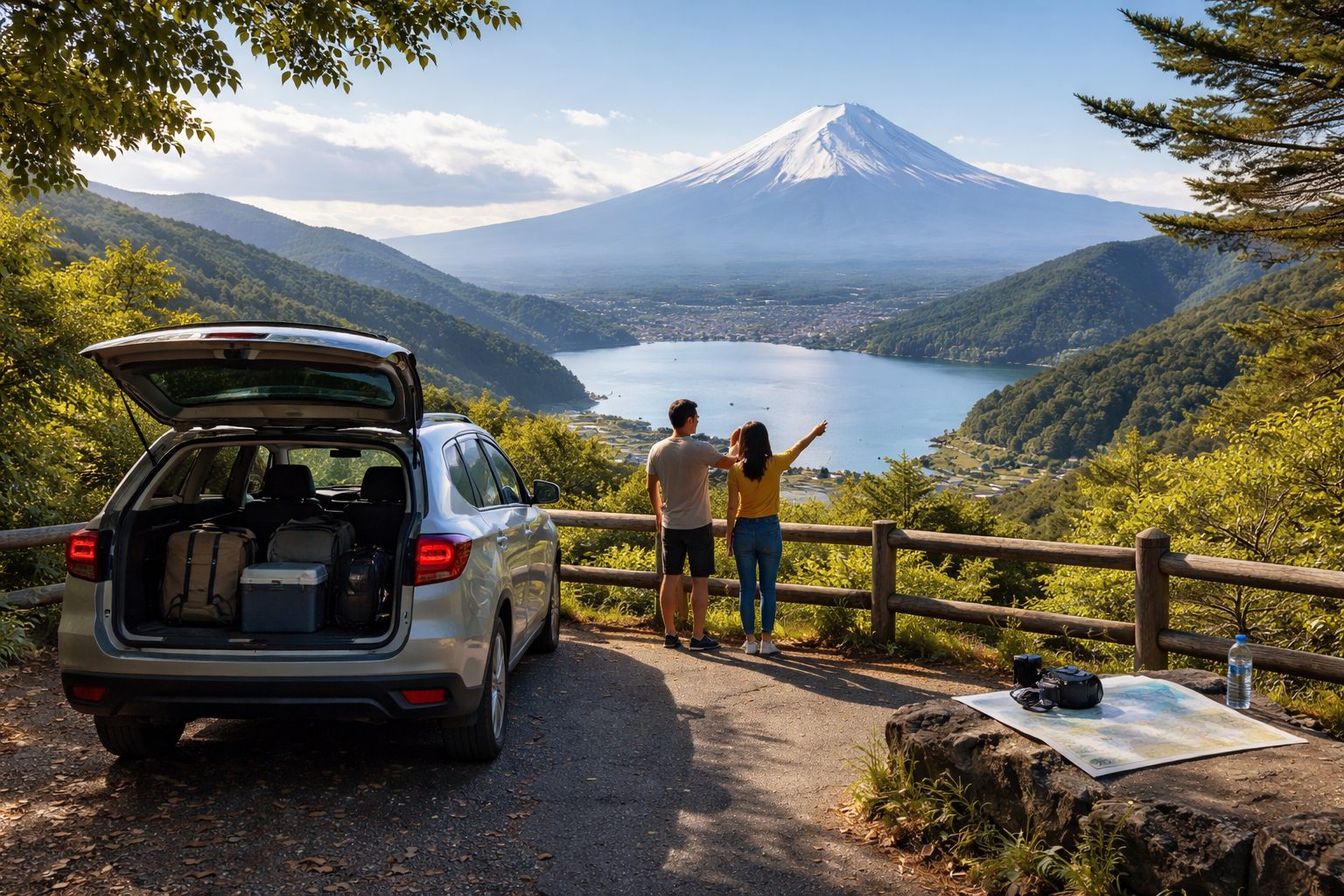
The most obvious benefit is flexibility. You set the pace, you choose the stops, and you don’t have to drag your bags through crowded train stations. But beyond convenience, driving lets you access places that simply aren’t on the rail network. Some of the best onsens, the quietest temples, the most dramatic coastlines are only reachable by car.
There’s also something to be said for the rhythm of driving. Japan’s roads are well-maintained and drivers follow the rules seriously. Once you adjust to driving on the left, the whole experience becomes surprisingly relaxed. You can pull over when something catches your eye, eat at roadside spots that don’t appear on any tourist map, and take the long way without consequence.
Driving also gives you a closer look at rural Japan. Visiting small towns in the countryside, watching local farmers at work, or finding a family-run soba shop off the highway is a different experience entirely from staying in Shinjuku and taking day trips.
Best Time of Year for a Japan Road Trip
Timing matters a lot. Spring (late March to early May) is popular for cherry blossoms, but traffic in tourist areas gets heavy and accommodation prices spike. Autumn (October to November) is arguably better for driving: the foliage is stunning, temperatures are comfortable, and the crowds thin out after the peak summer season.
Summer driving, especially in Hokkaido, is fantastic. The roads are clear, the days are long, and the landscape is lush. But central Japan and the west can be brutally hot and humid in July and August.
Winter is a mixed bag. Hokkaido roads can be dangerous without experience driving in snow, but the southwest stays mild and less busy. If you’re planning to drive around Okinawa or along the Seto Inland Sea coast, winter is actually a pleasant time to go.
Planning Your Japan Road Trip
Essential Documents and Requirements
You’ll need an International Driving Permit (IDP) to drive in Japan. This is non-negotiable. You get one from your home country’s automobile association before you travel, and it’s usually valid for one year. Without it, car rental companies won’t hand you the keys, and police won’t accept your home license alone.
Your home driver’s license is also required alongside the IDP. Neither document alone is sufficient. Make sure your IDP is issued by a country that is a signatory to the 1949 Geneva Convention on Road Traffic. Most Western countries qualify, but it’s worth checking before you travel.
Bring your passport and a credit card. Car rentals in Japan almost always require a credit card for the deposit, and debit cards are often not accepted. Some rental companies also request that you book through an international partner rather than directly at a local branch.
Choosing the Right Vehicle for Your Trip
For most travelers, a compact car is the right choice. Japan’s rural roads, especially in mountain areas, can be narrow. Some mountain passes and village lanes are tight enough to make a large SUV genuinely uncomfortable. A small sedan or kei car handles these situations much better.
If you’re traveling with a family or a lot of gear, a minivan or a slightly larger wagon works well, and Japan has plenty of those in the rental fleet. Just be aware that parking in city areas is designed for smaller vehicles.
Automatic transmission is strongly recommended unless you’re experienced driving on the left. Navigating unfamiliar roads while working a manual gearbox on the opposite side of the car adds unnecessary stress.
Some rental companies offer options like ETC cards (for electronic toll collection), portable Wi-Fi, and GPS units with English-language settings. All of these are worth adding to your booking.
Mapping Your Route: Must-See Destinations
Planning a route in advance saves time and reduces stress. Japan’s highway network is excellent, and travel times between major cities are predictable. But the real joy of a japan road trip comes from the side roads, so build in time to wander.
A practical approach:
- Identify your anchor cities or regions.
- Research secondary stops between them: small towns, natural landmarks, local markets.
- Estimate driving time using Google Maps or a Japanese navigation app, then add 20-30% for stops and exploration.
- Book accommodation in advance for the first and last nights. Midtrip, keep things flexible if your schedule allows.
Japan’s road network is divided into expressways (which have tolls) and national or prefectural roads (mostly free). Mixing both in your route gives you speed when you need it and scenic variety when you want it.
Top Destinations for Your Japan Road Trip
Tokyo: The Urban Adventure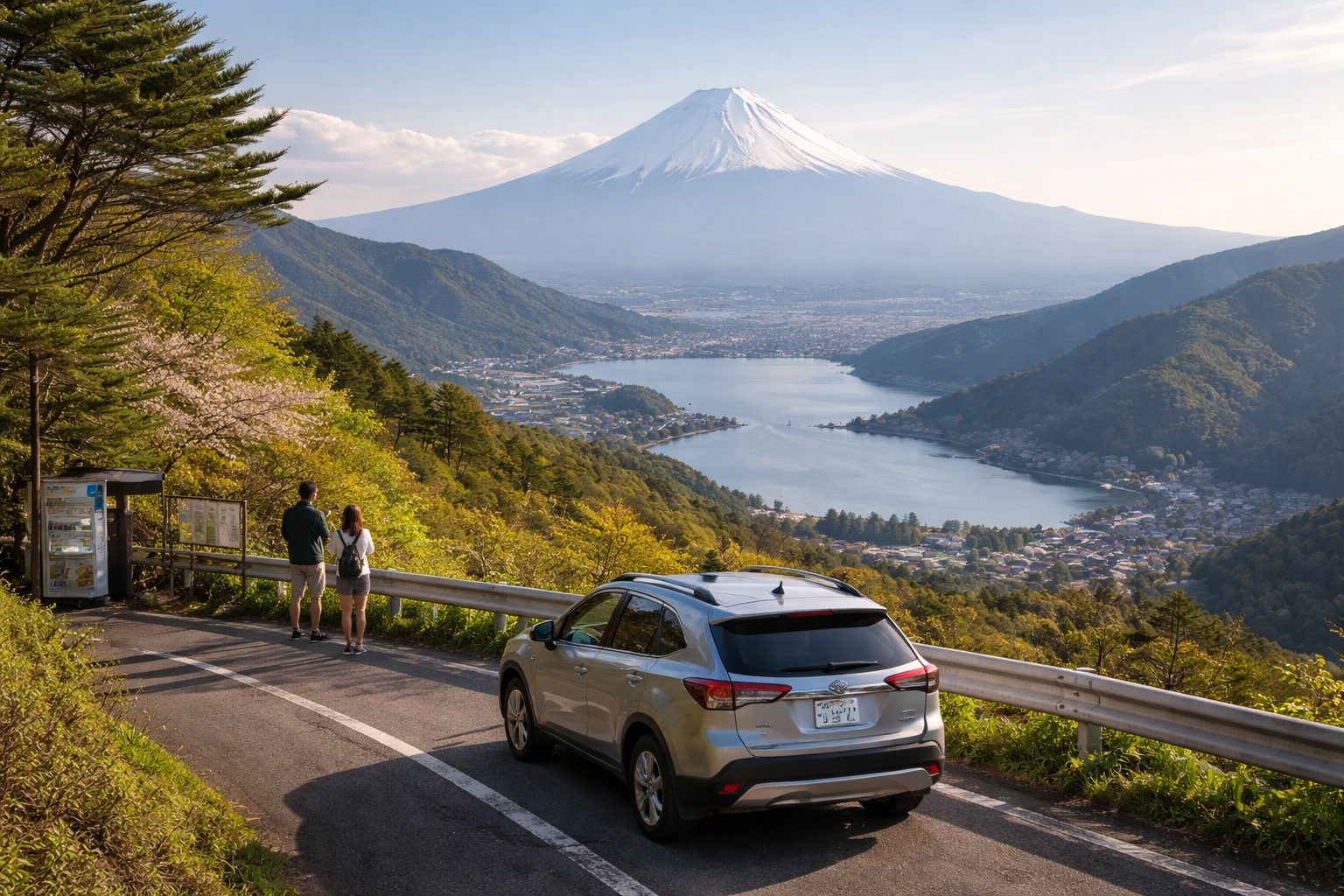
Starting your japan road trip in Tokyo is common, but driving in central Tokyo itself is not something I’d recommend on day one. The city is dense, parking is expensive, and you genuinely don’t need a car there. A better approach is to arrive, spend a few days using the excellent public transit, then pick up your rental car on the day you’re leaving the city.
That said, Tokyo’s outskirts reward drivers. The Nikko area is about two hours north. Hakone, with its views of Mount Fuji and excellent onsen culture, is easily reached by car and far more relaxing when you’re not dealing with crowded bus schedules.
Kyoto: Historical and Cultural Experiences
Kyoto is one of the most rewarding places to drive around in Japan. The city itself has a grid layout that’s easier to navigate than most Japanese cities, and the surrounding area is full of temples, bamboo groves, and mountain villages that see far fewer tourists than the famous sites.
Some spots worth seeking out by car:
- Kurama and Kibune: mountain villages north of the city with excellent hiking and traditional restaurants
- Ohara: a quiet valley area with several atmospheric temples, about 45 minutes from central Kyoto
- The Keihoku area: forested highland terrain rarely visited by foreigners
Parking around the major Kyoto temples can be expensive and limited. Early mornings are the best time to visit by car, before the tour buses arrive.
Osaka: Culinary Delights and Nightlife
Osaka sits close to Kyoto and Nara, which makes it a natural hub for a few days of eating and short drives. The city itself is better explored on foot and by metro, but the surrounding region offers easy day trips by car.
Nara is about an hour away by road and worth doing at your own pace. You can stop at smaller temples along the way and avoid the crowds that pile out of the express trains. The Yoshino mountain area to the south of Nara is famous for cherry blossoms in spring and is best accessed by car.
Osaka’s food scene is extraordinary, and having a car lets you eat at places outside the tourist zones. Neighborhood spots in Juso, Tsuruhashi, or along the Yodo River have no English menus and no queues, and they’re often far better than the well-reviewed central restaurants.
Hokkaido: Nature and Scenery
Hokkaido is where a japan road trip genuinely feels like a road trip. The island is large, sparsely populated, and built around driving. The roads are wide, the speed limits are generous by Japanese standards, and the scenery shifts dramatically between lavender fields, volcanic lakes, coastal cliffs, and dense forest.
Biei and Furano in summer are famous for their patchwork fields and rolling hills. The drive between them is short but beautiful, and you can easily spend a full day stopping for photographs and farm stands. Shiretoko Peninsula in the far east is a UNESCO site with brown bears and dramatic coastline. Getting there without a car is genuinely difficult.
Hokkaido’s roads are well-signposted, and the distances between towns mean you should always fuel up when you see a gas station rather than waiting until you need it.
Okinawa: Beaches and Relaxation
Okinawa is a different kind of japan road trip. The main island is small enough to drive across in under two hours, so you can cover a lot of ground without feeling rushed. The real reward is the smaller outer islands, some of which are connected by bridge and offer uncrowded beaches, clear water, and a pace of life that feels far removed from mainland Japan.
The Kouri Island bridge drive is a highlight. Miyako Island, reached by ferry or short flight, has excellent roads and some of the best beaches in Japan. Car rentals are available on most of the larger islands.
Traffic on the main Okinawa island can slow down in the tourist season, particularly around Naha and American Village. Early morning is the best time to cover ground.
Accommodation Options on Your Japan Road Trip
Hotels vs. Ryokans: Pros and Cons
| Feature | Western Hotel | Ryokan |
|---|---|---|
| Price range | Budget to luxury | Mid-range to high-end |
| Breakfast included | Rarely (or extra cost) | Usually yes |
| Parking | Often available | Often available in rural areas |
| Experience | Familiar and predictable | Immersive and cultural |
| Bathing | Private bathroom | Often communal onsen |
| Meals | Separate booking | Often included (dinner and breakfast) |
| Flexibility | High | Lower (fixed meal times) |
Both have clear value depending on what you’re after. For a japan road trip, I tend to mix the two: ryokans in rural areas where they fit the landscape, business hotels in cities where they’re affordable and practical.
Unique Places to Stay in Japan
Beyond hotels and ryokans, Japan has a few accommodation types worth trying:
- Minshuku: family-run guesthouses, usually simpler and cheaper than ryokans, with a very local feel
- Temple lodgings (shukubo): available at certain Buddhist complexes, especially in Koyasan; a memorable experience
- Roadside “michi-no-eki” rest stops: some have attached overnight facilities or campgrounds, useful for budget travelers
- Capsule hotels: available in most cities, practical for single nights when you just need somewhere to sleep
Camping is underused by foreign visitors but excellent in the right season. Hokkaido has well-maintained campsites, and driving with camping gear opens up areas with almost no tourist infrastructure.
Budget-Friendly Accommodation Tips
Book in advance for busy seasons, especially Golden Week (late April to early May), Obon (mid-August), and the autumn foliage period. These are when prices spike and availability shrinks.
Business hotel chains like Toyoko Inn, APA Hotel, and Dormy Inn offer consistent, affordable rooms and are common throughout Japan. Many include parking for a small additional fee, which is useful to confirm at booking.
Staying one or two nights in smaller towns rather than city centers cuts costs noticeably. A room that costs 15,000 yen in Kyoto might cost 7,000 yen thirty minutes outside the city. With a car, that distance is nothing.
Road Trip Essentials
Packing List for Your Japan Road Trip
Beyond the usual travel items, a few things specifically help for driving:
- A physical road atlas or prefectural maps as backup (Japanese road atlases called “mapple” are excellent and sold at convenience stores)
- Coins and small bills for parking meters and toll booths
- A portable Wi-Fi device or SIM card with data
- A car charger for your phone
- Comfortable driving shoes with good grip
- A small cooler bag if you’re buying food from convenience stores or farm stands
- Sunshades for parked-car windows in summer
- A basic first aid kit
- Extra cash, as many rural businesses and smaller accommodations don’t accept cards
Navigating Japan’s Roads: Signs and Rules
Japanese road signs use the same symbols as international standards, so most of them are recognizable without knowing Japanese. Speed limits are posted in km/h. Expressways typically have a 100 km/h limit, national roads between 50 and 60, and urban streets between 30 and 50.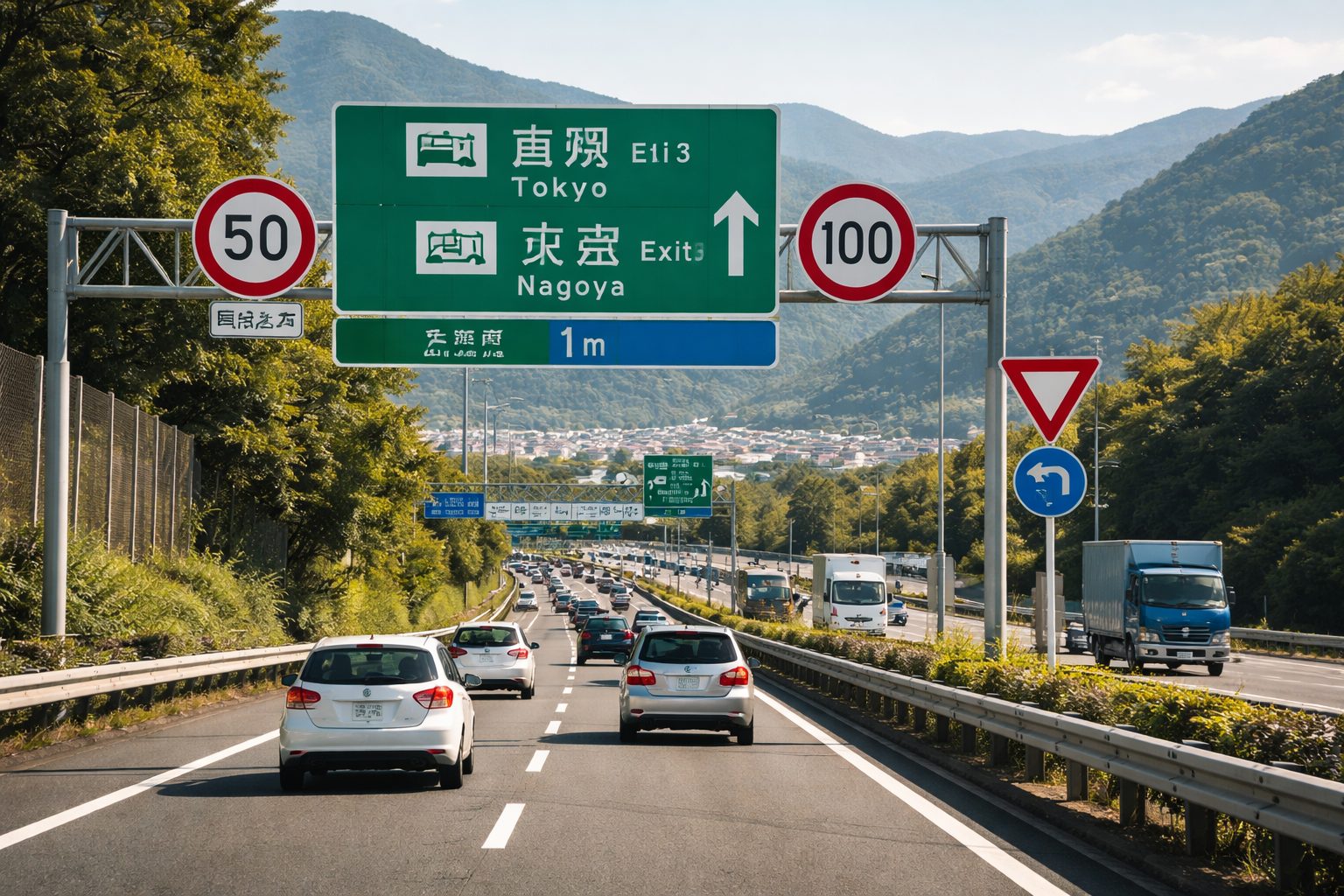
Traffic lights work the same as most countries. One unusual rule: turning left on a red light is not permitted unless specifically signed otherwise. This catches some foreign drivers off guard.
At toll plazas, look for the ETC lanes (marked with a purple sign) if you have an ETC card. Cash lanes are marked separately. Some toll booths are unstaffed and require exact change or a card.
Keep left, always. Lane discipline in Japan is actually excellent compared to many countries, and drivers rarely tailgate or cut in. The main adjustment is that your instincts about which side of the road to use need to be recalibrated.
Safety Tips for Driving in Japan
Japan has a very low road accident rate, and the driving culture reflects that. Drivers are patient, pedestrians have strong right of way, and you won’t see much aggressive behavior on the road.
A few practical safety points:
- Never drink and drive. Japan enforces strict zero-tolerance alcohol laws. Even a small amount of alcohol can result in arrest and immediate deportation.
- Check weather conditions before mountain driving, especially in winter. Roads close with no warning if conditions become dangerous.
- Take breaks on long drives. The expressway service areas (called SA) and parking areas (PA) are well-spaced and genuinely pleasant places to stop.
- If you’re unsure of a direction, it’s better to pull over and check your phone than to navigate while driving.
Cultural Etiquette and Tips for Travelers
Understanding Japanese Customs
Japan’s social customs can feel unfamiliar at first, but they become natural quickly. Bowing is the standard greeting. A small, slight bow works fine for most situations. You don’t need to perfect a deep ceremonial bow as a tourist; what matters is that you acknowledge people.
Remove your shoes before entering homes, traditional accommodations, and many temples. Slippers are usually provided. This is not optional in formal settings.
Public noise is kept low. Talking loudly on trains, playing phone audio without headphones, or being disruptive in public spaces draws genuine negative attention. The same applies to rest areas on your drive: Japanese roadside stops are calm, clean, and quiet.
Language Tips for Road Trippers
English is not widely spoken outside major tourist areas. This is less of a problem than it sounds. Japanese people are generally patient and helpful, and a combination of Google Translate, pointing at a map, and basic courtesy gets you surprisingly far.
A few phrases worth learning:
- Sumimasen: excuse me / sorry (useful for getting attention)
- Arigatou gozaimasu: thank you (formal)
- Doko desu ka: where is…? (useful with a map or a photo on your phone)
- Ikura desu ka: how much is this?
- Eigo wa hanasemasu ka: do you speak English?
Download an offline Japanese dictionary before you travel. Connectivity can be patchy in mountain areas.
Dining Etiquette While Traveling
Eating in the car is frowned upon in Japan, even at service areas. The custom is to eat at the designated seating area, then get back on the road. This isn’t strictly enforced, but it’s worth knowing.
When you sit down at a restaurant, you’ll typically receive a hot towel (oshibori) to clean your hands. Use it before eating. Don’t use it to wipe your face or neck.
Chopstick etiquette: don’t stick them upright in rice, and don’t pass food chopstick-to-chopstick. Both are funeral customs. Resting chopsticks on the bowl or on the provided rest is fine.
Tipping is not practiced in Japan and can actually cause confusion or mild offense. The price on the menu is what you pay.
Budgeting Your Japan Road Trip
Estimated Costs: Fuel, Tolls, and Accommodation
Japan is not a cheap destination, but it’s not as expensive as many assume if you plan carefully.
Fuel costs roughly 170-180 yen per liter at current prices. A compact car covering 400 km per day uses approximately 28-35 liters, depending on the route. Budget around 5,000-6,000 yen per day for fuel on an active driving itinerary.
Tolls are significant. The full expressway route from Tokyo to Kyoto costs around 10,000-12,000 yen one-way. Daily toll costs vary enormously based on your route, but 3,000-6,000 yen per day is a reasonable estimate for a mixed expressway and national road itinerary.
Accommodation ranges from about 5,000 yen per night for a budget business hotel to 15,000-20,000 yen for a mid-range ryokan with meals included. Luxury options go considerably higher.
A realistic daily budget for two people sharing costs:
- Budget: 15,000-20,000 yen per day (business hotels, convenience store meals, minimal extras)
- Mid-range: 25,000-40,000 yen per day (mix of hotels and ryokans, restaurant meals)
- Comfortable: 50,000+ yen per day (ryokans with full board, dining at proper restaurants)
Saving Money While Traveling in Japan
Convenience stores in Japan are not a last resort. Lawson, 7-Eleven, and FamilyMart sell genuinely good food, including hot items, fresh onigiri, and decent coffee. Eating one or two meals a day from convenience stores rather than restaurants cuts daily food costs significantly without sacrificing quality.
Consider an expressway pass if you’re covering long distances. Certain expressway packages are available to foreign visitors through car rental companies and offer flat daily rates for unlimited expressway use. These can save real money on a two-week trip.
Michi-no-eki (roadside stations) often sell local produce, food, and souvenirs at fair prices. They’re a good alternative to tourist gift shops.
Book car rentals in advance through international platforms rather than walk-in at the airport. Prices are almost always lower when booked online.
Currency and Payment Methods in Japan
Cash is still king in Japan, more so than in most developed countries. Many rural restaurants, small guesthouses, and local businesses don’t accept cards. Carry enough yen to cover at least two to three days of expenses at any time.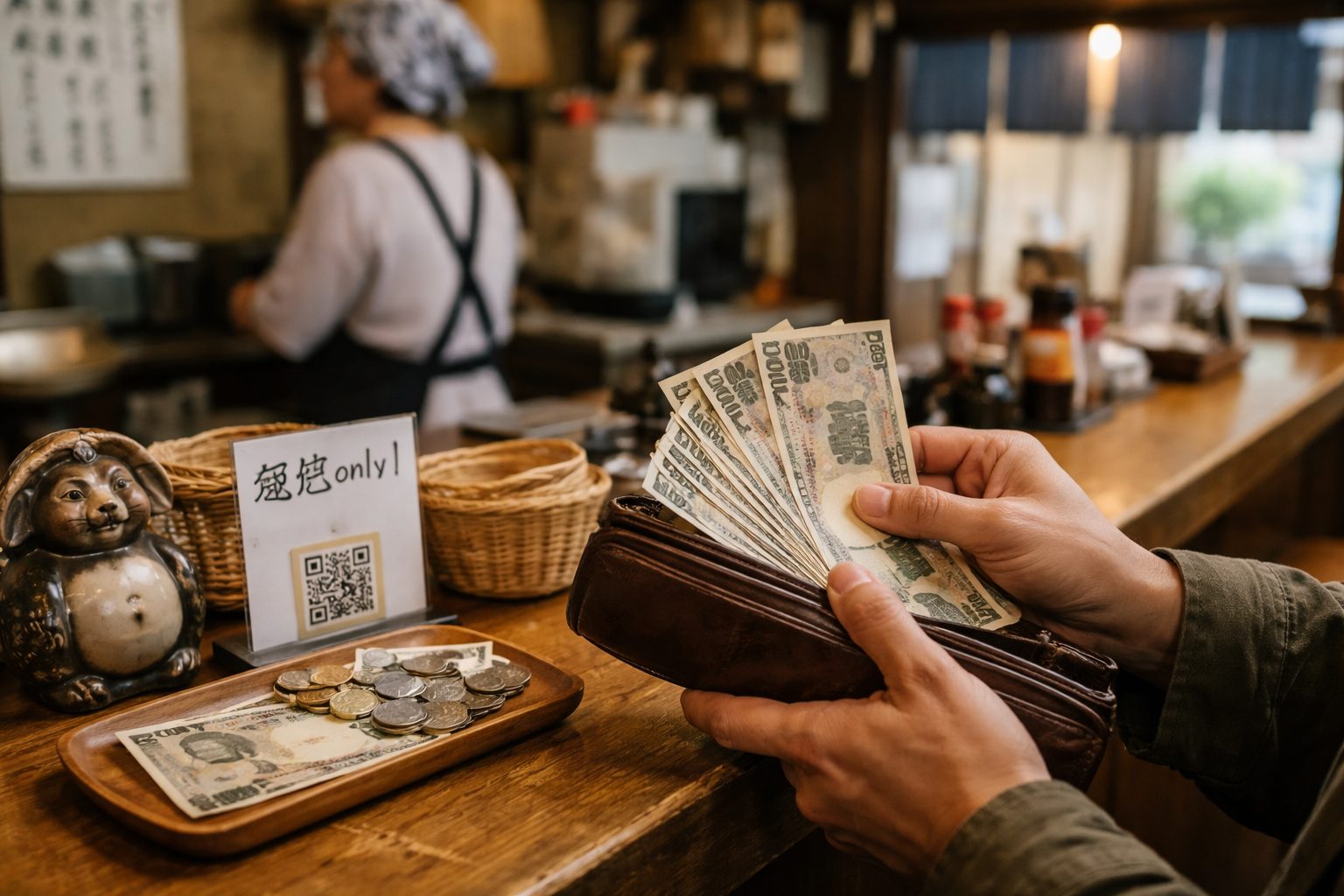
ATMs at 7-Eleven stores accept foreign cards reliably. Japan Post ATMs also work for international withdrawals. Bank ATMs outside these networks often don’t support foreign cards.
Major credit cards (Visa and Mastercard) are accepted at most hotels, large restaurants, and urban shops. American Express acceptance is less consistent.
IC cards like Suica or Pasmo, used for trains and buses, can also be used at convenience stores, vending machines, and some restaurants. They’re worth loading up if you plan to move between cities by transit at any point during your trip.
Popular Road Trip Routes in Japan
The Golden Route: Tokyo to Kyoto
This is the most popular japan road trip for first-time visitors, and it works well as either an expressway drive or a slower scenic route. The expressway from Tokyo to Kyoto takes around six to seven hours depending on stops. The scenic alternative follows National Route 1 through parts of the old Tokaido road, passing through coastal Shizuoka, with views of Mount Fuji on clear days, and through smaller towns that feel like an older Japan.
Breaking the journey at Hakone is an easy decision. The detour takes you through the mountains, past Ashi Lake, and into proper onsen country. It adds a day to the trip but substantially improves it.
Nagoya is another useful stop. It’s underrated as a tourist destination, with a strong castle, excellent regional food (miso katsu, hitsumabushi eel rice), and a convenient position roughly halfway along the route.
The Coastal Route: Exploring Japan’s Coastline
Japan’s Pacific coast south of Tokyo toward Shizuoka and the Izu Peninsula is dramatic and worth exploring slowly. The Izu Peninsula in particular has sharp cliffs, hidden beaches, and good seafood towns that most visitors bypass entirely.
The Sea of Japan coast on the western side of the main island is a different character: grey, rugged, and lined with fishing towns. The drive from Kanazawa north toward the Noto Peninsula is one of the most underrated coastal drives in the country.
Further west, the Sanin Coast in Shimane and Tottori prefectures runs along the Japan Sea and passes through some of the most rural and traditional parts of Japan. The Tottori Sand Dunes are unexpected and worth a stop.
The Northern Route: Hokkaido Highlights
Hokkaido rewards drivers more than any other region. The classic route covers:
- Sapporo (base for a night or two)
- Otaru (charming canal town, 30 minutes west of Sapporo)
- Niseko (mountain scenery, great in summer and winter)
- Biei and Furano (lavender and patchwork fields)
- Asahikawa (second largest city, useful transit hub)
- Daisetsuzan National Park (volcanic highlands, hiking, onsen)
- Akan Mashu National Park (volcanic lakes, Ainu culture)
- Shiretoko Peninsula (UNESCO wilderness, end of the road)
This circuit covers roughly 1,500 km and works well as a 10-14 day trip. The roads are good throughout, and the distances between stops are comfortable for daily driving.
Hokkaido’s service areas are well-supplied with regional specialties. Stopping at them isn’t just practical, it’s one of the pleasures of the trip.
Frequently Asked Questions about Japan Road Trips
Is it safe to drive in Japan?
Yes. Japan consistently ranks among the safest countries for road travel. Drivers follow rules closely, roads are well-maintained, and signage is clear. The main adjustment for foreign visitors is driving on the left side of the road.
Do I need an International Driving Permit?
Yes, it’s mandatory. You must have an IDP issued before you travel and carry it alongside your home country license. Rental companies will check for it at pickup, and police will ask for it if you’re stopped.
What are the best apps for navigation in Japan?
Google Maps works well throughout Japan and handles Japanese addresses accurately. Yahoo! Japan Car Navigation is popular with locals and is available in English. For offline use, Maps.me or HERE WeGo are reliable backups in areas with poor connectivity.
How do tolls work in Japan?
Tolls are collected at entry and exit points on expressways, either at staffed booths or automated machines. An ETC card, available from most rental companies, allows you to use dedicated ETC lanes and is faster and often cheaper. Without an ETC card, you pay cash at the booth. Keep small bills and coins available for exact change lanes.
Conclusion: Making the Most of Your Japan Road Trip
Final Tips for an Unforgettable Journey
A japan road trip rewards preparation but also flexibility. The more you’ve planned your anchor points, the more freedom you have to improvise between them. Don’t treat the route as a checklist. Some of the best moments come from turning off the highway because a sign caught your attention, or spending an extra night somewhere you didn’t expect to love.
A few last practical reminders:
- Always return a rental car with a full tank. Most contracts require it, and refueling at the rental location costs significantly more.
- Take photos of your rental car before driving away to document existing damage.
- Keep your IDP, home license, and passport accessible. You may need them more than once.
- Respect no-parking zones. Japanese cities enforce parking rules with impound trucks and fines that arrive without warning.
- Download offline maps before leaving urban areas.
Inspiring Road Trip Stories from Travelers
What I hear most often from travelers who’ve done a japan road trip for the first time is surprise. Not about how beautiful the country is, which they expected, but about how easy it was to drive there. The roads, the signs, the orderly traffic, the well-stocked rest stops: all of it makes the experience far less daunting than the planning phase suggests.
One friend drove the entire Hokkaido circuit solo over ten days. She’d never driven on the left before and was nervous about it. By day two, she said, it felt normal. The hardest part was deciding where to stop, because everywhere looked worth pulling over for.
That’s the thing about Japan on four wheels. You stop seeing the country as a series of destinations and start experiencing it as a continuous landscape. The space between places turns out to be just as interesting as the places themselves. That shift in perspective is what makes a japan road trip worth doing at least once, and probably worth doing again.