
If you’ve ever wondered what is portugal like, you’re not alone. Portugal sits at the edge of Europe, and yet it somehow feels like the center of something timeless. It’s a country where cobblestone streets wind past centuries-old cathedrals, where the Atlantic crashes against dramatic cliffs, and where a plate of freshly grilled fish and a glass of local wine can cost you less than you’d expect. I’ve spent time exploring this country from north to south, and every visit has deepened my appreciation for how much it quietly offers. Portugal isn’t flashy. It doesn’t need to be.
Overview of Portugal
Portugal consistently surprises people who arrive expecting something generic. The reality is that this small country packs enormous variety into a relatively compact space, from the green valleys of the north to the golden plains of the Alentejo and the subtropical islands of the Azores.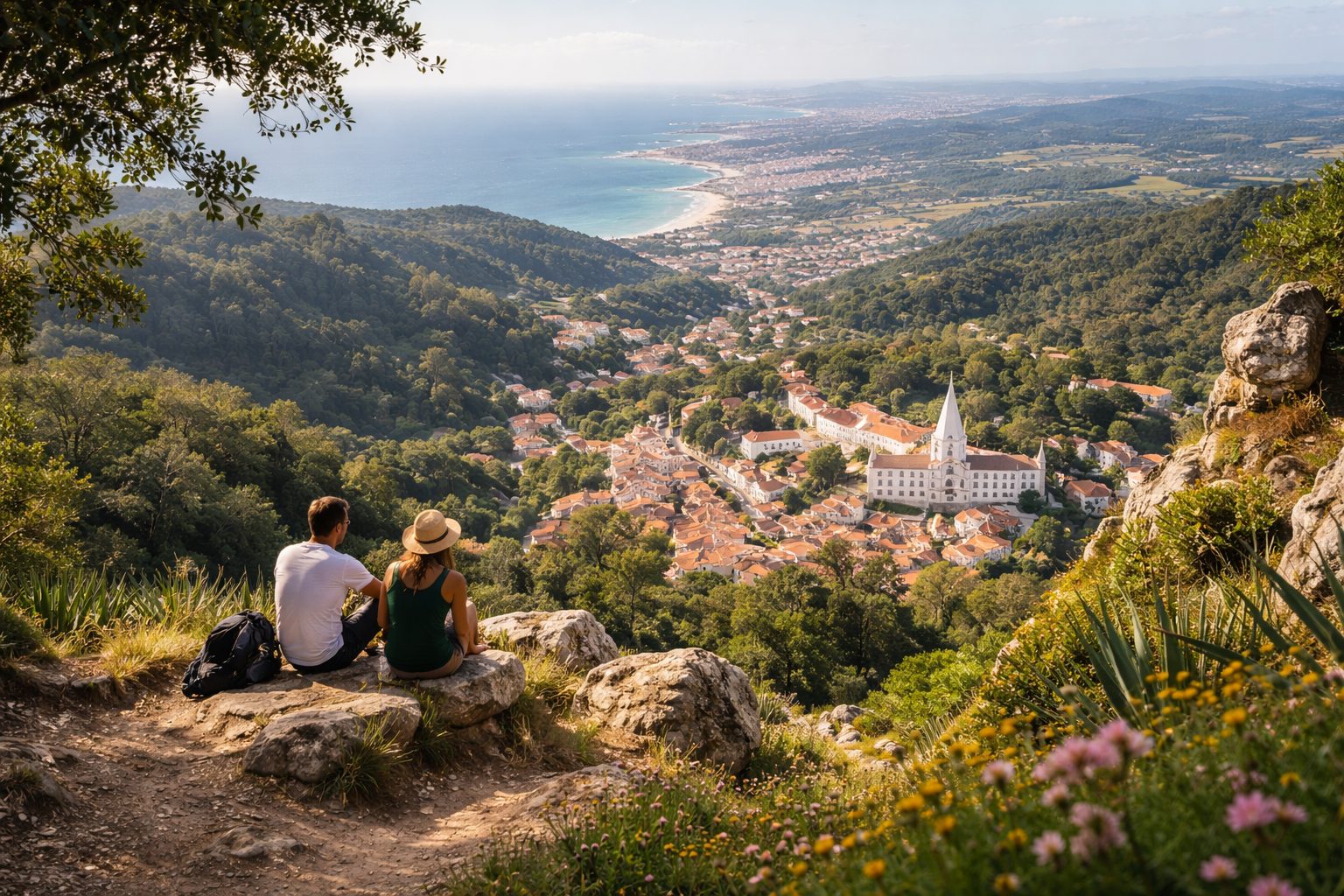
Geographical Location
Portugal occupies the southwestern corner of the Iberian Peninsula, sharing its eastern border with Spain and facing the Atlantic Ocean to the west and south. It covers about 92,000 square kilometers, making it one of the smaller countries in Western Europe. But size tells very little of the story.
The country also includes two autonomous regions: the Azores, an archipelago of nine volcanic islands roughly 1,500 kilometers west of mainland Portugal, and Madeira, a subtropical island group about 1,000 kilometers southwest in the Atlantic. These regions have their own distinct character and are worth treating as separate destinations entirely.
The mainland itself stretches from the Minho River in the north, which borders Spain’s Galicia region, down to the Algarve coast in the south. The terrain shifts considerably across this stretch, giving each region a genuinely different feel.
Climate and Weather Patterns
Portugal enjoys one of the mildest climates in Europe, but it varies significantly by region. The Algarve in the south sees long, dry summers and mild winters, with around 300 days of sunshine per year. That’s a hard number to argue with.
The north, particularly around Porto and the Minho, gets considerably more rainfall, especially between October and March. This is why the Douro Valley produces such excellent wine. The central interior can get surprisingly cold in winter and blistering hot in summer. Lisbon sits comfortably in the middle, with warm summers, moderate winters, and that distinctive Atlantic breeze that keeps the heat manageable.
The Azores has its own climate entirely. Expect green landscapes, occasional mist, and the possibility of four seasons in one day. It’s not for sun-chasers, but it’s extraordinary for nature lovers.
Cultural Diversity
Portugal’s culture is shaped by its history as a maritime nation. Over centuries of exploration and trade, the Portuguese absorbed influences from Africa, Brazil, India, and beyond. You feel this in the food, in the music, in the architecture, and in the way Portuguese people approach life.
There’s also a clear regional identity within the country itself. The north tends to be more traditional and conservative, with deep Catholic roots and a stronger attachment to local customs. The south is more relaxed and outward-facing, shaped by tourism and a warmer way of life. Lisbon sits at the crossroads, cosmopolitan and increasingly international.
History and Heritage
Understanding what is portugal like means spending some time with its history. Portugal was one of the world’s first global empires, and that past is visible at every turn.
Key Historical Events
Portugal became an independent kingdom in 1143 under King Afonso Henriques. But the era that truly defined the country was the Age of Discovery, which ran roughly from the early 15th century through the 16th century. Portuguese explorers like Vasco da Gama and Ferdinand Magellan opened sea routes to India, Africa, and the Americas. These voyages fundamentally changed global trade and history.
The empire eventually declined, and Portugal spent much of the 20th century under the authoritarian Estado Novo regime led by António de Oliveira Salazar. The Carnation Revolution of April 25, 1974 peacefully ended that dictatorship. That date is still celebrated as a national holiday, and you’ll see carnations used as symbols across the country in April.
Portugal joined the European Union in 1986, which accelerated modernization significantly. The 2008 financial crisis hit the country hard, leading to a bailout program and years of austerity. But Portugal recovered, rebuilt, and has since become one of Europe’s most visited destinations.
Architectural Influences
Portuguese architecture reflects the country’s layered history. Manueline style, developed during the Age of Discovery, is distinctive and unlike anything else in Europe. It blends Gothic structure with maritime motifs, twisted ropes carved in stone, coral, and armillary spheres. The Jerónimos Monastery in Lisbon and the Convent of Christ in Tomar are the best examples.
Moorish influence is visible throughout, particularly in the south. The Algarve’s whitewashed buildings with decorative chimneys and the region’s place names (many starting with “Al”) trace directly back to centuries of Islamic rule. Azulejo tile work, the blue-and-white decorative ceramic panels found on buildings, train stations, and churches across the country, is perhaps Portugal’s most recognizable architectural signature.
UNESCO World Heritage Sites
Portugal has several UNESCO World Heritage Sites worth knowing about:
- Historic Centre of Oporto (1996)
- Cultural Landscape of Sintra (1995)
- Monastery of Batalha (1983)
- Convent of Christ in Tomar (1983)
- Jerónimos Monastery and Tower of Belem in Lisbon (1983)
- Historic Centre of Évora (1986)
- Landscape of the Pico Island Vineyard Culture, Azores (2004)
- Alto Douro Wine Region (2001)
- Prehistoric Rock Art Sites in the Côa Valley (1998)
Each of these sites is genuinely worth visiting. They’re not just checkboxes. They hold real stories.
Portuguese Cuisine
Food is one of the best reasons to visit Portugal. What is portugal like for a food lover? Honest, generous, and deeply satisfying.
Traditional Dishes
Portuguese cooking is simple in the best way. It relies on quality ingredients, olive oil, garlic, fresh herbs, and seafood pulled from the Atlantic. The most iconic dish is bacalhau, salted cod, which the Portuguese claim to prepare in 365 different ways. Whether that’s literally true or not, they certainly take it seriously.
Other dishes you should know:
- Pastéis de nata: flaky egg custard tarts, best eaten warm straight from the oven
- Caldo verde: a kale and potato soup with slices of chouriço sausage
- Arroz de marisco: seafood rice, richer and more rustic than a paella
- Francesinha: a meat-stuffed sandwich from Porto covered in a spicy beer-based sauce
- Leitão: slow-roasted suckling pig, especially good in the Bairrada region
The portions are generous. The prices are fair. And you rarely need to hunt for a good meal.
Popular Beverages
Wine is the obvious starting point. Portugal produces excellent red wines from the Douro Valley, particularly the powerful Touriga Nacional grape. Vinho Verde from the northwest is a light, slightly effervescent white that pairs perfectly with seafood. And then there’s Port wine, the fortified wine aged in Vila Nova de Gaia, across the river from Porto. It’s one of Portugal’s most famous exports.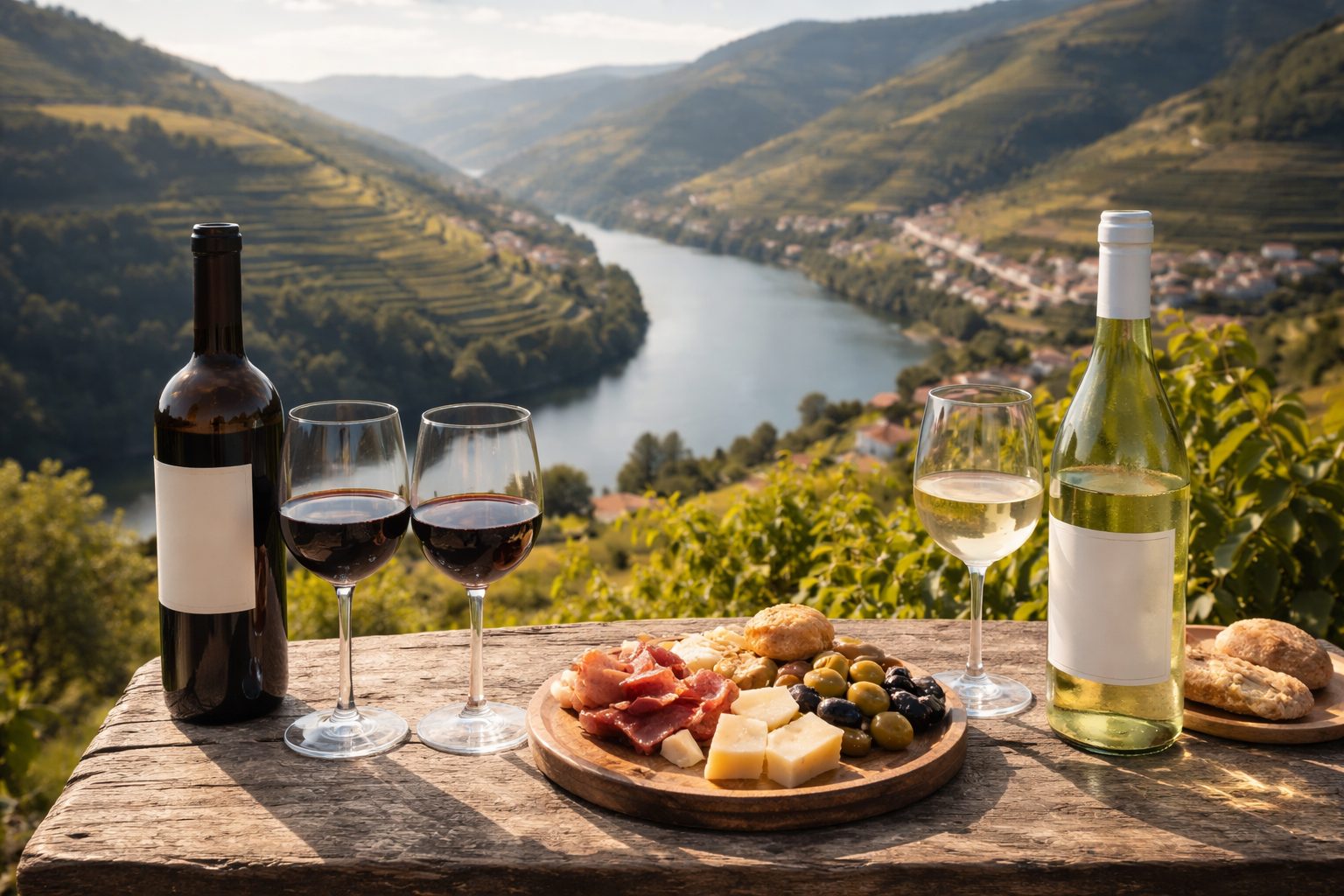
Sagres and Super Bock are the dominant beer brands, both light lagers that work well in warm weather. For something stronger, ginjinha is a cherry liqueur served in tiny cups, often on street corners in Lisbon and Óbidos. Medronho is a rough grape and arbutus berry spirit from the Algarve that’s an acquired taste but very much part of local culture.
Coffee culture is also strong. A bica is the Portuguese equivalent of an espresso, taken short and strong. A galão is a longer, milkier version closer to a latte.
Regional Specialties
Each region has its own food identity. The Alentejo is known for açorda, a bread-based soup with eggs and coriander, and for its migas, fried bread crumbles served with pork. The Algarve specializes in grilled fish and cataplana, a stew cooked in a clam-shaped copper pot. The Azores produce some of the best beef in Europe and a slow-cooked stew called cozido das Furnas, prepared using volcanic steam from geothermal vents.
In the north, tripas à moda do Porto is a tripe and bean stew that Portolanos are famously proud of. It’s not for everyone, but trying local specialties is part of understanding a place.
Natural Landscapes
Portugal’s geography is one of its strongest assets. If you’re curious about what is portugal like in terms of natural scenery, the answer is more diverse than most people expect.
Beaches and Coastlines
The Algarve coast is the most photographed part of Portugal’s shoreline, and for good reason. The golden limestone cliffs, hidden grottos, and clear turquoise water at places like Praia da Marinha and Ponta da Piedade are genuinely stunning. These aren’t manufactured resort scenes; the geology creates these forms naturally.
But the Algarve isn’t the only coastline worth knowing. The Costa Vicentina along the southwestern edge of the country is wild and relatively undeveloped, part of the Alentejo and Vicentine Coast Natural Park. The beaches here are long, windy, and used more by serious surfers than by beach tourists. The west coast around Peniche and Nazaré is known globally for its surf, including some of the biggest waves ever ridden at Praia do Norte in Nazaré.
Mountains and Parks
The Serra da Estrela is mainland Portugal’s highest mountain range, reaching about 1,993 meters at Torre. In winter, it’s the only place in mainland Portugal where you can ski. The landscape shifts dramatically from the rolling plains below to a rocky, windswept plateau. It’s also where the famous Serra da Estrela dog breed originates.
Peneda-Gerês National Park in the northwest is Portugal’s only national park, a protected area of granite mountains, river valleys, and old-growth forest. It’s relatively uncrowded and genuinely beautiful. The Douro Valley, carved by the Douro River and terraced with vine-covered slopes, is another natural highlight that doubles as a wine destination.
National Treasures
The Sintra hills, just west of Lisbon, form a microclimate of their own. Covered in lush forest and dotted with palaces and historic estates, the whole area is protected as a UNESCO Cultural Landscape. The Palace of Pena with its colorful towers and turrets looks like something from a fairy tale, but it’s real and worth every tourist who visits it.
The Azores offer volcanic calderas, thermal pools, whale watching, and dramatic ocean landscapes. The island of Flores in particular is almost otherworldly in its beauty. Madeira has levada walks, ancient irrigation channels converted into hiking trails through laurel forest, that you won’t find anywhere else on Earth.
Urban Exploration
Cities are where you understand the day-to-day texture of a country. What is portugal like in its cities? Relaxed but alive, historic but functional.
Lisbon: The Capital City
Lisbon is built on seven hills, and the city’s topography shapes how you experience it. You climb to the Alfama neighborhood to hear fado music drifting from open windows. You ride an old yellow tram up to the Graça viewpoint. You watch the light change on the Tagus River from the Miradouro da Graça at sunset.
The city has gentrified significantly over the past decade, but it still retains neighborhoods where locals live and work. LX Factory in Alcântara is a converted industrial space full of independent shops, restaurants, and creative studios. The Belém waterfront holds two of the most important monuments from Portugal’s Age of Discovery. The Bairro Alto neighborhood comes alive at night, but it’s also perfectly pleasant during the day.
Lisbon is manageable. It’s not overwhelming like some capital cities. And the food and wine scene is genuinely excellent without being pretentious.
Porto: A Cultural Hub
Porto is smaller than Lisbon, grittier in places, and intensely proud of its identity. The Ribeira waterfront, a UNESCO World Heritage Site, is the most photographed part of the city, with its colorful buildings reflected in the Douro River. But the real Porto is found by walking uphill into neighborhoods like Cedofeita or Bonfim, where independent coffee shops, bookstores, and small restaurants fill the gaps between traditional houses.
The Livraria Lello bookshop, often cited as one of the world’s most beautiful bookstores, is here. So is São Bento train station, whose interior is covered in some of the most impressive azulejo tile murals in Portugal. And of course, the Port wine lodges in Vila Nova de Gaia, just across the river, are a short walk from most accommodation.
Porto has a strong creative energy, driven partly by its universities and partly by its stubborn local identity. It’s worth at least two or three days.
Other Notable Cities
Coimbra is Portugal’s university city, home to one of the oldest universities in Europe, founded in 1290. The university sits on a hill above the city, and its historic library, the Biblioteca Joanina, is genuinely breathtaking inside. The city has a strong fado tradition, distinct from Lisbon’s style.
Évora in the Alentejo is well-preserved and atmospheric, with a Roman temple still standing in the center of the old town and a bone chapel in the Igreja de São Francisco that is unsettling in the best way. Braga in the north is an important religious center, home to the Bom Jesus do Monte sanctuary and a very active café culture.
The Algarve towns of Lagos, Tavira, and Silves each have a different character. Lagos is lively and tourist-facing. Tavira is quieter and more authentically Portuguese. Silves has a well-preserved Moorish castle and a slower pace that lets you breathe.
Language and Communication
Official Language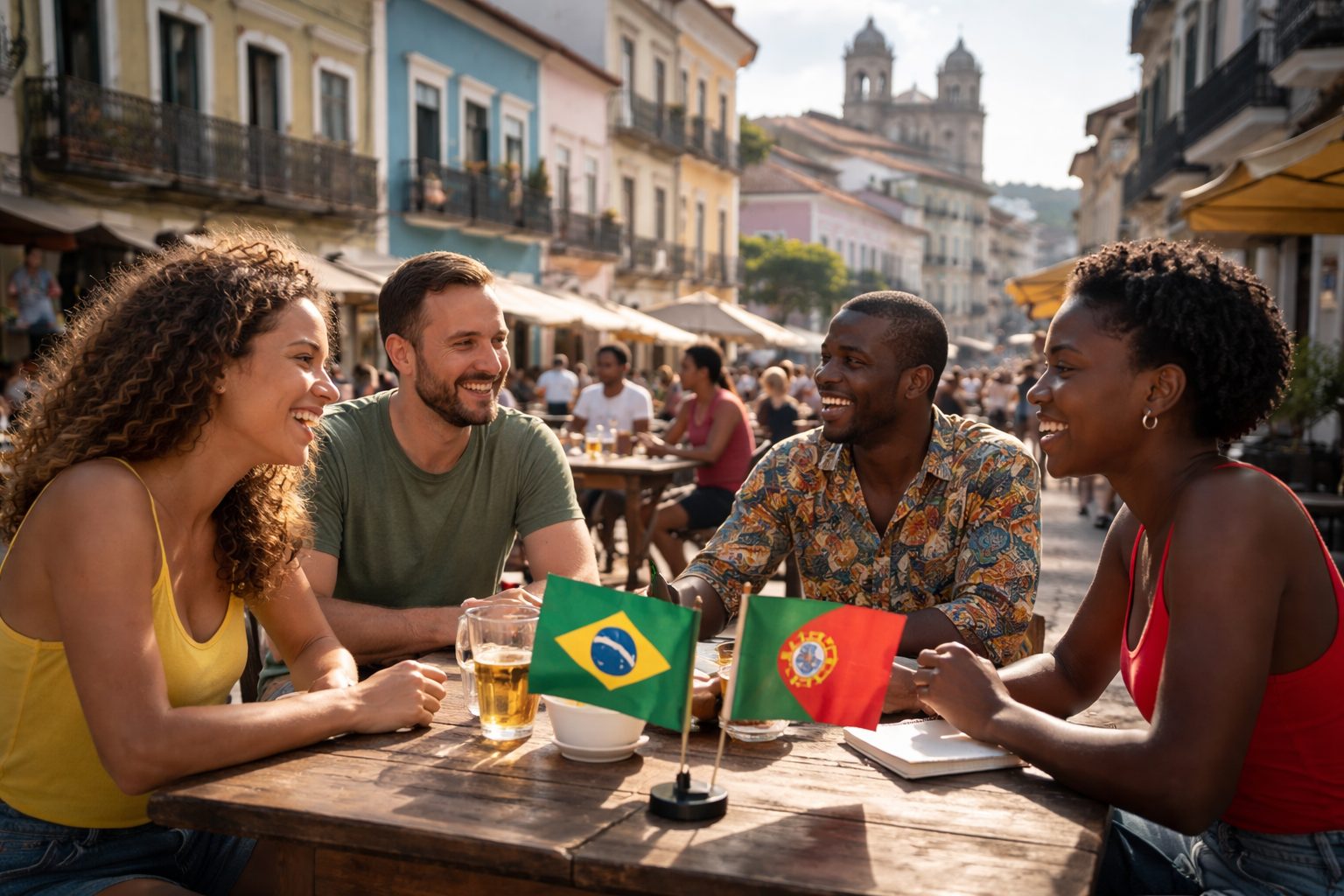
Portuguese is the official language, and it’s the sixth most spoken language in the world by native speakers, largely due to Brazil and former African colonies. European Portuguese sounds quite different from Brazilian Portuguese, and the differences can catch people off guard if they’ve only been exposed to one variety.
European Portuguese tends to swallow vowels and can sound slurred or fast to unfamiliar ears. Brazilians often say the Portuguese speak as if they’re always cold and keeping their mouths closed. There’s some truth to that.
Common Phrases for Travelers
Even knowing a few words makes a significant difference in how locals receive you. Here are some genuinely useful phrases:
- Obrigado (male) / Obrigada (female): Thank you
- Por favor: Please
- Com licença: Excuse me / Pardon me
- Desculpe: Sorry
- Fala inglês?: Do you speak English?
- Quanto custa?: How much does it cost?
- Uma mesa para dois, por favor: A table for two, please
- A conta, por favor: The bill, please
- Bom dia / Boa tarde / Boa noite: Good morning / Good afternoon / Good evening
Most Portuguese people in cities and tourist areas speak reasonable to excellent English, particularly anyone under 40. In rural areas, English proficiency drops considerably, but patience and goodwill go a long way.
Language Variations Across Regions
The Alentejo and Algarve accents are noticeably different from the accent in Lisbon. The north, including Porto, has its own rhythm and some distinct vocabulary. The Azores and Madeira have their own regional accents shaped by centuries of relative isolation and different immigrant influences.
Mirandese, spoken in a small region near Miranda do Douro in the northeast, is a recognized regional language and not a dialect of Portuguese. It’s one of only two officially recognized languages in Portugal, though its speakers number fewer than 15,000.
Festivals and Events
Major National Festivals
Portugal’s national festivals reflect its Catholic heritage and its history. Some of the biggest:
- Carnival: February, celebrated across the country with parades and festivities, particularly in Torres Vedras and Ovar
- Semana Santa (Holy Week): March or April, marked by processions in cities like Braga and Ovar
- Dia de Portugal (June 10): National Day, commemorating the death of poet Luís de Camões and celebrating Portuguese culture
- Feast of Saint Anthony (June 12-13): Lisbon’s biggest popular festival, with street parties in the Alfama and Mouraria neighborhoods
- Feast of Saint John (June 23-24): Porto’s biggest festival, involving fireworks, grilled sardines, and the tradition of hitting people over the head with plastic hammers
- Republic Day (October 5): Marks the founding of the Portuguese Republic in 1910
- All Saints’ Day (November 1): A public holiday with strong religious observance
Local Celebrations
Beyond the national calendar, Portugal has a rich tradition of village and town festivals tied to patron saints. These festas are often the social highlights of the year for local communities. You’ll find live music, dancing, food stalls, and a genuine sense of community. The Festa de Nossa Senhora de Agonia in Viana do Castelo in August is one of the most elaborate, with folk costumes, processions, and traditional dances.
The wine harvest festivals in the Douro Valley and Alentejo in September and October are worth timing your trip around if you can. They combine the celebration of the harvest with tastings, music, and access to quintas (wine estates) that aren’t normally open to the public.
Cultural Events to Experience
The Fado ao Centro in Coimbra and various fado houses in Lisbon offer regular performances of Portugal’s most famous music genre. The Serralves em Festa in Porto, held in late May or early June, is a 40-hour marathon of free cultural events at the Serralves Foundation, one of Portugal’s leading contemporary art institutions. The NOS Alive and Super Bock Super Rock festivals in Lisbon attract major international artists every summer.
Art and Music
Traditional Portuguese Music
Fado is Portugal’s most recognized musical form, classified as UNESCO Intangible Cultural Heritage since 2011. It emerged in Lisbon in the early 19th century, though its roots are debated. Traditional fado from Lisbon is characterized by a melancholic, heartfelt quality called saudade, a Portuguese word describing a deep nostalgic longing. The music is typically performed by a singer accompanied by a Portuguese guitar and a viola baixo.
Coimbra fado is a distinct tradition, historically associated with the university and performed only by men. It tends to be more formal and lyrical, linked to academic culture and poetry.
Influential Artists and Movements
Amália Rodrigues is the figure most associated with fado internationally. Her recordings from the 1940s through the 1990s shaped how the world heard Portuguese music. More recently, Ana Moura and Mariza have brought fado to new audiences while maintaining its authenticity.
In the visual arts, Josefa de Óbidos was a 17th-century baroque painter who worked at a time when women artists were extremely rare. Paula Rego, born in Lisbon in 1935, became one of the most significant figurative painters of the 20th century, known for unsettling, narrative-driven canvases that draw on fairy tales, politics, and personal experience.
Contemporary Art Scene
Lisbon has developed a serious contemporary art infrastructure. The Museu Nacional de Arte Contemporânea do Chiado, the Berardo Collection Museum at the Belém Cultural Centre, and the EDP Foundation all hold significant collections. Porto’s Serralves Foundation has a strong reputation for international contemporary art alongside its collection of 20th-century Portuguese work.
Street art is visible throughout Lisbon and Porto, with some commissioned work that has become part of the cultural landscape. The Underdogs Gallery in Lisbon is worth visiting if street and urban art interests you.
Outdoor Activities
Hiking and Nature Trails
Portugal has an extensive network of marked hiking trails ranging from short coastal walks to multi-day routes. The Via Algarviana crosses the Algarve from Alcoutim in the east to Cabo de São Vicente in the west, covering about 300 kilometers through inland countryside. The Rota Vicentina is a coastal and inland walking route along the southwest corner of the country, split between the Fishermen’s Trail along cliffs and beaches and the Historical Way through forest and farmland.
Peneda-Gerês has well-marked trails and a landscape that shifts from granite peaks to forested valleys. The Azores offer crater rim walks, island crossings, and routes through ancient laurel forest. On Terceira Island, the Biscoitos lava fields are a striking environment unlike anything on the mainland.
Water Sports and Activities
Portugal is a premier destination for surfing. Nazaré hosts the biggest waves in the world during winter storms. Peniche is a consistent surf spot with several distinct breaks for different skill levels. The Algarve has calmer water on the south coast and surfable Atlantic swells on the west coast.
Other water activities available throughout the country:
- Kitesurfing and windsurfing, particularly in the Algarve and around the Setúbal Peninsula
- Kayaking in the Algarve sea caves and river estuaries
- Stand-up paddleboarding on the Douro and Tagus rivers
- Whale and dolphin watching from the Azores, one of the best places in the world for cetacean encounters
- Scuba diving in the Azores, where visibility and marine biodiversity are exceptional
Winter Sports Options
Skiing in Portugal is limited but possible. The Serra da Estrela has a small ski resort at Torre that operates when snow conditions allow, which isn’t every winter. It’s not comparable to Alpine skiing but offers a unique experience for those already in the region.
The Azores have good conditions for hiking year-round because the mild oceanic climate keeps temperatures stable. Winter is actually a good time to visit Madeira, which stays warm and green while mainland Europe freezes.
Transportation in Portugal
Public Transport Systems
Lisbon has a metro system with four lines that connects most major neighborhoods and extends to the airport. Trams and buses fill the gaps, though the famous Tram 28 route through Alfama is often packed with tourists. Porto has a metro, tram line along the Douro, and a funicular.
Intercity rail is operated by CP (Comboios de Portugal). The Alfa Pendular is the fastest service, connecting Braga, Porto, Coimbra, Lisbon, and Faro. Journey times are reasonable, and trains are generally comfortable. There are also slower regional services that reach smaller towns, though frequency can be limited.
Long-distance buses operated by Rede Expressos reach destinations not well served by rail, generally at lower prices than the train.
Best Ways to Travel Between Cities
| Route | Train (Alfa Pendular) | Bus | Drive |
|---|---|---|---|
| Lisbon to Porto | ~2h 45min | ~3h 30min | ~3h |
| Lisbon to Faro | ~2h 45min | ~3h 30min | ~3h |
| Porto to Braga | ~1h | ~1h | ~50min |
| Lisbon to Évora | No direct train | ~1h 30min | ~1h 30min |
| Lisbon to Coimbra | ~1h 30min | ~2h 15min | ~2h |
For the islands, flying is the only option from mainland Portugal. TAP Air Portugal operates regular flights from Lisbon to the Azores and Madeira, with additional connections from Porto to Madeira.
Tips for Renters and Drivers
Renting a car is the best way to explore rural Portugal, the Alentejo, the Algarve interior, and areas not reachable by public transport. Roads are generally good, and highways connect the major cities efficiently. Tolls are common on motorways and are charged electronically. If you rent a car, make sure it has an electronic toll device (Via Verde) included, otherwise you may struggle to pay at unmanned toll points.
Driving in Lisbon itself is stressful due to narrow streets and aggressive local driving habits. Parking is difficult and expensive. In cities, public transport is almost always preferable.
Speed limits are 50 km/h in urban areas, 90 km/h on national roads, and 120 km/h on motorways. Enforcement is taken seriously.
Cost of Living
Average Prices for Food and Accommodation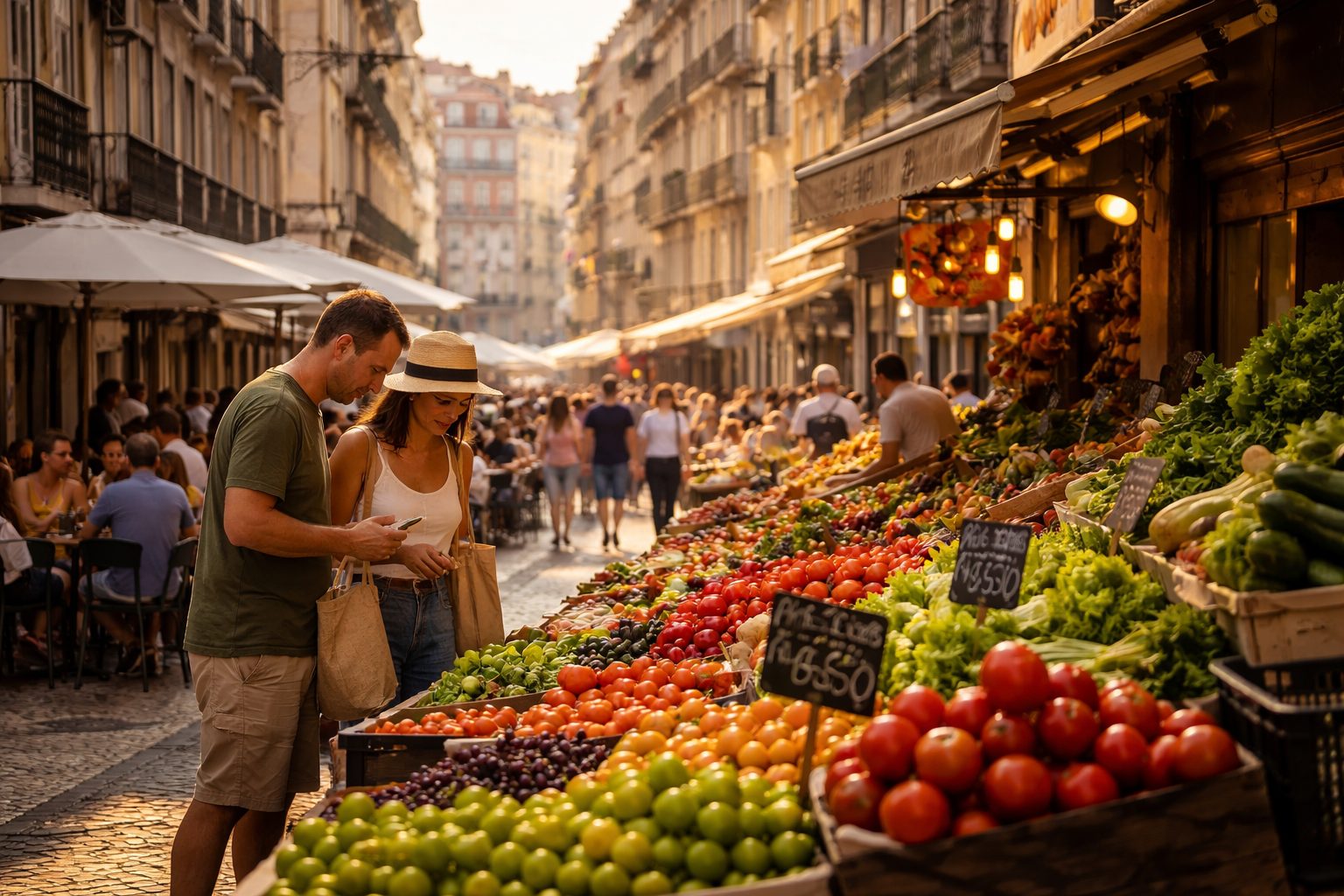
Portugal remains one of the more affordable Western European destinations, though prices have risen noticeably in Lisbon and Porto over the past few years due to tourism and the influx of remote workers.
Typical costs in a mid-range restaurant:
- Main course: 10 to 18 euros
- Three-course menu of the day (menu do dia) with drink and coffee: 10 to 14 euros
- Espresso: 0.80 to 1.50 euros
- Glass of house wine: 2 to 4 euros
- Beer: 1.50 to 3 euros
Accommodation in Lisbon and Porto ranges from around 80 to 150 euros per night for a decent mid-range hotel. Budget hostels start from 20 to 30 euros per dorm bed. In smaller cities and rural areas, you can find good guesthouses (quintas or residenciais) for 50 to 80 euros per night.
Transportation Costs
- Lisbon metro single ticket: around 1.60 euros
- 24-hour metro pass in Lisbon: around 6.60 euros
- Lisbon to Porto train (Alfa Pendular): 25 to 45 euros one-way depending on when you book
- Fuel: broadly in line with EU averages, around 1.70 to 1.85 euros per liter for diesel
- Ride-hailing (Uber, Bolt): available in Lisbon, Porto, and Algarve resorts, generally cheaper than taxis
Budgeting for Travel
A comfortable budget for daily spending, excluding accommodation:
- Budget traveler: 40 to 60 euros per day (self-catering, public transport, free attractions)
- Mid-range: 80 to 130 euros per day (restaurant meals, paid attractions, occasional taxi)
- Comfortable: 150 euros and above per day (good restaurants, wine tastings, private tours)
The Algarve in peak summer will cost more, particularly for accommodation. The Alentejo and interior regions are consistently cheaper than coastal areas.
Safety and Health
General Safety Tips
Portugal is consistently ranked among the safest countries in Europe. Violent crime against tourists is rare. The main concerns are petty theft, particularly pickpocketing in crowded tourist areas of Lisbon like Alfama, Baixa, and public transport.
Practical precautions:
- Use a money belt or keep valuables in inside pockets
- Don’t leave bags on the back of chairs in cafés or restaurants
- Be alert on Tram 28 and other crowded tourist routes
- Avoid displaying expensive cameras or phones unnecessarily in busy areas
The beaches can present water safety risks, particularly on the west coast where Atlantic currents can be powerful and unexpected. Follow flag systems at beaches. A red flag means no swimming. A yellow flag means caution.
Health Care System Overview
Portugal has a public health system called the Serviço Nacional de Saúde (SNS). For EU citizens, the European Health Insurance Card (EHIC) provides access to public healthcare at the same cost as Portuguese residents. Non-EU travelers should have travel insurance that includes medical coverage.
Pharmacies (farmácias) are widely available in cities and towns and are well-equipped to handle minor medical needs. Pharmacists can advise on non-prescription treatments for common conditions. Many speak enough English to help tourists.
Private clinics and hospitals exist in major cities and tourist areas and generally offer faster service than the public system for non-emergency situations.
Emergency Services Information
The universal emergency number in Portugal is 112, which covers police, fire, and medical emergencies. English-speaking operators are available.
- National Republican Guard (GNR): covers rural areas and motorways
- Public Security Police (PSP): covers urban areas
- Tourist Police (PSP Turismo): operates in Lisbon and major tourist areas, with English-speaking officers
If you’re hiking in remote areas, register your route with the local municipality if possible and tell someone your plans. Mobile coverage can be poor in mountainous areas.
Practical Travel Tips
Best Times to Visit
Spring (April to June) is arguably the best time to visit most of Portugal. The weather is warm without being oppressive, the crowds are manageable, and the landscape is green and full of wildflowers, particularly in the Alentejo. Prices are lower than summer.
Summer (July and August) is peak season. Beaches are crowded, prices rise sharply in tourist areas, and Lisbon can be genuinely hot. But it’s also when most festivals happen, and the energy is high.
Autumn (September and October) is excellent, especially for wine lovers. Harvest season is underway, temperatures are still comfortable, and the summer crowds have thinned. October can bring more rain in the north.
Winter (November to March) is the low season but has real appeal. Cities are quiet, prices drop, and you get a more authentic sense of everyday Portuguese life. Lisbon and the Algarve stay mild enough to be pleasant. The north gets cold and wet.
Essential Packing List
What you pack depends heavily on when and where you’re going, but some universals:
- Comfortable walking shoes (the cobblestones in Lisbon and Porto are hard on knees and ankles)
- Sun protection year-round, including a hat for summer
- A light waterproof jacket, especially for the Azores or north Portugal
- Power adapter (Portugal uses Type F plugs with 230V)
- Small day bag for day trips
- Reusable water bottle (tap water is safe to drink in mainland Portugal)
- A phrase book or translation app
If you’re hiking, bring proper footwear and layers, even in summer. Temperatures at altitude can drop quickly.
Navigating Cultural Etiquette
Portuguese culture is generally warm, polite, and indirect. A few things worth knowing:
- Greet people with a handshake in formal settings. Close friends and family greet with two kisses on the cheek, right cheek first.
- Don’t rush meals. Dining is social and leisurely. Asking for the bill immediately after eating can feel rude.
- Tipping is not mandatory but appreciated. Rounding up or leaving a euro or two per person at a restaurant is standard.
- Punctuality is a bit more relaxed in social settings. Don’t be offended if someone is 15 minutes late to a casual meeting.
- Dress modestly when visiting churches or religious sites. Shoulders and knees should be covered.
- Keep your voice at a moderate level in residential neighborhoods, particularly at night.
Frequently Asked Questions
What is the best time to visit Portugal?
April to June offers the best combination of good weather, manageable crowds, and reasonable prices. September and October are strong alternatives, particularly for the Douro Valley harvest season. Avoid August in tourist areas if crowds and heat are a concern for you.
Do I need a visa to travel to Portugal?
EU and EEA citizens do not need a visa. US, Canadian, Australian, and UK citizens can visit for up to 90 days within a 180-day period without a visa under the Schengen agreement. For longer stays or different nationality requirements, check with the Portuguese consulate in your country before traveling.
What is the currency used in Portugal?
Portugal uses the euro. ATMs are widely available in cities and towns. Major credit cards are accepted in hotels, restaurants, and shops, but smaller establishments and markets in rural areas may prefer cash. It’s worth carrying some euros whenever you’re heading off the main tourist routes.
Is Portugal a safe country for tourists?
Portugal ranks consistently among the top ten safest countries in the world on the Global Peace Index. Violent crime against tourists is rare. The main risk is petty theft in crowded urban tourist areas. Standard common sense precautions are sufficient for the vast majority of visitors.
Understanding what is portugal like is ultimately something that reveals itself gradually. You arrive expecting beaches and custard tarts, and those are genuinely wonderful. But then you find yourself sitting in a small café in Évora on a Tuesday afternoon, drinking an espresso and listening to the church bells, and you realize the country offers something that’s harder to photograph or quantify. There’s a pace here, a sense that life is meant to be lived rather than optimized, that gets under your skin. Portugal earns its reputation not through spectacle but through accumulation of small, good things.