
If you’ve ever tried to explain the difference between these two cities to someone who hasn’t visited the UAE, you already know how tricky it gets. The debate around abu dhabi vs dubai comes up constantly, whether you’re planning a trip, considering a move, or just curious about what makes each place tick. I’ve spent time in both, and I can tell you they’re far more distinct than most people expect.
Both cities sit within the same country, share a similar climate, and attract international visitors in massive numbers. But stop there and you’d be missing the point entirely. Abu Dhabi and Dubai have developed along very different paths, with different priorities, different vibes, and genuinely different appeals depending on what you’re looking for.
Introduction to Abu Dhabi and Dubai
The UAE is made up of seven emirates, and Abu Dhabi and Dubai are by far the most prominent. Abu Dhabi serves as the federal capital and the seat of government. Dubai is the commercial engine, the global media darling, and probably the city most outsiders picture when they think of the UAE.
Together, these two cities account for the vast majority of the country’s GDP, population, and international attention. Yet they’ve each carved out a distinct identity. Understanding that distinction matters whether you’re choosing where to vacation, where to work, or where to raise a family.
Overview of Abu Dhabi
Abu Dhabi is the largest emirate by land area, occupying roughly 87 percent of the UAE’s total territory. The city itself sits on a T-shaped island along the Arabian Gulf coast and fans out across the surrounding mainland. It’s home to around 1.5 million people in the urban core, with a broader metropolitan population well above 3 million.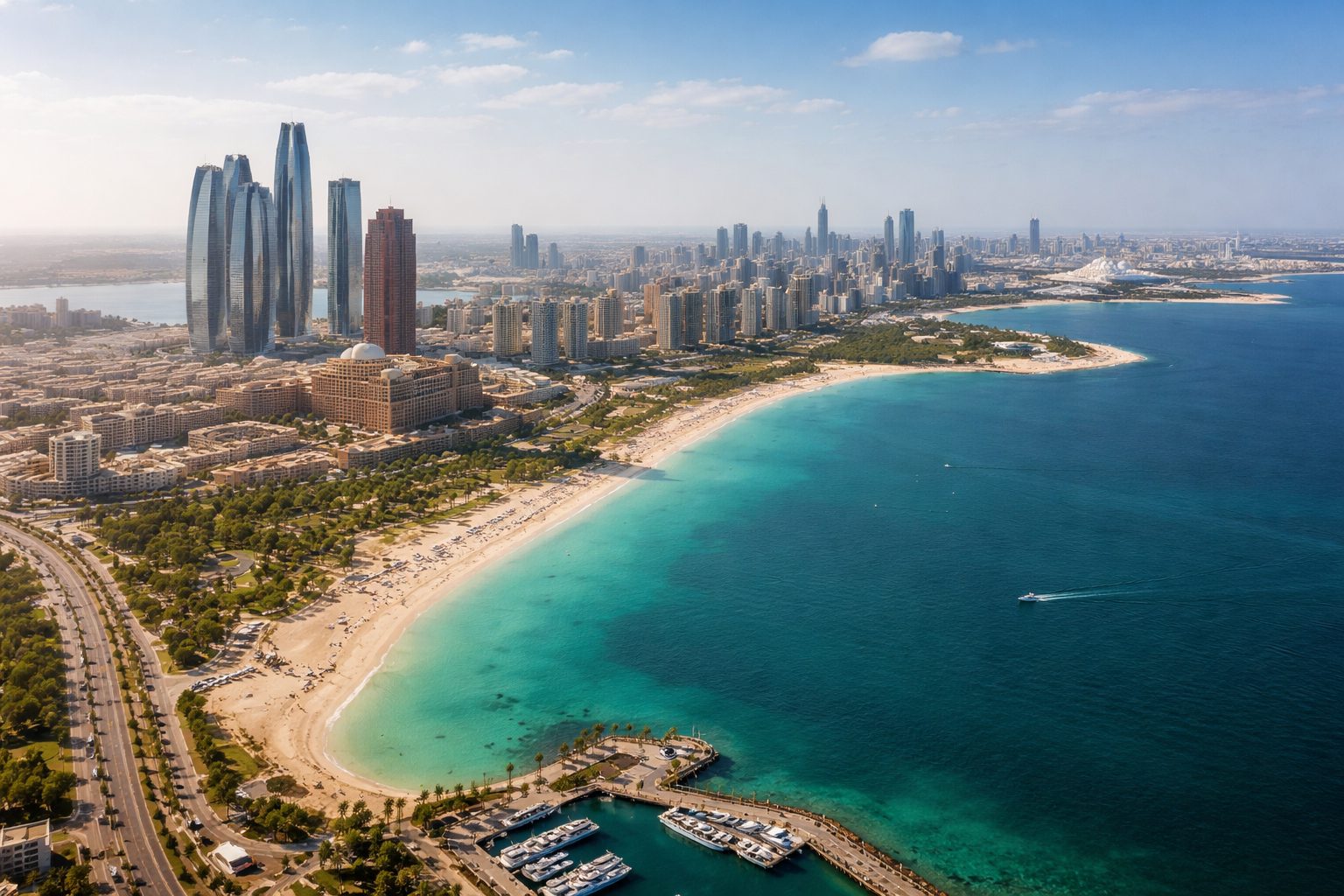
The emirate controls a substantial portion of the world’s proven oil reserves, which has made it extraordinarily wealthy. That wealth, however, hasn’t translated into the same kind of breakneck urban development you see across the water. Abu Dhabi has grown deliberately. The skyline is modern and impressive, but there’s a sense of space, calm, and planning that sets it apart.
The city has invested heavily in culture over the past two decades. The Saadiyat Island Cultural District is the clearest example, housing world-class institutions that would be noteworthy in any global city.
Overview of Dubai
Dubai is a different kind of story. It started with far less oil wealth than Abu Dhabi and had to hustle. That hustle became its defining trait. From the 1990s onward, Dubai rebranded itself as a global hub for trade, tourism, finance, and logistics. It worked spectacularly.
Today, Dubai is one of the most visited cities on the planet. It hosts more international tourists annually than almost anywhere else in the world. The city’s population has grown at a staggering pace, driven almost entirely by expatriate workers and residents. Emiratis make up a small fraction of Dubai’s total population.
The city is defined by ambition made visible. The tallest building in the world stands here. The largest shopping mall in the world is here. Artificial islands. Indoor ski slopes. Formula One racing. Dubai doesn’t do things quietly.
Key Differences Between Abu Dhabi and Dubai
The differences between these two cities run deeper than size or tourist attractions. Here’s a straightforward breakdown:
| Category | Abu Dhabi | Dubai |
|---|---|---|
| Role | Federal capital, oil-based wealth | Commercial and tourism hub |
| Vibe | Quieter, more traditional | Fast-paced, international |
| Population | ~3.5 million metro area | ~3.6 million city proper |
| Alcohol | Licensed venues only, more restricted | More widely available |
| Nightlife | Limited, more subdued | Extensive, globally known |
| Cost of living | Slightly lower overall | Generally higher |
| Architecture | Modern with traditional emphasis | Record-breaking skyscrapers |
| Tourism focus | Culture, heritage, nature | Shopping, spectacle, entertainment |
Neither city is objectively better. They just serve different needs. Abu Dhabi tends to appeal more to those who want a quieter, more culturally grounded experience. Dubai draws those after a high-energy, high-spectacle visit.
Cultural Aspects: Abu Dhabi vs Dubai
Culture is where the abu dhabi vs dubai comparison gets genuinely interesting. Abu Dhabi has positioned itself as the cultural capital of the UAE. The Grand Mosque, one of the largest in the world, is located here and remains one of the most architecturally stunning buildings I’ve ever visited. Louvre Abu Dhabi, opened in 2017, brought serious global art credibility to the emirate.
Abu Dhabi also has stricter social norms in practice, even if the laws themselves are similar across the UAE. Dress codes are more consistently enforced. Public behavior standards feel a bit more conservative. That’s not a complaint, just an honest observation.
Dubai’s culture is hybrid in a way that’s hard to describe unless you’ve experienced it. More than 200 nationalities live and work there. The city has adapted to accommodate such a diverse population. You’ll find neighborhoods that feel more like Mumbai, Manila, or London than anything traditionally Gulf. The cultural experience in Dubai is therefore about that cosmopolitan mix as much as anything specifically Emirati.
Both cities observe Islamic traditions, including Friday prayers, Ramadan practices, and conservative dress codes in religious sites. Visitors to both should pack modest clothing for mosque visits and be aware of local customs around public displays of affection.
Economic Landscape: Abu Dhabi vs Dubai
Abu Dhabi’s economy is anchored in hydrocarbons. ADNOC, the Abu Dhabi National Oil Company, is one of the largest energy producers in the world. The sovereign wealth fund, Abu Dhabi Investment Authority, manages hundreds of billions of dollars in assets globally.
But Abu Dhabi isn’t resting on oil money. The emirate has been actively diversifying into manufacturing, renewable energy, technology, and tourism. Masdar City, a planned sustainable urban development on the outskirts of the city, is one of the most ambitious clean energy projects anywhere in the world.
Dubai’s economy tells a different story. Having diversified away from oil decades ago out of necessity, Dubai now earns the bulk of its income from:
- Real estate and construction
- Trade and logistics (Jebel Ali Port is among the busiest in the world)
- Tourism and hospitality
- Financial services
- Aviation (Emirates airline and Dubai International Airport)
Dubai is arguably the more resilient model from a diversification standpoint, though it’s also more exposed to global market cycles. Real estate booms and busts have hit Dubai hard in the past, as seen in 2008 and again around 2020.
Tourist Attractions in Abu Dhabi
Abu Dhabi might not get the same tourist press as Dubai, but its attractions are genuinely impressive. In my view, some of them are actually more rewarding precisely because the crowds are smaller.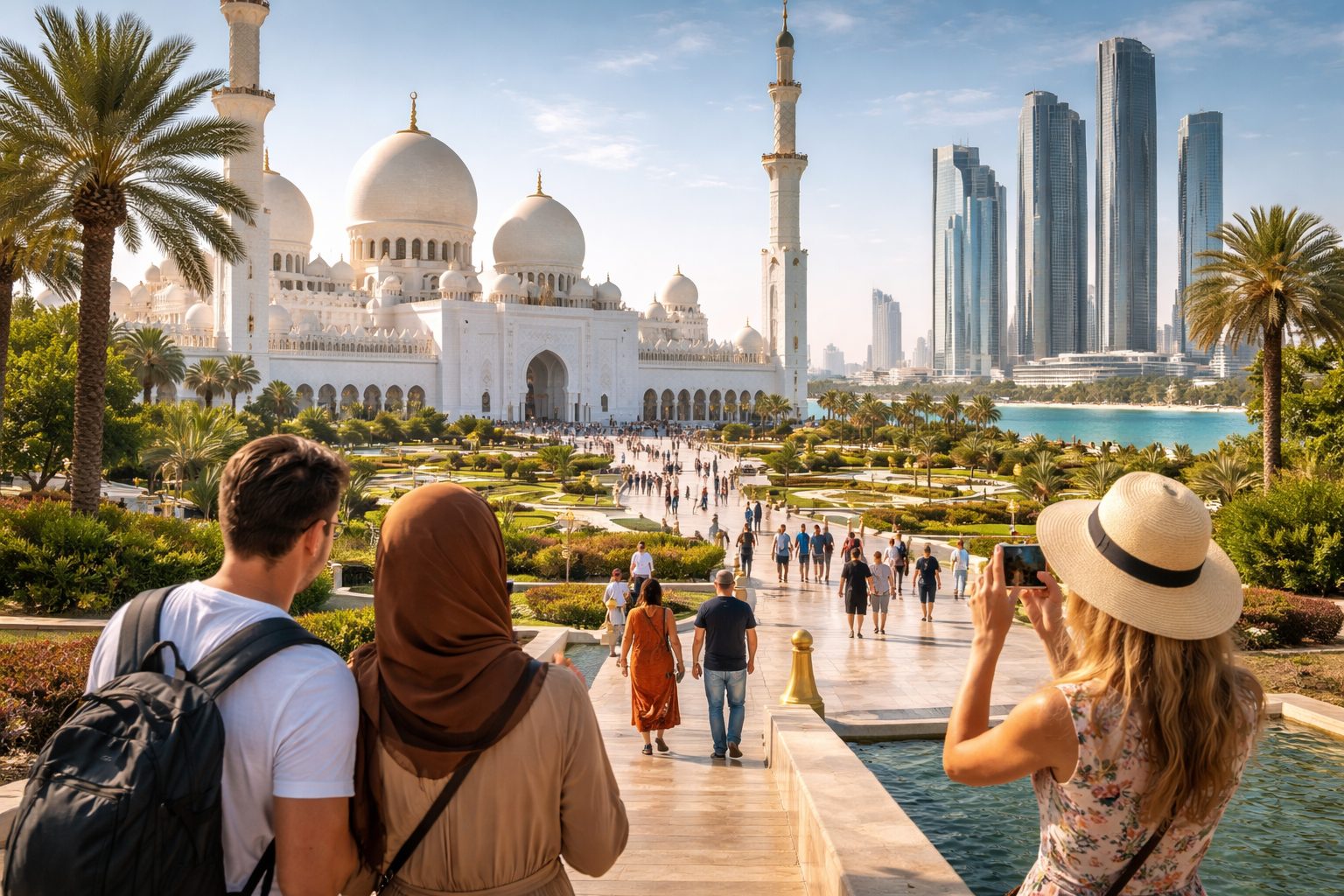
Top Sights in Abu Dhabi
- Sheikh Zayed Grand Mosque: One of the largest mosques in the world, built from white marble and capable of holding over 40,000 worshippers. It’s free to visit outside of prayer times and genuinely breathtaking.
- Louvre Abu Dhabi: The first Louvre outside France, set under a stunning latticed dome on Saadiyat Island. The permanent collection spans human history across cultures.
- Ferrari World: The world’s first Ferrari-branded theme park, home to Formula Rossa, the fastest roller coaster on the planet.
- Yas Island: A purpose-built entertainment hub with a Formula One circuit, water park, Warner Bros. World, and a growing list of attractions.
- Corniche Beach: A long, well-maintained public beach along the waterfront with clean facilities and a relaxed atmosphere.
- Qasr Al Watan: The Presidential Palace opened to public tours in 2019 and offers an extraordinary look at Emirati architecture and governance.
Cultural Experiences in Abu Dhabi
Abu Dhabi’s cultural depth goes beyond the headline museums. The Heritage Village near the Marina offers a reconstructed traditional settlement with craftspeople, old fishing tools, and Bedouin artifacts. Al Ain, a city within the Abu Dhabi emirate, is a UNESCO World Heritage Site with ancient falaj irrigation systems and historic oases that give a completely different perspective on Gulf life.
The Mangrove National Park is worth an afternoon, particularly if you want to kayak through protected mangroves along the coastline. It’s peaceful, quietly beautiful, and genuinely unlike anything you’d encounter in Dubai.
Tourist Attractions in Dubai
Dubai’s tourism infrastructure is hard to match anywhere in the world. The city has invested billions into making sure visitors leave with memories they can barely believe were real.
Iconic Landmarks in Dubai
- Burj Khalifa: The tallest structure on earth at 828 meters. The observation decks on floors 124, 125, and 148 offer staggering views across the city and desert.
- The Dubai Mall: One of the largest shopping centers globally, with an aquarium, ice rink, indoor waterfall, and hundreds of retail outlets.
- Palm Jumeirah: The artificial palm-shaped island visible from space, home to luxury hotels, villas, and the famous Atlantis resort.
- Burj Al Arab: The hotel shaped like a dhow sail that became the global symbol of Dubai opulence. Worth seeing even from the outside.
- Dubai Frame: A newer addition, this giant picture frame structure straddles old and new Dubai with glass-floored sky bridges and good city views.
- Dubai Creek: The historic trading waterway that built the original city, still crossed by traditional wooden abra ferries for a few dirhams.
Entertainment Options in Dubai
Dubai’s entertainment offerings are genuinely world-class and remarkably varied:
- Indoor skiing at Ski Dubai in the Mall of the Emirates, complete with real snow and a resident penguin colony.
- Desert safaris with dune bashing, camel rides, and Bedouin camp dinners under the stars.
- Deep-sea fishing charters departing from Dubai Marina.
- World-class dining with more Michelin-starred restaurants than most cities in Europe.
- Global concerts and festivals at venues like the Coca-Cola Arena.
- Beach clubs and rooftop bars with views of the skyline.
- Nightclubs hosting international DJs in some of the most lavish purpose-built spaces anywhere.
The sheer density of things to do in a relatively small area is remarkable. You genuinely don’t need to rent a car to fill ten days with diverse activities.
Lifestyle Comparison: Abu Dhabi vs Dubai
If you’re thinking about living in either city rather than visiting, the lifestyle question becomes central. I’ve spoken with expats who’ve lived in both, and the feedback is remarkably consistent.
Abu Dhabi suits people who want a slightly slower pace. The traffic is better, the city feels less crowded, and the general atmosphere is more settled. It has everything you need day to day. But it’s a city you grow to appreciate rather than one that hits you immediately. People who move there often say they resisted it at first, then never wanted to leave.
Dubai is where ambition goes. It’s a city for people who want to be in the middle of things, build networks fast, and live in an environment that rewards hustle. The energy is relentless in the best and worst ways. Many expats love it in their 20s and 30s and then start thinking about Abu Dhabi once they have children.
Both cities offer an extremely high standard of living by global measures. Modern apartments, reliable infrastructure, year-round sunshine, and very low crime make them genuinely attractive places to build a life.
Education and Healthcare: Abu Dhabi vs Dubai
Education in both cities is strong, with wide options for expat families. Abu Dhabi has made significant investments in its school system through the Abu Dhabi Department of Education and Knowledge. There’s a concentration of British, American, and IB-curriculum international schools across the emirate.
Dubai has an even wider range of international schools due to its larger and more diverse expatriate population. Competition for places in top schools is intense and fees are high in both cities. If school choice matters to your decision, research specific schools rather than making a blanket judgment based on the emirate.
Healthcare in both cities is excellent by regional standards. Abu Dhabi has mandatory health insurance for residents and a strong network of private hospitals and clinics. Dubai’s healthcare sector is more developed in terms of absolute volume, with major hospitals and specialist centers catering to medical tourism as well as resident needs. Cleveland Clinic Abu Dhabi is a standout institution, bringing a globally recognized brand into the Gulf with strong outcomes data.
Cost of Living: Abu Dhabi vs Dubai
Overall, Abu Dhabi tends to come out slightly cheaper than Dubai, though the gap has narrowed in recent years. Here’s a rough breakdown of how costs compare:
- Rent: Abu Dhabi is generally 10-20% cheaper for comparable properties, especially for villas and larger apartments.
- Groceries: Broadly similar across both cities.
- Dining out: Dubai has more high-end options and slightly higher average restaurant prices.
- Transportation: Abu Dhabi requires a car for most residents since public transit is limited. Dubai’s Metro reduces car dependence in key areas.
- School fees: High in both cities, broadly comparable.
- Entertainment: Dubai has more paid attractions, which adds up quickly for families.
Neither city is cheap in absolute terms. But compared to equivalent global cities like London, Singapore, or Sydney, both offer reasonably good value relative to quality of life, especially given the absence of income tax.
Transportation and Accessibility: Abu Dhabi vs Dubai
Getting around Dubai is easier than most people expect. The Metro system covers the main tourist and business corridors efficiently. Taxis are plentiful, metered, and reasonably priced. The Palm Monorail connects Palm Jumeirah to the mainland. And ride-hailing apps work seamlessly throughout the city.
Abu Dhabi relies far more heavily on private cars and taxis. The city has been slowly expanding its public bus network, but it’s not at a stage where you can comfortably live without your own vehicle. For expat families, a car is essentially a requirement in Abu Dhabi in a way that’s less true in Dubai.
Getting between the two cities is easy. They’re about 140 km apart on the E11 highway, a journey that takes roughly 90 minutes to two hours depending on traffic. Buses run between the cities regularly and cheaply. Most people who live in one city visit the other fairly often, and some people have been known to commute, though that’s an extreme commitment.
Both cities are served by major international airports. Dubai International is one of the busiest in the world for passenger traffic, with an extraordinary range of direct connections. Abu Dhabi International is significantly quieter but still very well connected, and a major expansion and new terminal are currently under development.
Safety and Security: Abu Dhabi vs Dubai
Both Abu Dhabi and Dubai are among the safest cities in the world by most metrics. Violent crime is extremely rare. Petty theft is uncommon. The cities are well-lit, well-policed, and operate with a level of public order that many Western capitals would envy.
Women traveling alone consistently report feeling safe in both cities. The combination of strict law enforcement, surveillance, and cultural norms keeps crime rates exceptionally low.
That said, travelers should be aware that UAE law applies everywhere, and it differs from Western norms in some areas. Carrying or consuming illegal drugs carries severe penalties. Public intoxication is illegal. Photographing government buildings, military installations, or individuals without consent can cause problems. Being aware of these rules isn’t difficult, but ignoring them because you’re used to different laws at home would be a mistake.
Abu Dhabi is generally perceived as slightly more conservative in terms of social enforcement. Dubai’s international character means the authorities are more accustomed to a wider range of behavior, though that tolerance has limits.
Conclusion: Choosing Between Abu Dhabi and Dubai
So where does that leave you in the abu dhabi vs dubai decision? Honestly, it depends entirely on what you’re after.
If you’re visiting as a tourist and want the full spectacle, the record-breaking architecture, the relentless entertainment options, and a city that never seems to sleep, Dubai delivers on that in a way that’s genuinely hard to match. It’s a city designed to impress and it succeeds.
If you want something more considered, culturally richer, and less frenetic, Abu Dhabi rewards you differently. The Grand Mosque, the Louvre, the quieter beaches, and the slightly slower pace give the city a depth that takes a bit more effort to discover but feels genuinely satisfying.
For expats considering a long-term move, the calculus shifts based on career sector, family situation, and personal temperament. Dubai offers bigger networks and more visible career momentum in certain industries. Abu Dhabi offers stability, a slightly lower cost of living, and a lifestyle that tends to feel more sustainable over the long term.
What I can say with confidence is that visiting just one and drawing conclusions about the whole country would be a mistake. The abu dhabi vs dubai comparison reveals just how much variety exists within a single, small nation. Both cities are worth your time, and the 90-minute drive between them makes experiencing both entirely feasible on a single trip.
Frequently Asked Questions (FAQs) about Abu Dhabi vs Dubai
What are the main attractions in Abu Dhabi?
Abu Dhabi’s headline attractions include the Sheikh Zayed Grand Mosque, Louvre Abu Dhabi, Ferrari World, and Yas Island. The heritage sites in Al Ain and the coastal mangroves offer excellent natural and cultural experiences beyond the main city.
How is the nightlife in Dubai compared to Abu Dhabi?
Dubai has a significantly more active nightlife scene, with internationally famous clubs, rooftop bars, and beach clubs operating until the early hours. Abu Dhabi has licensed venues but the scene is smaller, quieter, and less central to the city’s identity.
Which city is better for families: Abu Dhabi or Dubai?
Both cities work well for families. Abu Dhabi tends to feel more relaxed and has slightly lower costs, which many families appreciate. Dubai has more theme parks and family entertainment options but comes with higher costs and a more frenetic pace.
What is the better choice for expats: Abu Dhabi vs Dubai?
It depends on your industry and lifestyle. Dubai is better for networking, finance, media, and entrepreneurship. Abu Dhabi is stronger for government, energy, healthcare, and those who prefer a quieter daily life. Many expats try both before settling on their preferred city.
How do the climates of Abu Dhabi and Dubai compare?
The climates are nearly identical. Both cities experience hot, humid summers from May to September, with temperatures regularly exceeding 40 degrees Celsius. Winters from November to March are warm and pleasant. Abu Dhabi can feel marginally more humid due to its coastal geography, but the difference is minor.