Planning a trip to the Maldives is exciting, but timing matters more here than almost anywhere else in the world. The archipelago sits just above the equator in the Indian Ocean, and its weather follows a distinct rhythm that directly shapes your experience. I’ve helped dozens of travelers plan their Maldives trips, and the single question I get asked most is about when to go. Understanding the best time to visit Maldives can mean the difference between crystal-clear waters and weeks of choppy seas. So let’s get into it properly.
Overview of Maldives Climate
Tropical Climate Characteristics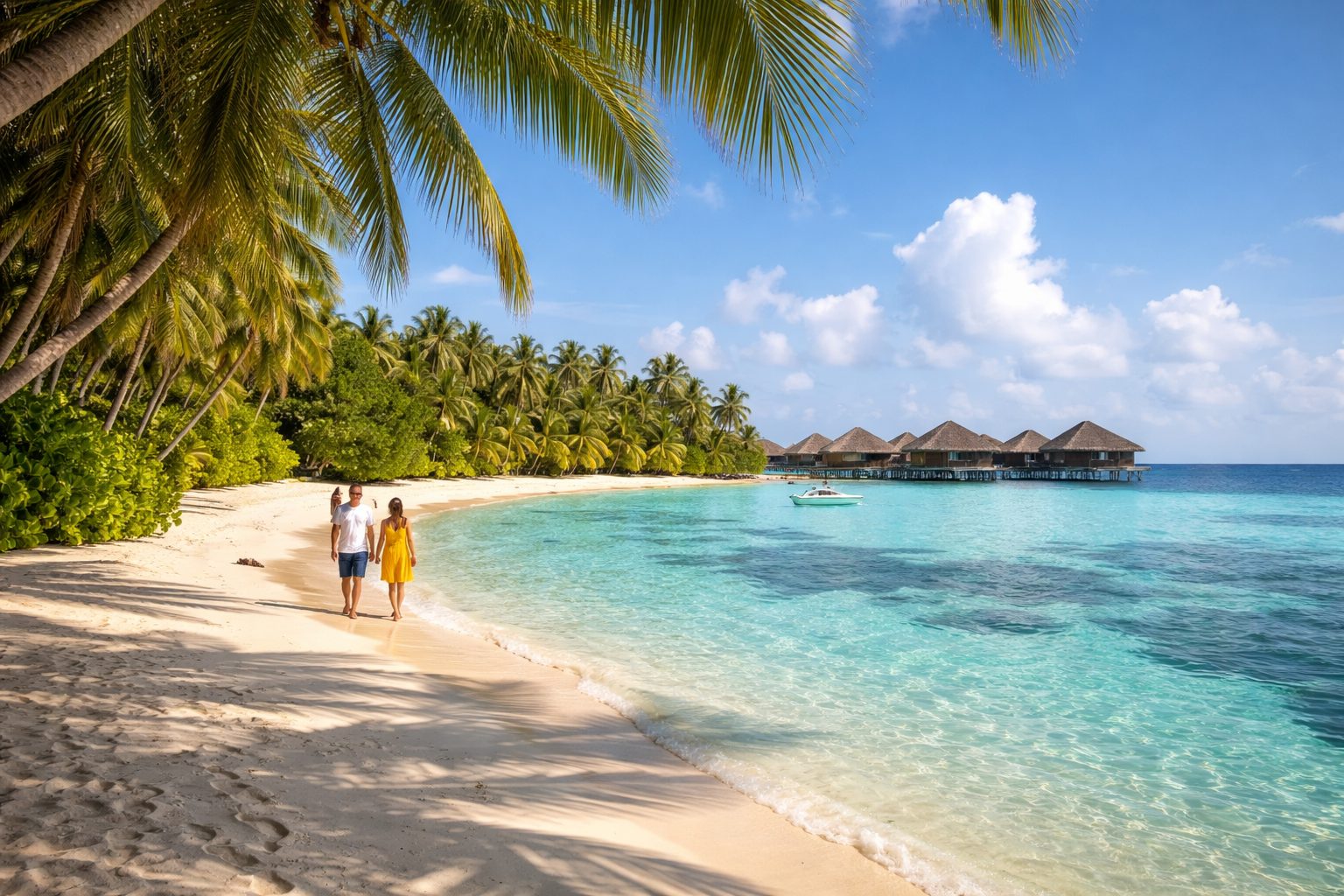
The Maldives has a tropical monsoon climate, which means it’s warm year-round. Temperatures hover between 25°C and 32°C (77°F to 90°F) throughout the year, so you’re never going to freeze here regardless of when you visit. Humidity is consistently high, usually sitting somewhere between 70% and 90%, which can feel intense if you’re not used to it.
What really defines the Maldivian climate isn’t temperature swings but rainfall and wind patterns. The northeast monsoon brings dry, calm conditions, while the southwest monsoon delivers rain, stronger winds, and rougher seas. Both seasons have their appeal depending on what you’re after.
The water temperature stays remarkably stable, ranging from around 26°C to 30°C (79°F to 86°F). This makes it comfortable for swimming and snorkeling all year long, though visibility underwater does shift with the seasons.
Seasons in the Maldives
The Maldives essentially has two seasons: the dry season and the wet season. These align with the two monsoons.
- Dry season (northeast monsoon): Roughly November through April. This is when the skies are clearest, seas are calmest, and most visitors choose to travel.
- Wet season (southwest monsoon): Roughly May through October. Rain is more frequent, winds pick up, and underwater visibility can drop in some areas.
But here’s something most travel guides don’t tell you clearly enough: the wet season in the Maldives is nothing like a rainy season in Southeast Asia. You’re not going to be trapped inside for days. Rain usually arrives in short, intense bursts, and then the sun reappears. It’s still absolutely a viable time to visit.
Best Time to Visit Maldives
Peak Tourist Season
The best time to visit Maldives for most people is between November and April. This window aligns with the dry northeast monsoon, and it’s when the islands are at their most picturesque. Visibility underwater is often excellent, reaching 30 to 40 meters in many dive sites. Winds are light, seas are calm, and you can enjoy long stretches of sunshine each day.
December through February is particularly popular. This period coincides with European and North American winter holidays, so resorts fill up quickly. If you’re planning to go during Christmas, New Year’s, or Valentine’s Day, expect premium pricing and full occupancy at the better properties. Booking six to twelve months in advance for peak holiday dates is not an exaggeration.
March and April are also excellent months. The weather remains good, but prices begin to soften slightly after the peak holiday rush. For couples on a honeymoon or travelers who want great conditions without the highest rates, late March and April are genuinely sweet spots.
Off-Peak Season
The off-peak season runs from May through October, and it deserves a more honest assessment than it usually gets. Yes, the southwest monsoon brings more rain and occasional rough conditions. But this season also has real advantages.
- Accommodation rates drop significantly, sometimes by 30% to 50% compared to peak season pricing.
- Resorts are less crowded, which makes the whole experience feel more private.
- Surf season kicks in, attracting wave riders from around the world.
- Manta rays are more commonly spotted during May to November in certain atolls.
- June and July still see plenty of sunny days, especially in the northern atolls.
The worst of the wet season tends to concentrate in June through August, with May and October acting as transitional months. If budget is a major consideration, traveling in May, early June, or October can give you noticeably better value while still offering reasonable weather.
Weather Patterns Throughout the Year
Monthly Weather Breakdown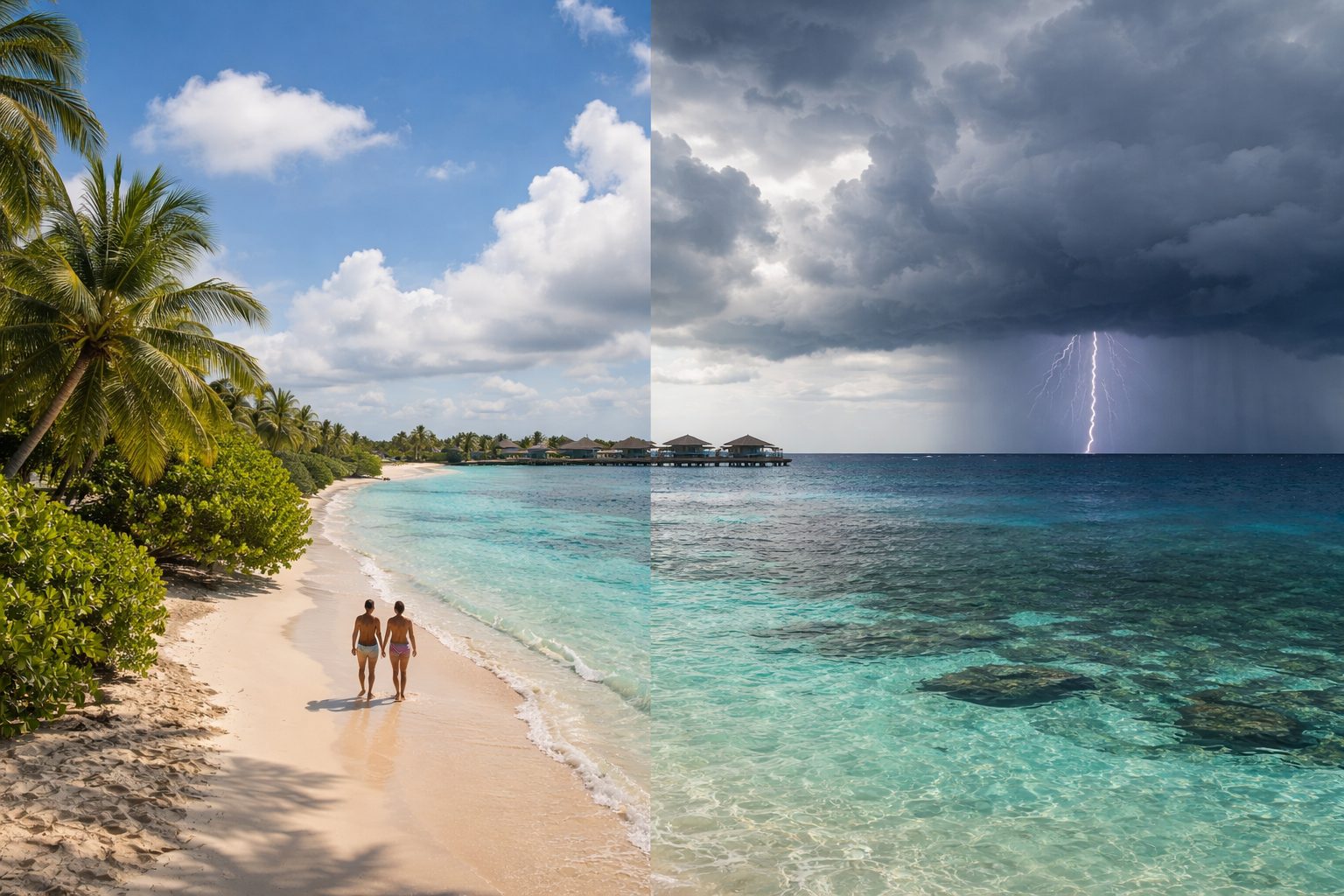
Breaking the year down month by month gives a clearer picture of what to expect when deciding on the best time to visit Maldives.
| Month | Weather | Rain Level | Crowds | Price Level |
|---|---|---|---|---|
| January | Sunny, calm seas | Low | High | High |
| February | Sunny, calm seas | Low | High | High |
| March | Warm, mostly sunny | Low-Medium | Medium-High | Medium-High |
| April | Warm, some clouds | Medium | Medium | Medium |
| May | Transition, some rain | Medium-High | Low | Low-Medium |
| June | Wet season begins | High | Low | Low |
| July | Wetter, windier | High | Low | Low |
| August | Often rainy | High | Low | Low |
| September | Still wet | High | Low | Low |
| October | Transition, improving | Medium | Low-Medium | Low-Medium |
| November | Drying out, cleaner seas | Low-Medium | Medium | Medium |
| December | Sunny, dry | Low | Very High | Very High |
January and February stand out as the most reliably beautiful months. December is equally stunning but considerably more expensive and busy. November marks a turning point when conditions improve noticeably.
Rainfall and Sunshine Hours
The Maldives receives around 1,800 to 2,000 millimeters of rainfall annually. Most of that falls between May and October. During the dry season, monthly rainfall might be as low as 30 to 50 millimeters. During peak wet months, that can jump to 200 millimeters or more.
Sunshine hours follow the inverse pattern. In January and February, you can expect eight to ten hours of sunshine daily. By July and August, that drops to around five to six hours, though you’ll still see sunny periods between rain showers. It’s rarely overcast all day, even in the wettest months.
One thing worth noting: rainfall distribution varies across the atolls. Northern atolls tend to receive slightly less rain during the wet season than the south. So if you’re visiting during May through October, consider staying in the northern part of the archipelago if weather is a concern.
Best Time for Different Activities
Scuba Diving and Snorkeling
The Maldives is one of the world’s top diving destinations, and choosing the right time to dive here really depends on what you want to see.
For clear water and high visibility, the dry season from November to April is the best time to visit Maldives for diving. Visibility regularly exceeds 25 to 30 meters, making it ideal for seeing reef structures, sharks, turtles, and colorful coral gardens.
But here’s where it gets interesting. The wet season, particularly May to October, actually brings better conditions for certain marine encounters:
- Manta rays: These magnificent creatures are most reliably spotted from May through November in many atolls. The southwest monsoon pushes plankton blooms that mantas feed on, concentrating them in specific cleaning stations.
- Whale sharks: While whale sharks can appear year-round, sightings increase from January through April in South Ari Atoll, and the eastern atolls see more activity during the wet season.
- Hammerhead sharks: The best hammerhead diving at sites like Rasdhoo Atoll happens between January and April.
If seeing mantas is your primary goal, the wet season isn’t a setback. It’s actually an advantage. Divers who come only in peak season sometimes miss the manta aggregations entirely.
Surfing Opportunities
The surfing scene in the Maldives is primarily a wet season affair. The southwest monsoon generates the swells that make the break points here so legendary. Surf season runs roughly from March through October, with the best waves typically from April to October.
The most famous breaks sit around Male Atoll and the central regions. These breaks aren’t for beginners. The reef is shallow, the breaks are powerful, and the water is warm but unforgiving. Intermediate to advanced surfers will find world-class left-handers and right-handers here that rival anything in the Indonesian archipelago.
If you’re coming specifically to surf:
- Aim for May through August for the most consistent swells.
- Book accommodation on or near a surf resort that provides direct boat access to breaks.
- Expect smaller, less consistent waves in March and April as the season builds.
- October still has decent surf as the season winds down.
Beach Relaxation and Sunbathing
For classic beach relaxation, the dry season wins without debate. Calm seas, blue skies, and minimal rain make January through March the ideal period for lounging on a sandbank, exploring house reefs, and enjoying sunset cocktails undisturbed.
That said, even during the wet season, many days are perfectly pleasant on the beach. A typical wet season day might have a few hours of rain in the late afternoon or evening, leaving the mornings and midday sunny and warm. You’d still get beach time. It’s just less predictable.
If uninterrupted sunshine is what you need, don’t risk the wet season. But if you’re flexible and don’t mind occasional rain, you can absolutely enjoy beach time even in July.
Local Events and Festivals
Cultural Festivals
Visiting the Maldives during a cultural festival adds real depth to the experience, particularly if you’re spending time in local guesthouses rather than isolated resort islands.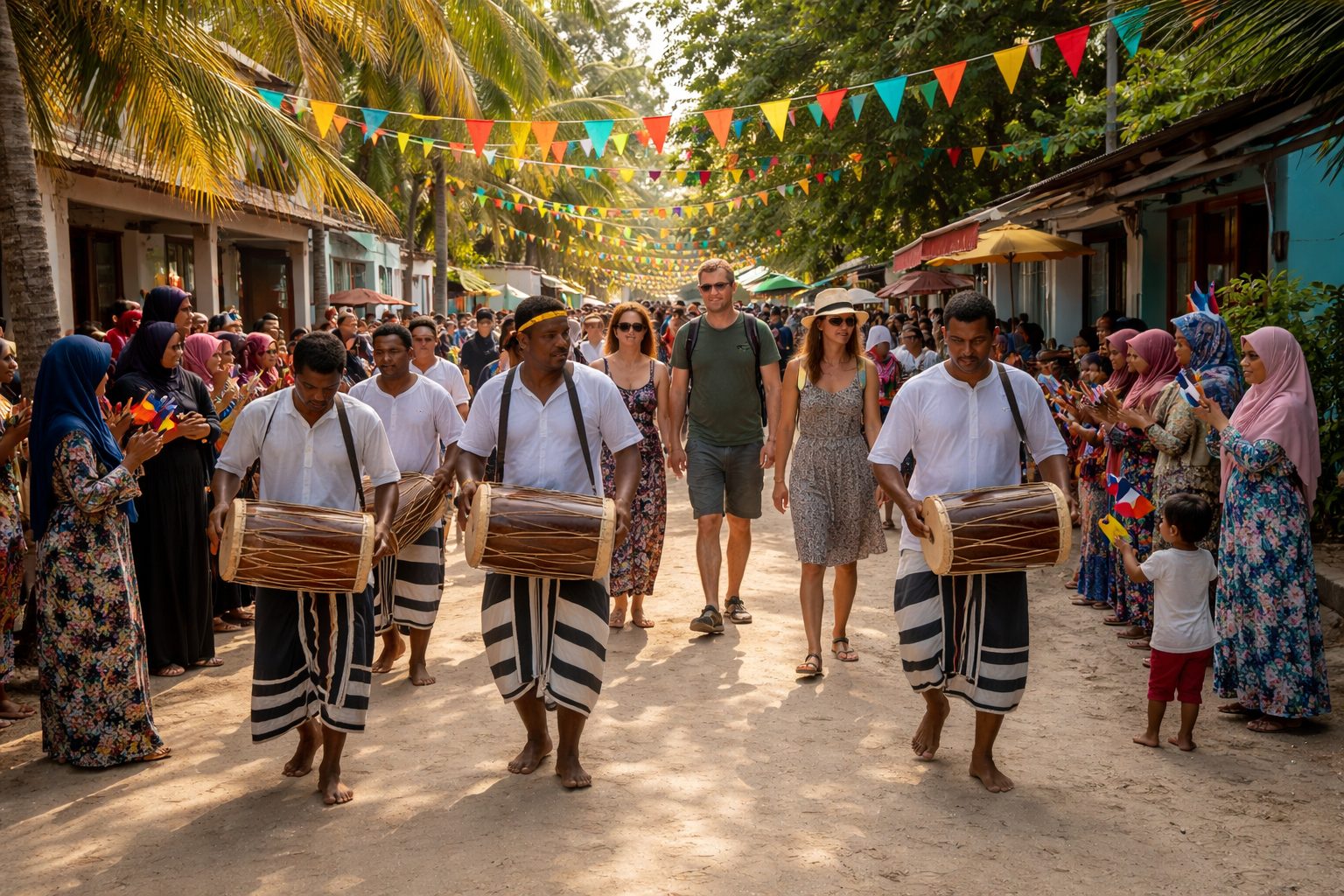
- Eid al-Fitr and Eid al-Adha: These Islamic celebrations are observed widely across the islands. Dates shift each year based on the lunar calendar, but they typically fall at different times across the calendar and involve communal prayers, feasting, and traditional performances like Bodu Beru drumming.
- Maldives Tourism Expo: Usually held during the dry season, this event highlights developments in Maldivian tourism and is more relevant if you’re in the industry.
- Coral Week: Historically organized around marine conservation, with diving events and environmental activities.
The Maldives is a Muslim-majority country, and Islamic holidays are taken seriously. During Ramadan, dining hours at local guesthouses may shift, and alcohol restrictions apply more strictly outside of resort islands. It’s worth checking the Ramadan calendar when planning if you’re staying in local communities.
National Holidays
Key national holidays that might affect your trip planning:
- Independence Day (July 26): Celebrates independence from British protection in 1965. Expect ceremonies and celebrations in Male.
- Republic Day (November 11): Marks the declaration of the republic. Another national celebration with events in the capital.
- Victory Day (November 3): Commemorates the 1988 defeat of a coup attempt.
These holidays don’t significantly impact resort experiences since resort islands operate largely independently. But if you’re traveling through Male or visiting local islands, services can be limited on national holidays.
Travel Tips for Visiting Maldives
Booking Flights and Accommodations
The Maldives has a somewhat complex travel logistics situation that surprises first-time visitors. Velana International Airport in Male is the main entry point, and from there, you reach your resort or guesthouse by speedboat, domestic flight, or seaplane, depending on location.
Seaplane transfers can only operate during daylight hours. If your international flight arrives after dark, you’ll likely need to spend a night in Male and transfer the next morning. This is common and your resort will usually arrange it, but it adds a step to planning.
For booking:
- International flights to Male are most competitive when booked four to six months in advance for peak season travel.
- Seaplane transfers book up quickly during peak season. Confirm your transfer immediately after booking your accommodation.
- Resorts and liveaboards (for diving) should be booked early for December, February, and the Easter period.
- Guesthouses on local islands are more flexible but still fill up during peak months.
Consider whether you want an all-inclusive resort, a half-board arrangement, or a local guesthouse. All-inclusive resorts offer convenience, but local guesthouses on inhabited islands give you a far more authentic Maldivian experience at a fraction of the cost.
Best Time for Deals and Discounts
If getting value for money matters to you, the shoulder seasons and wet season offer the best opportunities.
- May and October are the sweet spots. Weather is transitioning but still acceptable, prices are noticeably lower than peak season, and the islands feel less crowded.
- June through August gives the deepest discounts on accommodation. Some five-star resorts reduce rates by 40% to 60% during these months. If you don’t mind the chance of rain and are primarily there for diving mantas or surfing, this is an excellent window.
- Early November catches improving conditions before the Christmas price spike kicks in around late November.
Avoid December 20 through January 5 if you’re price-sensitive. This window commands the highest prices of the year across nearly all accommodation categories. The same applies to Valentine’s Day week in February.
Flash sales and last-minute deals do appear, but the Maldives is not a destination that rewards last-minute booking the way budget beach destinations in Thailand or Bali might. High-end resorts rarely discount at the last minute because demand is consistent. Book ahead.
Comparing Best Times for Different Preferences
Best Time for Couples vs. Families
Couples on a honeymoon or romantic holiday typically prioritize atmosphere, privacy, and beautiful conditions. For them, the best time to visit Maldives is December through February if budget allows, or March to April for a balance of quality conditions and lower costs. These months deliver the classic Maldives postcard experience with reliable sunshine and calm waters.
Families with children have different priorities. Kids need calm seas for water sports and snorkeling. School holiday schedules often push family travel toward July and August in Europe, which unfortunately coincides with the wetter part of the year. However, many families still have excellent holidays in the Maldives during July and August because resorts are quieter, prices are lower, and kids often care less about the occasional rainstorm than adults do.
If family schedules allow flexibility, consider October half-term or the Easter period, which still catch relatively good weather while avoiding the extremes of high-season pricing.
Best Time for Budget Travelers vs. Luxury Seekers
Budget travelers willing to stay in local guesthouses rather than resort islands have more flexibility. Local islands don’t fluctuate as dramatically in price across seasons, and the wet season months offer genuinely good value. You can experience the Maldives on a daily budget that’s a fraction of what a resort costs, particularly if you travel May through October.
Luxury seekers who have the budget should go in December or January for the ultimate experience. Weather is at its best, service is at its highest standard, and the islands are simply stunning during this window. The price premium is real but so is the experience.
For those who want luxury at better value, April is a compelling option. Conditions are still excellent, the Christmas and New Year crowds have left, and some resorts begin transitioning pricing to shoulder season rates.
| Traveler Type | Best Months | Why |
|---|---|---|
| Honeymooners | Jan, Feb, Mar | Best weather, romantic atmosphere |
| Budget travelers | May, June, Oct | Lowest prices, fewer crowds |
| Divers (visibility) | Nov to Apr | Clearest water, calmest seas |
| Manta ray chasers | May to Nov | Peak manta activity |
| Surfers | Apr to Oct | Southwest monsoon swells |
| Families | Oct, Easter | Good conditions, school-friendly timing |
| Luxury seekers | Dec, Jan | Peak conditions, full resort experience |
| Value luxury | Mar, Apr | Quality conditions, softening prices |
Frequently Asked Questions
What is the rainy season in the Maldives?
The rainy season runs from May through October, driven by the southwest monsoon. Rain typically falls in short bursts rather than prolonged downpours, so it rarely ruins an entire day. June through August are generally the wettest months within this period.
How does the weather affect travel plans?
Weather mainly affects seaplane operations, which need daylight and acceptable visibility to run. Rough conditions during the wet season can occasionally delay or reschedule transfers. Diving visibility is also affected, dropping in some areas during the wet season, though certain dive sites actually see better marine life encounters during this time.
Are there any specific months to avoid?
There’s no month that makes the Maldives completely unvisitable. However, June through August brings the most consistent rainfall and the choppiest seas in the southern and central atolls. If you want reliable beach weather and have no interest in surfing or manta diving, those three months are the weakest choice for a general holiday.
The Maldives rewards thoughtful planning. Knowing what you want from the trip, whether that’s pristine underwater visibility, surfable swells, budget savings, or pure luxury, shapes which part of the year works best for you. The best time to visit Maldives ultimately depends on your priorities, but the good news is that at almost any time of year, this extraordinary place delivers something worth experiencing.