
There are places in the world that stop you in your tracks the moment you arrive, and obidos portugal is exactly that kind of place. Tucked away in the Silver Coast region of central Portugal, this small medieval village sits entirely within a ring of ancient walls, looking much the same as it did centuries ago. Whitewashed houses trimmed with bright yellow and blue, cobbled streets that wind between flower-covered facades, and a castle that has watched over the town for nearly a thousand years. I’ve visited a lot of historic towns across Europe, and few have the concentrated, undiluted charm of Obidos. It manages to feel authentic rather than staged, which is a harder thing to pull off than it sounds.
This guide covers everything you need to know before visiting, from the best time to go and how to get there, to where to eat, sleep, and what to do once you’re inside the walls.
Overview of Obidos Portugal
Obidos sits about 80 kilometers north of Lisbon in the Oeste region of central Portugal. The town itself is small, with a permanent population of just a few thousand people, though the wider municipality stretches further into the surrounding countryside. The historic center is completely enclosed by a medieval wall circuit, which you can walk along for sweeping views of the terracotta rooftops and the green hills beyond.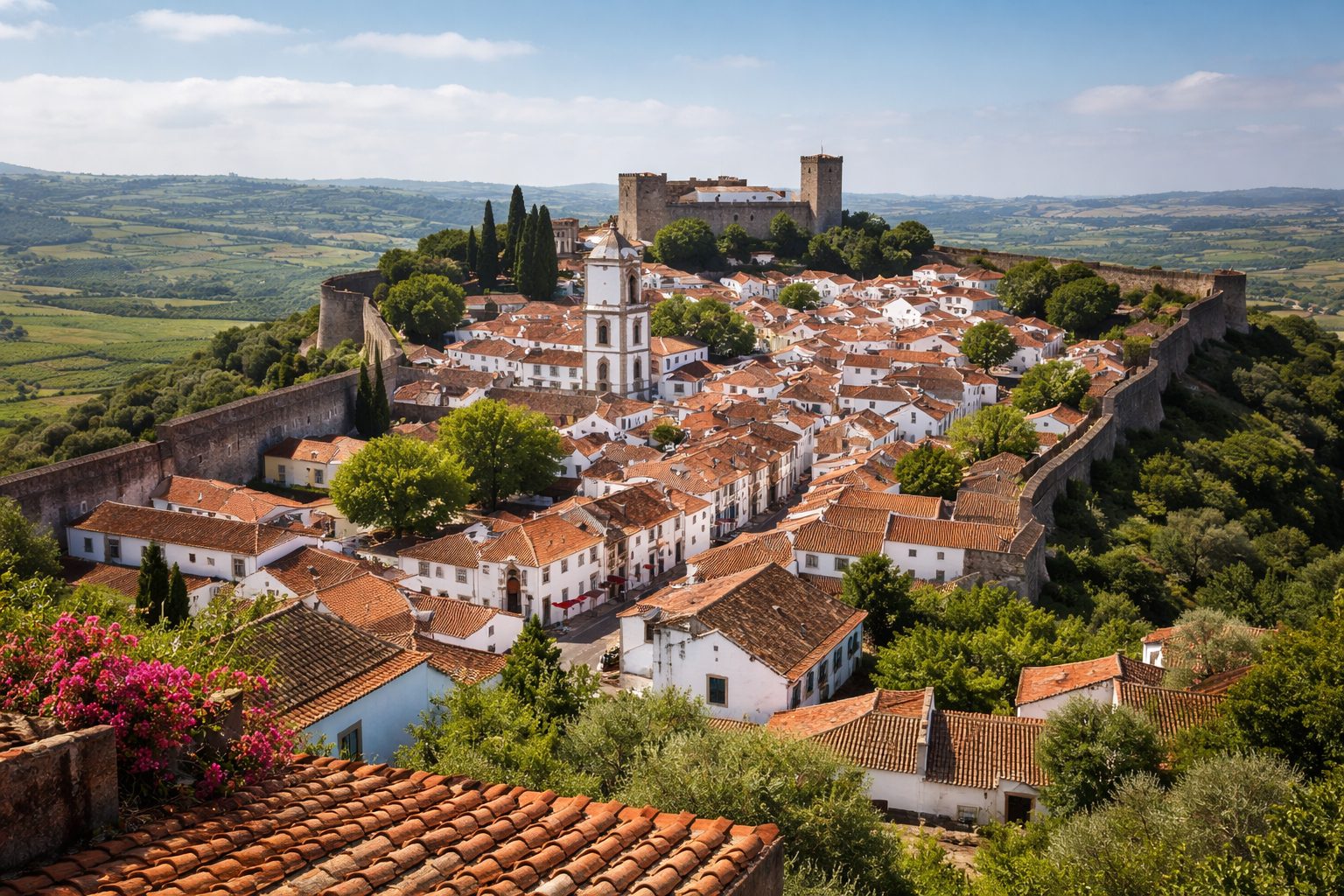
The whole place has a remarkably preserved quality. There are no ugly modern intrusions inside the walls, no chain stores, no advertising clutter. What you get instead is a dense layering of history, architecture, and daily life that makes wandering through the streets feel genuinely rewarding rather than like a theme park experience. It’s popular with tourists, especially on weekends and during summer, but even then it doesn’t feel overwhelmed.
The lagoon to the west of town adds another dimension. The Obidos Lagoon is one of the largest lagoons in Portugal, and it offers a completely different experience from the hilltop village, with watersports, birdwatching, and long stretches of Atlantic beach nearby.
History of Obidos Portugal
The history of obidos portugal stretches back well before the Moors arrived in the Iberian Peninsula. Archaeological evidence suggests the site was occupied during the Neolithic period, and it later became a Roman settlement known as Eburobrittium. The distinctive hilltop position was always strategically valuable, making it a natural choice for fortification through successive waves of occupation.
The Moors controlled Obidos for several centuries before Portuguese King Afonso Henriques reconquered it in 1148, the same campaign that secured Lisbon for the nascent Portuguese kingdom. The castle and walls were substantially rebuilt and expanded over the following centuries, and the town became a prosperous agricultural and administrative center within the kingdom.
One of the most enduring traditions associated with Obidos comes from 1282, when King Dinis gave the town as a wedding gift to his queen, Isabel of Aragon. The tradition held for several centuries, with successive queens of Portugal receiving Obidos as a gift upon marriage. This royal connection helped keep the town well maintained and relatively prosperous through the medieval period.
The town’s fortunes declined somewhat after Portuguese attention shifted to the maritime empire and major Atlantic ports. Obidos became a backwater in some respects, which paradoxically preserved much of its medieval character. The walls were never torn down to make way for expansion, the streets were never widened for modern traffic, and the castle was eventually converted into one of Portugal’s most unusual pousadas rather than being left to ruin.
Top Attractions in Obidos Portugal
The main draw of obidos portugal is the town itself, but certain landmarks deserve specific attention. Spend at least half a day here and you’ll naturally move between most of them, but knowing what you’re looking at and why it matters makes the experience considerably richer.
Obidos Castle
The castle at Obidos is one of the best preserved in Portugal. Construction began in earnest after the Reconquista, with major additions made during the reign of King Dinis in the late 13th and early 14th centuries. The imposing keep and the connecting towers still stand intact, and the whole structure has been carefully restored without losing its austere medieval character.
What makes the castle particularly special is how it’s used. Since the 1950s, it has functioned as a pousada, a state-run hotel occupying historic buildings. This means you can actually stay inside the castle walls and wake up in rooms that have been part of the structure for centuries. Even if you’re not staying there, the exterior and courtyard are worth exploring closely. The stonework is exceptional, and the towers offer excellent vantage points over the town and the surrounding plains.
The Walls of Obidos
Walking the walls of Obidos is the single experience I’d recommend to anyone visiting. The complete circuit stretches for about 1.5 kilometers and takes roughly 30 to 45 minutes to walk without stops, though you’ll almost certainly want to stop frequently for photographs and to orient yourself. The walls vary in height and condition, with some sections running at a considerable elevation above the surrounding streets.
It’s worth being aware that parts of the wall walk are genuinely narrow and exposed, with no guardrails in places. It’s not particularly dangerous if you’re careful and sensible, but it’s not ideal for people with a strong fear of heights or for very young children. Wear shoes with decent grip, particularly after rain when the stones become slippery. The views in every direction are worth the effort.
Church of Santa Maria
The Igreja de Santa Maria sits on the main square inside the walls and is one of the most striking interiors in the region. The interior walls are covered almost entirely in blue and white azulejo tilework from the 17th century, a form of Portuguese decorative ceramic painting that’s found throughout the country but rarely displayed quite so dramatically as here.
The church has an interesting historical footnote beyond its architecture. It was here that the ten-year-old King Alfonso V of Portugal married his eight-year-old cousin Isabel in 1444, a royal occasion that put Obidos briefly at the center of Portuguese court life. The church also contains a painting attributed to Josefa de Obidos, a remarkable 17th-century painter who was born in Seville but grew up and worked in Obidos, becoming one of the most accomplished artists of the Portuguese Baroque period.
Livraria de Santiago
The Livraria de Santiago is one of the most unusual bookshops I’ve encountered anywhere. It occupies a converted medieval church, the Igreja de Santiago, and uses the original stone structure as the backdrop for a genuinely impressive collection of books, particularly in the fields of history, art, and literature. The combination of vaulted ceilings, stone arches, and floor-to-ceiling bookshelves is quietly spectacular.
This bookshop became part of the Obidos Literary Village project, which established the town as Portugal’s first official literary village. The project has since expanded to include other book-related businesses and cultural programming throughout the year. Even if you’re not a devoted reader, the space itself is worth visiting.
The Obidos Lagoon
About five kilometers west of the walled town, the Obidos Lagoon is a large coastal lagoon formed where freshwater from several rivers meets the Atlantic. It’s one of the most important coastal wetland habitats in Portugal, supporting a remarkable variety of birdlife including flamingos, herons, egrets, and numerous species of waders. The lagoon is framed by low hills and dunes, and the light on the water in the late afternoon is genuinely beautiful.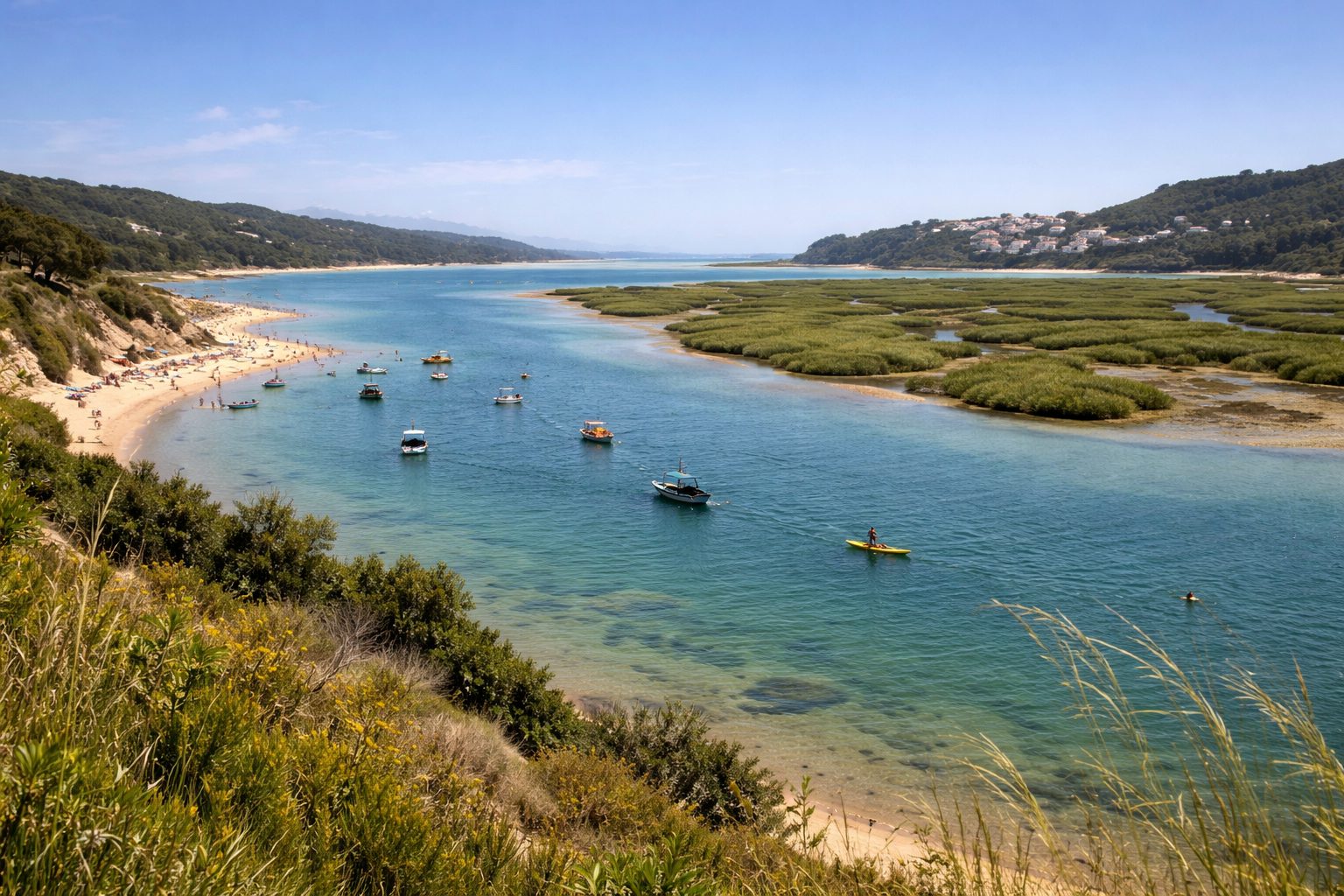
The lagoon is also used for watersports, particularly windsurfing and kitesurfing, which benefit from the consistent Atlantic winds. There are several small beach communities around the lagoon’s perimeter, and in summer the Atlantic beaches just beyond the lagoon entrance offer good swimming. It’s a complete contrast to the medieval atmosphere of the town and a good way to extend a visit.
Best Time to Visit Obidos Portugal
The best time to visit is broadly from April through June and from September through October. Spring brings mild temperatures, green hillsides, and manageable crowds. The light is clear, the flowers are out on the house facades, and the accommodation and restaurants are operating at full capacity without the summer press. Early autumn has the same advantages, with the added warmth of the summer sun but considerably fewer visitors.
July and August are busy. Obidos is a compact space and the peak summer crowds can make the main street feel genuinely congested, particularly on weekends when day-trippers arrive from Lisbon and the coast. If you’re visiting in summer, go early in the morning before the tour buses arrive, or stay overnight and explore in the evening when most day visitors have left.
Winter is quiet and often underrated. The medieval festivals have ended for the year and some smaller establishments close or reduce hours, but the town itself is still beautiful and it’s rarely cold enough to make wandering uncomfortable. Room rates drop significantly and you’ll often have the walls and streets largely to yourself.
The main festivals, particularly the Medieval Market in July and the Chocolate Festival in March, draw significant crowds but also add atmosphere and programming that’s worth experiencing if you can tolerate the busier conditions.
How to Get to Obidos Portugal
Getting to obidos portugal is straightforward from Lisbon, though a car makes the logistics considerably simpler. Here are the main options:
-
By car from Lisbon: The drive takes roughly 75 minutes via the A8 motorway. Parking is available just outside the main gate and in several areas around the walls. This is the most flexible option, particularly if you want to combine the visit with the lagoon or nearby towns.
-
By train from Lisbon: There is a narrow-gauge train line from Caldas da Rainha that connects to the main Lisbon rail network. The journey from Lisbon involves a change and takes around two hours total, but the local train is charming and the Obidos station is conveniently located near the walls.
-
By bus from Lisbon: Rodoviária do Oeste runs regular coach services from Lisbon’s Campo Grande bus terminal. Journey time is around 75 to 90 minutes depending on the service, and the buses stop near the town center.
-
Day trip from Nazare or Peniche: If you’re already based on the Silver Coast, Obidos is an easy add-on, typically 30 to 40 minutes by car from either location.
There is no practical public transport within the town itself. The walled area is pedestrianized and compact enough to cover entirely on foot, which is the only sensible way to explore it anyway.
Accommodation Options in Obidos Portugal
Hotels in Obidos Portugal
The most celebrated hotel in obidos portugal is the Pousada Castelo de Obidos, which occupies the medieval castle itself. Rooms are fitted out in a style that nods to the castle’s history without being uncomfortably theatrical, and staying here means you have access to the castle after the day visitors have left, which is a genuinely special experience. It’s not cheap, but for a special occasion or a memorable base for exploring the region, it’s hard to fault.
Several boutique hotels operate within or immediately adjacent to the walled town, typically in converted historic buildings. These tend to be small, personal places with individually decorated rooms and a level of atmosphere that chain hotels simply can’t replicate. Options range from mid-range to premium, and most are well reviewed for hospitality and breakfast quality.
Vacation Rentals in Obidos Portugal
Self-catering apartments and houses are available both inside the walls and in the surrounding countryside. Inside the walls, you’re looking at smaller spaces given the historic building constraints, but the experience of having your own base within the medieval town is appealing, especially for longer stays. Outside the walls, you can find larger rural properties with gardens and pools, which makes sense for families or groups.
Rental platforms list a reasonable selection, and booking early is advisable for peak periods, particularly around the medieval market in summer and the chocolate festival in spring.
Budget-Friendly Stays
Budget options are more limited in Obidos itself than in nearby towns. If you’re watching costs, staying in Caldas da Rainha about five kilometers north makes financial sense. It’s a functional working town without Obidos’s charm, but accommodation is significantly cheaper and it’s easy to visit Obidos for the day or evening from there.
There is a hostel option within the walls for solo travelers and backpackers looking for a social base. Rooms are basic but the location is excellent and the price point is the most accessible in town.
| Accommodation Type | Location | Price Range | Best For |
|---|---|---|---|
| Pousada (Castle Hotel) | Inside walls | High | Special occasions, history enthusiasts |
| Boutique Hotels | Inside/near walls | Mid to high | Couples, short stays |
| Vacation Rentals (in walls) | Inside walls | Mid | Longer stays, atmosphere seekers |
| Rural Rentals | Countryside | Mid | Families, groups |
| Hostel | Inside walls | Budget | Solo travelers, backpackers |
| Caldas da Rainha hotels | 5km away | Budget to mid | Cost-conscious visitors |
Food and Drink in Obidos Portugal
Traditional Dishes to Try
Portuguese cuisine in this part of the country is hearty, ingredient-led, and deeply satisfying. The Oeste region is known for its seafood, its vegetables, and its wine, and Obidos restaurants draw on all three. Some dishes worth seeking out: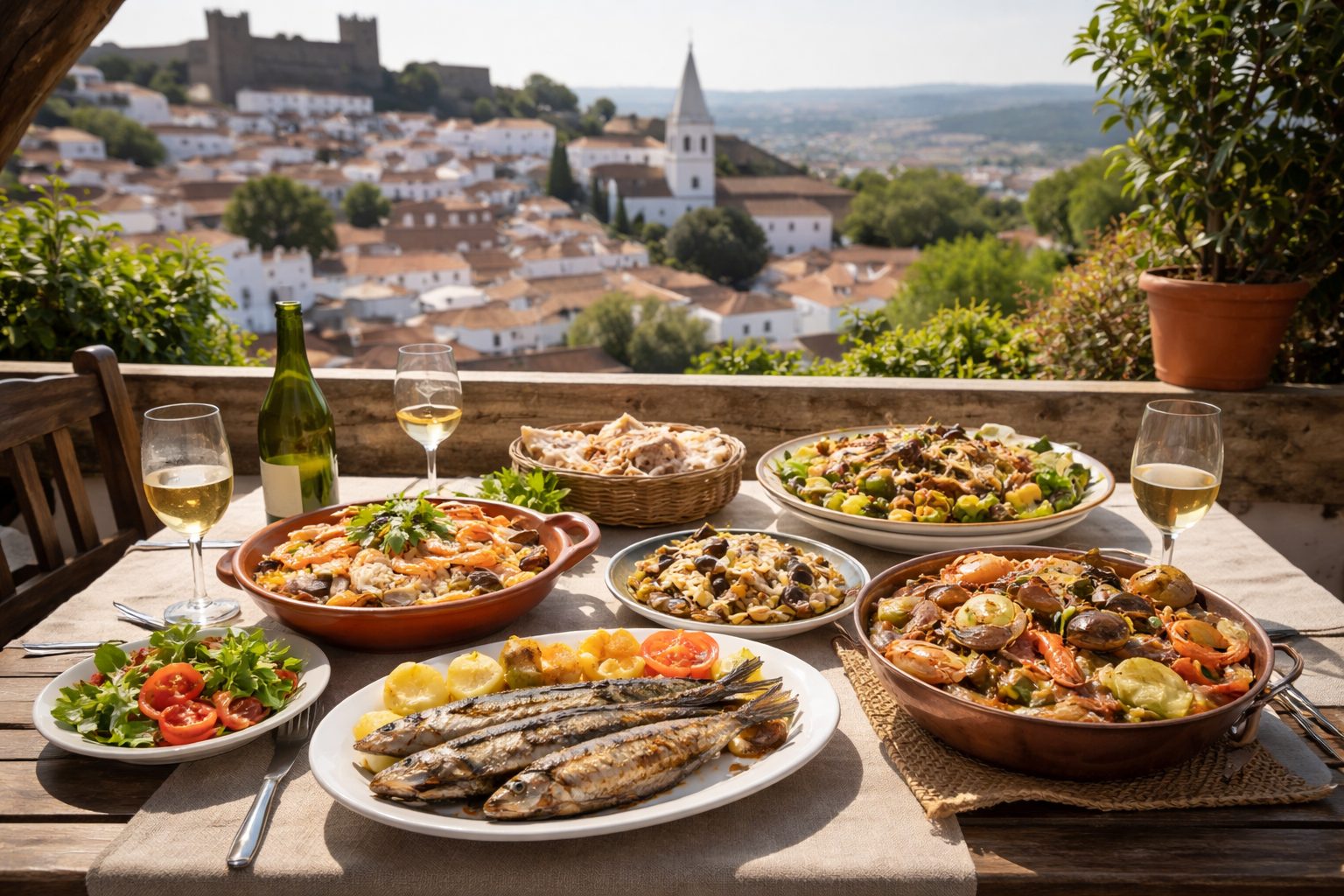
- Caldeirada: a fish stew made with whatever was caught that day, layered with potatoes, tomatoes, and onions in the traditional manner
- Bacalhau in various forms: salt cod prepared in a dozen different ways, from baked with cream and potato to grilled simply with olive oil and garlic
- Frango assado: roast chicken with piri piri, a Portuguese staple that rarely disappoints
- Cheeses from the surrounding region, particularly the firmer aged varieties that pair well with local wine
- Pasteis de nata: the ubiquitous Portuguese custard tart, which you’ll find everywhere and should eat often
Best Restaurants in Obidos Portugal
The main street through the walled town is lined with restaurants and cafes, and quality varies considerably. The places nearest the main gate and the most obvious tourist spots tend toward the middle of the market, adequate but rarely remarkable. Walk a few streets further in, or ask your accommodation for a recommendation, and you’ll find better options.
Look for places with handwritten menus or specials boards, which usually indicates cooking that changes with seasons and availability rather than a fixed tourist menu. Smaller spots with just a handful of tables and an evident local clientele are generally a reliable indicator of quality. Several restaurants operate out of converted historic buildings with beautiful interiors, which is worth factoring into your choice if atmosphere matters to you.
Lunch is generally the better value meal in Portugal, with most restaurants offering a prato do dia (dish of the day) that includes bread, a drink, and sometimes dessert at a fixed price well below what the same food would cost from the evening menu.
Local Wine and Ginja
The Oeste wine region surrounding Obidos produces good wine that’s often overshadowed by more famous Portuguese appellations like Douro and Alentejo. The local whites, made primarily from Arinto and Fernao Pires grapes, are crisp and mineral-driven with good acidity. They pair extremely well with the local seafood. There are also solid reds and increasingly impressive sparkling wines being made in the region.
But the drink most associated with obidos portugal is ginja. This is a sour cherry liqueur, deeply red and intensely flavored, served cold in a small glass, often carved from chocolate. Sipping ginja from a chocolate cup is one of those tourist-oriented experiences that actually delivers on its promise. The combination of bittersweet chocolate and the tart, slightly sweet liqueur is genuinely delicious. You’ll find it sold at small shops along the main street and it makes an excellent souvenir if you can get it home intact.
Cultural Events and Festivals in Obidos Portugal
Medieval Market
The Mercado Medieval de Obidos takes place for roughly two weeks in July and transforms the town into an immersive recreation of medieval life. The walls and streets are filled with costumed characters, artisan traders selling handcrafted goods, food stalls serving period-inspired dishes, and theatrical performances ranging from jousting to juggling and falconry. It’s one of the largest and most professionally staged medieval events in Portugal, drawing visitors from across the country and abroad.
The market runs into the evening, which is when the torch-lit atmosphere becomes genuinely spectacular. If you can visit on a weekday rather than a weekend, you’ll deal with considerably lighter crowds. Book accommodation months in advance if you’re planning to be there during the market, as rooms fill up quickly.
Chocolate Festival
The Obidos Chocolate Festival happens in late February or March and bills itself as one of the best chocolate festivals in the world, a claim it largely justifies. The event fills the walled town with chocolatiers, confectioners, and pastry makers from Portugal and internationally, and the installations, sculptures, and tastings that accompany the commercial stands give it a cultural dimension beyond a simple market.
It’s a particularly good time to visit with children, who tend to find the combination of medieval architecture and unlimited chocolate samples reliably thrilling. The festival runs for about two weeks and attracts significant crowds, particularly on weekends.
Literary Festival
As Portugal’s first designated literary village, Obidos hosts literary events throughout the year, with a concentrated festival program typically in autumn. The events range from book launches and readings to workshops and conversations with authors, and they make good use of the Livraria de Santiago and other venues within the walls.
The literary programming draws a different crowd than the medieval and chocolate festivals, generally quieter and more locally focused, which can be a pleasant contrast. It’s worth checking the schedule if you’re a reader or if you’re looking for a culturally engaged reason to visit outside the peak summer season.
Activities to Enjoy in Obidos Portugal
Walking Tours of Obidos
The most rewarding way to spend time in the walled town is simply to walk. The main street, Rua Direita, runs from the main gate to the castle and is the obvious route through, but the real interest lies in the side streets and corners that most visitors miss. Wander off the main drag and you’ll find quiet squares, unexpected viewpoints, and houses festooned with flowers that are far more photogenic than the busiest spots.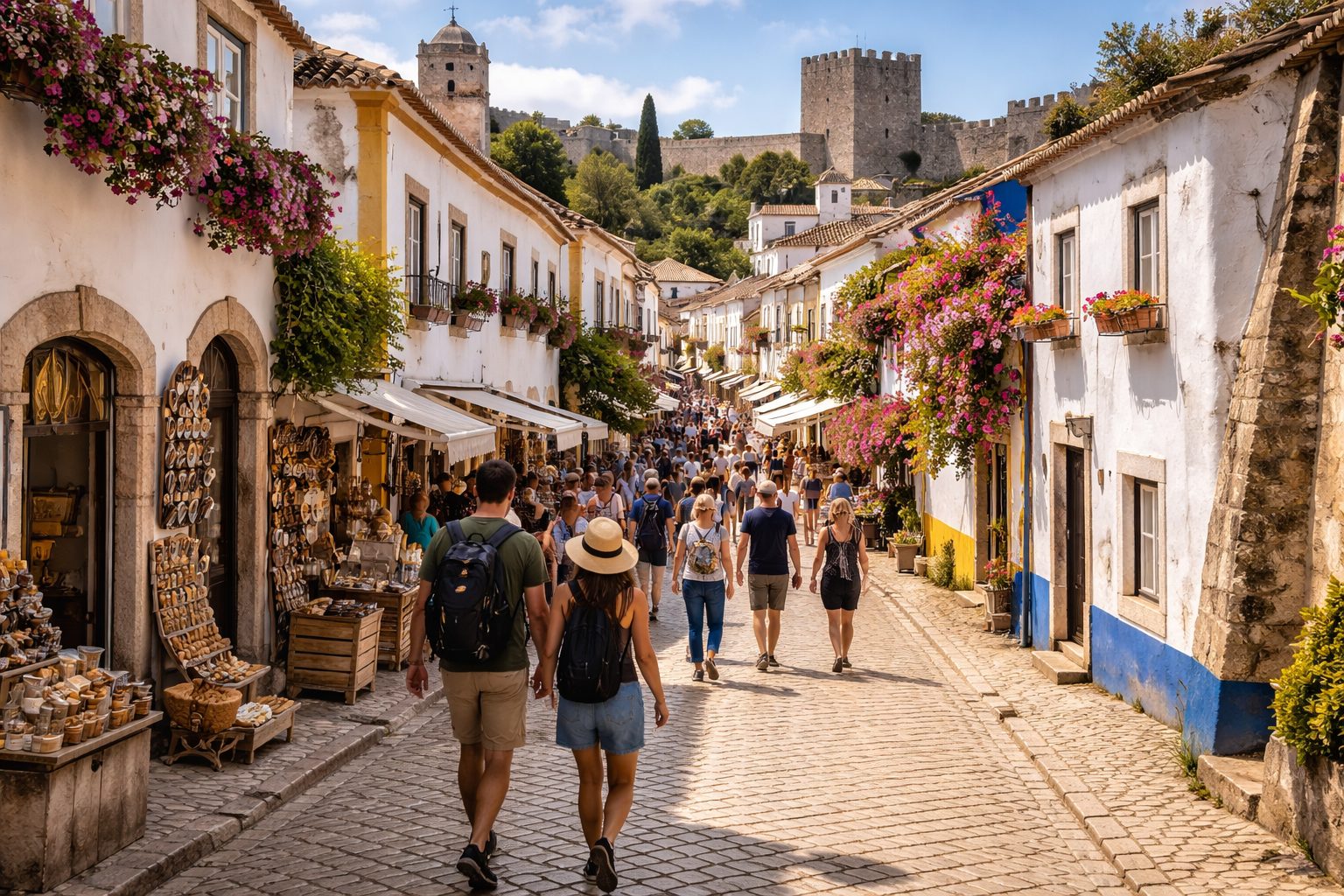
Guided walking tours are available and add genuine value if you want historical context rather than just visual impression. Local guides with real knowledge of the town’s layers of history can make what you’re looking at come alive in a way that independent wandering doesn’t always achieve. Tours typically last one to two hours and can be arranged through the tourist office near the main gate.
Wine Tasting Tours
The Oeste wine region has a growing number of quintas and adega operations offering tastings and tours. Several operators based in or near Obidos organize half-day and full-day wine routes through the local vineyards, which typically include the chance to walk among the vines, see the production facilities, and taste a range of wines with commentary from the producers.
This is a good way to understand the local wine culture beyond what you’ll encounter in restaurants, and the countryside between the vineyards is genuinely beautiful, especially in spring and early autumn. Some tours combine wine with cheese and charcuterie tastings from local producers, which makes for a substantial and enjoyable afternoon.
Outdoor Adventures around Obidos
The area around obidos portugal is well suited to outdoor activity, and it’s easy to combine a visit to the town with something more active:
- Cycling: There are marked cycling routes through the surrounding countryside and along the lagoon, and bike rental is available in town and at several lagoon-side operators.
- Kayaking and paddleboarding: The Obidos Lagoon is ideal for both, with calm sheltered water and good conditions for beginners as well as experienced paddlers.
- Kitesurfing and windsurfing: The lagoon entrance and the nearby Atlantic beaches are well regarded as learning and intermediate kitesurfing spots, with consistent Atlantic winds and professional schools operating in the area.
- Birdwatching: The lagoon supports flamingos and dozens of other species year-round, with spring and autumn migration periods being particularly rich. Several hides are positioned around the water.
- Horse riding: There are riding centers in the countryside around Obidos offering trail rides through the hills and agricultural land surrounding the town.
Day Trips from Obidos Portugal
Nazare
Nazare is about 40 minutes north by car and offers a complete contrast to Obidos. Where Obidos is inland, enclosed, and medieval, Nazare is a sprawling Atlantic fishing town with a dramatic beach that stretches for kilometers. It’s also famous globally for the extraordinary big waves that form at Praia do Norte during winter swells, which have produced several world record surf rides. Even outside the surf season, the cliffs above the town offer spectacular ocean views, and the older quarter of Sitio on the clifftop retains genuine character.
Peniche
Peniche is a working port town on a rocky promontory about 35 minutes west of Obidos. It’s primarily known as the departure point for boat trips to the Berlengas Islands, a nature reserve archipelago about 12 kilometers offshore with remarkable clear water, sea caves, and a small 17th-century fortress. Peniche itself has a historic fortress that served as a political prison during the Salazar dictatorship and now houses a museum, and the fish restaurants along the harbor offer some of the freshest and best-value seafood in the region.
Alcobaça
Alcobaça is roughly 30 minutes north and contains one of the most significant monuments in Portugal. The Monastery of Alcobaça was founded by King Afonso Henriques in the 12th century to fulfill a vow made before the Battle of Santarem, and it became one of the great Gothic buildings of the Iberian Peninsula. The church and cloister are extraordinary, and the monastery holds the tombs of Pedro I and Ines de Castro, carved with extraordinary detail and considered masterpieces of Portuguese Gothic sculpture. It’s a UNESCO World Heritage Site and absolutely worth the short detour.
Practical Tips for Visiting Obidos Portugal
Transportation within Obidos
The walled town is pedestrianized and small enough that everything is within walking distance. There is no need for any form of transport inside the walls, and indeed no form of transport would be practical on the narrow cobbled streets. The only exception is the small tourist train that runs between the main gate and the castle, which is aimed primarily at visitors who find the walk difficult.
Outside the walls, if you’re exploring the lagoon or the surrounding countryside, a car is the most practical option. Taxis are available but not always immediately on hand, and ridesharing apps have limited coverage in this part of the country.
Safety Tips
Obidos is a very safe destination. Petty theft is the only realistic concern, and it’s less of an issue here than in Lisbon or Porto given the smaller crowds and more contained environment. Standard precautions apply: keep bags close in crowded festival conditions, don’t leave valuables visible in rental cars, and be aware of your surroundings in the car parks outside the walls, particularly late at night.
The wall walk itself deserves a mention under safety. Some sections have limited or no barriers and a fall from the upper parts of the wall could be serious. Take care in wet or damp conditions, supervise children closely on the walls, and don’t attempt the walk in strong winds.
Language and Currency
Portugal uses the euro. Cash is widely accepted in smaller establishments, and card payments work everywhere in the town. It’s worth having some cash for smaller purchases, market stalls, and tips.
English is spoken to a reasonable standard in most tourist-facing establishments in Obidos. Some of the older or more locally oriented restaurants and shops will be primarily Portuguese-speaking, but basic transactions are manageable with patience and goodwill on both sides. Learning a few words of Portuguese, even just “obrigado” (thank you) and “por favor” (please), is always appreciated and smooths interactions considerably.
The country code for Portugal is +351. Mobile coverage is good throughout the town and surrounding area on all major networks, and wifi is widely available in hotels, cafes, and restaurants.
Frequently Asked Questions about Obidos Portugal
What is the best way to explore Obidos?
On foot, without question. The walled town is compact and pedestrianized, and the walls, side streets, and hidden corners reward slow, directionless walking more than any planned route. Give yourself at least two to three hours inside the walls.
Is Obidos Portugal family-friendly?
Yes, it’s a good destination for families. Children tend to respond well to the castle and walls, and the chocolate festival in spring is particularly popular with younger visitors. The town is relatively small and easy to navigate, though parents should supervise children carefully on the wall walk.
Can you visit Obidos in one day?
A day trip from Lisbon is entirely feasible and very popular. You can see the main attractions, walk the walls, eat well, and get a genuine feel for the town in a single day. Staying overnight adds the dimension of having the town to yourself in the early morning and evening, which is worth doing if your schedule allows.
What are the must-see places in Obidos?
The wall walk, the castle, the Church of Santa Maria with its azulejo interior, and the Livraria de Santiago are the four experiences I’d prioritize. Beyond those, the quality of the wandering through the streets themselves is as much a draw as any specific monument, and the Obidos Lagoon is worth the short drive if you have time.
Obidos is one of those places that looks almost too good in photographs and somehow still exceeds expectations when you actually arrive. The combination of intact medieval architecture, a human-sized scale, genuinely interesting cultural programming, and good food and drink in a beautiful landscape makes it one of the most rewarding day trips or short breaks available from Lisbon. If you haven’t been, it belongs on your list for Portugal.