
India is a country that carries centuries of history in its bones, and nowhere is that more apparent than in its museums. From ancient artifacts to colonial-era relics, from modern art to royal treasures, the top 10 museum in india offer an extraordinary range of experiences. I’ve spent time exploring many of these institutions personally, and what strikes me each time is how much they capture about this country’s layered identity. Whether you’re a history buff, an art lover, or just someone curious about where India comes from, these museums are worth every hour you spend inside them.
Introduction to Museums in India
India has more than a thousand museums spread across the country, ranging from small regional collections to sprawling national institutions. Many of them hold collections that date back hundreds of years, acquired through royal patronage, colonial-era excavation, or careful preservation by communities and scholars.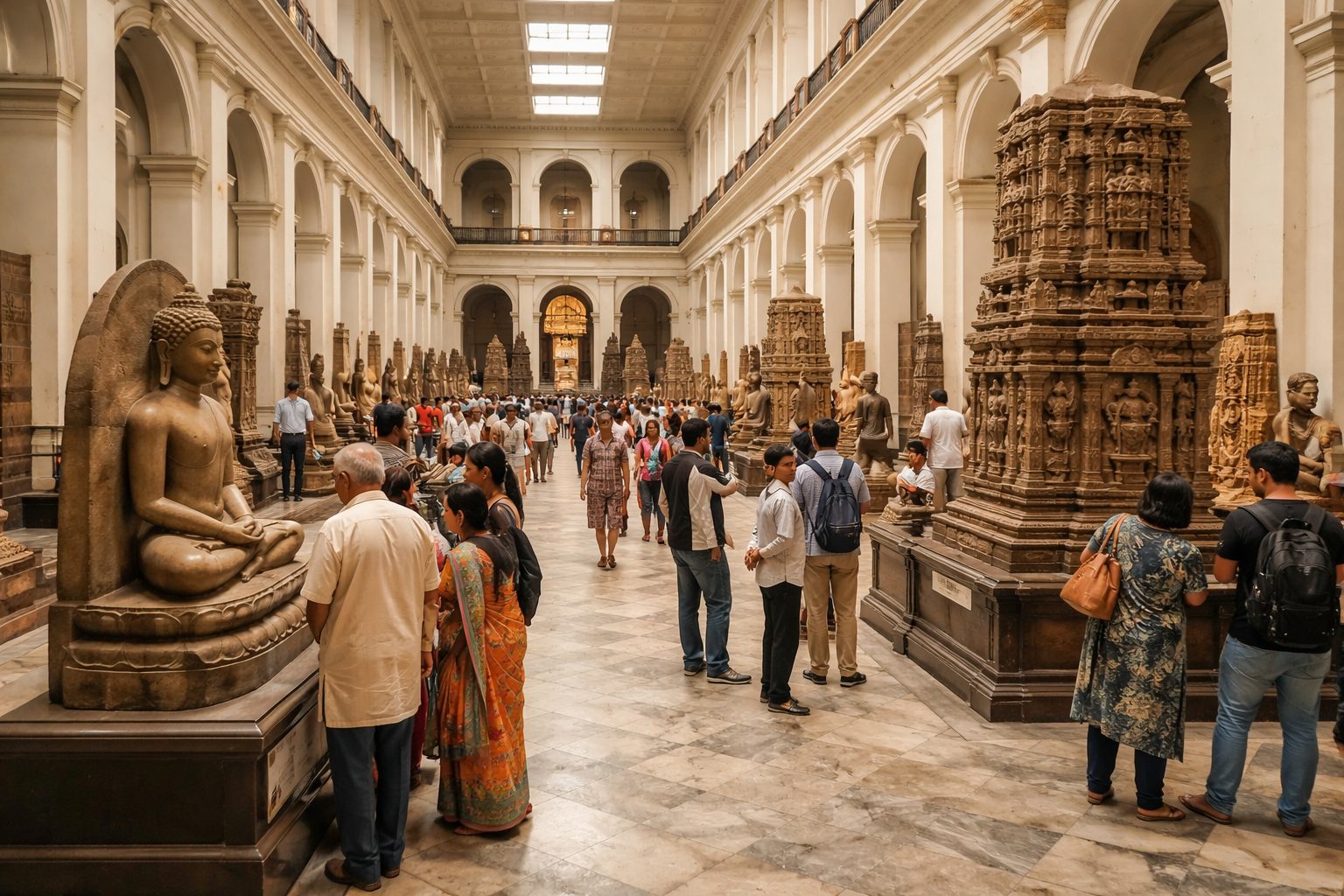
The landscape of museums in India is genuinely diverse. You’ll find everything from natural history to contemporary fine art, from textile traditions to weapons, coins, manuscripts, and religious relics. Some museums sit inside heritage buildings that are themselves worth the visit. Others are purpose-built structures housing collections of global significance.
What I find most compelling is that Indian museums often reflect the specific culture and history of their region. A museum in Kerala will feel nothing like one in Rajasthan. That regional distinctiveness is one of the reasons exploring the top 10 museum in india feels like traveling through the country’s entire history in a condensed form.
Importance of Museums in Cultural Heritage
Museums are not just storage rooms for old things. They’re active spaces that connect people with identity, meaning, and history. In a country as diverse as India, that function is especially important.
For many communities, a museum is the only place where their traditions are formally documented and displayed. Tribal art, folk crafts, ancient scripts, and regional histories that don’t appear in mainstream textbooks often find a home in museum collections. This makes museums critical for preserving what might otherwise be lost.
From an educational standpoint, museums serve students, researchers, and casual visitors alike. School trips to national institutions often leave a lasting impression on children who grow up to care about their heritage. And for international visitors, a well-curated museum can offer more insight into Indian civilization than almost any other single experience.
There’s also an economic dimension. Major museums draw significant tourism, supporting local businesses and creating demand for cultural experiences. The top museums in India collectively attract millions of visitors each year, making them important contributors to heritage tourism.
Criteria for Ranking the Top Museums
When I put together this list, I didn’t just go by size or fame. I considered several factors that genuinely matter to a visitor’s experience.
The criteria I used include:
- Significance and depth of the collection
- Historical and cultural importance of the institution
- Accessibility for general visitors
- Quality of curation and exhibit presentation
- Geographic representation across India
- Visitor reviews and reputation among travelers and scholars
- Special collections or unique exhibits not found elsewhere
No list like this is perfectly objective. Someone who loves contemporary art will rank the National Gallery of Modern Art higher than someone who prefers archaeological collections. But these ten institutions represent what I believe to be the strongest combination of quality, significance, and visitor experience available anywhere in the country.
Overview of the Top 10 Museums in India
1. The Indian Museum, Kolkata
The Indian Museum in Kolkata is the oldest and largest museum in India, established in 1814. Walking through its halls feels like stepping into a different era, not just because of the artifacts but because of the building itself, which carries the weight of its own history.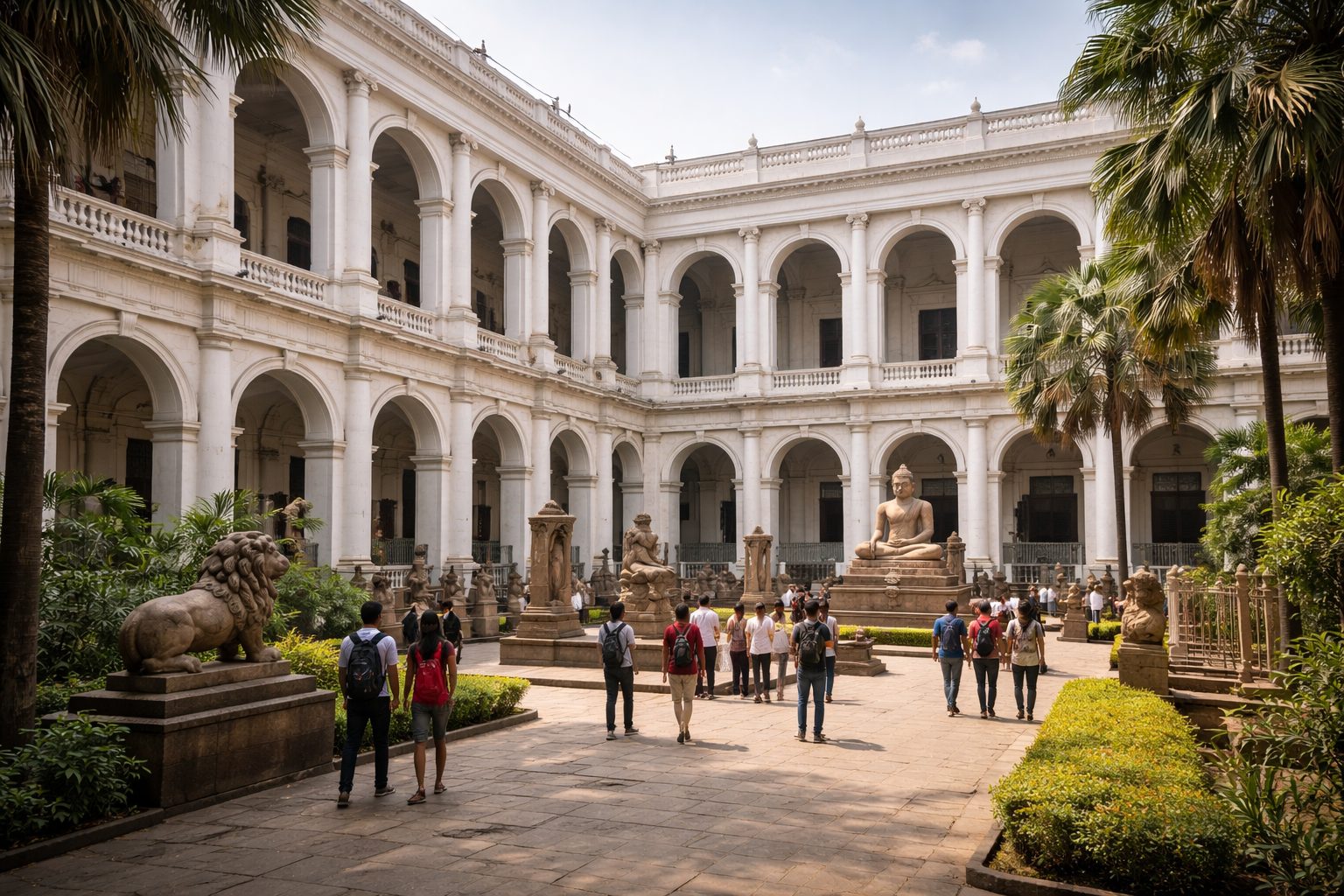
The collection spans six sections: art, archaeology, anthropology, geology, zoology, and economic botany. The archaeological wing is particularly impressive, housing pieces from the Indus Valley Civilization, rare Buddhist relics, and Egyptian mummies that somehow ended up in Kolkata. The mummies alone tend to generate a lot of attention.
What makes the Indian Museum remarkable is the sheer breadth of what it holds. A single visit rarely does it justice. Plan for at least three to four hours, and even then you’ll likely miss something worthwhile. The museum is open Tuesday through Sunday, and entry fees are modest by any standard.
2. National Museum, New Delhi
The National Museum in New Delhi is arguably the most important museum in the country from a scholarly and curatorial standpoint. It houses one of the most comprehensive collections of Indian art, history, and culture anywhere in the world, with over 200,000 objects spanning five thousand years.
The Harappan Gallery, dedicated to artifacts from the Indus Valley Civilization, is one of the highlights. So is the extensive collection of miniature paintings, Mughal-era manuscripts, and the decorative arts section. The museum also holds significant collections of weapons, textiles, and musical instruments.
I find the National Museum to be a serious place. It rewards visitors who come prepared with some background knowledge, though the exhibits are well-labeled and approachable for first-timers. If you’re only visiting one museum in Delhi, this should be it.
3. Salar Jung Museum, Hyderabad
The Salar Jung Museum in Hyderabad is one of the most fascinating museums in India, largely because of the story behind it. The entire collection was assembled by one man, Mir Yousuf Ali Khan, the third Nawab of Salar Jung, over the course of his lifetime. He traveled the world buying art, antiques, and curiosities, and what he brought back is genuinely extraordinary.
The collection includes sculptures, paintings, textiles, manuscripts, arms and armor, clocks, and decorative objects from across Europe, Asia, and the Middle East. The Veiled Rebecca, a marble sculpture by Giovanni Maria Benzoni, is one of the most-photographed pieces. The double statue of Mephistopheles and Margaretta is another crowd favorite.
What sets this museum apart is its personal origin. It feels like visiting someone’s home rather than a state institution. The curator’s individual taste is evident everywhere, and that makes it far more interesting than a collection assembled by committee.
4. Chhatrapati Shivaji Maharaj Vastu Sangrahalaya, Mumbai
Formerly known as the Prince of Wales Museum, the Chhatrapati Shivaji Maharaj Vastu Sangrahalaya in Mumbai is one of India’s premier art and history museums. The building itself is a masterpiece of Indo-Saracenic architecture, combining Hindu, Mughal, and British colonial influences into something genuinely striking.
The museum holds around 50,000 objects divided into three main sections: art, archaeology, and natural history. The Indus Valley collection is strong, as is the gallery of decorative arts that includes Jade objects, metalwork, and arms. The European painting collection contains works by Reynolds and Gainsborough, which you don’t expect to find in Mumbai.
The museum’s location in the Fort area of South Mumbai makes it easy to combine with other heritage sites nearby. The entrance courtyard alone is worth pausing in, especially in the morning light.
5. Dr. Bhau Daji Lad Museum, Mumbai
The Dr. Bhau Daji Lad Museum is the oldest museum in Mumbai, and after a major restoration completed in 2008, it’s also one of the most beautifully presented. The building is a stunning example of Victorian Italianate architecture, and the interior restoration preserved the original cast-iron columns, ornate ceiling, and mosaic floor.
The collection focuses specifically on Mumbai’s history, featuring maps, photographs, models, and artifacts that document the city’s development from a cluster of islands into the megalopolis it is today. There are detailed scale models of older structures, folk art from the region, and industrial objects that reveal how the city’s economy evolved.
This museum is smaller than most on this list, but what it does, it does with real precision. It’s a place that takes its subject seriously without being dry about it. If you care about urban history or colonial-era architecture, this is one of the most rewarding visits you can make in Mumbai.
6. Victoria Memorial, Kolkata
The Victoria Memorial is more than a museum. It’s one of the most architecturally magnificent buildings in India, a vast white marble structure built between 1906 and 1921 as a tribute to Queen Victoria. The building dominates the Kolkata skyline and sits within beautifully maintained gardens that are popular with locals and visitors alike.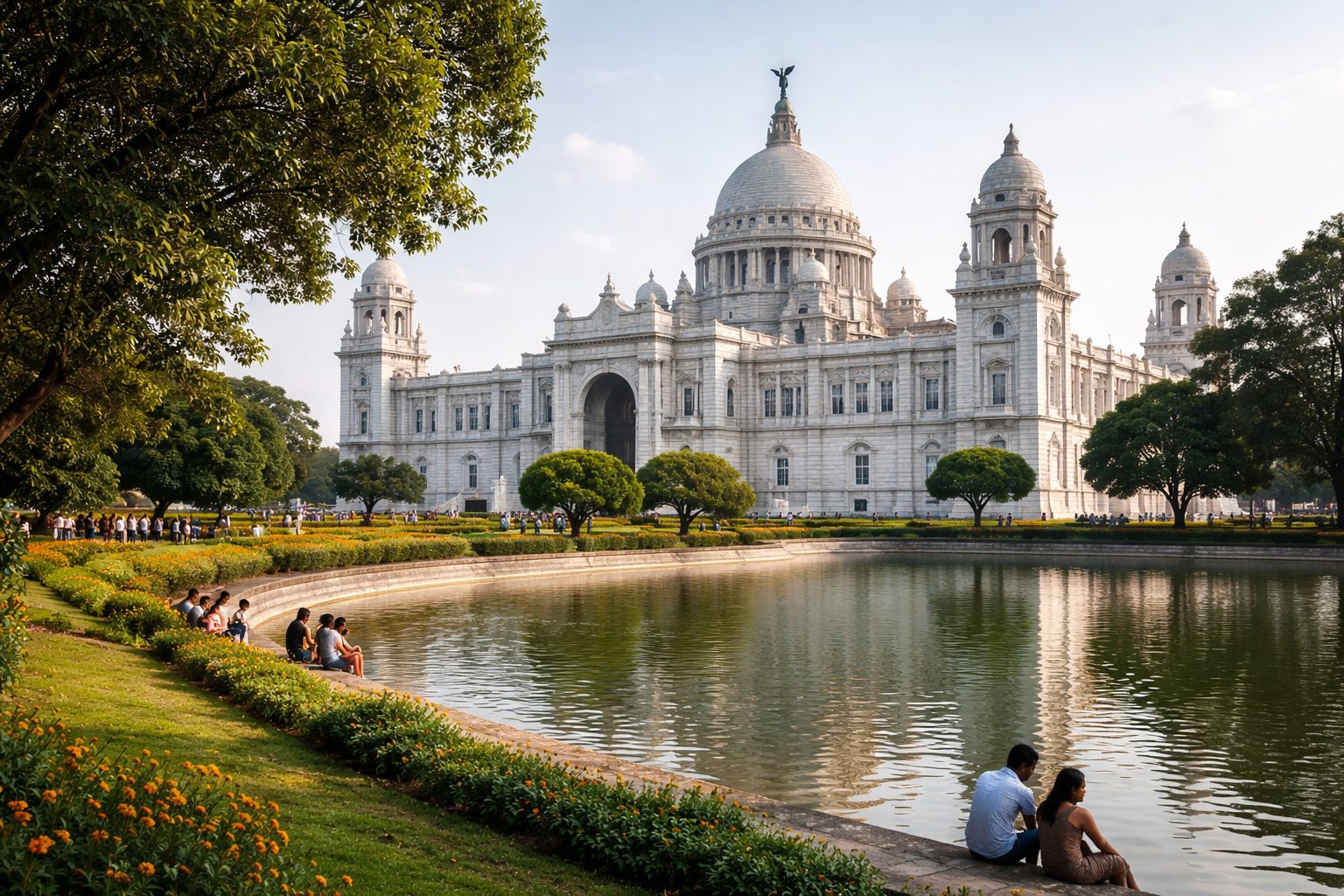
Inside, the collection focuses heavily on the colonial period in India, with portraits of British officials, maps, weapons, manuscripts, and personal items belonging to Victoria herself. There’s also a significant collection of Calcutta-related art and photography. The Royal Gallery contains some of the finest paintings from the colonial era.
The experience of visiting the Victoria Memorial is somewhat different from visiting a conventional museum. The scale of the building and the grandeur of the setting are part of the experience. I’d recommend visiting both at midday for a proper look at the collection and in the evening when the building is lit up and the gardens are full of life.
7. National Gallery of Modern Art, New Delhi
The National Gallery of Modern Art in New Delhi, often called NGMA, is the country’s foremost institution for modern and contemporary Indian art. Established in 1954, it houses over 17,000 works including paintings, sculptures, graphics, and photographs spanning roughly 150 years of Indian artistic production.
The permanent collection includes works by masters like Rabindranath Tagore, Amrita Sher-Gil, Jamini Roy, and Raja Ravi Varma, as well as significant holdings of post-independence modern art. The building, formerly the Jaipur House, adds an aristocratic quality to the experience.
NGMA regularly hosts temporary exhibitions featuring both established and emerging artists, making it worth checking the schedule before your visit. If you’re interested in how Indian art evolved through colonial encounter, independence, and modernization, there’s no better place to see that story told through the works themselves.
8. Gandhi Museum, Varanasi
The Gandhi Museum in Varanasi, also known as the Bharat Mata Mandir complex area, holds a focused collection dedicated to the life and legacy of Mahatma Gandhi. While smaller than most institutions on this list, it carries an emotional and historical weight that makes it genuinely affecting.
The collection includes photographs, personal belongings, letters, and documents from Gandhi’s life and from the broader independence movement. The way the exhibits are organized traces his philosophical development as much as his biography. It’s not just a collection of objects but an argument about what Gandhi stood for and why it still matters.
Varanasi itself adds to the experience. Gandhi had a deep connection with the city, and visiting this museum while spending time on the ghats and in the lanes of the old city gives you a fuller picture of the culture he emerged from.
9. Mysore Palace Museum, Mysuru
The Mysore Palace, officially known as Ambavilas Palace, is one of the most visited tourist destinations in India, and the museum within it is an essential part of any visit. The palace itself is an extraordinary example of Indo-Saracenic architecture, built in 1912, and it serves as both a living royal residence and a public museum.
The museum section contains an extensive collection of royal artifacts including weapons, thrones, ceremonial objects, costumes, paintings, and the famous howdah used to carry the maharaja in ceremonial processions. The golden throne, displayed during Dasara celebrations, is one of the most prized pieces.
What makes this museum distinctive is the context. You’re not just looking at royal objects in a display case. You’re in the palace where they were actually used. The scale and opulence of the surroundings make the collection feel alive in a way that purpose-built museums sometimes can’t replicate.
10. Sun Temple Museum, Konark
The Sun Temple at Konark is a UNESCO World Heritage Site, and the museum attached to it provides essential context for understanding one of the greatest architectural achievements in Indian history. Built in the 13th century by King Narasimhadeva I of the Eastern Ganga dynasty, the temple was designed as a gigantic chariot for the sun god Surya.
The Konark Museum, maintained by the Archaeological Survey of India, holds sculptures and fragments recovered from the original temple complex. Many of the intricate carvings that once adorned the exterior, including erotic sculptures, celestial beings, and mythological scenes, are preserved here after being removed for protection.
Visiting the museum alongside the temple itself gives you a far deeper understanding of what the original structure looked like and what it was trying to express. The artistry involved is genuinely breathtaking, and the museum helps translate it for visitors who might not have background in Indian temple iconography.
Comparison of the Top Museums: Features and Collections
Here’s a practical comparison of the ten museums to help you plan which ones to prioritize based on what you’re interested in:
| Museum | Location | Key Strength | Ideal For |
|---|---|---|---|
| Indian Museum | Kolkata | Breadth and age of collection | First-time visitors, history buffs |
| National Museum | New Delhi | Comprehensive Indian history | Scholars, serious visitors |
| Salar Jung Museum | Hyderabad | Unique personal collection | Art lovers, curious travelers |
| CSMVS | Mumbai | Art and archaeology | Art history fans |
| Dr. Bhau Daji Lad | Mumbai | Mumbai urban history | Architecture and city history |
| Victoria Memorial | Kolkata | Colonial-era India | History buffs, architecture lovers |
| NGMA | New Delhi | Modern Indian art | Contemporary art enthusiasts |
| Gandhi Museum | Varanasi | Independence movement | History and politics |
| Mysore Palace Museum | Mysuru | Royal artifacts in context | Culture and royalty |
| Sun Temple Museum | Konark | Temple sculpture | Architecture and religious art |
Each of these institutions offers something the others don’t. If you’re traveling across India and want to understand its top 10 museum in india circuit, I’d suggest grouping them by city and building your itinerary around museum visits combined with other local experiences.
Visitor Information: Best Times to Visit
Timing your museum visits can make a significant difference in the experience. Here’s what I’ve found from personal observation and general travel knowledge:
- Most museums in India are closed on Mondays. Always check the specific institution’s schedule before planning your visit.
- National holidays may cause closures or reduced hours. Diwali and other major festivals can affect operations.
- Summer months from April through June are extremely hot in most of India. Indoor museums become welcome refuges, but crowds can be heavy during school holidays.
- October through March is generally the best period for visiting museums across most of the country. The weather is comfortable and the light in the evenings is particularly good for outdoor structures like Victoria Memorial.
- Morning visits are typically less crowded than afternoon ones. Arriving within the first hour of opening often means shorter lines and quieter galleries.
- Photography policies vary by museum. Some allow photography without flash throughout. Others restrict it in specific galleries or require a paid camera permit.
For specific institutions, consider this:
- The National Museum in Delhi and the Indian Museum in Kolkata tend to get busy on weekends and public holidays. Weekday mornings are ideal.
- Mysore Palace gets extremely crowded during Dasara. Unless you specifically want that experience, avoid October visits.
- The Sun Temple complex at Konark is best visited in the morning before the midday heat makes outdoor movement uncomfortable.
Tips for Exploring Museums in India
Getting the most out of these institutions requires a bit of preparation. Here’s what I’d suggest:
- Research before you go. Even a basic read-up on the history related to a museum’s collection will make the exhibits far more meaningful.
- Wear comfortable shoes. These are large spaces and you will walk a lot.
- Carry water. Many museums have limited refreshment facilities, especially mid-tour.
- Hire a guide for at least part of your visit. Official guides at major institutions can provide context that no label or brochure can replicate.
- Give yourself more time than you think you need. An hour rarely does justice to any of the institutions on this list.
- Check for temporary exhibitions. Many of these museums run excellent special shows alongside their permanent collections.
- Visit the museum shop. The quality of books, reproductions, and crafts available at places like the National Museum and NGMA is genuinely good.
- Take notes or photographs of what interests you. The volume of information in these museums is hard to retain without some kind of record.
- Ask staff. Museum attendants at major institutions often know the collection well and are willing to answer questions.
- Consider a return visit. If you’re staying in a city for several days, a second visit to a major museum often reveals things you missed the first time.
Conclusion: Experience the Richness of Indian Heritage
India’s museums are among the most underrated cultural experiences in the world. Visitors who spend time in the country’s top 10 museum in india walk away with something that no temple, no street food tour, and no mountain trek can provide: a structured encounter with the full arc of Indian civilization.
What I appreciate most about this country’s museum culture is that it doesn’t try to present a single, sanitized version of history. You’ll find colonial objects sitting alongside independence-era artifacts. Royal splendor is displayed next to folk traditions. Ancient civilization is contextualized alongside modern art. That complexity is real, and the best museums handle it honestly.
Whether you start with the grand sweep of the National Museum in Delhi or the intensely personal story of the Salar Jung collection in Hyderabad, each institution offers a different lens on what India is and has been. The top 10 museum in india is not just a travel checklist. It’s an invitation to engage with one of the world’s great civilizations on its own terms.
Plan carefully, visit often, and take your time. These are not places to rush through.
Frequently Asked Questions (FAQs) about Museums in India
What are the entry fees for the top museums?
Entry fees vary widely. Most national museums charge between 20 and 600 rupees depending on whether you’re a domestic or foreign visitor. Some institutions like the Victoria Memorial and Salar Jung Museum charge a separate fee for photography or video.
Are guided tours available in these museums?
Yes, most major museums offer official guided tours, either included in the entry fee or available for an additional charge. Audio guides are available at the National Museum in New Delhi and a few other institutions.
What is the best time to visit museums in India?
October through March is the most comfortable period for museum visits across most of India, combining good weather with manageable crowds. Weekday mornings are consistently less crowded than weekends.
How long should one spend in each museum?
A serious visit to any of the top museums on this list takes at least two to four hours. The Indian Museum and the National Museum in Delhi each deserve a full day if you want to cover their collections properly.
Are there any special exhibits in these museums currently?
Special exhibitions change regularly and are best confirmed on the official website of each museum before your visit. The National Gallery of Modern Art and the National Museum in Delhi maintain active programming calendars with temporary shows running alongside their permanent galleries.